Reviewed · PRIVATE
Siem Reap: Elephants & Apopo Rat Demining Private Trip
See elephants, then meet Cambodia’s rat heroes. This unusual Siem Reap pairing gives you two very different animal encounters in one day. I like the elephants’ calm, choice-led visit, and I like the Apopo centre’s useful work reclaiming land from mines. The main drawback is the low advertised price: the $15 fee excludes both attraction tickets, so your real cost can be much higher.
I also like the small-group feel, with transport limited to 10 participants and guides such as Lucky, Daniel, and Chay praised for being helpful and flexible. You should allow plenty of time, though. The listing gives a 12-hour duration, while the stops themselves take roughly three hours or more, so road time and the order of visits matter.
In This Review
- Key points to know before you book
- Why this Siem Reap pairing works so well
- The 40-minute ride from Siem Reap
- Meeting the elephants at the sanctuary
- What makes the elephant visit feel responsible
- Returning to Siem Reap and visiting Apopo
- Morning or afternoon: which order is better?
- The real cost and what you receive
- Group size, guide service, and flexibility
- Who should book this day out?
- Should you book the elephant and Hero Rat trip?
- FAQ
- How much does the tour cost?
- How much are the attraction tickets?
- Are hotel pickup and drop-off included?
- What happens on the morning tour?
- What happens on the afternoon tour?
- Can I hold one of the rats?
Key points to know before you book
- Three retired elephants set the pace: Feeding, mud bathing, and river washing happen only if the elephants choose to take part.
- Apopo’s Hero Rats do serious work: You learn how Giant African Pouched Rats are trained to detect landmines and unexploded ordnance.
- The $15 price is transport only in practical terms: You must add the sanctuary fee, Apopo’s $10 entry, and personal expenses.
- Morning and afternoon departures are available: Morning visits the elephants first, while afternoon starts at Apopo.
- Bring spare clothes: The river washing session can leave you soaked, not just the elephants.
- Local stops may be possible: Guides have added roadside palm cakes, village food, temple stops, ATM visits, and other short detours when time allowed.
Why this Siem Reap pairing works so well
Siem Reap is best known for Angkor, but Cambodia’s present-day story extends well beyond temple walls. This trip links animal care with landmine clearance, giving you a more grounded look at the country and the people working to make rural communities safer.
The two stops also balance each other. The elephant sanctuary is slow, outdoorsy, and hands-on. Apopo is shorter, more structured, and focused on training and demonstration. You move from large, gentle animals to small working animals that are helping clear dangerous ground.
I think the combination is especially useful if your schedule is tight. Instead of arranging separate transport to two sites, you get hotel pickup, an English-speaking guide, chilled water in the vehicle, and a snack during the day. At the sanctuary, coffee or tea and a snack are offered. One guide even stopped at a roadside shop so visitors could see fresh palm cakes being made and taste them.
Do not confuse the advertised price with the final bill. The $15 charge covers the arranged transport and guide service, but it does not include entry at either attraction. That distinction is important, because the elephant ticket costs far more than the tour itself.
A few more options around Siem Reap worth reading up on
- Angkor Wat Sunrise or Sunset Tour with Guide from Siem Reap
★ 5.0 · 12,109 reviews - Siem Reap: Angkor Wat: Small-Group Sunrise or Sunset Tour
★ 5.0 · 9,444 reviews - From Siem Reap: Kampong Phluk Floating Village Tour by Boat
★ 4.9 · 6,979 reviews
The 40-minute ride from Siem Reap
Pickup is from your hotel in Krong Siem Reap. You wait in the lobby reception area, and the driver comes inside to collect you. Transport is described as an air-conditioned SUV, although some bookings have used a tuk-tuk, so I would confirm the vehicle when you book if comfort matters to you.
The drive to the elephant sanctuary takes about 40 minutes outside Siem Reap. This is more than dead time. You get a look at how life changes once you leave the central tourist area, and guides have used the journey to explain local sights and daily life.
Daniel, Lucky, and Chay are names worth noting if you want to request a particular guide, though availability cannot be guaranteed. Lucky was praised for being polite, responsive, and willing to make useful stops. Daniel was described as attentive and full of local information. Chay was friendly and helped make the drive comfortable.
The schedule has some flexibility, but do not treat that as a promise of a custom sightseeing day. A temple stop, village snack, lunch break, ATM visit, or transport arrangement may be possible when there is spare time. The main purpose remains the two booked attractions.
Meeting the elephants at the sanctuary
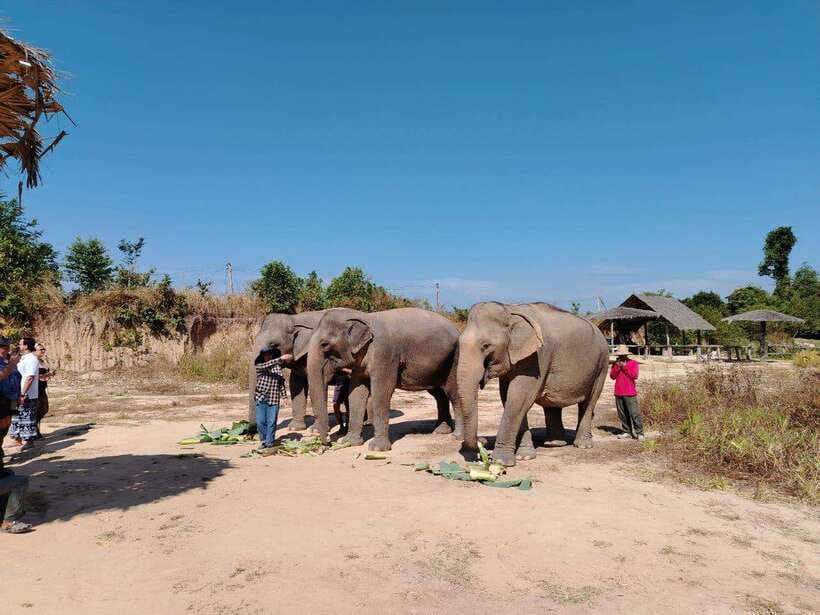
At the sanctuary, an expert gives an introduction to elephants in general and to the animals living there. You then prepare handmade snacks, usually rice and banana portions, before feeding the elephants up close.
This opening works well because it gives you something useful to do with your hands while you learn. You are not simply placed beside an animal for a quick photograph. You see what goes into preparing food and get an introduction to the elephants’ habits, backgrounds, and preferences.
The sanctuary experience is generally offered in one-hour or two-hour formats. Adults aged 11 and older pay $75 for two hours or $45 for one hour. Children aged 3 to 10 are listed at $62. The supplied information does not clearly state which duration applies to the children’s ticket, so ask before paying.
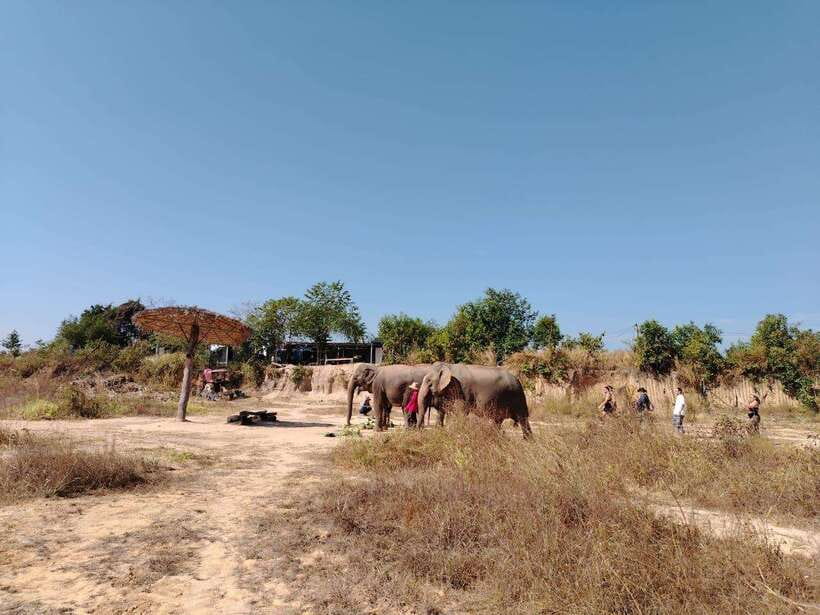
The elephants are described as three retired animals. There are no rides, and the activity is guided by the elephants’ own behavior. If they want to eat, they eat. If they want a mud bath, they head toward the mud. If they want to walk or rest, the group follows their pace.
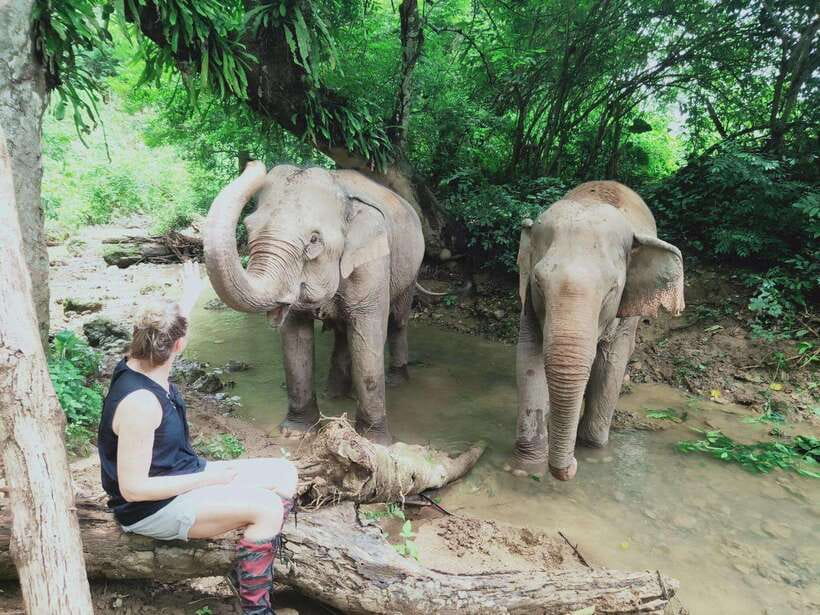
That is the strongest part of the visit. You may feed them, watch them play, see them spray mud, and follow them to the river. Some sessions include helping wash them in the water. The handlers explain each elephant’s eating patterns, past, habits, and preferences, which makes the meeting feel personal rather than staged.
You should still keep your expectations sensible. You are not guaranteed every activity in the same order, or even every activity at all. The elephants are not props, and their choices control the session. That is a positive feature, but it also means the visit is less predictable than a show.
The setting allows you to watch the elephants in open surroundings, including a pond and river area. You may get wet while washing them, so pack spare shorts, a shirt, and perhaps a small towel. Comfortable clothing is better than anything you want to keep spotless.
A snack and coffee or tea are offered at the sanctuary, and fruit has also been provided during some visits. These touches are simple but useful, especially if your morning starts early or you have not eaten much before pickup.
What makes the elephant visit feel responsible
The supplied details describe elephants that once performed labor and are now cared for at the sanctuary. The visit is presented as a chance to support their upkeep while learning about their individual needs.
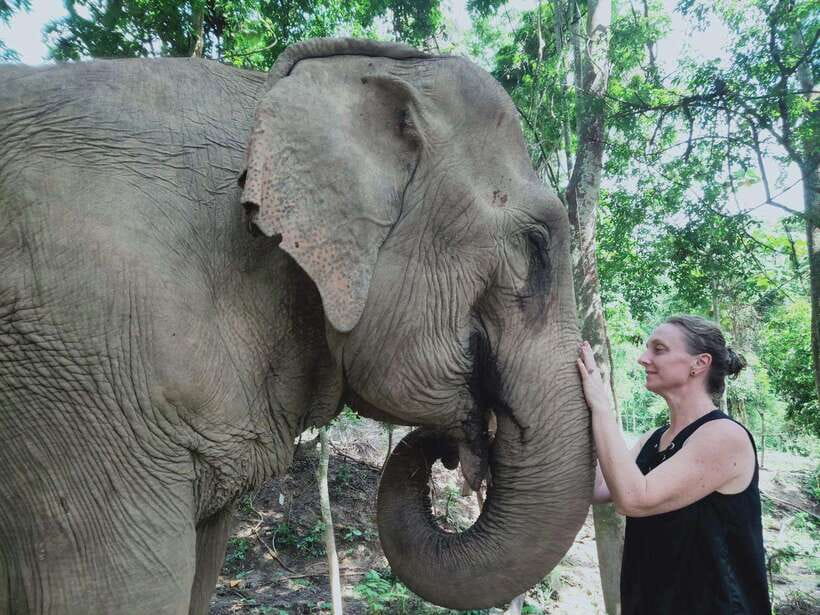
I would pay attention to the way the handlers manage contact. The strongest accounts describe the elephants moving freely, with the group following rather than forcing them into a routine. You can ask the guide how the animals arrived at the sanctuary, what they eat, and how their daily care works.
This is not a completely hands-off wildlife sighting. You may feed the elephants and wash them, so the visit involves close contact. If you prefer observing animals without touching them, you may find the sanctuary’s hands-on format less appealing.
For families, the food preparation and feeding are easy entry points for children. One 11-year-old particularly enjoyed feeding the elephants. Parents should remember that the river and mud activities can become messy quickly.
Something completely different for another day:
- Sunset tour of Kampong Phluk stilts home village on the Tonle Sap
★ 5.0 · 4,865 reviews - Siem Reap: Angkor Wat 2-Day Tour with Sunrise and Sunset
★ 4.9 · 4,429 reviews - Siem Reap: Kampong Phluk Floating Village Tour with Boat
★ 4.9 · 3,843 reviews - Siem Reap: Full-Day Angkor Wat Guided Tour with Sunset
★ 4.9 · 3,803 reviews
Returning to Siem Reap and visiting Apopo
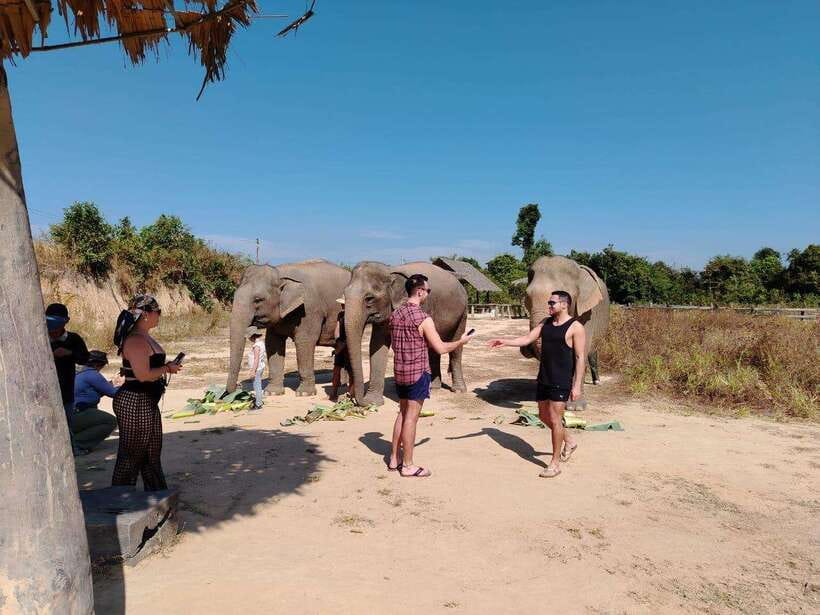
After the elephant stop, the vehicle returns toward Siem Reap for a visit of about an hour or more at the Apopo Rat Demining Centre. On the afternoon schedule, the order is reversed: Apopo first, then the elephants.
Apopo introduces you to the Giant African Pouched Rats trained to detect landmines and unexploded ordnance. Cambodia still deals with the dangers left by past conflict, and the centre’s work helps reclaim contaminated land for farmers and local communities.
The subject is serious, but the presentation is accessible. You watch the rats train and learn how their work supports mine clearance. The rats are also surprisingly appealing. They are described as smart, gentle, and much cuter than their name suggests.
You may be able to hold one yourself. Some visits include holding two rats, while the guide explains facts about their training and working role. This is a particularly good stop for children, since it turns a difficult subject into a clear lesson about animal skill and public safety.
The centre is not just an animal meeting. Its value comes from understanding why these rats matter. You see a practical program that links trained animals with safer land and restored use for communities. That gives the visit more weight than a standard wildlife attraction.
The stop is shorter than the elephant session and less physical. You will not need spare clothes here, and the indoor or structured format makes it a useful contrast after mud, water, and heat at the sanctuary.
Morning or afternoon: which order is better?
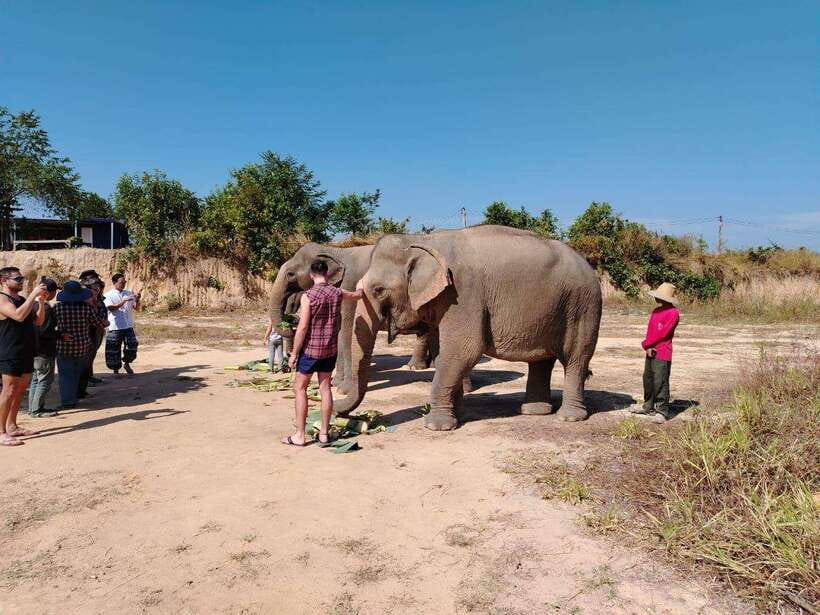
The morning option visits the elephant sanctuary first, followed by Apopo. The afternoon option starts at Apopo and finishes at the sanctuary.
I would choose the morning plan if the elephants are your main reason for booking. You reach them earlier in the day, then finish with the shorter rat-centre visit. It also gives you the more active part first, when you are fresh and ready for feeding, mud, and water.
Choose the afternoon plan if you prefer starting with a compact educational stop. Apopo gives you a clear introduction to the day, and the elephant sanctuary becomes the final, more relaxed part of the outing.
The best choice may depend on the available starting time and your other plans in Siem Reap. Because the advertised duration is 12 hours, check the exact schedule rather than assuming the tour will occupy only the stated half-day activity period. Road travel, waiting, and the gap between attractions can make this a long outing.
The real cost and what you receive

The tour price is $15 per person. For what it covers, that can be good value. Hotel pickup and drop-off, an English-speaking guide, air-conditioned transport, water, and a snack make it an easy way to connect two attractions.
But the attraction fees change the calculation:
- Adults aged 11 and older: $75 for the two-hour elephant option or $45 for one hour
- Children aged 3 to 10: $62 at the sanctuary
- Apopo Rat Demining Centre: $10 per person
- Tour transport and guide fee: $15 per person
That means an adult paying for the two-hour elephant visit spends at least $100 before personal expenses. The one-hour adult option brings the listed total to $70. A child’s listed total comes to $87, assuming the $62 sanctuary price applies as stated.
The $15 price is therefore not a cheap animal attraction ticket. It is a low-cost way to arrange transport and coordination between two separately paid sites. I think it is worthwhile if you already want to visit both places, since arranging two rides and managing the timing yourself may be a nuisance.
If you only want to see elephants, booking the transport separately may make more sense. If you are interested in both elephants and Apopo, the combined arrangement is much easier to justify.
Group size, guide service, and flexibility
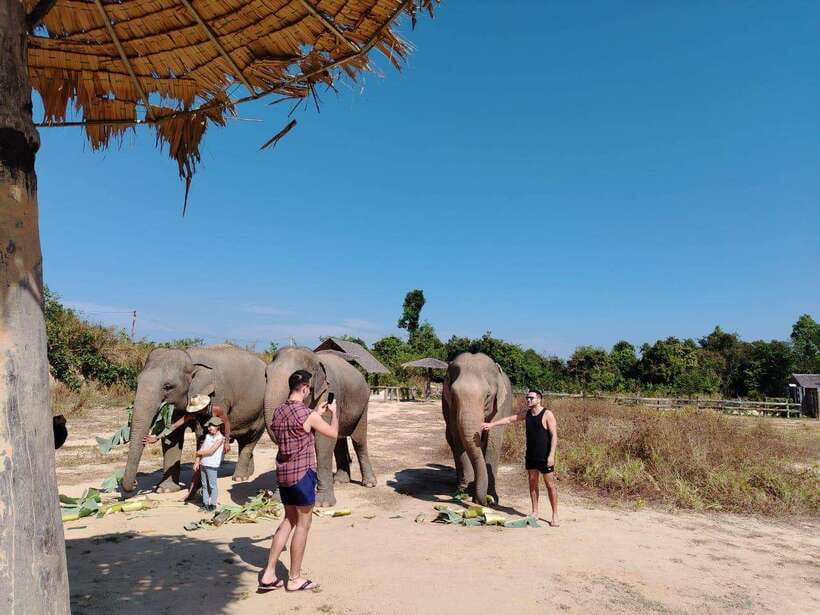
The group is limited to 10 participants, and you may join other people at the elephant sanctuary. This is not necessarily a fully private elephant session, even though the transport arrangement is sold as a private trip.
A smaller group matters here. Feeding and washing large animals becomes awkward when too many people crowd around them. A group of roughly 10 or fewer gives you a better chance to hear the handler and take part without constant jostling.
The driver service seems to be one of the strongest practical features. Lucky has stopped for local food, Daniel has shared information during the drive, and Chay has been praised for a friendly manner. One driver even helped with a temple stop when there was an extra hour available.
Still, the guide may be more of a driver and coordinator than a full-time specialist at both attractions. The expert elephant briefing comes from sanctuary staff, and Apopo provides its own explanation of the rats. Your booked guide helps you get there, keeps the day moving, and adds local context.
English and Cambodian are the listed languages. Pickup and drop-off are included from hotels in Krong Siem Reap. Free cancellation up to 24 hours before departure and reserve-now, pay-later booking add useful flexibility, especially if your temple schedule is still changing.
Who should book this day out?
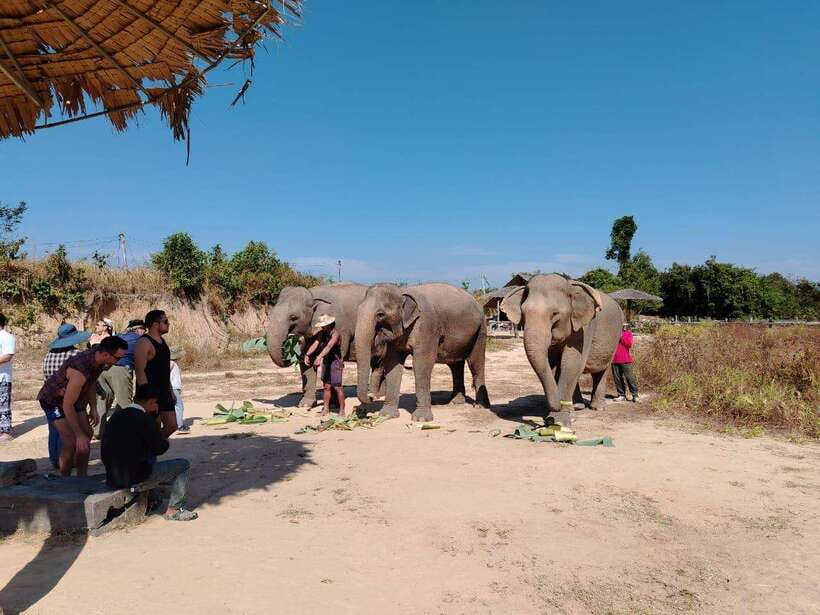
I would recommend it to families, animal lovers, and anyone who wants a break from temple sightseeing. Children get memorable contact with elephants and rats, while adults gain a better understanding of animal care and mine clearance.
It also suits you if you value local context. The ride beyond central Siem Reap, roadside palm cakes, village food, and conversations with guides can add more texture than a simple point-to-point transfer.
You may want to skip it if your budget is tight and you only noticed the $15 headline price. Once the entry tickets are added, this is not a low-cost outing. You should also think twice if you dislike getting wet, muddy, or close to large animals.
The day works best when you treat the elephants as living animals rather than a guaranteed performance. Their willingness to feed, bathe, walk, or rest shapes the visit. That patience is part of the point.
Should you book the elephant and Hero Rat trip?
I would book this tour if you want both attractions and prefer having transport, timing, and hotel pickup handled for you. The elephant session is the emotional centre, while Apopo adds a serious and unusual lesson about Cambodia’s recovery from landmines.
Before paying, confirm the elephant duration, the vehicle type, the starting time, and the final total including both attraction tickets. Bring spare clothes, wear shoes that can handle mud, and keep some flexibility for the drive.
For a visitor with only one free day beyond Angkor, this is a strong choice. It gives you close contact with well-cared-for elephants, a look at useful animal training, and a chance to see more of Cambodia than the centre of Siem Reap.
FAQ
How much does the tour cost?
The arranged tour costs $15 per person. Elephant sanctuary entry and Apopo Rat Demining Centre entry are extra, along with personal expenses.
How much are the attraction tickets?
For adults aged 11 and older, the elephant sanctuary lists $75 for two hours or $45 for one hour. Children aged 3 to 10 are listed at $62. Apopo entry is $10 per person.
Are hotel pickup and drop-off included?
Yes. Pickup and drop-off are included for hotels in Krong Siem Reap. You wait in the hotel lobby reception area for the driver.
What happens on the morning tour?
The morning schedule visits the Elephant Sanctuary first, followed by the Apopo Rat Demining Centre.
What happens on the afternoon tour?
The afternoon schedule visits Apopo first and then goes to the Elephant Sanctuary.
Can I hold one of the rats?
Yes. The Apopo visit includes the chance to hold a rat if you want to, subject to the centre’s visit procedure. You also watch the rats training to detect landmines and unexploded ordnance.
Newest reviews from Siem Reap
- War Museum, Killing Field, and APOPO Hero RATs Tour★ 5.0 · 7 reviews
- Angkor Wat at Sunrise★ 4.0 · 7 reviews
- Siem Reap Angkor Airport Taxis (from Airport to Hotel)★ 5.0 · 44 reviews
- Cambodian Cooking Class and Oxcart Ride with Local Village Tour★ 5.0 · 4 reviews
- Secret Temples of Angkor – Guided Tour in Siem Reap★ 5.0 · 6 reviews
- Short Cycling at Countryside★ 5.0 · 29 reviews
- SIEM REAP E-BIKE HALF-DAY COUNTRYSIDE (25-30 km)★ 4.0 · 1 review
- Unveiling the Mystical Beauty of Phnom Kulen National Park★ 5.0 · 6 reviews
Private, compared.

Full-Day Angkor Wat Sunrise Private Tour with Guide from Siem Reap
Read our review →

Phnom Penh Full Day Private Tour Included All Admission Tickets
Read our review →
Angkor Wat Private Tuk-Tuk Tour (sunrise Option) & more
Read our review →
Angkor Sunrise Half-Day Tour with Private Vehicles & Tour Guide
Read our review →