
Reviewed · CITY TOURS
Siem Reap City Hidden Gems (Private Guided Tour)
Siem Reap rewards curious detours. This private tour is a handy first look at the city beyond Angkor Wat, with time for the Old Market, Buddhist sites, local crafts, a small brick temple, and village life. I like the personal guide and driver, and I like the chance to see places you could easily miss on your own. The tour also offers a memorable visit to the Apopo Rat Center, where trained rats help find landmines, though that stop costs extra.
The advertised route can change. One recent booking became a tuk-tuk tour rather than a walking tour, and several planned stops were skipped because of personal choices and time. I would confirm the exact schedule before setting out, especially if you care about seeing the Royal Residence, the old brick temple, or the large wooden boat.
In This Review
- Quick points before you book
- Why this short tour can help you understand Siem Reap
- Starting at Psa Chas and the Old Market
- The old monastery and Siem Reap’s Buddhist life
- Royal Residence, Big Bat Park, and the city’s public spaces
- The longest wooden boat and village life
- Finding the 10th-century brick temple
- Satcha Handicraft Incubation Center and local enterprise
- The Apopo Rat Center costs $10 extra
- What $39 gets you, and what it does not
- Timing, transport, and how to prepare
- Who should book this Siem Reap tour?
- Should you book it?
- FAQ
- Where does the tour take place?
- How long does the experience last?
- How much does the tour cost?
- Is hotel pickup included?
- Is the tour private?
- What language does the guide speak?
- Is the Apopo Rat Center included in the price?
- What attractions are included in the tour price?
- Is the tour a walking tour?
- Can I cancel the booking?
Quick points before you book
- Private pickup in Siem Reap: A guide and driver collect you from your hotel in Krong Siem Reap after you provide the hotel details.
- A compact city introduction: The tour lasts about 3.5 hours, making it useful on your first day or between longer temple visits.
- The Apopo Rat Center costs extra: Entry is $10 per person, but the center offers one of the most unusual and meaningful stops on the route.
- Several stops are cultural rather than grand: Expect monasteries, shrines, markets, workshops, village views, and local businesses instead of major monuments.
- The route may use a tuk-tuk: Despite references to walking, the experience can involve tuk-tuk transport between stops.
- Good value for a private outing: At $39 per person, the price includes the guide, driver, attraction tickets other than Apopo, drinking water, and taxes.
Why this short tour can help you understand Siem Reap
Siem Reap is often treated as a base for Angkor. That is understandable, but it leaves out the city itself. This tour shifts attention from enormous temple towers to ordinary places where Cambodian history and daily life still meet: a monastery, a market, a school, a shrine, a craft workshop, and a village road.
I especially like the way the experience links old and new Cambodia. You may hear about Buddhist practice, royal life, wartime memory, local trade, and modern social enterprises in the same morning. That range gives you useful context before or after visiting the Angkor temples.
The tour is also small by design. Since it is private, you can ask questions, spend longer at a place that catches your interest, or tell the guide when you have had enough of a workshop. That flexibility matters more here than it would on a simple sightseeing bus.
Still, three and a half hours passes quickly. This is a sampler, not a full study of Siem Reap. If you want every listed stop, you need to clarify the plan in advance and keep the pace moving.
A few more options around Siem Reap worth reading up on
- Angkor Wat Sunrise or Sunset Tour with Guide from Siem Reap
★ 5.0 · 12,109 reviews - Siem Reap: Angkor Wat: Small-Group Sunrise or Sunset Tour
★ 5.0 · 9,444 reviews - From Siem Reap: Kampong Phluk Floating Village Tour by Boat
★ 4.9 · 6,979 reviews
Starting at Psa Chas and the Old Market
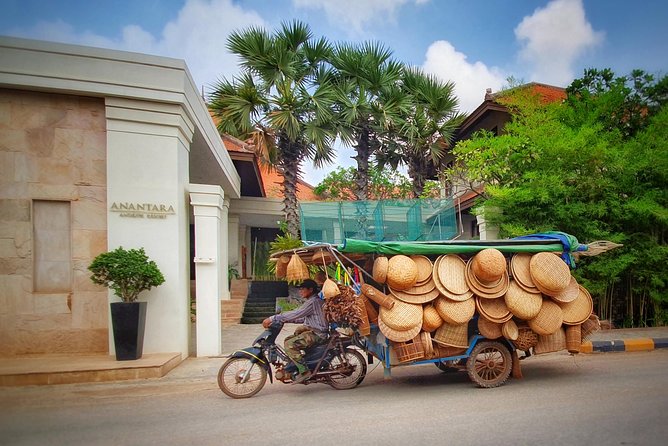
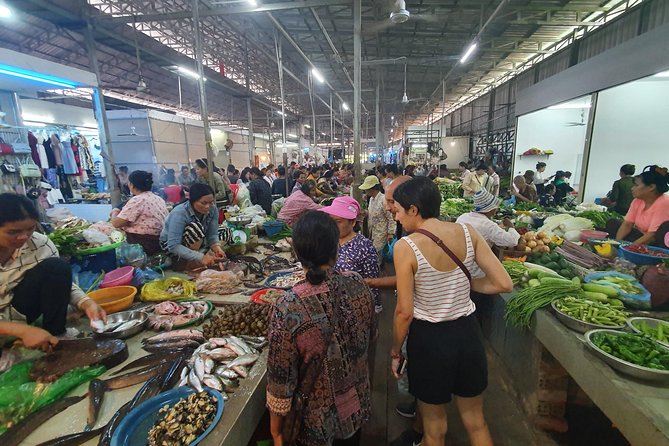
The route begins around Psa Chas, usually called the Old Market. This is a useful place to get your bearings. The area brings together food stalls, small shops, souvenirs, local products, and streets where daily commerce continues alongside tourist businesses.
You should not expect a quiet historical quarter. The market area is active and commercial, but that is part of its value. Your guide can help explain what you are seeing and point out details that are easy to overlook when you wander without context.
The Old Market stop is listed at about 20 minutes, although the broader city portion lasts longer. If you have already spent time here, tell the guide at the beginning. One booking shortened the route partly because the visitor had already explored the market extensively.
That is a good example of how to use a private tour well. You are not locked into a fixed group timetable, but you do need to speak up. A short market visit is enough for orientation, while a longer stop makes sense if you want to browse or learn about local goods.
The old monastery and Siem Reap’s Buddhist life
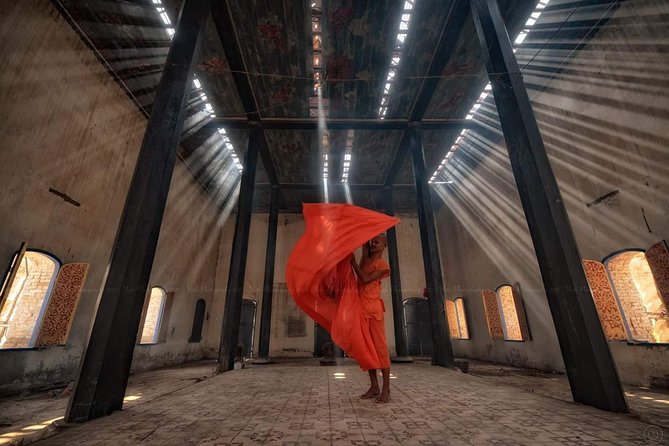
One of the planned stops is an old Buddhist monastery dating to A.D. 1371. The exact name is not specified in the tour details, so ask your guide to identify it when you arrive. Its importance lies less in a single grand sight and more in the chance to see a working religious place with a long connection to the city.
The tour also includes a local shrine or monastery, with time to learn about monks’ daily life. This is one of the stronger parts of the experience for anyone interested in Cambodian Buddhism. You can ask about the role of monks, the function of the monastery, and how religious life fits into the community.
Temple etiquette is simple but important. Dress modestly, carry a scarf if needed, and follow your guide’s instructions before entering religious areas. The suggested packing list includes a hat, scarf, camera, cash, and hand sanitizer or tissues. Those items make sense for a short outing in the Cambodian heat.
The guide’s explanation is especially valuable here. A monastery can look like a collection of buildings if you do not know what you are seeing. With context, it becomes a place connected to education, worship, community life, and local custom.
Royal Residence, Big Bat Park, and the city’s public spaces
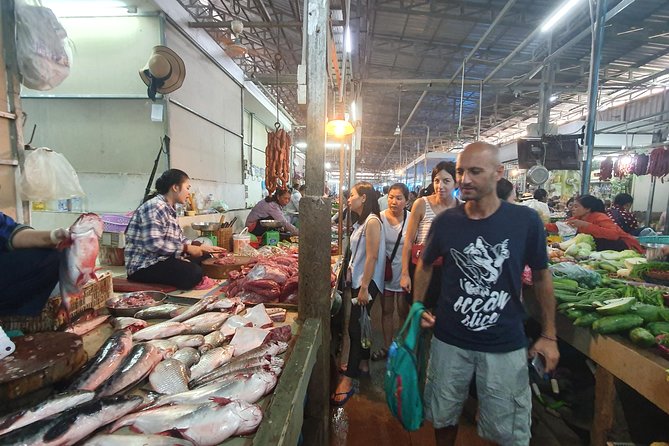
The Royal Palace Residence is another scheduled stop, with about 30 minutes set aside for a guided visit. The information provided does not specify how much of the residence you enter or which areas are open, so confirm the viewing arrangements on the day.
Big Bat Park adds a different kind of city stop. It is not presented as a major monument, but it helps break up the historic and religious visits with a public outdoor space. These smaller stops are part of the tour’s appeal: you are not simply moving from one famous building to another.
A private guide can also explain how the city has changed around these places. Siem Reap’s past is tied to Khmer culture, royal life, religion, and the nearby Angkor temples, but the modern city is not a museum. It is a living place with schools, shops, workshops, shrines, and neighborhoods.
That broader view is useful if you are staying several days. It helps you see Siem Reap as more than a launch point for temple excursions.
Something completely different for another day:
- Sunset tour of Kampong Phluk stilts home village on the Tonle Sap
★ 5.0 · 4,865 reviews - Siem Reap: Angkor Wat 2-Day Tour with Sunrise and Sunset
★ 4.9 · 4,429 reviews - Siem Reap: Kampong Phluk Floating Village Tour with Boat
★ 4.9 · 3,843 reviews - Siem Reap: Full-Day Angkor Wat Guided Tour with Sunset
★ 4.9 · 3,803 reviews
The longest wooden boat and village life

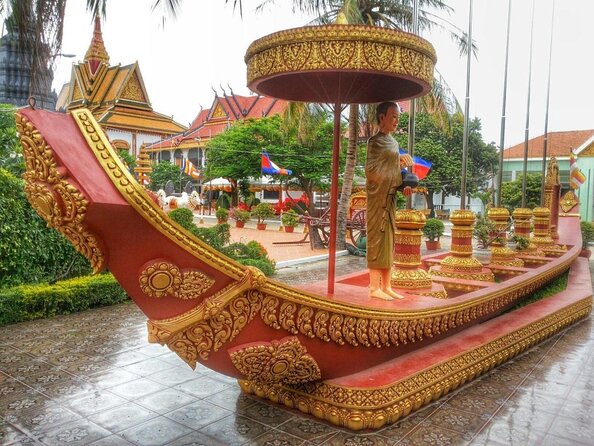
The tour may continue to a local monastery with a large wooden boat built to hold 76 rowers. That detail alone makes this a worthwhile stop for visitors interested in local traditions. It suggests a connection to communal events and water-based life, though the supplied information does not explain the boat’s exact use or history.
You may also pass a local school and a small village. These are not polished attractions. That is precisely why they can be interesting, provided you approach them respectfully and let the guide explain what is appropriate.
The guide can help you understand how people live beyond the central market area. You may learn about the monastery, village routines, and the place of schools in the community. Do not expect a staged cultural performance. The value is in seeing ordinary surroundings and asking thoughtful questions.
This portion also shows why the route needs some flexibility. A private tuk-tuk makes it easier to cover scattered stops, but the number of visits possible within 3.5 hours depends on traffic, walking time, and how long you spend at each place.
Finding the 10th-century brick temple

The hidden brick temple is one of the tour’s most appealing stops. It dates to the 10th century and does not require an admission ticket. For a visitor who has just seen Angkor’s famous monuments, a smaller ruin offers a useful contrast.
You will not get the scale of Angkor Wat here. Instead, the interest comes from the age of the structure and its place within the modern city. A local guide can point out architectural details and explain what makes the temple important.
The stop also provides a reminder that old Khmer remains are not limited to the headline sites. Some are surrounded by ordinary city life, and you might pass them without realizing what you are looking at.
Because this temple is included in the advertised route but was not reached on one booking, I would ask directly: Is the brick temple included today, and how much time will we spend there? That small question can prevent disappointment.
Satcha Handicraft Incubation Center and local enterprise
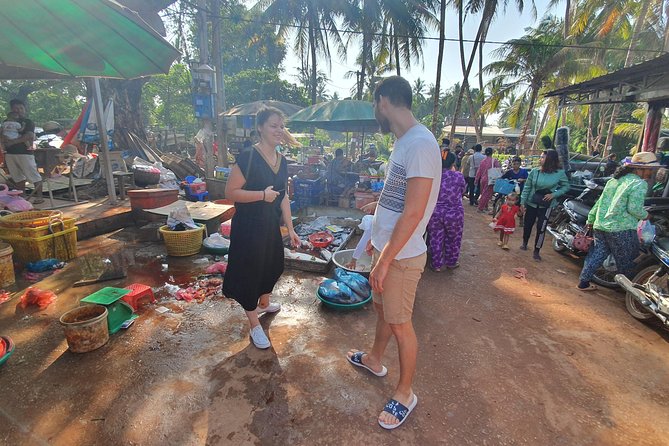
The Satcha Handicraft Incubation Center is a strong fit for visitors who want to understand present-day Cambodian craft work. It supports local makers and gives you a look at how handmade products are developed and sold.
The focus is not only on buying souvenirs. You can learn about craft production, local enterprise, and the effort to keep traditional skills connected to modern income. That gives the stop more substance than a quick shop visit.
The route may also include the Made in Cambodia Market, which highlights local businesses. If you want to take home something made in Cambodia, these stops are more useful than a generic souvenir stall. You can ask where an item was produced and what materials or techniques were used.
There may be an option to see silver and gem crafts or a crocodile leather workshop. These are optional elements, and you should be clear about what interests you. One visitor chose not to visit those workshops, so the actual experience can differ quite a bit from one private tour to another.
The Apopo Rat Center costs $10 extra
The Apopo Rat Center is the most distinctive optional stop. It teaches rats to detect landmines, a practical skill connected to Cambodia’s long experience with unexploded ordnance and landmines.
The entrance fee is $10 per person and is not included in the $39 tour price. The center can add real value because it is both unusual and tied to a serious issue affecting Cambodia. One booking described the visit as a highlight and considered it a must-see.
I would allow time for it if the subject interests you. It is not just an animal display. The point is the training and the life-saving work. Still, you should decide based on your interests and budget, since the additional cost raises the total to $49 per person before any tip.
If you skip Apopo, the tour can be shortened. That may suit you if you have already visited the Old Market or want a lighter outing. But if you are looking for the most memorable element beyond temples and markets, this is likely the stop to keep.
What $39 gets you, and what it does not

The base price is $39 per person. It includes a private English-speaking guide, a driver, attraction tickets other than Apopo, cool drinking water, and taxes. For a private half-day introduction, that is a reasonable package, particularly if you value hotel pickup and the ability to ask questions.
You do not pay for lunch, and meals are not included. The tour lasts only 3.5 hours, so many people will simply eat before or after. Bring cash for the optional rat center, personal purchases, and a tip if you feel the service deserves one.
The value depends on how many stops you actually make. If you see the monastery, Royal Residence, brick temple, boat, craft center, market, and Apopo, the outing covers a lot. If you skip several places, the price becomes less attractive, although private transport and a guide still provide convenience.
The best way to protect the value is to agree on priorities before pickup. Tell the guide the three stops you most want to see. I would put the brick temple, Apopo, and Satcha high on my list, then add the monastery and boat if time allows.
Timing, transport, and how to prepare
The tour can begin at different times, subject to availability. Pick a period when you can handle heat and short walks comfortably. A hat, scarf, water, camera, cash, and hand sanitizer or tissues are sensible items to carry.
Hotel pickup is included in Krong Siem Reap. After booking, provide your hotel details so the guide and driver know where to meet you.
The experience is described in some places as a walking tour, but one booking took place by tuk-tuk. You should treat the transport as flexible and confirm it before the day. A tuk-tuk is practical for scattered sites, but it also means this may feel more like a city sightseeing ride with walks than a continuous walking tour.
The tour is conducted in English and is for a private group. Free cancellation is available up to 24 hours before the start time, and you can reserve now and pay later. Those policies are useful if your Siem Reap schedule is still changing.
Who should book this Siem Reap tour?
I would recommend it to a first-time visitor who wants city context before visiting more temples. It also suits anyone with a short stay, a free morning, or a preference for small local sites over a full day at Angkor.
It is a particularly good choice if you want to ask questions about Buddhism, local history, crafts, and daily life. The private format gives you more room to shape the route than a standard group excursion.
I would be more cautious if you want a strict, fully confirmed itinerary. The stops can change, and personal choices may remove parts of the route. If the Royal Residence, 10th-century temple, or 76-rower boat is essential, confirm each one before departure.
The experience has a 4.6 rating from four published ratings. The strongest praise centers on the easygoing guide, clear explanations of Cambodian history and Buddhism, and the Apopo Rat Center. Those are the elements I would prioritize when deciding.
Should you book it?
Book this tour if you want a private, compact introduction to Siem Reap and are happy to trade a rigid schedule for local variety. The monastery visits, craft center, village views, and small temple give you a better sense of the city than a simple market ride.
Add the Apopo Rat Center if you want the most unusual and meaningful stop, and budget the extra $10 per person. Before pickup, confirm the transport and the exact stops. If you do that, the $39 price offers solid value for a flexible three-and-a-half-hour outing.
Skip it if you have only a few hours and want one guaranteed major attraction, or if you dislike changing plans. This is best for a curious visitor who wants to see how Siem Reap works beyond its famous temple gates.
FAQ
Where does the tour take place?
The tour takes place in Siem Reap Province, with pickup in Krong Siem Reap and visits around the city and nearby villages.
How long does the experience last?
The tour lasts about 3.5 hours, or roughly three to four hours depending on the timing of the stops.
How much does the tour cost?
The listed price is $39 per person.
Is hotel pickup included?
Yes. Pickup is included in Krong Siem Reap. You need to provide your hotel details after booking.
Is the tour private?
Yes. The experience is for a private group with a guide and driver.
What language does the guide speak?
The live tour guide speaks English.
Is the Apopo Rat Center included in the price?
No. Admission to the Apopo Rat Center costs an additional $10 per person.
What attractions are included in the tour price?
The price includes attraction tickets except for the Apopo Rat Center. The guide, driver, drinking water, and taxes are also included.
Is the tour a walking tour?
The description includes walking, but the experience may use a tuk-tuk between stops. Confirm the transport arrangement before the tour.
Can I cancel the booking?
Yes. You can cancel up to 24 hours in advance for a full refund. You can also reserve now and pay later.
Newest reviews from Siem Reap
- War Museum, Killing Field, and APOPO Hero RATs Tour★ 5.0 · 7 reviews
- Angkor Wat at Sunrise★ 4.0 · 7 reviews
- Siem Reap Angkor Airport Taxis (from Airport to Hotel)★ 5.0 · 44 reviews
- Cambodian Cooking Class and Oxcart Ride with Local Village Tour★ 5.0 · 4 reviews
- Secret Temples of Angkor – Guided Tour in Siem Reap★ 5.0 · 6 reviews
- Short Cycling at Countryside★ 5.0 · 29 reviews
- SIEM REAP E-BIKE HALF-DAY COUNTRYSIDE (25-30 km)★ 4.0 · 1 review
- Unveiling the Mystical Beauty of Phnom Kulen National Park★ 5.0 · 6 reviews
City Tours, compared.

Full Day tour .City tour.Countryside.Bamboo Train.Secret Bat Cave
Read our review →
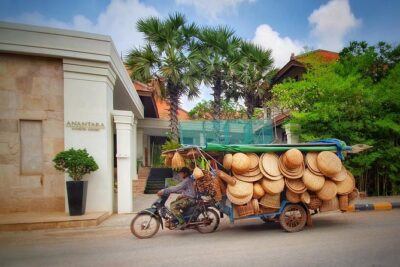
Siem Reap City Hidden Gems (Private Guided Tour)
Read our review →
Ho Chi Minh City: 2-Day Bike & Kayak Mekong Delta Tour
Read our review →
Private 3-Day Mekong Delta River Tour from Phnom Penh to Ho Chi Minh City
Read our review →Browse the lists this tour appears in