Reviewed · ANGKOR WAT TOURS
Siem Reap: Angkor Wat with German or English Guided Tour
Angkor rewards a day with a good guide. This outing pairs Angkor Wat and Angkor Thom with the atmospheric ruins of Ta Prohm, and I like the hotel pickup plus the cool, private air-conditioned vehicle. I also like the care shown by guides and drivers, from cold water and wet towels to smart photo stops. The main drawback is the extra cost: the $49 tour price does not include the $37 temple pass or lunch.
For eight hours, the route covers the main temples of Angkor’s small circuit without forcing you onto a large bus. Guides such as Sak, Bun, Sam, Sopheap Rath, and Nuon Chansarak have earned praise for clear explanations and considerate pacing. You should still expect heat, long walks, uneven temple surfaces, and a full day on your feet.
In This Review
- Key points to know before booking
- Why this eight-hour temple day works
- Angkor Wat: two hours among Khmer masterpieces
- Angkor Thom and the stone figures at the southern gate
- Bayon’s faces and the center of Angkor Thom
- Srah Srang: a useful pause in a demanding day
- Ta Prohm and the maze of jungle-covered stone
- The guides are the heart of the experience
- Transport, comfort, and the practical cost
- Who should book this Angkor tour?
- Final verdict: strong value for a first Angkor day
- FAQ
- What is included in the $49 tour price?
- Is the Angkor temple entrance fee included?
- Which languages are available?
- How long does the tour last?
- Is lunch included?
- Is hotel pickup available in Siem Reap?
- Is the tour suitable for wheelchair users?
Key points to know before booking
- The temple pass costs extra: Add $37 per person to the $49 tour price, bringing the known total to $86 before food.
- Angkor Wat gets two hours: You have time for the exterior, galleries, bas-reliefs, and central areas with a guide.
- Ta Prohm is the jungle temple stop: Allow one hour to explore its maze-like corridors and crumbling stonework.
- A private air-conditioned vehicle matters: It gives you a cool place to return to between walks, with bottled water included.
- English and German guides are available: Confirm your preferred language when booking.
- The day suits active sightseers: Comfortable shoes, sun protection, insect repellent, and cash are all useful.
Why this eight-hour temple day works
Angkor is too large and too important to treat as a quick photo stop. The temples can look spectacular even without explanation, but a guide helps you read the carvings, understand the layout, and connect the monuments with Cambodia’s Khmer civilization.
This tour follows a sensible order. You begin at Angkor Wat, continue to Angkor Thom and Bayon, pause near Srah Srang, and finish at Ta Prohm. That gives you the grandest monument first, the fortified city and face towers next, then the atmospheric jungle ruins later in the day.
I especially like the balance between guided time and breathing room. The scheduled visits are not just drive-by stops. Angkor Wat receives two hours, Ta Prohm one hour, Bayon one hour, and Srah Srang one hour for a break and free time.
The private vehicle is another strong point. Several accounts describe clean cars, careful driving, cold drinks, and chilled face towels. In Cambodia’s heat, that is not a minor luxury. It means you can recover between temple walks instead of sitting in a crowded vehicle with no room to cool down.
More ways to see Angkor Wat:
- Angkor Wat Sunrise or Sunset Tour with Guide from Siem Reap
★ 5.0 · 12,109 reviews - Siem Reap: Angkor Wat: Small-Group Sunrise or Sunset Tour
★ 5.0 · 9,444 reviews - Siem Reap: Angkor Wat 2-Day Tour with Sunrise and Sunset
★ 4.9 · 4,429 reviews
Angkor Wat: two hours among Khmer masterpieces
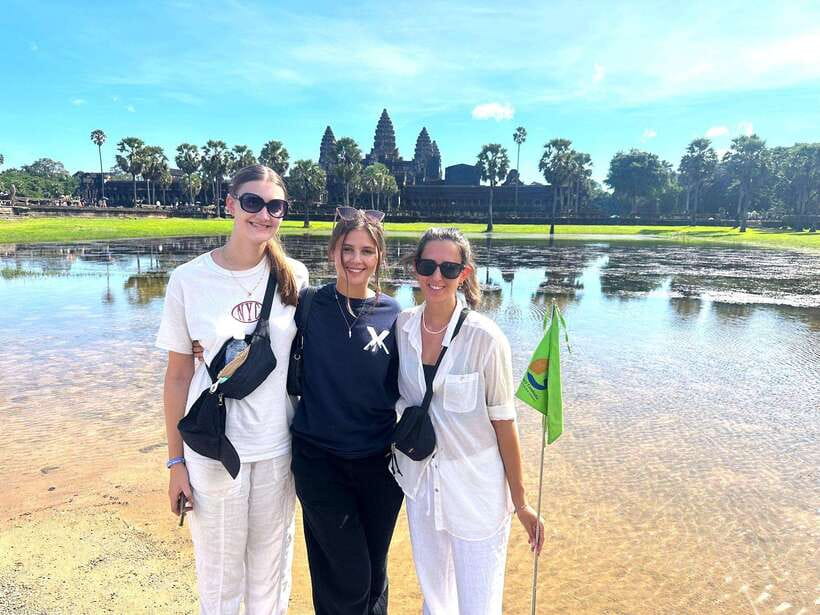
Your first temple stop is Angkor Wat, reached after hotel pickup and roughly 20 minutes of driving. The pickup point is listed as 57 2 Thnou Street, with hotel pickup available in Siem Reap.
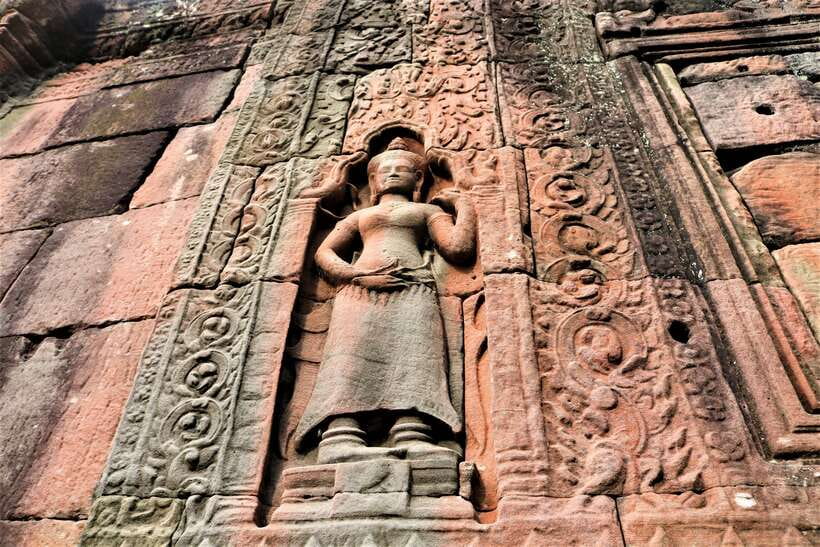
Two hours is a useful amount of time here. You can see the broad architectural plan, study the long galleries, and pause over the 12th-century bas-reliefs rather than rushing from one famous view to the next.
Angkor Wat is a classic example of Khmer architecture, and the guide’s role is most valuable inside the monument. Look closely at the carved scenes and repeated patterns. Your guide can point out details that are easy to miss when you are focused only on the central towers.
The site is large, so wear shoes that can handle a long walk. The information provided does not promise a sunrise departure, and this is not sold as a sunrise tour. If sunrise is your priority, ask about timing before booking rather than assuming it is included.
The best guides also help with photographs. Dianne specifically praised Mr Sak for finding strong photo angles, while Sam was praised for balancing useful information with a relaxed pace. You can ask for a little time to take pictures, but remember that the day has several major stops still ahead.
Angkor Thom and the stone figures at the southern gate
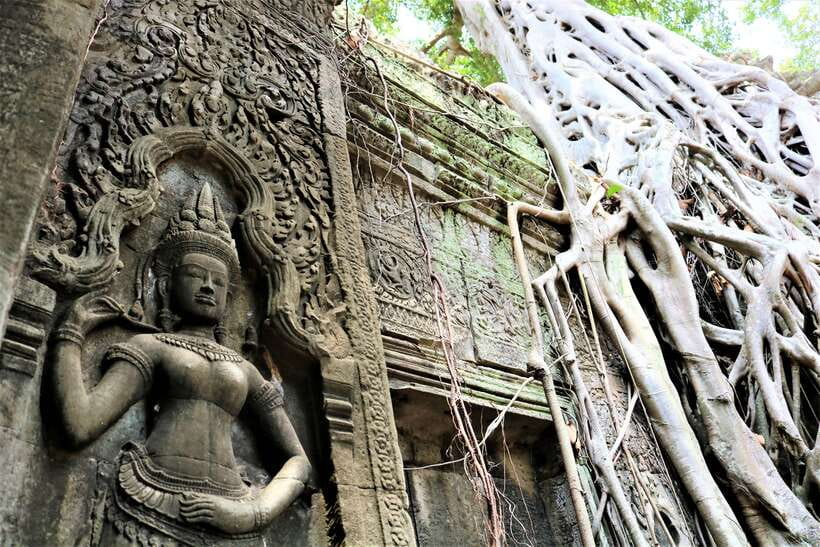
After Angkor Wat, the route moves to Angkor Thom, the fortified city that once formed a major center of Khmer power. The visit to Angkor Thom itself is listed as about 30 minutes, followed by a full hour at Bayon.
The southern gate makes a memorable entrance. Fifty-four stone figures of gods and demons line the approach, creating a powerful processional scene. Your guide can explain the meaning of the figures and the role they play in the entrance design.
This is a good place to slow down for a moment. Angkor Thom is not only a collection of monuments. Its gates, walls, terraces, and central temple show how the Khmer builders organized a monumental city.
The short scheduled time at Angkor Thom means you should not expect a detailed walk through every corner of the fortified city. The value here is the grand approach and the connection to Bayon. If you become fascinated by the terraces or want extra time at the gate, tell your guide early. The tour has some flexibility, but the day remains tightly packed.
Bayon’s faces and the center of Angkor Thom
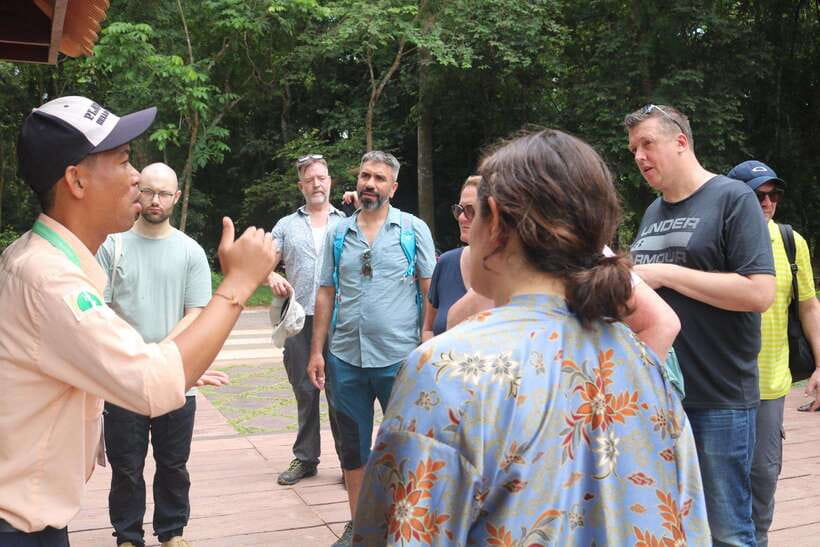
Bayon receives about one hour, which is enough to appreciate its unusual towers and carved galleries without trying to inspect every stone. The temple is famous for its serene stone faces, and the effect changes as you move through the tight passages.
This is where a good explanation pays off. Bayon can feel confusing at first because the towers rise close together and the corridors twist around one another. Guides including Sam, Bun, and Sokhuoch have been praised for making the temples easier to understand through clear historical and architectural explanations.
You will also see the Terrace of the Leper King and the Terrace of the Elephants as part of the Angkor Thom visit. These monuments reward attention to the carvings along their walls. They are not as instantly recognizable as Angkor Wat or Ta Prohm, but they help complete the picture of Angkor Thom as a ceremonial and royal center.
The pace may feel brisk if you want a serious study of every relief. For most people, though, one hour at Bayon is a sensible compromise. You get time for the main views, photography, and questions without using up the afternoon.
A few more options around Siem Reap worth reading up on
- From Siem Reap: Kampong Phluk Floating Village Tour by Boat
★ 4.9 · 6,979 reviews - Sunset tour of Kampong Phluk stilts home village on the Tonle Sap
★ 5.0 · 4,865 reviews - Siem Reap: Kampong Phluk Floating Village Tour with Boat
★ 4.9 · 3,843 reviews - Siem Reap: Full-Day Angkor Wat Guided Tour with Sunset
★ 4.9 · 3,803 reviews
Srah Srang: a useful pause in a demanding day
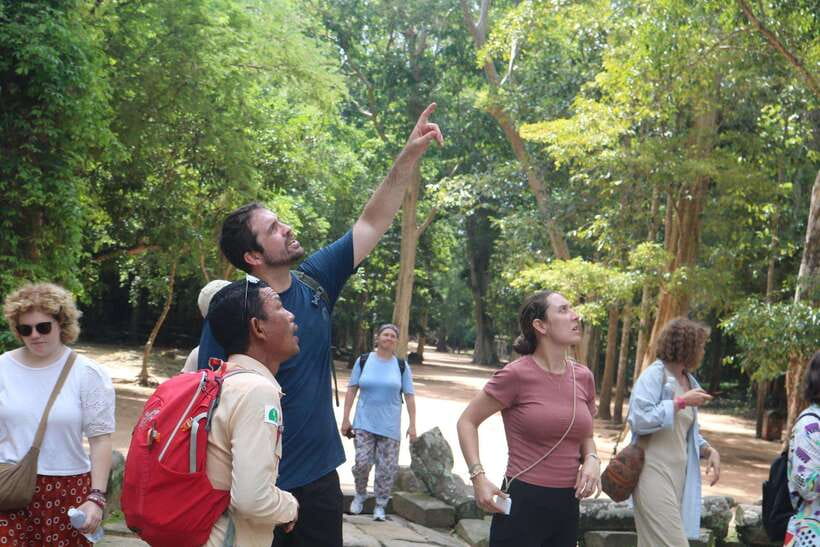
Srah Srang is scheduled as a one-hour break with free time. This is important because temple touring can become tiring well before the monuments stop being interesting.
Use the pause to drink water, rest your feet, and prepare for Ta Prohm. Bottled water is included, and several accounts describe drivers supplying cold water throughout the day. Some also received chilled wet towels, a thoughtful touch when the heat starts to catch up with you.
Lunch is not included in the tour price. One past booking described lunch at a small restaurant as pleasant, while another found the food disappointing, so I would keep expectations modest and carry cash. The supplied details do not give a fixed meal menu or a guaranteed restaurant standard.
The one-hour break also gives you a chance to decide how much energy to spend on the final temple. If you are already tired, tell your guide. If you are still eager, Ta Prohm is the stop where a slower, more curious walk can pay off.
Ta Prohm and the maze of jungle-covered stone
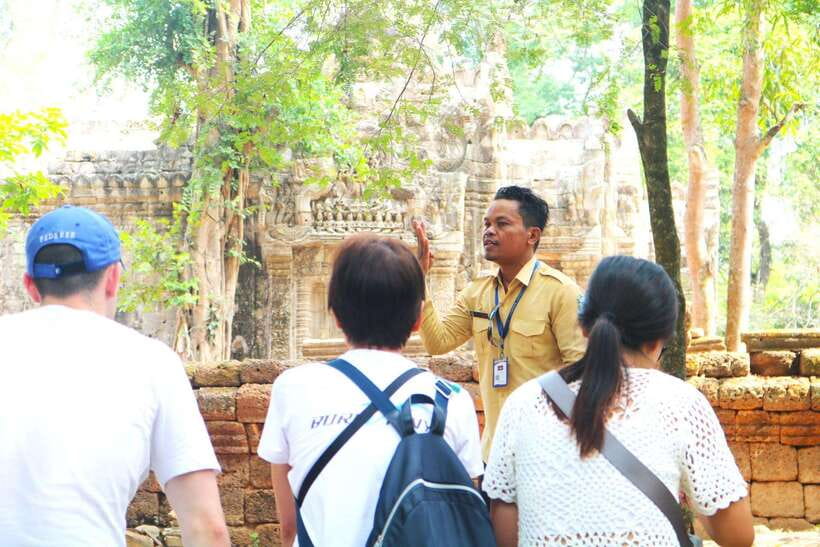
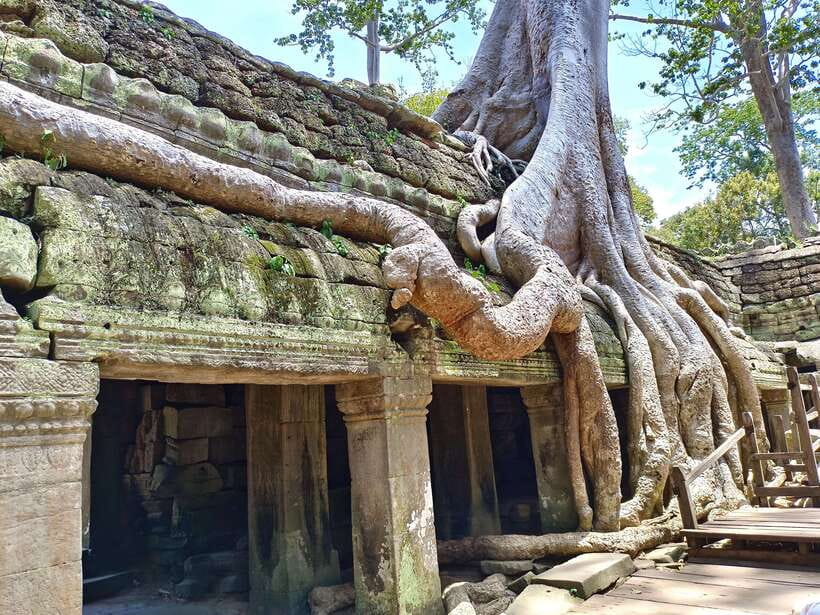
Ta Prohm is the final major temple visit and lasts about one hour. Its appeal comes from the combination of architecture and jungle, with trees and roots pressing against old stonework and narrow routes leading through the temple complex.
The experience is less orderly than Angkor Wat. You move through a maze of corridors, doorways, galleries, and partially ruined sections. That makes Ta Prohm exciting, but it also means you should watch your footing and stay aware of where the group is going.
A guide helps here by giving the ruins a sequence. Without context, Ta Prohm can become a collection of dramatic walls and tree roots. With explanations, you can better understand how the temple was built, used, and altered over time.
One hour is enough for the principal areas, though you may wish for more if you enjoy photography. The temple’s narrow passages can slow the walk, especially when several groups reach the same attractive doorway or tree. A guide who knows the route can help you avoid wasting time.
Ta Prohm is also a good final stop because it feels different from the formal scale of Angkor Wat and the crowded stone towers of Bayon. It leaves you with a more broken, intimate view of the Angkor complex.
The guides are the heart of the experience
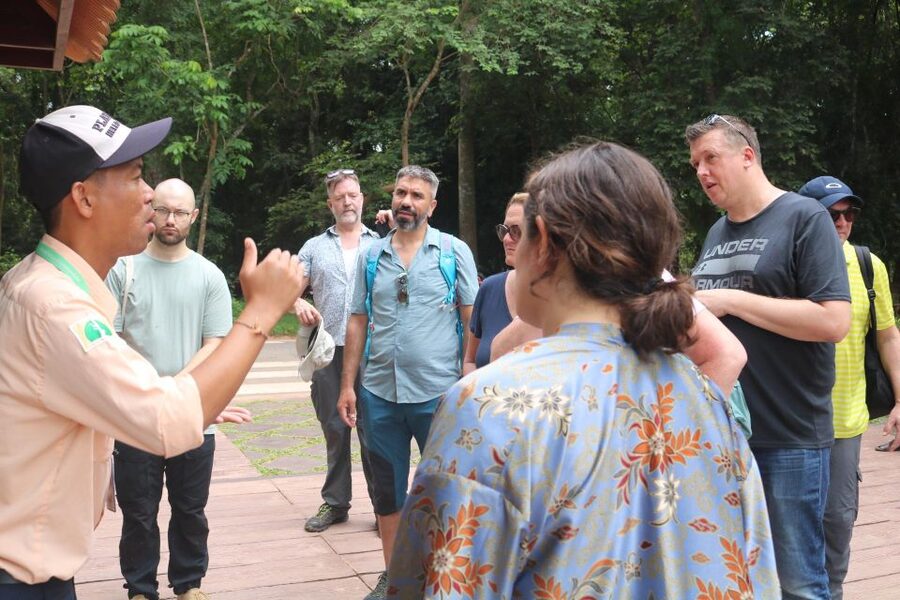
The strongest part of this tour is the quality of guiding. English and German are offered, and the English-speaking guides have been praised for clear speech, patience, and detailed explanations.
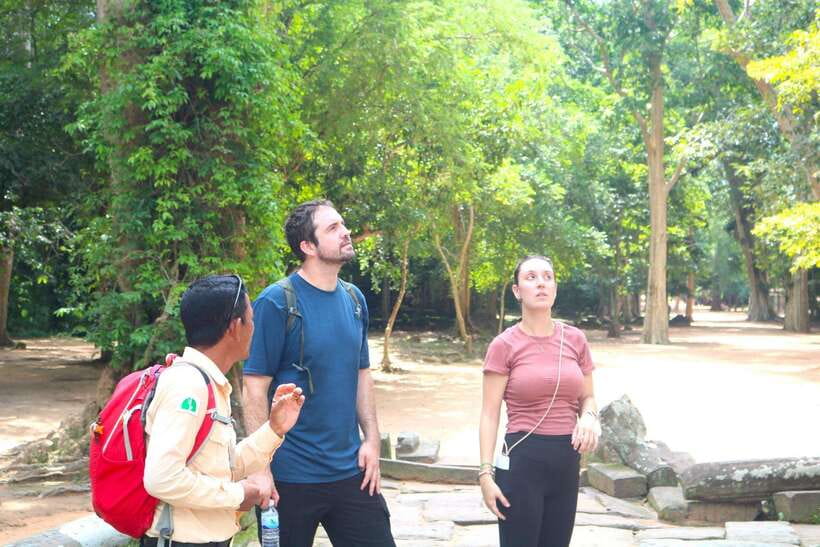
Sak appears repeatedly in the feedback as a particularly strong choice. He is described as friendly, informed, considerate, and good at finding photo locations. Sam is praised for making history interesting without talking endlessly, while Bun is noted for sharing plenty of information and helping people get good pictures.
Other named guides include Sopheap Rath, Pi, Setha, Sokpee, Noy, Pheng, Teth, Seng, Sokhuoch, and Nuon Chansarak. Their styles differ, but the consistent pattern is personal care, temple knowledge, and willingness to answer questions about Cambodia as well as Angkor.
That matters because this is not simply a ride between monuments. The temples are visually powerful, but the details are what turn the day into a meaningful visit. You can ask about architecture, religion, historical events, or modern Cambodia, and several guides have been praised for handling those wider questions well.
Guide quality can vary on any scheduled tour, so the names above should not be treated as a guarantee. Still, the overall rating of 4.9 from 212 reviews, along with the repeated praise for guiding, gives this operator a strong record.
Transport, comfort, and the practical cost
The advertised tour price is $49 per person. The Angkor temple pass costs another $37 per person and covers all the temples on this route. That makes the known cost $86 per person before lunch, drinks beyond the included water, or other personal spending.
At that price, the value depends on what you want from the day. If you only need transportation and a few temple photos, you could find cheaper ways to move around. If you want a private air-conditioned vehicle, hotel pickup and drop-off, a live guide, bottled water, and explanations at the principal monuments, the package is easier to justify.
The vehicle is especially useful because the day includes several walks in hot conditions. Past bookings describe clean cars, comfortable seating, careful drivers, and cold towels. Drivers named in the feedback include Kosal, Mr Mao, Mr Bund, Chi, Me Sung, and others.
Bring cash because meals are excluded. Also bring sunglasses, a hat, a camera, insect repellent, and comfortable shoes. Shorts are not allowed, so dress in clothing that covers the knees. Smoking, pets, luggage, and large bags are also not permitted.
The activity is described as suitable for most people, but not for wheelchair users. You should be prepared for walking and uneven temple surfaces. The day is long, and the combination of heat, stairs, and stone paths can be demanding even when the vehicle is comfortable.
Who should book this Angkor tour?
I would choose this tour if you have one full day for Angkor and want the main small circuit temples explained properly. It suits first-time visitors, couples, families with active older children, and anyone who prefers a car and guide over arranging several separate rides.
It is also a good fit if you care about photographs. Guides have helped people find useful angles and quieter paths, and the private vehicle lets you leave equipment in the car rather than carrying large bags through every temple.
You may want a different arrangement if you want sunrise at Angkor Wat, a slow archaeological study, a wheelchair-friendly route, or included meals. The schedule covers the major highlights, but it cannot give every monument the attention of a multi-day program.
Free cancellation up to 24 hours before the start and reserve-now, pay-later terms make the booking relatively flexible. Starting times depend on availability, so check the departure window before committing.
Final verdict: strong value for a first Angkor day
I would book this outing for a focused first look at Angkor. The route is well chosen, the private vehicle adds real comfort, and the strongest guides turn famous stones into places you can understand.
Budget the extra $37 temple pass and bring money for lunch. If you can handle a full day of walking and heat, this is a practical, well-supported way to see Angkor Wat, Angkor Thom, Bayon, and Ta Prohm without managing the transport yourself.
FAQ
What is included in the $49 tour price?
The price includes hotel pickup and drop-off, a live guide, transport by private air-conditioned vehicle, and bottled water.
Is the Angkor temple entrance fee included?
No. The entrance fee is an additional $37 per person and covers all the temples visited on the tour.
Which languages are available?
The tour offers live guides in English and German.
How long does the tour last?
The full experience lasts eight hours, including transportation and temple visits.
Is lunch included?
No. Meals are not included, so bring cash for food.
Is hotel pickup available in Siem Reap?
Yes. Pickup is available from your hotel in Siem Reap. The listed pickup location is 57 2 Thnou Street.
Is the tour suitable for wheelchair users?
No. The activity is not suitable for wheelchair users. Comfortable shoes are recommended for the walking portions.
Newest reviews from Siem Reap
- War Museum, Killing Field, and APOPO Hero RATs Tour★ 5.0 · 7 reviews
- Angkor Wat at Sunrise★ 4.0 · 7 reviews
- Siem Reap Angkor Airport Taxis (from Airport to Hotel)★ 5.0 · 44 reviews
- Cambodian Cooking Class and Oxcart Ride with Local Village Tour★ 5.0 · 4 reviews
- Secret Temples of Angkor – Guided Tour in Siem Reap★ 5.0 · 6 reviews
- Short Cycling at Countryside★ 5.0 · 29 reviews
- SIEM REAP E-BIKE HALF-DAY COUNTRYSIDE (25-30 km)★ 4.0 · 1 review
- Unveiling the Mystical Beauty of Phnom Kulen National Park★ 5.0 · 6 reviews
Angkor Wat Tours, compared.
Angkor Wat Sunrise or Sunset Tour with Guide from Siem Reap
Read our review →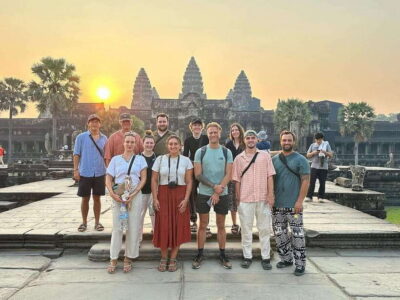
Angkor Wat: Small-Group Sunrise or Sunset Tour
Read our review →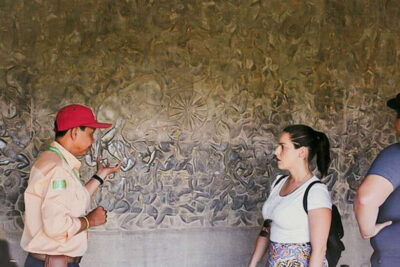
Angkor Wat 2-Day Tour with Sunrise and Sunset
Read our review →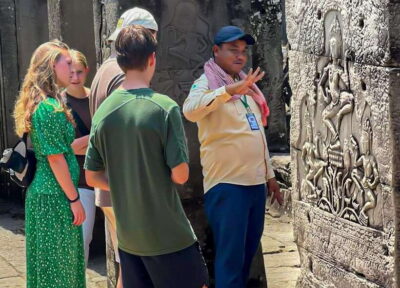
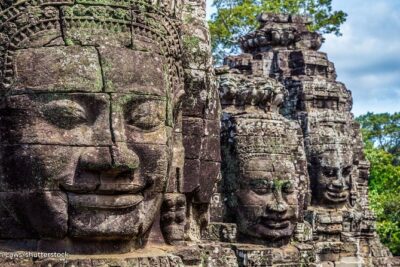
Angkor Wat Sunrise tour with Small – Group and Guide tours
Read our review →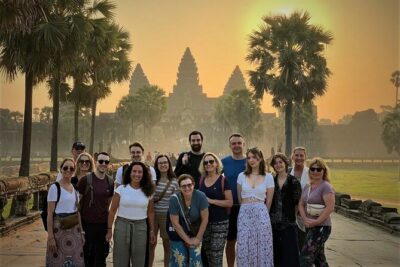
Angkor Wat Highlights and Sunrise Guided Tour from Siem Reap
Read our review →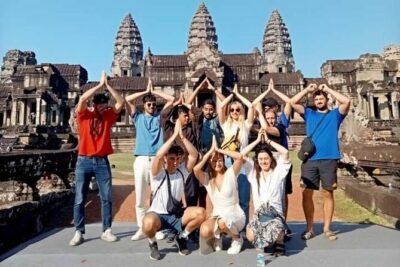
Angkor Wat Sunset Small Group Tour with Lunch Included
Read our review →