
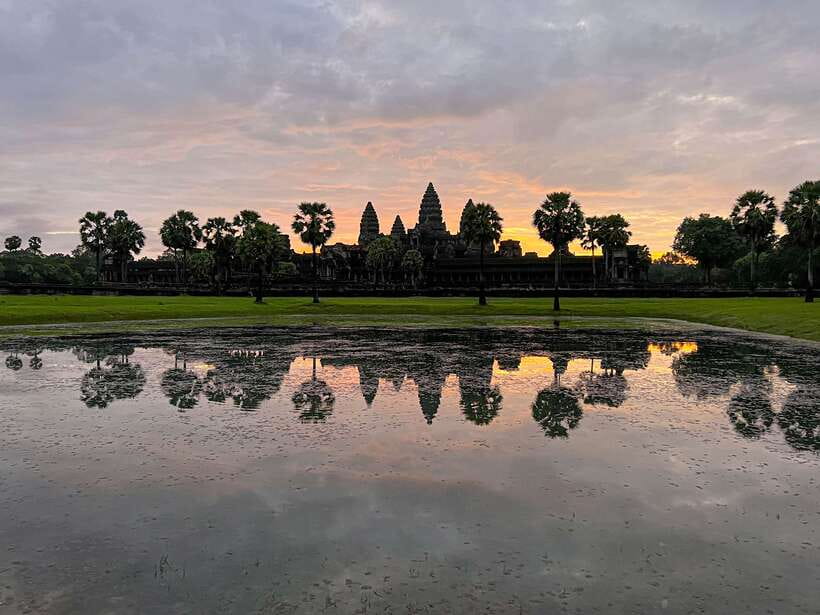
Reviewed · ANGKOR WAT TOURS
Siem Reap: Angkor Wat Small-Group Sunrise Tour & Breakfast
Rise before dawn for Cambodia’s greatest temple view. This nine-hour small-group tour pairs sunrise at Angkor Wat with Ta Prohm, Bayon, and the main monuments of Angkor Thom. I like the early start because you get time inside Angkor Wat before the day grows hotter and busier. I also like the stop at Preah Dak, where breakfast means Khmer rice noodles with green curry fish soup, palm cake, and steamed rice dumplings rather than a standard hotel buffet.
The main drawback is the alarm clock. Pickup is between 4:30 and 5:00 a.m., and the day packs several major temples into one route. You will need an Angkor pass, costing $37 per person, and lunch is not included. Still, at $23 per person for transport, an English-speaking guide, breakfast, water, and a full day of sightseeing, this is a strong value for a first visit to Angkor.
In This Review
- Key points at a glance
- Why the 4:30 a.m. start is worth it
- Walking through Angkor Wat before breakfast
- Breakfast in Preah Dak village
- Ta Prohm and the power of the jungle
- Angkor Thom, from royal terraces to Bayon faces
- Baphuon and Angkor Thom’s gates
- What the $23 price really covers
- Transport, group size, and the pace of the day
- The guides and small comforts that matter
- Who should book this sunrise tour?
- Should you book it?
- FAQ
- What time does hotel pickup take place?
- How long does the tour last?
- Is the Angkor pass included?
- Is breakfast included?
- Is there a vegetarian breakfast option?
- Is lunch included?
- What clothing is required at the temples?
- Is transportation included?
Key points at a glance
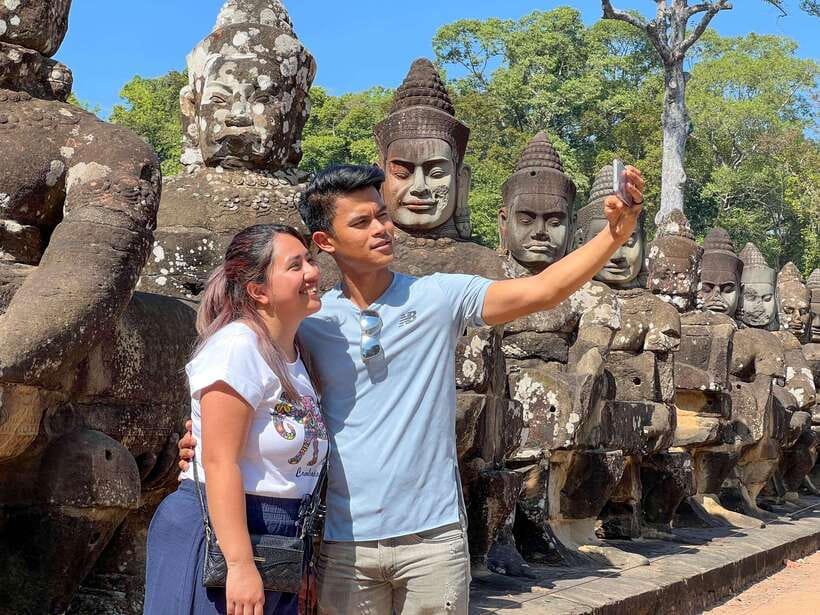
- Sunrise comes first: Reach Angkor Wat before the crowds and spend about 90 minutes exploring the temple after the sunrise view.
- Breakfast is local: Eat Khmer rice noodles with green curry fish soup, then sample palm cake and steamed rice dumplings in Preah Dak village.
- Ta Prohm feels different: Walk through a jungle temple partly overtaken by trees and huge roots.
- Angkor Thom gets proper attention: See Bayon, Baphuon, the Terraces of the Elephants and Leper King, plus the southern and victory gates.
- Guides add real value: Guides such as Mr. Ho Samnang, Mr. Kim, Mony, and Raman have been praised for clear explanations and close attention to detail.
- Budget for the pass: The tour costs $23, but the one-day Angkor pass is an extra $37 per person.
Why the 4:30 a.m. start is worth it
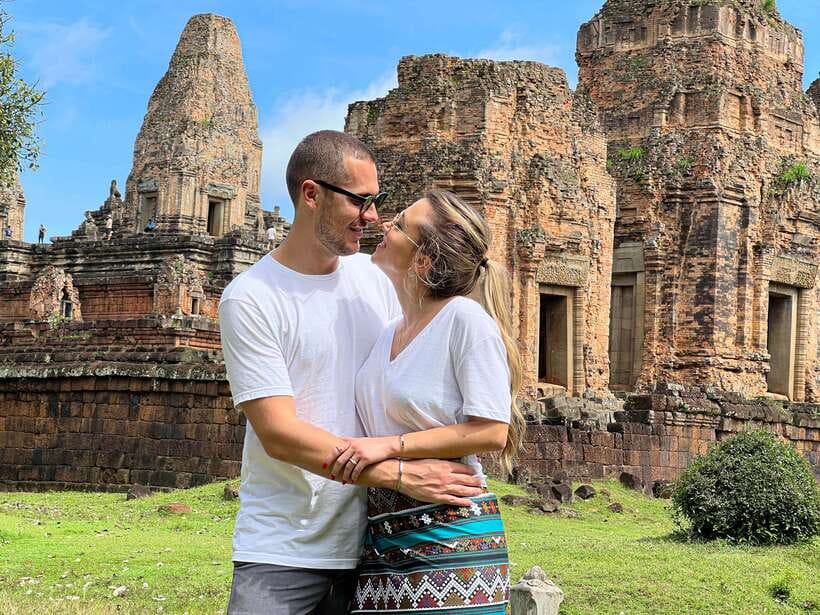
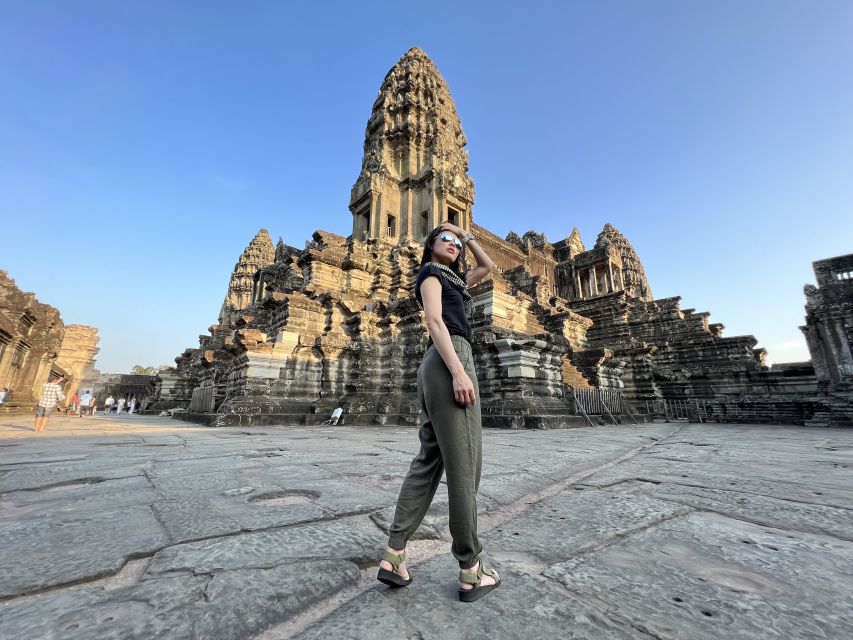
This is not a gentle holiday morning. You wait in your hotel lobby before sunrise, ride in an air-conditioned van, and arrive at Angkor Wat while it is still dark. The first transfer takes about 30 minutes.
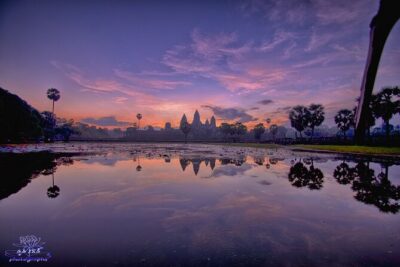
The reward is the temple silhouette and changing sky across the water. Sunrise is never guaranteed to be dramatic. Cloud can soften the colors, as one couple found, but the setting remains memorable even when the sun refuses to perform on cue.
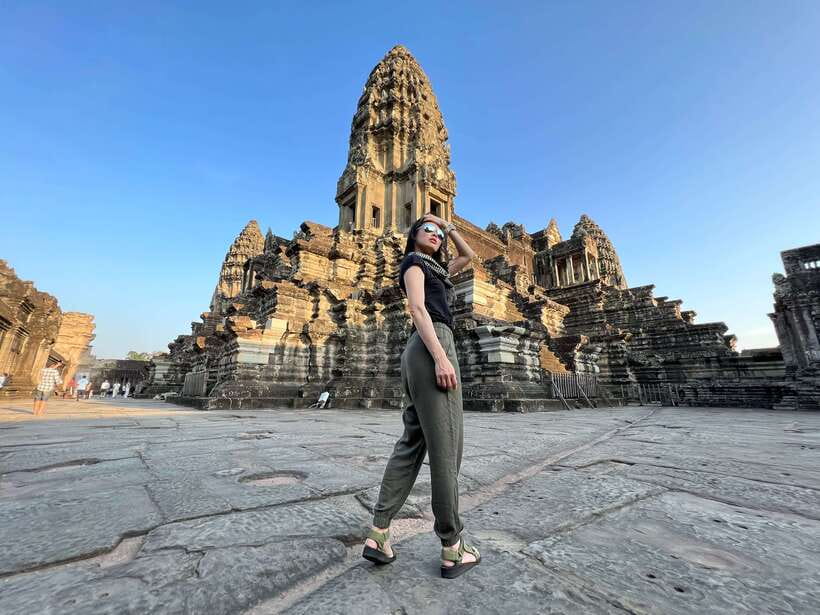
After the sunrise, you have roughly an hour and a half to explore Angkor Wat itself. That timing matters. Many people leave after taking the famous exterior photograph, but the inner galleries, courtyards, towers, and carved surfaces deserve time. Your guide can point out details that are easy to miss when you walk alone.
The early hour also helps with heat. Cambodia becomes hot and humid as the morning moves on, so doing the largest temple first is sensible. Bring water, sunscreen, insect repellent, and sunglasses. The driver supplies bottled water and cool towels, a small comfort that becomes surprisingly useful later in the day.
More ways to see Angkor Wat:
- Angkor Wat Sunrise or Sunset Tour with Guide from Siem Reap
★ 5.0 · 12,109 reviews - Siem Reap: Angkor Wat: Small-Group Sunrise or Sunset Tour
★ 5.0 · 9,444 reviews - Siem Reap: Angkor Wat 2-Day Tour with Sunrise and Sunset
★ 4.9 · 4,429 reviews
Walking through Angkor Wat before breakfast
Angkor Wat is the anchor of the morning, and the tour gives it more than a quick photo stop. You first watch the sunrise, then walk through the whole building with a guide.
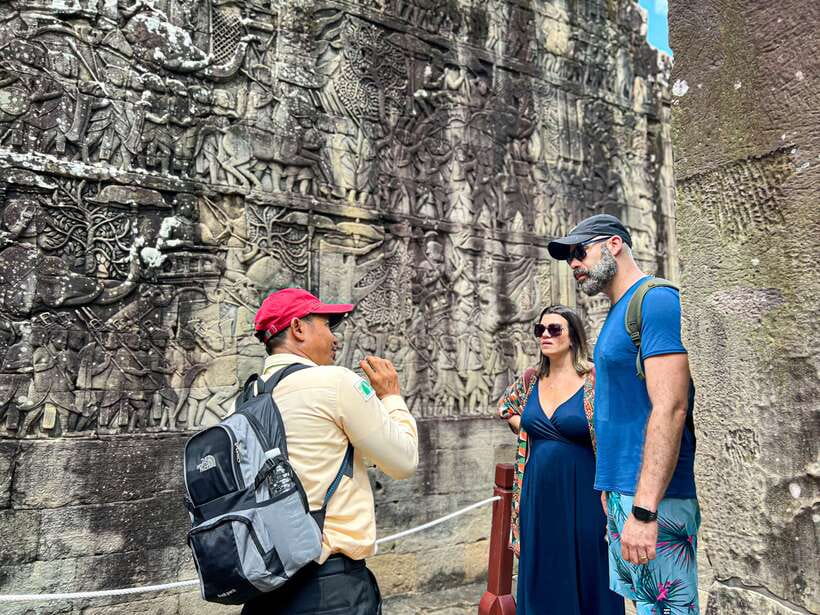
That guided time is especially useful if you want more than impressive stonework. A good guide can explain how the temple’s galleries, courtyards, towers, and religious spaces fit together. The strongest guide feedback has centered on people such as Mr. Ho Samnang, who answered questions about subjects as specific as holes in stone blocks and the purpose of different structures.
Your exact guide will depend on the date and group. Other praised guides include Mr. Kim, Raman, Mony, and Mr. Ho Samang. The recurring strength is not just information, but the ability to keep the day engaging while you move through a large and tiring site.
Wear clothing that covers your shoulders and knees. Short skirts, skirts, and sleeveless shirts are not allowed under the stated temple rules. Comfortable walking clothes matter more than dressing for the photograph. The stones and paths require attention, and the schedule continues for many hours.
Breakfast in Preah Dak village
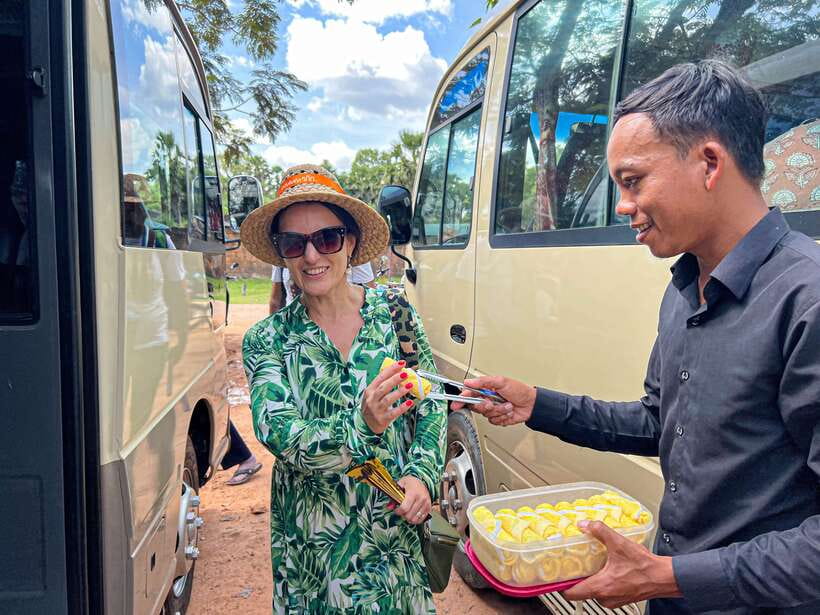
After Angkor Wat, the tour shifts from monuments to daily Cambodian food. You stop in Preah Dak village for about an hour, with time for breakfast, a short walk, and local snacks.
The main dish is Khmer rice noodle with green curry fish soup. A vegetarian option is available, but you need to request it in advance. The meal is included, unlike lunch, so this stop is both a cultural experience and a practical way to avoid sightseeing on an empty stomach.
Dessert is part of the appeal. You can taste palm cake and steamed rice dumplings made with palm sugar. These are small details, but they give the morning a local flavor that a temple-only itinerary cannot provide.
I also like the fact that the village stop breaks up the stonework. Angkor can become a blur of towers and carvings if you visit too many monuments without a pause. Preah Dak gives you a chance to sit, eat, and see something connected to present-day Cambodian life.
The food is local rather than polished for international tastes. That is exactly the point, but it may not suit someone looking for a large Western breakfast. If you need coffee, soft drinks, or a bigger meal, plan ahead. Soft drinks are not included, and lunch is also your responsibility.
Ta Prohm and the power of the jungle
Ta Prohm is the day’s most atmospheric stop. The temple has been left largely in its original state, with trees and huge roots growing across parts of the stonework.
You walk through the site for about an hour. This is where the tour’s title image becomes real: walls, doorways, and galleries sit beside roots that twist over the architecture. The contrast between careful construction and slow natural growth makes Ta Prohm different from Angkor Wat.
Your guide can help you see beyond the famous tree roots. Look at how the temple is arranged, how the carvings survive, and how the remaining structures connect. Without context, it is easy to spend the whole visit searching for the best root-covered doorway.
Ta Prohm can also feel tiring by this point. You have already been awake since the middle of the night, and the morning heat is building. The one-hour visit is enough to see the main character of the place without turning the stop into a long march.
More Sunrise Tours in Siem Reap:
- Angkor Wat Sunrise tour with Small – Group and Guide tours
★ 5.0 · 3,655 reviews - Angkor Wat Highlights and Sunrise Guided Tour from Siem Reap
★ 5.0 · 3,213 reviews - Full-Day Angkor Wat Sunrise Private Tour with Guide from Siem Reap
★ 5.0 · 2,920 reviews - Angkor Wat Sunrise & 3 Main Temples with Breakfast – Small Group
★ 5.0 · 2,857 reviews
Angkor Thom, from royal terraces to Bayon faces
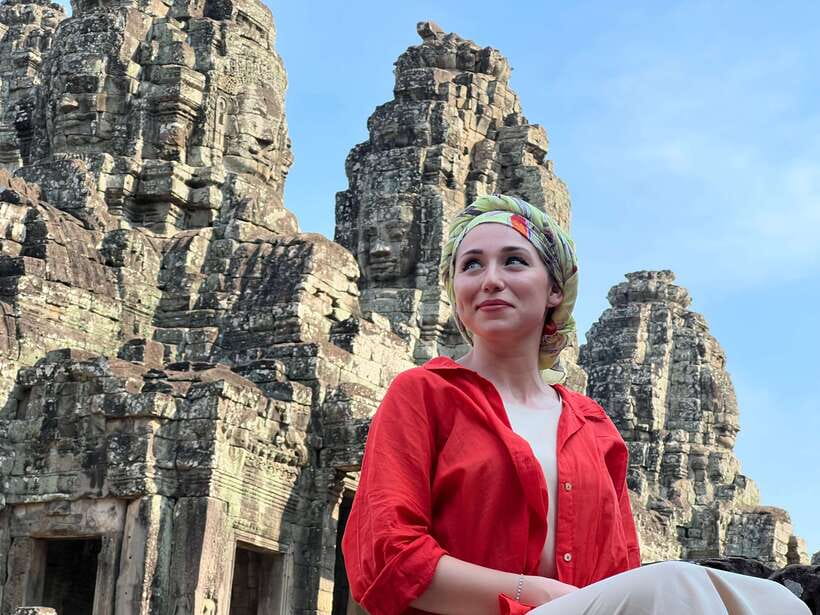
The route then enters Angkor Thom, the great walled city associated with King Jayavarman VII. You visit the Terraces of the Elephants and the Terrace of the Leper King before spending about an hour at Bayon.
The Terrace of the Elephants is a long carved platform used for royal display and ceremonies. The name comes from the elephant carvings, which are easy to spot along the structure. It is a short 15-minute stop, so expect an overview and photographs rather than an extended architectural study.
The Terrace of the Leper King follows, also for about 15 minutes. Its carved surfaces and enclosed passageways reward a closer look, but the schedule keeps this visit brisk. These short stops work well for a first tour because they introduce Angkor Thom without using up the time needed for Bayon.
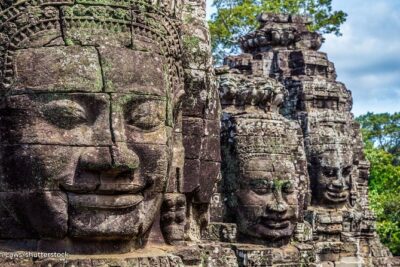
Bayon gets the longest visit in Angkor Thom. Its towers carry the famous serene faces, and the effect changes as you move through the narrow spaces and open areas. The temple also has unusual importance because it is described as the only monastery in the complex to survive to the present day, serving religious, educational, and administrative purposes.
A strong guide is particularly valuable here. Bayon is not simply a place to count faces. It is a layered structure, and explanations can help you understand its role under Jayavarman VII, a Mahayana Buddhist king. Mr. Kim was praised for mixing historical and cultural explanation with humor, while other guides have been singled out for answering questions rather than rushing people along.
Baphuon and Angkor Thom’s gates
Baphuon follows Bayon, with around 30 minutes for a guided visit and walk. The temple adds another architectural style to the morning and gives you a chance to keep exploring Angkor Thom without repeating the same visual experience.
The tour also visits the Victory Gate and the southern gate, known as Tonle Om Gate. Each takes about 15 minutes. These are shorter stops, but they help you understand that Angkor Thom was not just a collection of isolated temples. Gates and terraces formed part of a planned royal city.
The Victory Gate has become a well-known landmark in its own right. The southern gate is another useful orientation point, especially if this is your first time trying to understand the scale of Angkor Thom.
The schedule is active. You will be stepping out of the van, walking, listening, photographing, and moving on repeatedly. That suits you if you want to cover the major sights in one day. If you prefer long, quiet pauses at each temple, a private tour with a slower plan may be a better fit.
What the $23 price really covers
At $23 per person, the price is attractive because it includes the parts that can make an Angkor day difficult to arrange independently: hotel pickup and return, an air-conditioned minivan or minibus, a professional English-speaking guide, breakfast, bottled water, and cool towels.
The price does not include the Angkor pass. Add $37 per person for the one-day pass, making your basic combined cost $60 before lunch and drinks. That is the figure to use when comparing this tour with other options.
You should buy the Angkor pass before pickup if possible. One visitor specifically warned that stopping to purchase tickets can delay the group and reduce time at the best sunrise viewing area. This is practical advice, not a minor technicality. At dawn, a few lost minutes can matter.
Lunch is not included, so carry money for food and soft drinks. The schedule provides breakfast but does not name a lunch stop. Ask the guide or driver about the day’s plan when you meet them if you need a substantial midday meal.
Transport, group size, and the pace of the day
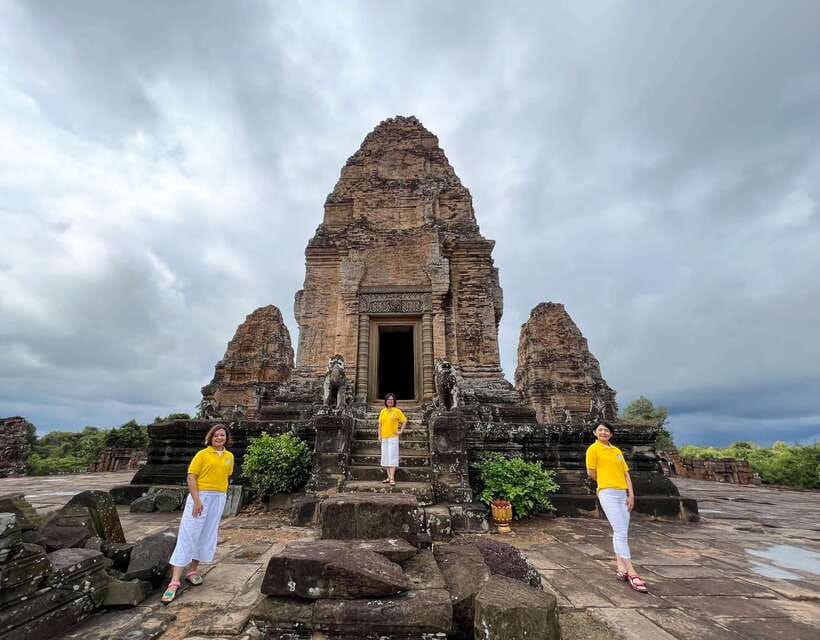
The tour uses an air-conditioned vehicle, with an initial drive of about 30 minutes and a return transfer of about 45 minutes. That air conditioning matters in Siem Reap, especially after several hours outside.
Private and small-group options are available. A small group can keep the cost down while still giving you a guide who can explain the sites. A private option gives you more control, which may help families, photographers, or anyone who wants fewer stops or more time at one temple.
Pickup is from your hotel lobby between 4:30 and 5:00 a.m. Wait there 15 minutes before the scheduled time. The precise pickup hour depends on availability, so check it when booking and do not treat the time window as a suggestion.
The day lasts nine hours. It is a full morning and afternoon rather than a short sunrise outing. The upside is coverage: Angkor Wat, Preah Dak, Ta Prohm, Angkor Thom, Bayon, Baphuon, the terraces, and the gates all fit into one organized route. The downside is fatigue, especially if you have just arrived in Siem Reap or do not sleep well before early departures.
The guides and small comforts that matter
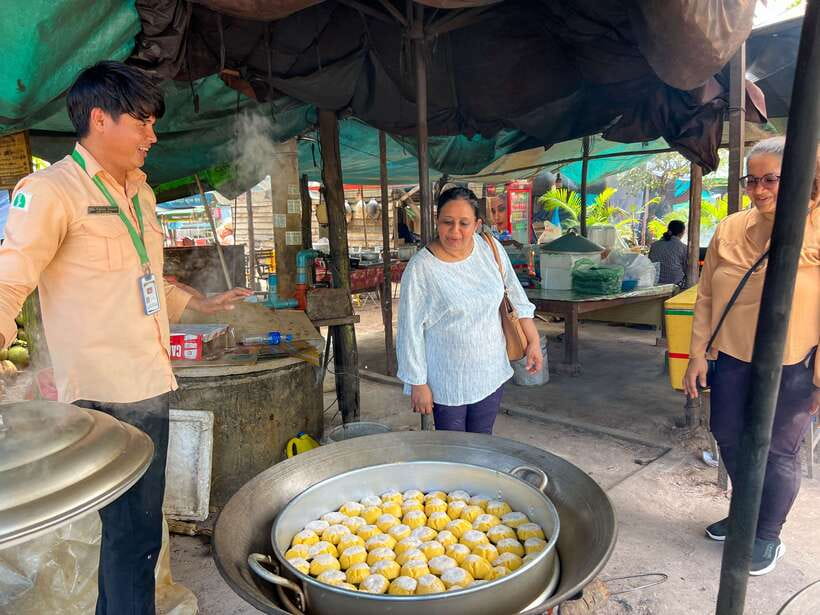
The guide can make or break a temple tour. Here, several named guides have received strong praise. Mr. Ho Samnang was valued for answering detailed questions. Mr. Kim was described as engaging, funny, and attentive to comfort. Raman helped one family notice details they would have missed alone. Mony and his driver Koen were also credited with creating a memorable day.
The driver matters too. Mr. Moon was praised for safe driving, bottled water, and cold towels, while other drivers helped keep the van comfortable between temples. You should not expect a luxury vehicle or a private chauffeur unless you choose the private option, but the basic transport and cooling supplies are well suited to the conditions.
The tour has a perfect five-star score from 17 ratings, which is a small sample but still points to a clear pattern: guide quality, breakfast, smooth transport, and the sunrise are the most praised elements. I would place the guide near the top of your decision list. A good temple guide turns stone corridors into places you can understand.
Who should book this sunrise tour?
I would recommend it for a first visit to Angkor, especially if you want the major sights without arranging transport, tickets, food, and guiding yourself.
It suits couples and families who want a strong central itinerary. One family with children found the sunrise unforgettable and valued the explanations that gave them a clearer sense of Angkor City. The included breakfast also makes the early start easier for families.
It is a good choice if you care about local food as much as photographs. The Preah Dak stop gives the day a human element, with village food and palm-sugar desserts between the major temples.
I would think twice if you dislike early mornings, prefer slow photography, or want to spend half a day at Angkor Wat alone. The nine-hour schedule is productive, but it is not leisurely. Also, the sunrise may be cloudy, and lunch requires extra planning.
Free cancellation is available up to 24 hours before the tour for a full refund, and you can reserve now and pay later. Those terms help if your Siem Reap schedule is still shifting.
Should you book it?
Book this tour if you want a well-organized first look at Angkor, with sunrise, the four major temple areas, a local breakfast, and an English-speaking guide for $23 before the pass.
The best reasons are practical: the guide handles the route, the driver provides cool water and towels, and the village breakfast keeps the day from becoming a nonstop procession of monuments. Buy your Angkor pass ahead of time, dress with covered shoulders and knees, bring sunscreen and insect repellent, and accept that the early alarm is part of the bargain.
Skip it only if you want a quiet, highly flexible temple day. For most first-time visitors, this is a sensible way to see a lot, learn what you are looking at, and still get a taste of Cambodia beyond the famous towers.
FAQ
What time does hotel pickup take place?
Pickup takes place from your hotel lobby between 4:30 and 5:00 a.m. You should wait in the lobby 15 minutes before your scheduled pickup time.
How long does the tour last?
The full experience lasts nine hours, including transportation, temple visits, breakfast, and the return journey to Siem Reap.
Is the Angkor pass included?
No. The one-day Angkor pass costs $37 per person and is not included in the $23 tour price.
Is breakfast included?
Yes. Breakfast includes Khmer rice noodles with green curry fish soup, along with local desserts such as palm cake and steamed rice dumplings with palm sugar.
Is there a vegetarian breakfast option?
Yes. A vegetarian option is available, but you need to request it in advance.
Is lunch included?
No. Lunch and soft drinks are not included, so you should budget separately for them.
What clothing is required at the temples?
Short skirts, skirts, and sleeveless shirts are not allowed. Wear clothing that covers your shoulders and knees.
Is transportation included?
Yes. Hotel pickup and drop-off are included in an air-conditioned minivan or minibus. Bottled water and cool towels are also provided.
Newest reviews from Siem Reap
- War Museum, Killing Field, and APOPO Hero RATs Tour★ 5.0 · 7 reviews
- Angkor Wat at Sunrise★ 4.0 · 7 reviews
- Siem Reap Angkor Airport Taxis (from Airport to Hotel)★ 5.0 · 44 reviews
- Secret Temples of Angkor – Guided Tour in Siem Reap★ 5.0 · 6 reviews
- Short Cycling at Countryside★ 5.0 · 29 reviews
- Cambodian Cooking Class and Oxcart Ride with Local Village Tour★ 5.0 · 4 reviews
- SIEM REAP E-BIKE HALF-DAY COUNTRYSIDE (25-30 km)★ 4.0 · 1 review
- Unveiling the Mystical Beauty of Phnom Kulen National Park★ 5.0 · 6 reviews
Angkor Wat Tours, compared.
Angkor Wat Sunrise or Sunset Tour with Guide from Siem Reap
Read our review →
Angkor Wat: Small-Group Sunrise or Sunset Tour
Read our review →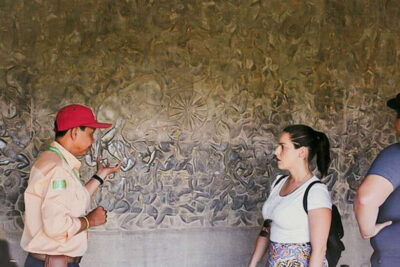
Angkor Wat 2-Day Tour with Sunrise and Sunset
Read our review →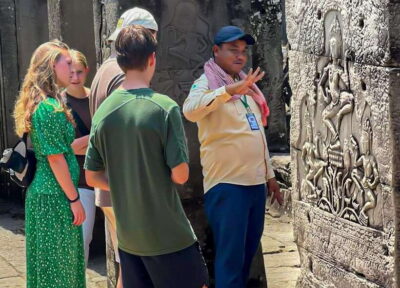
Angkor Wat Sunrise tour with Small – Group and Guide tours
Read our review →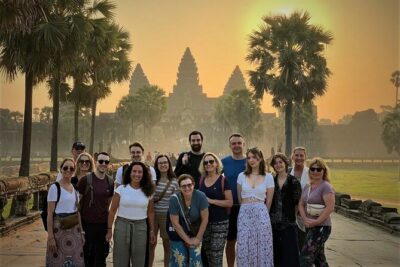
Angkor Wat Highlights and Sunrise Guided Tour from Siem Reap
Read our review →
Angkor Wat Sunset Small Group Tour with Lunch Included
Read our review →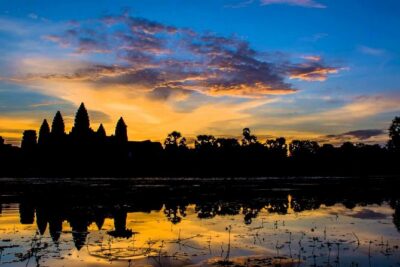
Full-Day Angkor Wat Sunrise Private Tour with Guide from Siem Reap
Read our review →Browse the lists this tour appears in