
Reviewed · ANGKOR WAT TOURS
Siem Reap: Angkor Wat Private Tour with Sunrise
Sunrise changes Angkor Wat. This private Siem Reap tour makes the temple circuit easy to manage, with hotel pickup, a local guide, and cold water and towels waiting in the vehicle. I like the early start, which helps you beat the worst heat, and I like the choice between a focused one-day visit and a fuller two-day plan. The main drawback is the early alarm, and the entrance ticket costs extra.
The guiding is a real strength. You may be paired with guides such as Youk, Ra, Sovuth Sun, or Buth Veasna, depending on availability, and several guides are also praised for creative photography. The one-day route packs in major temples quickly, while the two-day option gives Banteay Srei and the Grand Circuit the time they deserve.
In This Review
- Key points to know before booking
- Why the 5:00 AM start is worth it
- Angkor Wat, from sunrise to stone galleries
- Ta Prohm and the atmosphere of ruins
- Angkor Thom’s gates and royal center
- Baphuon and Bayon, two very different temples
- What the one-day option does well
- Day two: the Grand Circuit’s quieter monuments
- Banteay Srei and the finest carved detail
- Guides, vehicles, and the private format
- The real cost and what you receive
- Clothing, heat, and practical preparation
- Should you book this Angkor sunrise tour?
- FAQ
- What is included in the tour price?
- How much is the tour?
- How much does the Angkor entrance ticket cost?
- Is sunrise included?
- Which languages are available?
- What is the difference between the one-day and two-day options?
- Is lunch included?
- Do children need an entrance ticket?
- Can I cancel the booking?
Key points to know before booking
- Sunrise pickup at 5:00 AM: Start at Angkor Wat before the heat and crowds build.
- Two useful tour lengths: Choose the one-day Small Circuit for the essentials, or two days for Preah Khan, Ta Som, Banteay Srei, and more.
- Private transport and guiding: Your group travels alone by tuk tuk for one or two people, or by air-conditioned van or bus for three or more.
- Strong guide service: English, Spanish, French, Portuguese, and Japanese guiding is available.
- Banteay Srei adds something different: Its pink sandstone carvings offer some of the finest detail in the Angkor area.
- Budget for the temple pass: The tour price is $57 per person, but the Angkor ticket is separate at $37 for one day or $62 for two to three days.
Why the 5:00 AM start is worth it
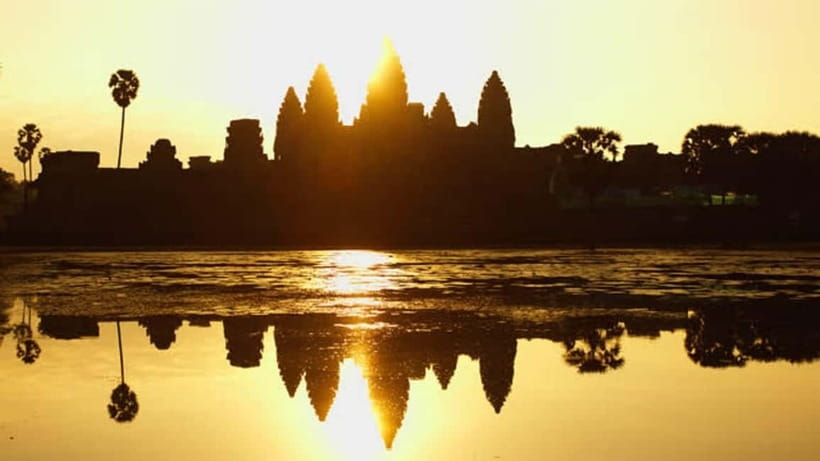
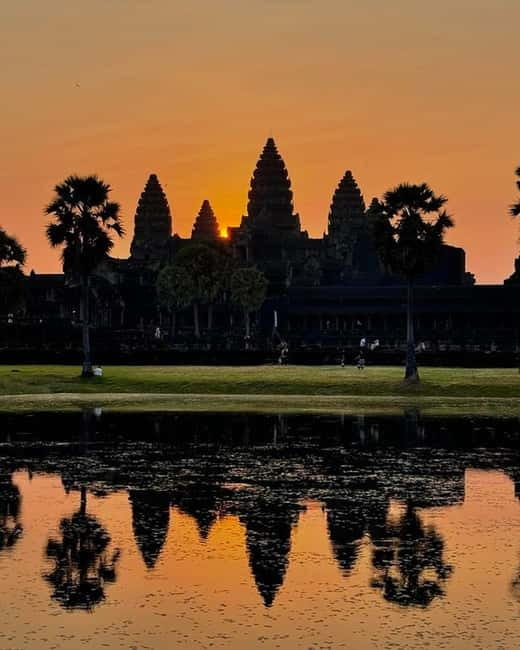
The day begins before most sensible people are awake. Pickup in Krong Siem Reap is scheduled for 5:00 AM, taking you to Angkor Wat for sunrise.
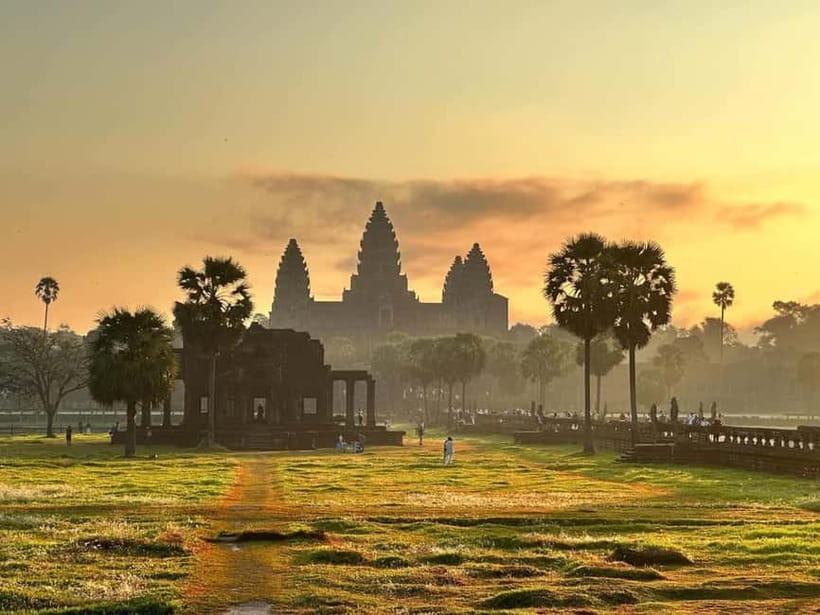
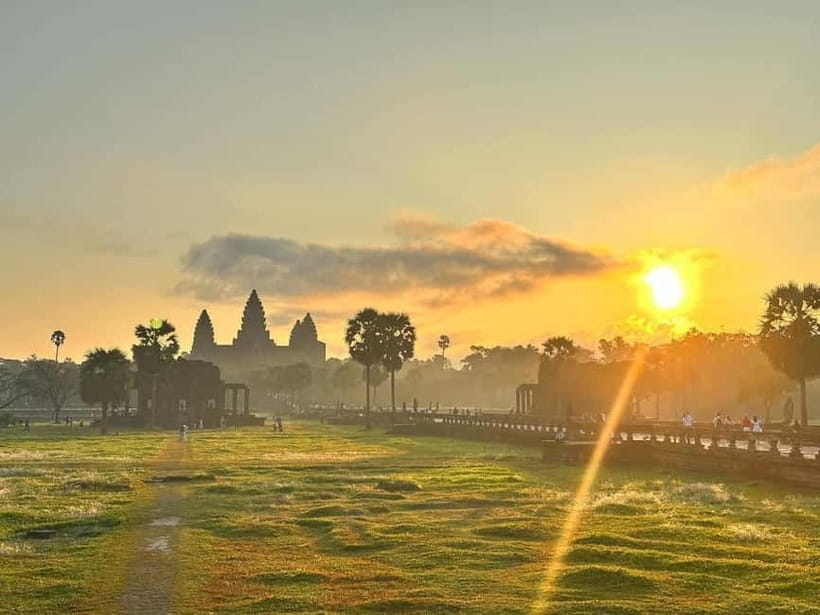
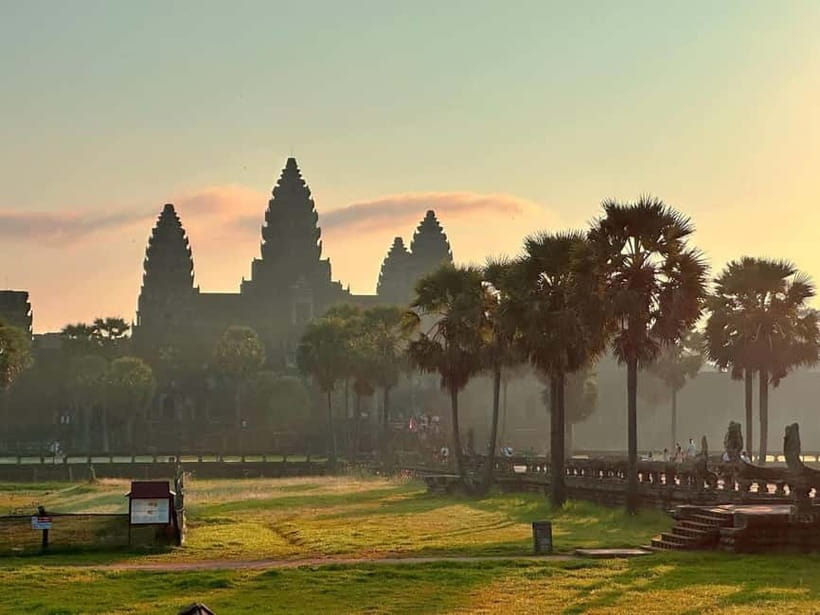
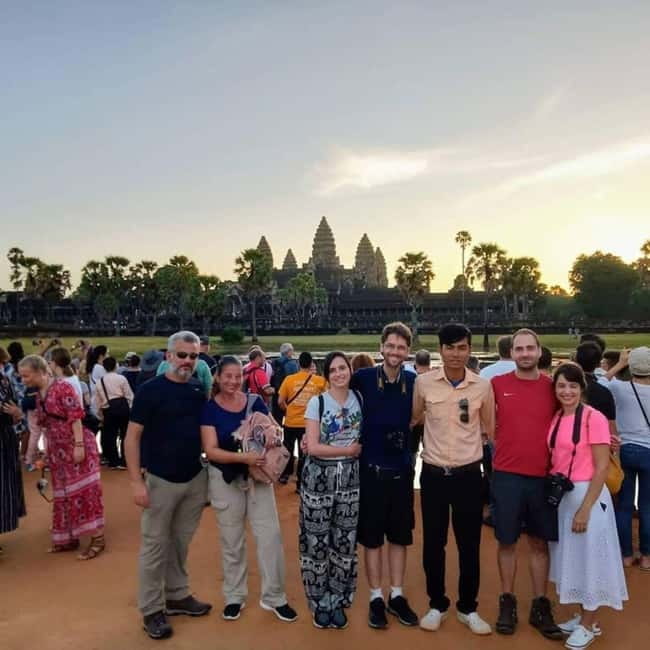
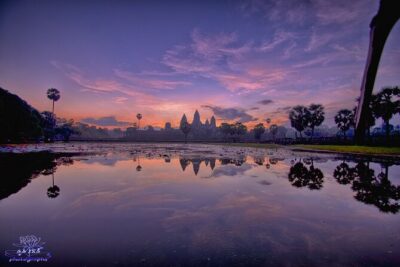
This is the tour’s signature moment. The temple’s towers and reflecting pools take on a soft morning light, and the setting gives you a memorable first look at the scale of the monument. Sunrise is not guaranteed to produce perfect color, of course, but the early hour still has practical value. You get cooler air, better light for photographs, and a head start before the midday heat.
Bring a breakfast box from your hotel. After sunrise, you can eat before beginning the main guided visit to Angkor Wat. Breakfast is not included, so arranging it in advance saves you from searching for food while the schedule is moving.
The morning can feel long if you are not used to early starts. Still, the timing is sensible. Angkor is much easier to appreciate when you are not trying to study carved walls while sweating through your clothes.
More ways to see Angkor Wat:
- Angkor Wat Sunrise or Sunset Tour with Guide from Siem Reap
★ 5.0 · 12,109 reviews - Siem Reap: Angkor Wat: Small-Group Sunrise or Sunset Tour
★ 5.0 · 9,444 reviews - Siem Reap: Angkor Wat 2-Day Tour with Sunrise and Sunset
★ 4.9 · 4,429 reviews
Angkor Wat, from sunrise to stone galleries
After the sunrise stop, you spend about two and a half hours around Angkor Wat. This is the place where a guide earns their fee.
The temple is enormous, and its bas-reliefs, galleries, towers, courtyards, and religious symbolism can blur together without explanation. A good guide helps you see how the monument is arranged and points out details you would likely walk past alone.
The tour gives you time for both the broad view and the close look. You can photograph the famous towers, then shift your attention to the carved scenes and the structure of the temple itself. Guides such as Youk have been praised for explaining the site clearly, keeping the mood light, and helping with creative photographs.
You should still expect walking, uneven surfaces, steps, and plenty of time in the sun. Comfortable shoes are important. A camera, sunglasses, hat, sunscreen, cash, and insect repellent belong in your day bag.
Ta Prohm and the atmosphere of ruins
Ta Prohm is the next major stop, with about an hour for a guided visit. It is the temple most associated with the Tomb Raider films, but the movie connection is only part of its appeal.
Here, trees press through walls and roots wrap around ancient stone. The contrast between living growth and carved architecture gives Ta Prohm a mood different from Angkor Wat’s formal grandeur. You are not simply looking at a restored monument. You are seeing a place where time, weather, and vegetation remain part of the scene.
That atmosphere also brings a practical issue: Ta Prohm can feel tight in its corridors and busy around its best-known photo spots. A private guide helps you move with purpose and find the important details without wasting your limited morning.
Angkor Thom’s gates and royal center
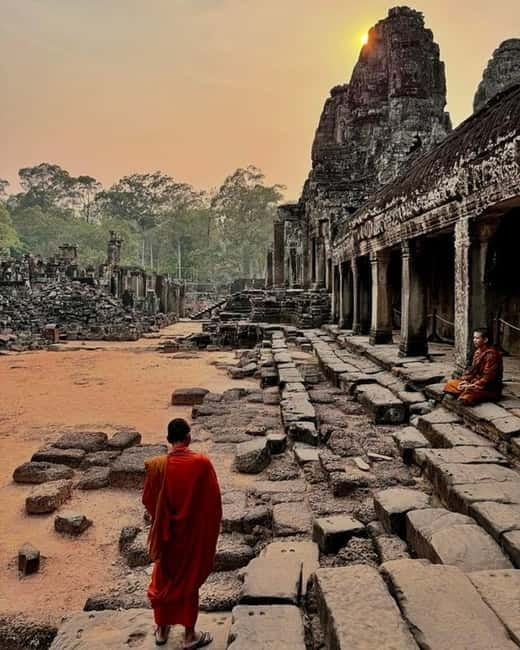
The route continues into Angkor Thom, the former royal city enclosed by thick walls and monumental gates. The schedule includes a 15-minute photo stop at Victory Gate.
That stop is brief, so think of it as a chance to take in the scale and decoration rather than a full exploration. The gate is one of five grand entrances to Angkor Thom, and its position helps you understand how the old city was organized.
Inside, you visit the Terrace of the Elephants for about 20 minutes. This long royal viewing platform is decorated with elephant carvings and once served as a place from which ceremonies and public events could be watched.
The Terrace of the Leper King is also part of the stated Small Circuit program, although the detailed stop times focus on the Elephant Terrace. The Leper King terrace is known for dense carvings and a mysterious statue whose identity has prompted different explanations. Your guide can give the site context instead of leaving you with a quick photograph and a name.
More Sunrise Tours in Siem Reap:
- Angkor Wat Sunrise tour with Small – Group and Guide tours
★ 5.0 · 3,655 reviews - Angkor Wat Highlights and Sunrise Guided Tour from Siem Reap
★ 5.0 · 3,213 reviews - Full-Day Angkor Wat Sunrise Private Tour with Guide from Siem Reap
★ 5.0 · 2,920 reviews - Angkor Wat Sunrise & 3 Main Temples with Breakfast – Small Group
★ 5.0 · 2,857 reviews
Baphuon and Bayon, two very different temples
Baphuon receives about 40 minutes. This restored temple mountain was designed as a symbolic representation of Mount Meru, the sacred center of the Hindu and Buddhist cosmos.
Its scale is impressive, but restoration has shaped what you see today. A guide can help you understand the structure and point out how the temple’s long approach and rising form create its effect.
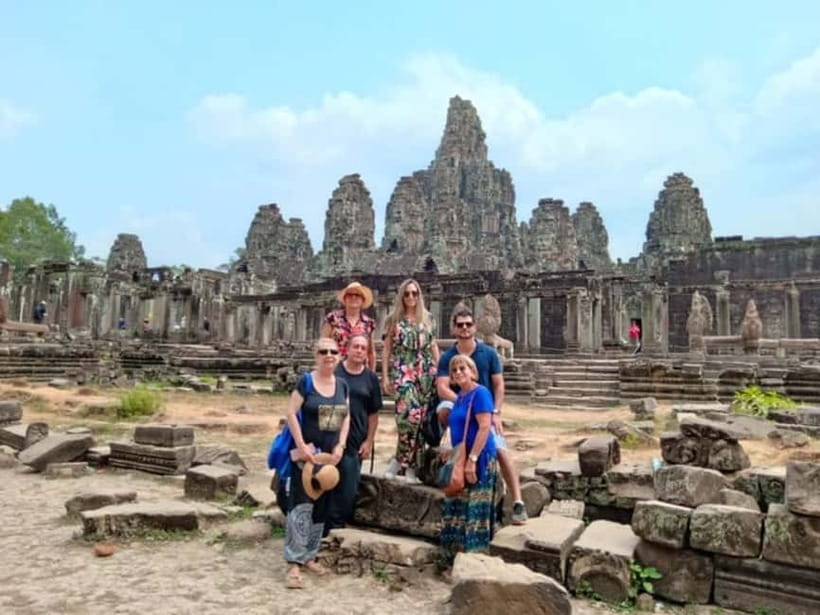
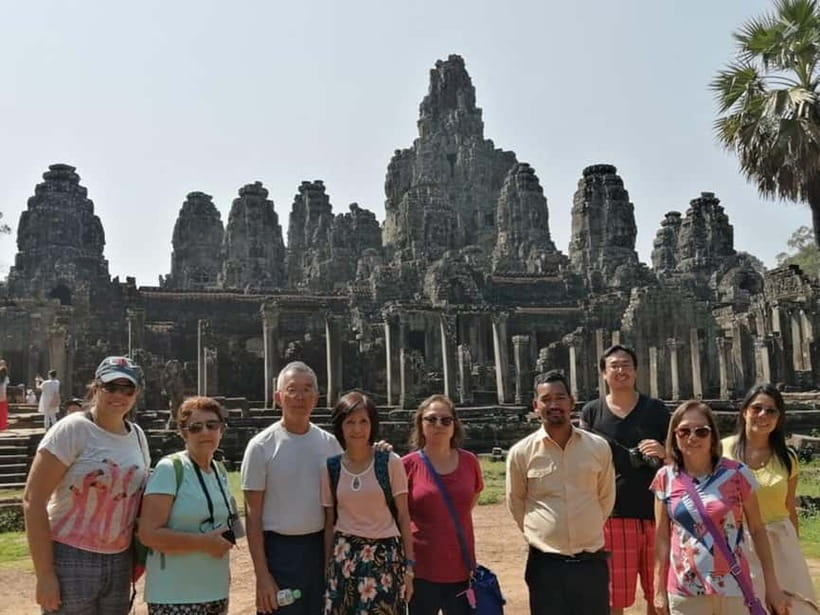
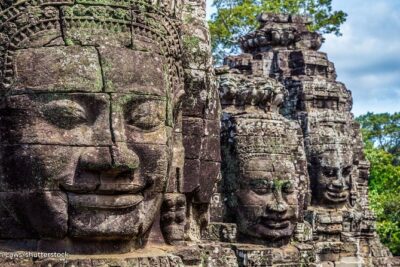
Bayon follows, with about 45 minutes. This is one of the most rewarding stops for close observation because its towers carry more than 200 serene stone faces. The expressions are calm, watchful, and slightly mysterious, which makes Bayon feel unlike the other major temples.
You may find yourself looking up constantly, so pace yourself. Bayon is not best understood from one sweeping viewpoint. Its appeal comes from moving among the towers and noticing faces appearing from different angles.
The one-day tour finishes around noon and returns you to your hotel. That is a useful design for anyone who wants the major temples without committing to a full day in the heat. It also leaves your afternoon free in Siem Reap.
What the one-day option does well
The one-day plan concentrates on sunrise, Angkor Wat, Ta Prohm, Angkor Thom, Baphuon, and Bayon. It is the right choice if you have limited time or want the most recognizable monuments in one morning.
I like the route because it avoids scattering your attention across too many distant sites. You get the architectural giant, the tree-covered ruins, the royal city, the elephant carvings, and Bayon’s famous faces.
The tradeoff is pace. Even though the tour finishes around noon, the early pickup and number of stops make this an active morning. You will not have unlimited time at every temple, and the route is built around highlights rather than slow wandering.
Choose one day if you want an efficient introduction. If temples are your main reason for visiting Siem Reap, the two-day plan offers better breathing room and more variety.
Day two: the Grand Circuit’s quieter monuments
The second day begins with the Grand Circuit and adds a different side of Angkor. Preah Khan comes first, a large monastic complex with long corridors, carvings, and a strong sense of scale.
Preah Khan can feel more exploratory than the headline monuments. Its passageways and courtyards reward attention, especially if your guide points out the carvings and explains how the complex functioned.
Next is Neak Pean, a small temple surrounded by pools. Its setting is calmer and more unusual than the towering temple mountains. The water-centered design gives the stop a welcome change of pace, although the visit is smaller in scale than Angkor Wat or Bayon.
Ta Som follows, known for its tree-covered gate. Like Ta Prohm, it shows the way vegetation has become part of the visual character of Angkor. Ta Som is a good reminder that the park is not only about the biggest monuments. Smaller sites can offer some of the most memorable details.
East Mebon was once located on an island in an ancient reservoir. Today, the temple’s setting helps you picture how water shaped the old Angkor system, even though the original reservoir no longer surrounds it in the same way.
The day continues to Pre Rup, a mountain-style temple with wide views toward the Cambodian countryside. It is a strong place to pause and understand how Angkor’s temple design often used height, stairs, and layered platforms to create a sense of ascent.
Lunch is not included. You stop at a nearby restaurant, and you should carry cash for the meal and drinks.
Banteay Srei and the finest carved detail
Banteay Srei is the final major stop on day two. Its name is often translated as Citadel of Women, and the temple is admired for pink sandstone carvings of remarkable delicacy.
This site looks and feels different from the larger central temples. The scale is smaller, but the carved decoration is unusually fine. You may find that Banteay Srei rewards close viewing more than distant photographs.
It is also farther from the main cluster than the one-day sites, which is one reason the two-day option makes sense. You are not trying to force every major temple into a single dawn-to-noon rush.
The day finishes around 4:00 PM with a return to your hotel. After another warm day outdoors, that timing gives you a clear end point rather than an open-ended ride back.
Guides, vehicles, and the private format
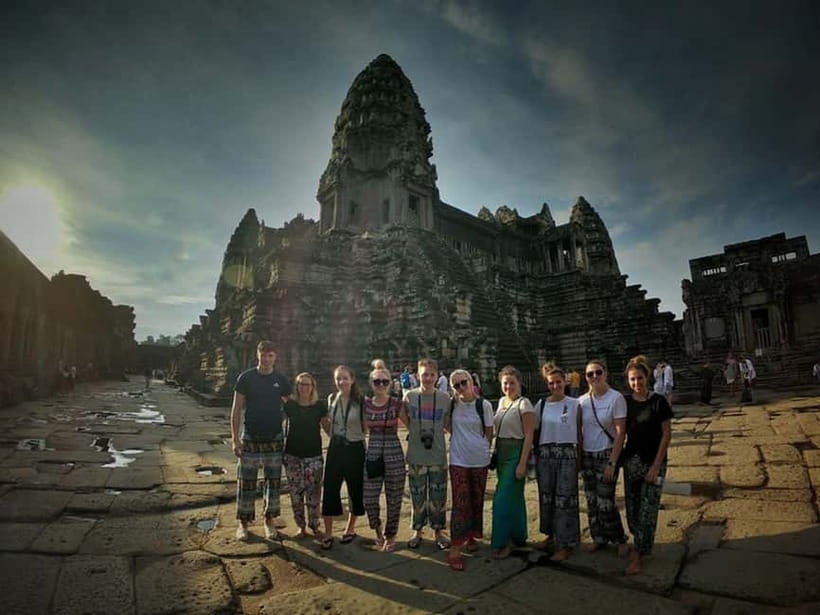
This is a private tour, so only your own group participates. That matters at Angkor. You can ask questions, adjust your attention, and keep the pace within the limits of the planned route without waiting for a large group to assemble.
Guiding is available in English, Spanish, French, Portuguese, and Japanese. The strongest praise goes to guides who combine facts with humor and practical help. Youk has been singled out for historical explanations, friendly energy, and photography assistance. Sovuth Sun was praised for keeping the day enjoyable in the heat, while another Spanish-language guide, called Cantinflas, was appreciated for detailed explanations and humor. These comments suggest that the company has several personable guides, though you cannot assume you will receive a particular one unless the provider confirms it.
Transport depends on group size. One or two people travel by tuk tuk. Groups of three or more use an air-conditioned van or bus. A tuk tuk gives you more open-air contact with Siem Reap, while the van offers more protection from sun and heat.
Cold water and towels are included. That sounds minor at breakfast, but after walking through exposed temple grounds, a chilled bottle and cold towel become some of the day’s best comforts. The driver service has also earned specific praise, including reliable driving and regular water service.
The real cost and what you receive
The advertised tour price is $57 per person. That covers the private guide, transport, hotel pickup and drop-off, sunrise, the listed temple visits, cold water, and towels.
You must add the Angkor Archaeological Park pass. It costs $37 per person for one day or $62 for two to three days. A child under 12 does not need an entrance ticket, but a passport must be shown as proof of age.
That puts the one-day experience at $94 per adult before lunch and other drinks. The two-day version comes to $119 per adult before meals. For a private tour with a guide and transport, I consider that fair value, especially for couples or small groups who would otherwise need to arrange an early pickup, driver, temple route, and guide separately.
The value is strongest if you care about explanations and want to avoid transportation decisions. It is less attractive if you only want a vehicle and plan to explore every temple alone.
Clothing, heat, and practical preparation
Dress carefully. Shorts, short skirts, sleeveless shirts, and other revealing clothing are not permitted. A scarf may cover knees and shoulders at most temples, but the rules are stricter at Angkor Wat, where pants or skirts covering the knees and shirts covering the shoulders are required.
Wear comfortable clothes and sturdy shoes. Add a sun hat, sunglasses, sunscreen, and biodegradable insect repellent. Alcohol and drugs are not allowed.
The tour is not suitable for wheelchair users or people over 95 years old. The temple grounds involve walking and uneven access, so you should consider your mobility before booking.
Free cancellation is available up to 24 hours before departure, and you can reserve now and pay later. Pickup and drop-off are included, but you need to provide your hotel name or address and a contact number when booking.
Should you book this Angkor sunrise tour?
Book it if you want a private, well-organized introduction to Angkor with a guide who can explain the carvings and help you use your time wisely. The one-day plan suits a short stay and covers the monuments most people hope to see.
Choose two days if you have room in your schedule. Preah Khan, Ta Som, East Mebon, Pre Rup, and Banteay Srei give you more variety, and the second day keeps the outer sites from feeling like an exhausting add-on.
I would not choose it if you dislike pre-dawn starts, cannot manage extended walking, or want lunch and entrance fees bundled into one price. For most small groups, though, the combination of private transport, multilingual guiding, sunrise, and a strong temple route makes this a practical way to see Angkor without spending your whole trip figuring out the logistics.
FAQ
What is included in the tour price?
The price includes a private one-day or two-day tour, a professional local guide, transportation, sunrise at Angkor Wat on the first day, listed transfers and visits, hotel pickup and drop-off, cold water, and a towel.
How much is the tour?
The tour costs $57 per person. The Angkor Archaeological Park entrance ticket is separate.
How much does the Angkor entrance ticket cost?
The ticket costs $37 per person for one day and $62 per person for two to three days.
Is sunrise included?
Yes. Sunrise at Angkor Wat is included on the first day, with hotel pickup scheduled for 5:00 AM.
Which languages are available?
Guides are available in English, Spanish, French, Portuguese, and Japanese.
What is the difference between the one-day and two-day options?
The one-day option covers sunrise, Angkor Wat, and the main Small Circuit temples. The two-day option adds the Grand Circuit and Banteay Srei.
Is lunch included?
No. Lunch and drinks not specifically included in the tour details are not covered. Lunch on day two is taken at a nearby restaurant.
Do children need an entrance ticket?
Children under 12 do not need to buy an entrance ticket, but a passport must be shown as proof of age.
Can I cancel the booking?
You can cancel up to 24 hours in advance for a full refund. The activity also allows you to reserve now and pay later.
Newest reviews from Siem Reap
- War Museum, Killing Field, and APOPO Hero RATs Tour★ 5.0 · 7 reviews
- Siem Reap Angkor Airport Taxis (from Airport to Hotel)★ 5.0 · 44 reviews
- Angkor Wat at Sunrise★ 4.0 · 7 reviews
- Cambodian Cooking Class and Oxcart Ride with Local Village Tour★ 5.0 · 4 reviews
- Secret Temples of Angkor – Guided Tour in Siem Reap★ 5.0 · 6 reviews
- Short Cycling at Countryside★ 5.0 · 29 reviews
- SIEM REAP E-BIKE HALF-DAY COUNTRYSIDE (25-30 km)★ 4.0 · 1 review
- Unveiling the Mystical Beauty of Phnom Kulen National Park★ 5.0 · 6 reviews
Angkor Wat Tours, compared.
Angkor Wat Sunrise or Sunset Tour with Guide from Siem Reap
Read our review →
Angkor Wat: Small-Group Sunrise or Sunset Tour
Read our review →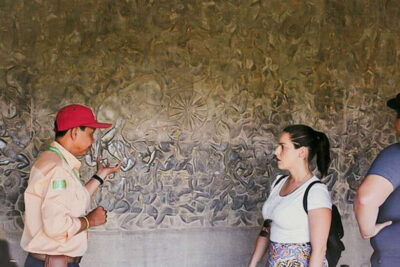
Angkor Wat 2-Day Tour with Sunrise and Sunset
Read our review →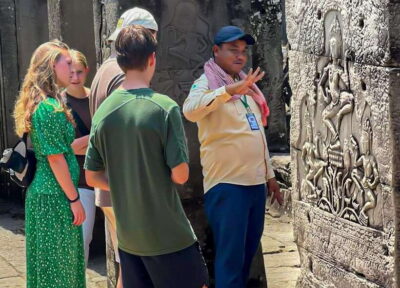
Angkor Wat Sunrise tour with Small – Group and Guide tours
Read our review →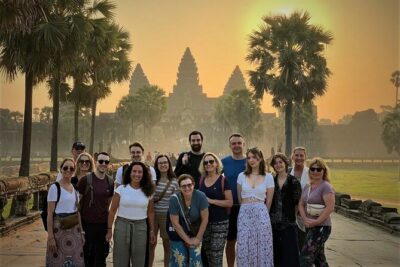
Angkor Wat Highlights and Sunrise Guided Tour from Siem Reap
Read our review →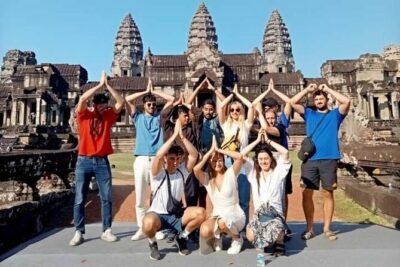
Angkor Wat Sunset Small Group Tour with Lunch Included
Read our review →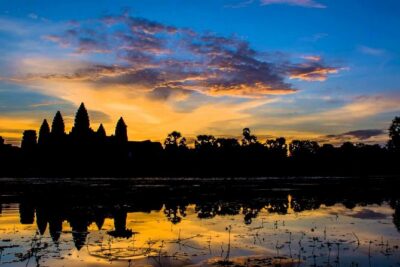
Full-Day Angkor Wat Sunrise Private Tour with Guide from Siem Reap
Read our review →Browse the lists this tour appears in