Reviewed · GUIDED
Siem Reap Angkor Private Tour Guide in English and Spanish
Ancient stones, enormous stories, one early start. This private Siem Reap tour is a strong choice if you want Angkor Wat, Bayon, and Ta Prohm explained by one guide rather than visited as silent photo stops. The guide has tourism training and took part in the Greater Angkor Project with the University of Sydney, including research into Angkor’s decline, dams, canals, and temples lost in the jungle. I especially like the private format and the choice of English or Spanish, with guide Son earning particular praise for his excellent Spanish and clear answers about both temples and Cambodian culture.
The main drawback is the 5:00 am start and the extra cost of temple admission. The tour price is $65 per person, but the one-day Angkor pass costs another $37, and food is not included. You should also note that the listed visits can add up to about seven hours, so this is not a quick morning outing.
In This Review
- Key points to know before booking
- Why the guide matters at Angkor
- The 5:00 am start and the value of private transport
- Three hours at Angkor Wat
- Bayon and the famous smiling faces
- The ancient city and Angkor’s lost urban scale
- Ta Prohm, where trees meet stone
- What the $65 price really covers
- Who will get the most from this tour
- Should you book the Siem Reap Angkor private tour?
- FAQ
- What languages are available for the private guide?
- How much does the tour cost?
- Is temple admission included?
- Where does the tour start?
- What time does the tour begin?
- What is included in the tour price?
- Does the tour return to the starting point?
Key points to know before booking
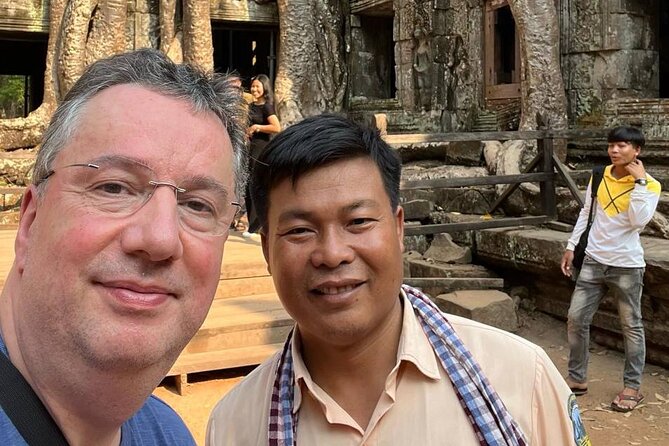
- A research background adds useful context: The guide’s work with the Greater Angkor Project included dams, canals, the city’s decline, and temples in the jungle.
- Spanish guidance is a real strength: Son is praised for speaking excellent Spanish and answering questions about both architecture and Cambodian culture.
- The 5:00 am meeting time shapes the day: You need to be ready early at the Hard Rock Cafe on King’s Road.
- The route covers four substantial temple stops: Angkor Wat, Bayon, an ancient city area, and Ta Prohm.
- The $65 price is not the full cost: Temple admission, meals, tips, and several optional admissions are separate.
- You have a private vehicle and guide: Only your own group takes part, with transportation and cold water included.
Why the guide matters at Angkor
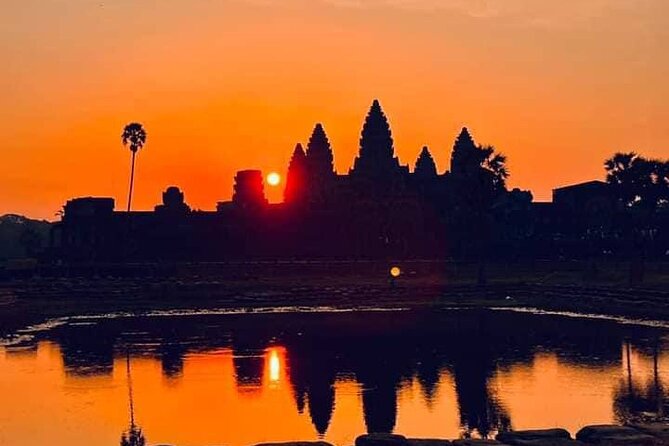
Angkor is not just a collection of handsome stone buildings. Its scale can be hard to grasp, and the carvings make more sense when someone explains the beliefs, rulers, engineering, and daily life behind them. A guide with archaeological research experience can help you connect the visible temple to the wider city that once supported it.
That background is particularly useful here. The guide participated in the Greater Angkor Project, a University of Sydney project that examined the decline of Angkor civilization. The work included dams, canals, and temples found in jungle areas. Those subjects give your visit a wider frame: Angkor was supported by a large water system and a highly organized urban center, not simply a few isolated shrines.
I also like the language choice. You can book in English or Spanish, and Son’s Spanish received especially strong praise. One Spanish-language assessment describes him as kind, exceptionally well informed, and able to answer questions about the temples and Cambodian culture. That matters because you can ask about small details without worrying that an important point has been lost in translation.
A private guide also changes the rhythm of the day. You are not tied to a large group’s questions or walking pace. You can spend more time on a carving that catches your eye, ask for a clearer explanation, or move on when your attention starts to fade. The tour is designed for your group alone, which gives it a more personal feel than a standard shared excursion.
A few more options around Siem Reap worth reading up on
- Angkor Wat Sunrise or Sunset Tour with Guide from Siem Reap
★ 5.0 · 12,109 reviews - Siem Reap: Angkor Wat: Small-Group Sunrise or Sunset Tour
★ 5.0 · 9,444 reviews - From Siem Reap: Kampong Phluk Floating Village Tour by Boat
★ 4.9 · 6,979 reviews
The 5:00 am start and the value of private transport
The meeting point is the Hard Rock Cafe Angkor on King’s Road, Street 7 Makara, near the Old Market Bridge in Siem Reap. The start time is 5:00 am, and the activity returns to the same meeting point.
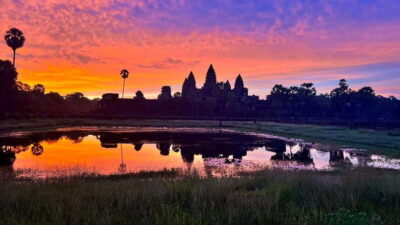
That early start is the most important practical detail. You need to plan your evening before and be ready at the stated location on time. The information provided does not promise a particular sunrise view, so you should not book this solely for a guaranteed sunrise experience. The early departure is still useful because it gives you a full day at the temples and puts the major sights at the center of your morning.
Private transportation is included, along with cold water. Those details are simple but welcome in Cambodia’s heat. You do not need to arrange separate temple transfers between each stop, and you can return to the vehicle between visits. Since this is a private activity, you also avoid waiting for other groups to finish.
The advertised duration is approximately five to seven hours. The four listed visits are scheduled for three hours at Angkor Wat, one hour at Bayon, two hours at the ancient city stop, and one hour at Ta Prohm. Added together, that is close to seven hours, so I would plan for the longer end of the range.
Three hours at Angkor Wat
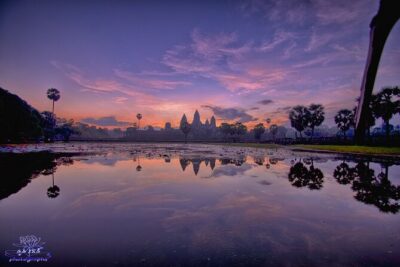
Angkor Wat is about six kilometers north of Siem Reap and is the first major stop. It is surrounded by a broad moat, and the approach across the bridge gives you a sense of the temple’s scale before you reach the main buildings.
Three hours is a sensible amount of time here. Angkor Wat is too large for a rushed half-hour visit, and the approach alone deserves attention. The bridge stretches for about 700 meters, offering a long view toward the temple and its surrounding water.
This is where a guide can help you read the site instead of simply photographing it. The temple’s size, layout, and carved surfaces can blur together when you are on your own. With explanations in English or Spanish, you can better understand why the complex was built and how its parts relate to one another.
The drawback is that three hours at one temple can feel demanding, especially after the early start. If you prefer a short visit with lots of variety, this tour may feel slow here. If you want time for details and questions, the longer stop is one of the tour’s strengths.
Temple admission is not included. The one-day pass costs $37, while a three-day pass costs $50. The tour does not specify which pass you should buy, so your choice depends on your wider Angkor plans. For this one-day route, the one-day price is the direct comparison, but the three-day pass may make sense if you plan to return on other days.
Bayon and the famous smiling faces
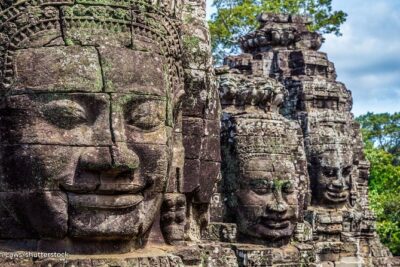
The next stop is Bayon Temple, described as the smiling faces temple. It has three levels and 54 towers, with faces looking out from the upper parts.
One hour is enough to get a focused introduction, but it is not a generous amount of time if you want to inspect every carved surface. Bayon works well after Angkor Wat because the mood changes. Instead of one grand, open approach, you find a more enclosed structure filled with towers and faces.
The guide’s role here is especially useful. Bayon’s repeated faces are easy to recognize, but the larger story is less obvious when you walk through without help. You can ask about the king represented by the faces and how the temple fits into the city around it.
If you are taking photographs, keep your attention on the stonework as well. The famous faces attract everyone’s eye, but the three-level design and the crowded arrangement of towers are part of what makes Bayon distinct. Your private guide can adjust the explanation to your interests, something that is harder in a large group.
Something completely different for another day:
- Sunset tour of Kampong Phluk stilts home village on the Tonle Sap
★ 5.0 · 4,865 reviews - Siem Reap: Angkor Wat 2-Day Tour with Sunrise and Sunset
★ 4.9 · 4,429 reviews - Siem Reap: Kampong Phluk Floating Village Tour with Boat
★ 4.9 · 3,843 reviews - Siem Reap: Full-Day Angkor Wat Guided Tour with Sunset
★ 4.9 · 3,803 reviews
The ancient city and Angkor’s lost urban scale
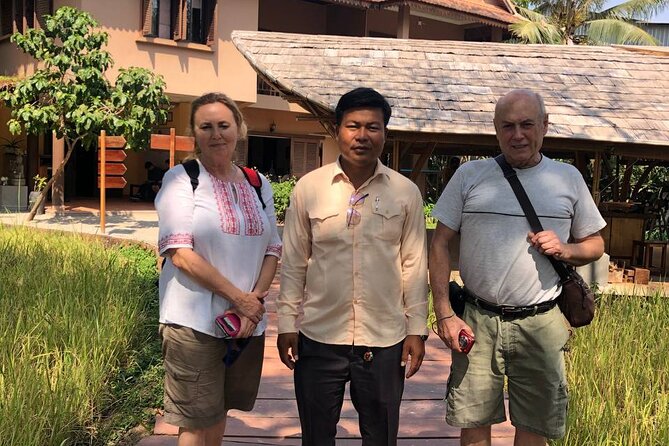
The third listed stop describes an ancient city that once supported around one million people across many generations. It is dated from the ninth to the fourteenth century, and after its decline, jungle covered much of the area and many of its temples.
This two-hour section is valuable because it shifts the focus from individual monuments to the civilization that built them. Angkor Wat and Bayon are impressive on their own, but the city context explains why the entire area matters. You begin to see the temples as part of a much larger urban and water-management system.
The description connects this part of the visit with the decline of Angkor and the way vegetation later covered the remains. That makes the guide’s research background especially relevant. A person who has studied dams, canals, and lost jungle temples can explain why the city was more than a ceremonial center.
There is one point to clarify before booking: the supplied stop information labels this visit as Angkor Wat, but its description is clearly about an ancient city and the wider Angkor area. I would confirm the exact site name with the provider before departure if the precise route matters to you. That does not cancel the value of the stop, but clear expectations are always helpful.
Two hours gives this part real weight. You are not simply racing from one famous facade to another. You have time to consider how a huge population lived across the area and how the city changed after its decline. That broader view is one of the strongest reasons to choose a guide with archaeological experience.
Ta Prohm, where trees meet stone
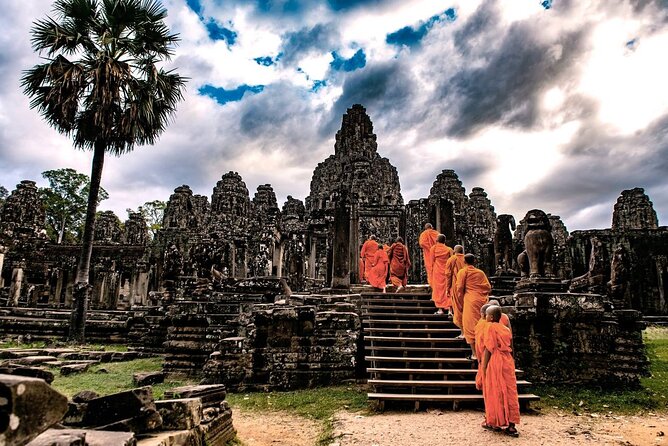
Ta Prohm is the final temple stop and is described as a model of how the site looked when the city was found in the nineteenth century. Vegetation covers parts of the temple, with large trees and thick roots still growing over the stone.
One hour gives you a focused visit without making Ta Prohm the entire day. The appeal is immediate: this is the place where the jungle and architecture appear to share the same space. The roots are not a decorative addition. They are part of the temple’s present condition and help you understand why early discovery of the site must have been so striking.
The guide can help you separate what is original from what has been stabilized or preserved, although the exact level of explanation is not specified. You should still expect uneven ground and a temple environment that requires attention while walking. The information says most people can participate, but it does not provide detailed accessibility information.
Ta Prohm is also a good final stop because it leaves you with a different memory from the formal scale of Angkor Wat and the stone faces of Bayon. You finish with roots, shade, and a clear reminder that the city was reclaimed by vegetation for generations.
What the $65 price really covers
The tour costs $65 per person. That includes private transportation, cold water, and a private guide in English or Spanish. For a private experience with a guide who has tourism qualifications and archaeological research experience, the price can be good value, especially if your group wants personal explanations rather than a basic transfer between temples.
You must add the temple pass. The one-day admission is $37 per person, and the three-day pass is $50. That brings the basic one-day combination to $102 per person before food or tips. The pass is not a minor extra, so include it when comparing this tour with cheaper options.
Meals are not included. Tips are also not included, and tipping is left to your judgment. An Angkor National Museum admission of $15 per person is separate as well, although the four-stop route described here does not include the museum.
There is also a $20 boat ticket listed as an extra. Because the provided route does not describe a boat visit, I would ask the provider why this appears among the optional costs before paying. It may relate to another possible activity, but it is not part of the temple schedule described here.
Who will get the most from this tour
I would choose this experience if you want a private, guide-led introduction to the main Angkor sights and you care about the explanation behind the stones. It is well suited to couples, families, and small groups who want to ask questions in their own language.
Spanish-speaking visitors have a particularly good reason to consider it because Son’s Spanish was praised as excellent. The comments also highlight his kindness and his ability to discuss Cambodian culture as well as temple details.
You should think twice if you dislike early starts, want a relaxed afternoon schedule, or are trying to keep the total cost near $65. The actual day includes a 5:00 am meeting time, separate admission, and a route that may run close to seven hours.
The private structure is also best for people who value flexibility more than the lowest possible price. If you only need transport and a few quick facts, a less personal option may cost less. If you want context about canals, dams, city decline, and temple design, the guide’s background gives this tour a stronger purpose.
Should you book the Siem Reap Angkor private tour?
I would book it if your priority is clear explanations, private transportation, and a Spanish or English guide who can connect individual temples with the wider Angkor civilization. The strongest feature is not simply the number of stops. It is the research background and the chance to ask questions in a private setting.
Before confirming, budget for the $37 one-day temple pass, bring the early start seriously, and clarify the exact name of the third stop and the reason for the separate $20 boat fee. With those points settled, this is a well-focused way to see Angkor’s major sights without treating them as a string of photo stops.
Free cancellation is available if you cancel at least 24 hours before the local start time. Cancellations or changes made inside that window are not accepted for a refund.
FAQ
What languages are available for the private guide?
The tour is offered with a guide in English or Spanish.
How much does the tour cost?
The listed price is $65 per person.
Is temple admission included?
No. Temple admission is separate and costs $37 for one day or $50 for three days.
Where does the tour start?
It starts at the Hard Rock Cafe Angkor on King’s Road, Street 7 Makara, near the Old Market Bridge in Siem Reap.
What time does the tour begin?
The start time is 5:00 am.
What is included in the tour price?
Private transportation, cold water, and a private tour guide are included.
Does the tour return to the starting point?
Yes. The activity ends back at the meeting point.
Newest reviews from Siem Reap
- War Museum, Killing Field, and APOPO Hero RATs Tour★ 5.0 · 7 reviews
- Angkor Wat at Sunrise★ 4.0 · 7 reviews
- Siem Reap Angkor Airport Taxis (from Airport to Hotel)★ 5.0 · 44 reviews
- Cambodian Cooking Class and Oxcart Ride with Local Village Tour★ 5.0 · 4 reviews
- Secret Temples of Angkor – Guided Tour in Siem Reap★ 5.0 · 6 reviews
- Short Cycling at Countryside★ 5.0 · 29 reviews
- SIEM REAP E-BIKE HALF-DAY COUNTRYSIDE (25-30 km)★ 4.0 · 1 review
- Unveiling the Mystical Beauty of Phnom Kulen National Park★ 5.0 · 6 reviews
Guided, compared.
Angkor Wat Sunrise or Sunset Tour with Guide from Siem Reap
Read our review →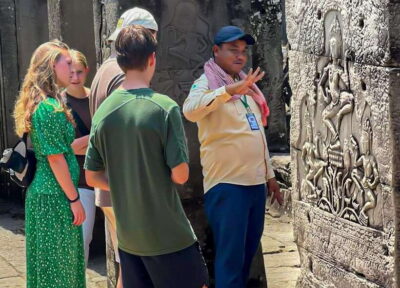
Angkor Wat Sunrise tour with Small – Group and Guide tours
Read our review →
Angkor Wat Highlights and Sunrise Guided Tour from Siem Reap
Read our review →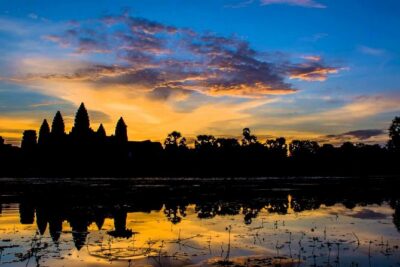
Full-Day Angkor Wat Sunrise Private Tour with Guide from Siem Reap
Read our review →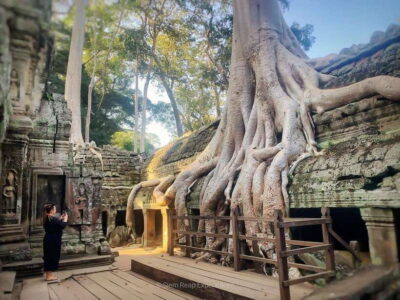
Angkor Wat: Highlights and Sunrise Guided Tour
Read our review →