Reviewed · FULL-DAY
Siem Reap: Angkor Full-Day Group Tour with Japanese Guide
Angkor rewards an early start and a good guide. This Siem Reap tour brings you to Angkor Wat, Bayon, Ta Prohm and Angkor Thom with a Japanese-speaking guide, hotel pickup, cold water, cold towels, and transport included. I especially like the choice between a small group and a private visit, plus the option to add sunrise or a second day.
The strongest point is the guiding. Guides such as Chung and Bun explain the temples in clear Japanese, help with photographs, and adjust the pace for older family members or children. I also like the flexible routing on private tours. The main consideration is cost beyond the advertised $50: your Angkor pass and lunch are extra, and a one-day visit can feel full in the afternoon heat.
In This Review
- Key points to know before booking
- What this Angkor tour is really like
- Starting at Ta Prohm among the tree roots
- Angkor Thom, from the Victory Gate to the royal terraces
- Bayon and its famous stone faces
- Angkor Wat, with two hours to take it in
- The two-day route adds the temples that deserve extra time
- A Japanese guide can change the experience
- Tuk-tuk or air-conditioned van?
- Dress, tickets, lunch, and the real price
- Who should choose one day, and who should choose two?
- Should you book this Japanese-language Angkor tour?
- FAQ
- What temples are included in the one-day tour?
- Is sunrise included?
- Is the Angkor entrance ticket included?
- Is lunch included?
- What language does the guide speak?
- What transport is used?
- Can children join the tour?
Key points to know before booking
- Chung is praised for clear Japanese and thoughtful care: He is known for gentle explanations, humor, good photo angles, and patience with slower walkers.
- The one-day route covers Angkor’s essential sights: You visit Ta Prohm, Angkor Thom, Bayon, the Elephant Terrace, Baphuon, and Angkor Wat.
- Sunrise changes the day completely: Pickup is around 4:30 to 5:00 AM, with the tour ending near noon.
- The two-day option reaches farther temples: Banteay Srei, Beng Mealea, Pre Rup, and Bakong add variety and reduce the pressure of the main circuit.
- Transport depends on group size: One or two people usually ride in a tuk-tuk, while larger parties use an air-conditioned van or bus.
- The temple pass is not included: Budget $37 for one day or $62 for two to three days, in addition to the tour price.
What this Angkor tour is really like
This is a guided temple day built for people who want context, not just a ride between photo stops. The guide meets you in your hotel lobby in Siem Reap between 8:30 and 9:00 AM for the standard start, then takes care of the route and explanations.
The one-day visit lasts roughly eight hours, finishing around 4:30 or 5:00 PM. That is a long day, but Angkor is spread across a large area, and the transport saves you from arranging separate tuk-tuks or cars for every temple.
I see the Japanese-language guiding as the main reason to choose this experience. The temples are full of Hindu and Buddhist imagery, royal symbolism, stories, and architectural details that are easy to miss. A good explanation turns a pile of carved stone into a readable story.
The tour is offered as a private or small-group experience. Private touring gives you more control over the order of the temples, the walking pace, and time for photographs. That flexibility mattered to one couple who changed the temple order and took shelter at a restaurant when rain arrived.
A few more options around Siem Reap worth reading up on
- Angkor Wat Sunrise or Sunset Tour with Guide from Siem Reap
★ 5.0 · 12,109 reviews - Siem Reap: Angkor Wat: Small-Group Sunrise or Sunset Tour
★ 5.0 · 9,444 reviews - From Siem Reap: Kampong Phluk Floating Village Tour by Boat
★ 4.9 · 6,979 reviews
Starting at Ta Prohm among the tree roots
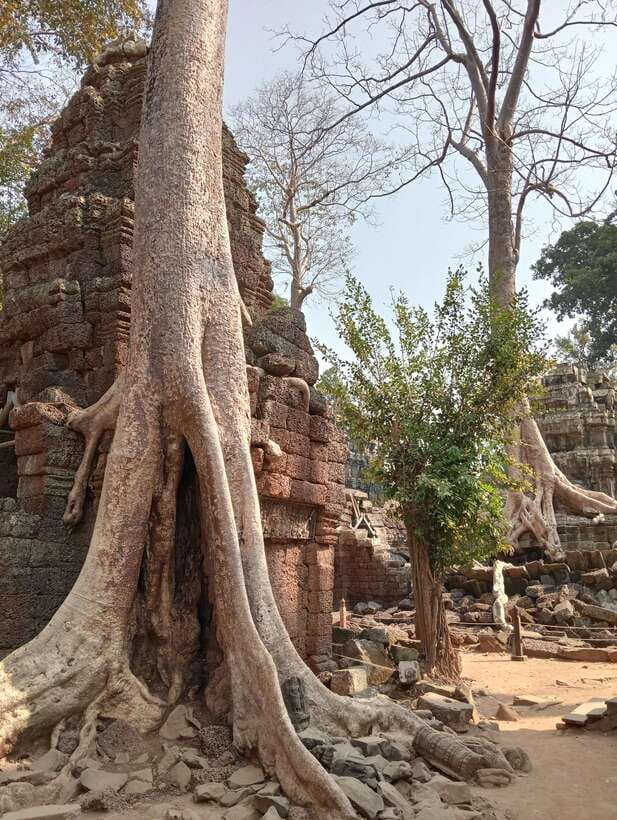
Ta Prohm is often the emotional highlight of the first half of the day. Huge tree roots wrap around stone walls, doorways, and galleries, giving the temple its famous jungle appearance.
You have about an hour here with a guided visit. That is enough time to see the key sections and hear how the site was left in a relatively natural state after its rediscovery. The atmosphere is powerful, but the uneven stone surfaces and narrow passages mean you should wear firm, comfortable shoes.
Ta Prohm is also one of the busiest places on the route. A guide who knows the temple can help you find better angles for photographs and avoid wasting your limited time. Chung is specifically praised for knowing strong photo positions and for taking pictures that include both people and the ruins.
The Tomb Raider connection attracts many people, but the temple has more to offer than a movie backdrop. Pay attention to the carvings and the way nature and architecture have become inseparable. This is also one of the less forgiving stops for anyone with limited mobility, since the ground is rough and the ruins are not suited to wheelchair use.
Angkor Thom, from the Victory Gate to the royal terraces
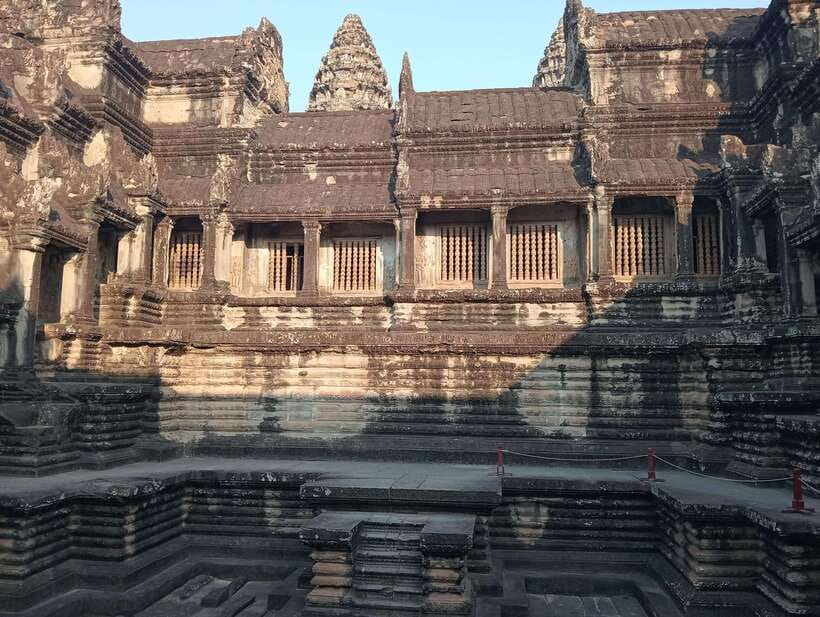
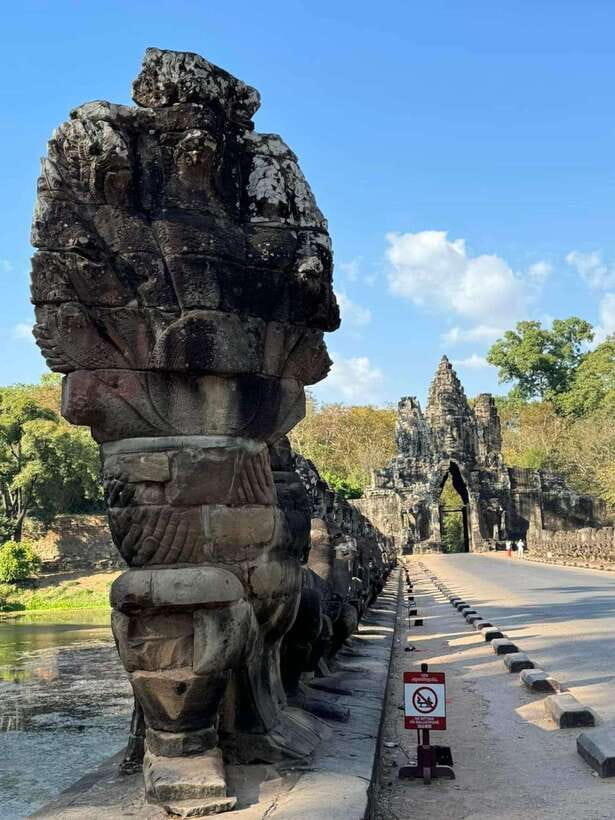
The route continues into Angkor Thom, the great walled city. A short stop at the Victory Gate gives you a chance to photograph the entrance and understand the scale of the old capital before the main temple visits.
The itinerary allows about ten minutes here, so treat it as a quick orientation and photo stop rather than a full exploration. The gate is one of several entrances, and the carved figures along the approach offer an early look at Khmer religious imagery.
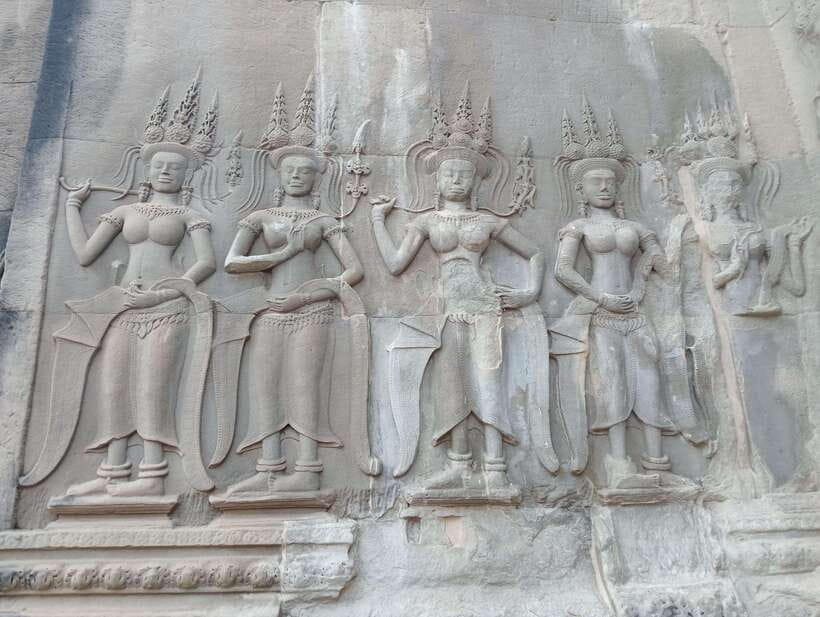
Inside, the tour visits the Elephant Terrace for about thirty minutes. This long platform was used for royal ceremonies and processions. Its carved elephants and other figures are easy to pass without a guide, but the position of the terrace makes more sense when you learn how it related to the city and royal court.
Baphuon follows, with another thirty-minute guided visit. This restored pyramid temple rises in tiers and gives you a sense of how Khmer builders used height to create a sacred mountain. The climb and uneven surfaces can be tiring, particularly in the heat, so take the pace slowly.
The Terrace of the Leper King adds a shorter but intriguing stop. Its carvings are dense and its meaning has been linked with Yama, the god of death. This is a good place for a focused explanation rather than a rushed walk past the walls.
Bayon and its famous stone faces
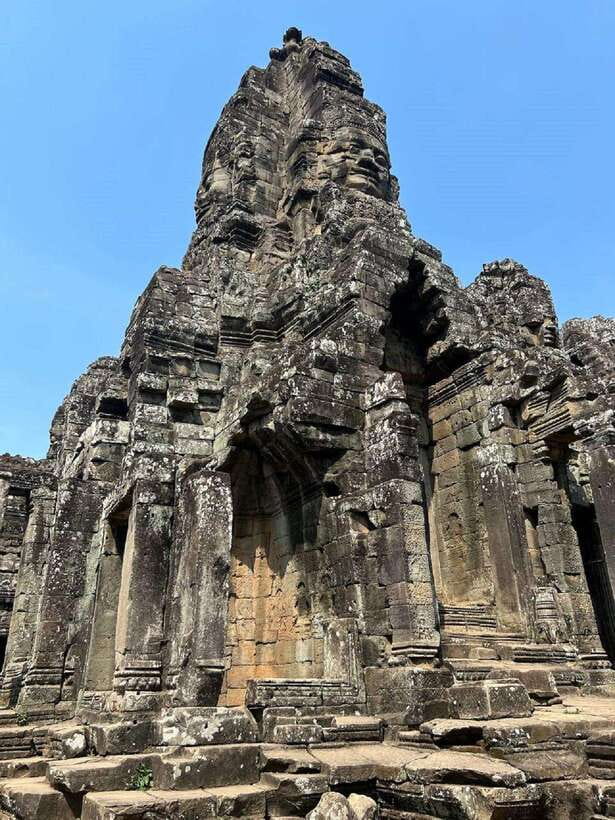
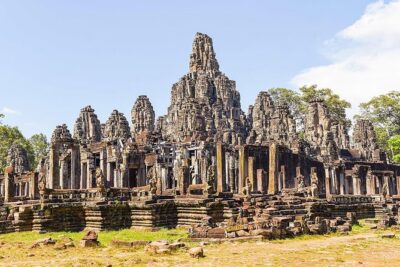
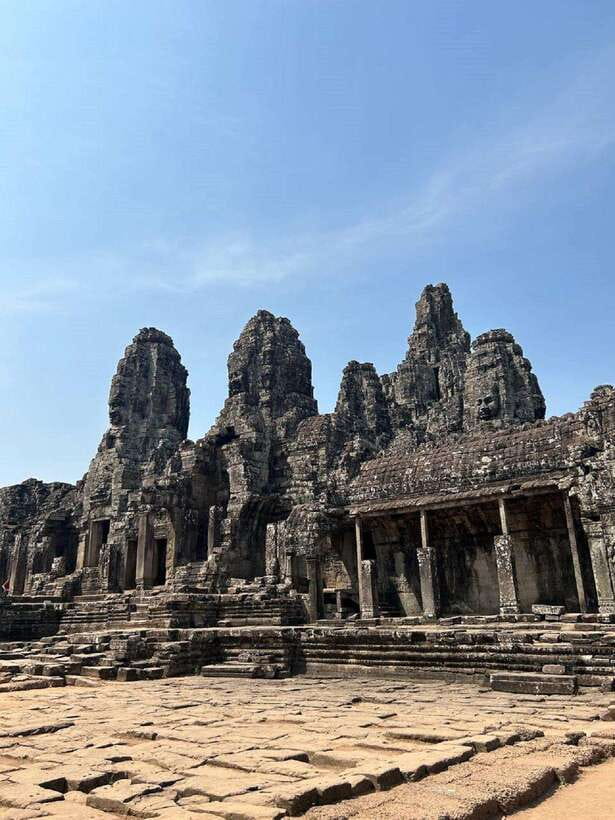
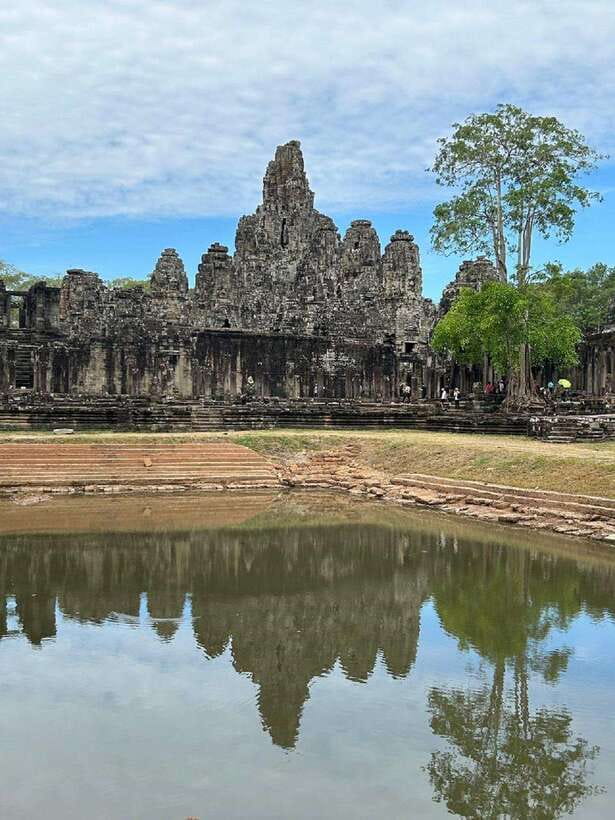
Bayon gets about forty-five minutes, which is enough for a useful introduction to its towers and carved faces. The temple is known for fifty-four towers carrying 216 serene faces associated with Avalokitesvara.
The faces are the easy part to notice. The harder part is understanding how the temple was designed as a layered, enclosed space. Corridors can feel confusing, and the scale is easier to appreciate from several angles. A Japanese-speaking guide helps connect the layout, sculpture, and religious ideas without leaving you to guess at the meaning.
This stop also shows why the tour is more valuable than simply hiring transport. Without explanation, you see repeated faces. With context, you begin to notice expression, placement, and the way the temple changes as you move through it.
You may be ready for a break by this point. The schedule includes time around Srah Srang for lunch and rest, though lunch is not included. Bring cash for the meal and other personal purchases. The stop gives you a needed pause before the largest temple of the day.
Something completely different for another day:
- Sunset tour of Kampong Phluk stilts home village on the Tonle Sap
★ 5.0 · 4,865 reviews - Siem Reap: Angkor Wat 2-Day Tour with Sunrise and Sunset
★ 4.9 · 4,429 reviews - Siem Reap: Kampong Phluk Floating Village Tour with Boat
★ 4.9 · 3,843 reviews - Siem Reap: Full-Day Angkor Wat Guided Tour with Sunset
★ 4.9 · 3,803 reviews
Angkor Wat, with two hours to take it in
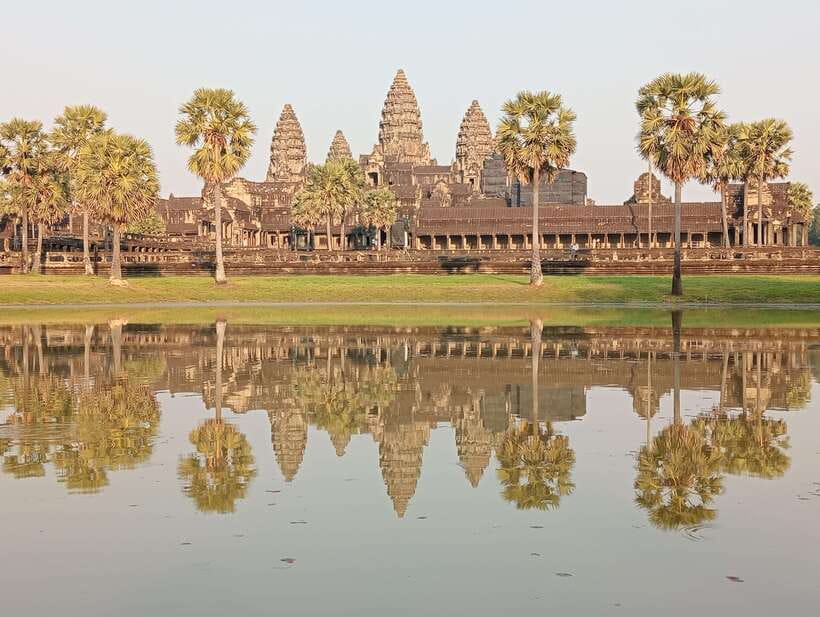
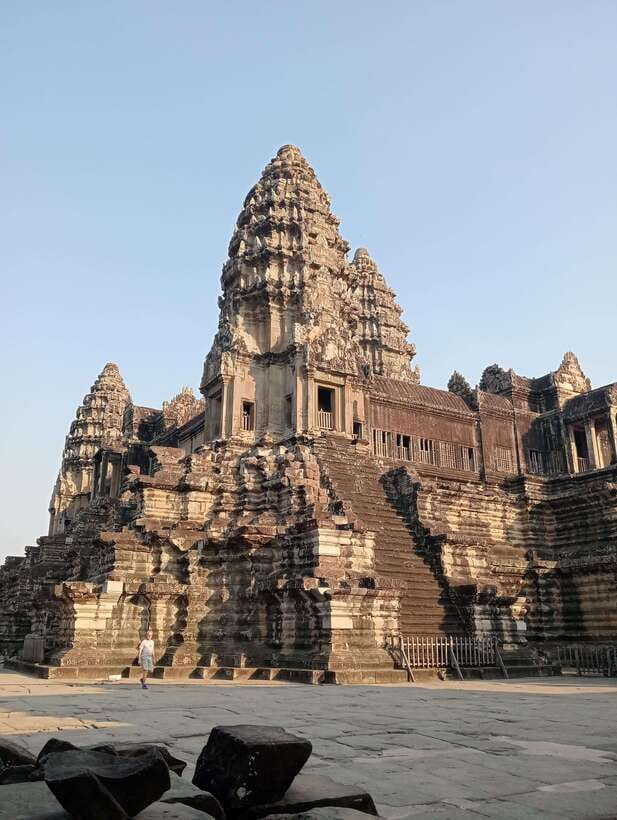
Angkor Wat receives around two hours, the longest guided visit on the one-day schedule. That is the right amount of time for the exterior, galleries, reliefs, central sanctuary, and the main stories behind the monument.
The temple is the world’s largest religious monument, but its size can make a visit feel scattered. Your guide can help you read the layout and understand its symbolism instead of treating each corridor as another photograph.
Expect plenty of walking. Comfortable clothes, a hat, insect repellent, and water are useful, though cold drinking water and cold towels are provided during the visits. The stone can be hot, and the day becomes more demanding after lunch.
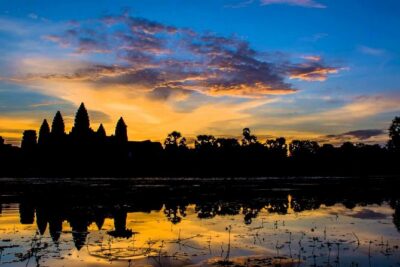
If you choose the sunrise option, pickup moves to about 4:30 to 5:00 AM. The tour finishes around noon. You should bring breakfast from your hotel, since breakfast is not provided. This option is best for people who care strongly about dawn light and cooler morning temperatures, but it requires an early wake-up and does not remove the need to walk.
For the two-day program, sunrise at Angkor Wat takes place at 5:00 AM on the second day. This gives you a second chance to see the temple in morning colors without forcing every major site into one long day.
The two-day route adds the temples that deserve extra time
The two-day option is not simply the same tour repeated. It adds more distant and varied sites, making it the better choice if you want a slower pace and a broader picture of Angkor-era architecture.
Day two begins at Pre Rup, a tenth-century pyramid temple built from warm brick and laterite. Its high terraces give you views across the surrounding area and offer a clear example of the eastern temple style. The site is less famous than Angkor Wat, but it helps you see how Khmer temple design developed over time.
Banteay Srei is one of the most rewarding additions. Built from pink sandstone, it is known for very fine carvings and is often called the Citadel of Women. The scale is smaller than Angkor Wat, but the detail is unusually sharp. If you enjoy close-up sculpture, this stop may be your favorite of the second day.
Lunch is again at your own expense. After eating, the route heads farther into the countryside to Beng Mealea.
Beng Mealea feels rougher and more adventurous than the main temples. Collapsed galleries, large blocks of fallen stone, and tree roots cover much of the site. It is highly photogenic, but the broken ground makes good shoes especially important. This is not the place to expect a neat, orderly temple circuit.
The day finishes at Bakong, the first grand stone pyramid temple of the Khmer Empire. It provides a useful contrast to both delicate Banteay Srei and overgrown Beng Mealea. The return drive begins around 2:30 to 3:00 PM, so the second day ends earlier than the main one-day route despite covering several important sites.
A Japanese guide can change the experience
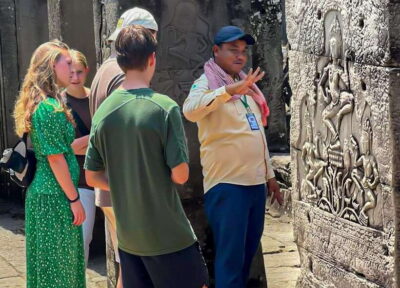
The strongest praise centers on the guides, especially Chung. He is described as fluent in Japanese, careful in his explanations, considerate with older parents, and skilled at finding good photography angles. His light wordplay and occasional old jokes are part of his style, which some people will enjoy and others may find a little corny.
That personal touch matters at Angkor. One traveler who visited alone during a quieter period had individual guiding and received help taking photographs throughout the day. Families also received practical attention, including help keeping children comfortable and changes to the schedule when needed.
Bun is also praised for detailed explanations and a polite manner. The important point is not just the language itself. The guide helps you understand what you are seeing, adjusts the pace, and makes the day feel less mechanical.
Private touring gives you the most benefit from this approach. You can ask for a different order, spend longer at a favorite temple, or slow down for family members. A small group costs less and still gives you a guide, but it may offer less control over timing.
Tuk-tuk or air-conditioned van?
Transport depends on the number of people and the option you select. Shared groups of one or two usually use a tuk-tuk, while groups of three to six use an air-conditioned van. For private tours, one or two people use a tuk-tuk on the first day, with a car available as an upgrade, while larger groups use a van or bus.
A tuk-tuk gives you open-air movement between temples and is part of the classic Siem Reap experience. It also exposes you to heat, dust, and weather. If you prefer cooling and a more protected ride, choose the car option when available or travel with a larger party in the van.
On the two-day private tour, one or two people use a tuk-tuk on Day 1 and a car on Day 2. That arrangement is useful because the second day travels farther to Banteay Srei and Beng Mealea.
Hotel pickup is included. Give the hotel name when booking and wait in the lobby about fifteen minutes before the agreed pickup time.
Dress, tickets, lunch, and the real price
The tour costs $50 per person, but the total budget needs a few additions. The Angkor Archaeological Park pass costs $37 for one day or $62 for two to three days. Lunch is not included, and tipping is optional.
At $50, the tour offers good value if you want a Japanese-speaking guide and organized transport. Paying separately for the temple pass is normal for this type of visit, but you should include it when comparing prices.
Wear trousers or a skirt that covers the knees and a shirt covering the shoulders. Shorts, short skirts, tank tops, and other revealing clothing are not permitted at the temples. A scarf may help in some settings, but full coverage is the safest choice, particularly at Angkor Wat.
Bring cash, comfortable shoes, a hat, a camera, comfortable clothing, and insect repellent. Children under twelve can join free on private tours, but a passport is required to show their age, and children still need suitable clothing.
The tour is not suitable for wheelchair users, babies under one year, or people over ninety-five. If mobility is a concern, ask about the route before booking, since many surfaces are uneven and some temple areas require steps.
Who should choose one day, and who should choose two?
Choose one day if this is your first visit to Siem Reap and you want the essential temples in a single organized outing. You will see the major names, receive cultural explanations in Japanese, and return to your hotel by late afternoon.
Choose the sunrise version if dawn photography and cooler temperatures matter more to you than sleep. Bring breakfast from the hotel and expect the day to begin before 5:00 AM.
Choose two days if you dislike rushing, want Banteay Srei and Beng Mealea, or prefer to spread the walking over a longer visit. The second day adds more driving, but it also gives you a better range of temple styles and settings.
I would favor the private option for families, older adults, solo visitors who want help with photos, and couples who care about setting their own pace. A small group makes more financial sense if you are comfortable following a fixed schedule.
Should you book this Japanese-language Angkor tour?
I would book it if you want clear Japanese explanations, hotel pickup, and a guide who can adjust the day instead of simply reciting a script. The repeated praise for Chung’s language, humor, photo help, and care with older family members gives this tour a strong personal advantage.
I would choose the two-day version if your budget and schedule allow it. Angkor Wat, Bayon, and Ta Prohm are essential, but Banteay Srei and Beng Mealea show a different side of the area and make the extra day worthwhile.
Skip it only if you want complete independence, dislike early starts, or need wheelchair-friendly access. For most Japanese-speaking visitors, especially families and first-time visitors, the combination of guiding, transport, and flexible private options makes the $50 starting price a fair deal once you add the temple pass and meals.
FAQ
What temples are included in the one-day tour?
The one-day route includes Ta Prohm, Angkor Thom, the Victory Gate, the Elephant Terrace, Baphuon, Bayon, Srah Srang, and Angkor Wat.
Is sunrise included?
Sunrise is an optional version of the one-day tour, with pickup around 4:30 to 5:00 AM and a finish around noon. On the two-day option, Day 2 begins with sunrise at Angkor Wat at about 5:00 AM.
Is the Angkor entrance ticket included?
No. The Angkor Archaeological Park pass must be purchased separately. It costs $37 for one day or $62 for two to three days.
Is lunch included?
No. Lunch is taken at a nearby or local Cambodian restaurant, but you pay for it separately.
What language does the guide speak?
The tour includes a Japanese-speaking guide. Guides named Chung and Bun have provided the Japanese-language service.
What transport is used?
One or two people generally travel by tuk-tuk. Larger groups use an air-conditioned van or bus. A car can be selected for some private-tour arrangements.
Can children join the tour?
Children under twelve can join free on private tours. A passport must be shown as proof of age, and children must follow the temple dress rules.
Newest reviews from Siem Reap
- War Museum, Killing Field, and APOPO Hero RATs Tour★ 5.0 · 7 reviews
- Angkor Wat at Sunrise★ 4.0 · 7 reviews
- Siem Reap Angkor Airport Taxis (from Airport to Hotel)★ 5.0 · 44 reviews
- Cambodian Cooking Class and Oxcart Ride with Local Village Tour★ 5.0 · 4 reviews
- Secret Temples of Angkor – Guided Tour in Siem Reap★ 5.0 · 6 reviews
- Short Cycling at Countryside★ 5.0 · 29 reviews
- SIEM REAP E-BIKE HALF-DAY COUNTRYSIDE (25-30 km)★ 4.0 · 1 review
- Unveiling the Mystical Beauty of Phnom Kulen National Park★ 5.0 · 6 reviews
Full-Day, compared.
Full-Day Angkor Wat Sunrise Private Tour with Guide from Siem Reap
Read our review →
Angkor Wat Sunrise and Full-Day Sightseeing Tour
Read our review →
Full Day Angkor Wat Temple Experience with Sunset
Read our review →
Angkor Wat full Day ‘Small Group with sunset & Tour Guide
Read our review →
Full-Day Banteay Srei & 4 Temples – Grand Tours Join-in Tour
Read our review →