Reviewed · SIEM REAP TOURS
Siem Reap: 1-Hour Cambodian Buddhist Water Blessing
Peace can arrive with a splash. This two-hour outing takes you from Siem Reap to Wat Arang Pagoda, where a monk performs a traditional Cambodian water blessing. I like the direct contact with a working pagoda, and I like that the English-speaking guide explains the ceremony rather than leaving you to guess what to do. The main consideration is that the longer blessing can leave you completely soaked, and the experience may feel brief if you expect a full-day cultural tour.
The $37 price includes tuk-tuk transport, a pagoda donation, a sarong, and a visit to a local market. Guides such as Sokha and Lee have been praised for clear explanations, careful ceremony instructions, and taking photos during the ritual. Still, ask before the ceremony which blessing you will receive, since one person reported not getting to choose.
In This Review
- Key points to know before you go
- Why this small ceremony matters in Siem Reap
- The tuk-tuk ride south of Siem Reap
- Arriving at Wat Arang Pagoda
- Choosing the light sprinkle or full water blessing
- What happens during the chanting
- The red wrist ties after the blessing
- Learning about Buddhism and Cambodian spiritual life
- The local market stop
- Is $37 a fair price?
- Who will appreciate this experience most?
- Practical tips for a respectful visit
- Should you book this Siem Reap blessing?
- FAQ
- Where does the water blessing take place?
- How long does the whole activity last?
- How long is the water blessing itself?
- How much does the experience cost?
- Is hotel pickup included?
- What is included in the price?
- Are there different types of blessings?
- Do I need to bring clothes for the blessing?
- Is the activity offered in English?
- Can I cancel the booking?
Key points to know before you go
- Wat Arang Pagoda is in the countryside south of Siem Reap: The short ride gets you away from the main temple circuit and into a functioning religious setting.
- You choose between two blessings: One uses chanting and a light sprinkling of water, while the longer ritual pours blessed water over your head.
- The full blessing requires a sarong: You change so your everyday clothes stay dry, though you should bring spare underwear and a way to dry long hair.
- Your guide is part of the experience: Sokha and Lee have been praised for explaining Buddhist beliefs, pagoda life, and proper ceremony etiquette.
- A local market visit adds everyday Cambodia: You may see stalls selling meat, fish, vegetables, and gold, rather than another polished sightseeing stop.
- The two-hour timing includes more than the ritual: The blessing itself may last only several minutes, with transport, explanations, the pagoda visit, and market stop filling out the outing.
Why this small ceremony matters in Siem Reap
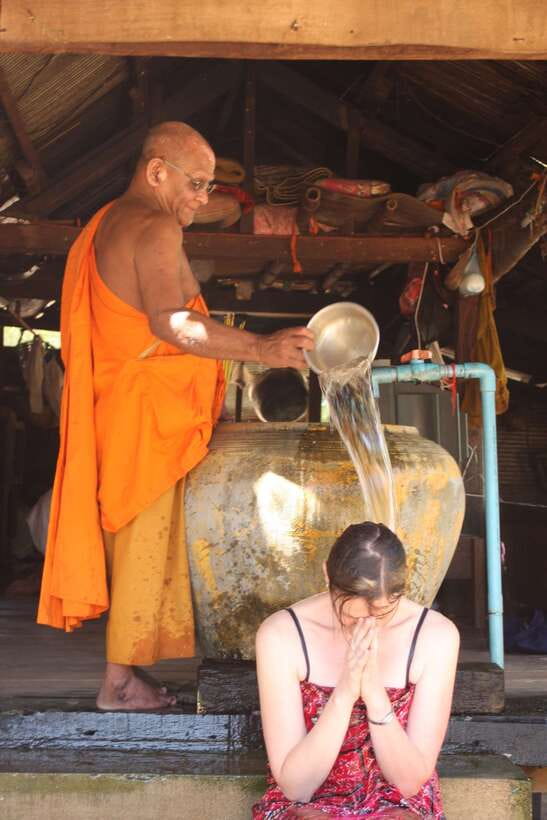
Siem Reap is famous for stone temples, carved galleries, and sunrise alarms. That is a good reason to come here, but Cambodia is not only a collection of ancient ruins. A water blessing lets you see a living religious tradition practiced in the present.
Cambodian water blessings reach back to ancient customs and combine Buddhist chanting with ideas about good fortune, safe travel, long life, and spiritual cleansing. The ceremony is offered to people of different faiths, so you do not need to be Buddhist to take part. Your guide should explain what is happening and how to show respect.
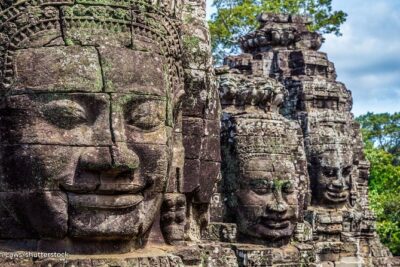
I especially like the contrast with the Angkor temples. At Angkor, you study a great civilization through towers and bas-reliefs. At Wat Arang, you sit near monks, listen to chanting, follow a ritual, and see how a pagoda functions today. It is a more personal experience, though it is also much smaller and less visually grand.
The pagoda is located in the countryside just south of Siem Reap. The ride is part of the change in mood. You leave the hotel area by tuk-tuk, travel roughly 15 minutes according to one account, and arrive at a place where the focus is on the ceremony rather than monuments.
A few more options around Siem Reap worth reading up on
- Angkor Wat Sunrise or Sunset Tour with Guide from Siem Reap
★ 5.0 · 12,109 reviews - Siem Reap: Angkor Wat: Small-Group Sunrise or Sunset Tour
★ 5.0 · 9,444 reviews - From Siem Reap: Kampong Phluk Floating Village Tour by Boat
★ 4.9 · 6,979 reviews
The tuk-tuk ride south of Siem Reap
Hotel pickup is included, and the driver collects you at the time shown on your booking. The tuk-tuk transfer keeps the outing simple and gives you a quick look beyond the central streets.
The total activity lasts two hours, but do not read that as a full hour of water ceremony followed by another hour at the pagoda. The ritual itself may be only several minutes, especially for two people together. The rest of the time is used for the ride, introductions, explanations, changing, the pagoda grounds, and the market visit.
That timing is useful if you are building a busy Siem Reap schedule. You can fit it between larger temple visits without giving up half a day. On the other hand, anyone expecting a long meditation session or a detailed monastery tour may find the outing too short.
The service includes a live English-speaking guide. The guide is not just there to point out the building. Guides named Sokha and Lee have been especially praised for explaining Buddhism, Cambodian culture, the ceremony itself, and life at the monastery. Sokha was also described as having once been a monk, which gives him a useful personal connection to the subject.
Arriving at Wat Arang Pagoda
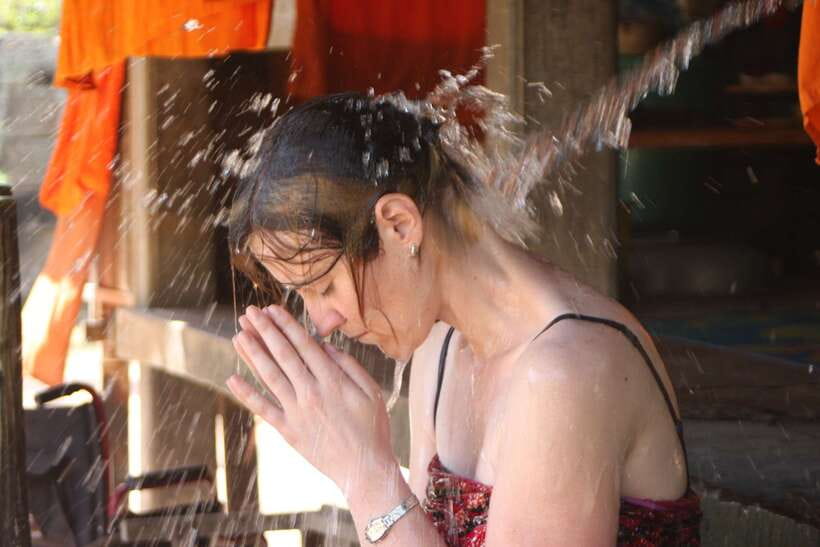
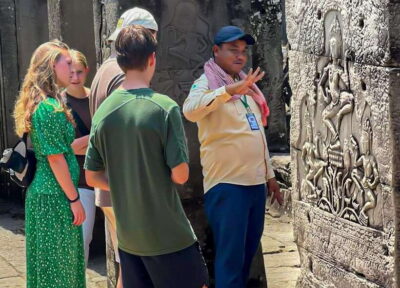
At the pagoda, your guide explains the setting and the basic rules before the blessing begins. You may first walk around the grounds and learn how the monastery operates. This is the moment to ask questions, especially if you are unsure about sitting, making an offering, or how to behave near the monk.
A donation to the pagoda is included in the price, along with the offering used during the visit. That matters because you are not left to work out what to buy or how much to give. The donation also gives the activity a more respectful shape than a simple paid photo opportunity.
One account described the offering as foodstuffs that can help the monk support people who rely on the monastery. That is a meaningful part of the visit, though you should think of the donation as support for the pagoda rather than a personal souvenir or admission ticket.
The grounds may be simple. That is part of the appeal. This is not a staged temple show designed around a large audience. The ceremony takes place at an active pagoda, and the scale can make the moment feel quiet and direct.
Choosing the light sprinkle or full water blessing
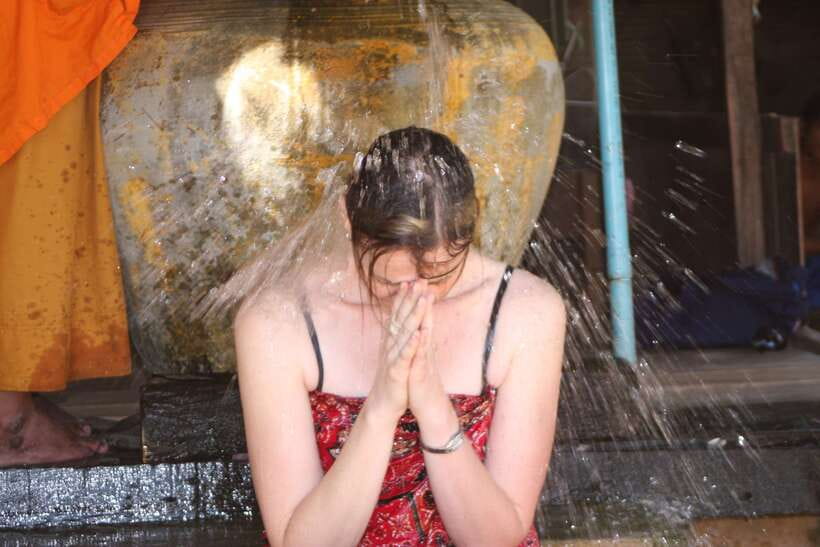
There are two forms of blessing.
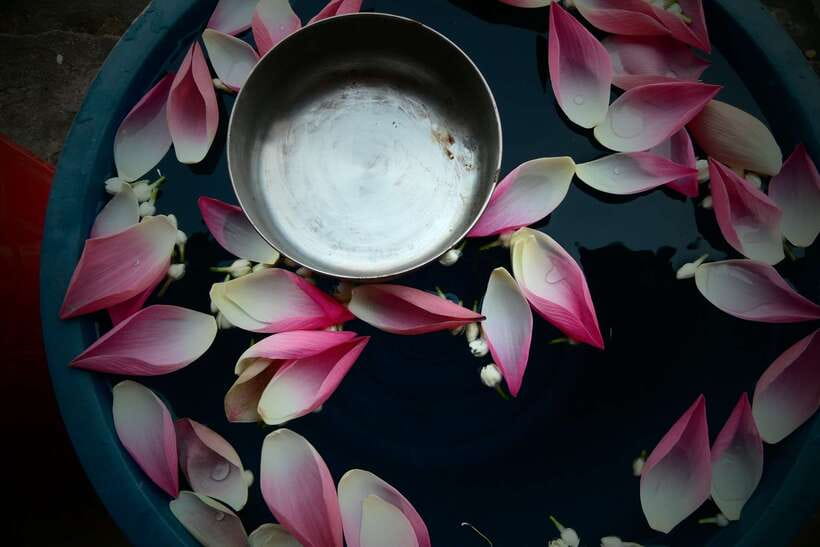
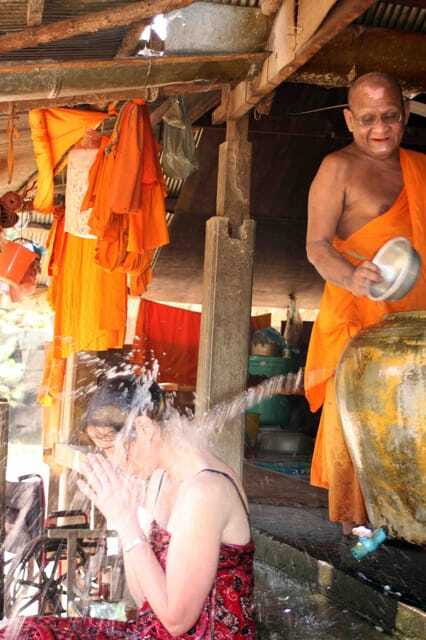
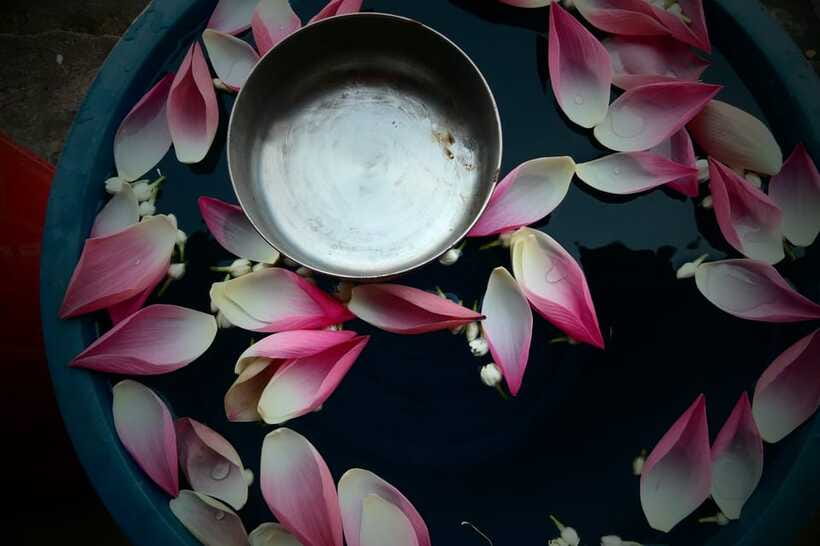
The first is the shorter option. The monk chants while wishing you good luck, safe travel, and a long life. He lightly sprinkles you with water, often using flowers or a similar ritual method. This choice suits you if you want to remain mostly dry, have limited time, or prefer a gentle introduction to the tradition.
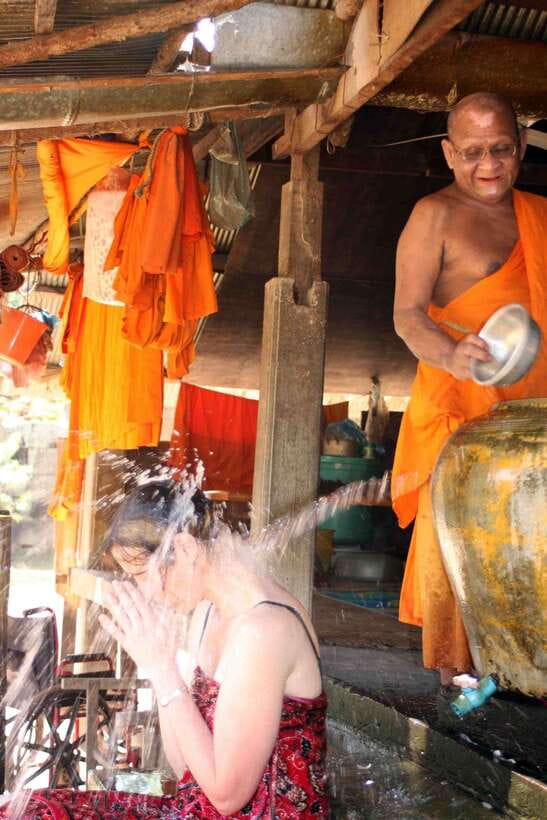
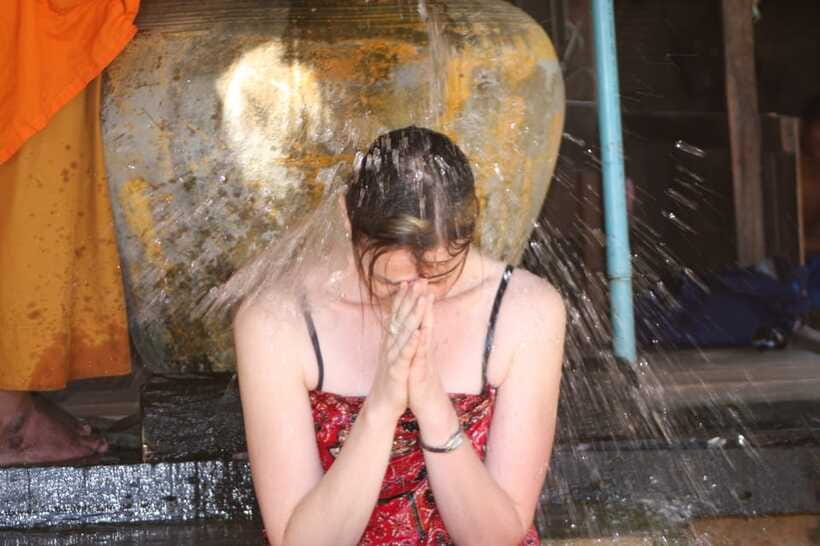
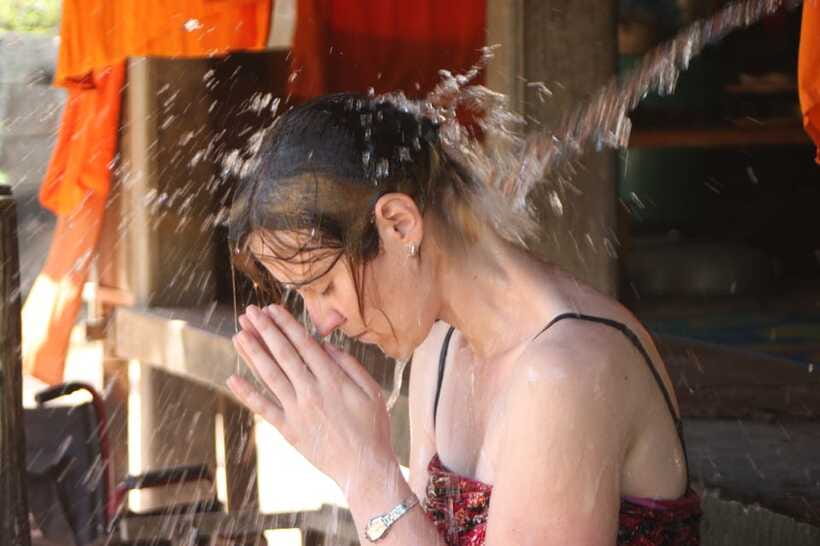
The second is the longer ritual. Blessed water is poured over your head while the monk chants. This is not a symbolic misting. You should expect to get wet, and one person compared it to being completely doused. The effect can be refreshing on a hot Cambodian day, but it is wise to prepare for a real change of clothes.
The activity provides a sarong for the longer blessing. You change into it before sitting for the ceremony so your regular clothing remains dry. Bring extra underwear, as one practical account advised, and consider a small towel if you have long hair. The provided information confirms the sarong, but personal drying supplies are still a sensible precaution.
Ask your guide clearly which option is planned before you change. The description says you can choose between the two forms, but one person reported not being given that choice. A polite question removes confusion and lets you decide how wet you want to become.
Something completely different for another day:
- Sunset tour of Kampong Phluk stilts home village on the Tonle Sap
★ 5.0 · 4,865 reviews - Siem Reap: Angkor Wat 2-Day Tour with Sunrise and Sunset
★ 4.9 · 4,429 reviews - Siem Reap: Kampong Phluk Floating Village Tour with Boat
★ 4.9 · 3,843 reviews - Siem Reap: Full-Day Angkor Wat Guided Tour with Sunset
★ 4.9 · 3,803 reviews
What happens during the chanting
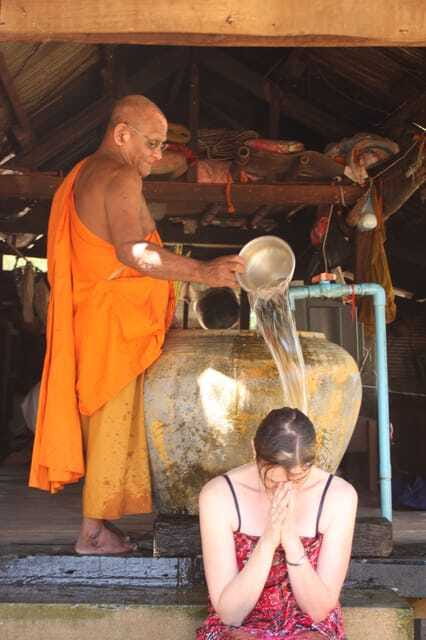
The monk chants as part of the blessing, and your guide explains what the words and actions mean. You are expected to follow the instructions rather than perform a complicated set of movements. The guide can also help with the offering and ceremony protocol.
The shorter blessing includes gentle sprinkling. The longer one uses vessels of blessed water poured over your head. The physical difference is obvious, but the purpose is not simply to cool you down. The ritual connects water with cleansing, good fortune, protection, and renewal.
You may find the ceremony moving, amusing, or simply interesting. One person was surprised by the buckets of water and laughed, which also made the monk laugh. That small detail says something useful: you do not need to act solemnly every second or pretend to understand every gesture. Respect matters, but a natural human reaction is not a failure.
Your guide may take photographs and videos during the ritual. This is a real practical benefit because you cannot easily photograph yourself while sitting before a chanting monk. Guides have been praised for taking many photos with personal phones, creating a record of the ceremony without requiring you to interrupt it.
Still, photography should remain secondary. If you want a quiet, inward moment, tell the guide you would prefer fewer pictures. The supplied information does not promise a specific number of photos or videos, so treat this as helpful guide service rather than a guaranteed package.
The red wrist ties after the blessing
At the end, the monk ties special red strings around your wrist. They mark the blessing and give you something small to carry away after the water has dried.
The strings are not a commercial souvenir handed out at a shop. They are part of the ceremony, and that is why they can feel more meaningful than another purchased trinket. You may want to leave them in place for a while as a personal reminder of the experience.
After you change back, you can ask questions. The guide may translate what the monk says, including personal spiritual observations, as happened for one visitor with Sokha. Treat those comments as part of the cultural exchange, not as a formal prediction or guaranteed reading.
Learning about Buddhism and Cambodian spiritual life
The strongest part of the outing may be the explanation around the ritual. You learn not only what to do, but also how Buddhism fits into Cambodian life.
The supplied experience describes the blessing as Buddhist, while several personal accounts also connected it with Cambodian ideas about animism, the soul, and spiritual cleansing. Your guide can help separate these strands without turning the visit into a lecture. That context is valuable because Cambodian religious life is not always captured by a simple Buddhist label.
You can ask about the monk, the pagoda, the ceremony, and the work done at the monastery. One account described learning about assistance for older and sick people. Another valued the chance to understand how monks live and how the monastery helps people who need support.
This is where a good guide makes a major difference. Sokha was praised for explaining the process carefully, while Lee was praised for his English, patience, and willingness to answer questions. If your guide has strong local experience, the visit becomes much more than a wet head and a red wrist string.
The local market stop
The market visit is included and gives the outing a useful second act. Instead of moving from one religious site directly back to your hotel, you see a market used by local people.
The market may include meat, fish, vegetables, and gold. That mix gives you a quick look at ordinary shopping, household needs, and Cambodian commerce. It is not presented as a major food tour, so keep your expectations in proportion. You are getting a short cultural stop, not a guided meal or extended market class.
I like this addition because it prevents the activity from becoming too inward-looking. The pagoda shows one side of local life. The market shows another. Together they offer a clearer picture of Siem Reap than a ceremony alone.
Your guide can explain what you are seeing and help you move through the market. If you enjoy everyday places more than polished attractions, this may be one of the most rewarding parts. If you dislike markets or want every minute devoted to Buddhism, it may feel like an extra stop.
Is $37 a fair price?
At $37 per person, the value depends on what you want from a short outing. You are paying for hotel pickup, tuk-tuk transport, an English-speaking guide, the sarong, the pagoda donation, the blessing, and the market visit. You are not paying only for a few minutes of chanting.
The guide is the key value. Without clear instructions, the ceremony could feel confusing or intrusive. With someone who explains the beliefs, translates questions, handles the offering, and takes photographs, the experience becomes easier to understand and more respectful.
The donation also matters. You are not simply entering a religious site and watching a performance. Part of the fee goes toward the pagoda, and the activity includes an offering. That does not make the price automatically cheap, but it gives the cost more purpose.
The weak point is the short ceremony. If you count only the minutes of chanting and water, $37 may seem high. If you value private transport, interpretation, cultural context, and a local market visit, the price is more reasonable.
Free cancellation up to 24 hours before the activity and reserve now, pay later terms make it easier to fit into a changing schedule. Personal expenses are not included, so carry money if you plan to buy anything at the market.
Who will appreciate this experience most?
I would choose this for you if you want a break from temple ruins and a chance to meet a living tradition. It suits people who enjoy asking questions, trying unfamiliar customs, and accepting a little uncertainty.
It is also a good choice for couples. One couple used the service for a wedding blessing and found the ceremony successful. The intimate setting can give the ritual a personal feel without requiring a large formal event.
It may suit families and older visitors as well, since the activity is listed as wheelchair accessible. Still, the water ritual and changing process may require personal planning, so check your own comfort and mobility needs before booking.
You should think twice if you want a strictly secular sightseeing stop with no ritual participation. You should also reconsider if getting soaked would cause problems with your clothing, electronics, or onward plans. The shorter sprinkle is a possible solution, but confirm your choice before the ceremony.
Practical tips for a respectful visit
- Wear clothing that is easy to change out of, especially if you plan to receive the full blessing.
- Bring spare underwear and a small personal towel, particularly if you have long hair.
- Ask the guide to explain the ceremony before it starts.
- Confirm whether you are receiving the light sprinkle or the full water ritual.
- Keep your phone protected until the guide is ready to take photos.
- Leave room in your schedule after the activity if you need to dry or change fully.
- Ask questions about Buddhism, the monastery, and the meaning of the red wrist ties.
- Carry some money for personal expenses at the market.
- Treat the pagoda as a functioning religious place, not only as a photo setting.
The activity is conducted in English, and hotel pickup is included. Starting times depend on availability, so check the schedule when you select your date.
Should you book this Siem Reap blessing?
Book it if you want an intimate cultural experience rather than another monument. The best reasons are the working pagoda, the chance to take part in a local ritual, and guides such as Sokha and Lee who explain what is happening. The market visit adds an everyday Cambodian note, and the tuk-tuk pickup keeps the outing easy.
Skip it if you want a long ceremony, a major temple tour, or a guaranteed choice of ritual without asking first. The full blessing can leave you soaked, and the activity may feel expensive if you judge it only by the ceremony length.
For most open-minded visitors with two free hours in Siem Reap, I think the balance is good. Confirm your blessing choice, pack a change of clothes, and arrive ready to listen. The water is the obvious part, but the understanding you gain around it is the real reason to go.
FAQ
Where does the water blessing take place?
The blessing takes place at Wat Arang Pagoda in the countryside just south of Siem Reap Province.
How long does the whole activity last?
The full activity lasts two hours. This includes the tuk-tuk transfer, explanations, the pagoda visit, the blessing, and the market stop.
How long is the water blessing itself?
The ceremony is described as a one-hour experience, although personal accounts indicate that the actual chanting and water portion may last only several minutes, with the rest of the activity covering other parts of the visit.
How much does the experience cost?
The price is $37 per person.
Is hotel pickup included?
Yes. A driver picks you up from your hotel at the time indicated on your booking.
What is included in the price?
The price includes an English-speaking guide, tuk-tuk transfer, a sarong, a donation to the pagoda, and a market visit.
Are there different types of blessings?
Yes. You can choose between a chanting blessing with a light sprinkling of water and a longer ritual in which blessed water is poured over your head.
Do I need to bring clothes for the blessing?
A sarong is provided for the longer ritual so your regular clothing stays dry. You should consider bringing extra underwear and personal drying supplies.
Is the activity offered in English?
Yes. The experience includes a live English-speaking guide.
Can I cancel the booking?
You can cancel up to 24 hours in advance for a full refund. Reserve now and pay later is also available, and the activity is listed as wheelchair accessible.
Newest reviews from Siem Reap
- War Museum, Killing Field, and APOPO Hero RATs Tour★ 5.0 · 7 reviews
- Angkor Wat at Sunrise★ 4.0 · 7 reviews
- Siem Reap Angkor Airport Taxis (from Airport to Hotel)★ 5.0 · 44 reviews
- Cambodian Cooking Class and Oxcart Ride with Local Village Tour★ 5.0 · 4 reviews
- Secret Temples of Angkor – Guided Tour in Siem Reap★ 5.0 · 6 reviews
- Short Cycling at Countryside★ 5.0 · 29 reviews
- SIEM REAP E-BIKE HALF-DAY COUNTRYSIDE (25-30 km)★ 4.0 · 1 review
- Unveiling the Mystical Beauty of Phnom Kulen National Park★ 5.0 · 6 reviews
Siem Reap Tours, compared.
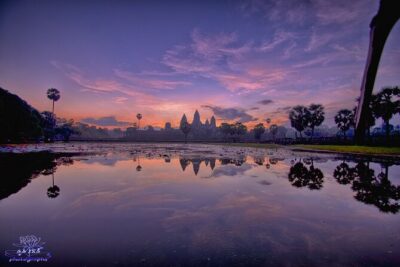
Angkor Wat Sunrise or Sunset Tour with Guide from Siem Reap
Read our review →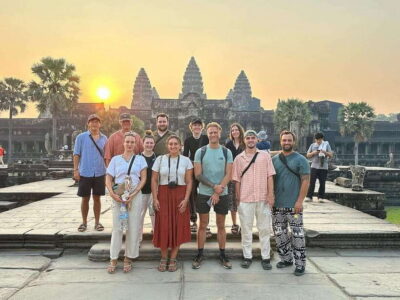
Angkor Wat: Small-Group Sunrise or Sunset Tour
Read our review →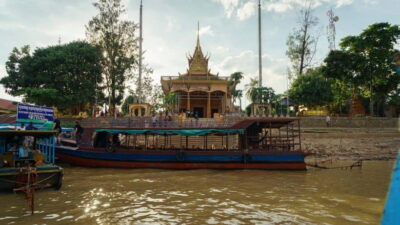
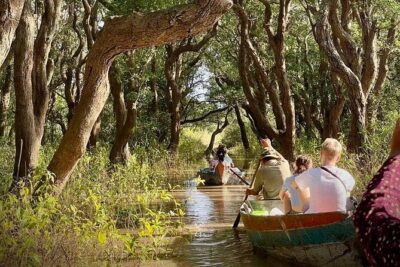
Sunset tour of Kampong Phluk stilts home village on the Tonle Sap
Read our review →
Angkor Wat 2-Day Tour with Sunrise and Sunset
Read our review →
Kampong Phluk Floating Village Tour with Boat
Read our review →