
Reviewed · MUSEUMS
Private Tour: HERO Rats & Angkor National Museum
Meet the rats who do dangerous work. This four-hour private outing combines Cambodia’s Hero Rats with Wat Thmei’s killing field memorial and the grand Khmer collection at Angkor National Museum. I like the unusual mix of recent Cambodian history and ancient art, and I like having a private, air-conditioned car with an English-speaking guide. The main catch is that the museum may be closed, so the final stops can change.
The tour costs $85 per person, including transport, guide, water, and admissions. That is a fair price if you want context and door-to-door transport, especially since a guide can explain painful subjects that are hard to understand from labels alone. Still, four hours passes quickly, and the experience is not a good fit if you want a relaxed museum day or dislike discussions of war and mass violence.
In This Review
- Key points at a glance
- Why this Siem Reap tour is worth considering
- Wat Thmei, a quiet memorial with a hard message
- APOPO Visitor Center and the work of the Hero Rats
- Angkor National Museum and Cambodia’s imperial art
- What the private car and guide add
- Is $85 per person a good value?
- Who should book this experience?
- Practical advice before you go
- My verdict: book it for the contrast
- FAQ
- How long does the private Hero Rats and museum tour last?
- What time can the tour start?
- Is hotel pickup included?
- Is this a private group activity?
- What is included in the price?
- Is food included?
- Will I definitely visit Angkor National Museum?
- Can I cancel for a full refund?
Key points at a glance
- Watch Hero Rats detect landmines: See specially trained rats work at the APOPO Visitor Center, one of the most unusual educational stops in Siem Reap.
- Visit Wat Thmei’s small memorial stupa: Skulls and bones make this a brief but difficult encounter with Cambodia’s Khmer Rouge period.
- Choose an 8 a.m. or 1 p.m. start: The flexible timing makes it easier to fit around other Siem Reap plans.
- Use the private car to connect three very different sites: You get an efficient half-day rather than arranging several rides yourself.
- Expect possible substitutions: Angkor National Museum is currently listed as closed, and another landmine or war museum may replace part of the planned route.
- Allow for a serious tone: This is an educational outing, not a light sightseeing loop.
Why this Siem Reap tour is worth considering
I like tours that connect Cambodia’s past and present instead of treating Angkor as the whole story. This one begins with the country’s recent conflict and unexploded landmines, then moves back to the art and politics of the Khmer Empire.
That change in subject gives the day some weight. At Wat Thmei, you face the human cost of Cambodia’s violence. At APOPO, you see a practical effort to make rural communities safer. At the museum, you turn to sculpture, religion, architecture, and royal power from the ninth through fourteenth centuries.
The private format matters. Only your group participates, so you can ask questions without waiting for a busload of people to catch up. You also travel in an air-conditioned car, a real help in Siem Reap’s heat. The package includes one bottle of water per person, admissions, and an English-speaking guide.
There are limits. The advertised schedule adds up to about three hours at the stops: 30 minutes at Wat Thmei, one hour at APOPO, and 90 minutes at the museum. Allow about four hours overall for driving and transitions. You will not get a long, slow museum visit or an extended countryside excursion.
More Museum Visits in Siem Reap
- Bantey Srei, Kbal Spean and Landmine museum Private Tuk-Tuk
★ 4.7 · 30 reviews - Siem Reap City Tour with War Museum and Killing Field
★ 5.0 · 27 reviews - War Museum, Killing Field and Floating village ( Chong Kneas) Tour
★ 5.0 · 14 reviews
Wat Thmei, a quiet memorial with a hard message
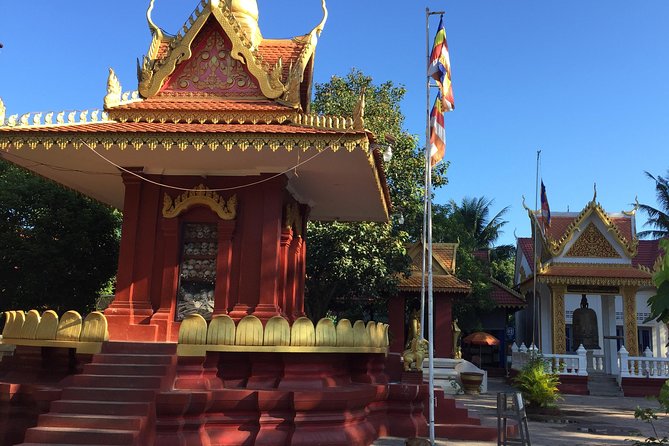
The first stop is Wat Thmei, also called Wat Thmey, a Buddhist temple complex with a small memorial stupa containing the skulls and bones of people killed during Cambodia’s Khmer Rouge era.
The planned visit lasts about 30 minutes. That may sound brief, but it is enough time to understand the purpose of the site without turning the stop into a long, emotionally heavy lecture. The memorial is smaller and less formal than some major killing field sites, which can make the encounter feel especially stark.
Your guide’s explanation is important here. Without context, the bones and stupa can seem like a grim roadside sight. With a clear account of Cambodia’s conflict and its effect on ordinary communities, the stop becomes a way to understand why landmines and unexploded weapons remain such serious concerns.
One guide praised for this part of the experience was Aaron, who shared personal experiences connected to the Killing Fields. A guide who can explain the subject with care adds real value, though the guide assigned to your group may be different.
Give yourself permission to keep this stop quiet. Wat Thmei is not a place for hurried photos or casual chatter. The visit is short, but it sets the tone for everything that follows.
APOPO Visitor Center and the work of the Hero Rats
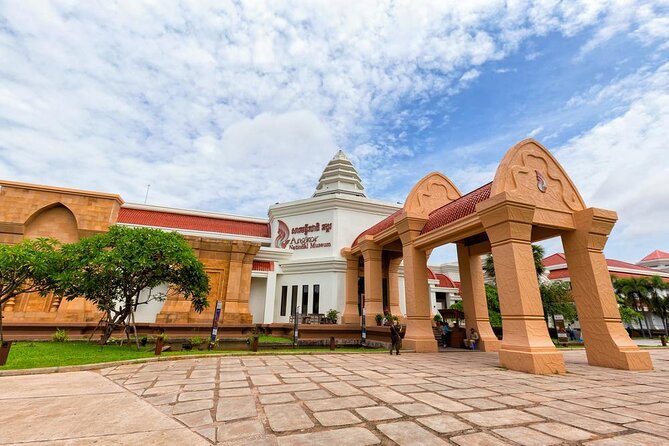
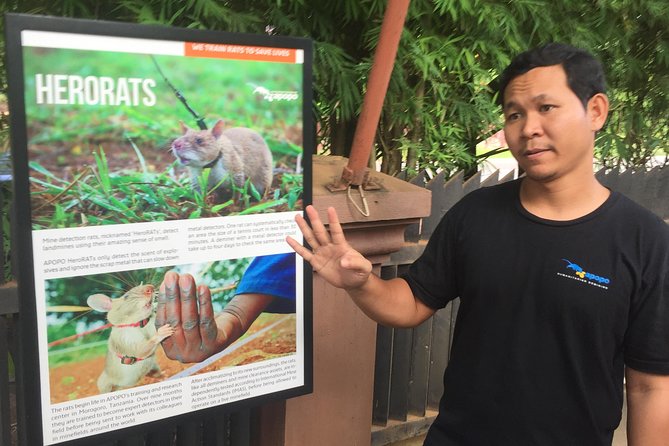
The APOPO Visitor Center is the tour’s most unusual stop. Here you learn how trained rats help detect landmines and other dangerous materials in areas affected by conflict.
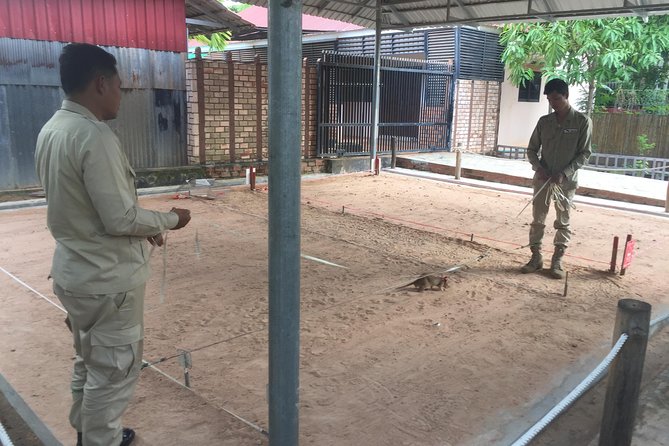
The visit lasts about one hour and admission is included. You should expect a presentation about the history of conflict in Cambodia, the danger landmines pose to local communities, and the work being done to clear contaminated ground.
The rats are not performing a circus trick. Their value comes from their ability to locate the smell of explosives while remaining light enough not to trigger most landmines. The center’s demonstrations help make a complex humanitarian problem easy to grasp.
That is the strongest part of the experience for many people. You see an animal that most people associate with alleys and garbage doing careful, life-saving work. The contrast is memorable, and the demonstration gives a face to a problem that can otherwise seem distant or abstract.
I also like the way this stop links history with present-day action. Wat Thmei explains what happened. APOPO shows one way people are responding to the danger left behind.
Plan to listen closely. The stop is not simply a chance to watch clever animals. You will get more from it if you pay attention to the explanation of landmines, community safety, and the long work required to make affected areas usable again.
The center can close for holidays or special dates. One party arrived during Cambodia’s New Year and instead visited the Cambodia Landmine Museum, located farther outside Siem Reap. That replacement can still provide useful context, but it is not the same visit, and the extra distance may affect the timing.
Angkor National Museum and Cambodia’s imperial art
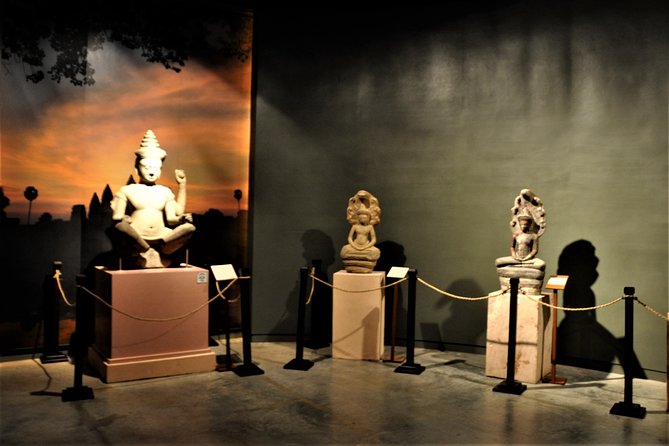
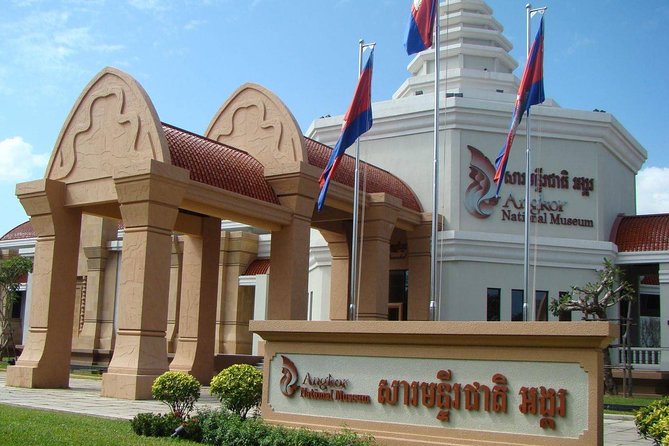
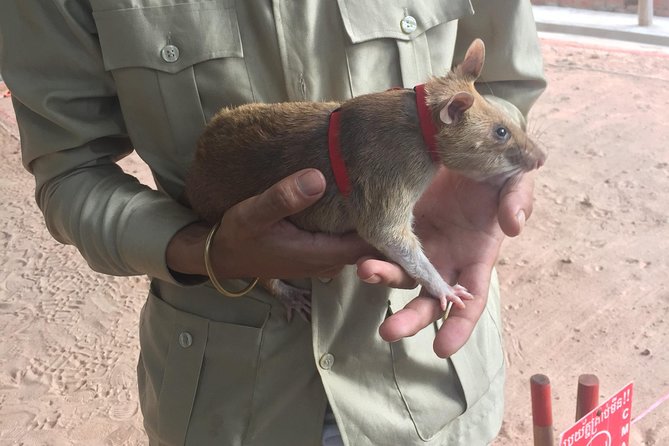
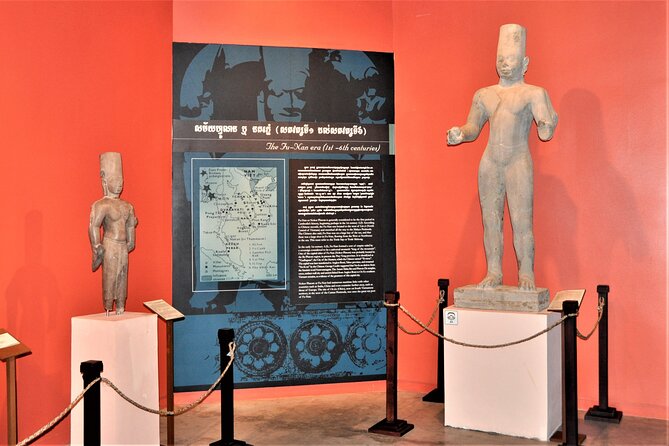
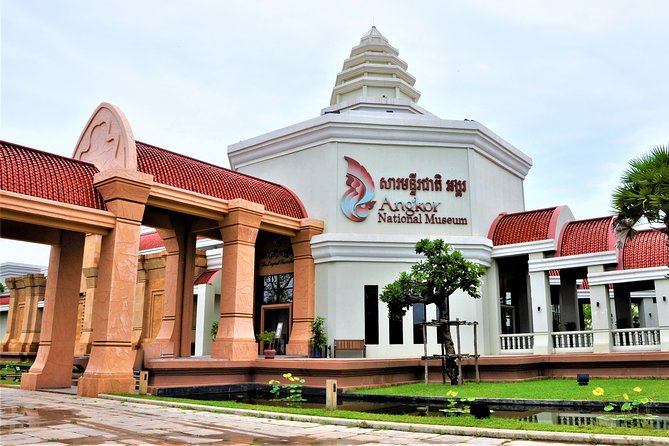
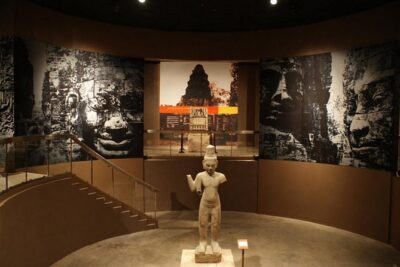
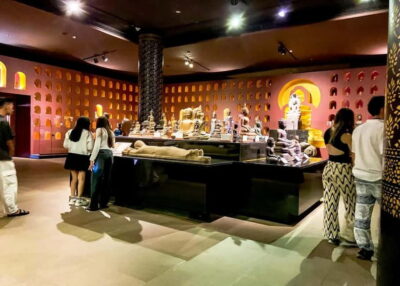
The planned final stop is Angkor National Museum, with about 90 minutes set aside. The museum focuses on Khmer artifacts from the ninth through fourteenth centuries, the period associated with the great Angkorian kingdoms.
This is a useful companion to the temples. At Angkor Wat, Bayon, and other monuments, you see enormous stone buildings in their original setting. In a museum, you can look closely at sculpture, religious figures, inscriptions, and decorative details. That helps you understand what the temple carvings represent rather than seeing them as impressive but unfamiliar stonework.
The museum is also a good way to finish because the tone changes. After the killing field memorial and landmine presentation, you move toward older cultural achievements. The transition does not erase Cambodia’s recent pain, but it gives you a fuller view of the country.
The planned visit is not long enough for every gallery. I would focus on the major Khmer collections and ask your guide to point out pieces that will help you recognize themes at the Angkor temples. If you have already visited the temples, the museum can fill in details. If you have not, it may give you a useful introduction before your temple day.
There is an important current warning: Angkor National Museum is listed as closed, and the route may be amended. Do not book this tour expecting the museum stop as a certainty. The replacement could be another museum connected with Cambodia’s war years. One account described a visit to the National War Museum instead, with some time spent outside in the hot sun.
That change may suit you if recent history is your main interest. It may disappoint you if ancient Khmer art is the reason you chose this tour. Confirm the operating status before you go if the museum is essential to your plans.
Something completely different for another day:
- Angkor Wat Sunrise or Sunset Tour with Guide from Siem Reap
★ 5.0 · 12,109 reviews - Siem Reap: Angkor Wat: Small-Group Sunrise or Sunset Tour
★ 5.0 · 9,444 reviews - From Siem Reap: Kampong Phluk Floating Village Tour by Boat
★ 4.9 · 6,979 reviews - Sunset tour of Kampong Phluk stilts home village on the Tonle Sap
★ 5.0 · 4,865 reviews
What the private car and guide add
The tour includes an air-conditioned private car, an English-speaking guide, and pickup. This is more than a minor convenience in Siem Reap, where heat, traffic, and scattered sites can make a short outing tiring.
A private vehicle lets you move directly from Wat Thmei to APOPO and then to the museum or replacement site. You are not waiting for unrelated groups, and you can keep the day to the advertised four-hour shape.
The guide’s role is especially important at Wat Thmei and APOPO. These places need explanation, and the quality of that explanation affects how much you take away. One account praised the guide’s broad knowledge of the area, while another found the outdoor history portion too long in the heat. Those details point to a practical tip: ask for a balance between discussion and shade if the schedule includes an outdoor war museum.
The itinerary gives you a morning start at 8 a.m. or an afternoon start at 1 p.m. The morning is likely the more comfortable choice for the outdoor portions, while the afternoon option can work well if you spend the morning at Angkor or need a slower start. The schedule is fixed enough to be useful, but closures may alter the order or final stop.
Is $85 per person a good value?
At $85 per person, this is not the cheapest way to see these sites. You are paying for a private car, an English-speaking guide, admissions, pickup, and the convenience of joining the sites in one organized half-day.
The value improves if you are traveling with several people because the private format and group discounts may reduce the per-person cost. It also makes sense if you do not want to arrange separate transport to APOPO, Wat Thmei, and a museum.
The price is harder to justify if you only want to see the rats and can arrange your own ride. It is also less appealing if Angkor National Museum is closed and the replacement visit is not of interest to you. The experience depends heavily on the guide and the exact sites operating that day.
Meals, extra drinks, personal spending, tips, and travel insurance are not included. One bottle of water is included for each person, but you should plan for any other refreshments yourself.
I would judge the price by the quality of the day’s explanation rather than by the number of sights. Three thoughtful stops with a good guide are more useful than a rushed circuit of five places. The strongest value here comes from having someone connect the sites for you.
Who should book this experience?
I would recommend this tour to you if you want a serious break from temple sightseeing. It suits people interested in Cambodian history, humanitarian work, and the way a country deals with the remains of conflict.
Families with older children may find the Hero Rats particularly memorable, though Wat Thmei requires sensitivity. The rat demonstrations provide an accessible entry point, while the guide can explain why landmine clearance matters.
The private format also works well for couples, families, and small groups who prefer their own schedule. The morning and afternoon choices make it easier to fit the outing around other plans in Siem Reap.
I would hesitate if you want a carefree attraction with little walking or difficult subject matter. The killing field memorial is upsetting, and the museum replacement may involve standing outdoors in the heat. I would also hesitate if ancient Khmer art is essential, since the museum closure can change the final stop.
Practical advice before you go
Wear light clothing and comfortable shoes. The route includes a memorial, a visitor center, and a museum or possible outdoor war site, so you may move between shaded and exposed areas.
Keep the day flexible. The listed order is sensible, but operating hours and holiday closures can change the final plan. The Cambodia New Year closure affected one visit, so checking current conditions is worthwhile.
If you care most about Angkorian artifacts, ask about the museum before departure. If the museum is closed, decide if a landmine or war museum still fits your interests.
Give your guide room to explain personal and national history. Aaron’s account of the Killing Fields was described as particularly powerful, but every guide brings a different background. Ask direct questions, especially about the connection between the memorial and the landmine work.
The tour offers free cancellation up to 24 hours before the start time. Cancellations or changes made inside that period are not accepted for a refund, and the cutoff follows local Siem Reap time.
My verdict: book it for the contrast
Book this tour if you want to understand more than Cambodia’s temples. The combination of Wat Thmei, APOPO’s Hero Rats, and Khmer art gives you three distinct windows into the country: suffering, recovery, and cultural achievement.
The best parts are the rat demonstration and the guide’s interpretation of Cambodia’s recent past. The main weakness is the uncertain museum stop, along with the possibility of spending too long in the hot sun if the route changes.
Before paying, confirm whether Angkor National Museum is open and what replacement is planned if it is not. If you are comfortable with that uncertainty, $85 is a reasonable price for a private, guided half-day that reaches places many visitors skip.
FAQ
How long does the private Hero Rats and museum tour last?
The tour lasts approximately four hours, including visits to Wat Thmei, the APOPO Visitor Center, and the planned museum stop.
What time can the tour start?
You can choose an 8 a.m. morning start or a 1 p.m. afternoon start.
Is hotel pickup included?
Pickup is offered, and the tour includes transport in an air-conditioned private car.
Is this a private group activity?
Yes. Only your group participates in the private tour.
What is included in the price?
The price includes an air-conditioned private car, an English-speaking tour guide, admissions, and one bottle of water per person.
Is food included?
No. Meals, additional drinks and refreshments, personal expenses, tips, and travel insurance are not included.
Will I definitely visit Angkor National Museum?
Not necessarily. The museum is currently listed as closed, and the itinerary may be changed. A different museum or war-related site may be used instead.
Can I cancel for a full refund?
Yes, if you cancel at least 24 hours before the experience start time. Cancellations or changes made less than 24 hours before the start time are not accepted for a refund.
Newest reviews from Siem Reap
- War Museum, Killing Field, and APOPO Hero RATs Tour★ 5.0 · 7 reviews
- Angkor Wat at Sunrise★ 4.0 · 7 reviews
- Siem Reap Angkor Airport Taxis (from Airport to Hotel)★ 5.0 · 44 reviews
- Cambodian Cooking Class and Oxcart Ride with Local Village Tour★ 5.0 · 4 reviews
- Secret Temples of Angkor – Guided Tour in Siem Reap★ 5.0 · 6 reviews
- Short Cycling at Countryside★ 5.0 · 29 reviews
- SIEM REAP E-BIKE HALF-DAY COUNTRYSIDE (25-30 km)★ 4.0 · 1 review
- Unveiling the Mystical Beauty of Phnom Kulen National Park★ 5.0 · 6 reviews
Museums, compared.
Bantey Srei, Kbal Spean and Landmine museum Private Tuk-Tuk
Read our review →
Kbal Spean Trekking Tour with Banteay Srei and Landmine Museum
Read our review →
Bantreay Srei , Kbal Spean and Landmine Museum with Tuk Tuk
Read our review →
Browse the lists this tour appears in