Reviewed · ANGKOR WAT TOURS
Personalised Angkor Wat Day Tour by an Air-conditioned Car
Angkor Wat is only the beginning. This private seven-hour tour from Siem Reap links the park’s biggest sights in a sensible circuit, from Angkor Wat and Bayon to the tree-wrapped stones of Ta Prohm. I like the private car and flexible pace, especially in Cambodia’s heat, and I like having an English-speaking guide to explain what you are seeing rather than simply pointing at ruins.
The package is also good value for a family or group. At $108.98 for up to 10 people, the transport, guide, hotel pickup, hotel drop-off, and bottled water are all covered in one price. The main catch is the $37 temple pass per person, which is not included, and meals and drinks are extra. Seven hours is enough for the major stops, but it is a full, hot day with plenty of walking and stairs.
In This Review
- Key points before you book
- Why a private Angkor tour works well
- Angkor Wat takes the first two hours
- Angkor Thom begins at the South Gate
- Bayon’s stone faces reward a slower look
- Baphuon adds stairs and a change of pace
- Ta Prohm delivers the most dramatic setting
- The $108.98 price is strongest for groups
- What to wear and how to handle the heat
- What the guiding adds to the day
- Who should book this seven-hour circuit?
- Should you book the Angkor Wat car tour?
- FAQ
- How much does the tour cost?
- How long does the tour last?
- Is hotel pickup included?
- What type of transport is provided?
- Are meals and drinks included?
- What clothing is required?
Key points before you book
- Five major Angkor stops: Angkor Wat, Angkor Thom’s South Gate, Bayon, Baphuon, and Ta Prohm fill the day.
- Private transport for up to 10 people: You ride with only your own party in an air-conditioned vehicle.
- A guide makes the ruins easier to read: English-language explanation adds context to carvings, rulers, religion, and city planning.
- The temple pass costs extra: Budget $37 for each person, in addition to the tour price.
- Ta Prohm supplies the cinematic moment: Giant trees and old stonework create the park’s most memorable setting.
- Cover knees and shoulders: A scarf is not accepted as a substitute, so dress accordingly.
Why a private Angkor tour works well
Angkor Archaeological Park is too large for a quick wander. The temples are spread out, and the scale can make a first visit feel like a list of names and gates. A private guide gives the day shape and lets you spend more time at places that interest you.
That flexibility matters if you are traveling with children, older family members, or a mixed-ability group. Guide Lao has been praised for adjusting the pace, keeping a four-year-old comfortable, and making the day feel relaxed rather than rushed. Chheuy Haklao has also been singled out for patience and good humor with a group of different abilities.
Guide assignments can change, so I would not book on the assumption that one particular person will lead your tour. Still, the repeated praise for Lao, Panha, and Chheuy Haklao suggests that the company places real value on personal guiding. Panha, in particular, has been praised for making a family’s week in Siem Reap easy and enjoyable.
The air-conditioned car is a practical advantage, not a luxury detail. Cambodia’s midday heat can sap your energy quickly, and the short rides between temples give you a chance to cool off. Bottled drinking water is included, which is helpful, although you should still plan your clothing and walking pace carefully.
More ways to see Angkor Wat:
- Angkor Wat Sunrise or Sunset Tour with Guide from Siem Reap
★ 5.0 · 12,109 reviews - Siem Reap: Angkor Wat: Small-Group Sunrise or Sunset Tour
★ 5.0 · 9,444 reviews - Siem Reap: Angkor Wat 2-Day Tour with Sunrise and Sunset
★ 4.9 · 4,429 reviews
Angkor Wat takes the first two hours
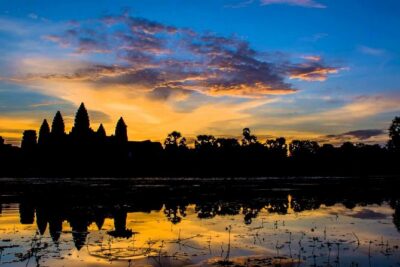
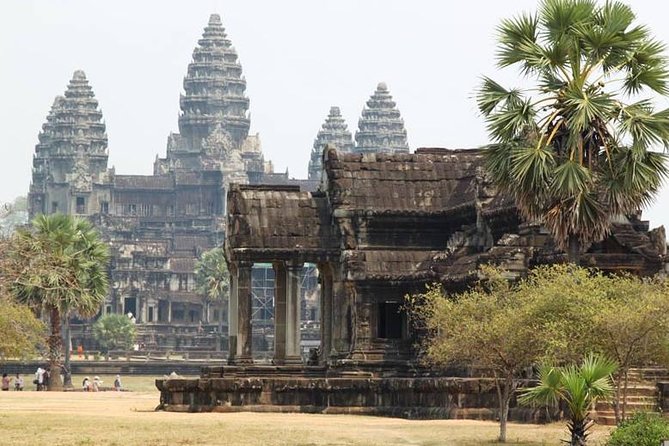
Start with Angkor Wat, the enormous 12th-century temple built under Suryavarman II. It began as a Hindu temple and is one of the clearest places in the park to see how religion, royal power, engineering, and art came together.
Two hours gives you enough time to appreciate the main structure without turning the morning into an exhausting architectural study. You can expect long galleries, carved scenes, courtyards, towers, and broad stone approaches. The scale is the first surprise. Angkor Wat is not a single photogenic facade. It is a complete ceremonial complex that keeps revealing new layers as you move through it.
Your guide is especially useful here. Without explanation, the carvings can blur into a succession of walls and figures. With help, you can better understand the temple’s Hindu purpose, its royal origins, and the meaning behind some of the images.
The drawback is that Angkor Wat can be the most demanding opening stop. The site is large, the stone surfaces can be uneven, and two hours passes quickly. Wear shoes suited to walking and avoid treating the first temple as a quick photo stop. It sets the visual and historical scale for everything that follows.
Angkor Thom begins at the South Gate
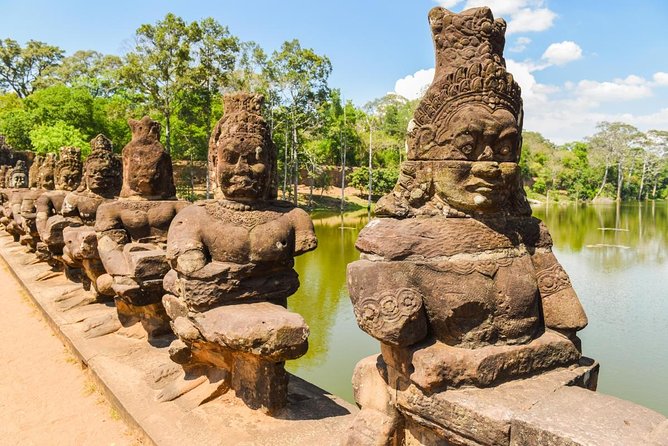
After Angkor Wat, the car continues to the South Gate of Angkor Thom for about 20 minutes. Angkor Thom means Great City, and this entrance gives you a strong sense of the defensive and ceremonial design of the former capital.
The stop is short, but it is well chosen. Gates can be easy to ignore when you are eager to reach the famous temples. Here, the entrance itself helps you understand that Angkor Thom was not just a cluster of shrines. It was an organized city with monumental boundaries and carefully planned approaches.
You may find this part feels more like a brief orientation than a full visit. That is fine. The value comes from seeing how the city is entered before moving toward its center. Your guide can connect the gate to the larger plan, which gives the next stop at Bayon more meaning.
Bayon’s stone faces reward a slower look
Bayon sits in the center of Angkor Thom and receives about an hour. It is famous for the large Buddha faces carved into its 49 towers, though the temple can feel confusing at first because its passageways, towers, and levels form a dense maze.
This is where a guide earns the fee. The faces appear from different angles, sometimes suddenly, sometimes half-hidden behind another tower. A good explanation helps you notice how the temple was designed to create repeated encounters with these calm expressions.
I would use the hour to look beyond the most famous faces. Bayon also contains carved scenes that show daily life, conflict, processions, and the world around the royal court. You do not need to memorize every detail. Let your guide point out a few telling scenes, then take time to look on your own.
Bayon is less tidy than Angkor Wat, and some people may prefer the first temple’s open, symmetrical design. I like Bayon precisely because it feels more layered and puzzling. The tradeoff is that the uneven paths and crowded interior can make it tiring, particularly after a warm morning.
A few more options around Siem Reap worth reading up on
- From Siem Reap: Kampong Phluk Floating Village Tour by Boat
★ 4.9 · 6,979 reviews - Sunset tour of Kampong Phluk stilts home village on the Tonle Sap
★ 5.0 · 4,865 reviews - Siem Reap: Kampong Phluk Floating Village Tour with Boat
★ 4.9 · 3,843 reviews - Siem Reap: Full-Day Angkor Wat Guided Tour with Sunset
★ 4.9 · 3,803 reviews
Baphuon adds stairs and a change of pace
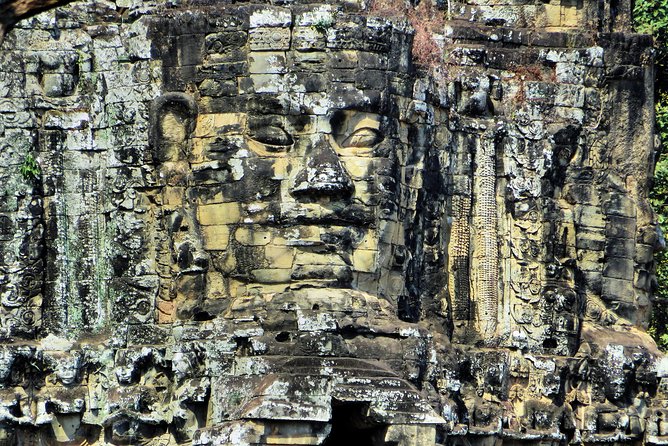
From Bayon, you continue to Baphuon for about 40 minutes. This temple is known for its steep stairs, so this is the point where the day becomes more physical.
The climb gives you a different view of Angkor Thom and a useful change from the enclosed corridors of Bayon. Baphuon is less immediately recognizable than Angkor Wat or Ta Prohm, but the structure has a strong sense of height and scale. The climb also makes the visit feel active rather than purely observational.
Take the stairs slowly. The tour is private, so you can ask your guide to give you a moment or adjust the pace if needed. This stop may not suit anyone who has difficulty with steep steps, and the heat can make the climb feel harder than expected.
The listed visit lasts about 40 minutes, enough for a look and a climb without spending too much energy here. If you want a detailed architectural study of Baphuon, you may find the schedule brief. For a first day at Angkor, the balance makes sense because Ta Prohm still lies ahead.
Ta Prohm delivers the most dramatic setting
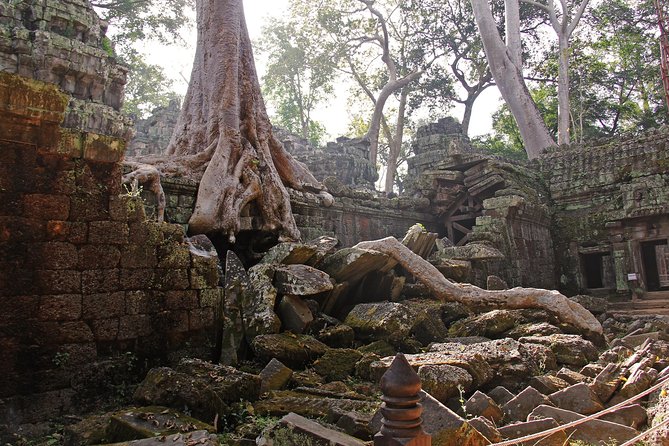
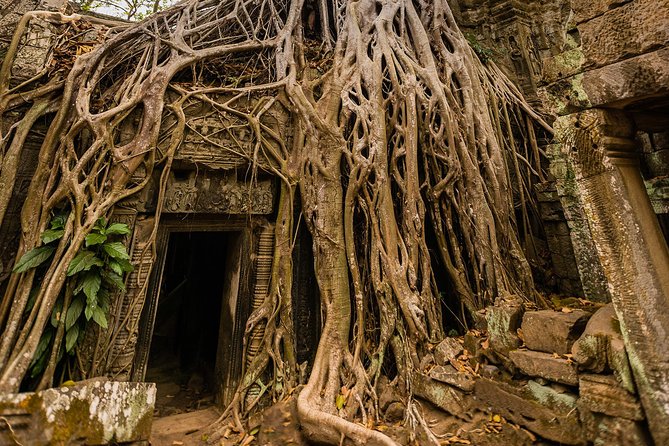
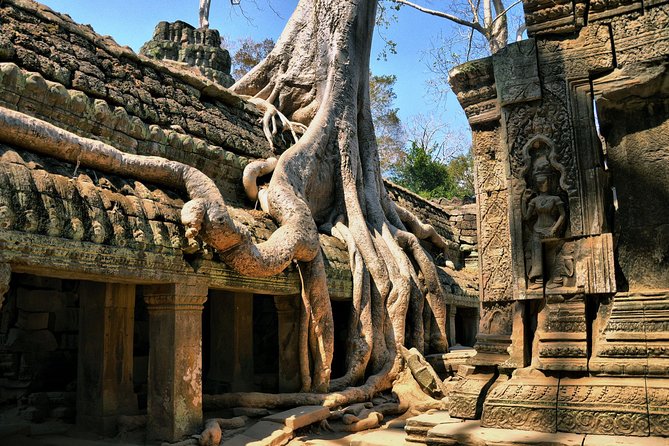
Ta Prohm is the final major temple, with about an hour set aside for the visit. It is the tree-covered site often associated with the film Tomb Raider, but the real attraction is the uneasy meeting of stone and living roots.
Trees grow over walls, roots press into galleries, and sections of the temple feel as though they are being slowly reclaimed by the forest. The effect is striking without needing much explanation. Even after Angkor Wat’s grand scale and Bayon’s carved faces, Ta Prohm changes the mood completely.
I would save some energy for this stop. The ground can be uneven, and you will want time to pause rather than rush through the most memorable sections. Your guide can explain the temple’s place in the Angkor complex, while you focus on the textures, collapsed passages, and enormous roots.
The popular setting can also be the busiest part of the day. A private tour does not mean you have the temple to yourself. It does mean you can discuss the pace with your guide and move on when you have seen enough, rather than following a large group’s fixed schedule.
The timing around lunch should be clarified when you book or meet your guide. The plan places lunch at a local restaurant at your own expense around the Ta Prohm portion of the day. Meals and drinks are not included, so carry money and allow room in your budget.
The $108.98 price is strongest for groups
The tour costs $108.98 per group, with as many as 10 people included. That price covers the English-speaking guide, private air-conditioned transport, hotel pickup and drop-off, and bottled water.
For a larger family or group of friends, the value is clear. Divided among 10 people, the tour price is modest before the temple passes. Even with the required $37 pass for each person, private transport and a dedicated guide can compare well with arranging separate rides and explanations.
For two people, the calculation is less obvious. You are paying for privacy, convenience, and a full day with a guide, not just a ride between temples. If you want the cheapest possible way to see Angkor, this will not be the lowest-cost choice. If you want control over the pace and a cool car waiting between sites, the price is easier to justify.
The temple pass is the major extra cost. At $37 per person, a couple adds $74 to the tour price, while a group of 10 adds $370. Meals and all other drinks are also separate. Bottled water during the tour is included, but I would still plan for lunch and any additional refreshments.
What to wear and how to handle the heat
The dress code requires covered knees and shoulders. Do not rely on a scarf, since the instructions specifically say that a scarf is not accepted. Lightweight clothing that covers the required areas is the safer choice.
You should also expect a lot of walking, standing, and some stairs. The tour is suitable for most people, but Baphuon’s steep steps and the size of Angkor Wat make this more than a simple car sightseeing trip.
The private format helps here. If someone in your group needs a slower morning, more water breaks, or a little extra time in the shade, you can discuss it with the guide. That is a real benefit over a fixed group schedule.
What the guiding adds to the day
The strongest part of this experience is likely to be the human side. Lao has been praised for energy, humor, and a passion for the work. One family found that he kept both adults and a young child at ease, while another group valued the way he provided historical context and included less crowded temple areas.
The tour described here focuses on five major stops, so you should not assume that extra temples or off-road driving are included. Some past experiences with the company have involved Jeeps and quieter sites, but this package specifically promises an air-conditioned private vehicle and the listed Angkor circuit.
That distinction matters. Book this tour for a guided introduction to the best-known temples, not as a remote-temple adventure. If your priority is seeing the major monuments in one day with a personal guide, the plan is well suited to you.
Who should book this seven-hour circuit?
I would recommend it to first-time visitors who want the essential Angkor sights without organizing transport, tickets, and route planning on their own. Families will appreciate the private setting, and groups of friends can spread the cost across several people.
It is also a good fit if you want explanations rather than a self-guided photo stop. Angkor’s details are easy to miss, and a guide can help you connect the temples to the rulers, religions, and city design behind them.
You may want a different plan if you dislike set itineraries, have limited tolerance for heat and stairs, or want to spend a full day at fewer temples. The schedule is efficient, but it is still ambitious. Seven to eight hours gives you a strong introduction, not an exhaustive study of Angkor.
Cancellation is flexible if your plans change. You can receive a full refund when you cancel at least 24 hours before the start time. Changes or cancellations inside that window are not accepted for a refund.
Should you book the Angkor Wat car tour?
Book it if you want a private, well-organized first day at Angkor, especially with family or a group large enough to share the $108.98 cost. The air-conditioned vehicle, water, hotel transfers, and personal guide remove much of the day’s practical fuss.
Think twice if you are traveling alone or as a couple on a very tight budget, since the $37 temple pass per person and lunch costs add up. Also be ready for heat, walking, and steep steps. For most first-time visitors to Siem Reap, though, this is a sensible way to see Angkor Wat, Bayon, Baphuon, and Ta Prohm in one focused day.
FAQ
How much does the tour cost?
The tour costs $108.98 per group, for up to 10 people. The temple pass costs an additional $37 per person.
How long does the tour last?
The tour lasts about seven hours, although the overall day may run seven to eight hours.
Is hotel pickup included?
Yes. Hotel pickup and drop-off are included.
What type of transport is provided?
The tour uses a private air-conditioned vehicle for your group.
Are meals and drinks included?
Meals and drinks are not included. Bottled drinking water during the tour is provided, and lunch is purchased at your own expense.
What clothing is required?
Your knees and shoulders must be covered. A scarf cannot be used as a substitute for the required clothing.
Newest reviews from Siem Reap
- Village walking & Cooking class in Siem Reap★ 5.0 · 2 reviews
- Ultimate Sunrise to Angkor Wat, Angkor Thom and Bayon Temple★ 5.0 · 3 reviews
- Angkor Wat Sunrise Shared Tours: Bayon, Ta Prohm And Kravan★ 5.0 · 1 review
- Twilight Tastes of Siem Reap Include Dinner★ 5.0 · 13 reviews
- Two Days Tour Angkor Complex; Banteay Srei, and Kulen Hill★ 5.0 · 1 review
- Trekking Tour at Phnom Kulen National Park from Siem Reap★ 5.0 · 3 reviews
- Trip to Big Circle included Banteay Srey and Banteay Samre★ 5.0 · 1 review
- Full-Day Private Tour of Angkor Wat with Pick Up★ 5.0 · 12 reviews
Angkor Wat Tours, compared.
Angkor Wat Sunrise or Sunset Tour with Guide from Siem Reap
Read our review →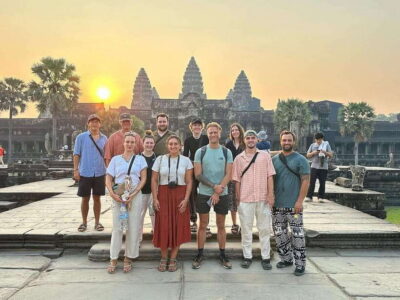
Angkor Wat: Small-Group Sunrise or Sunset Tour
Read our review →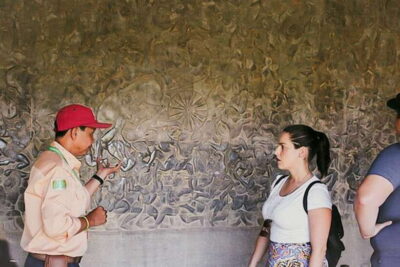
Angkor Wat 2-Day Tour with Sunrise and Sunset
Read our review →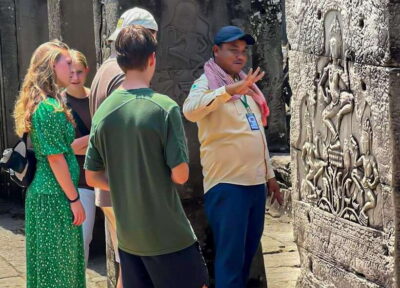
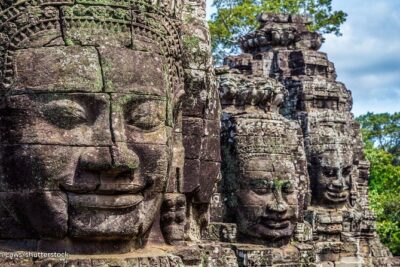
Angkor Wat Sunrise tour with Small – Group and Guide tours
Read our review →
Angkor Wat Highlights and Sunrise Guided Tour from Siem Reap
Read our review →
Angkor Wat Sunset Small Group Tour with Lunch Included
Read our review →