
Reviewed · PHNOM PENH TOURS
Oudong Mountain & Phnom Baset Private Tours from Phnom Penh
Get beyond Phnom Penh for a day. This private tour links Oudong’s royal hills with the pre-Angkorian temple at Phnom Baset, then adds pagodas, meditation centers, and countryside roads that are easy to miss on a city stay. You get hotel pickup, private air-conditioned transport, site admissions, and an English-speaking guide.
I especially like the flexible private format and the strong historical focus. Guides such as Makara, Ching, Tuk, and Tok have earned praise for clear explanations, patience, and thoughtful care, including cold drinks and towels during hot spells. The main drawback is value: at $135 per person, this costs more than a basic Cambodia day tour, and the long list of stops can make the day feel full.
In This Review
- Five things to know before you go
- Why Oudong makes a worthwhile day outside Phnom Penh
- Oudong Temple and the first royal hills
- Phnom Preah Reach Troap and the Royal Tombs
- Preah Sakyamoni Chedi rewards a slower look
- Two Buddhist centers, two different moods
- Moni Sakor Pagoda and the Koh Chen connection
- NH 5, Kampong Luong Pagoda, and the less polished side of the route
- Phnom Baset brings the oldest monument of the day
- Wat Sowann Thamareach finishes with newer Buddhist architecture
- What the private vehicle and guide add
- Is $135 per person good value?
- Who should book this Oudong and Phnom Baset day?
- Should you book it?
- FAQ
- How long does the Oudong and Phnom Baset tour last?
- Is hotel pickup and drop-off included?
- Is this a private tour?
- Are entrance fees included?
- Is lunch included?
- What is the cancellation policy?
Five things to know before you go
- Oudong was Cambodia’s royal capital from 1618 to 1866, and its hills are marked by stupas, royal tombs, and sacred monuments.
- Phnom Baset adds an older layer of history, with an eighth-century temple, a reclining Buddha, and broad views across rice fields.
- The private vehicle matters in the heat, especially because the day lasts roughly seven to nine hours.
- The tour includes more than the headline sights, with Buddhist meditation centers, pagodas, Koh Chen area sights, and lesser-visited Wat Sowann Thamareach.
- Lunch is not included, but local restaurant dishes are listed at about $3 to $10 each.
- This suits curious, active sightseers, but the number of stops may feel rushed if you prefer long, quiet visits.
Why Oudong makes a worthwhile day outside Phnom Penh
Oudong gives you a useful counterpoint to Phnom Penh. The capital is Cambodia’s modern political and commercial center, while Oudong recalls the period when royal power was based among temple hills and monumental stupas.
The city served as the royal capital between 1618 and 1866. That date range gives the visit a clear frame: Oudong is not an Angkor-era city, but it connects Cambodia’s older religious traditions with the later royal kingdom that preceded Phnom Penh.
I like that this is not simply a single-temple outing. The tour takes you across several connected sites, so you see how royal burial places, Buddhist worship, meditation, and local village life fit together.
The private setup also changes the pace. You are not tied to a large group’s questions or photo breaks. Your guide can spend more time explaining a monument, answer your questions, or help adjust the order of the day when needed. Feedback about Makara, Ching, Tuk, and Tok repeatedly highlights their calm manner and strong command of local history and Buddhist culture.
A few more options around Phnom Penh worth reading up on
- The Killing Field and Toul Sleng Genocide Museum (S21) Tour
★ 5.0 · 1,977 reviews - Phnom Penh: Sunset Cruise with Unlimited Beers & BBQ Buffet
★ 4.5 · 727 reviews - Aroma Therapy Massage, Relaxation therapeutic aromatherapy oil massages.
★ 5.0 · 645 reviews
Oudong Temple and the first royal hills
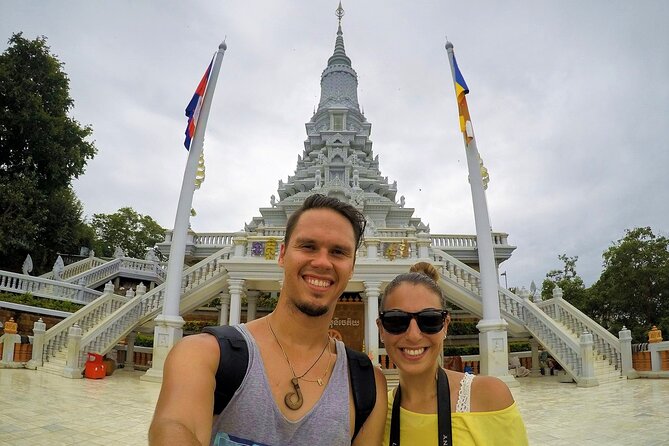
The opening visit to Oudong Temple lasts about an hour, with admission included. The temple area is spread across three hills, and the large stupas can be seen from a considerable distance as you approach.
These structures are the visual heart of Oudong. Their size helps you understand the importance of the former capital before you even reach the monuments. Rather than expecting one perfectly preserved complex, you should expect a series of sacred buildings and royal remains scattered across the hills.
Your guide is important here. Without context, the stupas can look like isolated monuments. With an explanation of their royal and religious purpose, the site becomes easier to read.
Allow for warm conditions and some walking. The private air-conditioned vehicle provides relief between stops, but the monuments themselves are outdoors. Modest clothing and comfortable shoes are sensible choices for a day centered on temples and pagodas.
Phnom Preah Reach Troap and the Royal Tombs
The next stop, Phnom Preah Reach Troap, takes about 45 minutes. This sacred mountain contains relics connected with settlements from ancient times, giving the day a wider span than the royal capital alone.
The visit to the Royal Tombs lasts about 30 minutes. These tombs hold more than 200 years of remains belonging to Cambodian rulers. Several stupas sit along the east-west ridge of Phnom Oudong, so the setting feels more like a royal memorial zone than a single enclosed building.
This is one of the places where a guide’s explanation adds real value. Royal succession, religious practice, and the meaning of stupas can be difficult to understand from signs alone. A good guide can connect the structures to Cambodia’s past without turning the visit into a classroom lecture.
The short stop is enough for an introduction and photographs. If you prefer to linger at every monument, the full schedule may feel brisk. The tour is designed to show you a broad collection of sites in one day, not to give you an hour at every stupa.
Preah Sakyamoni Chedi rewards a slower look
Preah Sakyamoni Chedi receives about 30 minutes. It is considered one of the best-preserved chedi structures in Oudong and is especially appealing to photographers.
I would treat this as a pause for careful looking rather than a quick tick on a list. The form of a chedi can appear simple at first, but details in its proportions and setting reward patience. Your guide can also explain how it relates to the other royal monuments around Oudong.
Thirty minutes should work for photographs and a short explanation. The stop may feel too brief if you are interested in architectural details or want time alone in the setting, but the private format gives you at least some chance to ask for a little extra time when the day allows.
Something completely different for another day:
- Killing field and Toul Sleng genocide museum Tour
★ 5.0 · 610 reviews - Phnom Penh Full Day Private Tour Included All Admission Tickets
★ 5.0 · 585 reviews - Phnom Penh: Sunset Cruise with Unlimited Beer &Fruit platter
★ 4.7 · 515 reviews - Phnom Penh Silk Island Bike Tour/ E-Bike or Tuk Tuk
★ 5.0 · 495 reviews
Two Buddhist centers, two different moods
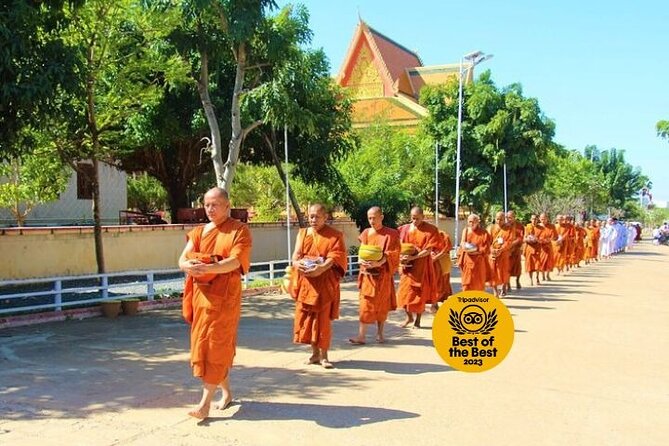
The Vipassana Dhurak Buddhist Centre of the Kingdom of Cambodia is open to the public, even though its main purpose is teaching Vipassana meditation. The planned visit lasts about 30 minutes, enough to walk through the gardens and observe the setting respectfully.
This stop adds a quieter, present-day side to the older royal monuments. You are not only looking at the remains of past rulers. You are also seeing how Buddhist practice continues in Cambodia now.
The Sontte Wan Buddhist Meditation Center receives another 30-minute visit, followed by a separate one-hour stop at the same center or nearby location identified as QQW7+WQH. The supplied details describe Sontte Wan as Cambodia’s largest Buddhist center and point to its elaborate decoration.
The duplicated center stops make the schedule slightly unclear. You may spend a total of about 90 minutes in this part of the day, but the exact division between the two entries should be confirmed when booking or with your guide. Either way, the center is included to show you Buddhist architecture and religious life, not simply another old temple.
Please treat meditation centers as active religious places. Walk quietly, follow your guide’s instructions, and dress with respect. The tour includes admission, but that does not mean every area is intended for casual access.
Moni Sakor Pagoda and the Koh Chen connection
Moni Sakor Pagoda is scheduled for about 30 minutes. The description also connects this part of the route with Koh Chen, an island in Tonle Sap Lake known for silver crafts and reachable from the Oudong and Phnom Penh area.
That connection is useful because it points toward local life beyond monuments. A visit to a silver-working village can be one of the most memorable parts of a Cambodian day, but the supplied schedule does not clearly promise a separate extended stop on Koh Chen itself. Ask your guide how much time is available if this interests you.
The value here is variety. After royal tombs and chedis, a pagoda and craft-related community offer a closer look at how faith and work shape daily life. Just keep your expectations measured: Moni Sakor is listed as a short stop, not a long village visit.
NH 5, Kampong Luong Pagoda, and the less polished side of the route
The route also includes a stop along NH 5, connected with Kampong Luong Pagoda. The details describe it as a place of worship and refer to a museum mission that once required difficult discussions with the pagoda’s chief.
This is not the sort of stop with a famous single monument that explains itself. It is more dependent on the guide’s storytelling. If your guide explains the pagoda’s role and the museum connection clearly, the visit can add useful local context. If you prefer only major historic sights, it may feel less essential than Oudong or Phnom Baset.
That is part of the trade-off with this tour. You get a broader picture of the area, but some stops are included for cultural texture rather than dramatic ruins. I see that as a strength for curious visitors and a weakness for anyone seeking a short list of headline attractions.
Phnom Baset brings the oldest monument of the day
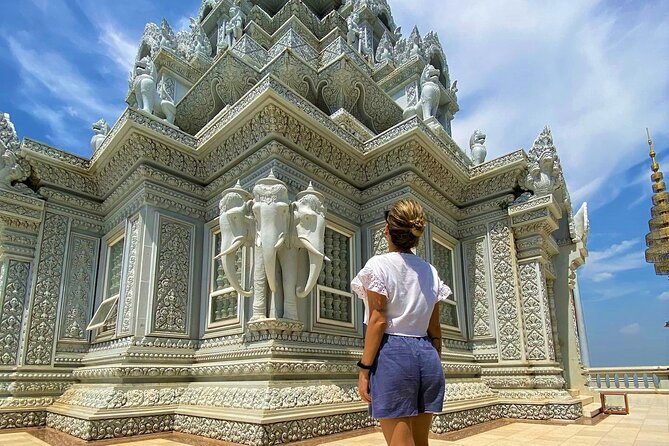
Phnom Baset is the final major highlight and receives about two hours. Here you see a pre-Angkorian temple dating from the eighth century, along with a reclining Buddha.
The age of this site changes the story again. Oudong represents a later royal capital, while Phnom Baset reaches back to the pre-Angkorian period. Seeing both in one day helps you understand that Cambodian history did not begin with Angkor, and it did not end there either.
The views are another reason to allow a full two hours. From the temples, you can look over surrounding plains and rice fields. This is a quieter visual experience than central Phnom Penh, with open countryside replacing city traffic and buildings.
Phnom Baset is also the one major stop listed without an admission charge. That does not make it less worthwhile. The temple, reclining Buddha, and rural views give it a strong finish, especially if you enjoy places where the setting is part of the experience.
The stop may involve uneven ground and outdoor walking. The tour information says most people can participate, but it does not provide detailed mobility guidance. If stairs, hills, or uneven surfaces are a concern, ask the provider for current conditions before booking.
Wat Sowann Thamareach finishes with newer Buddhist architecture
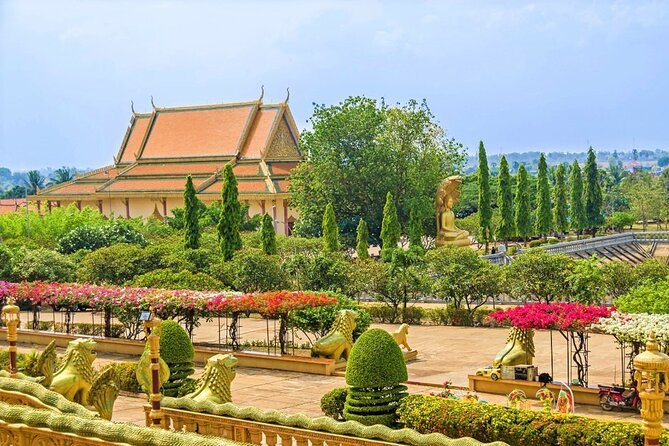
Wat Sowann Thamareach is scheduled for about 30 minutes. It is described as rarely visited and architecturally different from a traditional Buddhist temple complex.
That makes it a useful final stop. You have already seen royal stupas, older temple remains, meditation centers, and pagodas. Wat Sowann Thamareach adds a newer architectural voice and shows that Cambodian religious design continues to change.
Do not expect another Angkor-style ruin. The appeal is the contrast. If you enjoy comparing building styles, decoration, and the way modern Buddhist complexes organize space, this stop will interest you. If you are tired after a long day, it may feel like one monument too many.
What the private vehicle and guide add
Pickup and drop-off at your hotel are included, provided you give the hotel name when booking. Transport is private and described as a luxury air-conditioned vehicle, so only your group takes part.
That privacy is more than a comfort feature. Oudong and Phnom Baset involve several separate stops, and the day can last seven to nine hours. A private vehicle gives you a place to cool down between visits and avoids the delays that come with collecting a large group from several hotels.
Cold drinks and cold towels were provided on at least some tours, and that is exactly the sort of small service that matters in Cambodia’s heat. They are not specifically listed among the included services, so I would not assume they are guaranteed, but you can ask about them.
The English-speaking licensed guide is included, along with government VAT and service charges. The strongest praise centers on guide quality: clear explanations, patience, cultural knowledge, and attention to individual questions. Makara is singled out for teaching not only about the sites but also about Cambodian culture and the country’s past. Ching, Tuk, and Tok are also praised for combining guiding with attentive driving support.
Is $135 per person good value?
At $135 per person, this is not a budget excursion. The price makes more sense if you are traveling as a small private party and value hotel transport, a dedicated guide, an air-conditioned vehicle, and entrance fees bundled together.
You also cover far more than one monument. The day includes Oudong’s royal sites, Buddhist centers, several pagodas, Phnom Baset, and Wat Sowann Thamareach. If you paid separately for transport, a guide, admissions, and the convenience of arranging all these stops, the price becomes easier to understand.
Still, the cost is high compared with simpler Cambodia tours. One direct assessment called it overpriced beside other local options, and that criticism is fair. If your main goal is only Oudong, you may find a shorter tour better value. If you want a private, guide-led day with many stops and minimal planning, the price is easier to justify.
Lunch is extra. Local restaurants offer vegetarian and non-vegetarian choices, with menu prices listed at about $3 to $10 per dish. Bring some flexibility into the day, since the tour does not include the meal or guide and driver tips.
Who should book this Oudong and Phnom Baset day?
I would choose this tour if you want to leave Phnom Penh but do not want to arrange several distant sights yourself. It suits people who enjoy historical explanation, Buddhist architecture, countryside views, and a full schedule.
It is especially good for:
- Couples or families who want a private vehicle and their own guide
- First-time Cambodia visitors seeking context beyond Phnom Penh
- Photographers interested in stupas, chedis, temples, and open rice-field views
- People who prefer several cultural stops rather than one major ruin
- Visitors who appreciate having a guide available for detailed questions
I would hesitate if you dislike long days, hot outdoor visits, or short stops. I would also compare prices if you are traveling alone, since $135 per person is a significant outlay for one participant.
The tour is generally open to most people, but detailed accessibility information is not provided. Ask about walking surfaces and hills if that matters to you.
Should you book it?
Book it if you want an easy, private day that combines Oudong’s royal monuments with Phnom Baset’s older temple and a wide range of Buddhist sites. The guides are the main reason to choose this option, and names such as Makara, Ching, Tuk, and Tok are associated with patient explanations and good care in difficult heat.
Skip it if your priority is the lowest possible price or a slow visit to just two or three places. The schedule is ambitious, and the price is high. For the right reader, though, this is a useful way to see the countryside, understand Cambodia’s changing centers of power, and return to Phnom Penh with more than another temple photograph.
FAQ
How long does the Oudong and Phnom Baset tour last?
The tour lasts approximately seven to nine hours.
Is hotel pickup and drop-off included?
Yes. Hotel pickup and drop-off are offered. You need to provide your hotel name when booking for pickup arrangements.
Is this a private tour?
Yes. Only your group participates in the private activity.
Are entrance fees included?
Yes. Entrance fees for the tour sites are included. Phnom Baset is listed with free admission.
Is lunch included?
No. Lunch is at your own expense. Local restaurant dishes are listed at approximately $3 to $10 each, with vegetarian and non-vegetarian choices.
What is the cancellation policy?
You can cancel at least 24 hours before the start time for a full refund. Cancellations or changes made within 24 hours are not accepted for a refund.
Newest reviews from Phnom Penh
- 10 Day Ethical Animals Tour Where the Wild Things Roam★ 5.0 · 1 review
- Watch Live Khmer Traditional boxing in Phnom Penh★ 5.0 · 46 reviews
- Watch Khmer Kickboxing with Free Beers by Ringside Seats★ 5.0 · 11 reviews
- The killing field and Toul Sleng Genocide museum (S21) Tour★ 4.5 · 19 reviews
- Private Transfer from Phnom Penh to Siem Reap by VIP Alphard 2005★ 5.0 · 2 reviews
- Warm Stone Massage★ 5.0 · 23 reviews
- S-21 Prison and Killing Fields★ 5.0 · 8 reviews
- Private Taxi Between Phnom Penh – Siem Reap Stop Sightseeing★ 5.0 · 23 reviews
Phnom Penh Tours, compared.
Phnom Penh Full Day Private Tour Included All Admission Tickets
Read our review →
Sunset Cruise with Unlimited Beer &Fruit platter
Read our review →
Phnom Penh Silk Island Bike Tour/ E-Bike or Tuk Tuk
Read our review →
Sunset Cruise with unlimited beer & soft drinks -English speaking guide on board
Read our review →
Ultimate Phnom Penh Food Tour by Tuk Tuk: 20 Tastings and Drinks
Read our review →
Sunset & Evening Dinner Cruise With One Way Free Pick Up
Read our review →
Browse the lists this tour appears in