
Reviewed · BATTAMBANG TOURS
Morning village tour Livelihood tour with Local Product discover
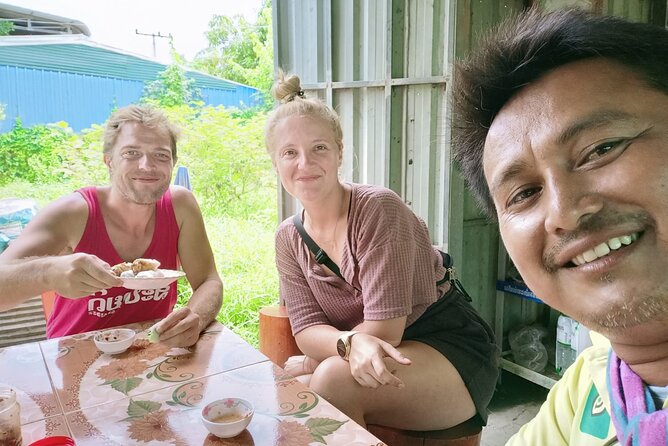
Cambodia’s countryside is the real attraction. This half-day tour from Battambang takes you beyond standard sightseeing and into homes, workshops, and small food-making businesses where local Khmer people prepare familiar products by hand. I like the clear focus on everyday life, and I like that tasting is part of the experience rather than an afterthought.
The tour also offers useful hotel pickup, safe transport, drinking water, and a small group limit of 10 people. The main consideration is that this is a working rural tour, not a polished attraction, so conditions may be simple and the exact stops can depend on weather and local activity.
In This Review
- Key points at a glance
- Why rural Battambang makes a good morning tour
- Pickup, group size, and the morning schedule
- Rice paper: a simple product with a lot of work behind it
- Sticky rice cooked inside bamboo
- Fermented fish paste and the less polished side of food
- Dried bananas and banana chips
- The traditional rice wine distillery
- Wat Samrong Knong and the killing fields option
- What the guide and driver add to the experience
- Is $15 a fair price?
- Who should book this Battambang experience?
- Booking timing, weather, and cancellation
- Should you book the village livelihood tour?
- FAQ
- Where does the tour take place?
- How long does the tour last?
- What time does the tour operate?
- Is hotel pickup available?
- How many people can join the tour?
- What products can I see being made?
- Can I taste the local products?
- Is Wat Samrong Knong included?
- What happens if the weather is poor?
Key points at a glance
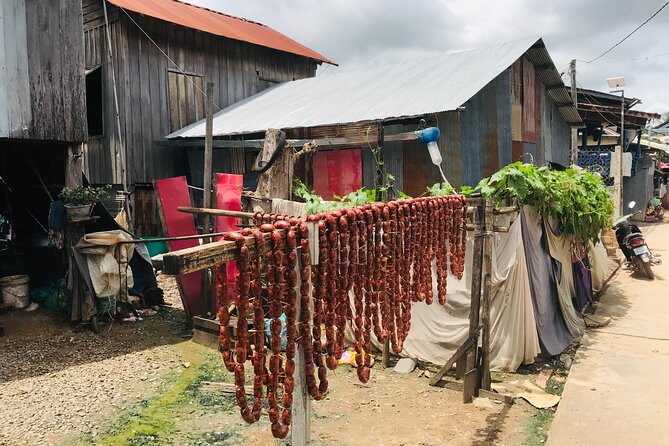
- See traditional food production: Watch rice paper, sticky rice, dried bananas, banana chips, fermented fish paste, and rice wine being made.
- Visit real village workplaces: The tour takes you to homes and small production sites instead of keeping you inside a standard sightseeing circuit.
- Taste the products: You get a chance to try several local foods and drinks during the morning.
- Add Wat Samrong Knong: The temple complex and killing fields can be included as an optional historical stop.
- Small group of up to 10: This keeps the outing more personal than a large coach tour.
- Strong value at $15: Pickup, transport, guiding, tastings, and four to five hours of touring make the price easy to justify.
Why rural Battambang makes a good morning tour
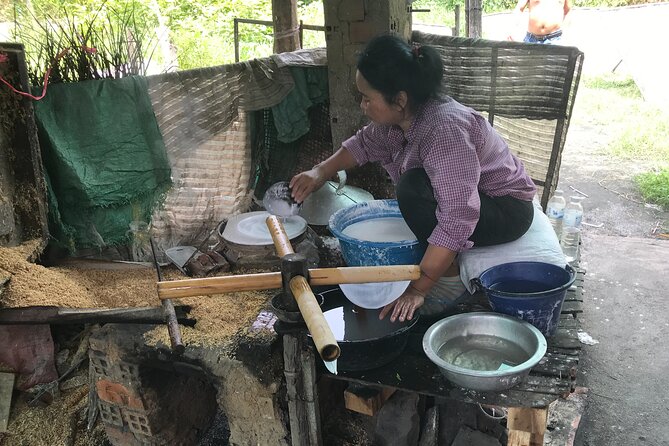
Battambang is known for its countryside as much as its town center. Rice farming, home production, food preservation, and small family businesses remain part of daily life around the city. This tour gives you a practical way to see that side of the area without arranging several separate rides.
I especially like the way the tour links food to local life. Rice paper is not just something on a menu. Sticky rice cooked in bamboo is not merely a snack for a photograph. These products show how people use crops, fire, bamboo, fruit, and fermentation to make food that can be eaten, stored, or sold.
The half-day length also works well. You leave in the morning, spend about four to five hours in the countryside, and still have much of the afternoon available. If you have only a short stay in Battambang, this gives you a useful look outside town without taking over your entire day.
A few more options around Battambang worth reading up on
- Battambang: Tuk-Tuk, Bamboo Train, Killing/Bat Caves, Sunset
★ 4.9 · 1,436 reviews - Battambang Tuk Tuk tour: Bambootrain, Killing & Bat Caves,Sunset
★ 5.0 · 799 reviews - Afternoon tour by tuk tuk to bamboo train,bat cave,killing cave,countryside.
★ 5.0 · 344 reviews
Pickup, group size, and the morning schedule
The stated meeting window is 8:00 to 8:30 in the morning, Monday through Sunday. Pickup is offered, which matters in Battambang because you do not need to work out separate transport to each rural stop.
The maximum group size is 10 people. That is small enough for a guide to explain what is happening and for you to ask questions without shouting across a vehicle. It also suits a tour built around small homes and workplaces, where a large group could feel awkward or simply get in the way.
The experience lasts approximately four to five hours. Allow for a flexible pace. Rural production does not always run on a strict tourist timetable, and the appeal here is seeing real work rather than moving through a fixed indoor exhibit.
A service animal is allowed, and the tour is near public transportation. Most people can participate. Confirmation is provided at booking, and the mobile ticket makes it easy to keep the details on your phone.
Rice paper: a simple product with a lot of work behind it
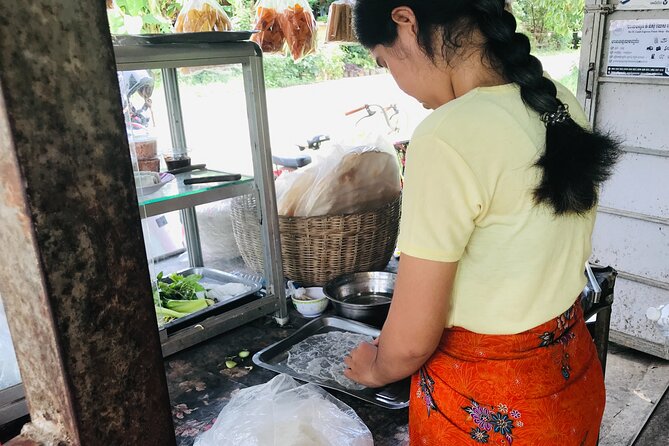
One of the most useful stops is the rice paper workshop. You can watch how a basic rice mixture becomes thin sheets used in Cambodian cooking. The process gives you a better feel for the patience behind a product that is easy to overlook when it arrives neatly packaged.
This is the kind of stop where your guide can help connect the method to local eating habits. You are not just looking at equipment. You are seeing how a staple product is made and handled before it reaches a market or kitchen.
The drawback is that the experience depends on production taking place when you arrive. This is not presented as a formal show with a guaranteed performance at a precise time. If you want a tightly timed attraction with signs and demonstrations on demand, this tour may feel loose.
For me, that informality is part of the value. You get a closer look at work as it is done, not a staged version designed only for visitors.
Sticky rice cooked inside bamboo
The sticky rice stop brings together food, fuel, and a traditional cooking method. You can watch sticky rice being cooked in bamboo tubes over an open fire. The sight and smell of the fire help explain why bamboo remains useful beyond building and crafts.
This preparation also shows how local cooking makes practical use of available materials. The bamboo tube acts as a cooking vessel, and the finished rice can be handled as a portable food. You get a small lesson in rural ingenuity without needing a lecture.
Expect the stop to be observational as well as culinary. You may watch the preparation and then have a chance to taste the result, but the supplied details do not promise a full meal. If you arrive hungry, eat something before pickup or treat the tastings as samples rather than lunch.
That is an important distinction. The tour is about discovering products, not replacing a proper breakfast or lunch.
Something completely different for another day:
- Local Livelihood Half Day Bike Tour in Battambang
★ 5.0 · 287 reviews - Explore Battambang full day tour by Tuk Tuk (start from 9am-6:30pm)
★ 5.0 · 240 reviews - Battambang: Bamboo Train, Bat Cave, Killing Cave by Tuk Tuk
★ 5.0 · 182 reviews - Full Day tour .City tour.Countryside.Bamboo Train.Secret Bat Cave
★ 5.0 · 178 reviews
Fermented fish paste and the less polished side of food
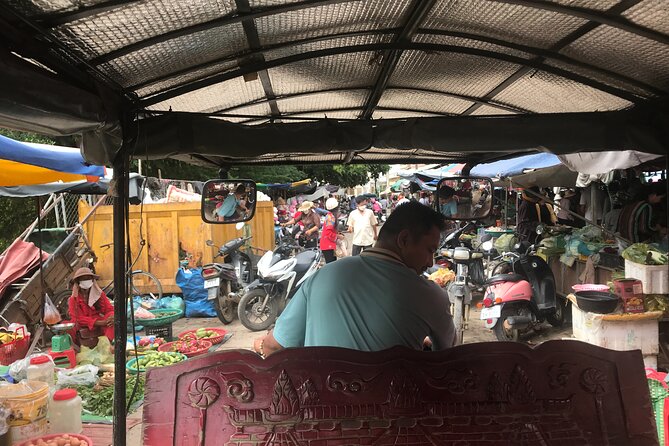
The old factory producing fermented fish paste may be the most revealing stop for anyone curious about Cambodian food. Fermentation is central to many food traditions, but the finished product can seem mysterious if you only encounter it in a dish. Seeing where and how it is produced makes the ingredient easier to understand.
This may also be the most challenging part of the morning. Fermented fish has a strong smell, and the workplace is described as an old factory rather than a modern visitor center. You should expect an authentic production setting, not a carefully scented display.
That is exactly why the stop has value. The tour does not only show attractive foods and easy photographs. It includes a product with a powerful character and a major place in local cooking. If strong smells bother you, keep that in mind before booking.
Dried bananas and banana chips
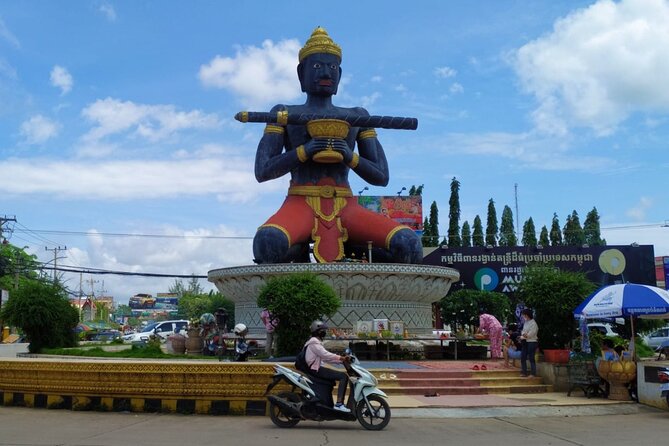
The banana production stop offers a lighter, more familiar part of the tour. You can see dried bananas and banana chips being produced, giving you a clear example of how fruit is preserved and turned into a snack.
This is a good stop for understanding the practical side of village food making. Fresh fruit does not last forever. Drying and frying create products that can be stored, transported, and sold over a longer period.
You also get another tasting opportunity. The contrast between dried bananas and crisp banana chips helps you notice how different methods change the same basic ingredient. It is a small detail, but this kind of comparison makes the tour more engaging than simply being shown a finished package.
As with the other production stops, the visit is likely to feel simple. You should not expect a branded food museum or a long formal presentation. The reward is seeing a small-scale process in its working setting.
The traditional rice wine distillery
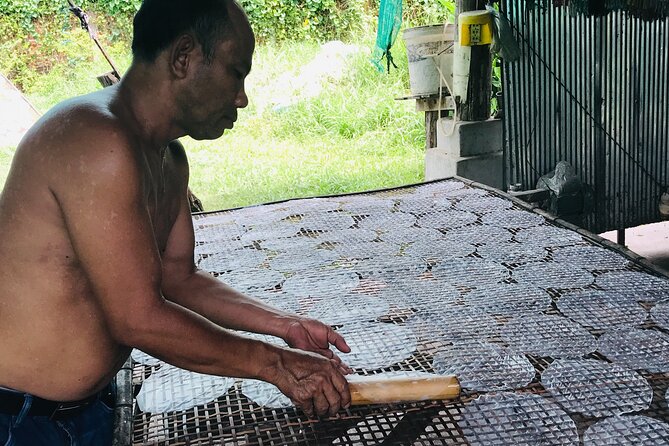
The rice wine distillery adds a drink to the tour’s food theme. You can visit a traditional old distillery and learn how rice is turned into alcohol through a local production method.
The word traditional matters here. This is not a modern tasting room built for a tourism program. The setting may be basic, and the emphasis is on seeing the distillery rather than receiving a large, structured tasting menu.
You will have the chance to discover and taste local products during the morning, but the available information does not specify how much rice wine is served or whether every visitor must try it. If you do not drink alcohol, you can still appreciate the production process, though you should ask the guide about tasting when you arrive.
This stop rounds out the tour well. Rice appears in several forms during the morning: rice paper, sticky rice, and rice wine. You get to see how one major crop supports different parts of local food culture.
Wat Samrong Knong and the killing fields option
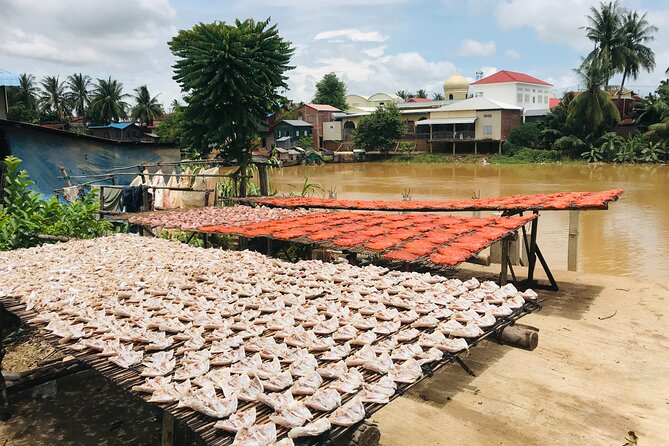
The tour can also include Wat Samrong Knong temple complex and killing fields. This adds a serious historical layer to a morning otherwise centered on food, work, and village life.
The supplied details do not describe the length of this stop or confirm whether it replaces one of the production visits. You should ask the guide at the start if this is important to you. The option may be especially useful if you want to connect the countryside with Cambodia’s difficult recent past.
Do not treat the killing fields as a casual photo stop. The subject is solemn, and you should allow the place a respectful pace. Pairing it with the food-making visits creates a broader picture of Battambang, but the change in mood can feel abrupt.
If your priority is local products and relaxed village touring, confirm how much time the historical stop will take. If you have not yet visited a killing field in Cambodia, including Wat Samrong Knong may give the morning more depth.
What the guide and driver add to the experience
The guide and driver are important here because the value depends on explanation and access. A driver who knows the area can move you between scattered countryside stops, while a good guide can explain what you are seeing and help you interact respectfully with local producers.
The service includes safe driving and bottled water according to the available feedback. One direct account also describes the driver as willing to accommodate a request and useful for additional afternoon travel and transfers to and from town. That suggests flexibility, although you should not assume extra trips are included in this $15 tour.
The best approach is to tell the guide what interests you early. You might care most about rice products, local drinks, photography, or the temple and killing fields. A short request at the beginning can help shape the morning if timing allows.
Do keep your expectations realistic. The tour provides access and transport, but it is not described as a private custom itinerary. The group can include up to 10 people, so the guide must balance different interests.
Is $15 a fair price?
At $15 per person, this is strong value if you want a guided look at rural Battambang. The price covers a four to five-hour morning, pickup, transport between stops, local guiding, and opportunities to taste several products. Recreating that route independently would mean finding each production site and arranging transport, with no guarantee that anyone would explain what you are seeing.
The value is not based on expensive facilities. You are paying for access, local knowledge, and a practical route through the countryside. The visits to rice paper makers, banana producers, the fish paste factory, and the rice wine distillery give the morning a clear theme.
Group discounts may be available, which could make it an even better choice for couples, families, or friends booking together. The small maximum group is another plus. You are not paying a premium private-tour price, but you also are not being placed in a large bus.
The fair warning is that tastings and stops may not feel equal in size or polish. Some places may offer only a brief look. That is normal for a rural livelihood tour and should be part of your price calculation.
Who should book this Battambang experience?
I would recommend it to you if you want more than temples and town streets. It suits people interested in food, farming, local work, photography, and the practical details of Cambodian life.
It is also a good fit for first-time visitors to Battambang who want an easy introduction to the area. The guide, pickup, and fixed morning route remove much of the guesswork.
Families may enjoy the visible, hands-on nature of the production stops, though adults should consider whether young children will be comfortable around an open fire, strong fermented-food smells, or a serious historical site. The available information says most people can participate, but it does not provide detailed child-specific guidance.
You should think twice if you want luxury transport, air-conditioned attractions, or a carefully staged culinary class. This is a working countryside outing. Conditions may be modest, and the experience is strongest when you are curious rather than demanding.
Booking timing, weather, and cancellation
The tour is often booked about 14 days ahead, so reserve early if your Battambang dates are fixed. Confirmation arrives at booking, and you can use a mobile ticket.
Free cancellation is available if you cancel at least 24 hours before the start time. Cancellations within 24 hours are not refunded, and changes within that period are not accepted. The cut-off follows local time.
Good weather is required. If poor weather cancels the tour, you will be offered another date or a full refund. That policy makes sense for a countryside route involving rural roads and outdoor activity.
Should you book the village livelihood tour?
Book it if you want to see how local products are made, taste several traditional foods, and spend a morning in the Battambang countryside without paying much. The strongest parts are the variety of stops, the small group size, the pickup service, and the chance to see real production rather than a generic cultural presentation.
Before you confirm, decide whether you want the optional Wat Samrong Knong and killing fields visit, and ask how it affects the food-production route. Also remember that the tour is not a full meal, and the fermented fish paste stop may be intense for sensitive noses.
For $15, this is an easy recommendation for curious, practical-minded visitors. It shows you the working side of Battambang, one local product at a time.
FAQ
Where does the tour take place?
The tour takes place in Battambang and the surrounding countryside, with visits to homes and workplaces where local Khmer people make traditional food and drink products.
How long does the tour last?
The experience lasts approximately four to five hours.
What time does the tour operate?
The stated meeting window is from 8:00 AM to 8:30 AM, Monday through Sunday.
Is hotel pickup available?
Yes. Pickup is offered for the tour.
How many people can join the tour?
The maximum group size is 10 travelers.
What products can I see being made?
You can see rice paper, sticky rice cooked in bamboo tubes, fermented fish paste, dried bananas, banana chips, and traditional rice wine being produced.
Can I taste the local products?
Yes. The tour includes opportunities to taste the traditional food and drink products.
Is Wat Samrong Knong included?
You have the option to visit the Wat Samrong Knong temple complex and killing fields. The supplied details do not specify how long this optional visit lasts.
What happens if the weather is poor?
Because the tour requires good weather, it may be canceled in poor conditions. You will then be offered a different date or a full refund.
Newest reviews from Battambang
- Private Taxi Transfer From Battambang – Kampot★ 5.0 · 1 review
- Private Taxi Transfer Battambang from/to Phnom Penh★ 5.0 · 7 reviews
- Private Taxi Transfer From Battambang – Siem Reap City★ 5.0 · 4 reviews
- Afternoon tour to Original Bamboo train. Bat cave. Killing cave★ 5.0 · 25 reviews
- Afternoon Tour BambooTrain & Bat Cave★ 5.0 · 57 reviews
- Private Boat from Battambang to Siem Reap via Tonle Sap Lake★ 4.5 · 3 reviews
- Tuk Tuk Tour (Full-Day)★ 5.0 · 7 reviews
- Private Half-Day Tuk Tuk Tour in Battambang★ 5.0 · 2 reviews
Battambang Tours, compared.
Tuk-Tuk, Bamboo Train, Killing/Bat Caves, Sunset
Read our review →
Battambang Tuk Tuk tour: Bambootrain, Killing & Bat Caves,Sunset
Read our review →Afternoon tour by tuk tuk to bamboo train,bat cave,killing cave,countryside.
Read our review →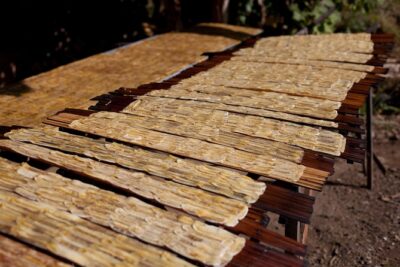
Local Livelihood Half Day Bike Tour in Battambang
Read our review →
Explore Battambang full day tour by Tuk Tuk (start from 9am-6:30pm)
Read our review →

Full Day tour .City tour.Countryside.Bamboo Train.Secret Bat Cave
Read our review →
Browse the lists this tour appears in