
Reviewed · FLOATING VILLAGE TOURS
Kompong Phluk Floating Village Tour from Siem Reap
The water tells Cambodia’s rural story. This four-hour trip from Siem Reap takes you through rice fields and village roads to Kompong Phluk, a fishing and farming community on Tonlé Sap Lake. I like the chance to see both parts of Kompong Phluk, including its stilted village and smaller floating settlement, and I like that a guide from the area can explain daily life in direct, personal terms.
I also like the changing route. When the water is high, you can travel along the village waterways and take a small boat through the flooded forest. When the water drops, you may walk beside homes on tall stilts instead. The main drawback is that the experience depends heavily on season and water level, so the forest boat ride may not be possible, and some visitors may find the $66 price high for a half-day outing.
In This Review
- Key Points Before You Book
- From Siem Reap’s Roads to Tonlé Sap Lake
- Reaching Kompong Phluk by Long-Tail Boat
- Seeing Both Villages, Not Just the Main Waterway
- Schools, Homes, and the Pagoda Temple
- The Flooded Forest Boat Ride
- Out on the Great Tonlé Sap
- A Quiet Half-Day Away From Angkor
- What the $66 Price Covers
- Practical Advice for a Better Visit
- Who Should Book This Kompong Phluk Tour?
- Should You Book It?
- FAQ
- Where does the Kompong Phluk tour start?
- How long does the tour last?
- How do I reach Tonlé Sap from Siem Reap?
- Does the tour visit both Kompong Phluk villages?
- Is the flooded forest boat ride guaranteed?
- What can I see in Kompong Phluk?
- Is food included?
- What languages are available for the guide?
- Can children join the tour?
Key Points Before You Book
- Both Kompong Phluk villages are included: You visit the stilted township and the attached floating village, not just the best-known section.
- Water levels shape the day: High water may allow a boat ride through the flooded forest, while dry-season conditions can mean more walking.
- The community is built around Tonlé Sap: About 3,000 people live here, mainly earning a living through fishing and farming.
- A local guide adds meaning: Guides such as Mr. Friday, Mr. Bean, Mr. Boone Sith, Veel, and Mr. Wanna have been praised for their clear explanations and friendly manner.
- The trip includes practical comforts: Hotel pickup and drop-off, transport, a boat trip, water, fruit, a guide, and checkpoint fees are listed as included.
- It is a quiet change from temple sightseeing: The pace is slower, and the focus is on homes, schools, fishing, farming, and the lake ecosystem.
From Siem Reap’s Roads to Tonlé Sap Lake
The trip begins with pickup at your hotel or guesthouse in Siem Reap. The journey south-east takes about 30 minutes by tuk-tuk, air-conditioned car, or minivan, depending on the transport arranged for your group.
I like this opening because it gives you a quick look at rural Cambodia before the boat ride begins. The road passes rice fields and villages, helping you see that Siem Reap is more than an access point for Angkor’s temples. This is still a working part of the country, where farming and fishing shape the day.
The transport matters more than it might seem. A tuk-tuk gives you an open-air ride and a closer feel for the countryside, but it offers less protection from weather and road dust. An air-conditioned vehicle is easier in hot or wet conditions. One small group described using a van with only three people, while another chose the local tuk-tuk option, so the feel of the trip can vary.
You may also stop at a local market on the way. This is not listed as a guaranteed part of every departure, so treat it as a possible addition rather than a promise. If it is included, you can see how local shoppers choose food, including live fish and crabs kept in small pools. That can be an honest look at local food culture, though it may be uncomfortable if you prefer to avoid scenes involving live animals.
More floating village trips:
- From Siem Reap: Kampong Phluk Floating Village Tour by Boat
★ 4.9 · 6,979 reviews - Sunset tour of Kampong Phluk stilts home village on the Tonle Sap
★ 5.0 · 4,865 reviews - Siem Reap: Kampong Phluk Floating Village Tour with Boat
★ 4.9 · 3,843 reviews
Reaching Kompong Phluk by Long-Tail Boat
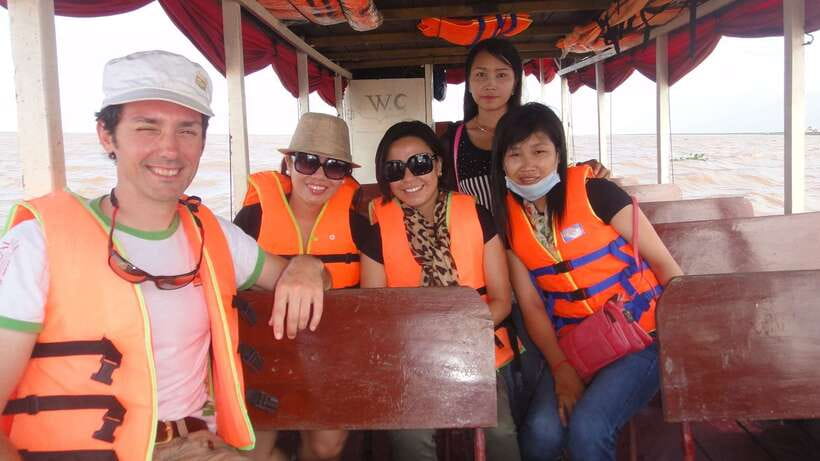
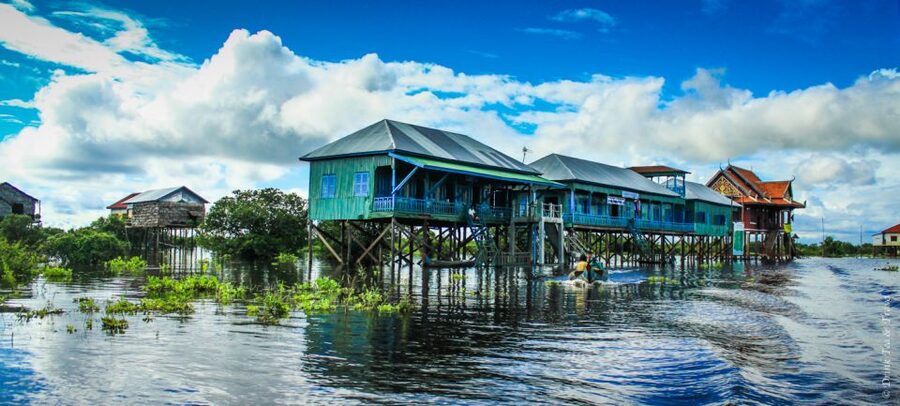
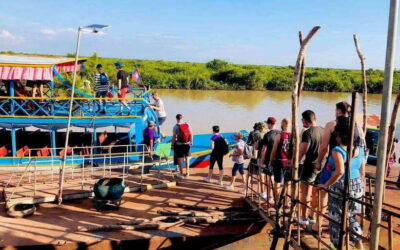
At the point where the road ends, you board a long-tail boat and follow the Kompong Phluk River toward the stilted village. This transition is one of the trip’s best moments. The road gives way to water, and the houses begin to rise above you on tall wooden supports.
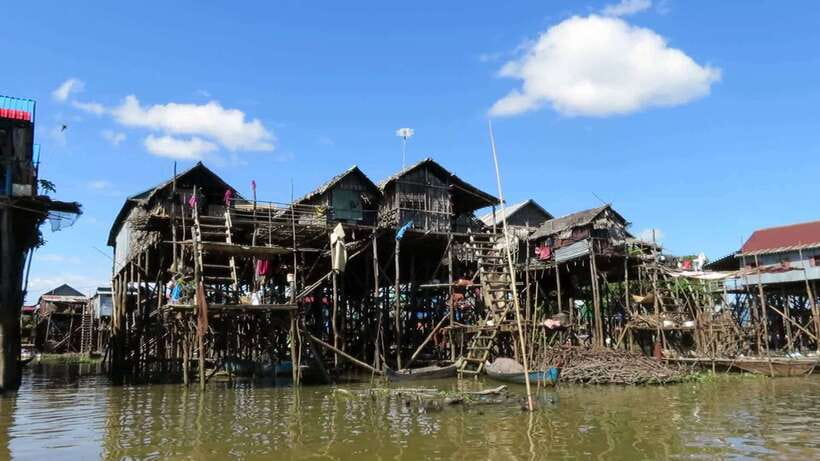
Kompong Phluk has about 3,000 inhabitants. Fishing and farming are the main sources of income, and the village is designed around a water level that can change dramatically. Tonlé Sap can rise or fall by as much as 10 meters between seasons. That explains why some homes stand up to 10 meters tall and why the same route can look very different at different times of year.
During the wet season, the boat may pass along what functions as the village’s main street. During the dry season, water levels can be low enough that you transfer to a smaller boat or walk through parts of the community. A February visit described low water and a small-boat ride past the stilted houses, followed by time in the village and at the temple. A June visit also noted that walking through the village was necessary, but still worthwhile.
This is important when setting expectations. You are not booking one fixed postcard scene. You are visiting a place that changes with the lake. That makes the experience more genuine, but it also means the route will not always match the most dramatic photographs.
Seeing Both Villages, Not Just the Main Waterway
One useful feature of this trip is that it visits both Kompong Phluk villages. The main settlement is the stilted township, with homes, schools, and community buildings raised above the seasonal flood. A smaller floating village is attached to it, and relatively few tours make the effort to reach that section.
The floating village gives you another view of life on Tonlé Sap. Here, the relationship with the water is even more direct. Homes and daily routines are arranged around boats and changing lake conditions. You are not simply looking at scenery. You are seeing how people adapt their work and homes to a large freshwater system that does not stay at one level.
The two villages are separated by a large structure described in the tour information as a pergola, while the route also includes a visit to the village pagoda temple. The wording around this structure is not entirely clear, so I would ask your guide to explain what you are seeing on the day.
The village visit is strongest when you take your time and listen. Guides can explain the simple farming and fishing lifestyle, the seasonal changes, and the practical problems faced by families living in this setting. Several guides have received especially warm praise for this part of the experience. Mr. Friday was singled out for his friendly explanations, while Mr. Bean was praised for sharing local information with humor and warmth. Veel, Tong, Mr. Wanna, Mr. Boone Sith, and other guides have also been described as helpful and easy to understand.
Schools, Homes, and the Pagoda Temple
The itinerary includes stops at a few schools and at the large pagoda temple. These visits help you see the village as a real community rather than a boat route lined with houses.
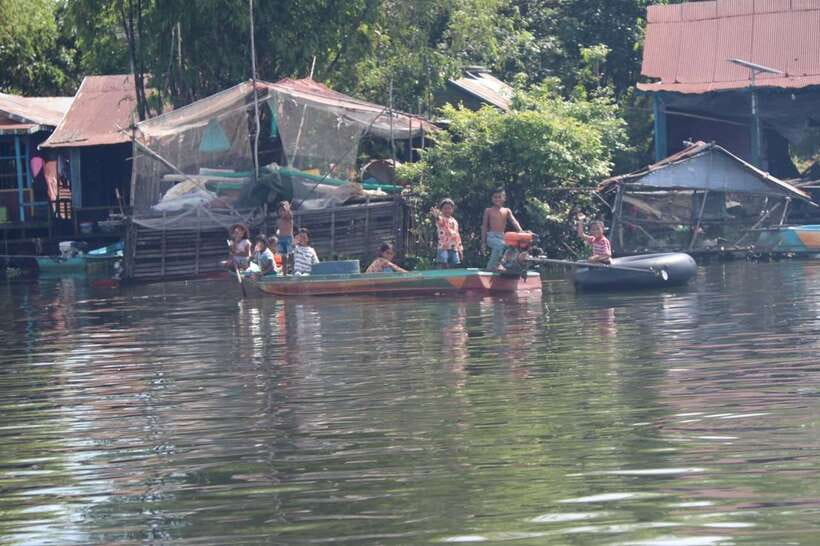
The schools are especially useful for understanding the everyday side of the village. You may see children going about their day, and the tour description notes that children are often playful and smiling. You should still approach these stops with care. This is a living community, not a staged attraction, so follow your guide’s advice about photography and where to walk.
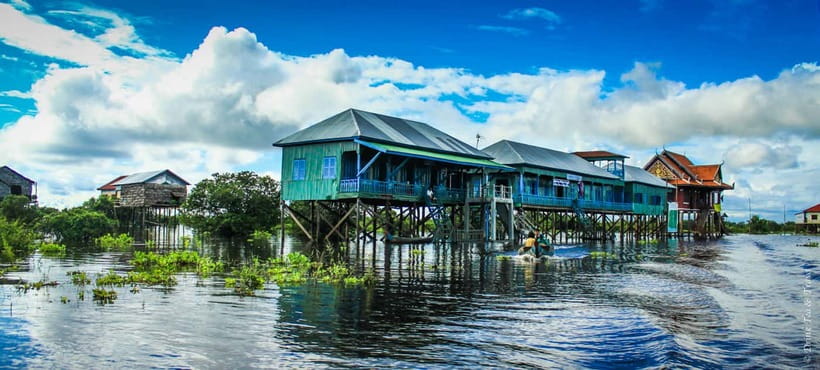
The tall houses are the most striking feature. Their height is not a design trick. It reflects the lake’s seasonal rise and fall. From the water, you can see how high the supports need to be, and in drier months you can better understand the distance between the homes and the riverbed.
The pagoda adds a cultural stop to the practical story of fishing and farming. It gives the village a place for religious life and community identity. This balance is one reason I find the outing more worthwhile than a simple scenic cruise. You get nature, local work, homes, education, and religion within a short route.
Still, keep the scale in mind. This is not a large temple complex with a long list of carvings and galleries. The pagoda is part of a village visit, not a replacement for Angkor Wat or Ta Prohm.
A few more options around Siem Reap worth reading up on
- Angkor Wat Sunrise or Sunset Tour with Guide from Siem Reap
★ 5.0 · 12,109 reviews - Siem Reap: Angkor Wat: Small-Group Sunrise or Sunset Tour
★ 5.0 · 9,444 reviews - Siem Reap: Angkor Wat 2-Day Tour with Sunrise and Sunset
★ 4.9 · 4,429 reviews - Siem Reap: Full-Day Angkor Wat Guided Tour with Sunset
★ 4.9 · 3,803 reviews
The Flooded Forest Boat Ride
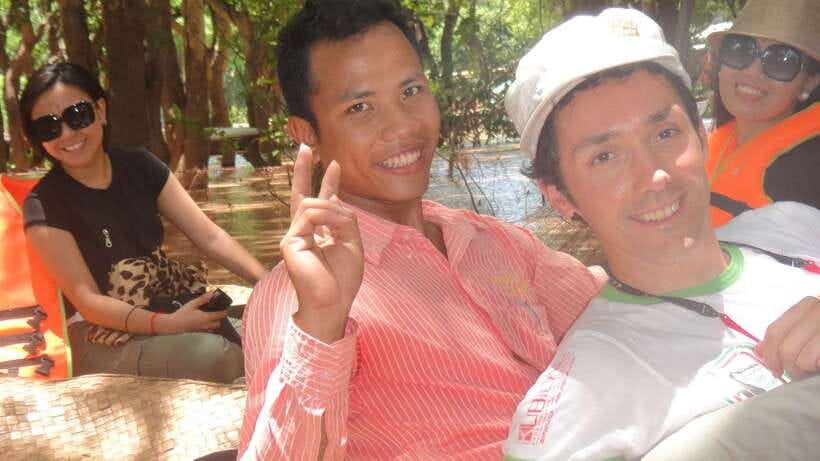
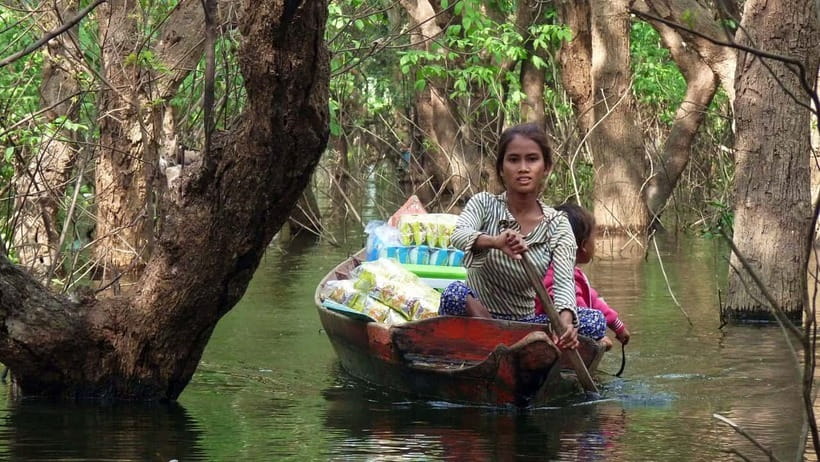
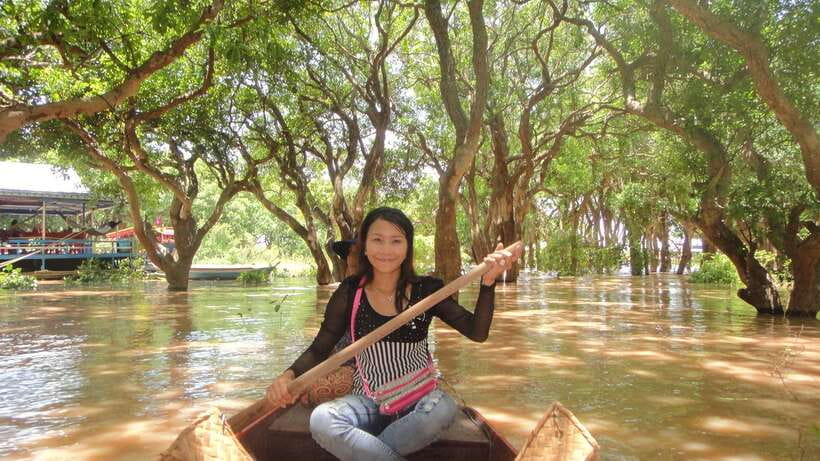
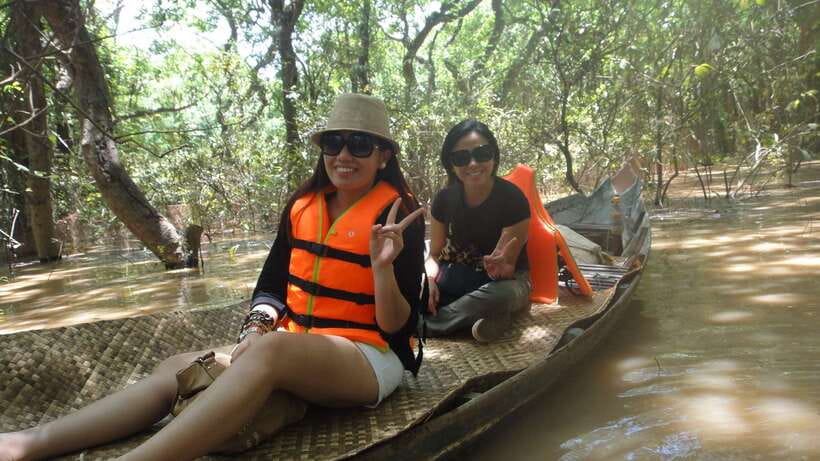
If water conditions allow, you transfer to a small boat and are rowed through the flooded forest toward Tonlé Sap Lake. This is usually the quietest part of the trip. The narrow waterways, tree trunks, and changing reflections give you a slower look at the lake’s seasonal ecosystem.
The flooded forest is valuable because it is not just pretty scenery. It provides habitat for fish and helps support the wider fishing system of the lower Mekong basin. As the water spreads into the forest, fish use the flooded areas for shelter and feeding. Your guide can connect what you see in the trees and water with the food and work of the villages.
Do not count on this section as a guaranteed feature. In dry conditions, the water may be too low for the small boats. That is the main seasonal limitation of the tour. A past visit in the dry season still included a memorable punt-boat ride, but another dry-season description makes clear that walking was needed in the village. Conditions can change from month to month and even from day to day.
The small boat also means the ride is not a private wilderness expedition. You are taking a short local journey as part of a village tour. That is its value. You see the connection between the forest, river, homes, and lake instead of treating each as a separate attraction.
Out on the Great Tonlé Sap
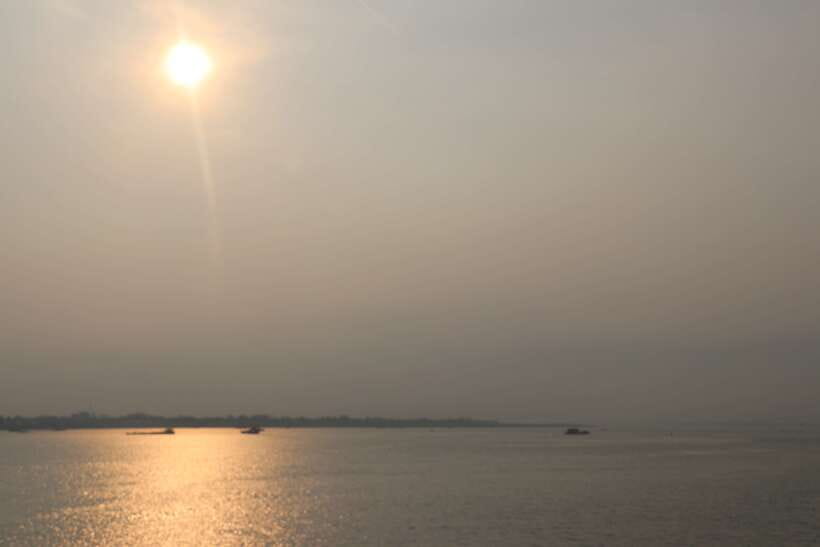
The boat eventually reaches the open lake. Tonlé Sap is the largest freshwater lake in Southeast Asia, and its size becomes clearer once the village waterways open into a broad expanse of water.
The lake is also central to Cambodia’s food supply. The tour describes it as one of the world’s most productive fishing lakes and notes that a large share of Cambodian protein comes from fishing and farming connected to Tonlé Sap. The exact figure given is 75 percent, but the broader point is clear: this lake is not simply a scenic stop. It supports households, markets, and national food traditions.
You might see water buffalo cooling in the river systems or large water birds near the shallows and overhead. Sightings are not promised, so treat them as a bonus rather than a reason to book. The experience is still worthwhile without wildlife, since the lake itself and the working village are the main attractions.
The UNESCO biosphere reserve designation, given in 1997, reflects the area’s high biodiversity. Your guide can help turn that label into something you can understand from the boat. You see why seasonal water movement matters, why fish are plentiful, and why the flooded forest is part of a much larger system.
A Quiet Half-Day Away From Angkor
The tour lasts four hours, with roughly three hours devoted to Tonlé Sap, including the guided boat cruise and village visit. That makes it easy to fit around other Siem Reap plans.
I would not schedule it as a rushed add-on after a full day of temples. The outing is shorter than an Angkor circuit, but the heat, boat ride, walking, and road transfer still take energy. It works best when you want a quieter morning or afternoon and need a change from stone temples.
The pace is one of its strengths. You are not racing between several major sights. You have time to watch the water, listen to the boat engine, examine the tall homes, and ask your guide how seasonal changes affect local work.
This is also a good choice if you want a more direct look at rural Cambodian life. It will not give you a full picture of the country, and it should not be treated as a poverty display. The value comes from learning how a community organizes itself around fishing, farming, schools, religious life, and water.
What the $66 Price Covers
At $66 per person, the tour is not the cheapest way to see Tonlé Sap. The value depends on what you would otherwise need to arrange yourself.
The stated inclusions cover hotel pickup and drop-off, transport, a professional English-speaking or Cambodian-speaking guide, the boat trip, a light fruit lunch, water, and checkpoint fees. Having transport and boat arrangements handled is useful, especially when the lake route changes with conditions.
The strongest value is the guide. Names such as Mr. Friday and Mr. Bean appear repeatedly in the positive feedback, with praise focused on clear English, local knowledge, patience, and a friendly sense of humor. A good guide can explain the village in a way that makes the tall houses, flooded forest, and seasonal fishing system meaningful.
There is one detail worth checking before departure. The inclusion list says fruit and water are provided, while the general activity information says food and drinks are not included unless specified. I would confirm exactly what your booking includes, especially if you expect a full meal rather than a light snack.
The price may feel high if you only want a short boat ride and a few photographs. It makes more sense if you value hotel transport, a local guide, both villages, the temple, and the chance to travel through the flooded forest when conditions cooperate.
Practical Advice for a Better Visit
Dress for heat, humidity, and possible rain. The tour operates in all weather conditions, and you should wear clothes that are comfortable for a small amount of walking as well as time on the boat.
Water levels are the key question. Ask at booking or before departure whether the flooded forest route is open and how much walking is expected. That one question will help you form realistic expectations.
Choose transport with care. A tuk-tuk offers a more open ride, while an air-conditioned car or minivan may be more comfortable in harsh weather. Pickup is available from hotels and guesthouses in Siem Reap.
Children must be accompanied by an adult, and unaccompanied minors are not allowed. Because the tour includes boats, village paths, and some walking, keep a close eye on children around the water.
The trip operates in a community where people live and work. Listen to your guide about respectful behavior, avoid treating homes as exhibits, and ask before taking close photographs of people or children. You will get more from the visit by being curious and polite.
Free cancellation is available up to 24 hours before departure, and you can reserve now and pay later. Confirmation is sent within 24 hours, subject to availability. These terms are useful if your Siem Reap schedule is still changing.
Who Should Book This Kompong Phluk Tour?
I would recommend it to you if you want a half-day experience focused on local life, changing water levels, and the Tonlé Sap ecosystem. It suits people who enjoy quiet boat rides, rural scenery, and conversations with a guide more than polished attractions.
It is also a good choice after visiting several Angkor temples. The contrast is strong: carved stone and royal monuments give way to stilted homes, schools, fishing boats, and open water.
I would hesitate if you need a guaranteed flooded-forest cruise, dislike small boats, or expect a packed list of major sights. The route changes with the season, and the village can feel modest rather than spectacular. The crocodile farm and caged animals mentioned in one account may also bother animal lovers.
Should You Book It?
Book this tour if you want to understand why Tonlé Sap matters to Cambodia, not just take a quick boat photograph. The visit to both Kompong Phluk villages, the schools, pagoda, tall homes, flooded forest, and open lake gives you a useful look at a community shaped by water.
The best reason to go is the guide. Ask for someone who can explain local life clearly, as guides such as Mr. Friday, Mr. Bean, Mr. Boone Sith, Veel, and Mr. Wanna have done for past groups. If the water is high, the small-boat ride through the forest can be the highlight. If it is dry, expect more walking and judge the $66 cost against the added transport and explanation.
For an authentic change of pace from Angkor, I think it is worth considering. Just book it for the people, water, and seasonal reality, not for a guaranteed wildlife show or one fixed version of a floating village.
FAQ
Where does the Kompong Phluk tour start?
Pickup is provided from your hotel or guesthouse in Krong Siem Reap.
How long does the tour last?
The full experience lasts four hours. About three hours are allocated to Tonlé Sap, including the guided tour and boat cruise.
How do I reach Tonlé Sap from Siem Reap?
The tour includes transport by tuk-tuk, air-conditioned car, or minivan. The road journey from Siem Reap takes about 30 minutes.
Does the tour visit both Kompong Phluk villages?
Yes. The route visits the main stilted village and the attached floating village.
Is the flooded forest boat ride guaranteed?
No. The small-boat ride through the flooded forest depends on water levels and weather conditions.
What can I see in Kompong Phluk?
You can see stilted homes, schools, the pagoda temple, fishing and farming activity, the floating village, and the seasonal waterways.
Is food included?
A light fruit lunch and water are listed as included. The general information also says food and drinks are excluded unless specified, so confirm the exact food arrangement when booking.
What languages are available for the guide?
The tour is offered with a live guide in Cambodian or English.
Can children join the tour?
Yes, but children must be accompanied by an adult. Unaccompanied minors are not allowed.
Newest reviews from Siem Reap
- War Museum, Killing Field, and APOPO Hero RATs Tour★ 5.0 · 7 reviews
- Angkor Wat at Sunrise★ 4.0 · 7 reviews
- Siem Reap Angkor Airport Taxis (from Airport to Hotel)★ 5.0 · 44 reviews
- Cambodian Cooking Class and Oxcart Ride with Local Village Tour★ 5.0 · 4 reviews
- Secret Temples of Angkor – Guided Tour in Siem Reap★ 5.0 · 6 reviews
- Short Cycling at Countryside★ 5.0 · 29 reviews
- SIEM REAP E-BIKE HALF-DAY COUNTRYSIDE (25-30 km)★ 4.0 · 1 review
- Unveiling the Mystical Beauty of Phnom Kulen National Park★ 5.0 · 6 reviews
Floating Village Tours, compared.
Sunset tour of Kampong Phluk stilts home village on the Tonle Sap
Read our review →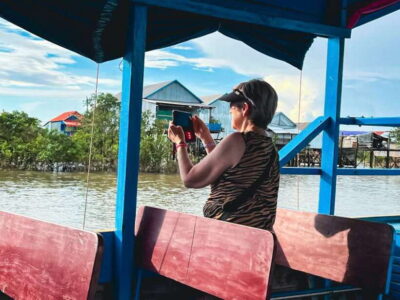
Kampong Phluk Floating Village Tour with Boat
Read our review →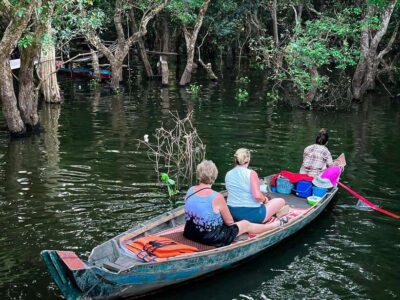
Siem Reap Floating Village Kampong Phluk Sunset with Boat
Read our review →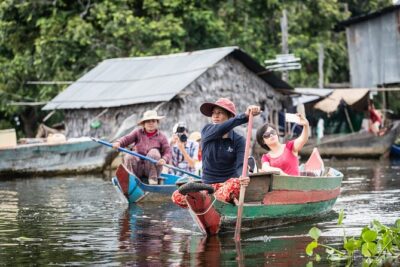
Kompong Phluk Floating Village Half-Day Tour ( Morning / Sunset )
Read our review →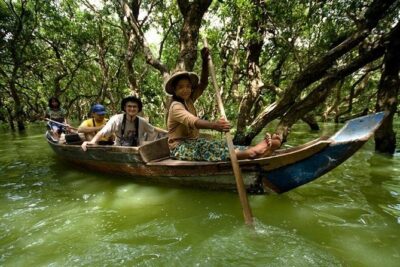
Tonle Sap Lake & Kampong Phluk Village Half-Day Tour
Read our review →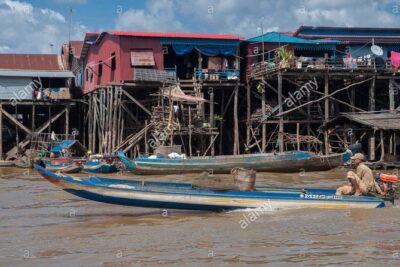
Browse the lists this tour appears in