
Reviewed · KOH KER TOURS
Koh Ker & Preah Vihear
Remote temples reward the extra miles. This two-day trip from Siem Reap pairs the old Khmer capital of Koh Ker with cliff-top Preah Vihear, while showing you rural Cambodia between the major sights. I like the small maximum of two people and the chance to see a hillier side of the country, far from the usual temple circuit.
I also like the personal service from guide Ry Vanra, whose English, humor, and care receive repeated praise. The main drawback is cost planning: the $100 price does not include entrance fees, meals, lodging, or tips, and two long days on the road require a reasonable level of fitness.
In This Review
- Key points before you book
- Why this two-day trip is different from a standard Siem Reap outing
- Day one: Koh Ker and a former Khmer capital
- Beng Mealea: ruins shaped by time and plants
- Peung Kom Nuo in the Kulen hills
- Overnight planning between the temple sites
- Day two: Preah Vihear on the Dongrek range
- Ta Mok House and Cambodia’s difficult recent past
- Guide, driver, and the small-group advantage
- What the $100 price really buys
- Who should choose this route
- Should you book Koh Ker and Preah Vihear?
- FAQ
- Where does the tour start?
- How long does the experience last?
- How many people can join?
- What is included in the price?
- Are entrance fees included?
- Are meals and accommodation included?
- What level of fitness is needed?
- What is the cancellation policy?
Key points before you book
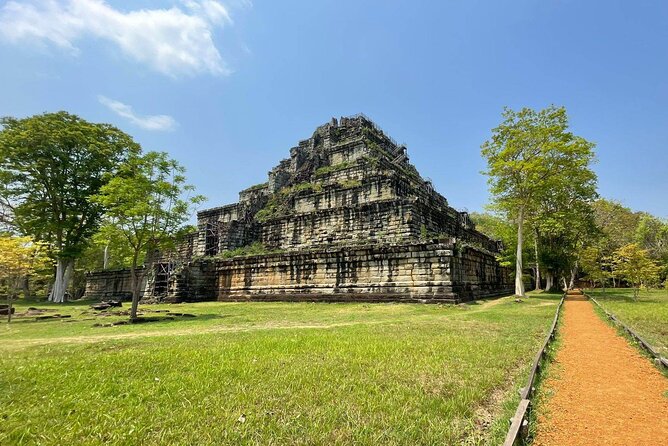
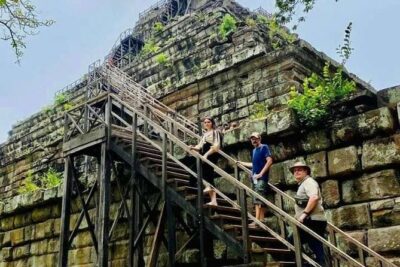
- Koh Ker feels like an expedition: Its seven-tiered pyramid rises in a remote setting tied to a former Khmer capital.
- Preah Vihear sits high on the Dongrek range: The temple’s hilltop position gives this trip a very different feel from Siem Reap’s flatter temple zone.
- The group size is unusually small: The tour accepts a maximum of two people, useful if you want direct contact with your guide.
- Rural Cambodia is part of the experience: You are not simply moving between monuments. The route includes villages, working countryside, and changing terrain.
- The price covers transport and guidance, not the full trip: You must budget separately for admission, food, accommodation, and tips.
- Safety and conversation are major strengths: Vanra is praised for punctuality, patience, good English, and careful driving, while one account specifically praises driver Mr. Buny for staying off his phone.
Why this two-day trip is different from a standard Siem Reap outing
Most visitors base themselves around Siem Reap and visit the best-known Khmer sites in short, easy loops. This trip asks you to go farther. It reaches Koh Ker, Beng Mealea, Peung Kom Nuo, and Preah Vihear, with an overnight stop needed somewhere along the way.
That extra distance changes the experience. You see temples in more remote settings, pass through rural areas, and encounter hills that may surprise you if you picture Cambodia only as a flat plain. The road time is a real part of the tour, not an inconvenience to be hidden. You spend hours in transport, but those hours connect the monuments to the communities and scenery around them.
The small group makes a difference. With only two places available, you can ask questions, adjust the pace within reason, and speak directly with Vanra rather than trying to catch a guide’s attention in a large bus. The feedback about his humor, patience, English, and knowledge of Cambodian history and culture is especially consistent.
This is also a practical choice for anyone who wants help with a complicated route. Koh Ker and Preah Vihear are not simple add-ons to a short Angkor day. A guide and driver reduce the work of arranging transport, navigation, and the long return journey.
More trips out to Koh Ker:
- Koh Ker Temple Group & Beng Mealea Full-Day Join-in Tour
★ 5.0 · 710 reviews - From Siem Reap: Koh Ker and Beng Mealea Temples Tour
★ 4.9 · 293 reviews - Preah Vihear: Full-Day Preah Vihear and Koh Ker Temple Tour
★ 4.9 · 263 reviews
Day one: Koh Ker and a former Khmer capital
The first day begins at 8:30 a.m. with pickup from Siem Reap. The main stop is Koh Ker, an ancient city of the Khmer Empire built between 928 and 944 AD. It was once home to more than 10,000 people, which gives the site a scale beyond the single pyramid most people picture.
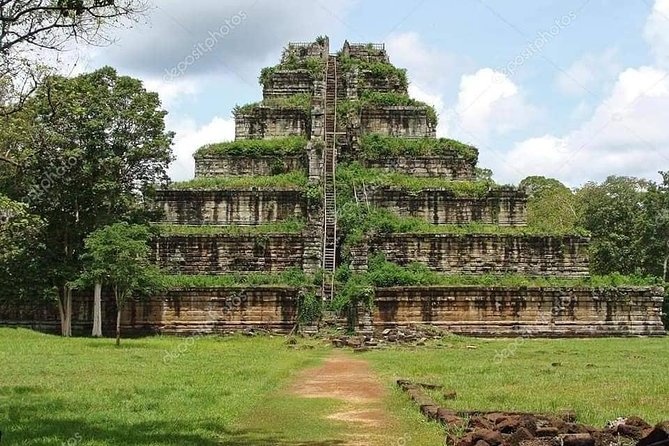
The star attraction is the seven-tiered Prang pyramid. Its shape is bold and unmistakable, but the wider setting matters just as much. Koh Ker is presented as a place where you can feel like an explorer, and that description fits the remote character of the site better than the polished feel of a central temple complex.
Allow about six hours for Koh Ker. That is a substantial portion of the day, and rightly so. The time allows you to see more than one structure and to absorb the former city rather than treating the pyramid as a quick photo stop. You should expect walking and uneven ground, so shoes with a firm sole and enough water are sensible.
Admission is not included. This is one of the most important budget points, since the $100 tour price is only the service charge for transport, the guide, and cold water. Ask for the current entrance cost before departure so you can carry enough cash or arrange payment as needed.
Koh Ker suits you best if you enjoy places with a sense of distance and discovery. If you want a compact temple visit with cafés and facilities close by, this may feel demanding. The attraction is the remoteness, so the trade-off is less convenience.
Beng Mealea: ruins shaped by time and plants
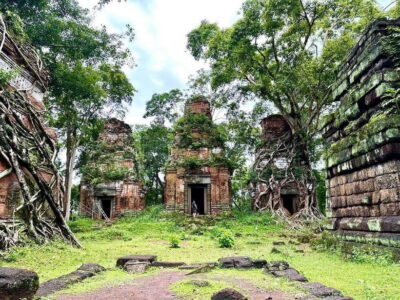
After Koh Ker, the route continues to Prasat Beng Mealea. The stop lasts about one hour, making it a much shorter visit than Koh Ker. Built in the early 12th century under King Suryavarman II, Beng Mealea is known for its ruined appearance and plants growing around the temple.
That combination gives the site a rougher mood. You see architecture being pressed and softened by nature rather than presented as a fully ordered monument. I like this stop because it adds contrast after the grand pyramid at Koh Ker. One temple gives you monumental geometry, the other gives you broken stone, overgrowth, and a more weathered setting.
The one-hour limit means you will not have unlimited time to wander. You should listen carefully to the guide’s meeting instructions and keep an eye on the clock. This is a stop designed to complement the day, not replace Koh Ker as the main event.
Beng Mealea also has a useful role in the overall route. It connects the remote temples to the better-known world of Angkor-era construction, while still feeling less formal and more untamed. Vanra’s historical explanation is likely to be most useful here, since the stones alone do not always explain how the temple fits into the wider Khmer story.
Peung Kom Nuo in the Kulen hills
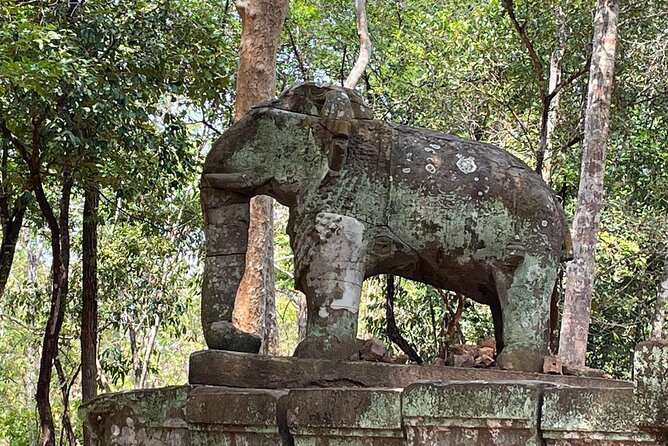
The final listed stop on day one is Peung Kom Nuo, described as a secluded site in the Kulen mountain area. You spend about one hour here.
This stop is for people who like smaller and less familiar places. It is not presented as a huge temple complex, so you should not arrive expecting another Angkor Wat. Its value is the change of pace and the chance to see a quieter part of the Kulen hills.
The stop also reinforces one of the trip’s best features: the scenery changes as you move away from Siem Reap. Cambodia here is not only flat rice country. The route becomes more hilly, and that shift helps explain why this journey feels different from a normal day around Angkor.
The available description does not provide details about facilities, exact walking conditions, or the specific remains at Peung Kom Nuo. Plan for a simple rural stop rather than a fully serviced attraction. Keep your day bag light, carry water, and stay aware of the guide’s instructions.
More trips to Preah Vihear:
- Full-Day Preah Vihear, Koh Ker and Beng Mealea Private Tour
★ 4.4 · 101 reviews - Preah Vihear temple – Koh Ker & Other temple with Small Group
★ 5.0 · 96 reviews - Private Preah Vihear and 2 Temples Guided Tour
★ 5.0 · 42 reviews - Preah Vihear, Koh Ker & Beng Mealea Tour
★ 5.0 · 18 reviews
Overnight planning between the temple sites
The tour lasts approximately two days, but accommodation is not included. You need to confirm where the overnight stop will be and arrange or pay for your own room. Food is also separate, so the final cost will be higher than the advertised $100.
This is not a flaw, but it needs to be clear before booking. The price can be good value for a private or near-private two-day route with transport and a guide, especially when compared with arranging several separate rides. Still, you should add entrance fees, one night of accommodation, meals, and a tip when comparing the total with other options.
The long drives make the quality of the driver important. One account gives specific praise to Mr. Buny for careful driving and for never looking at his phone. Other feedback praises Vanra’s safe driving, regular rest breaks, punctuality, and patience. Those details matter on a trip with so many road hours.
You should also expect the schedule to feel full. The tour starts at 8:30 a.m., and the listed stops already account for roughly eight hours of sightseeing on day one. Road time comes on top of that. A good night’s sleep and a realistic attitude toward early starts will help.
Day two: Preah Vihear on the Dongrek range
The main destination on day two is Preah Vihear Temple, with about three hours set aside for the visit. This ancient Hindu temple was built during the Khmer Empire on top of the Dongrek mountain range, near the Cambodia and Thailand border.
Its hilltop position is the defining feature. The temple is not simply another set of stones in a wooded area. You approach a monument placed high above the surrounding terrain, and the climb and setting are part of what makes it special.
You need moderate physical fitness for this trip. The exact number of steps and walking distance are not provided, so I would not treat the three-hour visit as a simple stroll. Wear practical shoes, take the climbs slowly, and keep cold water close. The included water is helpful, but you should still prepare for a physically active day.
Preah Vihear is also the point where the trip’s geography becomes most striking. The location near the Thai border gives the temple political and geographic context as well as religious and architectural interest. Vanra’s explanations are valuable here, particularly if you want more than a quick look at the structure.
Three hours is enough to give the temple proper attention, but the stop may feel tiring after the previous day. The reward is a site with a strong sense of place. If your ideal holiday means staying close to Siem Reap and limiting road time, Preah Vihear is probably better visited on a dedicated trip with a slower schedule.
Ta Mok House and Cambodia’s difficult recent past
The final listed stop is Ta Mok House, visited for about 30 minutes. Ta Mok was a former Khmer Rouge leader from 1975 to 1979, so this stop shifts the subject from ancient Khmer power to Cambodia’s recent and painful history.
Half an hour is brief, but the stop adds an important layer to the trip. Cambodia is not only temples and royal architecture. A visit to Ta Mok House can help you place the country’s modern history beside the older monuments and rural communities seen along the road.
Because the stop is short, do not expect a full museum visit or a long historical seminar. Its value depends heavily on the explanation you receive. Vanra’s background in Cambodian history and culture, praised repeatedly for this tour, is particularly relevant here.
This is also a stop to approach with respect. It may not suit anyone who wants a light sightseeing day focused only on architecture. For many people, though, the contrast makes the tour more honest and more useful.
Guide, driver, and the small-group advantage
The human side of this experience receives unusually strong praise. Ry Vanra is described as professional, punctual, polite, funny, patient, and easy to talk with. His English and knowledge of Cambodia are repeatedly singled out, along with his ability to help arrange the day around what you want to see.
One account names Mr. Buny as the driver and praises his careful road habits. Other comments describe Vanra himself as a safe driver who takes regular breaks at interesting places. Since the exact driving arrangement may vary, confirm who will drive and guide your departure.
The maximum group size is two people. That is a major advantage for couples, friends, or a parent and adult child. One account describes a 63-year-old mother traveling with her 26-year-old daughter, which also suggests the trip can work across generations if both people are comfortable with long road days and walking.
Small groups do not remove the physical demands. You still need to manage two full days, uneven temple areas, hills, and separate arrangements for food and lodging. What the small group does provide is attention, flexibility, and a more personal exchange with the guide.
What the $100 price really buys
At $100 per person, the tour includes transport, a tour guide, and cold water. Pickup is offered, and you receive confirmation when you book. A mobile ticket is available, which keeps the booking process simple.
The price does not include temple entrance fees, food, accommodation, tips, or other personal expenses. That list is broad enough that you should calculate the real cost before deciding. The final amount depends on the entrance charges and the room and meals you choose.
I see the strongest value in the route and the small group. You are not paying only for a ride to one monument. You are getting access to a demanding two-day plan that links several distant places and includes a guide who can explain the temples, rural Cambodia, and modern history.
The value is weaker if you only want the cheapest transport. In that case, the excluded costs and long duration may make the package less appealing. It is better suited to you if you value planning help, conversation, safe driving, and a route that would be awkward to organize alone.
The tour is booked an average of 64 days ahead, so popular dates may disappear early. If your Cambodia schedule is fixed, reserve well before departure. Free cancellation is available up to 24 hours before the start time for a full refund. Inside that window, no refund is offered, and changes are not accepted.
Who should choose this route
I would recommend this trip to you if you:
- Want to see Cambodia beyond the main Siem Reap temple circuit
- Enjoy remote ruins and long scenic drives
- Prefer a group of no more than two people
- Want a guide who can discuss history, culture, and daily life
- Have moderate fitness and can handle two full days
- Are willing to pay extra for entrance fees, meals, and accommodation
- Want to combine ancient sites with a stop connected to the Khmer Rouge period
I would hesitate if you have limited time in Siem Reap, dislike long drives, need a highly predictable schedule, or want all costs included upfront. The route is ambitious, and its appeal depends on accepting the road as part of the day.
Should you book Koh Ker and Preah Vihear?
Book this tour if your best Cambodia memories are likely to come from places that feel remote, varied, and less polished. Koh Ker’s pyramid, Beng Mealea’s plant-covered ruins, Peung Kom Nuo, the hills around Preah Vihear, and Ta Mok House create a broad picture of the country.
Before paying, confirm the overnight location, entrance fees, and driving arrangement. Then budget for every excluded item. If those details work for you, the $100 price is reasonable for a two-person trip with transport, cold water, and a highly praised guide.
If you want a simple, short temple outing from Siem Reap, choose something closer. If you want a demanding two-day route with rural scenery, strong historical range, and personal service from Vanra, this is a compelling choice.
FAQ
Where does the tour start?
The tour starts in Siem Reap, with pickup offered. The stated start time is 8:30 a.m.
How long does the experience last?
The experience lasts approximately two days.
How many people can join?
The activity has a maximum of two people.
What is included in the price?
Transport, a tour guide, and cold water are included.
Are entrance fees included?
No. Entrance fees for the listed sites are not included.
Are meals and accommodation included?
No. Food and accommodation are separate expenses.
What level of fitness is needed?
A moderate level of physical fitness is required. The route includes temple visits in hilly areas, especially around Preah Vihear.
What is the cancellation policy?
You can cancel at least 24 hours before the start time for a full refund. Cancellations or changes made within 24 hours are not accepted and are not refunded.
Newest reviews from Siem Reap
- War Museum, Killing Field, and APOPO Hero RATs Tour★ 5.0 · 7 reviews
- Angkor Wat at Sunrise★ 4.0 · 7 reviews
- Siem Reap Angkor Airport Taxis (from Airport to Hotel)★ 5.0 · 44 reviews
- Cambodian Cooking Class and Oxcart Ride with Local Village Tour★ 5.0 · 4 reviews
- Secret Temples of Angkor – Guided Tour in Siem Reap★ 5.0 · 6 reviews
- Short Cycling at Countryside★ 5.0 · 29 reviews
- SIEM REAP E-BIKE HALF-DAY COUNTRYSIDE (25-30 km)★ 4.0 · 1 review
- Unveiling the Mystical Beauty of Phnom Kulen National Park★ 5.0 · 6 reviews
Koh Ker Tours, compared.
Koh Ker Temple Group & Beng Mealea Full-Day Join-in Tour
Read our review →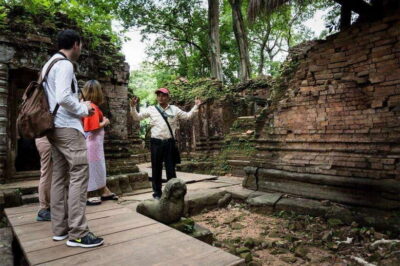
Preah Vihear: Full-Day Preah Vihear and Koh Ker Temple Tour
Read our review →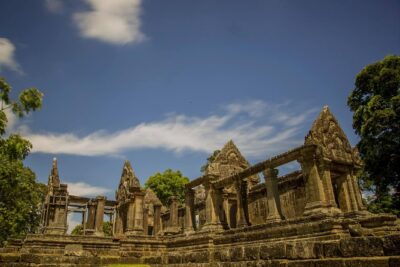
Full-Day Preah Vihear, Koh Ker and Beng Mealea Private Tour
Read our review →
Preah Vihear temple – Koh Ker & Other temple with Small Group
Read our review →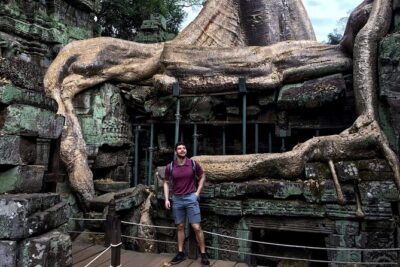
4-Day Excursion of Angkor, Koh Ker, Beng Mealea, Tonle Sap and Waterfalls
Read our review →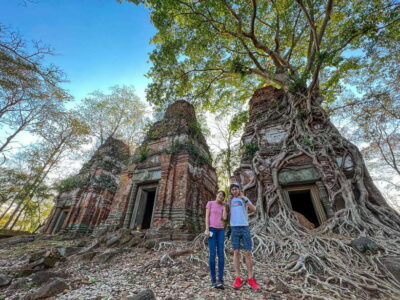
Koh Ker, Beng Mealea, & Banteay Srei Join-in Tour
Read our review →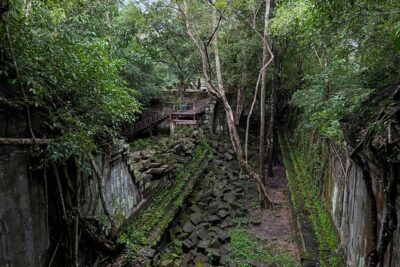
Full Day Banteay Srei Beng Mealea and Koh Ker Small Group Tour
Read our review →Browse the lists this tour appears in