
Reviewed · PEPPER FARM TOURS
Kampot Countryside include Pepper farm,Kep crab market beach
Salt fields, cave temples, pepper, and crab in one day. This private tour gives you a lively look at Kampot Province beyond the city, with stops that connect local food, difficult history, religion, and seaside life. I like the mix of hands-on visits and open-air sightseeing, especially the pepper tasting and the view from Phnom Chhngok cave temple. I also like that the $50 price covers a private group of up to two people, rather than charging each person separately.
The main consideration is the long eight-hour day in a tuk-tuk, with stairs at the cave and outdoor stops in the Cambodian heat. Food, sunscreen, and sunglasses are not included, so you need to plan for those costs and bring cash. The final stop at Kep gives you time for seafood, the beach, and a swim, but the exact amount of free time depends on the pace of the earlier visits.
In This Review
- Key points at a glance
- Why this day works for curious visitors
- Starting from Kampot in a private tuk-tuk
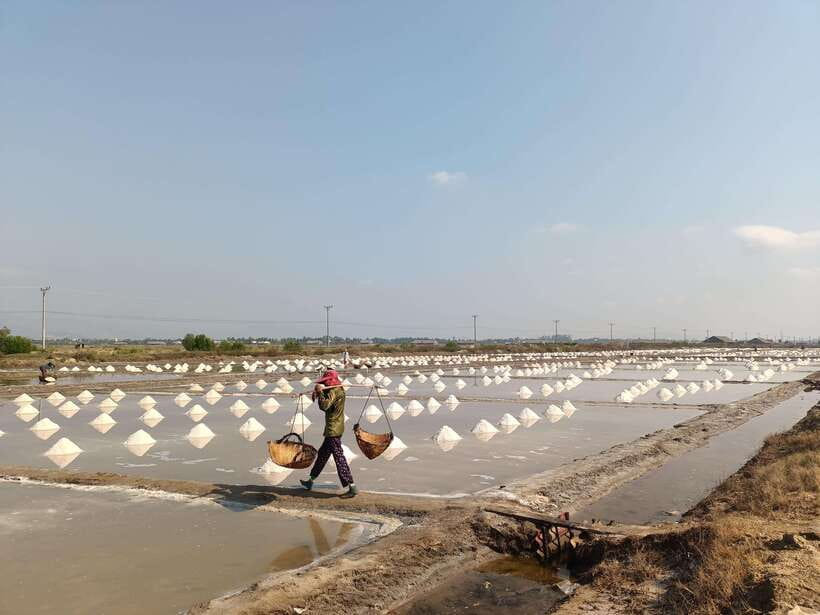
- Salt fields and the work behind Kampot’s salt
- Climbing 203 steps to Phnom Chhngok
- Brateak Krola Lake and Cambodia’s difficult past
- A closer look at Kampot pepper
- Kep crab market, seafood, and the beach
- Is $50 good value for two people?
- Who should book this Kampot day trip?
- Should you book it?
- FAQ
- How long does the Kampot countryside tour last?
- How much does the tour cost?
- What places does the tour visit?
- Is transportation included?
- Is food included?
- What is included in the tour price?
- Can I cancel the tour?
Key points at a glance
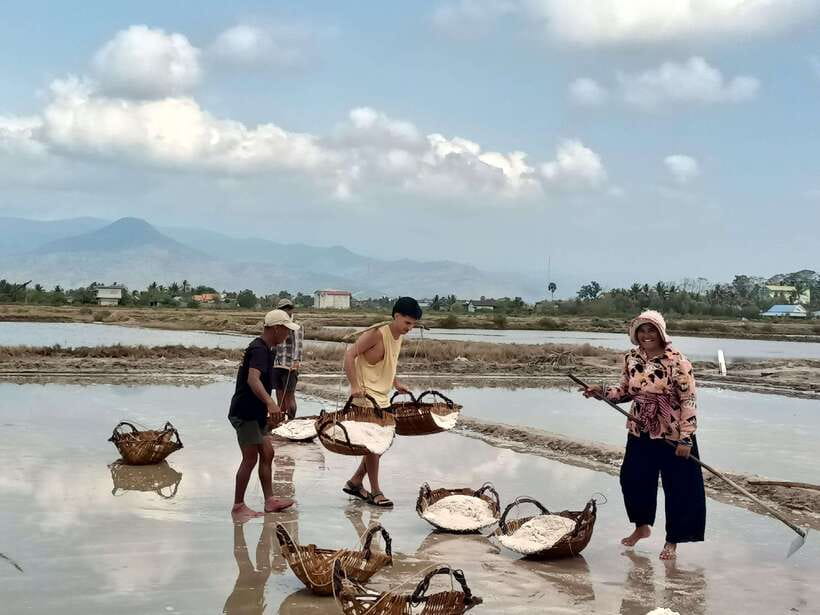
- Salt production outside Kampot: Learn how salt is made and why the industry matters to the local economy.
- 203 steps to Phnom Chhngok: Reach a cave temple with a seventh-century brick shrine dedicated to Shiva.
- A lake with a painful past: Visit Brateak Krola, an artificial lake built during the Khmer Rouge period using slave labor.
- Peppercorn tasting at the source: Walk through a large plantation and sample pepper produced on site.
- Kep’s crab market and beach: Buy or order seafood at your own expense, then swim or relax before returning.
- Private transport for two: The $50 group rate offers good value if you are sharing the tuk-tuk with one other person.
Why this day works for curious visitors
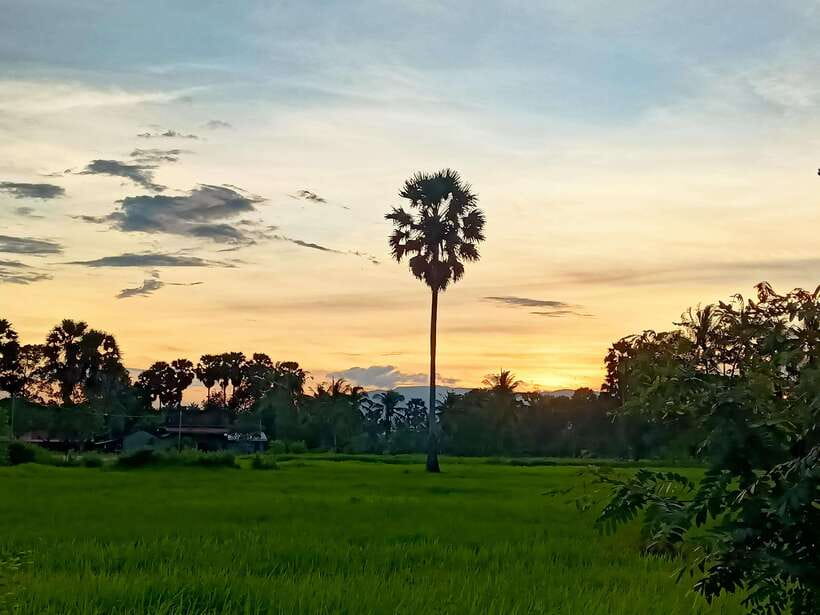
Kampot is famous for its pepper, but the countryside offers much more than rows of vines. This outing links several parts of everyday life in the province: salt production near the coast, religious remains in a cave, a man-made lake tied to Cambodia’s recent past, and the seafood culture of Kep.
I like the route because it does not treat the countryside as a backdrop for quick photos. At the salt facility and pepper plantation, you get explanations about how local products are made. At Phnom Chhngok and Brateak Krola, the stops carry cultural and historical weight. Then Kep provides an easier final stretch, with food and time by the sea.
The tour is private, which matters in a full-day schedule. You can ask the guide to explain something again, spend longer at the pepper farm, or move on when you have seen enough. Guide Phalla has been praised for being patient and for taking time to explain the salt fields and cave carefully. Another guide received strong praise for using a translator when communication was difficult. That is useful if your English and the guide’s English do not always line up perfectly.
More pepper farm visits:
- Kampot: Pepper Farm Tours, Salt, Lake & Phnom Chhngok Temple
★ 4.8 · 432 reviews - Kampot: Full-day Countryside Tour with Pepper Farm and Kep
★ 4.9 · 245 reviews - Kampot: Tuk Tuk Trip to Pepper Farm, Kep, Crab Market & More
★ 4.9 · 143 reviews
Starting from Kampot in a private tuk-tuk
Pickup normally takes place at the meeting point opposite Epic Art Cafe in Kampot. Hotel or restaurant pickup and drop-off can also be arranged, but the service does not cover locations more than 3 kilometers from the meeting points. Confirm this before booking if you are staying outside central Kampot.
The transport is by tuk-tuk, with listed rides ranging from about 15 minutes to 45 minutes between stops. That gives you a useful sense of the day: this is not a compact walking tour. You will spend part of the eight hours on the road, watching the countryside pass by and moving between separate sights.
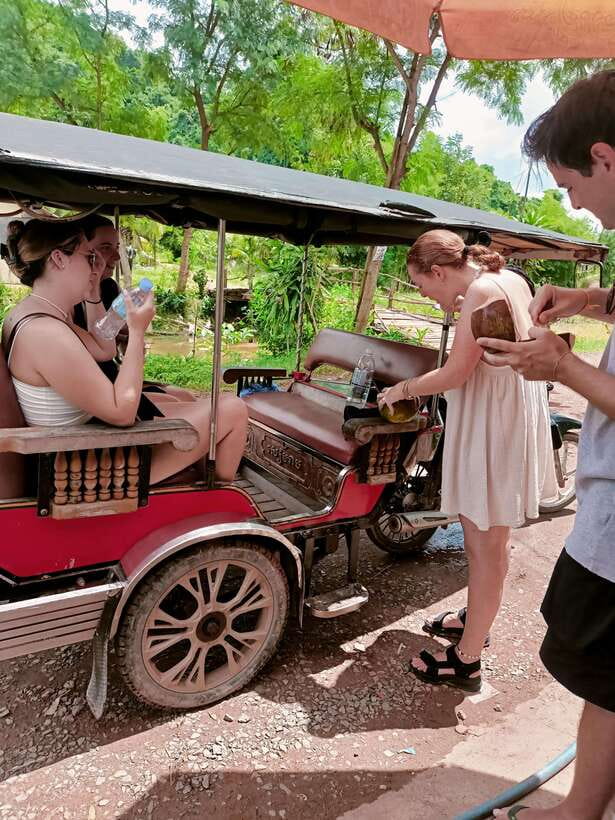
A private tuk-tuk is a practical choice for this route. You avoid organizing separate rides to the pepper farm, cave, lake, and Kep. The trade-off is exposure to sun, dust, and weather. Wear light clothing, bring sunscreen and sunglasses, and carry cash for food and other personal expenses. A bottle of water and a fresh coconut are included, which helps, but you should still prepare for a hot day.
Salt fields and the work behind Kampot’s salt
The first major stop is a salt-producing facility on the outskirts of Kampot. This is more useful than a simple photo stop because the guide explains the process and the economic role of salt in the area.
Salt production can look simple from a distance, but the visit gives you a chance to understand the stages involved. The factory visit focuses on how the product moves from local production toward something that can be used and sold. The exact working conditions can vary, so listen closely to the guide’s explanation rather than expecting a staged demonstration.
I like beginning here because it grounds the tour in present-day local work. Pepper often gets the attention in Kampot, yet salt is another important part of the province’s food economy. If you enjoy seeing how regional products are made, this stop is one of the most worthwhile parts of the day.
The visit is not designed as a long museum tour. You may find it fairly straightforward, especially if you already know how salt is produced. Still, the guide’s explanation adds meaning that you would miss by passing the fields on your own.
Climbing 203 steps to Phnom Chhngok
Phnom Chhngok is the most physically demanding stop. You climb 203 steps to reach the entrance of the cave, so good footwear and a steady pace will help. The activity is not suitable for every body, and the tour is specifically not recommended for pregnant women, people over 80, people with high blood pressure, or children under 2.
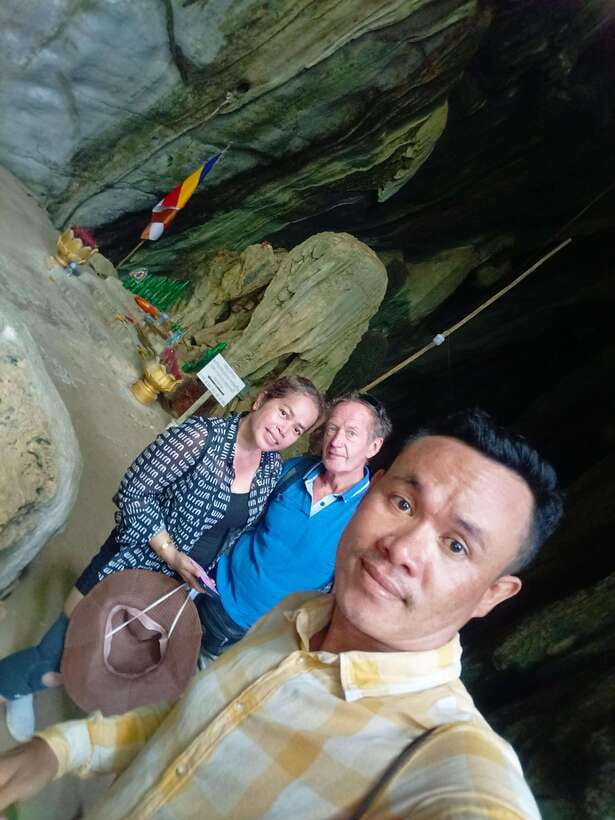
Inside the main chamber is a brick temple from the seventh century, dating to the Funan era and dedicated to Shiva. It is a remarkable setting: a small early temple inside a natural cave, reached after the climb rather than placed beside an easy road entrance.
The cave gives the day a strong historical and religious center. You are not only looking at rock formations. You are seeing a place where an ancient brick shrine survives within a cave used for worship. Your guide can help explain what you are looking at, which makes the stop more rewarding than entering alone and taking a quick picture.
The cave entrance also offers wonderful views over the surrounding countryside. Plan to pause there rather than rushing straight inside. The combination of the climb, the cave, and the view makes this stop feel like a proper excursion, not just another item on a schedule.
There are two things to keep in mind. The steps may be tiring in hot weather, and cave surfaces can be uneven. The tour includes entrance fees, but it does not promise a slow pace for every person in the group, so tell your guide if you need a break.
More Market Tours in Kampot:
- Kampot Pepper & Kep/Crab Market Tours: Salt, Secret lake
★ 4.7 · 33 reviews - Kampot Pepper Farm, Salt Fields, Crab Market from Phnom Penh
★ 4.8 · 21 reviews - Discover kampot country side full day tour; kep crab market
★ 4.9 · 9 reviews - Kampot : Cooking Class in a Local Chef with Market Tour
★ 5.0 · 2 reviews
Brateak Krola Lake and Cambodia’s difficult past
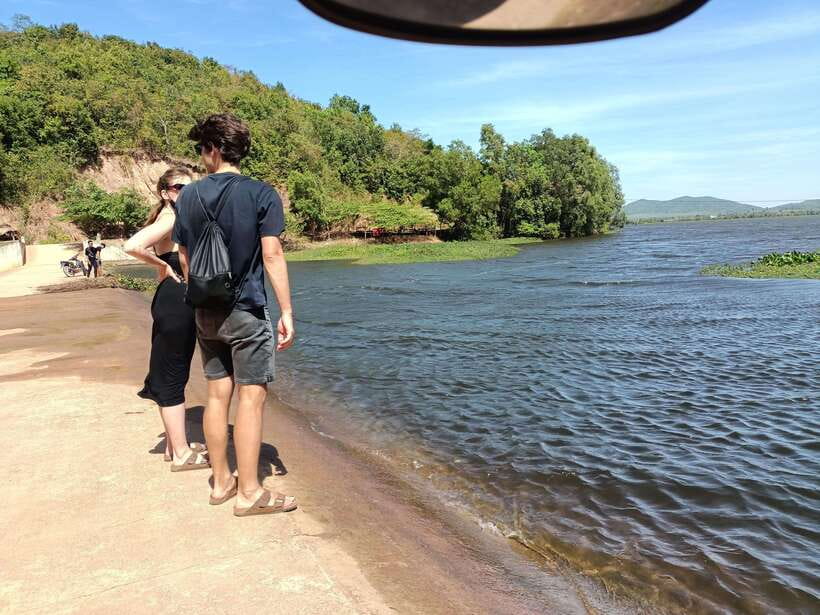
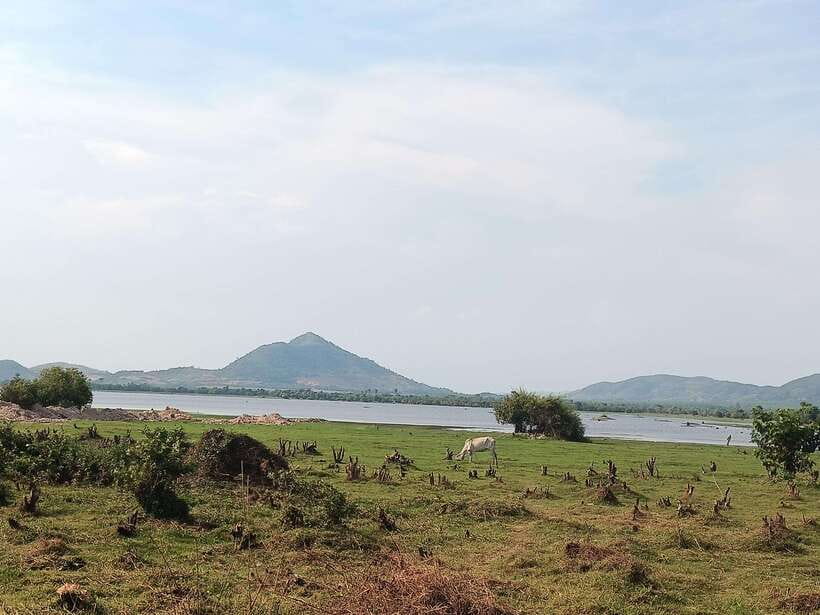
Brateak Krola Lake is an artificial lake built during the Khmer Rouge period using slave labor. It is a quiet stop, but the history is not quiet. The lake gives your guide an opportunity to explain how forced labor shaped Cambodia’s countryside and how large construction projects were carried out under extreme conditions.
This part of the tour may feel less immediately exciting than a cave or pepper tasting. That is exactly why it matters. A good day in Cambodia should leave room for places connected to suffering and memory, not only pleasant scenery and food. The lake helps you think about the human cost behind a site that might otherwise look like an ordinary body of water.
The visit appears to be a short sightseeing stop rather than a formal memorial visit. You should listen carefully and ask questions respectfully. Because the tour information does not give a fixed length of stay here, the time may depend on the traffic, the weather, and how much explanation you want from the guide.
A closer look at Kampot pepper
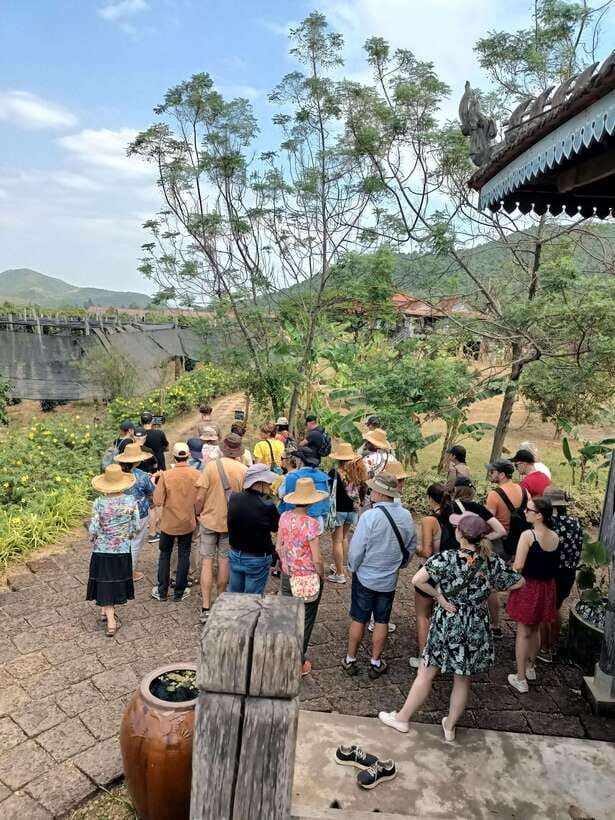
The pepper plantation is likely to be the food highlight for many people. You receive a guided tour of a large farm, learn about the production process, and taste peppercorns grown on site.
Pepper tasting is more useful than simply buying a packet at a shop because it helps you compare the product with ordinary table pepper. Pay attention to the guide’s explanation of how the pepper is grown and prepared. The tasting lets you connect the plant, the farming process, and the finished spice.
Plan enough time here. One private tour guest spent two hours at the pepper farm, and the guide, Phalla, was praised for being patient throughout the visit. That detail is important: the plantation is not necessarily a five-minute stop between attractions. If you enjoy food, farming, and local products, you may want to linger.
The tour includes the pepper visit and tasting, so you do not need to pay an extra entrance fee for that part. Any purchases are not listed as included, so bring cash if you want to buy pepper to take home. Cash is also needed for food at Kep.
Kep crab market, seafood, and the beach
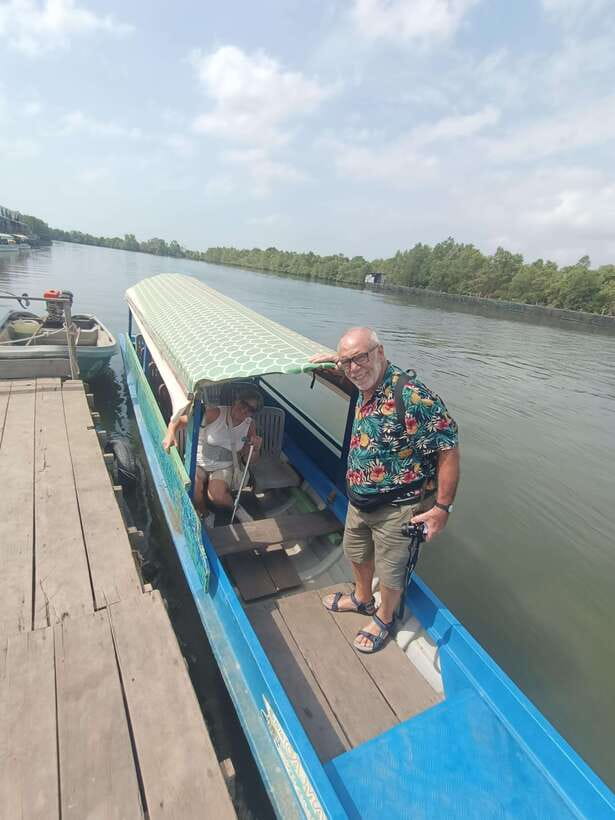
The final part of the day takes you to Kep, where you can test seafood or have lunch at the crab market. Food is not included, which gives you control over what you order and how much you spend. It also means the $50 price does not cover your meal, so budget for lunch separately.
The crab market is a good match for the rest of the tour. Salt and pepper are agricultural products linked to Kampot, while crab and seafood show how the nearby coast shapes local eating. You can use this stop to eat, walk around, or simply take a break after the road journeys and cave climb.
Afterward, you can swim or relax on the beach before returning to Kampot. The schedule also allows for enjoying the sunset in Kep, as long as the day’s timing works out. This is a pleasant way to finish because you are not being hurried straight from the last sightseeing stop into the tuk-tuk.
Do not assume lunch is included or that a seafood order is part of the tour price. The provider includes entrance fees, water, fresh coconut, the pepper tour and tasting, and a guide, but not food. Sunscreen and sunglasses are also listed as personal items, so bring them from the start rather than trying to find them at the end of the day.
Is $50 good value for two people?
At $50 per group of up to two, the price is strong if you are a couple or a pair of friends. You receive an eight-hour private outing, transport between several countryside stops, entrance fees, a guide, water, a fresh coconut, and pepper tasting. You would otherwise need to arrange several separate rides and pay for the cave entrance and pepper visit yourself.
The value is less about luxury and more about coverage. The tour takes you to places that are spread around Kampot Province and includes both explanation and transport. A private group also gives you more flexibility than a large shared vehicle.
Your real extra costs are food at Kep, personal drinks beyond the included water and coconut, and any pepper or other purchases. The tour has free cancellation up to 24 hours before departure, and you can reserve now and pay later, which helps if your Kampot plans may change.
Who should book this Kampot day trip?
I would recommend this tour to people who want a broad introduction to the area in one day. It suits couples and friends who like mixing food, history, religion, countryside scenery, and a little beach time.
It is especially useful if you have limited time in Kampot and want to include Kep without arranging another day. The private format also works well if you prefer asking questions and setting a comfortable pace.
You should think twice if you dislike long tuk-tuk rides, hot outdoor conditions, or stair climbs. The cave has 203 steps, the route takes eight hours, and not every stop offers a lot of activity. This is also not a suitable choice for children under 2, pregnant women, people over 80, people with high blood pressure, or anyone over 200 pounds, according to the stated restrictions.
Should you book it?
Book this tour if you want Kampot’s countryside explained rather than simply crossed. The salt facility, Phnom Chhngok cave temple, Brateak Krola Lake, pepper plantation, and Kep crab market create a varied day with genuine local context.
The strongest reasons to book are the private $50 group price, the included pepper tasting, the guide’s patient explanations, and the chance to finish with seafood and a beach swim. Skip it if you want a slow beach day, a short farm visit, or a polished air-conditioned vehicle. For curious couples who have one full day and want to connect Kampot’s food, history, and coast, this is a well-priced and thoughtfully varied outing.
FAQ
How long does the Kampot countryside tour last?
The tour lasts 8 hours, including the visits around Kampot Province and the return to Kampot.
How much does the tour cost?
The price is $50 per private group of up to two people.
What places does the tour visit?
The tour visits a salt-producing facility, Phnom Chhngok cave temple, Brateak Krola Lake, a pepper plantation, and Kep’s crab market and beach.
Is transportation included?
Yes. The tour uses tuk-tuk transportation, with pickup and drop-off included. Pickup normally starts opposite Epic Art Cafe, and hotel or restaurant pickup is possible within 3 kilometers of the meeting points.
Is food included?
No. Food is not included, so you pay separately for seafood or lunch at the crab market.
What is included in the tour price?
The price includes entrance fees, a bottle of water, a fresh coconut, the pepper tour and tasting, tuk-tuk transportation, and an English-speaking guide.
Can I cancel the tour?
Yes. You can cancel up to 24 hours in advance for a full refund. You can also reserve the tour and pay later.
Newest reviews from Kampot
- Sunset Cruise on the Mekong River from Phnom Penh★ 5.0 · 2 reviews
- Khmer Food Culture Cooking Class in Kampot★ 5.0 · 7 reviews
- Kayaking tour around green cathedral★ 4.8 · 38 reviews
- Kampot: Sunset Walking Tour★ 4.1 · 9 reviews
- Kep town: Local tuk tuk to Countryside & Pepper farm★ 4.6 · 8 reviews
- Kampot: Salt Fields, Pepper Farm, and Secret Lake Tour★ 3.0 · 1 review
- Kep: Discover kampot pepper farm/lake & Salt fields…more★ 5.0 · 5 reviews
- Kampot-Phnom Penh include Pepper farm Tour, Salt field, Lake★ 4.8 · 5 reviews
Pepper Farm Tours, compared.
Pepper Farm Tours, Salt, Lake & Phnom Chhngok Temple
Read our review →
Full-day Countryside Tour with Pepper Farm and Kep
Read our review →
Tuk Tuk Trip to Pepper Farm, Kep, Crab Market & More
Read our review →Kampot Tour Pepper Plantation, Salt Field, Cave, Secret Lake
Read our review →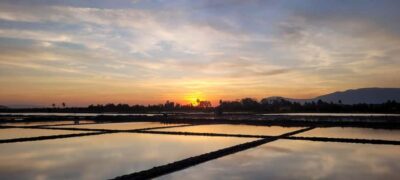
Kampot Countryside include Pepper farm, Salt field & Lake
Read our review →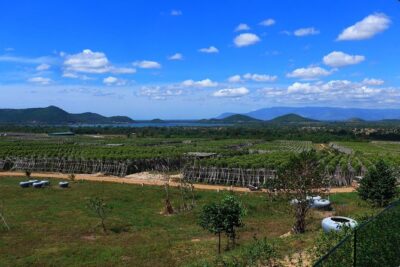
La Plantation tour (discovering Kampot Pepper) + Lunch
Read our review →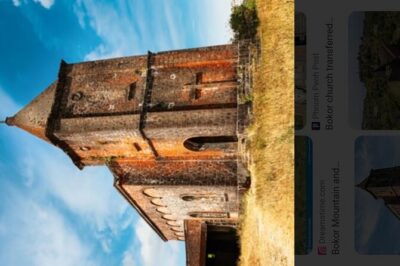
KAMPOT TRAVEL-Pepper farm. Cave.Secret lake-Crab market & Salt…
Read our review →
Kampot’s Countryside & Kayak Tour, Pepper Farm include Lunch
Read our review →Browse the lists this tour appears in