
Reviewed · PEPPER FARM TOURS
Kampot Tour Pepper Plantation, Salt Field, Cave, Secret Lake
Red roads lead to real Cambodia. This half-day tuk tuk trip takes you beyond Kampot’s center to working salt fields, a cave temple, a Khmer Rouge-era dam, and La Plantation, where you learn how famous Kampot pepper is grown. I especially like the countryside views and the chance to travel with drivers such as Roy or Wandon, who are praised for their English, humor, and local stories.
I also like the tour’s unhurried feel. You get cold water, hotel pickup in central Kampot, and enough time at La Plantation to understand the pepper-making process rather than simply buy a packet in a shop. The main drawback is the rough, dusty road to the cave and pepper farm. In the dry season, bring something to cover your nose and mouth.
In This Review
- Four things to know before you book
- A $20 ride into Kampot’s countryside
- Salt fields: best in the dry season
- Phnom Chhngok Cave Temple and its steep approach
- Brateak Krola, the so-called Secret Lake
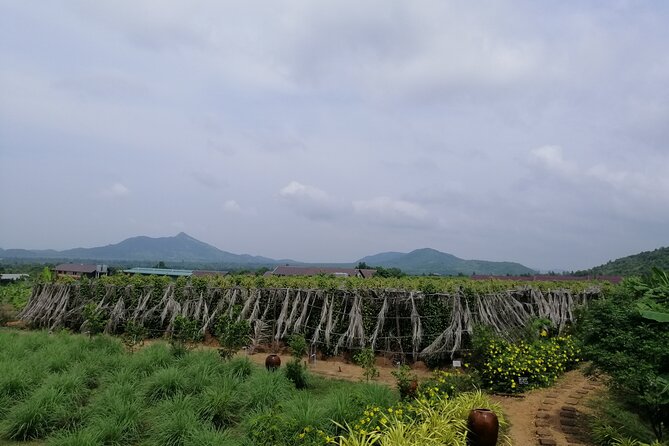
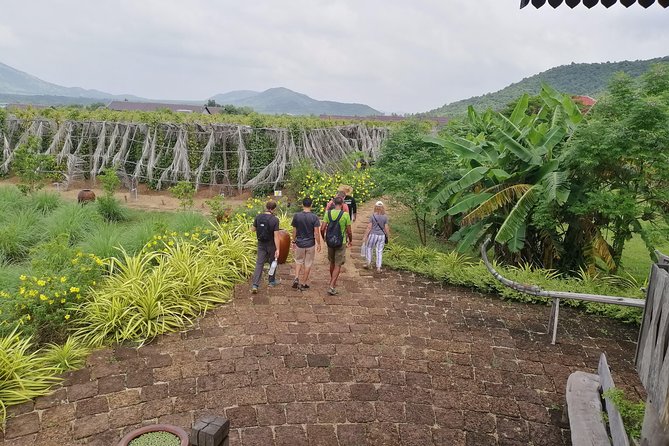
- La Plantation is the tour’s main event
- What the tuk tuk ride adds, and what it takes away
- What I would ask before booking
- Who will enjoy this Kampot tour?
- Should you book it?
- FAQ
- Where does the tour take place?
- What time does the tour start?
- How long does the tour last?
- Is hotel pickup included?
- What transportation is used?
- Is food included?
- Is the tour available in French?
- How many people can join the tour?
- Are entrance fees included?
Four things to know before you book
- The road is part of the experience: Expect bumpy, dusty travel by tuk tuk, with attractive views of rice fields and rural Cambodia.
- La Plantation is the strongest stop: The guided visit and pepper tasting give this tour its clearest value.
- The cave requires effort: Phnom Chhngok Cave Temple involves steps, heat, and slippery sections inside the cave.
- Secret Lake is not secret: Brateak Krola is a large man-made dam beside a road, with a serious Khmer Rouge-era story.
- The guide can make the day: Roy and Wandon receive especially warm praise for clear English, humor, punctuality, and personal stories.
- The price is fair for a shared outing: At $20 per person, transport and guiding are included, but meals and some possible entrance costs are not.
A $20 ride into Kampot’s countryside
This tour begins at about 8:00 am and lasts roughly five to six hours. Pickup and return are included if you stay in Kampot city center. If you are staying outside Kampot, do not assume the same arrangement applies, since pickup beyond town is not included.
The vehicle is a tuk tuk, not an air-conditioned car. That matters. You get open views and fresh air, but you also feel the bumps and road dust. On the rougher stretches, especially toward Phnom Chhngok Cave Temple and La Plantation, a scarf, mask, sunglasses, and hat will make the ride more comfortable.
The group can reach a maximum of 16 people, though the experience may also be arranged privately. A shared tuk tuk keeps the cost low. At $20, you are paying for transportation, an English-speaking driver-guide, hotel pickup and return in central Kampot, and the planned visits. Meals, personal expenses, and travel insurance are extra.
I see this as good value if you want several rural sights in one morning without arranging separate tuk tuk rides. It is less attractive if you prefer a polished vehicle, long stays at every stop, or a carefully timed cultural tour with extensive site interpretation.
The guide is an important part of the value. Roy is repeatedly praised for his clear English, punctual pickup, friendly manner, and facts about Cambodian life. Wandon is also singled out for humor, fluent English, and strong knowledge of the route. You may not receive the same person, but the driver is intended to act as your guide, not simply take you from one stop to the next.
More pepper farm visits:
- La Plantation tour (discovering Kampot Pepper) + Lunch
★ 4.5 · 97 reviews - KAMPOT TRAVEL-Pepper farm. Cave.Secret lake-Crab market & Salt…
★ 5.0 · 87 reviews - Kampot Pepper Farm, Salt Fields, Cave from Sihanoukville
★ 4.5 · 2 reviews
Salt fields: best in the dry season
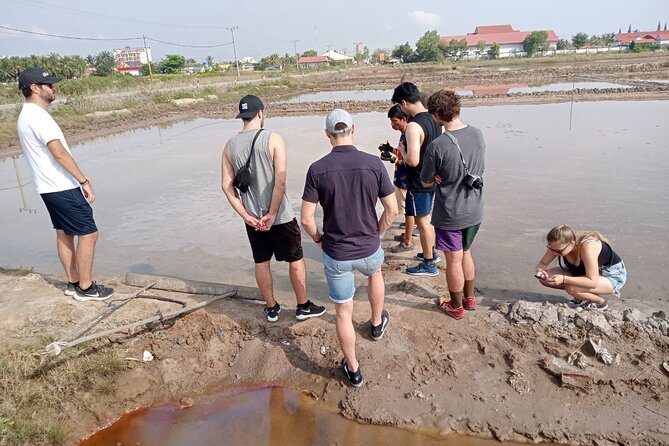
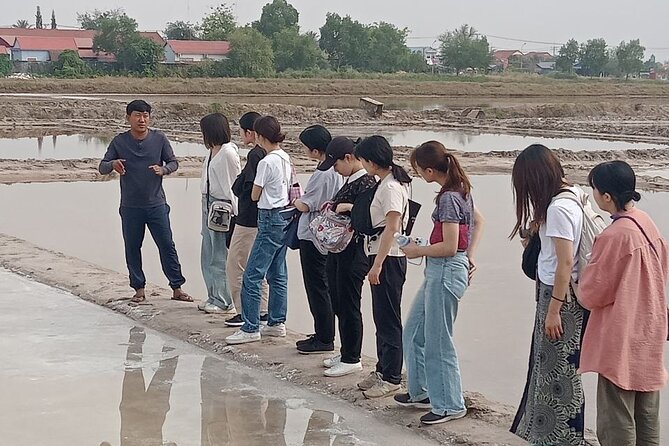
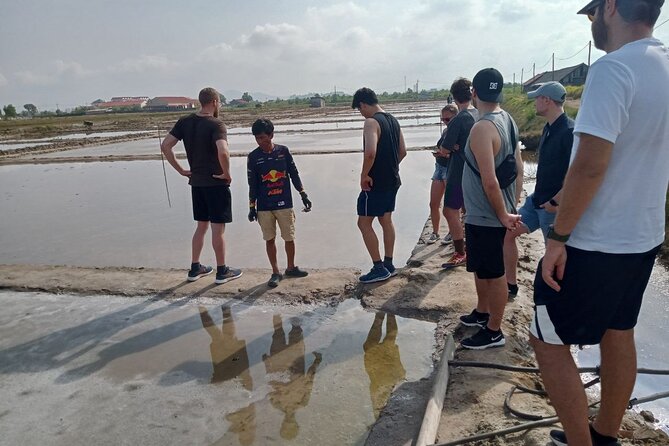
The first stop takes you out of town to Kampot’s salt fields. You have about 30 minutes here, and there is no admission charge. The attraction is simple but useful: you see how local farmers work the fields and learn about Cambodia’s salt production.
This stop depends heavily on weather and season. In dry, sunny conditions, the fields can be striking, especially under strong morning light. During or after rain, salt production may not be active, and there may be little to see beyond wet or empty plots. One visit in the rainy season offered almost no view of active salt work, although Roy still explained the process.
That variability is worth accepting. This is not a museum with displays and a guaranteed show. It is a working rural area. If conditions are right, you see a part of everyday Cambodian industry. If they are not, the stop becomes a short photo break and a chance to hear about the work.
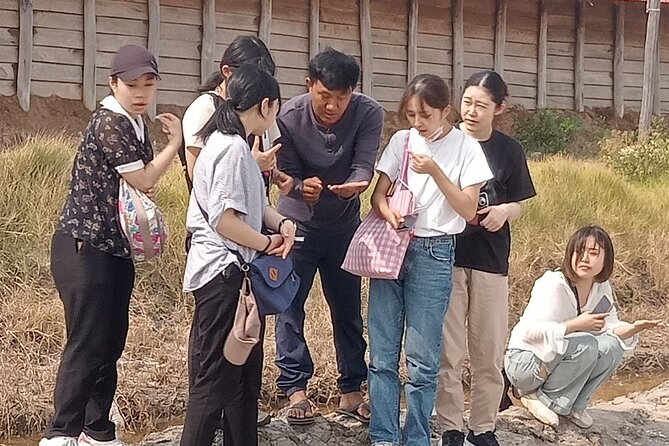
A useful detail is that guides may add personal context. Roy has been encouraged to talk about his own experience working on the salt fields. Ask questions if you want more than a quick look. The quality of this stop depends less on the salt itself than on the explanation you receive and the conditions on the day.
Phnom Chhngok Cave Temple and its steep approach
From the salt fields, the tuk tuk heads toward Phnom Chhngok Cave Temple. The route passes through rural Cambodia, with rice fields, crop plots, and red dirt roads. The ride can be rough, dusty, and tiring, particularly if you are on a motorbike or sitting through the bumpier sections in an open tuk tuk.
The temple is reached after walking through a working crop area and climbing steps toward the cave. You should expect heat and a physical effort rather than a quick roadside photo. The number of steps is manageable for many people, but the heat can make the climb feel harder, particularly in April, Cambodia’s hottest period.
Inside, the cave temple is small and atmospheric. Its age gives it importance, and it is older than Angkor Wat. The site does not offer the scale of Cambodia’s major temple complexes, but that is part of its appeal. You are seeing a modest religious place set inside a natural cave, with countryside around it rather than a large monument complex.
Allow about 30 minutes for the stop, including the approach. The entrance fee is a point to clarify before departure. The tour information says entrance fees are included, while the cave itinerary also identifies admission as not included. Ask the provider what, if anything, you will pay locally.
Take care inside the cave. A direct return by the steps is the safer choice. Continuing farther through the cave to exit another way can involve slippery ground and large drops. Wear firm shoes, watch your footing, and do not treat the cave as an easy stroll.
Brateak Krola, the so-called Secret Lake
The next stop lasts about 15 minutes at Brateak Krola Lake, commonly called Secret Lake. The name sounds mysterious, but the site is beside a fairly busy road and is not hidden. It is actually a large man-made dam.
The dam was constructed during the Khmer Rouge period using forced labor. That history gives the stop a weight that the view alone does not provide. Guides such as Roy have used the site to discuss Cambodia’s past and the human cost behind parts of the country’s infrastructure.
You should set your expectations correctly. This is not a peaceful, secluded lake reached by a secret track. It is a brief roadside stop with a serious historical story. Some people find the stop disappointing because the name promises something more dramatic. I think it works best when you focus on the explanation and the history, not on the idea of a hidden natural lake.
The short visit also keeps the tour moving. After the salt fields and cave, you do not spend a long time standing in the heat. Take a few minutes for the view, listen carefully to the guide, and understand why the place matters.
A few more options around Sihanoukville worth reading up on
- Discovery Tour: Caving, Climbing, Via Ferrata and Abseiling in Kampot
★ 5.0 · 172 reviews - Sihanoukville Highlights Day Tour for Cruise Passengers
★ 4.5 · 171 reviews - Kampot Day Tour “Bokor National Park”
★ 5.0 · 82 reviews - Bokor Mountain Adventure – History, Sights and Waterfalls
★ 5.0 · 65 reviews
La Plantation is the tour’s main event
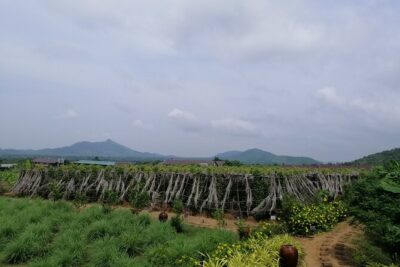
The final and longest stop is La Plantation, a Kampot pepper farm. You spend about two hours here, and admission is listed as free. This is where the tour becomes more than a collection of quick countryside stops.
The guided visit explains the history of Kampot pepper and shows how it is produced by traditional methods. You learn about different pepper varieties and how the farm handles its products. The experience is practical rather than purely scenic, which makes it useful even if you are not a food enthusiast.
The tasting session is a major reason to stay. You can sample the pepper products and compare the different types. Pepper ice cream is the unusual treat that keeps coming up, and it is worth trying if it is available during your visit. The farm also sells its products in an on-site shop.
Prices at the shop can feel high compared with ordinary Cambodian markets. Still, you are buying a high-quality product directly from a working plantation, and the visit helps explain why Kampot pepper costs more. I would treat the shop as optional, not as part of the tour’s value calculation.
You can also eat lunch at La Plantation, but meals are not included in the $20 price. One person extended the outing with lunch there, while another combined the wider trip with a crab lunch in Kep. These additions are not part of the advertised package, so agree on any extra transport or costs with the driver before setting off.
The plantation is especially useful for you if you want a food-focused stop with a clear connection to the area. It also gives the tour a satisfying finish. After dusty roads and short visits, you get time to sit, taste, ask questions, and browse at your own pace.
What the tuk tuk ride adds, and what it takes away
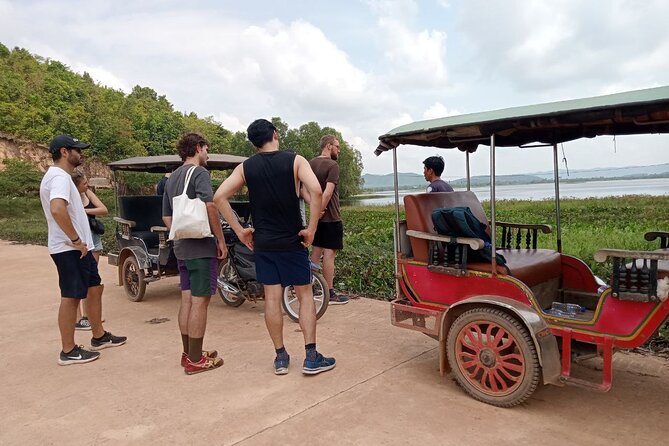
The open tuk tuk is both a strength and a weakness. I like that you can see the countryside as you move through it. Rice fields, crop plots, red roads, and roadside life become part of the outing rather than scenery hidden behind car windows.
You also feel the reality of the roads. The trip to the cave and plantation can be bumpy and dusty, especially in the dry season. Several people advise bringing a face covering, sunglasses, and a hat. That is practical advice, not over-preparation.
Cold water is provided, which helps in the heat. You should still plan around Cambodia’s strong sun, particularly during the cave climb and outdoor stops. The itinerary is short enough to complete in half a day, but the combination of heat, road vibration, and walking can leave you ready for a quiet afternoon.
The driver-guide setup works well when you have someone like Roy or Wandon. Their value is not just in navigation. Good commentary turns a salt field into a lesson about local work, a dam into a reminder of Cambodia’s painful past, and a pepper farm into a better understanding of a product you may have seen in shops without knowing how it was made.
What I would ask before booking
I would confirm four things. First, ask where pickup is available. Central Kampot hotel pickup and return are included, while pickup outside Kampot town is not.
Second, clarify the cave admission fee because the information is inconsistent. One section lists entrance fees as included, while the cave stop lists its admission as not included.
Third, ask which guide will accompany you if having an English-speaking guide is important. The driver is intended to provide the guiding, and Roy and Wandon have received especially strong praise, but a specific guide may not be guaranteed.
Fourth, agree in advance about any extension to Kep or other added stops. One unhappy experience involved an extra charge for a Kep visit that was understood differently by the customer and driver. The safest approach is to confirm the total price per person before leaving.
The tour is free to cancel up to 24 hours before the start time for a full refund. Changes or cancellations made less than 24 hours before departure are not accepted for a refund.
Who will enjoy this Kampot tour?
I would recommend it if you want to leave town and see working rural Cambodia in a single outing. It suits you if you enjoy local food production, short historical visits, countryside views, and informal guiding.
It is also a good choice for first-time visitors to Kampot who want an efficient introduction to the area. You get salt, religious history, modern Cambodian memory, farming, and pepper tasting in one route.
You may want another option if you have back problems, dislike dusty roads, or want a slow, luxurious morning. The cave climb and rough ride are real considerations. The salt fields can also be underwhelming in wet weather, and Secret Lake is more ordinary in appearance than its name suggests.
Families and older visitors should judge the cave steps and slippery interior carefully. The tour information says most people can participate, but that does not remove the need for sensible footwear and caution.
Should you book it?
Book this tour if La Plantation is high on your list and you also want a taste of Kampot’s countryside. The pepper farm is the clear highlight, while the cave adds a worthwhile cultural stop and the salt fields can be rewarding in the right season.
At $20 per person, the package offers solid value for a shared half-day tuk tuk trip with a guide, water, and central hotel pickup. Go prepared for dust, bumps, heat, and a flexible rural pace. If you do, this is a practical way to see more of Kampot than the town center alone.
FAQ
Where does the tour take place?
The tour operates around Kampot, Cambodia. The supplied location information also lists Sihanoukville, so confirm the exact operating area when booking if you are not already staying in Kampot.
What time does the tour start?
The stated start time is 8:00 am.
How long does the tour last?
The experience lasts approximately five to six hours.
Is hotel pickup included?
Pickup and drop-off are included for hotels in Kampot city center. Pickup outside Kampot town is not included.
What transportation is used?
Transportation is provided by tuk tuk. The driver also acts as an English-speaking tour guide.
Is food included?
No. Meals are not included. You may be able to eat at La Plantation, but lunch must be paid for separately.
Is the tour available in French?
A French-speaking guide is available at La Plantation only. The main driver-guide service is described as English-speaking.
How many people can join the tour?
The maximum group size is 16 people.
Are entrance fees included?
The tour information lists entrance fees as included, but the Phnom Chhngok Cave Temple stop also says admission is not included. Confirm this detail with the provider before departure.
Newest reviews from Sihanoukville
- Sihanoukville: Ream National Park Guided Tour with Lunch★ 5.0 · 1 review
- Sihanoukville – Khmer Traditional Cooking Class★ 5.0 · 1 review
- Sihanoukville: Koh Kjorng Village (4 hours tour)★ 5.0 · 1 review
- Sihanoukville Full Day City Tour with Transportation & Guide★ 4.8 · 19 reviews
- Sihanoukville City Tour for Cruise Passengers with 7 Stops★ 5.0 · 6 reviews
- Sihanoukville: Group Shore Excursion from Cruise Port★ 4.3 · 9 reviews
- Half Day City Tour★ 3.9 · 18 reviews
- Full Day City Tour with A Boat Trip to 2 Islands★ 4.3 · 10 reviews
Pepper Farm Tours, compared.
Pepper Farm Tours, Salt, Lake & Phnom Chhngok Temple
Read our review →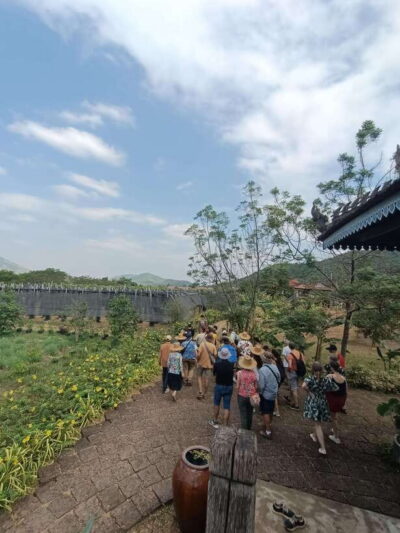
Full-day Countryside Tour with Pepper Farm and Kep
Read our review →
Tuk Tuk Trip to Pepper Farm, Kep, Crab Market & More
Read our review →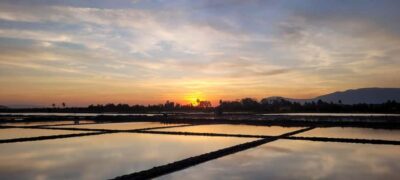
Kampot Countryside include Pepper farm, Salt field & Lake
Read our review →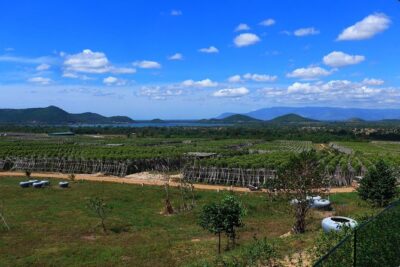
La Plantation tour (discovering Kampot Pepper) + Lunch
Read our review →
KAMPOT TRAVEL-Pepper farm. Cave.Secret lake-Crab market & Salt…
Read our review →
Kampot’s Countryside & Kayak Tour, Pepper Farm include Lunch
Read our review →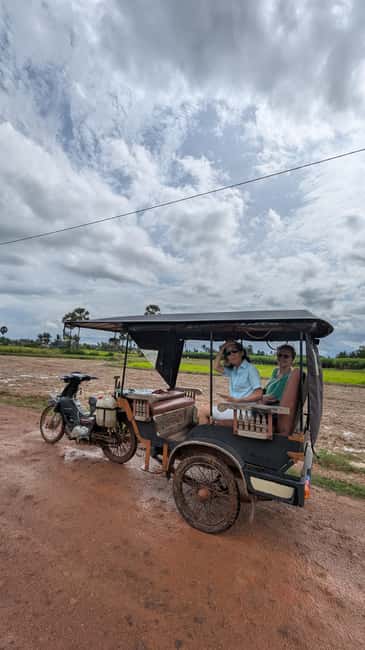
Kampot Pepper & Kep/Crab Market Tours: Salt, Secret lake
Read our review →Browse the lists this tour appears in