Reviewed · TOURS
Journey Through Time: Grand Tours with professional photographers
Angkor beyond the famous postcard. This private Grand Circuit tour gives you a quieter look at the temple complex, with Preah Khan, Neak Pean, Ta Som, Pre Rup, Eastern Mebon, and Banteay Srei on the route. I like the private car and flexible pace, and I like that a professional photographer joins the English-speaking guide. The main consideration is time: six temple stops in roughly five to six hours can make the day feel brisk, especially if you want long photo sessions.
I also like the practical hotel pickup in Siem Reap, bottled water, tissues, and fruit during the outing. Guides named in past feedback include John, Diamond, Pich, and Davann, with special praise for their humor, clear English, historical explanations, and help avoiding queues. The $237 price is for the experience, but the Angkor pass, food, drinks, tips, and a stated $15 sun-light charge are extra, so check exactly what your booking covers.
In This Review
- Key points to know before booking
- What the Grand Circuit adds to an Angkor visit
- Preah Khan: a large temple with room to wander
- Neak Pean: a temple reached across water
- Ta Som: trees, ruins, and a quieter mood
- Pre Rup: a high sandstone temple with a different shape
- Eastern Mebon: a former island temple
- Banteay Srei: the detailed final stop
- How the guide and photographer affect the day
- Private transport, timing, and comfort
- What the $237 price really includes
- Dress, preparation, and who should book
- FAQ
- Is hotel pickup included?
- How long does the tour last?
- Which temples are included?
- Is the Angkor temple pass included?
- Is the tour private?
- What is included with the tour?
- What should I wear?
- Should you book this Grand Circuit tour?
Key points to know before booking
- Six temples in one private outing: The route covers Preah Khan, Neak Pean, Ta Som, Pre Rup, Eastern Mebon, and Banteay Srei.
- A guide and photographer travel with you: You get historical explanations plus help with pictures and videos.
- Private transport from Siem Reap: Hotel pickup and return are included in a luxury private car or van.
- The temples offer different moods: Expect carved corridors, tree-covered ruins, artificial islands, a Hindu pyramid temple, and finely detailed pink sandstone.
- The Angkor pass costs extra: The one-day temple pass is listed at $37 per person.
- Dress carefully: Knees and shoulders must be covered at places of worship, or entry may be refused.
What the Grand Circuit adds to an Angkor visit
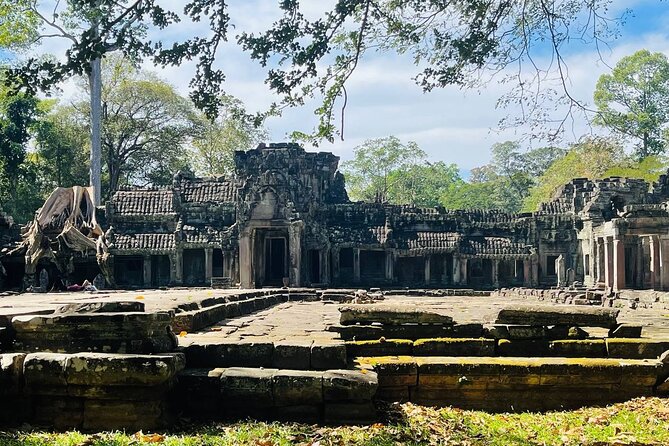
Most first visits to Angkor focus on Angkor Wat and the Small Circuit. That makes sense, but the Grand Circuit gives you a different side of the park. Instead of spending the day at only the best-known monuments, you move through a string of temples from several periods and rulers.
I like this route because the stops do not all look alike. Preah Khan gives you long stone passages and a sense of former scale. Neak Pean is tied to water and healing. Ta Som shows nature pressing back into the ruins. Pre Rup and Eastern Mebon offer large, formal Khmer temple designs, while Banteay Srei finishes with some of the finest carving in the region.
This is a private activity, so only your group takes part. That matters at Angkor. You are not waiting for a large coach party to gather, and your guide can explain a carving, answer a question, or adjust the pace without managing strangers.
Still, private does not mean slow. The listed duration is only about five to six hours, while the itinerary gives about an hour to each of six stops. With driving and hotel transfers included in the day, you should confirm the exact schedule before setting out. If photography is your main goal, ask how much time you can spend at each temple.
A few more options around Siem Reap worth reading up on
- Angkor Wat Sunrise or Sunset Tour with Guide from Siem Reap
★ 5.0 · 12,109 reviews - Siem Reap: Angkor Wat: Small-Group Sunrise or Sunset Tour
★ 5.0 · 9,444 reviews - From Siem Reap: Kampong Phluk Floating Village Tour by Boat
★ 4.9 · 6,979 reviews
Preah Khan: a large temple with room to wander
Your first temple is Preah Khan, also called the Royal Sword Temple. King Jayavarman VII built it in the early 12th century to honor his father. It was not simply a religious monument. It once served as the center of a large organization with almost 100,000 officials and servants.
That number helps you read the site differently. The long galleries and multiple courtyards were part of a working religious and administrative center, not just a pretty ruin for a quick photograph. I would give your guide time here to explain how the temple functioned.
Preah Khan is a strong opening stop because it feels expansive. You can expect a mix of enclosed corridors, stone doorways, carved details, and areas where trees and weather have shaped the scene. It is also a good place for the photographer to take both close portraits and wider images.
The drawback is simple: the scale can make the visit feel rushed if you have only one hour. Keep your first pass moving, then pause for the details that catch your eye.
Neak Pean: a temple reached across water
Neak Pean sits on an artificial island near Preah Khan. Jayavarman VII built it at the center of the Preah Khan Baray, also known as Jayatataka. It was a Buddhist temple connected to a carefully planned water setting.
The setting changes the pace of the tour. After Preah Khan’s long stone spaces, Neak Pean gives you a more open approach and a stronger link between architecture and water. I find this stop valuable for understanding that Angkor was designed around more than temples alone.
The temple itself is smaller than Preah Khan, so your guide’s explanation matters. Ask about the artificial island and the role of the surrounding reservoir. Those details turn a short stop into a useful lesson in Khmer planning and belief.
Neak Pean may not offer as many rooms to explore as the larger temples. If you prefer dramatic towers and long corridors, this can feel brief. If you enjoy unusual settings and the photographer’s eye for composition, it adds welcome variety.
Ta Som: trees, ruins, and a quieter mood
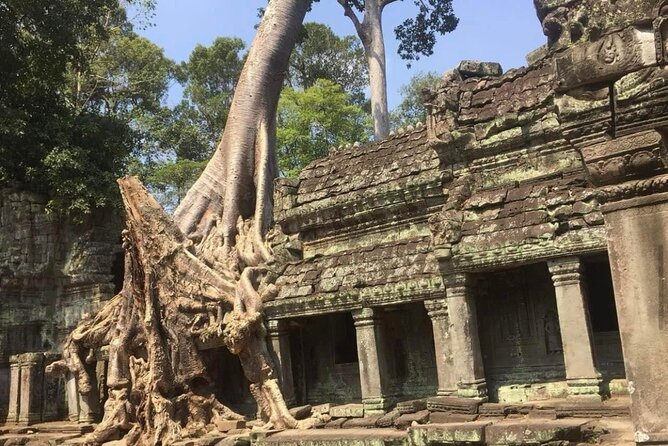
Ta Som was built by Jayavarman VII at the end of the 12th century and dedicated to his father. Like Ta Prohm, it remains largely unrestored, with trees and other growth pressing into the structure.
I would expect Ta Som to be one of the most atmospheric stops on the route. The combination of stone and roots gives the photographer plenty to work with, and the temple’s less formal condition helps you picture how many Angkor sites might have appeared before major conservation work.
The appeal is not just visual. Ta Som lets you see the tension between preservation and nature. Some sections feel orderly and architectural, while others show the forest reclaiming the site. A good guide can help you understand what you are seeing rather than reducing the visit to a search for the best tree-framed doorway.
The practical limit is again time. The tour allows roughly an hour here, and that may pass quickly if you want pictures, a history lesson, and a relaxed walk. Tell your guide early if this is one of your priorities.
Something completely different for another day:
- Sunset tour of Kampong Phluk stilts home village on the Tonle Sap
★ 5.0 · 4,865 reviews - Siem Reap: Angkor Wat 2-Day Tour with Sunrise and Sunset
★ 4.9 · 4,429 reviews - Siem Reap: Kampong Phluk Floating Village Tour with Boat
★ 4.9 · 3,843 reviews - Siem Reap: Full-Day Angkor Wat Guided Tour with Sunset
★ 4.9 · 3,803 reviews
Pre Rup: a high sandstone temple with a different shape
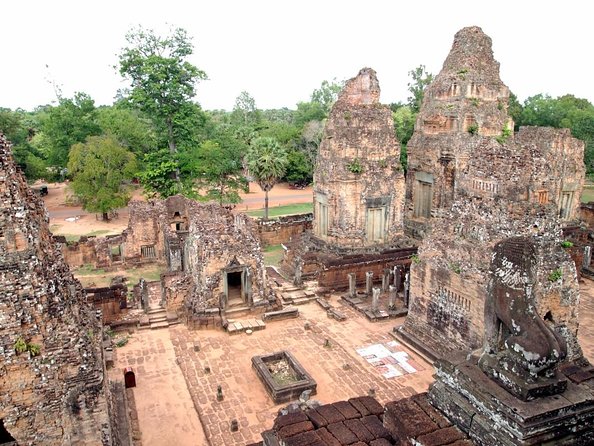
Pre Rup is a Hindu mountain temple built by King Rajendravarman in 961 or early 962. Its modern Khmer name means turn the body, and Cambodian belief connects the site with funeral rites.
This temple changes the architectural rhythm of the day. After the enclosed spaces at Preah Khan and Ta Som, Pre Rup gives you a strong, tiered stone form. It was designed as a mountain temple, so your attention naturally moves upward through the levels.
I like this stop for readers who want to compare Hindu and Buddhist monuments within the same day. The guide can connect Pre Rup with the beliefs and royal power of the period, while the photographer can use its broad sandstone structure for portraits and architectural images.
Be prepared for a more exposed visit. The tour information specifically warns about sun, with a $15 per-person charge listed separately. The wording is unclear, so I would ask the operator what this fee means before booking and carry sun protection regardless.
Eastern Mebon: a former island temple
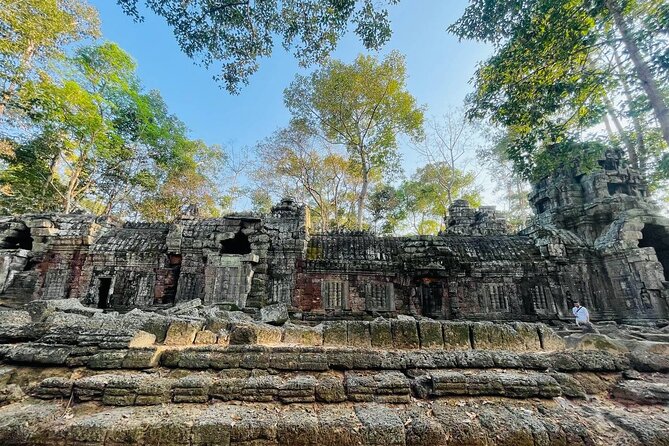
Eastern Mebon is a 10th-century temple built by King Rajendravarman. It was dedicated to the Hindu god Vishnu and honored the king’s parents. The temple once occupied an artificial island in the East Baray, which is now dry.
That former island setting gives the stop an important layer. You are looking at a monument that was once surrounded by water, even though the reservoir is no longer part of the scene in the same way. I like how this helps you understand the changing environment of Angkor and the scale of its waterworks.
Eastern Mebon also gives you another chance to compare temple design. Its formal structure and religious purpose differ from the later Buddhist sites built by Jayavarman VII. A private guide can make those changes easier to follow, especially if you are visiting several temples in a single day.
The stop may feel less instantly dramatic than Ta Som or Banteay Srei. That is not a reason to skip it. It is one of the places where the wider story of Angkor’s rulers, gods, water, and family memorials comes together.
Banteay Srei: the detailed final stop
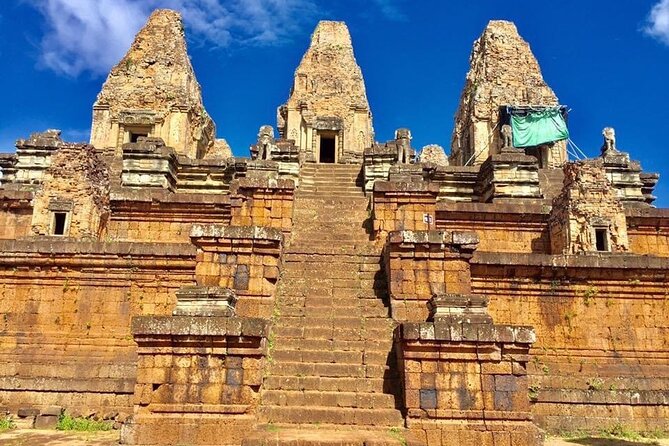
Banteay Srei sits about 25 kilometers northeast of the Angkor Archaeological Park. It is smaller than Angkor Wat, but its scale is part of its charm. The temple is known as a jewel of Khmer artistry, with finely worked sandstone carving.
I would save your attention for the details here. Banteay Srei is not about vast courtyards or towering mass. It is about the quality and precision of the decoration. The smaller size can make the carvings easier to appreciate, particularly when your guide points out figures, patterns, and religious scenes.
This is also the stop most likely to test the schedule. It is farther from the central Angkor temples, and the route already includes five earlier sites. If Banteay Srei matters most to you, ask whether the order and timing can be adjusted. A private tour should give you a better chance of discussing that than a fixed group outing.
The itinerary lists admission as free for Banteay Srei, but the separate one-day Angkor pass is not included in the tour price. Treat the pass requirement as an additional cost unless the operator confirms otherwise.
How the guide and photographer affect the day
The guide is a major part of this experience. Past feedback specifically praises John for his friendly humor, Cambodian history explanations, and small details around the temples. Diamond, also identified as Pich, was praised for explaining the kings and culture and for taking photos and videos. Davann was noted for his humor and for helping avoid queues.
Those details suggest a tour that works best when you ask questions. I would not simply follow the guide from doorway to doorway. Ask about the temple’s purpose, the ruler who built it, and the difference between the Buddhist and Hindu sites. The itinerary gives you the names and dates, but the guide can help connect them.
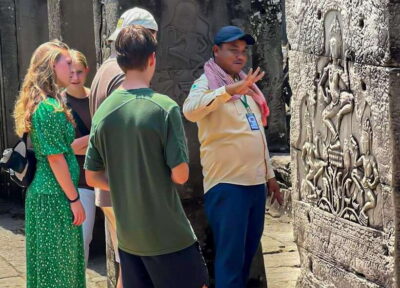
The photographer is useful if you want more than casual phone snapshots. You can expect help with pictures and videos, though the supplied information does not specify how many edited images you receive, when they arrive, or whether any professional equipment is used. Confirm those points if photography is central to your booking.
The strongest praise centers on friendly service, humor, clear English, historical detail, and personal care. One particularly important note describes assistance for an 82-year-old family member. That does not guarantee a specific accessibility plan, but it suggests you should tell the operator about mobility needs before the day begins.
Private transport, timing, and comfort
Pickup is offered in Siem Reap, and the tour returns you to the meeting point. The private transport is described as a luxury car or van, with complimentary round-trip hotel transfer. You also receive mineral water, tissues, and natural fruit.
These touches matter in Cambodia’s heat. You can keep your day bag lighter and spend less time arranging transport between sites. Downloading the e-ticket to your phone is recommended so the driver can identify the pickup booking.
The tour is listed at five to six hours. That makes it a useful half-day plan, but the route is full. Six one-hour stops would already fill six hours without counting transfers, entry procedures, and pauses. I would treat the timing as approximate and confirm whether all six temples are guaranteed in your chosen departure window.
Because the activity is private, you have a better chance of keeping the day efficient. The guide can also help you avoid queues, as Davann did for one party. Still, no private tour can remove every delay, and Banteay Srei’s distance makes the schedule especially important.
What the $237 price really includes
At $237, this is not the cheapest way to see Angkor. You are paying for private transport, an English-speaking guide, a professional photographer, hotel transfers, and small comfort items. If you are a couple or a small group, the value improves when the cost is divided among several people.
The Angkor pass is listed separately at $37 per person. Personal expenses, food, drinks, tips, and a $15-per-person sun-light charge are also excluded. Since the sun-light item is not explained clearly, ask for a full cost breakdown before confirming.
I see the strongest value for people who care about convenience and pictures. A budget-minded visitor who is comfortable arranging transport and taking personal photos may find the price high. A family, small group, or couple wanting a private day with a guide and a photographer may find the added service worth it.
Group discounts are offered, but the amount is not stated. Ask for the group rate rather than assuming the advertised price applies to everyone.
Dress, preparation, and who should book
Knees and shoulders must be covered for both men and women at places of worship and selected museums. Wear clothing that meets that rule from the start. You may be refused entry if you arrive in shorts or sleeveless tops.
Bring sun protection, comfortable walking shoes, and a phone with your ticket downloaded. Water and fruit are supplied, but food and drinks beyond those provisions are not included.
I think this tour suits you best if you have already seen, or plan to see separately, Angkor Wat and the Small Circuit. It adds a broader set of temples without placing you in a large group. It also fits people who want historical context, personal photos, and hotel-to-hotel transport.
It may not suit you if you dislike a packed schedule or want to study each temple at length. In that case, ask about dropping one stop or extending the day. Since this is a private activity, that request is worth making.
FAQ
Is hotel pickup included?
Yes. Private round-trip hotel transfer from Siem Reap is included, and the activity ends back at the meeting point.
How long does the tour last?
The tour lasts approximately five to six hours.
Which temples are included?
The route includes Preah Khan, Neak Pean, Ta Som, Pre Rup, Eastern Mebon, and Banteay Srei.
Is the Angkor temple pass included?
No. The one-day Angkor Temple Pass is listed as an additional $37 per person.
Is the tour private?
Yes. Only your group participates in this private activity.
What is included with the tour?
The package includes a luxury private car or van, a professional English-speaking guide, a professional photographer, mineral water, tissues, and natural fruit.
What should I wear?
Knees and shoulders must be covered for both men and women at places of worship and selected museums. Shorts and sleeveless tops may lead to refused entry.
Should you book this Grand Circuit tour?
I would book it if you want a private, photo-focused day that goes beyond Angkor Wat. The strongest reasons are the varied temple route, hotel transport, personal guide, and the chance to leave with better photos and videos than you might take alone.
Before paying, I would confirm three things: the exact schedule for all six stops, what the $15 sun-light charge means, and how the professional photography is delivered. If those answers suit you, this is a practical way to see the Grand Circuit with less waiting and more personal attention.
If your priority is slow exploration, the itinerary is too ambitious as written. If your priority is seeing many different Angkor sites in one well-supported private outing, Marvel Angkor Tours offers a strong option at a price that makes the most sense for couples, families, and small groups.
Newest reviews from Siem Reap
- Village walking & Cooking class in Siem Reap★ 5.0 · 2 reviews
- Ultimate Sunrise to Angkor Wat, Angkor Thom and Bayon Temple★ 5.0 · 3 reviews
- Angkor Wat Sunrise Shared Tours: Bayon, Ta Prohm And Kravan★ 5.0 · 1 review
- Twilight Tastes of Siem Reap Include Dinner★ 5.0 · 13 reviews
- Two Days Tour Angkor Complex; Banteay Srei, and Kulen Hill★ 5.0 · 1 review
- Trekking Tour at Phnom Kulen National Park from Siem Reap★ 5.0 · 3 reviews
- Trip to Big Circle included Banteay Srey and Banteay Samre★ 5.0 · 1 review
- Full-Day Private Tour of Angkor Wat with Pick Up★ 5.0 · 12 reviews
Tours, compared.
Angkor Wat Sunrise or Sunset Tour with Guide from Siem Reap
Read our review →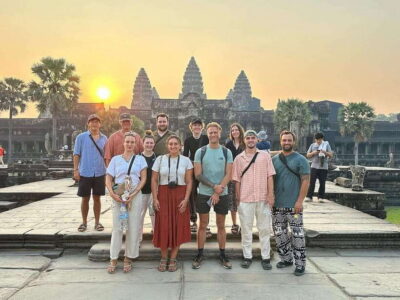
Angkor Wat: Small-Group Sunrise or Sunset Tour
Read our review →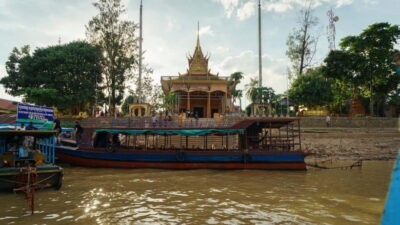
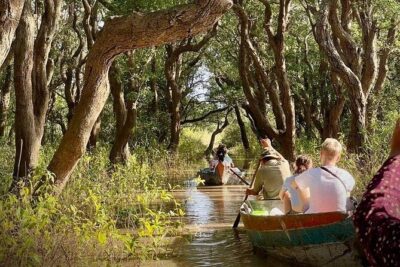
Sunset tour of Kampong Phluk stilts home village on the Tonle Sap
Read our review →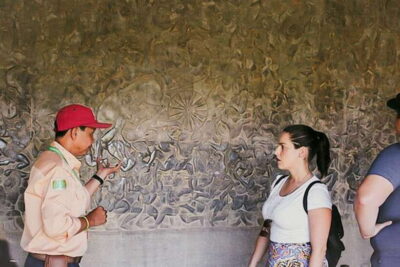
Angkor Wat 2-Day Tour with Sunrise and Sunset
Read our review →
Kampong Phluk Floating Village Tour with Boat
Read our review →