
Reviewed · ANGKOR WAT TOURS
Full-Day private Tour with Sun Rise in Lost City & Angkor Wat from Siem Reap
Before dawn, Angkor Wat feels almost unreal. This private eight-hour tour combines sunrise at Angkor Wat with the major temples of Angkor Thom and Ta Prohm, giving you a broad first look at the ancient Khmer capital without the fixed pace of a large group. I like the early start, which helps you reach the temples before the worst heat, and I like having a guide who can explain the carvings, kings, and religious changes that are easy to miss on your own. The main drawback is the long day and the very early pickup, especially if you are not good at functioning before breakfast.
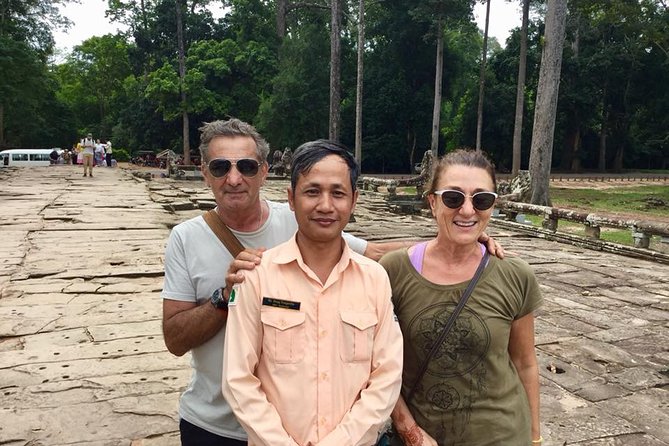
I also like the private format. You travel with your own party, hotel pickup and drop-off are included, and the route can be adjusted to your needs. Guides named in the feedback, including Rith, Sen, and Sim, were praised for clear English, thoughtful timing, photo help, and careful attention to individual interests. Just remember that the advertised $36 price does not include the $37 Angkor admission ticket, so your basic cost is about $73 per person before food or other personal spending.
In This Review
- Key Points at a Glance
- Why the Sunrise Start Changes the Day
- Angkor Wat: Two Hours Inside Cambodia’s Great Temple
- Angkor Thom South Gate and the Faces of Bayon
- Baphuon, Phimeanakas, and the Former Royal Center
- The Leper King and Elephant Terraces
- Ta Prohm, Where the Jungle Reclaims the Stones
- The Guide and Driver Make the Difference
- What the $36 Price Really Gets You
- Who Will Enjoy This Eight-Hour Route
- Practical Tips for a Better Morning
- Should You Book This Angkor Sunrise Tour?
- FAQ
- Is the Angkor admission ticket included in the tour price?
- How long does the private tour last?
- Does the tour include hotel transportation?
- Is breakfast included?
- What should I wear to the temples?
- Can I cancel for a full refund?
Key Points at a Glance
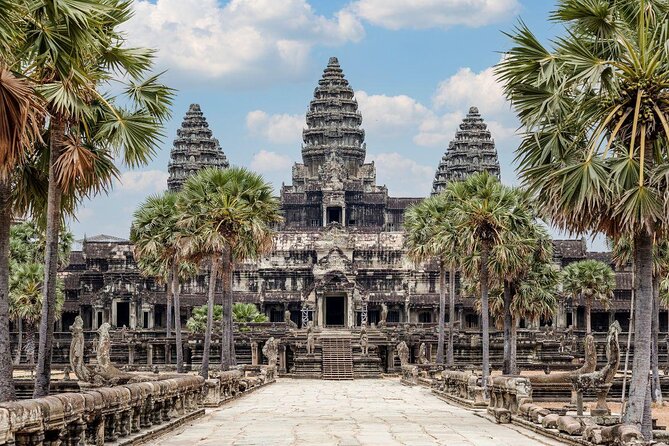
- Sunrise entry through the eastern gate: You enter Angkor Wat in darkness and walk toward the north pool before the sun appears.
- A private vehicle and guide: Hotel pickup, bottled water, transport, and a guide are included for your group alone.
- Nine substantial temple and city stops: The day covers Angkor Wat, Angkor Thom, Bayon, Baphuon, Phimeanakas, the royal terraces, and Ta Prohm.
- A useful crowd and heat strategy: The early schedule puts the largest temple first and reaches jungle-covered Ta Prohm later in the morning.
- Guide quality matters here: Rith, Sen, and Sim received especially warm praise for history, local stories, photography, and organization.
- Temple ticket costs extra: The tour price is attractive, but admission adds $37 per person.
Why the Sunrise Start Changes the Day
The alarm will be early. Your guide collects you at your Siem Reap hotel before dawn, then takes you by private vehicle to Angkor Wat. The precise pickup time depends on the season and sunrise, but you should expect to leave while it is still dark.
The unusual part comes next. Rather than simply joining the main flow toward the familiar reflecting pools, the tour enters through Angkor Wat’s eastern gate. You continue on foot along a jungle path toward the north pool. The temple is nearby, but in the darkness you cannot fully see it. That slow reveal is part of the appeal.
At the pool, you wait for daylight. The famous sunrise views can be excellent, though the sky is never guaranteed to produce a dramatic display. The practical advantage is more certain: you are already inside the temple complex before the hotter part of the morning, and your guide can help you choose a useful place to view and photograph the scene.
Bring a small light if you have one, though the tour information does not promise that equipment. Flat shoes are more important. You will walk on uneven paths and stone surfaces, and this is not a day for fashionable shoes that punish you by breakfast.
The early start also affects food. You are advised to request a boxed breakfast from your hotel, then eat at a local cafe near Angkor Wat. This is a sensible plan. It keeps the morning moving and gives you a chance to sit down before the long run through Angkor Thom.
More ways to see Angkor Wat:
- Angkor Wat Sunrise or Sunset Tour with Guide from Siem Reap
★ 5.0 · 12,109 reviews - Siem Reap: Angkor Wat: Small-Group Sunrise or Sunset Tour
★ 5.0 · 9,444 reviews - Siem Reap: Angkor Wat 2-Day Tour with Sunrise and Sunset
★ 4.9 · 4,429 reviews
Angkor Wat: Two Hours Inside Cambodia’s Great Temple
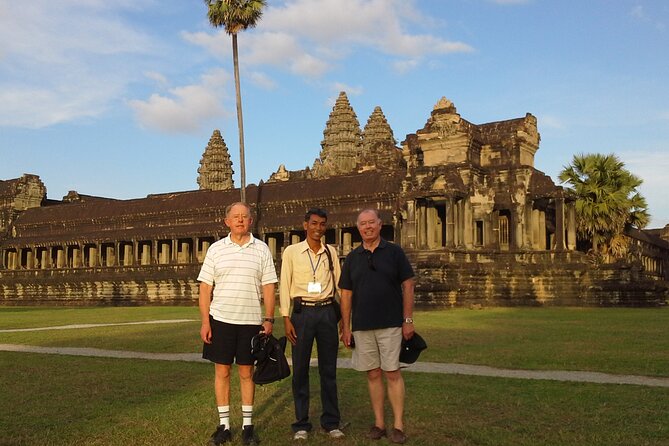
After sunrise, you explore Angkor Wat itself. Built in the 12th century, it is the largest religious monument in the world and the best-preserved major temple in the Angkor area. It has remained an important religious center since its foundation, first associated with Hindu worship and later with Buddhism.
The tour allows about two hours here. That is enough for a useful introduction, but not enough to examine every gallery and carving. Angkor Wat is enormous. A guide helps you use the time well, pointing out major features and explaining how the temple’s design reflects religious ideas and royal power.
You can expect to walk through the central chambers and continue toward the upper terraces. The higher levels give you a better sense of the temple’s scale, but access may depend on current site rules and conditions. Wear clothing that covers your knees and shoulders, since some temple areas require modest dress.
The private format is especially useful here. You can ask why the temple faces west, how the galleries were used, or what the carved scenes mean. If you are more interested in architecture than mythology, tell your guide. If you want help with photographs, say so early. The strongest guide feedback came from people who appreciated that guides such as Rith adjusted explanations and helped find good photo positions.
One caution: sunrise is not a quiet, solitary event. Angkor Wat is famous for a reason. The eastern entrance and north pool route can reduce some of the usual pressure, but you should not expect to have the monument to yourself.
Angkor Thom South Gate and the Faces of Bayon
After breakfast, the route moves to Angkor Thom, the walled capital city of the Khmer Empire. The South Gate is one of five entrances to the former royal city. Its approach is lined with 54 stone figures on each side, creating a dramatic processional road toward the gate.
You have about 30 minutes here. That is enough to see the gate, photograph the figures, and hear how the entrance formed part of a larger fortified city. It is a short stop, but it sets up the rest of the morning.
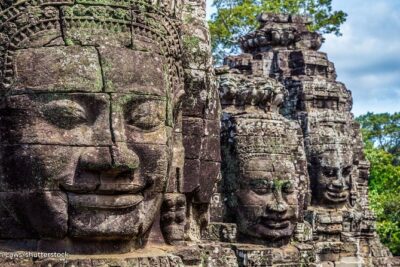
Next comes Bayon, with about an hour inside. Built in the 13th century as the state temple of King Jayavarman VII, Bayon occupies the center of Angkor Thom. Its most famous feature is the collection of enormous carved faces, which appear at different angles as you move through the crowded stone towers.
Bayon rewards a guide who can explain what you are seeing. The faces are striking, but the temple is also filled with carvings of daily life, battles, ceremonies, and court scenes. Look beyond the famous expressions. The lower galleries can feel confusing, with corridors and towers packed close together, so a clear route is useful.
This is one place where the private tour can save time. You can pause for photographs or move on when the heat and stone begin to wear you down. You also have a better chance of asking questions without holding up a busload of people.
Baphuon, Phimeanakas, and the Former Royal Center
Baphuon receives about 40 minutes. The supplied description repeats Bayon’s text by mistake, so you should not expect a separate detailed explanation from the booking information itself. In practical terms, Baphuon is part of the Angkor Thom temple area and adds another layer to the story of royal construction within the walled capital.
The route then continues to Phimeanakas, also called Vimeanakas, with about an hour planned. This celestial temple began near the end of the 10th century under King Rajendravarman and was completed under Suryavarman I. Its three-tier pyramid form reflects an earlier stage of Khmer temple design than Bayon.
Phimeanakas is located within the enclosure of the former Royal Palace. That setting matters. You are not only visiting isolated temples. You are moving through the administrative and ceremonial center of a former empire, where royal buildings, audience spaces, temples, and processional terraces worked together.
The stop can feel less immediately spectacular than Angkor Wat or Ta Prohm. I would treat it as a history-rich pause rather than a big photo moment. Your guide’s explanation is important here, because the site’s importance is easier to grasp when you understand its place inside the old royal compound.
A few more options around Siem Reap worth reading up on
- From Siem Reap: Kampong Phluk Floating Village Tour by Boat
★ 4.9 · 6,979 reviews - Sunset tour of Kampong Phluk stilts home village on the Tonle Sap
★ 5.0 · 4,865 reviews - Siem Reap: Kampong Phluk Floating Village Tour with Boat
★ 4.9 · 3,843 reviews - Siem Reap: Full-Day Angkor Wat Guided Tour with Sunset
★ 4.9 · 3,803 reviews
The Leper King and Elephant Terraces
The Terrace of the Leper King gets roughly 30 minutes. This U-shaped structure is thought by some to have been used as a royal cremation site. It was built in the 13th century under Jayavarman VII, though the modern name comes from a statue and later tradition rather than a simple description of the original purpose.
The terrace is valuable for its carved walls and for the questions it raises about royal ritual. You may find the narrow, enclosed sections more interesting than the broad open face seen from the road. Give yourself time to look closely at the reliefs instead of treating the stop as a quick photograph.
Nearby, the Terrace of the Elephants stretches about 350 meters. It served as a giant reviewing stand for public ceremonies and formed a base for the king’s grand audience. Some local Khmer residents call it the Ancient Khmer Stadium, which gives you a useful sense of its public function.
This is a wide, open stop, and the sun can be strong by this point. Bottled water is included, but I would still carry it with you. A hat, sunscreen, and light clothing that still covers the required areas will make the second half of the day easier.
Ta Prohm, Where the Jungle Reclaims the Stones
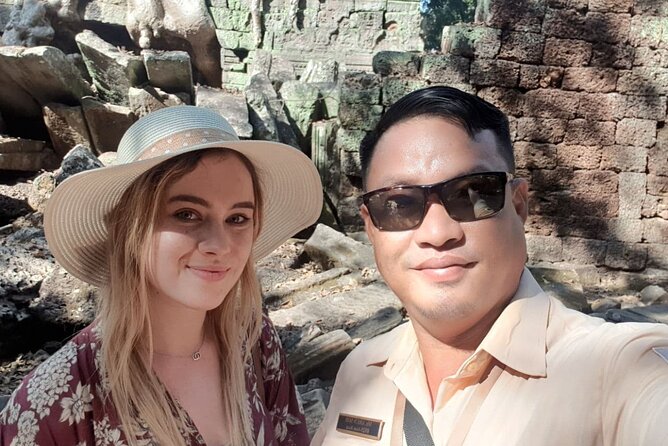
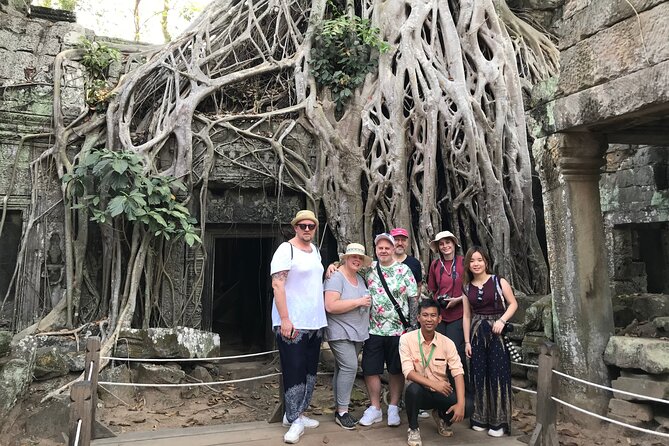
Ta Prohm is the final major stop, with about an hour planned. Built in the 13th century, it is often called the Tomb Raider temple because of its appearance in the film. Its real appeal is older and better: stone galleries, towers, roots, and trees combine to create one of Angkor’s most atmospheric places.
The jungle growth is not simply decoration. Ta Prohm was left in a condition that shows how vegetation can push into walls, cover doorways, and alter the feel of an ancient site. You can see why it has become one of the most photographed temples in Cambodia.
There is a tradeoff in placing Ta Prohm late in the day. You may have more heat and tired legs by then, but the schedule avoids trying to visit every major temple at the same early hour. The private vehicle also gives you a place to return to between stops, rather than forcing you to walk every stretch.
Take care around uneven stones and narrow passages. Comfortable flat shoes are essential, and clothing requirements still apply. Your guide can help you find good angles for photographs while keeping the group moving.
The Guide and Driver Make the Difference
The temples are extraordinary on their own, but the quality of the day depends heavily on the people leading it. The guide is an English speaker, and the strongest praise focused on clear explanations, personal stories, good timing, and the ability to answer questions.
Rith was repeatedly singled out for excellent English, approachable conversation, Cambodian stories, and help staying away from the thickest crowds. He was also praised for taking photographs and for sharing personal experiences. Sim was praised for checking arrangements with the hotel the day before and for knowing a strong sunrise position. Sen received praise for being helpful and treating requests as part of the job rather than a nuisance.
Those details tell you what to ask for. If you care about photography, mention it before the morning begins. If you want more time at Bayon and less at a smaller stop, ask. This is a private experience, so flexibility is one of the main reasons to choose it.
The driver matters too. Feedback highlights courteous, safe driving, and a comfortable private vehicle is included. That becomes more valuable as the day goes on, especially in Cambodia’s heat.
What the $36 Price Really Gets You
At $36 per person, the tour looks inexpensive for a private full-day service. But the temple admission ticket costs another $37 per person, bringing the core total to about $73. Food is not included, though you can arrange a boxed breakfast through your hotel and eat at a local cafe.
For that combined price, you receive roughly eight hours, hotel pickup and drop-off, a private vehicle, an English-speaking guide, and bottled water. The value is strongest for two or more people who want private transport and personal explanations without arranging each temple separately.
The price is less compelling if you only want a quick sunrise photograph and a short visit. In that case, the full route may be more than you need. It also offers limited value if you plan to spend several days at Angkor and prefer to explore slowly on your own.
The tour is often booked about 22 days ahead on average. That is useful planning information, especially if your dates are fixed. The cancellation terms are forgiving up to 24 hours before the start, when you can receive a full refund. Changes or cancellations inside that period are not accepted for a refund.
Who Will Enjoy This Eight-Hour Route
I would recommend this experience to first-time visitors who want the major Angkor sights in one well-organized day. It is also a good fit for families, couples, and friends who value a private vehicle and the ability to ask questions freely.
It suits you especially well if:
- You want sunrise at Angkor Wat without arranging transport yourself.
- You prefer a guide who can explain history and local culture in English.
- You want to reduce exposure to the midday heat.
- You appreciate help with photographs and route choices.
- You are comfortable walking for much of the day.
- You want to see both the grand monuments and the more atmospheric corners of Angkor Thom.
It may not suit you if you dislike early mornings, have trouble walking on uneven surfaces, or want a slow visit with long breaks. Nine stops in eight hours is a full schedule. You will see a great deal, but you will not study every carving.
Practical Tips for a Better Morning
Ask your hotel for a boxed breakfast before you go. This is one of the most useful suggestions for the tour, since the first part of the morning is built around sunrise rather than a sit-down meal.
Wear flat, comfortable shoes and clothing that covers your knees and shoulders. Bring sun protection and keep the supplied bottled water close, not buried in the vehicle.
Your guide will send a link so you can purchase the temple entrance e-ticket in advance. The admission fee is separate from the tour price, so include it in your budget.
Most people can participate, and the experience is offered as a private activity for your party alone. Still, the combination of darkness, stairs, stone paths, heat, and a long walking day means you should judge your own comfort honestly.
Should You Book This Angkor Sunrise Tour?
Book it if you want a strong first day at Angkor with sunrise, the major Angkor Thom sites, and Ta Prohm covered in one private run. The best reasons are the early timing, the flexible format, and the guides, especially Rith, Sen, and Sim, whose strengths include clear English, thoughtful planning, local stories, photo help, and crowd-aware routing.
Skip it if you want a slow temple study day or if dawn departures make you miserable. For most first-time visitors staying in Siem Reap, though, the tour offers a practical balance: the main monuments, a private vehicle, personal guidance, and enough structure to keep a huge archaeological area from becoming an exhausting puzzle.
FAQ
Is the Angkor admission ticket included in the tour price?
No. The tour price is $36 per person, and the Angkor temple entrance ticket costs an additional $37 per person.
How long does the private tour last?
The tour lasts approximately eight hours.
Does the tour include hotel transportation?
Yes. Hotel pickup and drop-off are included, along with a private vehicle.
Is breakfast included?
No. You are advised to request a boxed breakfast from your hotel and eat it at a local cafe near Angkor Wat.
What should I wear to the temples?
Wear clothing that covers your knees and shoulders. Flat shoes that are comfortable for walking are recommended.
Can I cancel for a full refund?
Yes, if you cancel at least 24 hours before the experience start time. Cancellations or changes made less than 24 hours before the start are not eligible for a refund.
Newest reviews from Siem Reap
- War Museum, Killing Field, and APOPO Hero RATs Tour★ 5.0 · 7 reviews
- Angkor Wat at Sunrise★ 4.0 · 7 reviews
- Siem Reap Angkor Airport Taxis (from Airport to Hotel)★ 5.0 · 44 reviews
- Secret Temples of Angkor – Guided Tour in Siem Reap★ 5.0 · 6 reviews
- Short Cycling at Countryside★ 5.0 · 29 reviews
- Cambodian Cooking Class and Oxcart Ride with Local Village Tour★ 5.0 · 4 reviews
- SIEM REAP E-BIKE HALF-DAY COUNTRYSIDE (25-30 km)★ 4.0 · 1 review
- Unveiling the Mystical Beauty of Phnom Kulen National Park★ 5.0 · 6 reviews
Angkor Wat Tours, compared.
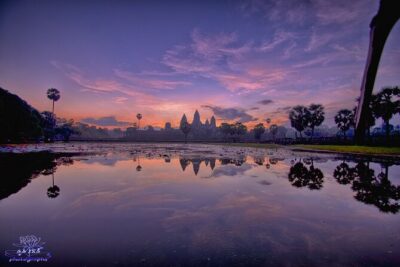
Angkor Wat Sunrise or Sunset Tour with Guide from Siem Reap
Read our review →
Angkor Wat: Small-Group Sunrise or Sunset Tour
Read our review →
Angkor Wat 2-Day Tour with Sunrise and Sunset
Read our review →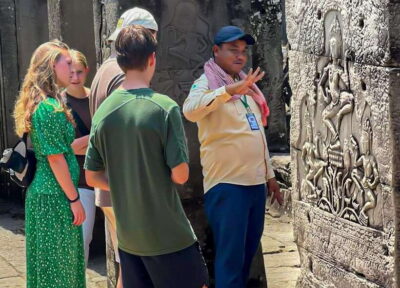
Angkor Wat Sunrise tour with Small – Group and Guide tours
Read our review →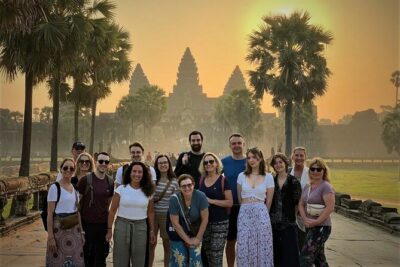
Angkor Wat Highlights and Sunrise Guided Tour from Siem Reap
Read our review →
Angkor Wat Sunset Small Group Tour with Lunch Included
Read our review →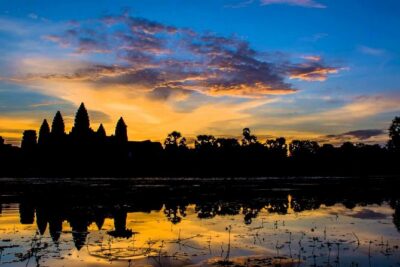
Full-Day Angkor Wat Sunrise Private Tour with Guide from Siem Reap
Read our review →Browse the lists this tour appears in