
Reviewed · FLOATING VILLAGE TOURS
Full Day: Highlight Ruin and Floating Village
Ancient stones meet life on the water. This seven-hour Siem Reap outing links Angkor Wat, Bayon, Ta Prohm, the Roluos temples, and a floating village on Tonle Sap Lake. I like the unusual mix of famous monuments and present-day Cambodian life, and I like that the group stays small, with fewer than six people.
The main consideration is cost beyond the $45 tour price. Your Angkor Archaeological Park ticket, floating-village boat trip, meals, and personal spending are not included. You also cover a lot of ground in one day, so the schedule suits you best if you want broad coverage rather than a slow, single-temple visit.
In This Review
- Key points to know before you go
- Why this temple and lake combination works
- Starting from Krong Siem Reap
- Angkor Wat, the essential first chapter
- Tonle Om Gate and the southern approach
- Bayon and its quiet stone faces
- Ta Prohm and the power of nature
- Bakong and the Roluos chapter
- Preah Ko and early Khmer craftsmanship
- Tonle Sap and the floating village visit
- The guide can make or break the temple day
- Is $45 a good value?
- Who should book this day?
- Final verdict: a strong first day in Siem Reap
- FAQ
- How long does the experience last?
- What language is the tour conducted in?
- How many people are in the group?
- Is hotel pickup and drop-off included?
- Is the Angkor entrance ticket included?
- Is the floating-village boat trip included?
- Are food and personal expenses included?
- Can I cancel for a full refund?
Key points to know before you go
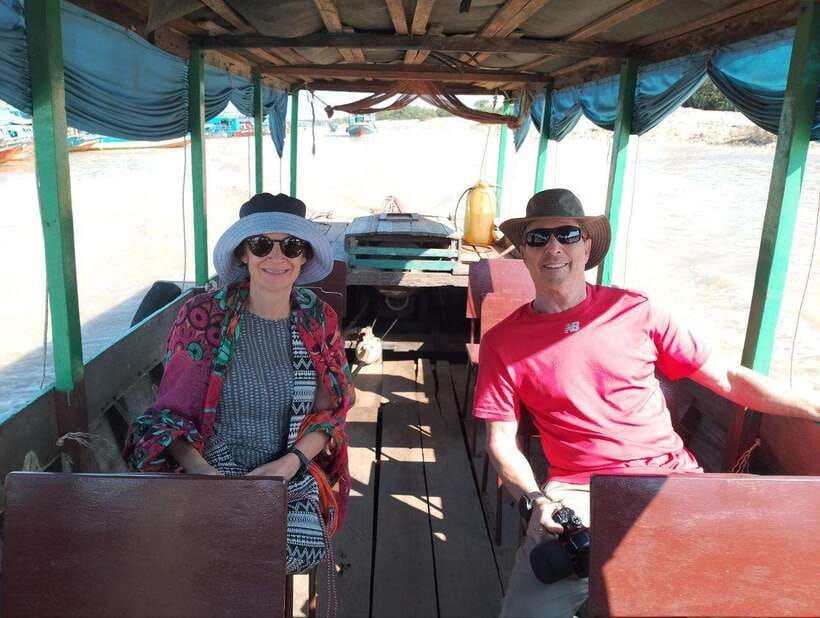
- Two sides of Cambodia in one day: You see the ceremonial world of the Khmer kings, then floating houses, schools, and markets on Tonle Sap.
- The small circuit gets the headline treatment: Angkor Wat, Bayon, and Ta Prohm provide the classic temple experience.
- Roluos adds an earlier chapter: Bakong and Preah Ko offer a look at pre-Angkorian architecture away from the busiest temple stops.
- A private group keeps things flexible: Fewer than six people makes it easier to ask questions and adjust attention to your interests.
- The guide can shape the day: Guide Mr. Long Rain is praised for explaining architectural details and answering questions in clear English.
- The price is only part of the budget: Park admission, the lake boat, food, and personal expenses must be added separately.
Why this temple and lake combination works
Many Siem Reap excursions focus only on the Angkor temples. This one adds a second story: how people live around Tonle Sap Lake today. I find that contrast useful because the carved stone monuments can otherwise feel disconnected from modern Cambodia.
The temple section covers the best-known stops in the Angkor area. Angkor Wat gives you the grand scale, Bayon supplies its famous stone faces, and Ta Prohm offers the atmospheric sight of trees and roots pressing into old masonry. The Roluos Group then shifts the focus toward earlier Khmer building traditions.
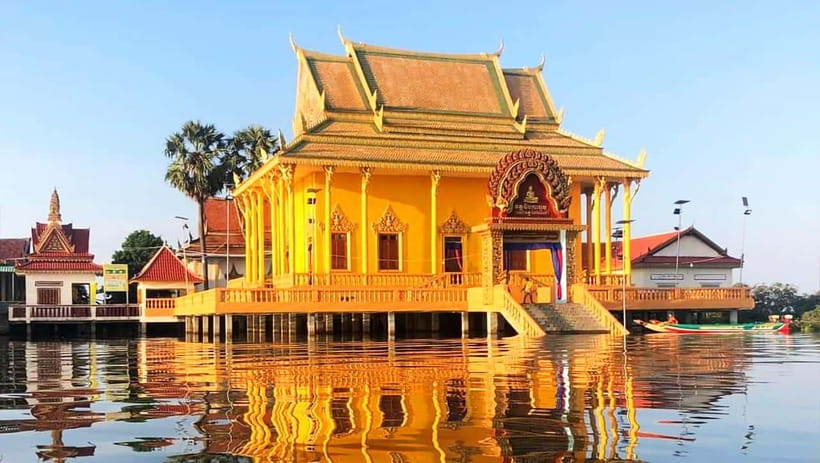
At the lake, the focus changes from royal power to local routines. You can see floating houses, schools, and markets, along with fishing activity and the practical customs shaped by life on Southeast Asia’s largest freshwater lake. The exact order may vary, but the experience is designed to combine major ruins with a boat visit to a floating village.
The trip is led in English by an individual professional guide and driver. The small private format matters here. At Bayon or Ta Prohm, you can ask why a carving matters or pause over a detail without trying to keep up with a large coach group.
More floating village trips:
- From Siem Reap: Kampong Phluk Floating Village Tour by Boat
★ 4.9 · 6,979 reviews - Sunset tour of Kampong Phluk stilts home village on the Tonle Sap
★ 5.0 · 4,865 reviews - Siem Reap: Kampong Phluk Floating Village Tour with Boat
★ 4.9 · 3,843 reviews
Starting from Krong Siem Reap
Pickup and drop-off are included in Krong Siem Reap. The tour uses local transportation, with cool water and fresh towels provided during the day. That is a modest touch, but it matters in Cambodia’s heat, especially when you are moving between open temple courtyards and a sunny lake.
The trip lasts about seven hours. That is long enough to see the major highlights, but not long enough to examine every corner of Angkor. You should think of this as a carefully packed overview rather than an unhurried archaeological study.
The operator describes the experience as a private group of fewer than six people. Larger groups may receive a lower per-person price because discounts are available as group size increases. If you are traveling with friends, ask how the group rate changes before booking.
Angkor Wat, the essential first chapter
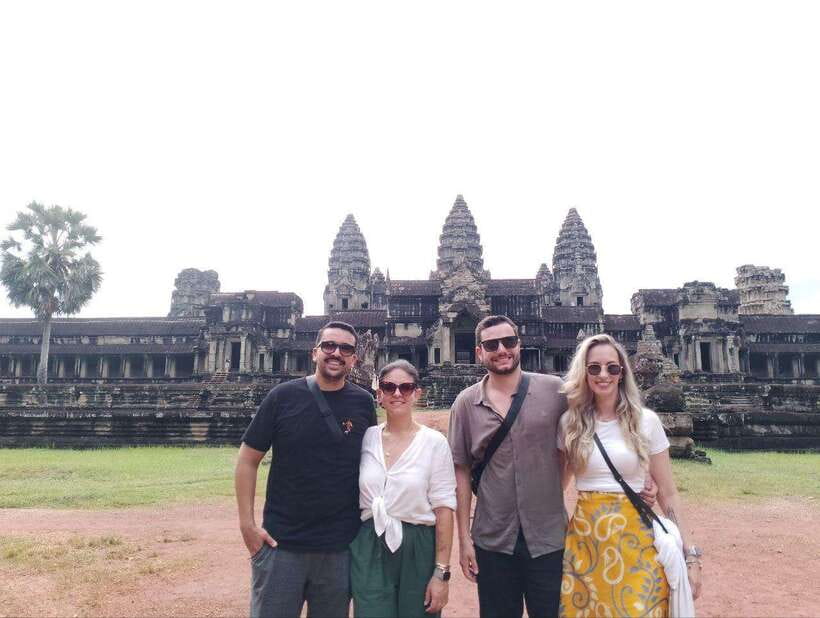
Angkor Wat is the tour’s biggest architectural draw. It was built as the crown jewel of the Khmer Empire and is recognized as a UNESCO World Heritage Site. Its scale can be hard to grasp from photographs, so the approach and broad temple layout are important parts of the visit.
You can expect a guided visit with time for photographs and sightseeing. The temple’s galleries and bas-reliefs offer more than attractive surfaces. They show how religious ideas, royal authority, and skilled stonework came together in the Khmer world.
I would use the guide here rather than rushing from one photo spot to another. A well-prepared explanation can help you read the scenes and understand why Angkor Wat matters beyond its size. The available information does not promise a specific start time, so check the day’s departure options when reserving.
Angkor Wat is also where your extra admission cost matters first. The entrance fee for Angkor Archaeological Park is not part of the $45 price. You should confirm the current park ticket arrangements before setting your total budget.
Tonle Om Gate and the southern approach
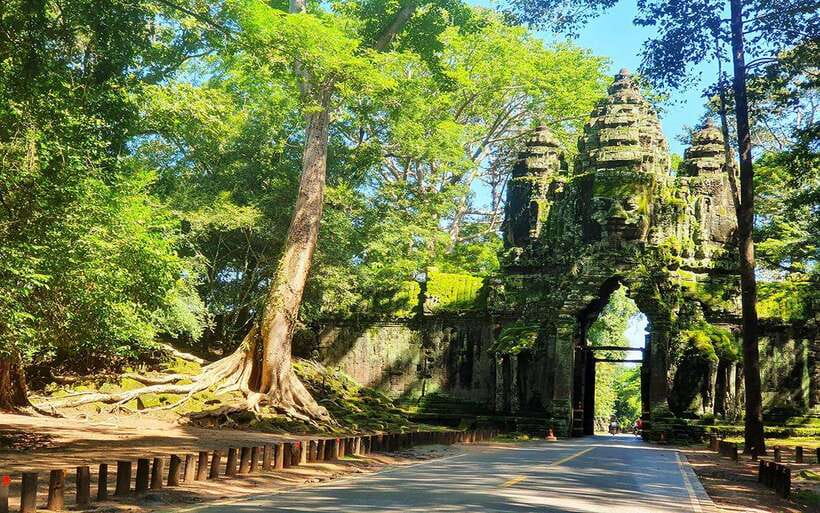
Tonle Om Gate, also called the Southern Gate, is a brief but worthwhile stop on the route. It offers another chance to photograph Angkor’s monumental stonework and gives your guide a place to explain how the temple complex was arranged.
Do not expect the same length of visit as at Angkor Wat. This is a photo and orientation stop, not a full standalone temple tour. Its value comes from connecting the road, gateways, and larger Angkor setting in your mind.
The sequence places the gate before Bayon, which makes practical sense. You move from the outer approach toward the central temple area and then spend more time among the carved towers of Bayon.
A few more options around Siem Reap worth reading up on
- Angkor Wat Sunrise or Sunset Tour with Guide from Siem Reap
★ 5.0 · 12,109 reviews - Siem Reap: Angkor Wat: Small-Group Sunrise or Sunset Tour
★ 5.0 · 9,444 reviews - Siem Reap: Angkor Wat 2-Day Tour with Sunrise and Sunset
★ 4.9 · 4,429 reviews - Siem Reap: Full-Day Angkor Wat Guided Tour with Sunset
★ 4.9 · 3,803 reviews
Bayon and its quiet stone faces
Bayon is one of the most distinctive temples in the Angkor complex. Its central towers carry enigmatic faces that look out across the site. The faces are the reason many people remember Bayon more clearly than larger, more formal monuments.
The building can feel confusing at first. Towers, corridors, and enclosed spaces appear to overlap, and the famous faces reveal themselves from changing angles. This is a good stop for a guide who can help you understand what you are looking at rather than simply point toward the largest carving.
Mr. Long Rain receives especially strong praise for this part of the day. He is described as speaking very well, taking people through lanes and smaller passages, explaining architectural details, and answering a large number of questions. If he is assigned to your outing, make use of that access. Ask about the carvings, temple design, and differences between the sites.
Bayon is not a place to rush through in five minutes. At the same time, the entire seven-hour program includes several major stops, so your guide will need to balance detail with the clock.
Ta Prohm and the power of nature
Ta Prohm is famous for trees and roots growing across the old temple walls. The sight is striking because you can see the tension between built order and natural growth in one frame. It is also one of the stops most likely to produce memorable photographs.
The temple is more than a dramatic backdrop. Its damaged galleries and tree-covered stone show how time changes a monument, even when the original religious and political purpose has faded. I like Ta Prohm because it gives you a visual break from the more symmetrical grandeur of Angkor Wat.
Expect another guided visit, with time for photographs and sightseeing. The site can feel atmospheric, but it is still part of a popular temple route. This tour’s smaller group may make the visit easier to manage, though no group size can guarantee a quiet temple.
Bakong and the Roluos chapter
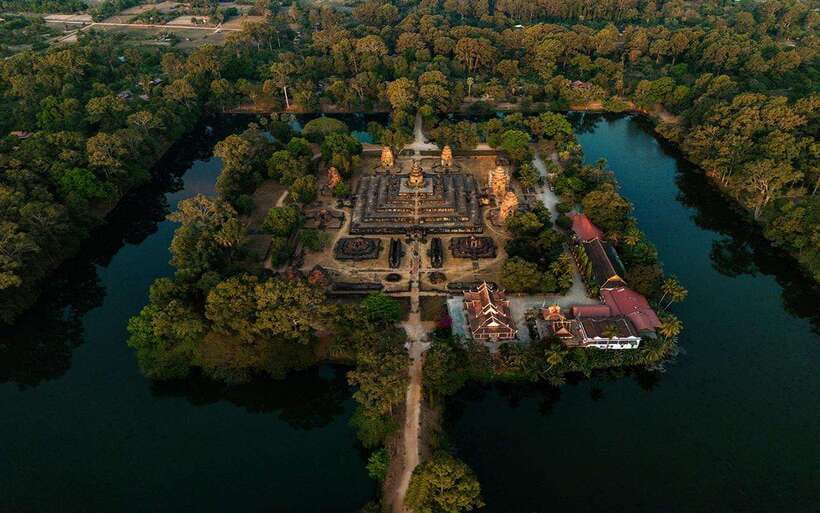
Bakong is the first major Roluos Group stop named in the route. The Roluos temples are important because they belong to an earlier period of Khmer history, before the monuments most people associate with Angkor. That makes them valuable for understanding how Khmer temple design developed over time.
You can use Bakong to compare an earlier structure with the later complexity of Bayon or the scale of Angkor Wat. The exact teaching style depends on your guide, but the supplied description places special emphasis on learning about pre-Angkorian temples in Siem Reap.
This is the tour’s off-the-main-route advantage. Bakong is not simply another famous photograph. It gives you a quieter historical angle and helps prevent the day from becoming a parade of the same type of monument.
Still, you should keep expectations realistic. The Roluos Group is described as a special highlight, but the overall tour gives more attention to the headline temples and the lake. If early Khmer architecture is your main interest, you may wish for more time here than the seven-hour format allows.
Preah Ko and early Khmer craftsmanship
Preah Ko adds another stop in the Roluos area. Like Bakong, it helps place the Angkor monuments within a longer story rather than treating Angkor Wat as the beginning of everything.
The visit includes photography, sightseeing, and a guided explanation. Look to your guide for the historical links between Preah Ko, Bakong, and the later temple styles. This is where a personal guide earns much of the tour’s value. A short stop becomes more meaningful when someone explains what changed between early and later Khmer construction.
The route information also includes an additional photo and sightseeing stop without naming the site. That means you should confirm the final sequence with the operator if knowing every location in advance is important to you.
Tonle Sap and the floating village visit
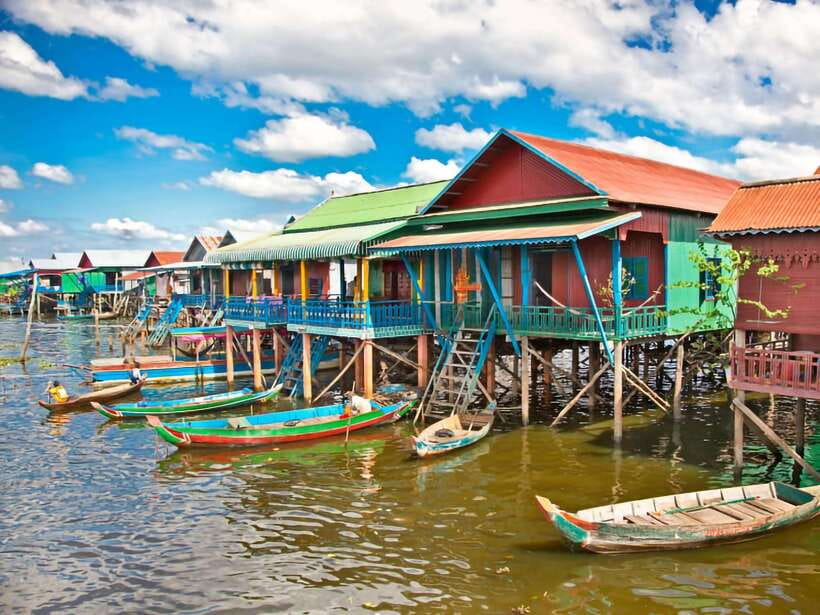
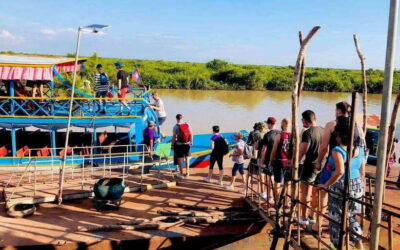
The Tonle Sap portion changes the mood completely. Instead of stone courtyards and carved towers, you see a lake community shaped by water. Floating homes, schools, and markets show how ordinary services and family life adapt to a setting that is not fixed on dry land.
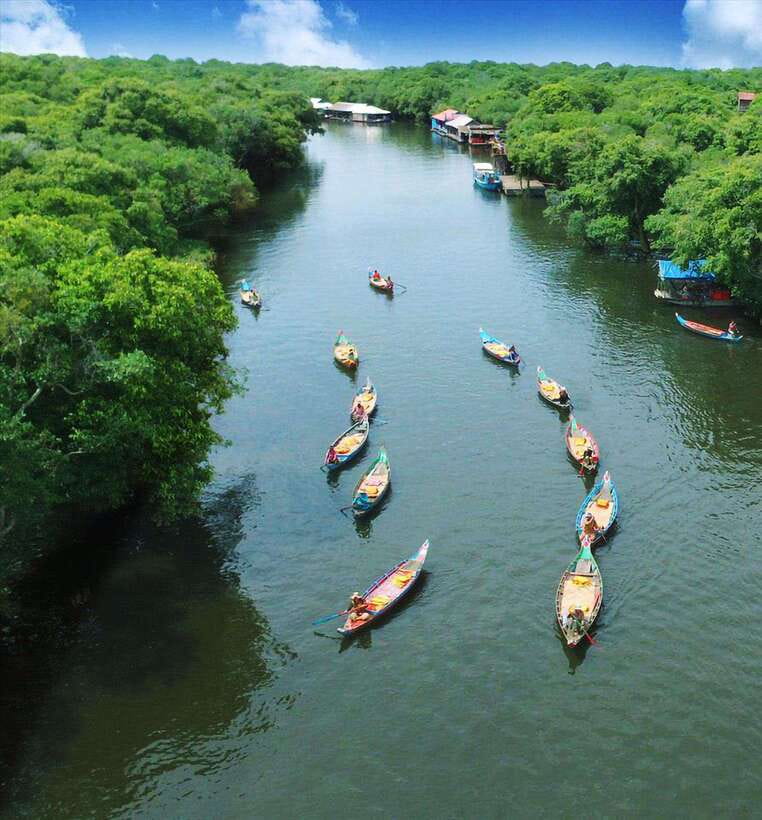
The lake is the largest freshwater lake in Southeast Asia and has a unique ecosystem that supports wildlife and thousands of residents. A boat trip lets you see the community from the water and learn about fishing techniques, daily routines, and local customs.
I consider this the most useful contrast in the entire program. The temples show the reach of royal power centuries ago. The floating village shows how people organize daily life around the lake now. You get more than two unrelated sightseeing stops because each one adds context to the other.
The boat visit is not included in the $45 price. That is the most important extra expense to clarify before booking. You should also ask exactly which floating village is visited and what the boat charge covers, since the supplied details identify the activity but not the separate fee.
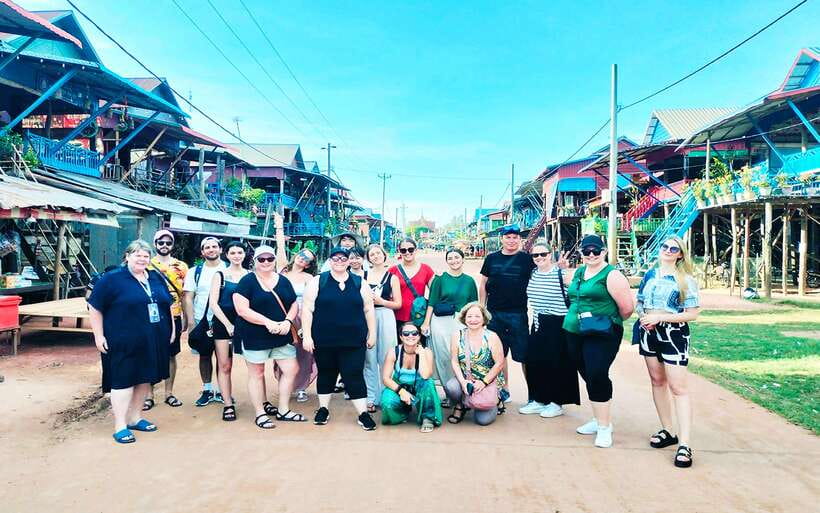
The lake can feel overwhelming in scale and human activity. That is not necessarily a weakness, but you should approach it with respect. This is a lived-in community, not a theme park. Listen to the guide’s explanation, observe without treating homes as props, and remember that the boat portion is part of a local economy.
The guide can make or break the temple day
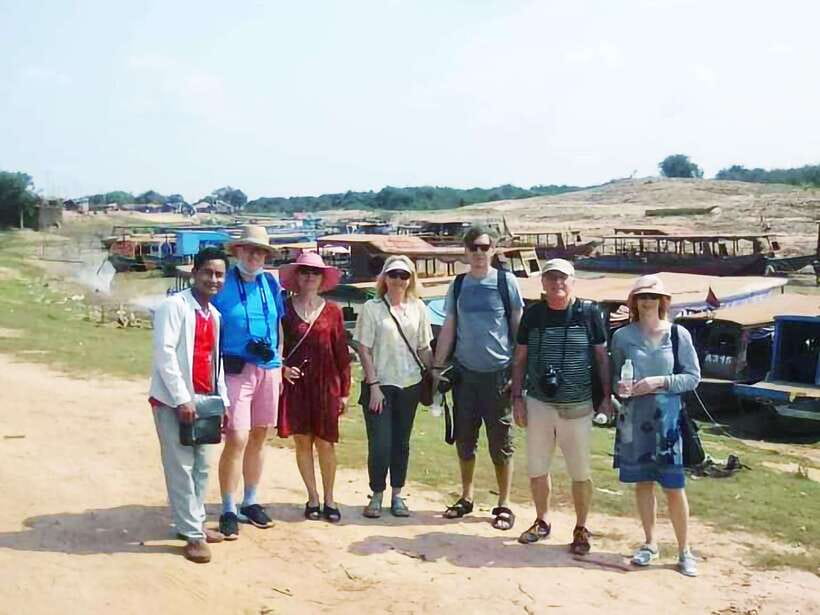
The clearest praise for this experience goes to the guide. Mr. Long Rain and tuk-tuk driver Hana are singled out for their warmth, clear English, and careful attention to temple details. The description of Mr. Rain taking people through lanes and smaller passages suggests a guide who does more than deliver a memorized speech.
One especially useful quality is his interest in helping the local community. That matters on a day that includes a floating village, where respectful explanation is more valuable than a quick ride past houses.
You receive a professional English-speaking guide and driver. The experience provider is an individual professional guide, not a large tour company, so the character of the outing may depend heavily on who is assigned. If you can request Mr. Long Rain, it is worth asking.
The small group also supports a more personal day. Fewer than six people means you can ask questions about architecture, history, or lake life without competing with a full busload. It also makes the transportation feel less anonymous.
Is $45 a good value?
At $45 per person, the price is reasonable for a seven-hour private-style outing that includes pickup, drop-off, a guide, a driver, local transport, water, and fresh towels. The value is strongest if you want both the major temples and the floating village without arranging several separate trips.
However, $45 is not your final cost. You still need to pay for the Angkor Archaeological Park entrance, the Tonle Sap boat visit, food, and personal expenses. I would calculate those additions before comparing this outing with a package that includes admission or the boat.
The tour is particularly good value for couples, families, or friends who can benefit from the small-group setup. Discounts are available as group size increases, and dividing costs among friends may reduce the individual price. Solo visitors should look closely at the extra fees because the private format can make the total higher than the headline number suggests.
Free cancellation up to 24 hours before departure and reserve-now, pay-later booking add useful flexibility. Keep in mind that flexibility does not remove the need to check ticket and boat charges.
Who should book this day?
I would choose this outing if you want a broad first look at Siem Reap. It suits you if Angkor Wat is essential, Bayon and Ta Prohm are high on your list, and you also want to see how people live on Tonle Sap.
It is a good fit for people who enjoy asking questions. The guide-led format is more valuable when you want explanations of architecture, early Khmer history, fishing practices, and local customs.
It may not suit you if you want a slow, highly focused temple study. Seven hours, several ruins, and a lake trip require movement and compromise. You also need to be comfortable with the additional entrance and boat fees.
The stated restriction says the activity is not suitable for people over 95. No other specific accessibility details are provided, so anyone with mobility concerns should ask the operator for current transport and site information before booking.
Final verdict: a strong first day in Siem Reap
I would book this tour if I had one busy day and wanted both ancient monuments and present-day lake life. Its strongest feature is the contrast: Angkor’s royal temples, Roluos’s earlier structures, and Tonle Sap’s floating communities all fit into one manageable outing.
The $45 price is attractive, but only after you add the park ticket, boat fee, and food. Book it for the small group, the chance to ask detailed questions, and the reported care shown by Mr. Long Rain and Hana. Skip it only if you prefer a slower temple-only day or want every major cost included upfront.
FAQ
How long does the experience last?
The tour lasts seven hours, including pickup in Krong Siem Reap and return to Krong Siem Reap.
What language is the tour conducted in?
The live tour guide speaks English.
How many people are in the group?
This is a small private group with fewer than six people. Discounts may be available as the group size increases.
Is hotel pickup and drop-off included?
Yes. Pickup and drop-off in Krong Siem Reap are included.
Is the Angkor entrance ticket included?
No. The entrance fee for Angkor Archaeological Park is not included in the tour price.
Is the floating-village boat trip included?
No. The boat visit to the floating village on Tonle Sap Lake is an additional expense.
Are food and personal expenses included?
No. Food and personal expenses are not included.
Can I cancel for a full refund?
Yes. You can cancel up to 24 hours in advance for a full refund. You can also reserve now and pay later.
Newest reviews from Siem Reap
- War Museum, Killing Field, and APOPO Hero RATs Tour★ 5.0 · 7 reviews
- Angkor Wat at Sunrise★ 4.0 · 7 reviews
- Siem Reap Angkor Airport Taxis (from Airport to Hotel)★ 5.0 · 44 reviews
- Cambodian Cooking Class and Oxcart Ride with Local Village Tour★ 5.0 · 4 reviews
- Secret Temples of Angkor – Guided Tour in Siem Reap★ 5.0 · 6 reviews
- Short Cycling at Countryside★ 5.0 · 29 reviews
- SIEM REAP E-BIKE HALF-DAY COUNTRYSIDE (25-30 km)★ 4.0 · 1 review
- Unveiling the Mystical Beauty of Phnom Kulen National Park★ 5.0 · 6 reviews
Floating Village Tours, compared.
Sunset tour of Kampong Phluk stilts home village on the Tonle Sap
Read our review →
Kampong Phluk Floating Village Tour with Boat
Read our review →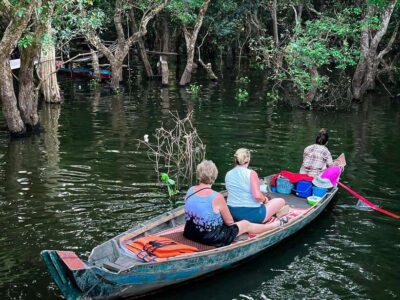
Siem Reap Floating Village Kampong Phluk Sunset with Boat
Read our review →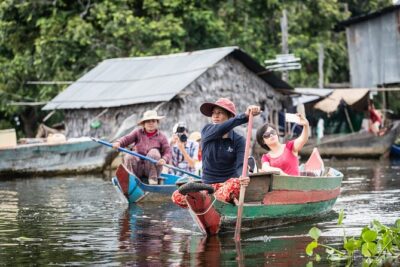
Kompong Phluk Floating Village Half-Day Tour ( Morning / Sunset )
Read our review →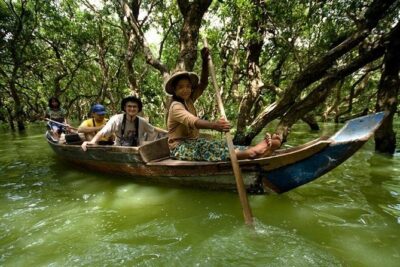
Tonle Sap Lake & Kampong Phluk Village Half-Day Tour
Read our review →
Browse the lists this tour appears in