
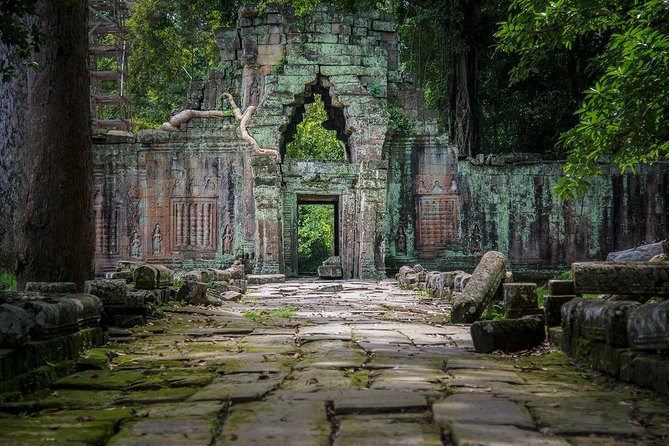
Reviewed · ANGKOR WAT TOURS
Full-Day Explore Angkor Wat Temple & Floating Village
Ancient stones, living water, one long day. This private Siem Reap tour links Angkor Wat, Angkor Thom, Ta Prohm, and Kompong Phluk in about 11 hours. I like the mix of grand temple sites and present-day Cambodian life, and I like that your group travels in an air-conditioned vehicle with an English-speaking guide, cold water, and cold towels. The main drawback is the pace: four major stops, a boat ride, and road time make this a demanding day, especially in hot weather.
I also like the private format, since your group can focus on photographs, explanations, and rest breaks without sharing the day with strangers. Guide Sa received especially warm praise for giving useful temple information, finding good photo spots, and adjusting the day around the heat. You should budget extra for the Angkor admission ticket, boat ticket, and meals, so the advertised price is not the final cost.
In This Review
- Key points to know before booking
- Why this 11-hour route works
- Angkor Wat: three hours with Cambodia’s great symbol
- Angkor Thom and Bayon: faces, gates, and royal ceremony
- Ta Prohm: roots over stone
- Kompong Phluk: from temples to Tonle Sap
- What the private format adds
- Is $128.21 a fair price?
- Who should book this day?
- Should you book the Angkor Wat and Kompong Phluk tour?
- FAQ
- How long does the tour last?
- What time does the tour start?
- Is pickup available?
- Is this a private tour?
- What transportation is provided?
- Is an English-speaking guide included?
- Are water and towels provided?
- Are Angkor Wat admission tickets included?
- Is the Kompong Phluk boat ticket included?
- Are meals included?
- How long does the boat ride take?
- Can I cancel for a full refund?
Key points to know before booking
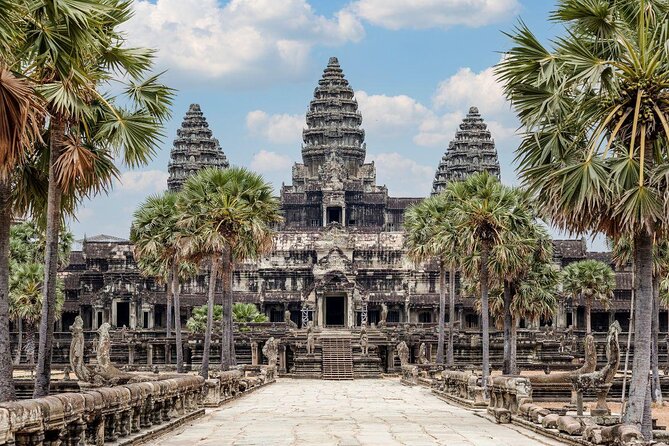
- Angkor Wat gets three hours: You have time to see the main temple area, but the site is large and the heat can make that period feel short.
- Bayon leads into a full Angkor Thom visit: The route includes the South Gate, Baphuon, the Elephant Terrace, the Leper King Terrace, and Phimeanakas.
- Ta Prohm brings the jungle atmosphere: Huge fig tree roots grip the ruins, and the temple remains close to its discovered condition.
- Kompong Phluk adds a very different Cambodia: Tall stilted homes, a floating hospital, fishing activity, and flooded mangroves show how people live with Tonle Sap.
- The boat ride changes with the season: Expect roughly 90 minutes to two hours on the boat, plus a possible 15-minute trip through the flooded forest.
- The price covers comfort, not entrance costs: The $128.21 per-person rate includes transport, guide service, water, and towels, but not temple admission, the boat ticket, or food.
Why this 11-hour route works
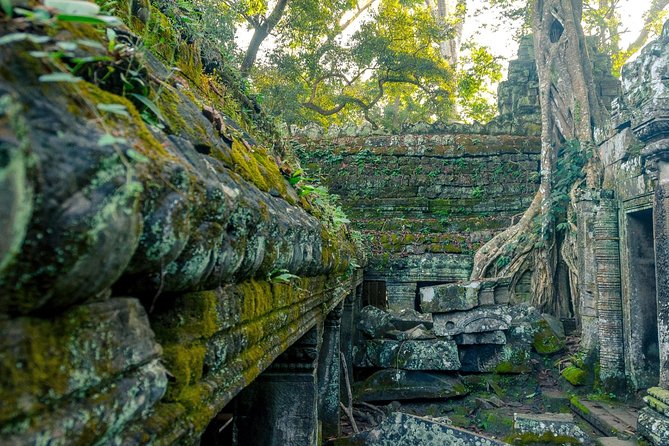
Many Siem Reap tours focus only on the major temples. This one tries to show two sides of the region in one day: the ceremonial stonework of the Khmer empire and the water-based life around Tonle Sap. That contrast gives the day more meaning than a simple sequence of ruins.
The route begins at 8:00 a.m. and uses an air-conditioned vehicle. That matters in Siem Reap, where a day among open courtyards and sun-baked stone can wear you down. Cold water and a cold towel are small additions, but they become useful ones after several hours outside.
You take part in a private activity, so only your own group participates. That is helpful if you want time for photographs or need a short pause. It also means the experience depends in part on how well your group manages its time. With four stops and a long boat excursion, lingering at every temple is not realistic.
More ways to see Angkor Wat:
- Angkor Wat Sunrise or Sunset Tour with Guide from Siem Reap
★ 5.0 · 12,109 reviews - Siem Reap: Angkor Wat: Small-Group Sunrise or Sunset Tour
★ 5.0 · 9,444 reviews - Siem Reap: Angkor Wat 2-Day Tour with Sunrise and Sunset
★ 4.9 · 4,429 reviews
Angkor Wat: three hours with Cambodia’s great symbol
Angkor Wat was built in the early 12th century by King Suryavarman II and dedicated to Vishnu, a major Hindu deity. It later became part of the Buddhist world, but its original purpose helps explain the temple’s scale, layout, and carved decoration.
Three hours gives you a useful first look at the complex. You can expect to spend time moving through the temple grounds, seeing the central structures, and listening as the guide explains the site’s religious and royal role. The important point is that Angkor Wat is not just one building. It is a large complex, and walking between sections takes time.
I would treat this as an introduction rather than a complete study of every corridor and carving. If you want to stop for long photo sessions or inspect every detail, the schedule may feel tight. The tour does not include the Angkor admission ticket, so plan for that separate cost before the day begins.
A guide can make a real difference here. Sa was praised for explaining the sites clearly and for pointing out strong places for photographs. That kind of help is useful at Angkor Wat, where the scale can make it hard to know where to look first.
Angkor Thom and Bayon: faces, gates, and royal ceremony
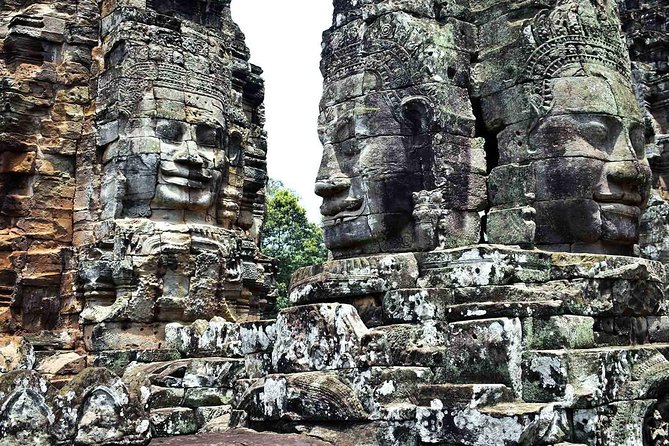
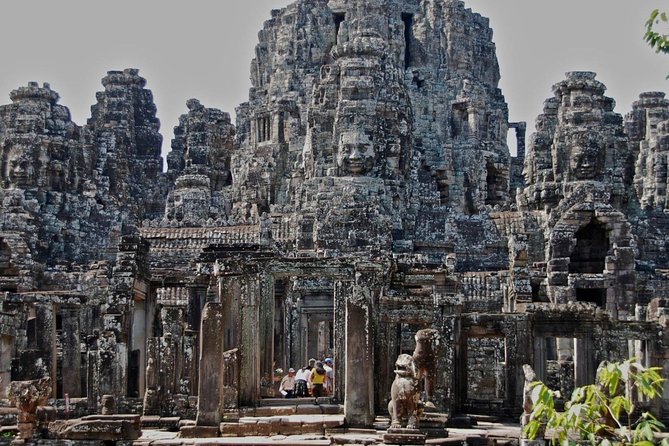
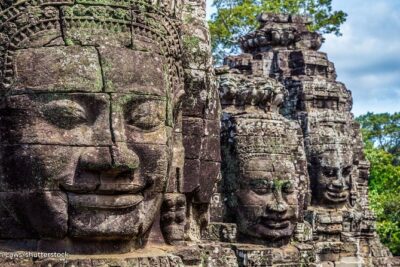
The next major temple area is Angkor Thom, entered through its South Gate. The visit centers on Bayon, the unusual temple filled with towers and carved faces traditionally associated with the Buddhist figure Avalokitesvara.
Bayon feels different from Angkor Wat. Angkor Wat has a more ordered, monumental appearance, while Bayon surrounds you with towers and faces that appear from several directions. The carvings reward slow looking, but the two-hour section also includes several other Angkor Thom sites.
The route continues to Baphuon, once one of the most spectacular temples of its time. You then see the Terrace of the Elephants, which was used for public ceremonies and as a setting for the king’s grand audience. The Terrace of the Leper King adds one of Angkor’s unanswered mysteries, followed by Phimeanakas, the ancient Royal Palace temple.
This is a lot of history in one stretch. The guide’s role is particularly important because the ruins can blur together if you do not understand how each place functioned. Ask for help separating the religious buildings from the ceremonial and royal spaces.
Lunch is a short break of about 45 minutes. The guide recommends a restaurant near the temple area, but lunch is not included. That arrangement keeps the day moving, though it does not leave much time for a relaxed meal. If you prefer a slow lunch, you may find the schedule brisk.
Ta Prohm: roots over stone
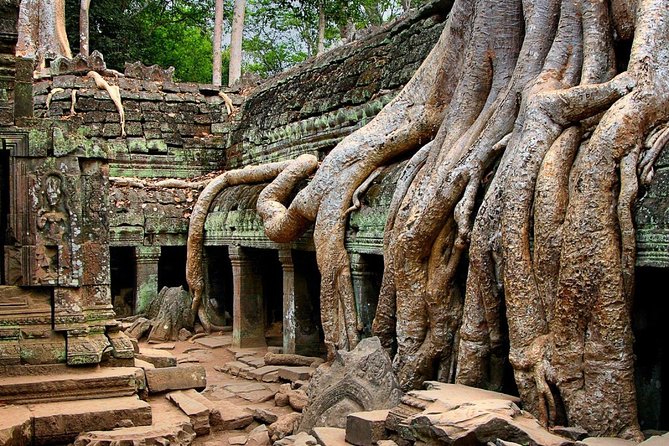
Ta Prohm is often the temple people remember most clearly. Enormous fig trees grip the ruins, and the temple has been left in much the same condition in which it was found. The combination of broken stone, tree roots, and jungle growth gives the site a raw appearance that differs from the more cleared and formal areas.
The tour allows about two hours here. That gives you time to take in the main structures and photograph the roots pressing across walls and doorways. The trees are not just decoration. They are part of the reason Ta Prohm feels like a place being slowly reclaimed by nature.
The drawback is that Ta Prohm can be difficult to appreciate quickly. The most striking sections may require patience, and the heat can make long walks tiring. Since this visit follows Angkor Wat and Angkor Thom, keep some energy in reserve.
I like the way Ta Prohm breaks up the day. After the broad scale of Angkor Wat and the carved faces of Bayon, you get a more enclosed and irregular site. It is still an important temple, but it also gives you a sense of time, decay, and the force of the trees.
More floating village trips:
- From Siem Reap: Kampong Phluk Floating Village Tour by Boat
★ 4.9 · 6,979 reviews - Sunset tour of Kampong Phluk stilts home village on the Tonle Sap
★ 5.0 · 4,865 reviews - Siem Reap: Kampong Phluk Floating Village Tour with Boat
★ 4.9 · 3,843 reviews - Siem Reap Floating Village Kampong Phluk Sunset with Boat
★ 5.0 · 1,962 reviews
Kompong Phluk: from temples to Tonle Sap
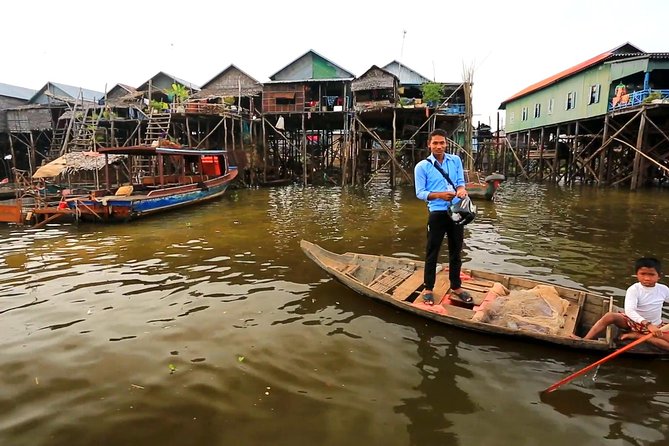
After the temple circuit, the tour changes completely. You ride by minivan for about 40 minutes from Siem Reap to the boat pier, then take a private boat toward Kompong Phluk, a traditional Khmer floating village about 30 kilometers from Siem Reap.
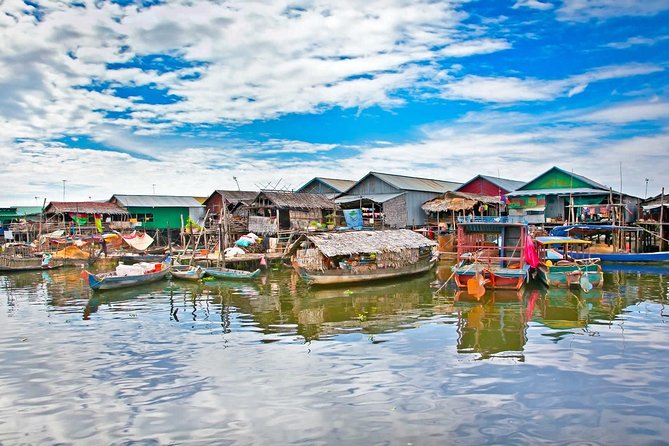
Kompong Phluk offers a look at daily life around Tonle Sap, described here as the largest freshwater lake in Southeast Asia. The village includes tall houses built on stilts, a floating hospital, fishing activity, and views of the flooded mangrove forest.
This is the most important contrast in the day. Angkor’s temples tell you about kings, gods, ceremonies, and stone construction. Kompong Phluk shows a community shaped by water. Homes, work, transport, and public services all relate to changing lake conditions.
The boat ride lasts about one and a half to two hours, depending on the season. You may also be offered a roughly 15-minute trip through the flooded forest. Because the water level changes, the exact appearance of the village and forest will not be identical throughout the year.
The boat ticket is not included in the tour price. That extra cost is worth checking before you commit, since the floating village is a major part of the experience rather than a minor add-on. The four-hour section also includes the drive to and from the pier, so this is not a quick side trip.
You should approach Kompong Phluk respectfully. This is a living community, not simply a scenic stop. The tall houses and fishing activity are interesting because they show how people adapt to the lake, not because they are staged decorations for a photo.
What the private format adds
A private tour is useful here because the day has several moving parts. You travel with your own group, receive an English-speaking guide, and use an air-conditioned vehicle. That gives you more control than a large shared coach, even though the overall route remains fairly fixed.
Guide Sa appears to be a strong part of the experience. He was praised for supplying the information needed at the temples, identifying good photo locations, and responding sensibly to the hot weather. He also kept the group supplied with cold refreshments.
That last detail should not be dismissed. Angkor involves outdoor walking, and this tour continues to Tonle Sap after the temple circuit. Cold water and a cold towel can make the difference between staying engaged and simply trying to reach the end of the day.
Private does not mean leisurely. The route still covers a great deal, and you should expect a full schedule. If your group wants to spend half a day at Angkor Wat alone, this is not the right design. If you want to cover the area’s major sights in one organized day, the format makes good sense.
Is $128.21 a fair price?
At $128.21 per person, this is not a budget temple outing. The value depends on how much you appreciate private transport, a dedicated guide, and the chance to combine Angkor with Kompong Phluk.
The price includes an air-conditioned vehicle, an English tour guide, cold water, and cold towels. It does not include Angkor Wat admission, the boat ticket, breakfast, lunch, or dinner. Those exclusions are important because the added costs can change your final budget.
Still, the tour covers about 11 hours and uses private arrangements for your group. Booking separate transport to several temples and then arranging a boat trip to Kompong Phluk could become inconvenient. You are paying for coordination as well as sightseeing.
I would call it reasonable for visitors who have limited time in Siem Reap and want both temples and Tonle Sap in one day. It is less attractive for anyone traveling on a tight budget or planning several days at Angkor, since a slower schedule may offer better value for that kind of trip.
Who should book this day?
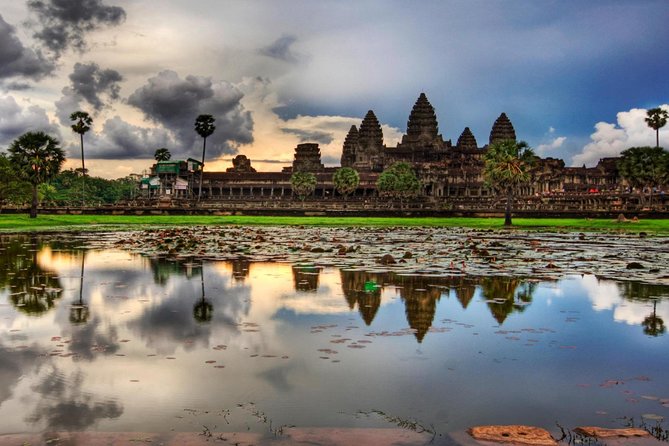
You should consider this tour if you want a strong first overview of Siem Reap. It suits people who want the four main stops handled in one day, prefer a private group, and value an English-speaking guide who can explain what they are seeing.
It also suits photographers. Sa’s ability to point out good photo locations is a practical advantage, and Ta Prohm and Bayon offer very different subjects. The air-conditioned vehicle gives you a place to cool down between sites.
This is not the best fit if you dislike long days, need a slow lunch, or prefer to explore each temple without a fixed route. The combination of heat, walking, road travel, and a boat ride requires stamina.
Wear practical clothing suitable for temple visits, bring patience for the schedule, and keep room in your budget for the excluded tickets and meals. The tour offers free cancellation when you cancel at least 24 hours before the local start time, but changes or cancellations inside that window are not refunded.
Should you book the Angkor Wat and Kompong Phluk tour?
Book it if you want a private, well-supported day that pairs Cambodia’s most famous temple with a real look at lake life. The strongest reasons are the broad route, air-conditioned transport, refreshments, and the personal attention of a guide such as Sa.
Skip it if you want a slow temple holiday or need a clearly all-inclusive price. The extra admission, boat, and meal costs matter, and the schedule is demanding. For a first visit with only one full day available, though, this is a practical way to see Angkor’s major monuments and understand how different life can be around Tonle Sap.
FAQ
How long does the tour last?
The tour lasts approximately 11 hours.
What time does the tour start?
The stated start time is 8:00 a.m.
Is pickup available?
Yes, pickup is offered.
Is this a private tour?
Yes. Only your group participates in the activity.
What transportation is provided?
An air-conditioned vehicle is provided for the tour.
Is an English-speaking guide included?
Yes. An English tour guide is included.
Are water and towels provided?
Yes. Cold water and a cold towel are included.
Are Angkor Wat admission tickets included?
No. The Angkor Wat ticket is not included.
Is the Kompong Phluk boat ticket included?
No. The boat ticket is not included.
Are meals included?
No. Breakfast, lunch, and dinner are not included. The guide recommends a nearby restaurant for the approximately 45-minute lunch break.
How long does the boat ride take?
The boat ride lasts about one and a half to two hours, depending on the season. A roughly 15-minute trip through the flooded forest may also be offered.
Can I cancel for a full refund?
Yes, if you cancel at least 24 hours before the experience start time. Cancellations or changes made less than 24 hours before the start time are not refunded or accepted.
Newest reviews from Siem Reap
- War Museum, Killing Field, and APOPO Hero RATs Tour★ 5.0 · 7 reviews
- Angkor Wat at Sunrise★ 4.0 · 7 reviews
- Siem Reap Angkor Airport Taxis (from Airport to Hotel)★ 5.0 · 44 reviews
- Short Cycling at Countryside★ 5.0 · 29 reviews
- Cambodian Cooking Class and Oxcart Ride with Local Village Tour★ 5.0 · 4 reviews
- Secret Temples of Angkor – Guided Tour in Siem Reap★ 5.0 · 6 reviews
- SIEM REAP E-BIKE HALF-DAY COUNTRYSIDE (25-30 km)★ 4.0 · 1 review
- Unveiling the Mystical Beauty of Phnom Kulen National Park★ 5.0 · 6 reviews
Angkor Wat Tours, compared.
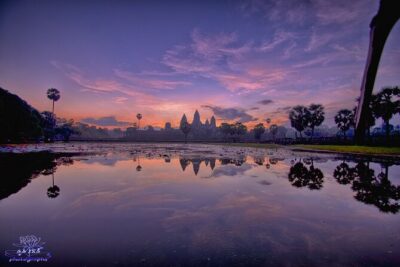
Angkor Wat Sunrise or Sunset Tour with Guide from Siem Reap
Read our review →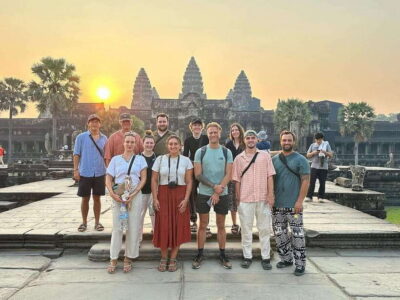
Angkor Wat: Small-Group Sunrise or Sunset Tour
Read our review →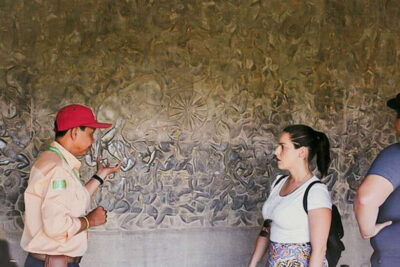
Angkor Wat 2-Day Tour with Sunrise and Sunset
Read our review →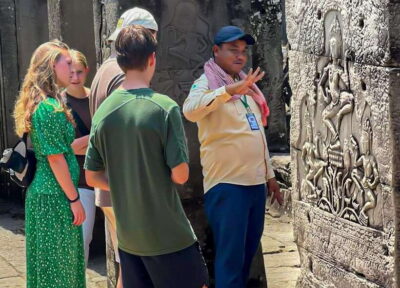
Angkor Wat Sunrise tour with Small – Group and Guide tours
Read our review →
Angkor Wat Highlights and Sunrise Guided Tour from Siem Reap
Read our review →
Angkor Wat Sunset Small Group Tour with Lunch Included
Read our review →
Full-Day Angkor Wat Sunrise Private Tour with Guide from Siem Reap
Read our review →Browse the lists this tour appears in