
Reviewed · FLOATING VILLAGE TOURS
Exploring the Enchanting Kampong Phluk Floating Village
Wake before the village wakes. This half-day outing takes you from Siem Reap into Cambodia’s countryside, then by boat through Kampong Phluk’s flooded forest, where houses rise high above the water and fishing remains part of daily life. I like the quiet canal ride and the chance to see Tonle Sap as a working source of food, not just a scenic stop. I also like that hotel pickup, air-conditioned transport, a guide, boat fare, and drinking water are included.
The main drawback is the early 7 a.m. departure and the fact that water levels can change the view considerably. The itinerary also includes a visit connected with Bakong Temple, but the exact timing and order are not clearly explained, so I would confirm that detail before booking.
In This Review
- Key points to know before you book
- Leaving Siem Reap at 7 a.m.
- Reaching the three villages of Kampong Phluk
- The slow boat ride through the flooded forest
- Understanding Tonle Sap’s seasonal rhythm
- Adding Bakong Temple to the morning
- What the $26 price really covers
- The guide can shape the whole morning
- How the seasons change what you see
- Who will enjoy this Kampong Phluk tour?
- Should you book it?
- FAQ
- What is included in the tour price?
- Is a meal included?
- How long does the tour last?
- What time does the tour depart?
- How large is the tour group?
- Is Bakong Temple included?
- Can I cancel for a full refund?
Key points to know before you book
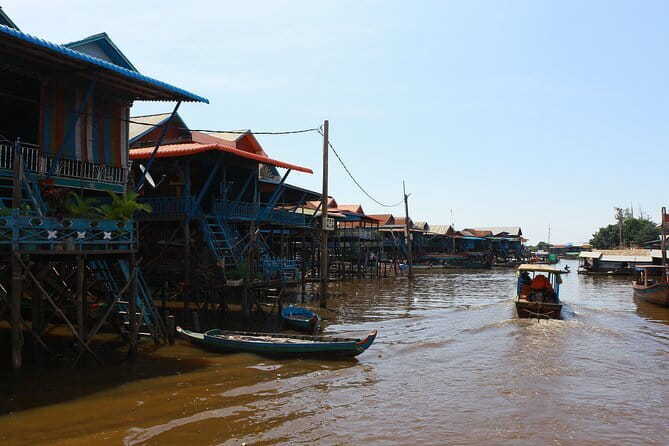
- Kampong Phluk is three fishing villages: You are not visiting one isolated floating settlement, but a group of villages set among canals and flooded woodland.
- The flooded forest is the real highlight: The boat moves slowly through narrow water routes where you can look for plants, birds, and signs of local fishing life.
- Tonle Sap changes dramatically by season: The lake expands to about 12,000 square kilometers during the wet season and can shrink to roughly 2,500 square kilometers in the dry season.
- Guide Phearsom earned special praise: If he leads your outing, you may benefit from the same warm, personal guiding style noted in the tour feedback.
- A canoe ride may be available: One account of the trip singles out a canoe journey through the mangroves as an extra highlight, so ask if it is part of your departure.
- The group is capped at 15 people: That is small enough to keep the trip manageable, though it is not a private tour.
Leaving Siem Reap at 7 a.m.
The day begins with hotel pickup at 7 a.m. That early start is practical rather than glamorous. You get out into the countryside before the day becomes hot, and the drive gives you a quick look at the rural setting around Siem Reap.
Your ride is an air-conditioned vehicle, which matters in Cambodia’s heat and dust. The tour lasts about four to five hours, so you are not giving up a full day of temple sightseeing. That makes it easier to fit beside an Angkor Wat visit or another major Siem Reap activity.
The group limit is 15 people. You will not have the freedom of a private car, but this is a more personal size than a large coach. It should also make it easier to hear the English-speaking guide and ask questions during the outing.
Pickup and drop-off at your hotel are included. That saves you from arranging a tuk-tuk or negotiating a separate ride to the departure point. Mineral water is provided as well, but no meal is included, so eat before leaving or ask your hotel about an early breakfast.
More floating village trips:
- From Siem Reap: Kampong Phluk Floating Village Tour by Boat
★ 4.9 · 6,979 reviews - Sunset tour of Kampong Phluk stilts home village on the Tonle Sap
★ 5.0 · 4,865 reviews - Siem Reap: Kampong Phluk Floating Village Tour with Boat
★ 4.9 · 3,843 reviews
Reaching the three villages of Kampong Phluk
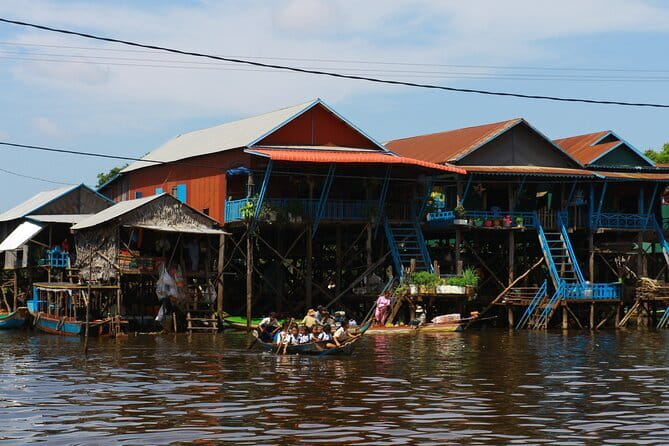
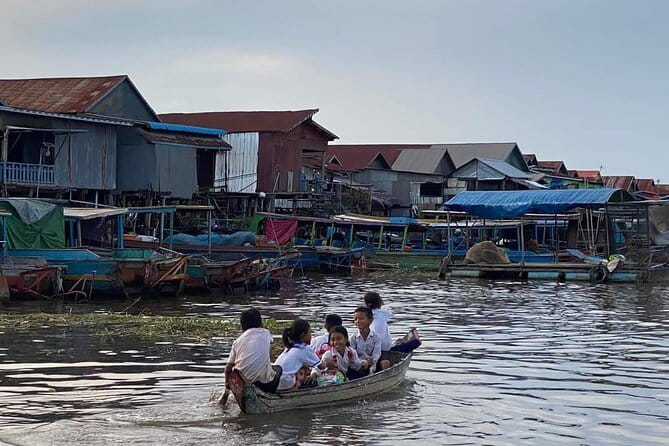
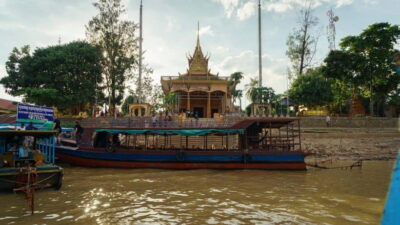
Kampong Phluk is a collection of three small fishing villages on the Tonle Sap system. The setting is shaped by water. Homes are built on tall stilts, allowing them to remain above the water when the lake rises during the wet season.
That design is more than a visual curiosity. It shows how families have adapted their homes to a place where the shoreline moves with the seasons. From the boat, you can see the relationship between the village, the water, and fishing work in a way that is difficult to understand from a road.
The village is described as a floating village, but the exact appearance can depend on the time of year. During high water, boat routes may pass close to homes and through flooded woodland. During the dry season, the water recedes and the tall stilts become more prominent.
You should keep your expectations flexible. This is not a staged cultural show with a fixed series of performances. It is a boat trip through a working community, and what you see will depend on weather, water level, and local activity that morning.
The slow boat ride through the flooded forest
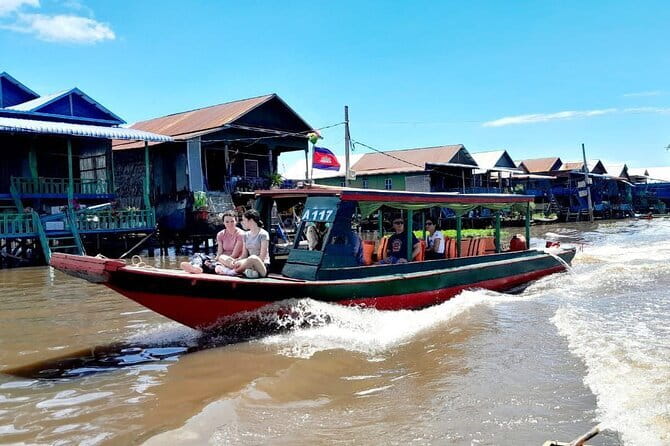
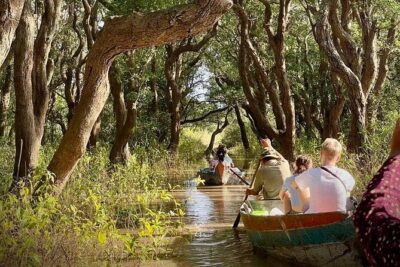
The boat cruise is the heart of the outing. Rather than racing across the lake, the route meanders through forest canals, giving you time to look at the vegetation and watch for wildlife.
The flooded forest is especially interesting because it changes character with the water. Trees and plants become part of the aquatic route, creating narrow passages where the boat moves between trunks and branches. You might see birds or other signs of life, though no specific animals are guaranteed.
I like this part because it gives the tour a sense of place. You are not simply standing at a viewpoint and taking a photograph. You are moving through the same watery setting that supports fishing, transport, and village life.
A canoe ride through the mangroves has also been singled out as a memorable part of this outing. The supplied details do not make clear if it is included on every departure, so ask the operator before you count on it. If available, it would provide a quieter and lower-to-the-water view than the main boat.
Bring patience. The best moments may be small: a glimpse of a stilt house through the trees, a fishing boat at work, or the change from open water to a shaded canal. The guide can help explain what you are seeing, but the trip is not built around constant narration.
Understanding Tonle Sap’s seasonal rhythm
Tonle Sap is one of the world’s most productive freshwater bodies. Its importance comes from the annual cycle of water and fish, not just from its size.
During the wet season, the lake can expand to around 12,000 square kilometers. In the dry half of the year, it can contract to approximately 2,500 square kilometers, with water draining into the Tonle Sap River.
That change helps explain why the village looks so different from one season to another. High water creates broad boat routes and brings the flooded forest into its aquatic phase. Lower water exposes more land and leaves tall stilt homes rising above drier ground.
Millions of fish come to the lake to spawn each year. Fishing communities such as Kampong Phluk depend on this cycle, so the boat ride offers useful context for Cambodia’s food supply and rural economy.
The tour does not promise a formal ecology lesson, but its route makes the subject visible. I find that more useful than a long classroom explanation. You see how water levels affect housing, transport, trees, and work all at once.
A few more options around Siem Reap worth reading up on
- Angkor Wat Sunrise or Sunset Tour with Guide from Siem Reap
★ 5.0 · 12,109 reviews - Siem Reap: Angkor Wat: Small-Group Sunrise or Sunset Tour
★ 5.0 · 9,444 reviews - Siem Reap: Angkor Wat 2-Day Tour with Sunrise and Sunset
★ 4.9 · 4,429 reviews - Siem Reap: Full-Day Angkor Wat Guided Tour with Sunset
★ 4.9 · 3,803 reviews
Adding Bakong Temple to the morning
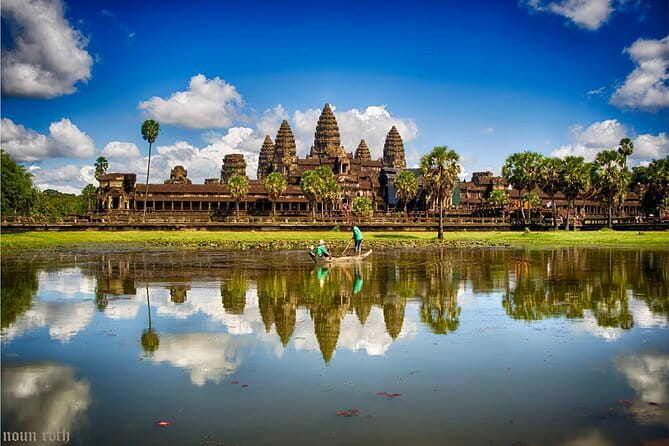
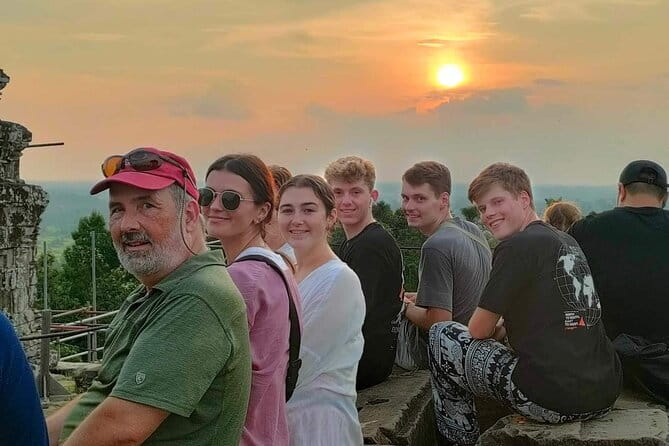
The itinerary also describes a stop at Bakong, part of the Roluos Group. This temple is presented as the first temple mountain of its style and as the state temple at the center of Hariharalaya.
Bakong has five levels and a central tower reaching about 15 meters. The structure collapsed at one point and was reconstructed by the French between 1937 and 1945. That combination of ancient remains and modern restoration gives the stop a different feel from the boat ride.
The temple’s setting adds useful variety. After several hours of water, village homes, and canals, you get a chance to see a Khmer temple complex connected with the early Roluos area. The visit can help you compare religious architecture with the practical, water-based life of Kampong Phluk.
Bakong Pagoda is described as modern, well maintained, and still in use. Its murals are an additional detail worth noticing. This is not simply an abandoned archaeological shell. The pagoda remains part of local religious life.
There is a scheduling question here. The tour summary focuses on Kampong Phluk, while the itinerary also describes Bakong, and the stated duration is only four to five hours. I would ask the provider whether Bakong is included in every departure, how long the stop lasts, and whether the order changes with water or traffic conditions.
What the $26 price really covers
At $26 per person, the price is reasonable if you want transport and the boat arranged in one package. The cost includes hotel pickup and drop-off, an English-speaking local guide, an air-conditioned vehicle, the boat ticket, and mineral water.
That matters because the boat is the central part of the outing. A low headline price can become less useful if you still need to pay separately for transport or boat access. Here, the main practical costs are included.
The value is strongest for people who want a simple half-day plan from Siem Reap. You do not need to arrange several pieces yourself, and the group limit of 15 is fairly modest. Group discounts may also be available, making it more attractive for families or small parties.
The price does not cover a meal. Since the departure is early, plan around breakfast. If your hotel cannot provide food at that hour, carry something with you rather than assuming lunch or snacks will appear during the tour.
This is not the right comparison for a private boat charter or a custom photography trip. You are paying for a shared guided outing with a fixed general route. For that purpose, the package is straightforward and fairly priced.
The guide can shape the whole morning
A local English-speaking guide is included, and the guide’s role matters here. Kampong Phluk is easier to understand when someone explains why the homes are raised, how the water changes, and what fishing means to the villages.
Phearsom is the guide name connected with particularly strong praise for this experience. If Phearsom leads your trip, you may find the service especially warm and attentive. The available feedback describes him as the best part of the tour, so it is reasonable to request him if the operator allows guide requests, though availability is not guaranteed.
You should also ask questions. Why are some houses on stilts? How does the village change in the dry season? Which parts of the forest are flooded only during certain months? A good guide can turn a boat ride into a clearer picture of Cambodian rural life.
The tour is described as a local experience rather than a formal academic excursion. That is a strength if you want direct explanations and everyday context. It may feel limited if you want a detailed history lecture or a long wildlife presentation.
How the seasons change what you see
The best visual experience depends on the water level. In the wet season, the flooded forest should be more central to the route, with canals and trees creating the distinctive boat journey described here.
In the dry season, the lake can be much smaller. You may see more of the stilt construction and less of the forest as a broad water-filled setting. That does not make the trip pointless, but it changes the emphasis from a forest cruise to a closer look at how the village is built for seasonal flooding.
Weather is also important. The tour requires good weather, and poor conditions can lead to a different date or a full refund. That policy is sensible for a boat trip, but you should leave some flexibility in your Siem Reap schedule.
The booking confirmation is received at the time of booking. Free cancellation is available up to 24 hours before the start time. Changes or cancellations inside that 24-hour window are not accepted for a refund, so avoid placing this tour on the final morning of a tightly packed itinerary.
Who will enjoy this Kampong Phluk tour?
I would recommend this outing to you if you want a short break from temple ruins and a closer look at life around Tonle Sap. It suits visitors who enjoy quiet boat rides, rural scenery, and cultural context more than high-energy entertainment.
It is also a good choice for first-time visitors to Siem Reap who want an organized introduction to the lake. Hotel transport removes much of the hassle, and the four to five-hour length leaves the afternoon open.
Families may appreciate the boat and the manageable duration, although young children need close supervision around the water. Most people can participate, according to the supplied information, and the tour is near public transportation.
I would hesitate if your main goal is luxury, privacy, or guaranteed wildlife sightings. The group can include up to 15 people, the weather can affect the plan, and the natural setting is not a staged attraction. You need to accept a little uncertainty in exchange for seeing a real working village.
Should you book it?
Book this tour if you want an affordable, practical morning that combines Kampong Phluk’s fishing villages, a flooded-forest cruise, and a possible Bakong visit. The included transport, boat fare, guide, and water make the $26 price easy to understand, especially if you are traveling with a small group.
Before paying, confirm three things: the season’s expected water level, whether the canoe ride is available, and whether Bakong is included in the exact departure you are choosing. If those details match your plans, this is a worthwhile way to see a side of Cambodia that temple visits alone cannot provide.
FAQ
What is included in the tour price?
The price includes an English-speaking local guide, an air-conditioned vehicle, the boat ticket, mineral water, and hotel pickup and drop-off.
Is a meal included?
No. Meals are not included, so arrange breakfast before the 7 a.m. departure or ask your hotel about food to take with you.
How long does the tour last?
The outing lasts approximately four to five hours.
What time does the tour depart?
The stated departure time is 7 a.m., with pickup from your hotel.
How large is the tour group?
The experience has a maximum of 15 travelers.
Is Bakong Temple included?
The itinerary describes a stop connected with Bakong Temple and the Roluos Group, but the supplied details do not clearly confirm whether this stop is included on every departure. Confirm the schedule with the provider before booking.
Can I cancel for a full refund?
Yes. You can cancel at least 24 hours before the local start time for a full refund. Cancellations or changes made less than 24 hours before departure are not refunded, and poor weather or an insufficient minimum group may lead to a new date or a full refund.
Newest reviews from Siem Reap
- War Museum, Killing Field, and APOPO Hero RATs Tour★ 5.0 · 7 reviews
- Siem Reap Angkor Airport Taxis (from Airport to Hotel)★ 5.0 · 44 reviews
- Angkor Wat at Sunrise★ 4.0 · 7 reviews
- Cambodian Cooking Class and Oxcart Ride with Local Village Tour★ 5.0 · 4 reviews
- Secret Temples of Angkor – Guided Tour in Siem Reap★ 5.0 · 6 reviews
- Short Cycling at Countryside★ 5.0 · 29 reviews
- SIEM REAP E-BIKE HALF-DAY COUNTRYSIDE (25-30 km)★ 4.0 · 1 review
- Unveiling the Mystical Beauty of Phnom Kulen National Park★ 5.0 · 6 reviews
Floating Village Tours, compared.
Sunset tour of Kampong Phluk stilts home village on the Tonle Sap
Read our review →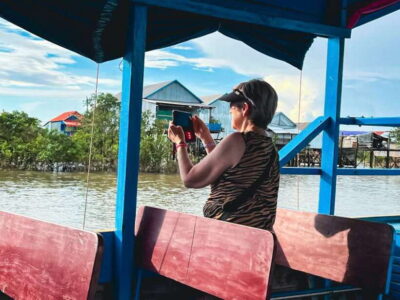
Kampong Phluk Floating Village Tour with Boat
Read our review →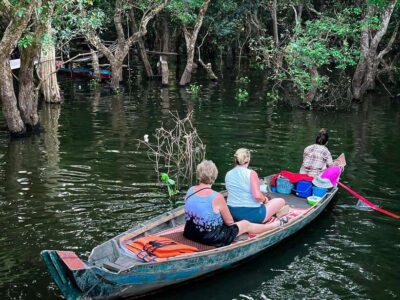
Siem Reap Floating Village Kampong Phluk Sunset with Boat
Read our review →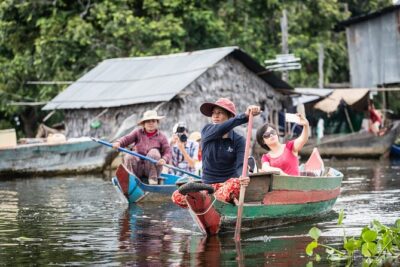
Kompong Phluk Floating Village Half-Day Tour ( Morning / Sunset )
Read our review →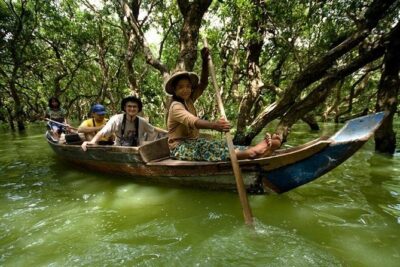
Tonle Sap Lake & Kampong Phluk Village Half-Day Tour
Read our review →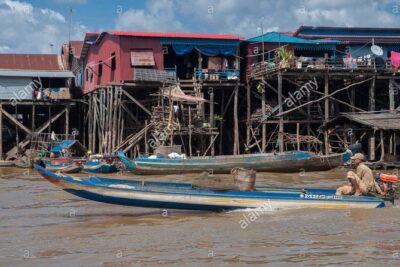
Browse the lists this tour appears in