
Reviewed · CYCLING TOURS
Cultural Cycling Tour – half day (8:00-11:30)
Battambang is best seen at bicycle speed. This half-day ride takes you beyond the usual town sights to family-run food workshops, a prahok market, Wat Samrong Knong, and the rural communities around Ek Phnom. I especially like the small group limit of 10 and the chance to meet local makers through a Khmer guide who translates as you go.
I also like the food tastings. Kralan, rice paper, rice wine, and banana chips turn the ride into something more than a sightseeing loop. The main point to consider is the morning heat. You will be outdoors for several hours, and suncream, sunglasses, and your own drinks beyond the supplied water are not included.
In This Review
- Key points at a glance
- Why this $16 Battambang ride offers good value
- Wat Samrong Knong and a difficult chapter of history
- Seeing prahok before it reaches the table
- Ek Phnom’s family food workshops
- Kralan in a bamboo tube
- What the cycling feels like
- The guides make the difference
- Practical concerns before you book
- Who will enjoy this ride most?
- Should you book the Cultural Cycling Tour?
- FAQ
- How long does the Cultural Cycling Tour last?
- How much does the tour cost?
- What is included in the price?
- What food products can I see or taste?
- Is hotel pickup available?
- What happens if bad weather cancels the tour?
Key points at a glance
- A $16 morning ride: The price includes a bicycle, guide, bottled water, tastings, entrance fees, and taxes.
- Local food made in front of you: See rice paper discs, rice wine, dried banana chips, fermented prahok, and bamboo-tube kralan.
- A meaningful historic stop: Wat Samrong Knong includes a pagoda and a site connected with the Killing Fields.
- A Khmer guide as interpreter: Guides such as Paov and Sothea have been praised for friendly conversation, clear English, and useful explanations of local life.
- A relaxed alternative to crowded sightseeing: The route gives you a closer look at everyday work outside central Battambang.
- Flexible for some cycling concerns: If someone in your group cannot ride because of the stated problems, a tuk tuk can be included.
Why this $16 Battambang ride offers good value
At $16, this is one of those tours where the inclusions matter. You are not paying only for a bicycle and a short escort around town. The fee covers the bicycle, a local guide, bottled water, tasting portions, admission fees, and taxes.
That makes the value easy to understand. You get transport under your own power, cultural interpretation, several food stops, and a historic site in one morning. Buying the products separately would not necessarily cost much, but the guide is what connects them. Without explanation, rice paper or prahok can look like simple food production. With a Khmer guide translating, you can ask how the products are made and understand their place in daily life.
The timing also works well. The ride begins at 8:00 in the morning and finishes around 11:30, although it is described as approximately four hours. Starting early gives you a better chance of avoiding the strongest midday sun, though Cambodia can still feel hot before noon.
Pickup is offered, and the ticket is mobile, which keeps the start simple. The tour is also near public transportation. Confirmation is provided when you book, and the maximum group size is 10. That is small enough for conversation and for a guide to keep an eye on the group without turning the ride into a parade.
More Bike Tours in Battambang:
- Local Livelihood Half Day Bike Tour in Battambang
★ 5.0 · 287 reviews - Customs and Culture Half Day Walk and Bike Tour in Battambang
★ 5.0 · 23 reviews - Explore local livelihood & countryside (Half-Day Cycling Tour)
★ 5.0 · 19 reviews
Wat Samrong Knong and a difficult chapter of history
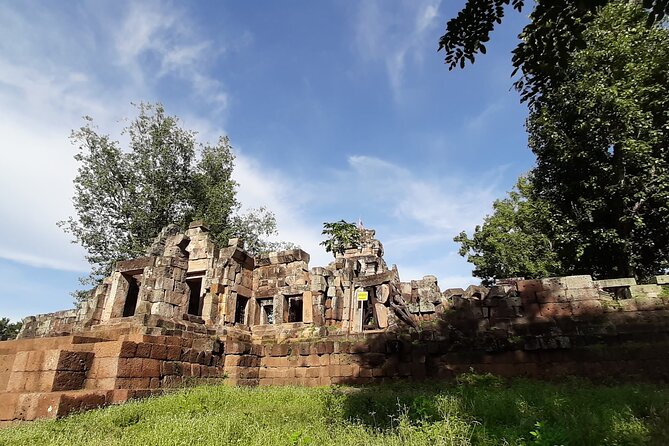
The first listed stop is Wat Samrong Knong, described as Battambang’s oldest pagoda. You have about 20 minutes here, with admission included.
The pagoda is paired with a site associated with the Killing Fields. That combination matters. A morning focused on food and village life could easily become a pleasant but shallow outing. This stop adds the difficult history of Cambodia and gives your guide a chance to explain the Khmer Rouge period and its effect on local communities.
The time is short, so do not expect a long museum visit or a detailed memorial program. Instead, treat it as a focused introduction. The strongest benefit will come from asking your guide questions. Sothea, one guide praised for excellent English, has been described as offering clear explanations of Khmer Rouge history along with accounts of ordinary Cambodian life. That mix is useful because it places the memorial within the wider story of the region, rather than treating it as an isolated stop.
You should be ready for the emotional shift. The ride may begin in a light mood, but this part asks for quiet attention. Wear suitable clothing for entering a religious site, and listen to the guide’s instructions about behavior.
Seeing prahok before it reaches the table
The second stop takes you to the Khmer Prahok Market for roughly 20 minutes. Here, you can see fish fermenting in jars for the production of prahok, a strongly flavored Khmer staple.
This is not a polished food demonstration designed for quick photographs. Fermenting fish has a powerful smell, and the market setting may feel direct and earthy. That is precisely why the stop is useful. Food is not presented as an abstract cultural symbol. You see one of the processes behind a familiar part of Cambodian cooking.
The short visit keeps the stop manageable. Your guide acts as the bridge between you and the people working there, explaining what you are seeing and translating questions. That interaction is one of the tour’s most valuable features. You can learn how local products are made without needing to speak Khmer.
If you are sensitive to strong smells, prahok may be the most challenging part of the morning. It is still worth seeing, but go with an open mind. This is a working food market, not a sanitized tasting room.
Ek Phnom’s family food workshops
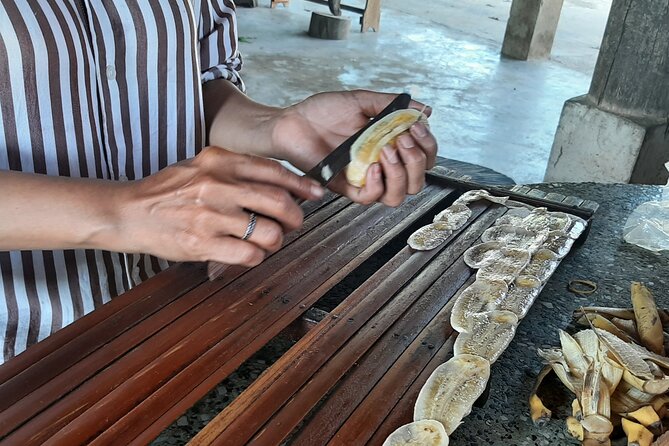
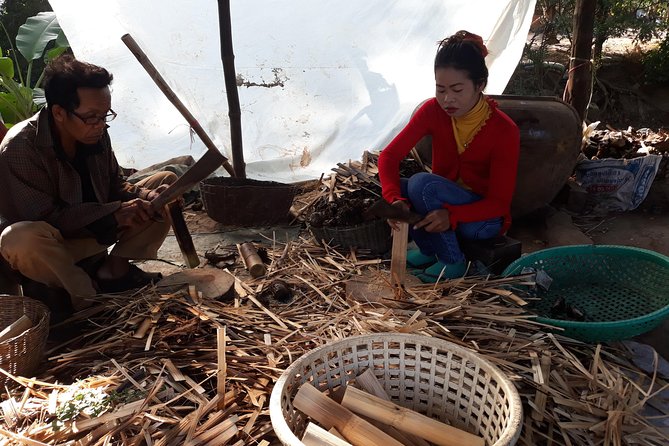
The longest stop is around Ek Phnom, with about one hour devoted to traditional food production. You can see rice wine, rice paper, and dried banana chips being made.
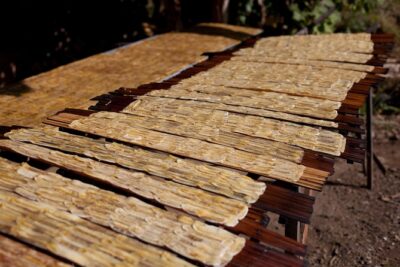
Rice paper is especially interesting because the thin discs are used to wrap spring rolls. You will see local women, referred to as Ming, making them. The word is a respectful way to address older women, often translated as aunt, and it gives the encounter a more personal tone than a generic factory visit.
The guide’s interpreting role is important here. You may be able to watch the process, but the questions make it memorable. Ask about the work itself, how the paper is handled, and how the products are sold. The information provided does not promise a hands-on workshop, so expect observation and conversation rather than a class where you make your own rice paper.
The rice wine stop offers another look at small-scale production. You can see how rice becomes a drink sold along the roadside and in local communities. Tasting is included, but drink portions and exact tasting arrangements are not specified, so you should not assume this is a full beverage tour.
Dried banana chips add a sweeter note. Along with rice wine, they may also appear at roadside stalls during the ride. These are ordinary foods, but that is the charm. You are seeing products made for local use and sale, not a performance created only for visitors.
A few more options around Battambang worth reading up on
- Battambang: Tuk-Tuk, Bamboo Train, Killing/Bat Caves, Sunset
★ 4.9 · 1,436 reviews - Battambang Tuk Tuk tour: Bambootrain, Killing & Bat Caves,Sunset
★ 5.0 · 799 reviews - Afternoon tour by tuk tuk to bamboo train,bat cave,killing cave,countryside.
★ 5.0 · 344 reviews - Explore Battambang full day tour by Tuk Tuk (start from 9am-6:30pm)
★ 5.0 · 240 reviews
Kralan in a bamboo tube
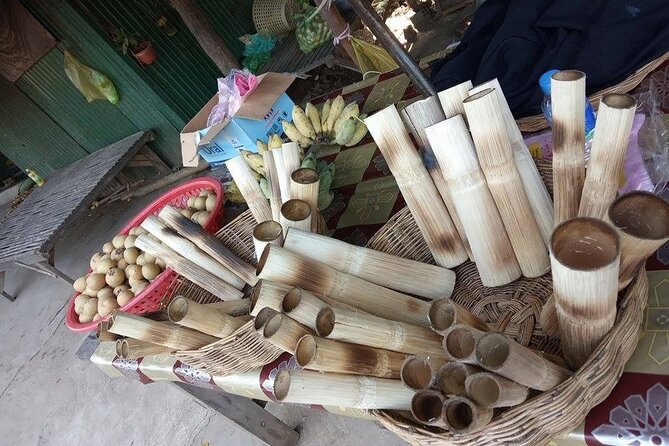
One of the most distinctive tastes on the morning ride is kralan. At Samrong Knong, you sample sticky rice, black bean, coconut milk, and a little salt cooked inside a bamboo tube over charcoal.
The bamboo cooking method is the memorable detail. It shows how ingredients, fuel, and containers can all come from the local setting. The result is compact, filling, and different from the better-known spring rolls or noodle dishes you may encounter elsewhere in Cambodia.
The tour includes snacks made by the artisans you visit, so kralan fits naturally into the ride. You may also encounter rice wine and banana chips from roadside vendors. Beer is not included, and neither are personal purchases, so bring some Cambodian riel or another suitable way to pay if you want to buy products along the route.
Food tastings can vary in size. Think of them as samples rather than a complete breakfast or lunch. Eat something before departure if you need a substantial meal, especially since the ride lasts through late morning.
What the cycling feels like
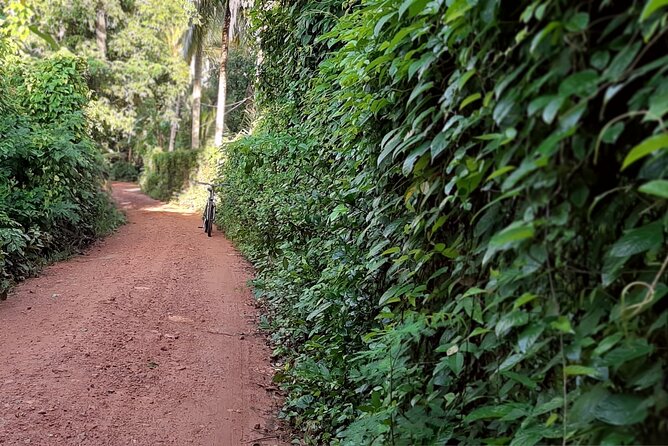
The route is designed as a relaxed ride at a moderate speed. One especially useful detail is that the tour is meant to get you away from crowds and show you everyday Battambang at a calmer pace.
You do not need to be a serious cyclist. The morning is built around stops, short visits, and food production rather than athletic distance. Still, you should be comfortable riding a bicycle for several hours, with pauses along the way.
The exact distance, bicycle type, road surface, and helmet arrangements are not specified, so ask before booking if those details matter to you. The supplied information does confirm that bicycles are provided. It also says a tuk tuk can be included if someone in your group has one of the listed problems that prevents cycling.
That flexibility is helpful for mixed groups. One person may want to ride while another needs a vehicle. You should clarify the arrangement in advance rather than assume the tuk tuk is automatically available for any preference.
Pickup is offered, but the exact pickup area and timing are not given. Confirm those details when you book. The mobile ticket and booking confirmation make the administration easy, but the practical start point still needs to be clear.
The guides make the difference
The tour depends heavily on the guide. Food production and historic sites can feel disconnected if nobody explains what you are seeing. A good guide turns each stop into a conversation.
Several guides connected with this experience have received strong praise. Paov is described as friendly, fun, and welcoming, especially for a couple interested in seeing real local life without a large organized group. Sothea has been praised for clear English, historical explanations, and an easy manner during the ride. Raksa is associated with the company and has also guided cycling outings, while other feedback describes her as kind, trustworthy, and helpful with arranging activities.
Names and availability can change, so you should not book expecting one particular guide unless the company confirms it. The important point is the guide’s role: a genuine Khmer guide who can interpret between you and the artisans.
This also helps avoid a common problem with rural tours. You are not simply passing through a village while someone recites facts. You have a chance to ask questions about food, work, history, and daily routines. That is where much of the tour’s value lies.
Practical concerns before you book
Pack light, but prepare for sun. Suncream and sunglasses are not included, so bring both. Bottled water is provided, but you may want additional water for a warm morning ride.
Wear clothing suitable for cycling and for visiting a pagoda. Comfortable shoes matter more than stylish ones. Since you may stop near food production areas, clothes that can handle dust or a few splashes are sensible.
The tour requires good weather. If poor weather forces cancellation, you are offered another date or a full refund. You can cancel for a full refund up to 24 hours before the start time. Cancellations or changes made within 24 hours are not refunded or accepted.
Most people can participate, but the company does not provide a detailed accessibility description. If you have mobility, balance, or cycling concerns, explain them when booking and ask about the tuk tuk option.
The group maximum is 10, but the actual group may be smaller. One outing had only one participant, which meant a more personal morning. That is a useful possibility if you prefer conversation over a fixed group dynamic, though no tour can guarantee a private departure.
Who will enjoy this ride most?
I would recommend this tour to you if you want local food, small-scale production, and Cambodian history in one compact morning. It suits curious visitors who prefer meeting working artisans to ticking off major monuments.
It is also a good choice for couples and small groups who enjoy cycling at a moderate pace. The ride gives you a way to see more than the center of Battambang without committing to a full-day countryside excursion.
Families may enjoy the food stops, but parents should judge the cycling and heat for their own children. The available information says most people can participate, but it does not give a minimum age or child-bike details.
I would think twice if you want a long temple visit, a serious cycling workout, or a large meal. The historic stop is brief, the ride is relaxed, and the tastings are snacks. Also, prahok production is not for everyone. Strong smells are part of the reality here.
Should you book the Cultural Cycling Tour?
Book it if you want an affordable, human-scale introduction to Battambang. For $16, you get a bicycle, guide, water, food tastings, entrance fees, and a morning that connects local work with Cambodian history.
The best reason to choose it is the mix. You will see a pagoda and Killing Fields site, then move into the practical world of fermented fish, rice paper, rice wine, banana chips, and charcoal-cooked kralan. That combination gives you a more grounded sense of the area than a simple sightseeing loop.
Before paying, confirm the pickup point, bicycle details, and whether your group needs the tuk tuk option. Bring sun protection, eat a light breakfast, and leave room for unfamiliar flavors. If you are happy to trade polished attractions for real food production and friendly conversation, this is a strong morning in Battambang.
FAQ
How long does the Cultural Cycling Tour last?
The tour runs from 8:00 to about 11:30 and is described as approximately four hours.
How much does the tour cost?
The listed price is $16.
What is included in the price?
The price includes bottled water, tastings of traditional food products, all fees and taxes, bicycle use, and a local experienced guide.
What food products can I see or taste?
You can see rice paper, rice wine, dried banana chips, and fermented prahok. The tour also includes a taste of kralan, made with sticky rice, black bean, coconut milk, and salt in a bamboo tube over charcoal.
Is hotel pickup available?
Pickup is offered, though the provided information does not specify the pickup area or exact timing.
What happens if bad weather cancels the tour?
If poor weather causes cancellation, you can choose another date or receive a full refund. You can also cancel at least 24 hours before the start time for a full refund. Cancellations within 24 hours are not refunded.
Newest reviews from Battambang
- Private Taxi Transfer From Battambang – Kampot★ 5.0 · 1 review
- Private Taxi Transfer Battambang from/to Phnom Penh★ 5.0 · 7 reviews
- Private Taxi Transfer From Battambang – Siem Reap City★ 5.0 · 4 reviews
- Afternoon tour to Original Bamboo train. Bat cave. Killing cave★ 5.0 · 25 reviews
- Afternoon Tour BambooTrain & Bat Cave★ 5.0 · 57 reviews
- Private Boat from Battambang to Siem Reap via Tonle Sap Lake★ 4.5 · 3 reviews
- Tuk Tuk Tour (Full-Day)★ 5.0 · 7 reviews
- Private Half-Day Tuk Tuk Tour in Battambang★ 5.0 · 2 reviews
Cycling Tours, compared.
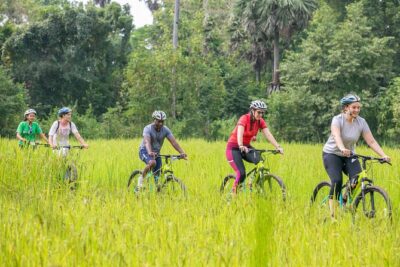
Siem Reap Countryside Bike Tour / E-Bike or Tuk Tuk
Read our review →
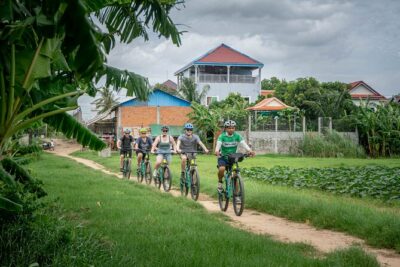
Phnom Penh Silk Island Bike Tour/ E-Bike or Tuk Tuk
Read our review →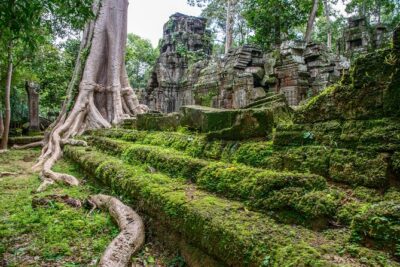
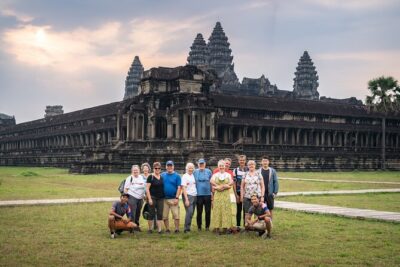
Angkor Wat Sunrise Bike Tour & Jungle Breakfast
Read our review →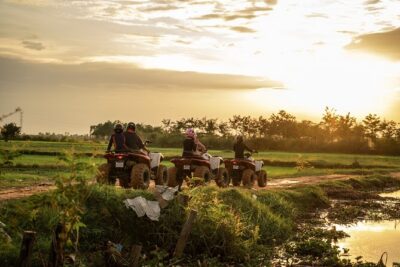
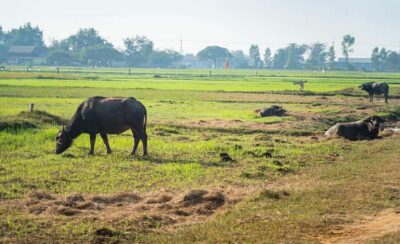
Local Livelihood Half Day Bike Tour in Battambang
Read our review →Browse the lists this tour appears in