
Reviewed · SIHANOUKVILLE TOURS
Coconut Oil Making Activity in Cambodia
Coconut oil starts with a coconut, not a factory. This small-group class near Sihanoukville offers a friendly look at traditional island production, beginning with fresh green coconut juice and ending with a 70ml bottle of oil you help make. I like the hands-on work with traditional tools, and I like that Samda helps with directions and booking. The main drawback is transport: private pickup is not included, and the meeting point can take some effort to reach.
The class lasts about two hours and costs $28 per person. That is fair if you want a cultural activity rather than another beach afternoon, but less attractive if you only want a bottle of coconut oil. The group is capped at six people, which should give you plenty of time to ask questions and take part in each step.
In This Review
- Key points to know before you book
- Why this is more than a coconut oil demonstration
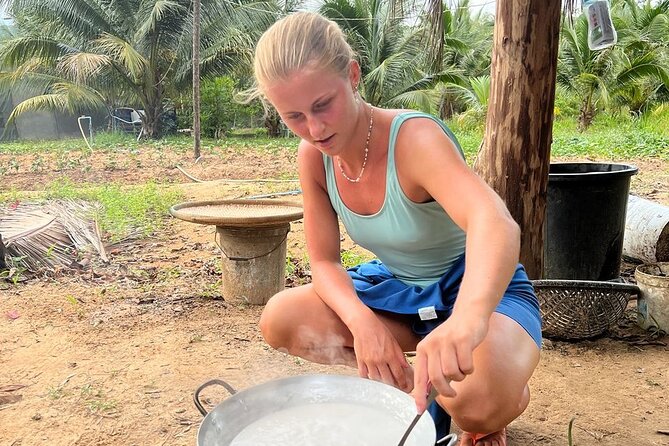
- Starting with green coconut juice from the garden
- Choosing, peeling and opening the brown coconut
- Turning coconut meat into milk
- Boiling coconut milk into cream and oil
- Collecting, filtering and filling your souvenir bottle
- The value of a six-person class
- Finding the meeting point near Sihanoukville
- Who will enjoy this activity most
- Timing, weather and cancellation advice
- How this compares with a standard souvenir stop
- Should you book the coconut oil class?
- FAQ
- How long does the coconut oil making activity last?
- How much does the activity cost?
- Where does the activity start and end?
- Is transportation included?
- What do I receive during the activity?
- How many people can join?
- Can I cancel for a full refund?
Key points to know before you book
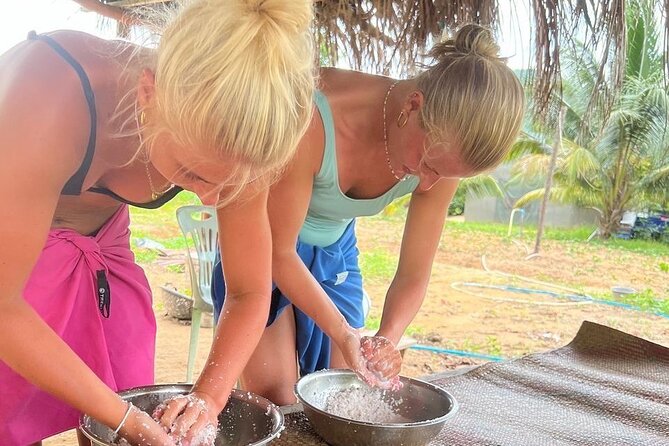
- You make the oil from coconut meat: The process covers peeling, cracking, grating or preparing the meat with traditional tools, producing coconut milk, boiling it into cream and oil, then filtering the finished product.
- A green coconut juice welcome is included: You begin with a fresh drink from the garden, along with bottled water.
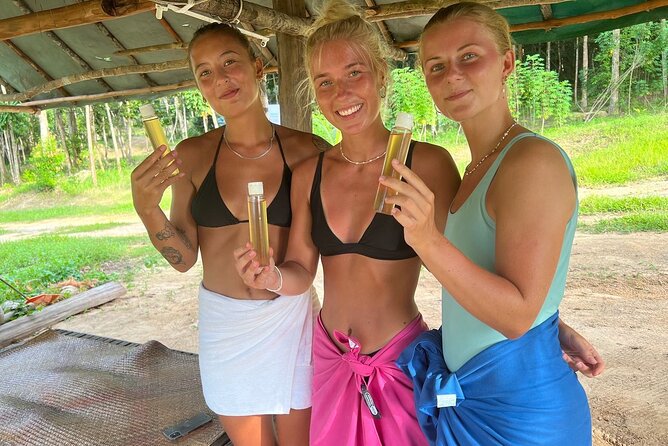
- You take home 70ml: The small bottle is made during the class and serves as a useful souvenir rather than a generic shop purchase.
- The group is limited to six: This is a better setup for hands-on learning than a large demonstration.
- Samda can help with the meeting point: A previous booking included help with directions, which matters since private transportation is not part of the price.
- Weather and minimum attendance matter: The class may be rescheduled or refunded if poor weather or low attendance prevents it from running.
Why this is more than a coconut oil demonstration
Many holiday activities show you something and then send you on your way. This one asks you to handle the raw material and follow the full chain from coconut to oil. That makes the class useful even if you have never thought about how coconut oil is produced.
You start by learning how to select the right coconut for the process. That is a small but important detail. The class is not simply about heating a ready-made ingredient. You see that quality begins before the shell is opened.
The activity then moves through several familiar but easily overlooked stages. You peel the brown coconut, remove the hard outer material, break the shell and take out the white meat. Traditional tools are used rather than a polished commercial setup, so the work feels practical and local.
The final product also gives the class a clear purpose. You do not just watch oil appear in a pan. You help create a 70ml bottle that you can keep as a souvenir. It is modest in size, but it carries more meaning than a bottle bought from a supermarket because you followed the process yourself.
A few more options around Sihanoukville worth reading up on
- Discovery Tour: Caving, Climbing, Via Ferrata and Abseiling in Kampot
★ 5.0 · 172 reviews - Sihanoukville Highlights Day Tour for Cruise Passengers
★ 4.5 · 171 reviews - Kampot Tour Pepper Plantation, Salt Field, Cave, Secret Lake
★ 5.0 · 128 reviews
Starting with green coconut juice from the garden
The welcome is simple: fresh green coconut juice from the garden. Bottled water is also included, but the juice is the more memorable touch. It sets the tone for a class based on the whole coconut, not only the finished oil.
You are given time to relax before the demonstration begins. That slower start suits the setting and gives you a chance to settle in, especially if you have just arrived from the beach or walked from another part of the island.
Do not expect a fast-paced cooking lesson with every minute tightly scheduled. The stated duration is approximately two hours, and the pace may depend on the group and the steps being shown. That is part of the appeal, but it also means you should leave enough room in your day rather than booking this immediately before another fixed activity.
Choosing, peeling and opening the brown coconut
The first major stage uses a brown coconut that has already been prepared for the class. You learn how to choose the right coconut, then work on peeling it to reach the hard nut inside.
Next comes the shell. Traditional tools are used to break the coconut and remove the meat. This is the most physical part of the class, and you should expect a practical demonstration rather than a purely spoken explanation.
The appeal here is clear. Coconut oil is often sold as a finished health or beauty product, but this activity puts the raw ingredient in your hands. You see the shell, the meat and the texture before anything is processed.
You should also keep your expectations sensible. The class does not promise a large quantity of oil. The result is a 70ml bottle, so the value comes from learning the method and sharing the work, not from producing enough oil to supply your kitchen for months.
Turning coconut meat into milk
Once the coconut meat has been removed, the class shows you how to transform it into coconut milk. This is the bridge between the raw coconut and the oil.
That step helps explain why the finished product takes time and effort. The oil is not simply pressed from a whole coconut in front of you. The meat must be prepared and converted into milk before the traditional cooking process can begin.
For you, this is likely to be one of the most interesting parts because coconut milk is familiar in Cambodian and Southeast Asian cooking. The class connects a common food ingredient with a second use as a source of oil.
The exact amount of hands-on work may vary depending on the group, since the class is limited to six people and some tasks may be demonstrated before you try them. If active participation is your main reason for booking, ask at the start how the group will share the tools and steps.
Something completely different for another day:
- La Plantation tour (discovering Kampot Pepper) + Lunch
★ 4.5 · 97 reviews - KAMPOT TRAVEL-Pepper farm. Cave.Secret lake-Crab market & Salt…
★ 5.0 · 87 reviews - Kampot Day Tour “Bokor National Park”
★ 5.0 · 82 reviews - Bokor Mountain Adventure – History, Sights and Waterfalls
★ 5.0 · 65 reviews
Boiling coconut milk into cream and oil
After the coconut milk is made, it is boiled using the traditional method. The aim is to turn the milk into coconut cream and then separate out the oil.
This is where the class becomes a lesson in patience. The oil is the final result of several linked stages, and boiling is not a shortcut around the earlier work. You can better understand why traditionally made coconut oil is valued as a household product when you see the process in sequence.
The activity also explains the oil’s everyday uses. You are shown how coconut oil may be used on the body, in your hair or in food. Those benefits are presented as part of the class, but you should treat them as general information rather than medical advice. The experience is educational and cultural, not a health consultation.
Because the class depends on good weather, the setting and outdoor conditions are important. A poor-weather cancellation can lead to another date or a full refund, so keep that possibility in mind if your stay in the area is short.
Collecting, filtering and filling your souvenir bottle
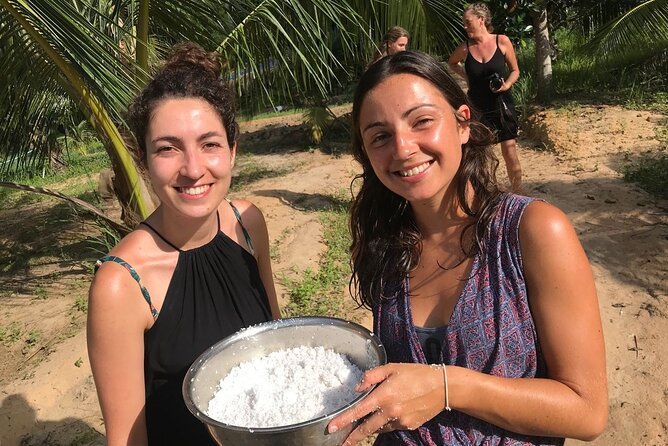
The final steps are collecting the oil and filtering it. This gives you a clear finish to the activity and lets you see the difference between an unfinished mixture and a usable product.
You then receive a 70ml bottle of the coconut oil made during the class. The bottle is small enough to pack easily, and it gives you something tangible to take away from the lesson.
I like this part because it avoids the usual souvenir trap. You are not simply handed a local product at the end. You have seen the coconut opened, the meat processed, the milk cooked and the oil filtered. The bottle becomes a reminder of the method as well as a practical item.
Still, the bottle should not be the only reason you book. At $28 per person, you are paying for the instruction, time, setting and participation. If you compare the cost with the price of coconut oil in a shop, the arithmetic will not favor the class. If you compare it with a small cultural workshop for up to six people, the price makes more sense.
The value of a six-person class
A maximum of six people is one of the strongest practical features. A traditional process can become frustrating when a large crowd gathers around a single tool. Here, the smaller group should make it easier for you to see what is happening and take a turn.
The size also encourages questions. You can ask about the coconuts, the tools, the cooking stage and the ways the oil is used at home. The available information does not promise a private class, so you should expect to share the work with other people, but six is still a manageable number.
A previous booking included a couple who took the afternoon course and hiked from Sandy Beach to the class. Samda helped them with booking and was patient while they found the pickup point. That detail is useful: the activity can work well as part of a day on foot, but you should not assume that reaching the meeting point will be effortless.
Finding the meeting point near Sihanoukville
The listed starting point is H874+XFJ, Chhak, Preah Sihanouk, Cambodia. The activity ends back at the same meeting point.
The location information deserves careful attention because the experience is connected with Ben’s garden Koh Rong Sanloem, while the supplied address refers to Chhak in Preah Sihanouk. Before setting out, confirm the exact map pin and the best route for your day. The booking includes a mobile ticket, but that does not mean transport to the site is included.
Private transportation is specifically not included. You may need to arrange your own way to the meeting point or coordinate directions with the provider. Samda’s help with the route is a useful advantage, especially if you are walking from Sandy Beach, but you should contact the provider before the class if the location is unclear.
This is not a serious problem for an independent visitor who is comfortable with maps and local directions. It is a real consideration if you want door-to-door service or are carrying luggage. Plan the route early and allow extra time.
Who will enjoy this activity most
I would recommend this class to you if you like local food traditions, small workshops and activities that explain how everyday products are made. It suits couples, curious solo visitors and small groups who prefer a slower cultural experience to a standard sightseeing stop.
It is also a good choice if you want a break from the coast without abandoning the island setting. The welcome drink, garden setting and traditional tools give the class a local character that a shop visit cannot offer.
Families may enjoy it too, but the supplied information does not specify a minimum age or how much children can take part in the tool work. If you plan to bring young children, ask the provider about participation and supervision before booking.
You may want to skip it if your main goal is a large amount of oil, a luxury wellness treatment or a fully organized excursion with transport. This is a hands-on making class. Its strength is the process, not speed or convenience.
Timing, weather and cancellation advice
The class lasts about two hours, so it is easy to fit into an afternoon. The previous afternoon booking worked well for a couple who came from Sandy Beach, suggesting that you can pair it with other nearby plans if you leave enough time for walking and directions.
The activity requires good weather. If weather stops the class, you are offered another date or a full refund. It also requires a minimum number of people, and if that number is not reached, you are offered another date or experience or a full refund.
For a full refund, cancel at least 24 hours before the start time. A cancellation made within 24 hours is not refunded, and changes during that period are not accepted. Cutoff times follow local time, so do not rely on your home time zone when making changes.
Service animals are allowed. Confirmation is received when you book, and the mobile ticket makes it easier to keep the booking details on your phone.
How this compares with a standard souvenir stop
A shop can sell you coconut oil in minutes. This class takes roughly two hours and asks you to work for a small bottle. That contrast explains both its value and its limitation.
You pay for access to a traditional process, direct instruction and a chance to make something yourself. The class also gives you context for a product you may use in cooking, hair care or body care. If you enjoy learning by doing, the price is reasonable.
If you are shopping purely for value per milliliter, it is not. The 70ml bottle is a keepsake, not a bulk purchase. Think of it as a workshop with a take-home result rather than a retail transaction.
The small group improves that comparison. A large commercial activity might offer a lower price, but it could give you less time with the tools. Here, the group limit of six supports a more personal lesson.
Should you book the coconut oil class?
Book it if you want a practical, low-key cultural activity and you are happy to arrange your own way to the meeting point. The best reasons are the full traditional process, the small group, the fresh coconut welcome and the 70ml bottle you make together.
I would be cautious if your schedule is tight, the map location is uncertain or you expect private transportation. Confirm the meeting point with Samda or Ben’s garden Koh Rong Sanloem before the day, and leave room for weather changes.
For $28, this is a good pick for curious visitors who value an authentic activity over a cheap souvenir. It is not the right choice if you only want oil, but it is a memorable way to understand how one humble coconut becomes a useful household product.
FAQ
How long does the coconut oil making activity last?
The activity lasts approximately two hours.
How much does the activity cost?
The price is $28 per person.
Where does the activity start and end?
It starts at H874+XFJ, Chhak, Preah Sihanouk, Cambodia, and ends back at the meeting point.
Is transportation included?
Private transportation is not included. You need to arrange your own transport or reach the meeting point independently.
What do I receive during the activity?
You receive fresh green coconut juice from the garden, bottled water and a 70ml bottle of coconut oil made during the class.
How many people can join?
The activity has a maximum of six people. It also requires a minimum number of participants to operate.
Can I cancel for a full refund?
Yes. You can cancel at least 24 hours before the start time for a full refund. Cancellations or changes made within 24 hours are not refunded or accepted.
Newest reviews from Sihanoukville
- Koh Rong Tour: A Snorkeling, Fishing, Sunset, Plankton★ 4.0 · 4 reviews
- Sihanouk Ville Airport Pickup or Transfer Private Car★ 5.0 · 2 reviews
- Koh Rong Snorkeling Tour (Private)★ 5.0 · 1 review
- Phnom Penh to Sihanoukville by Private Car or Minivan★ 4.0 · 1 review
- Koh Lanta any hotel to Krabi airport Private transfer★ 5.0 · 2 reviews
- Koh Rong Fishing & Snorkeling tour (Private)★ 3.0 · 1 review
- Koh lanta any hotel to Phuket airport Private transfer★ 5.0 · 1 review
- Cooking Class at La Plantation★ 5.0 · 16 reviews
Sihanoukville Tours, compared.

Discovery Tour: Caving, Climbing, Via Ferrata and Abseiling in Kampot
Read our review →
Sihanoukville Highlights Day Tour for Cruise Passengers
Read our review →
Kampot Tour Pepper Plantation, Salt Field, Cave, Secret Lake
Read our review →
La Plantation tour (discovering Kampot Pepper) + Lunch
Read our review →
KAMPOT TRAVEL-Pepper farm. Cave.Secret lake-Crab market & Salt…
Read our review →

Bokor Mountain Adventure – History, Sights and Waterfalls
Read our review →
Kampot Countryside Tour – Pepper Farm, Salt Lake, Caves, and more
Read our review →Browse the lists this tour appears in