Reviewed · TOURS
Cambodia 7 Days Tour from Siem Reap to Battambang and Phnom Penh
Cambodia rewards curious detours. This seven-day private journey links Angkor Wat, Tonle Sap, Battambang, and Phnom Penh with a guide, driver, hotels, breakfasts, entrance fees, and airport transfers included. I like the route because it moves beyond Siem Reap’s famous temples, and I like the private format, which gives your group more room to adjust the pace. The main drawback is the busy schedule: several days run long and leave little spare time.
You’ll ride the bamboo train, watch millions of bats leave Phnom Sampeou, explore a floating village, and visit both royal monuments and sites connected to Cambodia’s darkest years. Guides named Sara, Vany, Chany, and Meng have been associated with especially warm and helpful service, while driver Art has been praised for careful driving. Still, you should confirm which guide and hotel category you’ll receive before booking.
In This Review
- Key points to know before booking
- A useful seven-day route through Cambodia
- Day 1: A gentle arrival in Siem Reap
- Day 2: Angkor Thom, Ta Prohm, and Angkor Wat
- Day 3: Tonle Sap, village life, and Siem Reap crafts
- Day 4: The road to Battambang and its evening bats
- Day 5: Udong and the road south to Phnom Penh
- Day 6: Phnom Penh’s royal center and painful history
- What the $1,025.05 price really covers
- Who will enjoy this tour most
- Practical details that matter
- Should you book this seven-day Cambodia tour?
- FAQ
- How long is the Cambodia tour?
- Where does the tour start?
- Where does the tour end?
- Is this a private tour?
- What meals are included?
- Are entrance fees included?
- Is airport pickup included?
- Is there an extra charge for a single room?
- Are guide and driver tips included?
- Can I cancel for a full refund?
Key points to know before booking
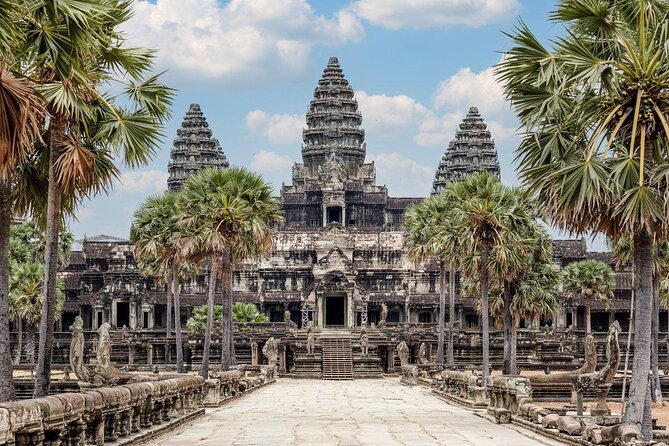
- Angkor in one demanding day: Angkor Thom, Bayon, Ta Prohm, Angkor Wat, and Phnom Bakheng all appear on Day 2.
- A private door-to-door route: Your own group travels by private transport from Siem Reap to Phnom Penh.
- Battambang adds variety: The bamboo train, colonial-era sights, countryside temples, Peace Gallery, and bat caves give this day a different feel from Angkor.
- The price covers many essentials: At $1,025.05 per person, the package includes six nights, breakfast each morning, entrance fees, transport, an English-speaking guide, and drinking water.
- The schedule is physically full: Long road transfers and repeated temple visits require comfortable shoes, patience, and a willingness to start early.
- Cambodia’s recent past is included: Tuol Sleng and Choeung Ek are serious, emotional visits, not quick sightseeing stops.
A useful seven-day route through Cambodia
I see this as a compact introduction to Cambodia rather than a slow holiday. You begin with Siem Reap’s ancient Khmer monuments, then move west to Battambang before continuing south to Phnom Penh.
That shape makes sense. Each destination feels different, and you avoid returning to Siem Reap after Angkor. The trade-off is that the tour spends only one or two nights in most places, so you gain range but not much time for unplanned wandering.
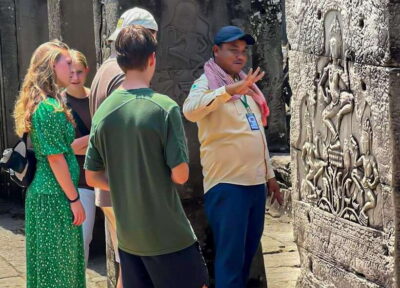
The tour is private, so only your group participates. That matters here. A packed temple day can be tiring, and a private guide may be able to explain a carving again, pause for photographs, or adjust the timing more easily than a large coach group.
A few more options around Siem Reap worth reading up on
- Angkor Wat Sunrise or Sunset Tour with Guide from Siem Reap
★ 5.0 · 12,109 reviews - Siem Reap: Angkor Wat: Small-Group Sunrise or Sunset Tour
★ 5.0 · 9,444 reviews - From Siem Reap: Kampong Phluk Floating Village Tour by Boat
★ 4.9 · 6,979 reviews
Day 1: A gentle arrival in Siem Reap
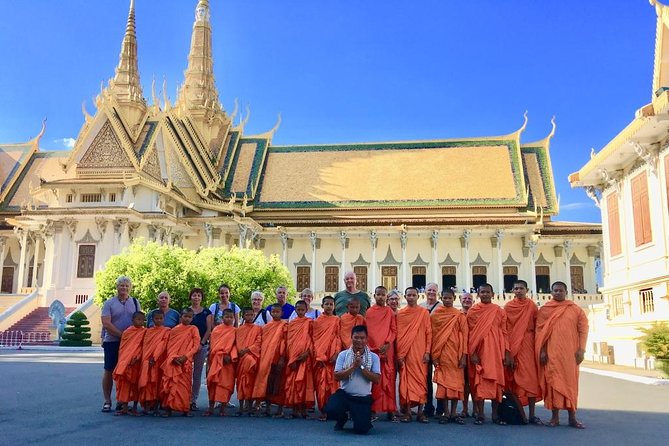
Your guide and driver meet you at Siem Reap Angkor International Airport and transfer you into the city. The airport transfer is listed at about two hours, including an introduction to the local area.
After arrival, you check into one of three hotel categories:
- Royal Crown Hotel & Spa, or a similar three-star property
- Regency Angkor Hotel, or a similar four-star property
- Angkor Paradise Hotel, or a similar five-star property
The exact property depends on the package level and availability, so confirm this before paying. The hotels are described as city-center options, which should make dinner and evening walks easier, but the supplied details do not promise a particular room, pool, or restaurant.
This first day is intentionally light. That is good after a flight. You have a chance to settle in before the early temple work begins.
Day 2: Angkor Thom, Ta Prohm, and Angkor Wat
Day 2 is the heart of the trip and also its hardest day. After breakfast, you enter the Angkor Archaeological Park through Angkor Thom’s South Gate.
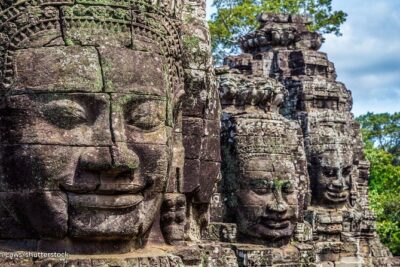
The gate is a strong opening because its causeway and monumental faces give you an immediate sense of the scale of the old royal city. From there, the route moves through several important sites:
- Bayon Temple: About 70 minutes are scheduled here. Its tower faces are the visual signature of Angkor Thom, and a guide is useful for explaining how the temple fits into the royal city.
- Baphuon: This elevated sandstone temple has a long approach and several levels. Allow time for steps and uneven ground.
- Phimeanakas: Set near the former royal palace area, this smaller temple helps fill in the picture of court life rather than simply presenting another giant monument.
- Terrace of the Elephants: The carvings and long platform make this a good place to understand how royal ceremonies and public display shaped the city.
- Terrace of the Leper King: The detailed bas-reliefs here reward a close look, especially if your guide points out the figures on the inner and outer walls.
The day then shifts to Ta Prohm, scheduled for two hours. This is one of the most atmospheric stops because trees have grown through parts of the ruins, although the site has been cleared and strengthened enough for safe access.
After Ta Prohm comes Angkor Wat, also with two hours planned. That is enough for a meaningful first visit, but not enough to inspect every gallery at leisure. You’ll see the grand plan, towers, reliefs, and central structure, while your guide can help you focus on the details most easily missed.
The final stop is Phnom Bakheng, an older temple mountain on a hill about 60 meters high. The climb and uneven surfaces can feel demanding after a full day of ruins. The schedule gives you about an hour, but conditions at the site may affect how much time you actually spend there.
I like the range of this day. You see royal-city architecture, jungle-covered ruins, and the great monument itself. My concern is the pace. Eight major stops can turn Cambodia’s most memorable day into a checklist if you rush every visit.
Day 3: Tonle Sap, village life, and Siem Reap crafts
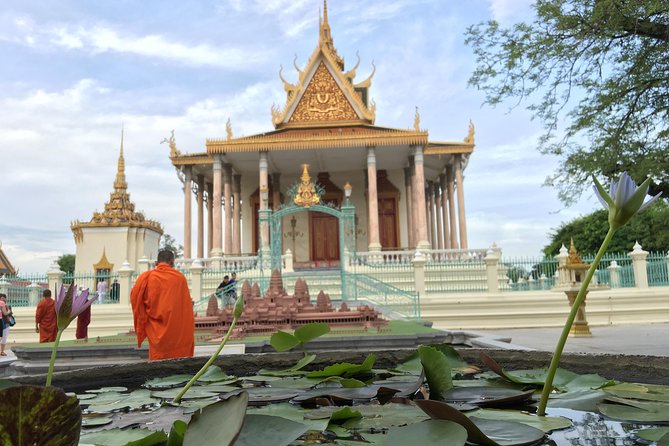
Tonle Sap Lake gives the tour a welcome change of scale. The lake is Southeast Asia’s largest freshwater body and supports fishing and carp harvesting. The two-hour lake visit leads into about three hours at Kampong Phluk Floating Village.
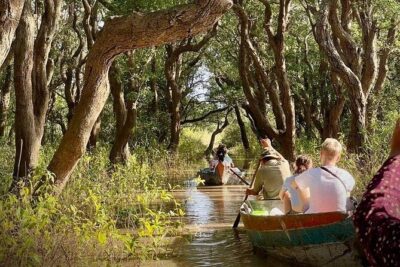
Kampong Phluk is also known for its mangrove forest. The village and lake visit should help you see how water shapes daily life in this part of Cambodia. Conditions at the lake can affect the feel of the visit, and the supplied information does not specify the exact boat arrangement, so ask your operator what is included.
Back in Siem Reap, Artisans Angkor provides a more focused cultural stop. This Cambodian social business creates jobs for young people in rural areas and helps revive Khmer craft traditions. It is a useful visit if you want to connect handmade work with present-day economic opportunities rather than seeing only old monuments.
Wat Bo follows. This is one of Siem Reap’s older pagodas and is noted for 19th-century wall paintings. Some scenes show Hindu stories even though the building is Buddhist, an interesting reminder that Cambodian religious life has never fit neatly into one box.
The Royal Residence is a short final stop. It is the king’s official residence when he visits Siem Reap, so access and what you can see may be limited. Think of it as a brief city landmark, not a palace tour.
Something completely different for another day:
- Sunset tour of Kampong Phluk stilts home village on the Tonle Sap
★ 5.0 · 4,865 reviews - Siem Reap: Angkor Wat 2-Day Tour with Sunrise and Sunset
★ 4.9 · 4,429 reviews - Siem Reap: Kampong Phluk Floating Village Tour with Boat
★ 4.9 · 3,843 reviews - Siem Reap: Full-Day Angkor Wat Guided Tour with Sunset
★ 4.9 · 3,803 reviews
Day 4: The road to Battambang and its evening bats
Battambang is Cambodia’s second-largest city and gives you a different setting after the monumental scale of Angkor. The city is known for colonial buildings and traditional Cambodian houses, including wooden homes more than a century old.
The bamboo train is the day’s playful highlight. Called a norry, it is a simple platform used on railway tracks. The ride is listed at about two hours and offers a memorable look at an unusual form of transport.
You then visit Battambang Central Market. The duration shown for this stop is clearly inconsistent, listed as more than a day, so treat it as a market visit rather than a full-day activity. Markets are best for seeing ordinary commerce, produce, and local food, though the details here do not promise a guided food tasting.
Wat Tahm-rai-saw, also called the White Elephant Pagoda, adds a religious and architectural stop. Cambodia Peace Gallery then shifts the tone. Its focus is recovery and Cambodian participation in peace work around the world, offering a useful counterpoint to the country’s war-related sites.
Outside the city, Ek Phnom Pagoda is an atmospheric, partly collapsed 11th-century temple about 11 kilometers north of Battambang. The remains of a laterite wall and an ancient reservoir add context to the ruins.
Phnom Sampeou is a 100-meter-high mountain whose shape resembles a ship. The visit lasts about two hours and is followed by the famous bat caves. Near sunset, millions of bats stream from the caves and form a moving line across the sky. This is one of the tour’s most unusual natural scenes, but the timing is important. If the day runs late, you may have less time at the mountain before the bats appear.
The final stop is the statue of Ta Dumbong Kro Aung, the legendary figure linked to Battambang’s name. It is a short stop that connects local folklore with the city itself.
Your Battambang hotel is listed as Classy Hotel & Spa, Cambana La Riviere Hotel, or Maisons Wat Kor, depending on the accommodation level. The range runs from three to five stars, so ask exactly which category is part of your booking.
Day 5: Udong and the road south to Phnom Penh
Day 5 is mostly a transfer day from Battambang to Phnom Penh, with stops along the way. The brief reference to Pursat is an itinerary point rather than a full sightseeing stop, so do not expect a long visit there.
Udong Mountain was Cambodia’s royal capital from the 17th through the 19th centuries. The site has two mounds joined by a ridge, and the visit gives you an important link between the Angkor era and the later royal period.
Another stop is identified by the map code QQW7+WQH rather than a clear attraction name. The description refers to a meditation center where you can walk through the grounds and enter a large temple. Since the name and exact facilities are not clearly stated, ask for clarification before departure. This is the least transparent part of the schedule.
You spend the night in Phnom Penh at one of three listed options: Mahasakor Inn, Sun & Moon Urban Hotel, or Sun & Moon Riverside. The capital is your base for the final two nights and the most serious historical visits.
Day 6: Phnom Penh’s royal center and painful history
Day 6 covers a great deal of Phnom Penh. The first major subject is the Khmer Rouge period, followed by royal monuments, Buddhist temples, national memorials, and the Central Market.
Tuol Sleng Genocide Museum occupies the former Security Prison 21, a school converted into a prison during the genocide. Choeung Ek, about 17 kilometers south of Phnom Penh, was an orchard and mass-grave site for people killed between 1975 and 1979.
These visits are emotionally heavy. They are essential for understanding modern Cambodia, but they should not be treated as ordinary sightseeing. The schedule gives about 90 minutes at each site, enough for a serious introduction but not a long study.
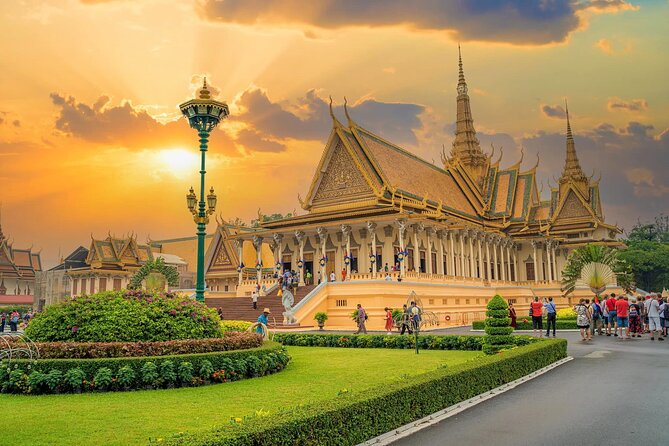
The Royal Palace and Silver Pagoda shift the focus to Cambodia’s monarchy and religious life. The palace visit lasts about 70 minutes, followed by an hour at the Silver Pagoda. The pagoda’s garden offers a quieter setting beside the palace complex.
Wat Phnom sits on a tree-covered 27-meter hill and is tied to the legend of the city’s founding. Wat Ounalom, one of Phnom Penh’s five original monasteries, sits near the riverfront and dates to 1422. These shorter visits work well as city orientation stops.
The Independence Monument and the memorial to King Father Norodom Sihanouk add modern national history. Central Market, a domed 1937 building with four branching halls, ends the day with shopping and everyday city life.
This is a thoughtful mix, but it is a long day. The two genocide sites alone require emotional energy, and adding eight more stops means you may feel ready for a quiet dinner afterward.
What the $1,025.05 price really covers
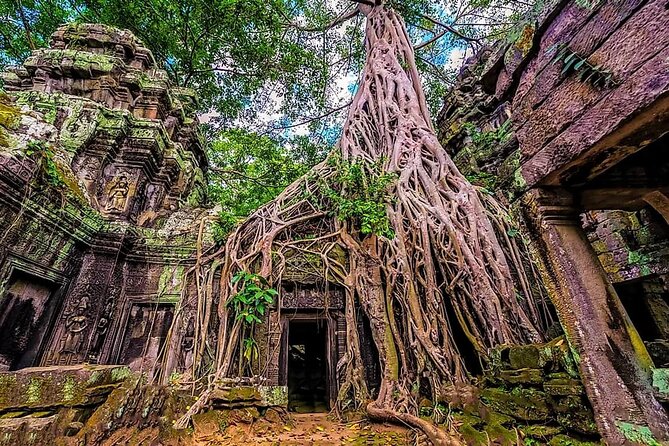
At $1,025.05 per person, the cost is not simply a seven-day sightseeing pass. It includes six nights of accommodation in a double or twin room, private transport, an English-speaking guide, entrance fees, six breakfasts, and drinking water.
That package can offer good value if you want one company to handle the route, hotels, road transfers, and major admissions. Angkor entrance fees and transport between Siem Reap, Battambang, and Phnom Penh can add up quickly when arranged separately.
The price needs closer checking if you are traveling alone. A single room adds 40 percent to the total tour price per person. Tips for the guide and driver are not included, so keep a separate budget for them.
Hotel substitutions are possible because each city lists options or similar properties. I would ask three questions before booking:
- Which exact hotel category is included?
- Is the airport transfer on Day 7 guided or driver-only?
- What is included during the Tonle Sap village visit?
These answers will tell you more about the package’s real value than the headline price.
Who will enjoy this tour most
I recommend this route to you if you want a private, well-supported first visit to Cambodia and prefer seeing several major regions in one week. It works especially well for families and small groups who value a dedicated vehicle and guide.
You should also enjoy history. Angkor and the royal sites require attention, while Tuol Sleng and Choeung Ek ask for a respectful, serious mood.
This may not suit you if you want long afternoons by a pool, independent food exploration, or slow photography sessions. Day 2 and Day 6 are packed, and the road journey to Phnom Penh takes time away from relaxed city wandering.
The guide can make a major difference. Sara has been praised for clear explanations and humor, Vany for temple and Khmer culture insight, Chany for making solo travelers feel welcome, and Meng for patience and a calm manner. Driver Art has been praised for careful driving. These names are useful when discussing your booking, but they do not guarantee assignment.
Practical details that matter
The tour starts with pickup at Siem Reap Angkor International Airport. On Day 7, you have free time after breakfast, followed by a transfer without a guide to Techo International Airport. The listed transfer time is about three hours, so confirm your flight time and pickup schedule carefully.
Most people can participate, according to the tour information, but temple steps, uneven stone, the Phnom Bakheng hill, and Phnom Sampeou require steady walking. Wear shoes with good grip and carry water, which is included.
The tour is booked, on average, 104 days ahead. That suggests you should not leave planning until the last week if you need a particular hotel level or guide arrangement.
Cancellation is flexible until six full days before the local start time for a full refund. A cancellation two to six full days ahead receives 50 percent, while cancellation less than two full days ahead is nonrefundable. This matters because international flight changes can be costly.
Should you book this seven-day Cambodia tour?
I would book it if your priority is coverage with private support. In one week, you get Angkor’s major monuments, Tonle Sap, Battambang’s bamboo train and bat caves, Udong, Phnom Penh’s royal center, and a serious look at the Khmer Rouge period.
I would hesitate if your ideal Cambodia trip is slow and flexible. The schedule is ambitious, hotel assignments need confirmation, and one Day 5 stop is not clearly named.
For a first visit, though, the route offers a strong balance of temples, countryside, city life, living craft traditions, folklore, and modern history. Ask for the exact hotels, clarify the Tonle Sap arrangements, and confirm your guide before paying. If those details suit you, the tour is a practical way to see far more than Angkor Wat alone.
FAQ
How long is the Cambodia tour?
The tour lasts approximately seven days and includes six nights of accommodation.
Where does the tour start?
The tour starts with pickup at Siem Reap Angkor International Airport in Siem Reap, Cambodia.
Where does the tour end?
The tour ends with a transfer to Techo International Airport, listed as KTI.
Is this a private tour?
Yes. Only your group participates in the private tour or activity.
What meals are included?
Six breakfasts are included, one for each morning of the six-night stay.
Are entrance fees included?
Yes. The tour includes entrance fees for the listed attractions.
Is airport pickup included?
Yes. Airport pickup and transfer from Siem Reap Angkor International Airport are included. The Day 7 transfer to Techo International Airport is provided without a guide.
Is there an extra charge for a single room?
Yes. A single-room stay adds 40 percent of the total tour price per person.
Are guide and driver tips included?
No. Tipping for the guide and driver is not included.
Can I cancel for a full refund?
Yes, if you cancel at least six full days before the experience start time. Cancellations two to six full days ahead receive a 50 percent refund, and cancellations less than two full days ahead are not refunded.
Newest reviews from Siem Reap
- Village walking & Cooking class in Siem Reap★ 5.0 · 2 reviews
- Ultimate Sunrise to Angkor Wat, Angkor Thom and Bayon Temple★ 5.0 · 3 reviews
- Angkor Wat Sunrise Shared Tours: Bayon, Ta Prohm And Kravan★ 5.0 · 1 review
- Twilight Tastes of Siem Reap Include Dinner★ 5.0 · 13 reviews
- Two Days Tour Angkor Complex; Banteay Srei, and Kulen Hill★ 5.0 · 1 review
- Trekking Tour at Phnom Kulen National Park from Siem Reap★ 5.0 · 3 reviews
- Trip to Big Circle included Banteay Srey and Banteay Samre★ 5.0 · 1 review
- Full-Day Private Tour of Angkor Wat with Pick Up★ 5.0 · 12 reviews
Tours, compared.
Angkor Wat Sunrise or Sunset Tour with Guide from Siem Reap
Read our review →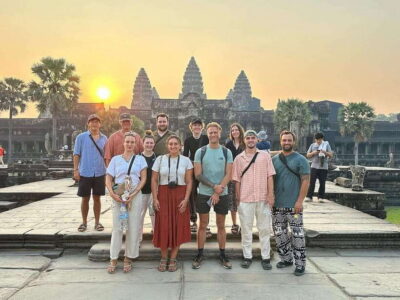
Angkor Wat: Small-Group Sunrise or Sunset Tour
Read our review →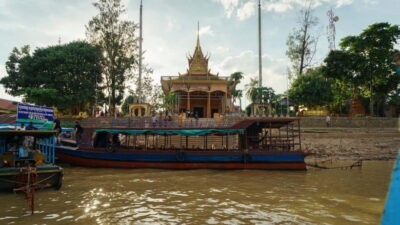
Sunset tour of Kampong Phluk stilts home village on the Tonle Sap
Read our review →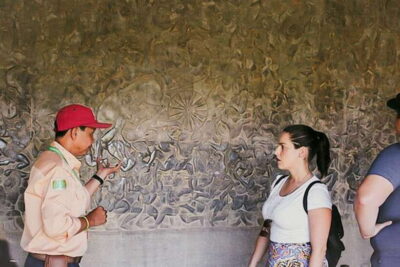
Angkor Wat 2-Day Tour with Sunrise and Sunset
Read our review →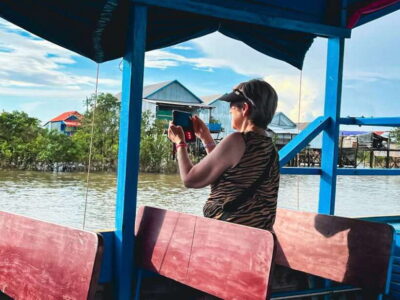
Kampong Phluk Floating Village Tour with Boat
Read our review →