
Reviewed · FLOATING VILLAGE TOURS
Bakong Temples & Floating Village Tour
Ancient stone, then life on water. This Siem Reap outing pairs the early Khmer temples of Lolei, Preah Ko, and Bakong with Kampong Phluk Floating Village, giving you two very different views of Cambodia in one long day. I like the private format and the chance to see how a water-based community works, not just another temple gateway. I also like that an English-speaking guide, air-conditioned transport, pickup, drop-off, and cold water are included.
The main drawback is cost control. The $45 tour price does not include the $37 Angkor Pass, and some admission costs at Lolei and Kampong Phluk are also excluded. The schedule can last six to eight hours, so you should expect a full outing rather than a quick morning trip.
In This Review
- Key points before you book
- Why Bakong makes this temple day worthwhile
- Lolei and Preah Ko show an earlier Khmer style
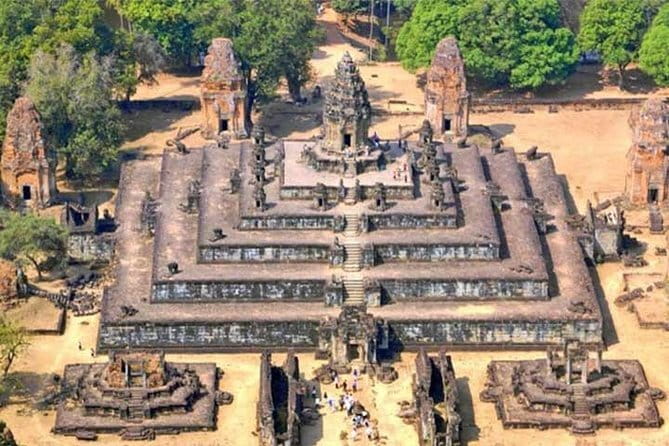
- The five-tiered pyramid at Prasat Bakong
- Kampong Phluk changes the subject completely
- How the private format affects the day
- What the $45 price really covers
- Who will enjoy this outing most
- Cancellation and practical planning
- Should you book the Bakong and Floating Village Tour?
- FAQ
- How much does the tour cost?
- How long does the experience last?
- Is transportation included?
- Is this a private tour?
- What is included besides transport and a guide?
- Can I cancel for a full refund?
Key points before you book
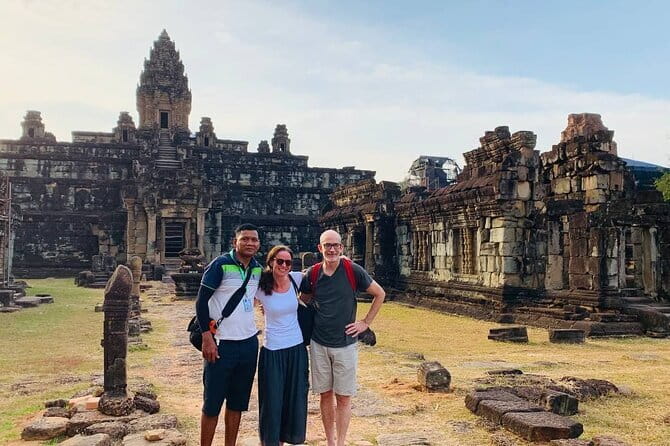
- Bakong is the architectural centerpiece: Built in 881 AD, it was the Khmer Empire’s first temple-mountain and helped set the pattern for later monuments such as Angkor Wat.
- The Roluos temples come as a useful trio: Lolei, Preah Ko, and Bakong show an earlier stage of Khmer design, before the grand Angkor complex reached its best-known form.
- Kampong Phluk is a working water community: Homes, schools, and shops are built either on floating platforms or tall stilts that suit changing lake levels.
- The tour is private: Only your own group takes part, which makes it easier to control the pace and ask questions.
- A boat ride may be part of the village visit: The route can include travel along the river toward the floating community, with possible contact with a local school.
- Budget for the temple pass: The Angkor Pass is listed at $37 per person, in addition to the tour price.
Why Bakong makes this temple day worthwhile
If you have already seen Angkor Wat, Bakong helps you understand where that style began. It was built in 881 AD by King Indravarman I and is described as the first sandstone temple-mountain created by Khmer rulers at Angkor.
The design represents Mount Meru, the sacred mountain at the center of Hindu cosmology. You can read that idea in the temple’s structure: a five-level pyramid rises inside enclosing walls and moats, with each level leading you closer to the central sanctuary.
I find this more useful than simply ticking off another temple. Bakong is not only an old monument. It is an early model for the grand temple mountains that followed, including Angkor Wat. The scale is smaller than Angkor Wat, but the design explains the basic Khmer plan in a much clearer way.
Look for the Naga causeway, described as the earliest known example of this feature in Khmer architecture. The serpent form is not decorative filler. In Khmer religious art, the Naga is tied to water, protection, and sacred passage, which makes the causeway a fitting approach across the temple’s moats.
The lower levels also retain large stone guardian statues of elephants and lions. These figures give the base a solid, watchful quality and are among Bakong’s most distinctive details. I would take time here rather than rushing straight up the pyramid for photographs.
The itinerary allows two hours at Bakong. That is the right amount of time for a thoughtful visit, especially if your guide explains the symbolism and points out the architectural details. You will want comfortable shoes and a willingness to handle steps and uneven ancient stone, although the supplied information does not give a formal accessibility rating.
More floating village trips:
- From Siem Reap: Kampong Phluk Floating Village Tour by Boat
★ 4.9 · 6,979 reviews - Sunset tour of Kampong Phluk stilts home village on the Tonle Sap
★ 5.0 · 4,865 reviews - Siem Reap: Kampong Phluk Floating Village Tour with Boat
★ 4.9 · 3,843 reviews
Lolei and Preah Ko show an earlier Khmer style
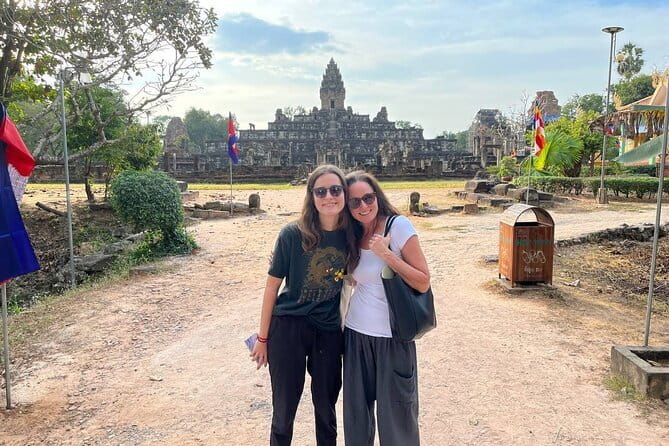
The first stop is Lolei, the northernmost of the three Roluos temples. It belongs to a group of late ninth-century Hindu temples that also includes Preah Ko and Bakong.
Lolei receives about an hour. It is useful as an introduction because you encounter the Roluos group in a sequence rather than seeing Bakong in isolation. You can begin to notice how Khmer builders worked with brick, sandstone, sacred enclosures, and repeated tower forms before the architecture became more elaborate.
Admission at Lolei is not included, so keep that in mind when calculating the final cost. The tour information does not specify the separate charge, so I would ask the operator before departure rather than assume that every fee is covered by the Angkor Pass.
Preah Ko follows, also with about an hour planned. It was the first temple built in Hariharalaya, an ancient city about 15 kilometers southeast of the main Angkor temple group. Its name means Sacred Bull, and its early position in Khmer history gives the stop real value for anyone who wants more than the famous central temples.
Preah Ko is listed as free admission. That makes it a pleasant middle stop, particularly after paying for the wider temple pass. I would use this hour to compare its smaller, earlier setting with the more imposing pyramid of Bakong.
The three temples work best as a set. Lolei gives you the northern point of the Roluos group, Preah Ko introduces the early royal temple at Hariharalaya, and Bakong shows the mature temple-mountain idea. If you only have time for one of them, Bakong is the essential stop. If you want historical context, the full sequence is much better.
The five-tiered pyramid at Prasat Bakong
Prasat Bakong is the longest temple visit, with two hours assigned to it. That extra time matters because the monument rewards a slow circuit more than a quick look from the entrance.
The five-tiered sandstone pyramid is the focal point. It was built to symbolize Mount Meru, and the rising levels create a clear physical path from the outer sacred world toward the central shrine. The surrounding moats and walls make the religious plan easier to grasp than at many larger sites, where crowds and scale can blur the original design.
I would ask your guide to explain the relationship between the pyramid, the moats, and the enclosing walls. This is where an English-speaking guide can add real value. One guide associated with this experience is Mr Oun Kosorl, while another is identified as Mr K. Both are praised for charm and clear explanations of Siem Reap and its temples, though the specific guide assigned to your booking may vary.
The elephant and lion guardians deserve close attention. They sit on lower levels and help you see how architecture and sculpture worked together to protect and mark the sacred center.
Bakong is also a good place to keep your expectations in check. You are not getting the polished drama or immense scale of Angkor Wat. You are getting something older and more instructive: an early temple-mountain whose importance comes from its place in the development of Khmer architecture.
Kampong Phluk changes the subject completely
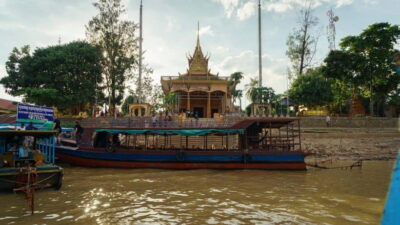
After the Roluos temples, the tour shifts from stone sanctuaries to Tonle Sap Lake. Kampong Phluk is a community built around water, with houses, schools, and shops arranged for seasonal changes in the lake and river system.
You can expect two basic types of structures. Some buildings float directly on the water. Others sit on tall stilts, which allow them to remain above the ground during the dry season and adapt when water levels rise.
That seasonal design is the key to understanding the village. This is not a decorative waterfront display created only for sightseeing. The community’s basic infrastructure is shaped by water levels, and the village must adjust to the conditions of the year.
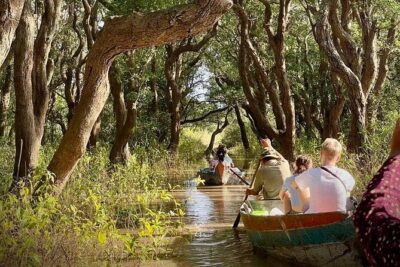
The visit is scheduled for about three hours, making it nearly as substantial as the temple portion. The route can include a boat trip along the river toward the village. One account of the outing also describes a visit to a primary school where children were learning English. That type of stop can offer a more personal connection to the community, but you should treat it as a possible part of the visit rather than a guaranteed feature unless the operator confirms it.
The village can be a sobering sight. You may notice the difficult conditions created by life on the water, even as the people you meet appear content with their community. I appreciate that the tour places daily life beside grand monuments, but I would approach the visit with respect and patience. This is a home and workplace, not simply a photo stop.
Weather can affect this section more than the temple visits. One account describes poor weather making the village portion less fortunate on that day. Clouds, rain, and water conditions can change the mood and the quality of the boat ride, so keep your plans flexible and bring suitable protection for changing conditions.
A few more options around Siem Reap worth reading up on
- Angkor Wat Sunrise or Sunset Tour with Guide from Siem Reap
★ 5.0 · 12,109 reviews - Siem Reap: Angkor Wat: Small-Group Sunrise or Sunset Tour
★ 5.0 · 9,444 reviews - Siem Reap: Angkor Wat 2-Day Tour with Sunrise and Sunset
★ 4.9 · 4,429 reviews - Siem Reap: Full-Day Angkor Wat Guided Tour with Sunset
★ 4.9 · 3,803 reviews
How the private format affects the day
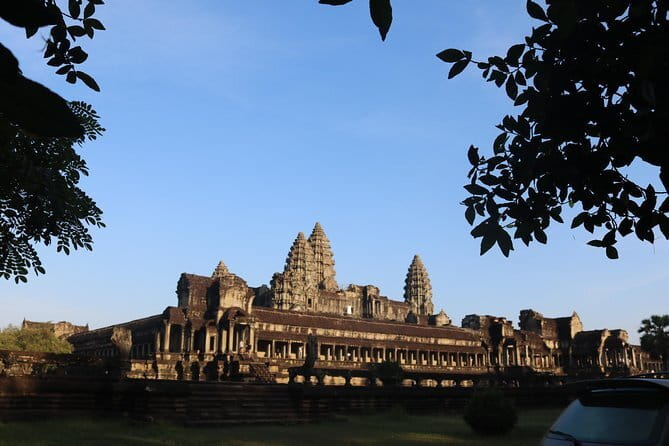
This is a private tour, so only your own group participates. That is a meaningful advantage at $45 per person, particularly if you are traveling with family or friends and want to ask questions without holding up a large bus group.
A private guide can also help with the balance between the temples and the village. If Bakong captures your interest, you can use the full two hours there. If your group is more curious about Kampong Phluk, you can make the most of the three-hour village portion, subject to the operator’s schedule.
Pickup and drop-off are included, as is an air-conditioned vehicle. In Siem Reap’s heat, that is more than a minor comfort. It gives you a cooler break between outdoor stops and avoids the need to arrange separate transport for the Roluos temples and the lake.
Cold drinking water is included as well. I would still carry any additional drinks or snacks you need, since the information provided confirms water but does not list meals or refreshments beyond that.
The total duration is approximately six to eight hours. The broad range probably reflects road conditions, the pace of your private group, and the length of the village portion. I would avoid booking another fixed activity immediately afterward.
What the $45 price really covers
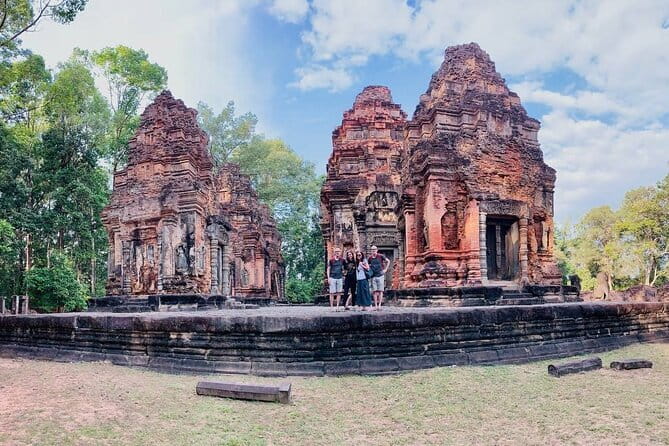
At $45 per person, the tour gives you a full day of transport, a private English-speaking guide, cold water, and visits to four substantial places. The combination is stronger than a basic temple transfer because the guide connects early Khmer architecture with present-day life around Tonle Sap.
The important extra charge is the Angkor Pass, listed at $37 per person. That brings the basic combined cost to $82 per person before any other excluded admission charges.
Lolei and Kampong Phluk both show admission as not included. Preah Ko and Prasat Bakong are listed as free admission in the supplied details, although temple access may still relate to the separate Angkor Pass requirement. I would ask exactly which ticket covers each stop and what additional village or boat fees apply before paying.
Group discounts are offered, which could improve the value for larger parties. The private format also means you are paying for a more personal day rather than sharing the vehicle with strangers.
I consider the price fair if you value convenience and interpretation. It is less attractive if you already have transport, know the Roluos temples well, and only want a quick look at the village. The day earns its cost through the contrast between ancient royal architecture and a modern community shaped by seasonal water.
Who will enjoy this outing most
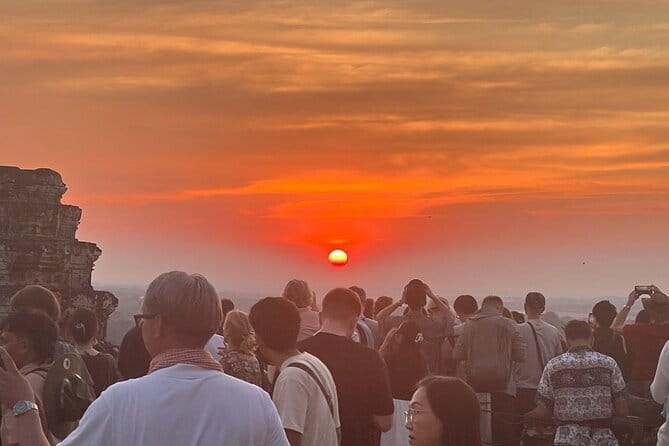
I would recommend this tour to anyone who wants an alternative to repeating the central Angkor circuit. Bakong is especially worthwhile if you care about how Khmer temple design developed over time.
It also suits families and small groups. The private vehicle, pickup, and drop-off reduce the day’s logistical work, while the mix of temples and village life gives the group different kinds of interest.
You should book it if you want a guide to explain what you are seeing. The comments attached to this experience place strong emphasis on the charm and insight of the guides, especially Mr Oun Kosorl and Mr K. That personal explanation appears to be one of the tour’s most praised qualities.
I would be more cautious if you dislike long outings, boats, or visits to communities where living conditions may be difficult to see. The village section is not a light sightseeing break after the temples. It asks you to pay attention to how people organize homes, education, shopping, and transport around water.
The experience is booked an average of 12 days ahead, so I would reserve early if your Siem Reap dates are fixed. Confirmation is provided at booking, and most people can participate according to the supplied information.
Cancellation and practical planning
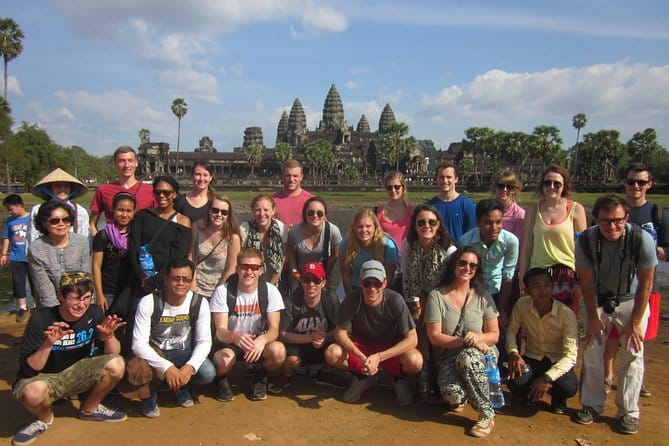
Free cancellation is available if you cancel at least 24 hours before the local start time. Cancellations made within 24 hours are not refunded, and late changes are not accepted.
I would confirm the pickup time, the exact guide, the Angkor Pass arrangement, and any Kampong Phluk admission or boat charges before the day begins. The information confirms pickup and drop-off, but it does not provide a detailed schedule or a precise meeting time.
Because the day includes outdoor temple visits and a boat-based village excursion, dress for heat and possible rain. The supplied details do not list a dress code, meal, or special equipment, so plan around the basics rather than expecting extras to be provided.
Should you book the Bakong and Floating Village Tour?
Book it if you want a private, well-rounded day that combines the origins of Khmer temple architecture with a close look at life on Tonle Sap. Bakong is the real historical prize, while Kampong Phluk adds a human and seasonal side that the temple circuit cannot provide.
The tour is less suitable if you want the lowest possible price or a short, tightly timed excursion. Once you add the $37 Angkor Pass and any separate village charges, the final cost is clearly higher than the advertised $45.
For me, the strongest reason to choose it is the pairing. Lolei, Preah Ko, and Bakong explain the early Khmer world. Kampong Phluk shows how Cambodian communities still adapt to their surroundings in practical ways. Add a private vehicle and a guide such as Mr Oun Kosorl or Mr K, if available, and you have a useful day with plenty to look at and plenty to think about.
FAQ
How much does the tour cost?
The tour price is $45 per person. An Angkor Pass costing $37 per person is not included, and admission costs for Lolei and Kampong Phluk are also listed as not included.
How long does the experience last?
The tour lasts approximately six to eight hours. The planned visits include one hour at Lolei, one hour at Preah Ko, two hours at Prasat Bakong, and three hours at Kampong Phluk Floating Village.
Is transportation included?
Yes. Pickup and drop-off are included, along with transport in an air-conditioned vehicle.
Is this a private tour?
Yes. Only your own group participates in this private tour or activity. Group discounts are also offered.
What is included besides transport and a guide?
The tour includes an English-speaking guide and cold drinking water. Admission fees and the Angkor Pass are not included.
Can I cancel for a full refund?
Yes, if you cancel at least 24 hours before the experience’s start time. Cancellations made less than 24 hours in advance are not refunded, and changes within that period are not accepted.
Newest reviews from Siem Reap
- War Museum, Killing Field, and APOPO Hero RATs Tour★ 5.0 · 7 reviews
- Angkor Wat at Sunrise★ 4.0 · 7 reviews
- Siem Reap Angkor Airport Taxis (from Airport to Hotel)★ 5.0 · 44 reviews
- Cambodian Cooking Class and Oxcart Ride with Local Village Tour★ 5.0 · 4 reviews
- Secret Temples of Angkor – Guided Tour in Siem Reap★ 5.0 · 6 reviews
- Short Cycling at Countryside★ 5.0 · 29 reviews
- SIEM REAP E-BIKE HALF-DAY COUNTRYSIDE (25-30 km)★ 4.0 · 1 review
- Unveiling the Mystical Beauty of Phnom Kulen National Park★ 5.0 · 6 reviews
Floating Village Tours, compared.
Sunset tour of Kampong Phluk stilts home village on the Tonle Sap
Read our review →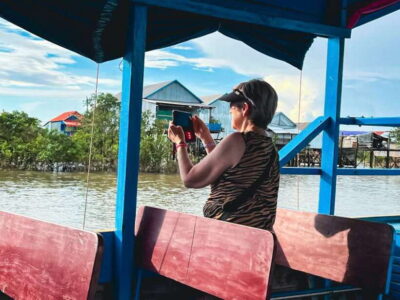
Kampong Phluk Floating Village Tour with Boat
Read our review →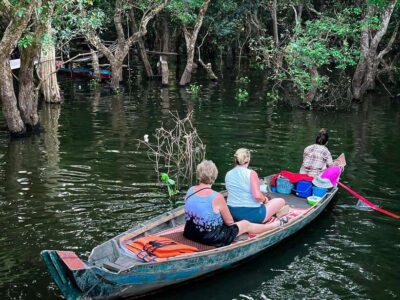
Siem Reap Floating Village Kampong Phluk Sunset with Boat
Read our review →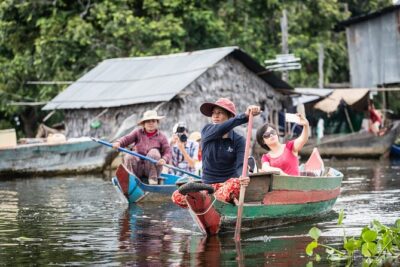
Kompong Phluk Floating Village Half-Day Tour ( Morning / Sunset )
Read our review →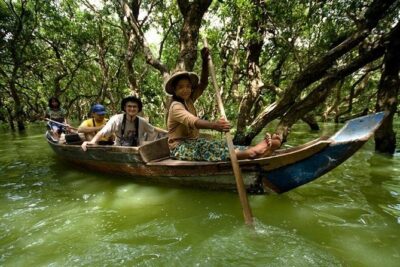
Tonle Sap Lake & Kampong Phluk Village Half-Day Tour
Read our review →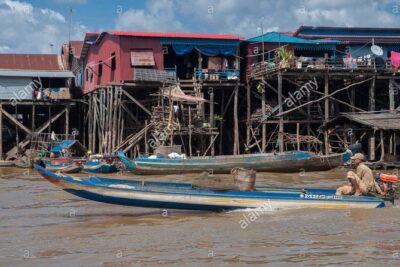
Browse the lists this tour appears in