
Reviewed · TUK-TUK TOURS
Authentic Siem Reap: Tuk Tuk Countryside and Sunset Tour
Leave the temples behind for an afternoon. This four-hour tuk tuk trip shows you the daily Cambodia that sits beyond Siem Reap’s famous ruins, with a local market, rice wine farm, lotus workshop, countryside food, and sunset near Phnom Krom. I especially like the mix of hands-on stops and the chance to ride with a female English-speaking guide who can explain local customs as you go.
The lotus farm is a strong point, not just a photo stop. It supports local women and demonstrates how lotus fibers become textiles, followed by lotus tea and cake with a high view over the surrounding countryside. The other highlight is the rice wine visit, where you see how rice, leftover mash, pigs, cows, and buffalo fit into one working farm system. The main consideration is comfort: the tuk tuk ride, open-air stops, sun, dust, and insects may not suit everyone, and the tour is not wheelchair accessible.
In This Review
- Key points before you book
- Why this tour adds something after Angkor
- The local market: start with everyday Cambodia
- Basket making, bamboo, and the spiritual houses
- Wat Po Banteaychey and the rice wine farm
- The lotus farm: craft, belief, and a good cup of tea
- Sunset at Phnom Krom and the lotus meal
- What the $69 price includes
- Practical advice for a comfortable afternoon
- Who will enjoy this Siem Reap experience?
- Should you book the countryside and sunset tour?
- FAQ
- How long does the tour last?
- What is included in the $69 price?
- Is hotel pickup included?
- What language does the guide speak?
- Will I taste rice wine?
- What happens at the lotus farm?
- Is food included?
- Is the tour wheelchair accessible?
Key points before you book
- Rice wine is part of a working farm system: You see rice being fermented, taste freshly distilled rice wine, and learn how the leftover rice feeds pigs.
- The lotus farm supports local women: The workshop links traditional craft with employment and lower-impact textile production.
- A female guide adds a personal touch: Guides including Sarah and Hong Ho have been praised for warm storytelling and strong English.
- The sunset meal is local and relaxed: You finish on a traditional mat near rice fields, with lotus dishes and countryside food.
- The tour is short but full: Four hours covers several stops, so expect an active afternoon rather than a slow, empty schedule.
- The price is $69 per person: Hotel transport, guide, snacks, drinks, tastings, food, entrance fees, and taxes are included.
Why this tour adds something after Angkor
Siem Reap can easily become a cycle of temples, hotel pools, and restaurants aimed at international tastes. Those are useful parts of a visit, but they do not explain how the surrounding communities live. This tour gives you a look at food production, small-scale farming, household objects, spiritual traditions, and local work.
I like the design of the afternoon. Each stop answers a different question. What do people buy and eat? How are daily tools made? How does rice become an alcoholic drink? What does the lotus mean in Cambodia, and how can it become cloth? The final sunset then gives you time to sit still and connect the pieces.
You are picked up at your Siem Reap hotel in a tuk tuk. The guide introduces the program before you head into the rural areas. Please give the provider your hotel name and address when booking or at least a day before departure, and be ready on time. A four-hour tour has little spare room for a late start.
More Tuk-Tuk Tours in Siem Reap
- Siem Reap: Angkor Wat Private Tuk-Tuk Tour
★ 4.9 · 2,222 reviews - Siem Reap Countryside Bike Tour / E-Bike or Tuk Tuk
★ 5.0 · 935 reviews - Angkor Sunrise Bike Tour / E-Bike or Tuk Tuk
★ 5.0 · 615 reviews
The local market: start with everyday Cambodia
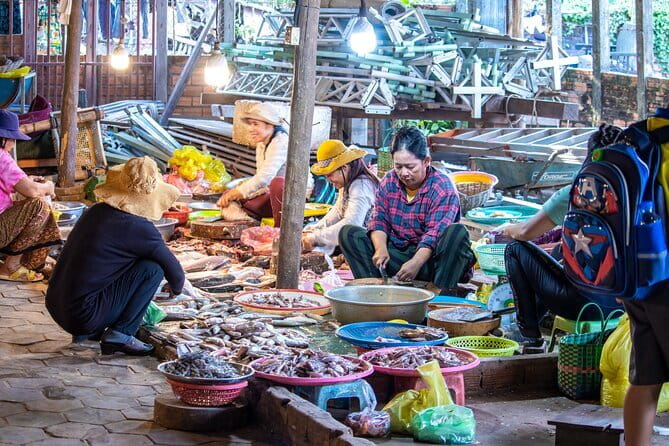
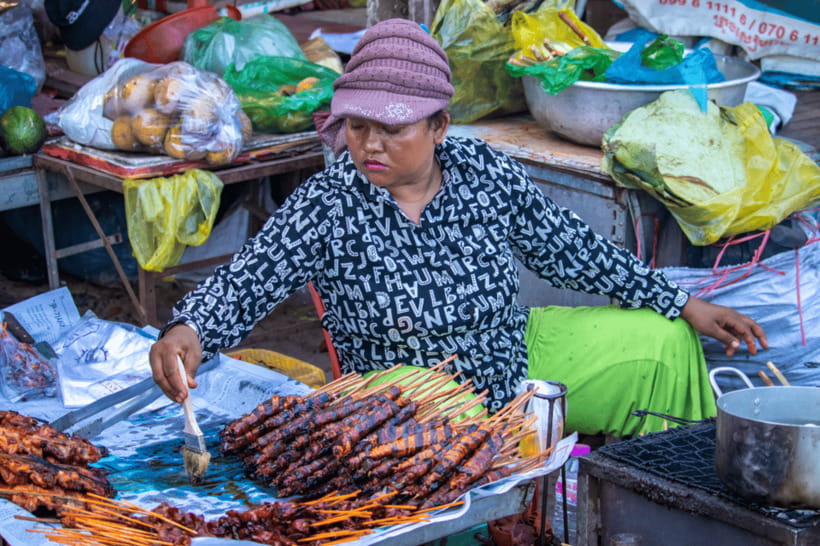
The first stop lasts about 30 minutes and focuses on a local food market. This is more than a quick walk past piles of produce. Your guide explains how the market serves ordinary household needs, where local food comes from, and how crops are cultivated.
The market also provides a useful look at changing eating habits. Supermarkets have influenced local customs, including how people buy food and think about a healthy diet. That contrast between traditional shopping and newer retail habits gives the stop a bit more meaning than simply trying a snack.
You may see ingredients that are familiar from Cambodian meals alongside produce you do not recognize. This is where a guide matters. Without explanation, a food market can be a blur of smells, colors, and activity. With Sarah, Hong Ho, Ben, or another assigned guide, you can ask about the role of each product and the way it reaches the household.
Local snacks and drinks are included, and you will have opportunities to taste food during the afternoon. Bring small cash if you want personal purchases, since personal expenses are not covered.
Basket making, bamboo, and the spiritual houses
The next stop, listed around Wat Athwear Road, lasts about 20 minutes and takes you to a local basket shop. The focus is on objects made from wood, bamboo, and other local materials. These are not simply souvenirs. They can serve as household tools, cooking supplies, decorations, and religious objects.
The visit also explains the small spiritual houses placed in front of local homes. These structures are easy to spot as you move through Cambodia, but a short explanation helps you understand why they matter. The tour connects these visible details with local beliefs and household life.
The shopping element is brief. You may see a range of baskets and handmade objects from different local areas, but this is not presented as a large craft market. If you want to buy something, ask about prices and carry cash. If you prefer not to shop, the cultural explanation still gives the stop value.
Wat Po Banteaychey and the rice wine farm
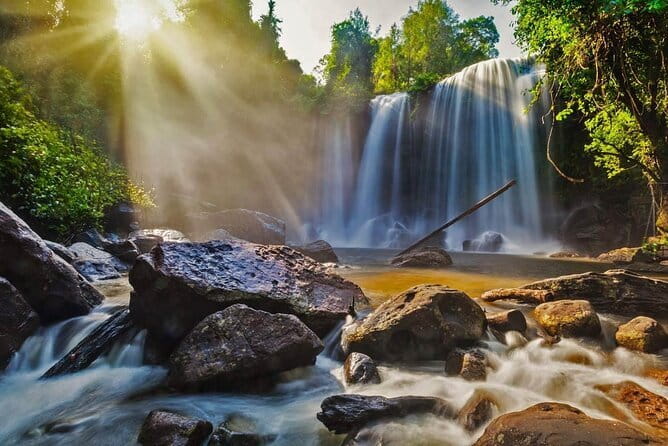
The rice wine stop at Wat Po Banteaychey is one of the most useful parts of the afternoon. You visit a rural rice farm where rice is fermented and distilled into local rice wine. The process is explained in practical terms, and you get to taste the finished drink.
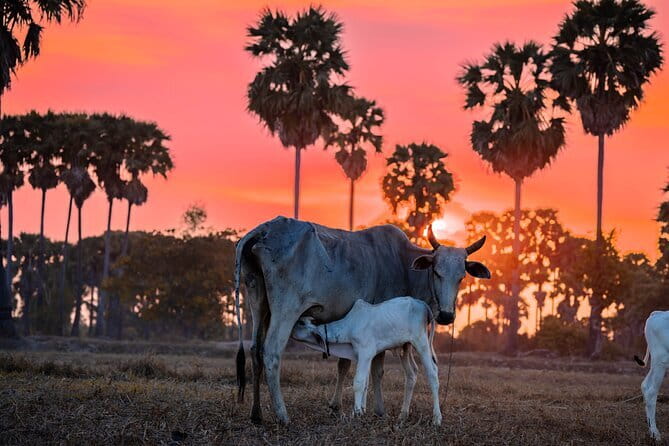
The key lesson is the careful reuse of farm resources. Rice grown by the household becomes part of the wine production. After fermentation, leftover rice is used to feed pigs. The discussion also includes raising cows and buffalo for farm work, giving you a clearer picture of how agriculture supports several parts of rural life at once.
You should expect a tasting, not a full drinking session. The freshly distilled rice wine may be stronger than you expect, so take a small taste first. Local snacks are also served. If you do not drink alcohol, the farm visit still works because the process and the farming system are the main attractions.
This stop feels more grounded than a staged demonstration. The value comes from seeing how a household makes use of what it grows and produces. It also shows why rice cultivation is not just an agricultural detail in Cambodia. Rice shapes meals, income, family work, and related farm activities.
Something completely different for another day:
- Angkor Wat Sunrise or Sunset Tour with Guide from Siem Reap
★ 5.0 · 12,109 reviews - Siem Reap: Angkor Wat: Small-Group Sunrise or Sunset Tour
★ 5.0 · 9,444 reviews - From Siem Reap: Kampong Phluk Floating Village Tour by Boat
★ 4.9 · 6,979 reviews - Sunset tour of Kampong Phluk stilts home village on the Tonle Sap
★ 5.0 · 4,865 reviews
The lotus farm: craft, belief, and a good cup of tea
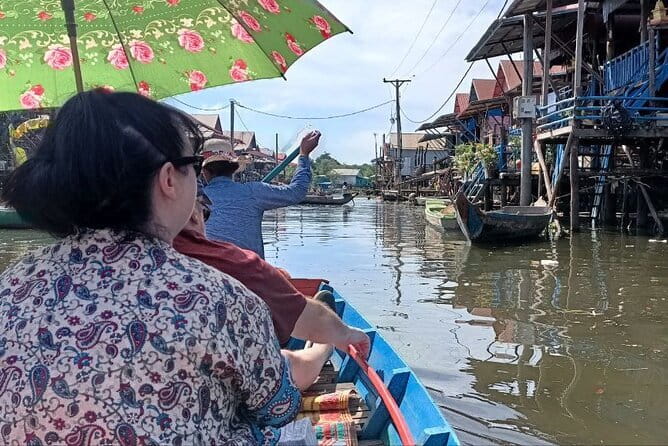
The lotus farm is scheduled for about an hour, giving it enough time to be more than a quick stop. You learn about the lotus plant as a symbol connected with Buddhist teaching and belief in Cambodia. You also see how lotus fibers can be made into an environmentally friendly textile.
The workshop supports local women by providing work, and the project promotes more responsible energy use. That social purpose adds weight to the visit. You are not only looking at a pretty flower or browsing a shop. You are seeing how a local enterprise connects culture, employment, craft, and environmental concerns.
The stop ends in a tea lounge on the upper floor. You receive freshly brewed lotus tea and local cake, with a 360-degree view of the surrounding scenery. This is a good moment to slow down after the market and farm visits. The high viewpoint also gives you a different feel for the rural area around Siem Reap.
One review singled out the lotus farm as the best part of the afternoon, especially because the guide explained the women’s employment project and served lotus tea. Another guide-led visit also included mushroom growing, which suggests the exact farm discussion may vary slightly depending on the route or guide. The advertised focus remains the lotus workshop, tea, cake, and textile process.
Sunset at Phnom Krom and the lotus meal
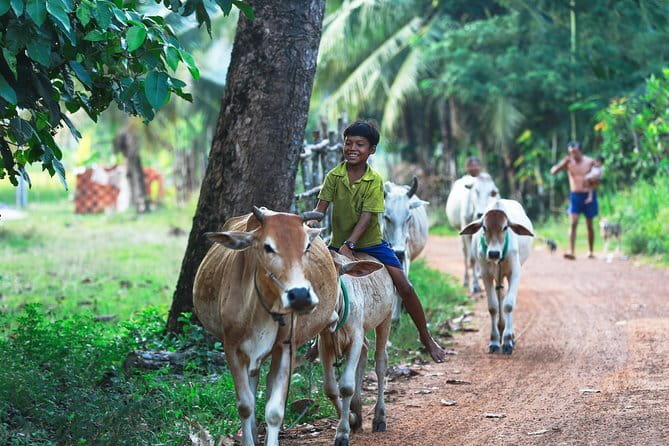
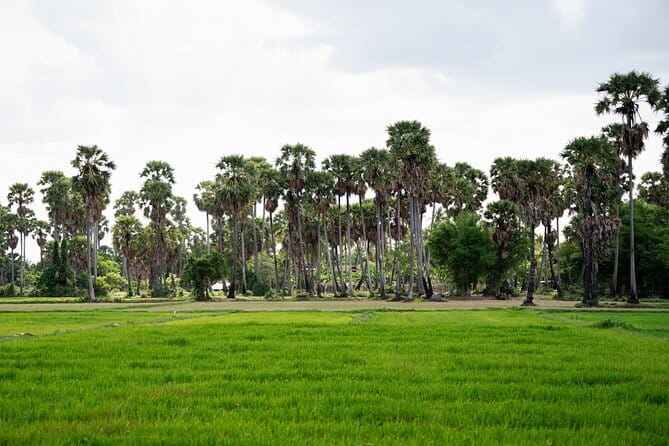
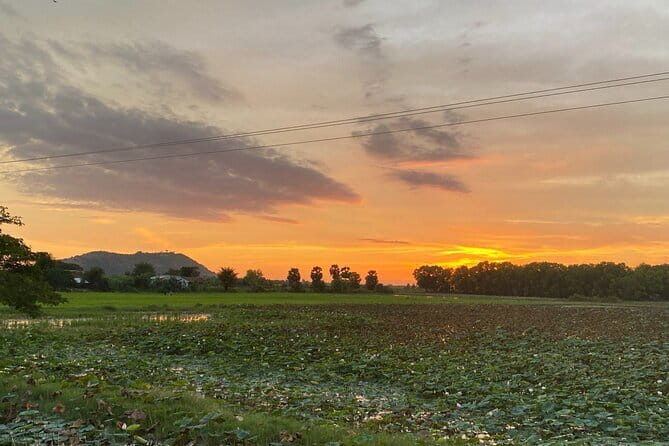
The final portion lasts about 90 minutes at Phnom Krom, near the rice fields. You sit on a traditional mat and watch the sun go down, with time for photographs and a meal from a local restaurant nearby.
This is a sensible ending. The first half of the tour is full of explanations and short stops. At Phnom Krom, you can sit, eat, and take in the countryside without needing to rush through another demonstration. The food includes lotus dishes and other local countryside items, giving the meal a direct link to the farm and plant-based themes of the afternoon.
Sunset timing depends on the season and the weather. One visit ended with a thunderstorm arriving just after sunset, which shows the open-air nature of the experience. That sort of weather can change the mood quickly, so bring light, comfortable clothing and do not expect a guaranteed clear sky.
The setting is simple rather than polished. You are not dining in a formal restaurant with a long menu. You are sitting on a mat near rice fields and tasting local food. For me, that is the point, but anyone seeking air conditioning and restaurant-style service may prefer a conventional evening meal.
What the $69 price includes
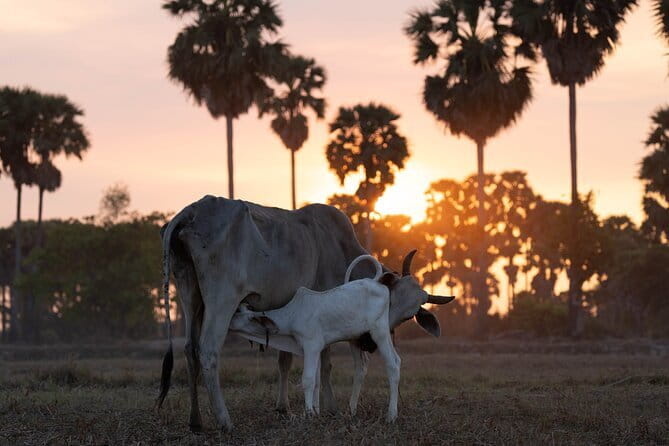
At $69 per person, this is not the cheapest way to spend an afternoon in Siem Reap. The price makes more sense when you count what is included: hotel pickup and drop-off, tuk tuk transport, an English-speaking guide, market and farm visits, snacks, drinks, local food tastings, entrance fees, and taxes.
The guide is especially important to the value. Without clear explanations, the market, basket shop, rice wine process, and lotus textile work could feel like unrelated stops. The strongest feedback has focused on the guides. Sarah was praised for being fun and informative. Ben was noted for strong English and detailed explanations during a private outing. Hong Ho was described as warm and generous with stories about Cambodia, while driver Mrs. Mom was also praised for her care.
The group size is not stated, so you should not book expecting a guaranteed private tour. One confirmed outing was just one person and the guide, but that does not establish the usual group size. The transportation is by tuk tuk, which gives you open views and a pleasant connection with the countryside, though it also means exposure to heat, dust, and road conditions.
Free cancellation is available up to 24 hours before the start for a full refund, and you can reserve now and pay later. Those terms help if your Siem Reap plans are still shifting.
Practical advice for a comfortable afternoon
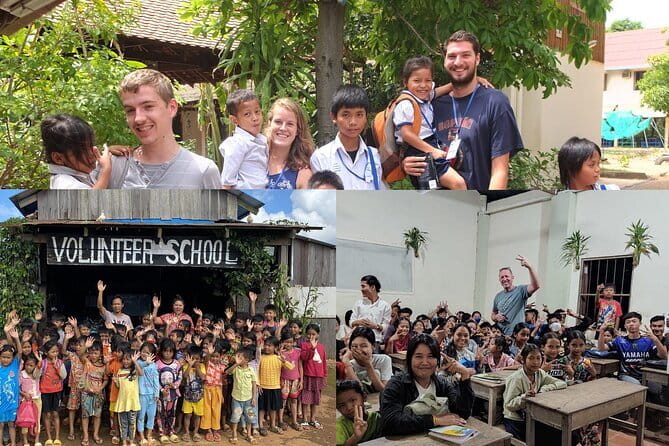
Wear comfortable shoes and loose clothing. You will walk through a market, visit working rural sites, and spend time outdoors near the fields. Sunglasses, a hat, sunscreen, and insect repellent are sensible additions.
Bring a camera. The lotus workshop, handmade baskets, rice farm, tuk tuk route, and sunset all offer different kinds of photographs. Keep your equipment protected from dust during the ride.
Carry some cash for personal purchases and expenses. Food tastings, snacks, drinks, and listed fees are included, but anything you choose to buy is your responsibility.
The tour is not suitable for wheelchair users, and the provider lists an age limit of under 95 years. If you have mobility concerns, ask before booking, since the route includes walking and open-air rural stops.
Who will enjoy this Siem Reap experience?
I would recommend this tour to anyone who has already planned time for Angkor and wants to understand the province beyond temple walls. It suits people who enjoy food, farming, craft, photography, and conversations with local guides more than people who want nonstop sightseeing.
It is also a good choice for a first afternoon in Siem Reap because the hotel pickup keeps the logistics simple. Families with older children may appreciate the variety, although the provider does not give a specific child age policy, so ask before booking.
The tour may not suit you if you dislike alcohol tastings, open-air transport, hot weather, insects, or food served in a simple local setting. It is also not ideal if you want a long, unhurried visit at each place. Four hours goes quickly because the route includes five main stops.
Should you book the countryside and sunset tour?
Book it if you want a compact introduction to rural Siem Reap, especially after visiting the temples. The best reasons are the farm-to-table explanations, the rice wine process, the lotus women’s enterprise, and the chance to finish with local food beside the rice fields.
I would be less enthusiastic if your priority is luxury transport, a private guide guaranteed in advance, or a slow sunset-only outing. For most curious visitors, though, $69 is fair because transport, guiding, food, tastings, and fees are bundled together. Ask for Sarah, Ben, or Hong Ho if one of them is available, pack repellent and cash, and leave room for a little road dust. That is part of the afternoon.
FAQ
How long does the tour last?
The tour lasts four hours, including hotel pickup, countryside visits, food tastings, sunset time, and the return to your accommodation.
What is included in the $69 price?
The price includes an English-speaking guide, hotel pickup and drop-off, tuk tuk transportation, local snacks and drinks, local foods for tasting, all fees, and taxes.
Is hotel pickup included?
Yes. Pickup and drop-off at your Siem Reap hotel are included. Provide the hotel name and address when booking or at least one day before the tour.
What language does the guide speak?
The live guide speaks English.
Will I taste rice wine?
Yes. At the rural rice wine stop, you learn about fermentation and distillation and can taste freshly distilled local rice wine.
What happens at the lotus farm?
You learn how lotus fibers can become textiles and about the flower’s importance in Cambodian Buddhist belief. The visit includes lotus tea, local cake, and a 360-degree view from the tea lounge.
Is food included?
Yes. Local snacks, drinks, and food tastings are included. The final stop includes lotus dishes and local countryside food.
Is the tour wheelchair accessible?
No. The experience is not suitable for wheelchair users. Comfortable shoes and clothing are recommended because the tour includes walking and outdoor rural stops.
Newest reviews from Siem Reap
- War Museum, Killing Field, and APOPO Hero RATs Tour★ 5.0 · 7 reviews
- Siem Reap Angkor Airport Taxis (from Airport to Hotel)★ 5.0 · 44 reviews
- Angkor Wat at Sunrise★ 4.0 · 7 reviews
- Cambodian Cooking Class and Oxcart Ride with Local Village Tour★ 5.0 · 4 reviews
- Secret Temples of Angkor – Guided Tour in Siem Reap★ 5.0 · 6 reviews
- Short Cycling at Countryside★ 5.0 · 29 reviews
- SIEM REAP E-BIKE HALF-DAY COUNTRYSIDE (25-30 km)★ 4.0 · 1 review
- Unveiling the Mystical Beauty of Phnom Kulen National Park★ 5.0 · 6 reviews
Tuk-Tuk Tours, compared.
Tuk-Tuk, Bamboo Train, Killing/Bat Caves, Sunset
Read our review →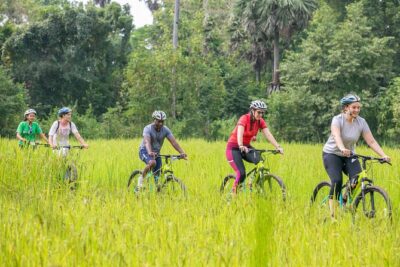
Siem Reap Countryside Bike Tour / E-Bike or Tuk Tuk
Read our review →
Battambang Tuk Tuk tour: Bambootrain, Killing & Bat Caves,Sunset
Read our review →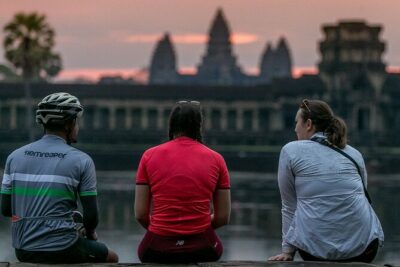
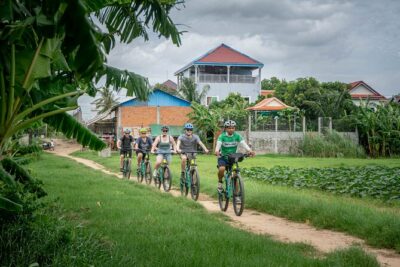
Phnom Penh Silk Island Bike Tour/ E-Bike or Tuk Tuk
Read our review →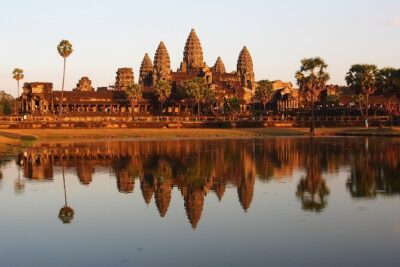
Angkor Wat Private Tuk-Tuk Tour (sunrise Option) & more
Read our review →
Ultimate Phnom Penh Food Tour by Tuk Tuk: 20 Tastings and Drinks
Read our review →Browse the lists this tour appears in