

Reviewed · ANGKOR WAT TOURS
Angkor Wat Tuk Tuk Tour with Private Tour Guided
Ancient stones, open-air travel, one full day. This private Angkor Wat tuk-tuk tour gives you a practical way to reach the major temples around Siem Reap without being tied to a large group. I like the hotel pickup and return, and I like that your own group can set the pace with a professional English-speaking guide. The main catch is important: the low $9.45 price does not include temple admission, so your true cost will be higher.
The tuk-tuk is a good match for Angkor’s wide grounds and narrow temple approaches. I also like that bottled water is included, and the tour can suit a family or small group that wants a more personal day. Still, the schedule is busy, and five major stops in roughly eight hours leave limited room for lingering.
In This Review
- Key points before you book
- Why a tuk-tuk works well at Angkor
- Angkor Thom, the fortified royal city
- Bayon’s many faces and maze of galleries
- The terraces and the royal viewing platform
- Ta Prohm, where trees and stone share the frame
- Angkor Wat deserves the longest stop
- What the private format changes
- The $9.45 price and the real budget
- Who should book this Angkor Wat day
- Should you book the tuk-tuk tour?
- FAQ
- Where does the tour begin?
- Where does the tour end?
- How long does the tour last?
- Is the tour private?
- Which temples are included?
- Is an English-speaking guide included?
- Are temple entrance fees included?
- Can I cancel for a full refund?
Key points before you book
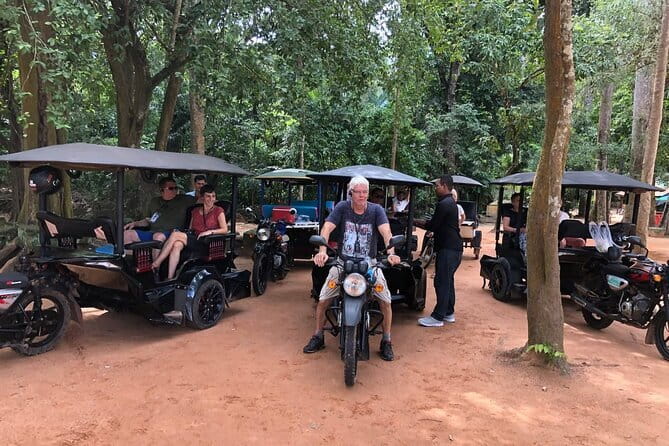
- Private transport for your group: You ride by tuk-tuk rather than sharing a larger vehicle with strangers, with pickup and drop-off in Siem Reap included.
- Five major Angkor stops: The route includes Angkor Thom, Bayon, the Terraces of the Elephants and Leper King, Ta Prohm, and Angkor Wat.
- A guide comes with the ride: A professional English-speaking guide is included, which adds context to carvings, royal buildings, and Buddhist and Hindu traditions.
- Temple tickets cost extra: Admission is not included for Angkor Wat, Bayon, Ta Prohm, or the other temples on the route.
- Eight hours on site and on the road: The listed visits total nearly five hours, with the remaining time used for transfers and the day’s practical pauses.
- A useful choice for older family members: One detailed account praised the comfortable pace for a 65-year-old mother and singled out tuk-tuk driver Mr. Kimsun for arriving before 8 a.m. and driving safely.
Why a tuk-tuk works well at Angkor
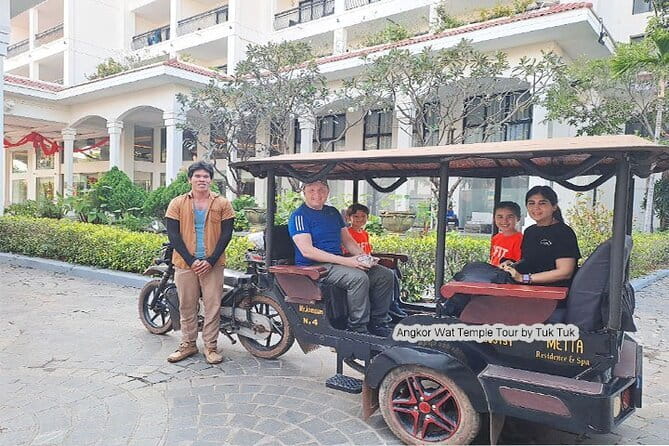
Angkor is not one temple. It is a huge archaeological park with monuments spread across a broad area. A tuk-tuk lets you travel between them in the open air, while its compact size helps it move along smaller approaches and passageways.
That matters most after you leave the grand entrance roads. A private tuk-tuk also gives you a little breathing room between temples. You are not being moved as part of a large coach group, and only your own party takes part in the activity.
The tour lasts about eight hours, so expect a full day rather than a quick morning outing. The listed stop times add up to about four hours and 50 minutes: 40 minutes at Angkor Thom, 40 at Bayon, 30 at the terraces, one hour at Ta Prohm, and two hours at Angkor Wat. The rest allows for driving and the natural pauses that come with moving around a large temple complex.
The open-sided ride has a simple pleasure. You can see the road, feel the air, and watch the setting change as you move from the city area toward the monuments. Bottled water is included, a small but useful touch during a long day of walking.
More Tuk-Tuk Tours in Siem Reap
- Siem Reap: Angkor Wat Private Tuk-Tuk Tour
★ 4.9 · 2,222 reviews - Siem Reap Countryside Bike Tour / E-Bike or Tuk Tuk
★ 5.0 · 935 reviews - Angkor Sunrise Bike Tour / E-Bike or Tuk Tuk
★ 5.0 · 615 reviews
Angkor Thom, the fortified royal city
Your first major stop is Angkor Thom, the late 12th-century capital built under King Jayavarman VII. The name means great city, and the scale explains why. The city is almost square, enclosed by walls about eight meters high and a little over 12 kilometers long, with five large gates.
An approximately 100-meter-wide moat helped protect the walls. Angkor Thom became the new Khmer capital after Jayavarman VII drove out the Chams, who had destroyed the earlier capital of Yasodharapura. That political story gives the site more meaning than a quick photo stop.
You have about 40 minutes here. That is enough to get a sense of the city’s defensive design and monumental entrances, but it is not a leisurely archaeological study. I would listen closely to the guide at this point, because the walls, gates, and city plan can be hard to understand from the ground without explanation.
The stop also sets up the rest of the day. Bayon sits at the center of Angkor Thom, while the terraces are nearby. You are seeing a capital city first, then the royal and religious monuments that made it important.
Bayon’s many faces and maze of galleries
Bayon was built in the late 12th or early 13th century as the state temple of Jayavarman VII. It is a Buddhist monument at the center of Angkor Thom, but its layout can feel confusing at first.
Unlike many Angkor temples, Bayon has no separate enclosing wall. The larger wall of Angkor Thom protects it instead. Inside, three levels combine square galleries, bas-reliefs, passages, steps, and a circular central sanctuary.
The result is a temple that rewards a guide. Without some help, you may notice the famous carved faces and miss how the building is organized. With about 40 minutes here, you can see the main features and hear why the temple’s plan is more complicated than its basic three-level outline suggests.
I would treat this as a close-looking stop rather than a fast walk-through. Pay attention to the bas-reliefs on the first and second levels, then look upward toward the central sanctuary. The narrow routes and uneven steps are part of the character of the place, but they also mean you should keep your pace sensible.
The terraces and the royal viewing platform
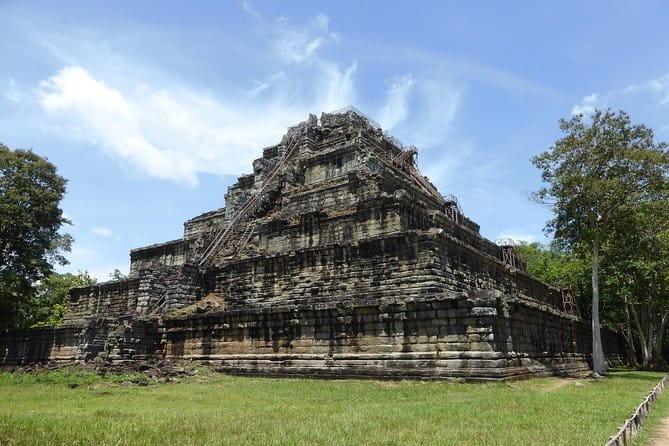
The Terrace of the Elephants was built as a platform from which the king could view the victorious return of his army. Its carvings connect the site to royal ceremony, military power, and public display.
The visit also includes the Terrace of the Leper King. Detailed carvings run along a narrow passageway that leads toward Baphuon and Phimean Akas. This is a shorter stop, listed at about 30 minutes, so you will likely get an overview rather than a long examination of every carved surface.
The narrow passage is worth noting. It gives you a different kind of temple visit from the broad approaches at Angkor Wat. You are moving through a more enclosed route, with carved stone close on both sides.
This part of the tour is useful because it links individual monuments to the working life of the Khmer court. The terraces were not simply decorative platforms. They were connected to royal appearances and the movement of armies.
More ways to see Angkor Wat:
- Angkor Wat Sunrise or Sunset Tour with Guide from Siem Reap
★ 5.0 · 12,109 reviews - Siem Reap: Angkor Wat: Small-Group Sunrise or Sunset Tour
★ 5.0 · 9,444 reviews - Siem Reap: Angkor Wat 2-Day Tour with Sunrise and Sunset
★ 4.9 · 4,429 reviews - Siem Reap: Full-Day Angkor Wat Guided Tour with Sunset
★ 4.9 · 3,803 reviews
Ta Prohm, where trees and stone share the frame
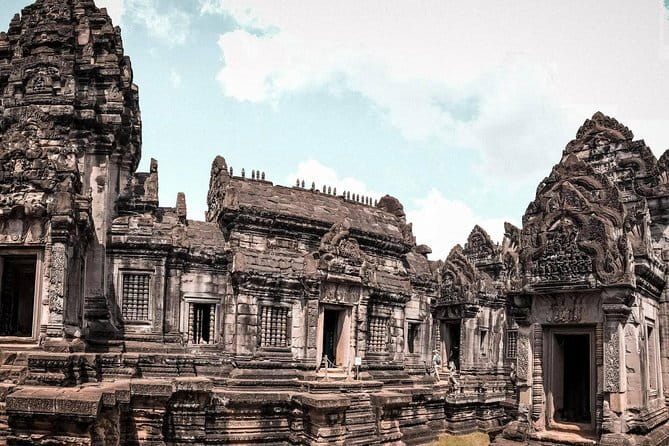
Ta Prohm is the atmospheric stop on this route. Built between the mid-12th and early 13th centuries, around 1186, it was commissioned by Jayavarman VII and dedicated to his mother. Its art follows the Bayon style, but the setting gives it a very different mood.
The temple is known for its ruined condition and for the way trees grow around the remaining stonework. That combination makes Ta Prohm visually striking, but the appeal is not only photographic. The decay helps you see how time, vegetation, and weather have changed the monument.
Ta Prohm was once a very large complex. Its inscription refers to 260 statues of gods, 39 towers with pinnacles, and 566 groups of residences. The central area is reached through a series of towers and corridors, while the wider complex was enclosed by a rectangular laterite wall measuring about 600 by 1,000 meters. Only traces of that wall remain.
The tour allows one hour here, which is a sensible amount of time for getting beyond the first view and into the temple’s layered spaces. You can expect long, low buildings, towers, corridors, and areas where the ruined structure makes the route less direct.
I would not rush Ta Prohm. If your group includes someone who needs a gentler pace, this is one of the places where a private tour helps. The guide can keep the visit moving while allowing time for the parts that interest you most.
Angkor Wat deserves the longest stop
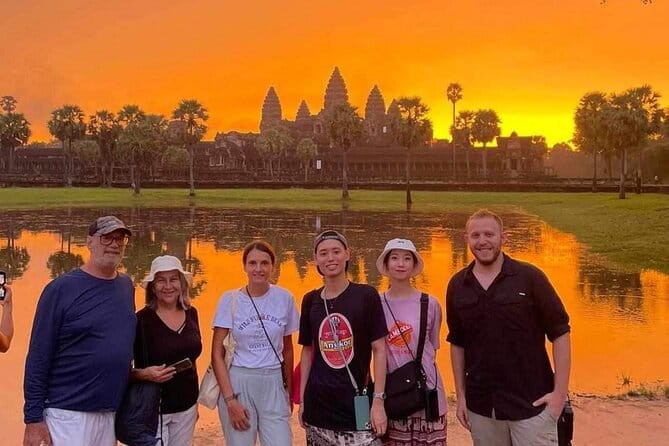
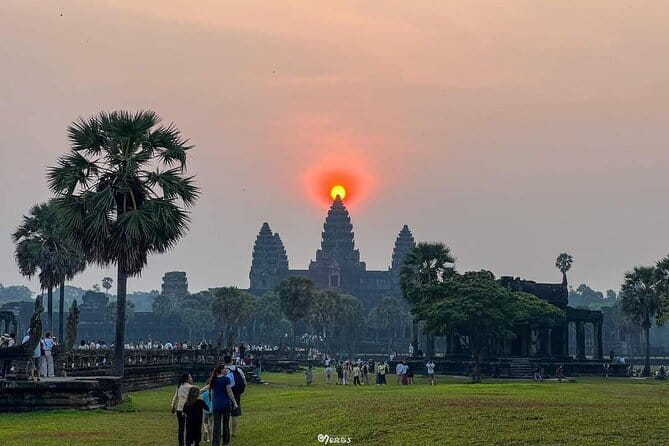
The final major visit is Angkor Wat, and the two-hour allocation reflects its scale. Built for King Suryavarman II in the early 12th century, it began as a Hindu state temple dedicated to Vishnu and later became Buddhist. It remains a major religious center.
The complex was designed to represent Mount Meru, the sacred mountain of Hindu belief. A moat and an outer wall about 3.6 kilometers long surround three rectangular galleries, each higher than the one before. At the center is a group of five towers arranged in a quincunx.
You will notice that Angkor Wat is oriented to the west, unlike most Angkorian temples. That detail is one reason the site rewards a proper explanation rather than a quick circuit. The guide can help connect the building’s orientation, towers, galleries, and religious purpose.
Two hours gives you time to approach the temple, pass through the galleries, study carvings, and take in the central structure without treating the visit as a race. It is still not unlimited time. If you want a very slow architectural study, this itinerary may feel brisk, but for a first full-day visit it gives Angkor Wat the attention it deserves.
The scale can also be tiring. You will spend much of the day getting in and out of the tuk-tuk and walking around stone monuments. Comfortable clothing, practical footwear, and water are sensible choices, though only bottled water is specifically included in the tour.
What the private format changes
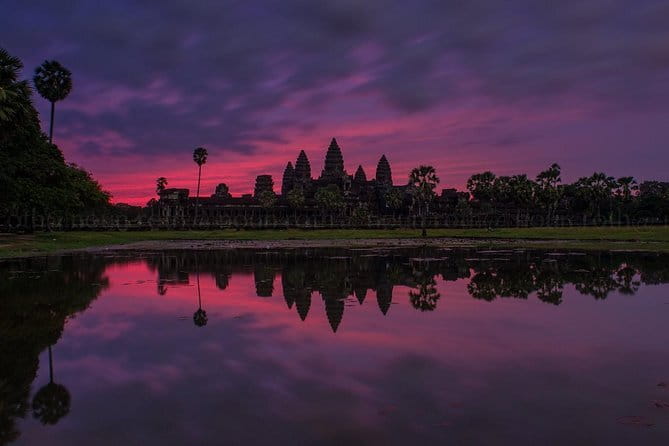
The strongest feature here is not luxury. It is control. Because the activity is private, you are traveling only with your own group, and the day can feel less rigid than a large scheduled excursion.
That matters if you are traveling with an older relative, a child, or anyone who does not want to keep up with a fixed crowd. A detailed account of this tour described it as comfortable for a mother aged 65. The same account praised driver Mr. Kimsun for arriving before 8 a.m. and driving safely.
That is useful practical information, but it should not be treated as a guarantee that the same driver will be assigned to every booking. The confirmed inclusions promise a professional English-speaking guide and a tuk-tuk service, while the named driver is one especially positive detail from the available account.
The guide is another important part of the value. Angkor’s monuments are large, and it is easy to confuse dates, kings, religious traditions, and building functions. A guide can explain why Bayon sits inside Angkor Thom, why Ta Prohm was built, and how Angkor Wat changed from a Hindu temple to a Buddhist religious center.
The $9.45 price and the real budget
At $9.45 per person, the advertised price is very low for a private, guided, full-day tuk-tuk tour. That price can be good value if your group wants transport, hotel pickup, bottled water, and an English-speaking guide without paying for a larger vehicle.
But the number is not your final sightseeing budget. Temple admission is excluded, including entry to Angkor Wat, Bayon, and Ta Prohm. The information provided does not give the admission amount, so check the current cost before booking and add it to the tour price.
The value also depends on group size. A solo participant pays the listed per-person amount, while a small private group may find the transport and guide costs especially reasonable. Group discounts are offered, though the amount of the discount is not stated.
Lunch is not listed among the inclusions. The schedule also does not identify a meal stop, so you should clarify how food fits into the day before departure. Do not assume that the tour price covers meals.
Who should book this Angkor Wat day
I would recommend this tour to you if you want the major temples in one day, prefer open-air transport, and value having your own guide and tuk-tuk. It is especially appealing for a small family group or for people who want a calmer pace than a large shared excursion can provide.
It also suits first-time visitors who want help making sense of the monuments. The route covers the key names most people hope to see: Angkor Thom, Bayon, the terraces, Ta Prohm, and Angkor Wat.
I would think twice if you want a slow, highly specialized study of every temple. Five stops in eight hours is a full schedule, and each location has far more to offer than the listed visit time allows. You should also budget separately for temple admission and confirm meal arrangements.
Pickup and drop-off are included in Siem Reap, and the activity ends back at the meeting point. Confirmation is provided when you book, service animals are allowed, and most people can participate according to the supplied information.
Free cancellation is available if you cancel at least 24 hours before the local start time. Cancellations or changes inside that window are not refunded or accepted.
Should you book the tuk-tuk tour?
Book it if you want an affordable private route through the essential Angkor temples, with a tuk-tuk, hotel pickup, bottled water, and an English-speaking guide included. The best reason to choose it is the private format, particularly if someone in your group needs a more manageable pace.
Before paying, confirm the current temple admission cost, ask how the guide and driver roles are arranged, and clarify where a meal break fits. If those extra costs and the busy schedule suit you, this is a practical way to see Angkor without spending the day inside a large vehicle.
FAQ
Where does the tour begin?
The tour begins in Krong Siem Reap, Cambodia, with hotel pickup offered.
Where does the tour end?
The activity ends back at the meeting point in Siem Reap.
How long does the tour last?
The tour lasts approximately eight hours.
Is the tour private?
Yes. Only your own group participates in this private activity.
Which temples are included?
The route includes Angkor Thom, Bayon Temple, the Terrace of the Elephants, the Terrace of the Leper King, Ta Prohm Temple, and Angkor Wat.
Is an English-speaking guide included?
Yes. A professional English-speaking tour guide is included.
Are temple entrance fees included?
No. Temple entrance fees are not included, including admission to Angkor Wat, Bayon Temple, and Ta Prohm Temple.
Can I cancel for a full refund?
Yes, if you cancel at least 24 hours before the experience start time. Cancellations made less than 24 hours before the start time are not refunded.
Newest reviews from Siem Reap
- War Museum, Killing Field, and APOPO Hero RATs Tour★ 5.0 · 7 reviews
- Angkor Wat at Sunrise★ 4.0 · 7 reviews
- Siem Reap Angkor Airport Taxis (from Airport to Hotel)★ 5.0 · 44 reviews
- Cambodian Cooking Class and Oxcart Ride with Local Village Tour★ 5.0 · 4 reviews
- Secret Temples of Angkor – Guided Tour in Siem Reap★ 5.0 · 6 reviews
- Short Cycling at Countryside★ 5.0 · 29 reviews
- SIEM REAP E-BIKE HALF-DAY COUNTRYSIDE (25-30 km)★ 4.0 · 1 review
- Unveiling the Mystical Beauty of Phnom Kulen National Park★ 5.0 · 6 reviews
Angkor Wat Tours, compared.
Angkor Wat Sunrise or Sunset Tour with Guide from Siem Reap
Read our review →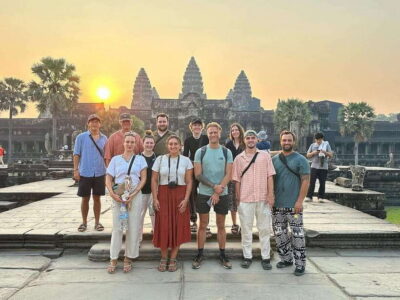
Angkor Wat: Small-Group Sunrise or Sunset Tour
Read our review →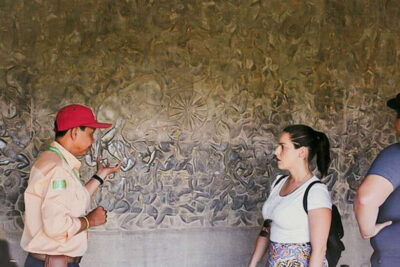
Angkor Wat 2-Day Tour with Sunrise and Sunset
Read our review →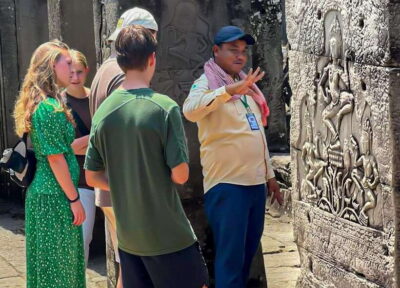
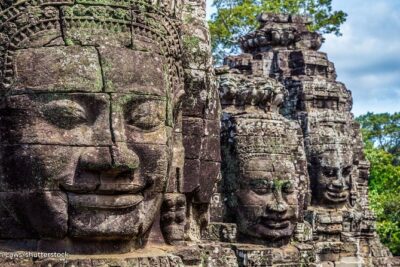
Angkor Wat Sunrise tour with Small – Group and Guide tours
Read our review →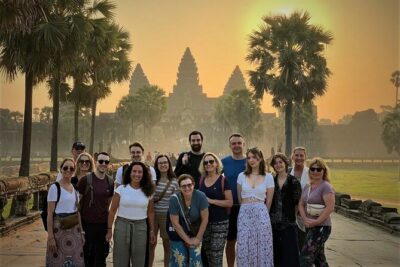
Angkor Wat Highlights and Sunrise Guided Tour from Siem Reap
Read our review →
Angkor Wat Sunset Small Group Tour with Lunch Included
Read our review →
Full-Day Angkor Wat Sunrise Private Tour with Guide from Siem Reap
Read our review →Browse the lists this tour appears in