
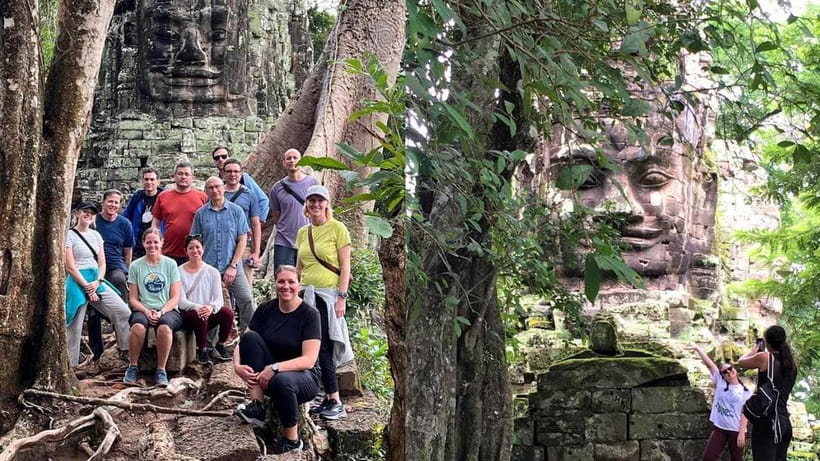
Reviewed · ANGKOR WAT TOURS
Angkor Wat: Sunrise: Ta Prohm and Bayon Temple Tour
Wake before dawn for ancient stone.
This $16 Angkor temple tour gives you a full morning at Cambodia’s most famous sites, beginning with sunrise at Angkor Wat and continuing to Ta Prohm, Angkor Thom, and Bayon. I like the early eastern entrance into Angkor Wat, which lets you enter through shadowy corridors before the main crowds, and I like the care provided by the guides and drivers, including bottled water and cool towels. The main drawback is the very early start, often before 4 a.m., followed by eight hours of walking in the heat.
I also like the sensible route. You get the grandest temple first, a breakfast break at Srah Srang, then two very different sites that keep the morning varied. Guides such as Mr. Sokpee, Chhay, Kiz, Sopheaprath, Lucky, and Sam have been praised for clear explanations, humor, photography help, and attentive service. Still, this is not a gentle sightseeing ride. You need comfortable shoes, covered shoulders and knees, and enough energy for uneven temple paths and stairs.
In This Review
- Key points at a glance
- Why the early start is worth considering
- Angkor Wat before the crowds arrive
- Breakfast at Srah Srang, with time to reset
- Ta Prohm and the power of decay
- Bayon’s stone faces and Angkor Thom
- The Southern Gate and the final temple views
- Guides, vehicles, and the small touches
- What the $16 price really covers
- What to bring and who should book
- Should you book this Angkor Wat sunrise tour?
- FAQ
- How long does the Angkor Wat sunrise tour last?
- What time does the tour start?
- Is the Angkor temple entrance fee included?
- Is breakfast included?
- Which temples and sites are included?
- What language does the guide speak?
- What should I wear?
- Is the tour suitable for children and wheelchair users?
Key points at a glance
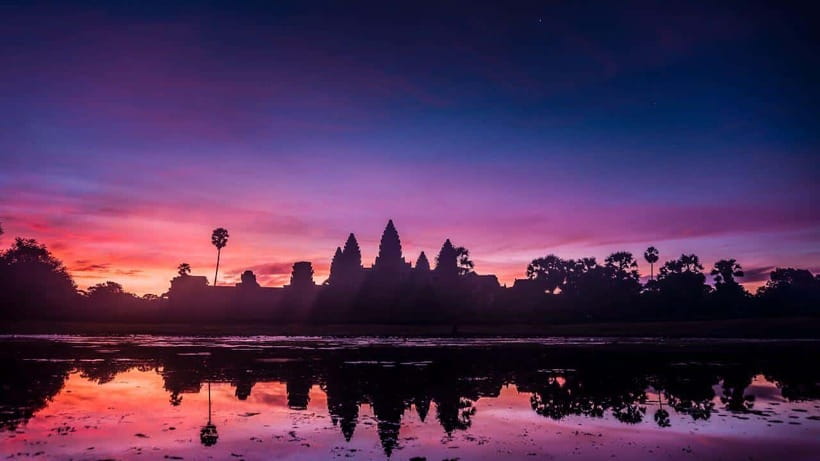
- Sunrise from Angkor Wat: Arrive early for a good position near the reflecting pools and watch the temple change from silhouette to warm stone.
- Eastern entrance before the crowds: Enter through the quieter side in darkness and walk along ancient cloisters and bas-reliefs.
- Two hours inside Angkor Wat: The time allows for the corridors, central chambers, upper terraces, and carved stories.
- Ta Prohm at its most atmospheric: Tree roots, broken galleries, and jungle growth give this temple a very different mood.
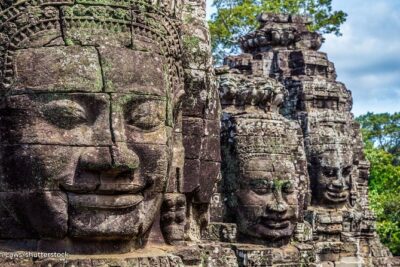
- Bayon’s 200-plus faces: The central towers make this one of Angkor’s most memorable stops.
- Good value with one important extra cost: The tour is $16, but you must add the $37 one-day temple pass and pay for breakfast.
Why the early start is worth considering
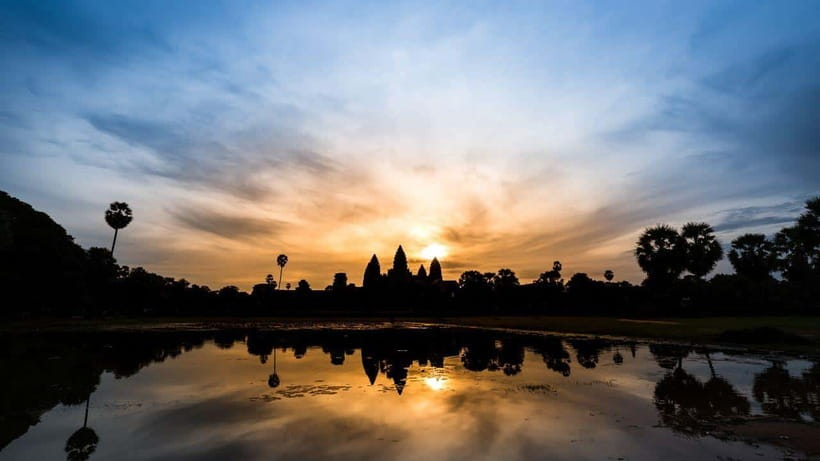
The day begins with hotel pickup in Krong Siem Reap and about 20 minutes in an air-conditioned van. The exact pickup time depends on the sunrise schedule, but you should expect a pre-dawn departure and possibly a wake-up call before 4 a.m.
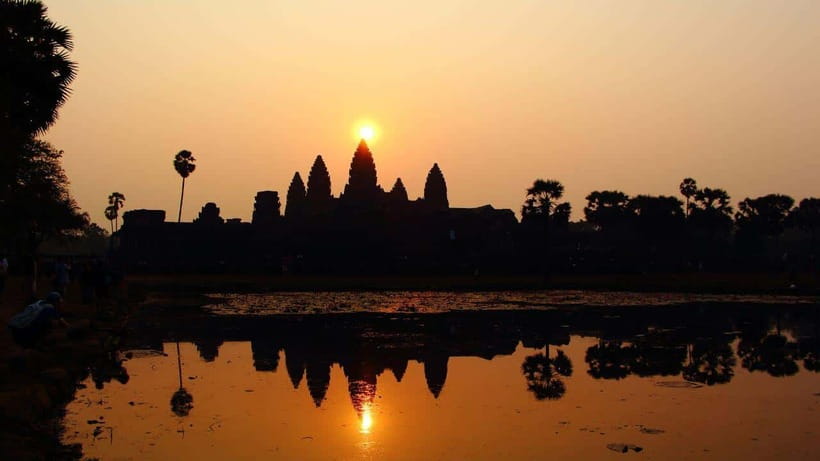
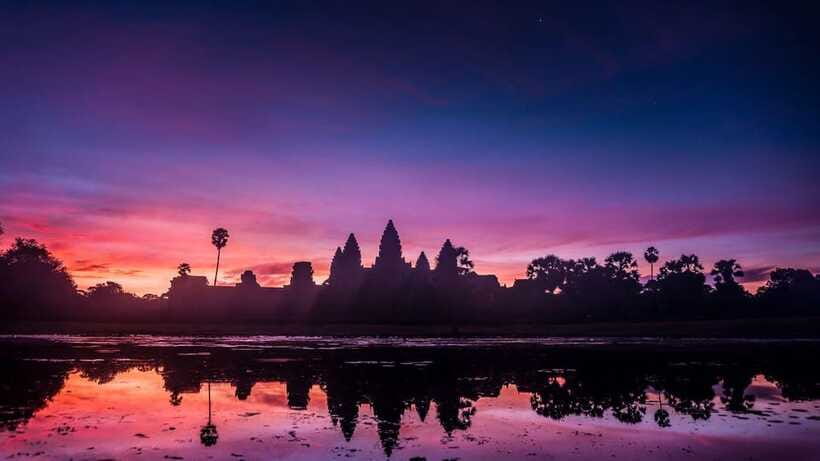
That sounds severe because it is. Yet sunrise is the reason to choose this tour rather than a later temple circuit. Arriving early gives you time to find a good viewing place near the water and settle in before the sky brightens. Atsuko specifically appreciated arriving early enough to take photographs of Angkor Wat and its reflection.
The light is never guaranteed. Bharat found the sunrise worthwhile even though the sky was not completely clear. That is a useful way to think about it: you are paying for access to the temple and a guided morning, not a guaranteed postcard sky.
Your guide should contact you before pickup with the meeting details. Luna appreciated that advance message, and punctual service was praised repeatedly. The van is air-conditioned, which matters after sunrise, when the temperature climbs and the stone paths begin to feel much less forgiving.
More ways to see Angkor Wat:
- Angkor Wat Sunrise or Sunset Tour with Guide from Siem Reap
★ 5.0 · 12,109 reviews - Siem Reap: Angkor Wat: Small-Group Sunrise or Sunset Tour
★ 5.0 · 9,444 reviews - Siem Reap: Angkor Wat 2-Day Tour with Sunrise and Sunset
★ 4.9 · 4,429 reviews
Angkor Wat before the crowds arrive
Angkor Wat is not just a quick photo stop. The tour allows about two hours at the main temple, enough time to see more than the familiar front view.
The eastern entrance is a smart feature. Instead of immediately joining the busiest approach, you enter in darkness through a less-used side and move through old cloisters. Bring a small torch, as the early corridors can be dark. Keep it pointed down so you can watch your footing without spoiling the mood for others.
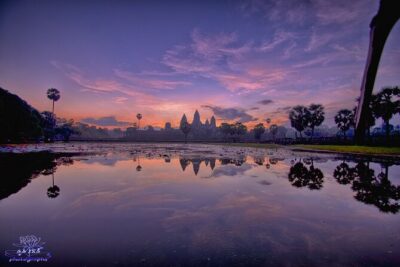
As dawn develops, the temple’s scale slowly becomes clear. The towers and long galleries emerge from the gray light, while the pools offer the classic reflection view. Your guide can help you choose a place for photographs, and Sopheaprath was praised for knowing good photo locations and helping with pictures.
Inside, the carved walls are the real prize. Angkor Wat contains an exceptionally long stretch of bas-reliefs showing religious scenes, battles, processions, and figures from Khmer culture. Without explanation, the carvings can become an endless parade of stone bodies. With a good guide, you get a clearer sense of what you are seeing and how the temple connected religion, kingship, and daily life during the Khmer Empire.
The upper terraces add another layer. Access involves stairs and walking, so this part may be tiring, especially after the early wake-up. Dress modestly, with shoulders and knees covered, since the rules apply inside the temples. Shorts are not allowed, and casual clothing is fine as long as it meets the coverage requirements.
Two hours is generous, though it will pass quickly. You will not study every carving in detail, but you should have time for the major galleries, central chambers, and upper levels. A guide who explains at the right pace makes a big difference. Chhay was praised for mixing historical information with amusing stories, while Mr. Sokpee was noted for explaining religious traditions, architectural styles, and the kingdoms connected to the site.
Breakfast at Srah Srang, with time to reset
After Angkor Wat, the route pauses at Srah Srang for about an hour. Breakfast is not included, but you can buy food at a local restaurant. You can also bring a boxed breakfast from your hotel, which Eliza did, and use the break to eat and rest.
This pause is more important than it may sound. Sunrise tours ask you to spend your first hours awake on foot, and the next temples require more walking. A simple breakfast and water can prevent the second half of the morning from becoming a slog.
The meal is an extra expense, but one traveler found the restaurant reasonably priced. Carry cash, as it is listed among the recommended items. The company provides bottled water and cool towels, and some people received several bottles during the morning. The cold towel is a small luxury after walking through hot temple courtyards.
Srah Srang itself provides a calmer setting than Angkor Wat. The scheduled stop is mainly for breakfast and free time, so do not expect a long formal explanation here. Think of it as a useful pause between the major monuments.
Ta Prohm and the power of decay
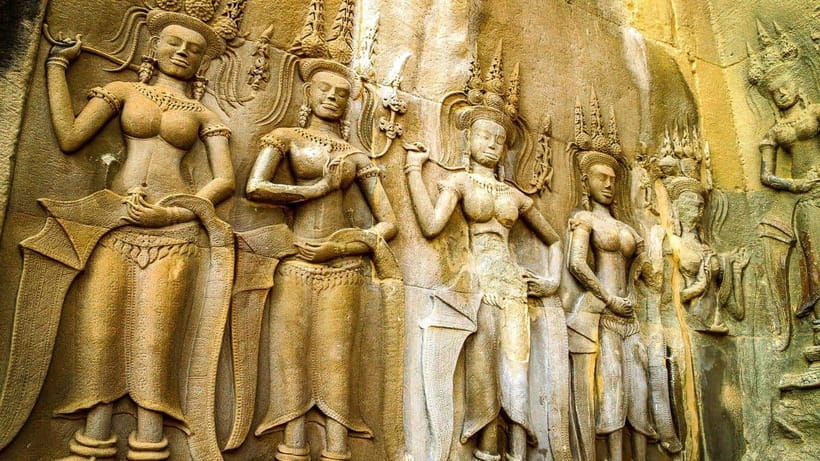
The next stop is Ta Prohm, visited for about an hour. This temple has a completely different feel from Angkor Wat. Here, stone galleries, courtyards, and towers are tangled with trees and jungle growth.
Ta Prohm was once home to 2,740 monks. Today, its broken walls and enormous roots create the atmosphere most people associate with lost temples in Cambodia. The site was left in much the same condition seen by French explorer Henri Mouhot in the early 1850s, when he brought wider European attention to the ruins.
I like Ta Prohm because it does not ask you to admire perfect symmetry. You see the tension between architecture and nature: doorways blocked by roots, galleries opened by collapse, and carvings softened by time. The setting can feel more intimate than Angkor Wat, although popular sections may still be busy.
The one-hour visit is enough for a strong first look, but it is not enough to wander every corner. Watch your footing. Ta Prohm has uneven surfaces, and you will be walking rather than simply viewing the temple from a vehicle. Comfortable shoes are essential.
Your guide can help you understand which parts are original, which areas have been stabilized, and why the temple looks so different from Angkor Wat. This is also a good place to ask questions, since the smaller scale makes it easier to pause and look closely.
More of Angkor Thom and the Bayon:
- Siem Reap Tour: Angkor Wat Sunrise, Bayon, Ta Prohm, Banteay Srei
★ 5.0 · 931 reviews - From Phnom Penh: Angkor Wat, Bayon, and Ta Prohm Day Trip
★ 4.9 · 104 reviews - Angkor Wat Private Driver Tours to Angkor Wat Sunrise, Angkor Thom & Ta Prohm
★ 5.0 · 98 reviews - Angkor Wat Sunrise and Angkor Thom Sunset Tour
★ 5.0 · 89 reviews
Bayon’s stone faces and Angkor Thom
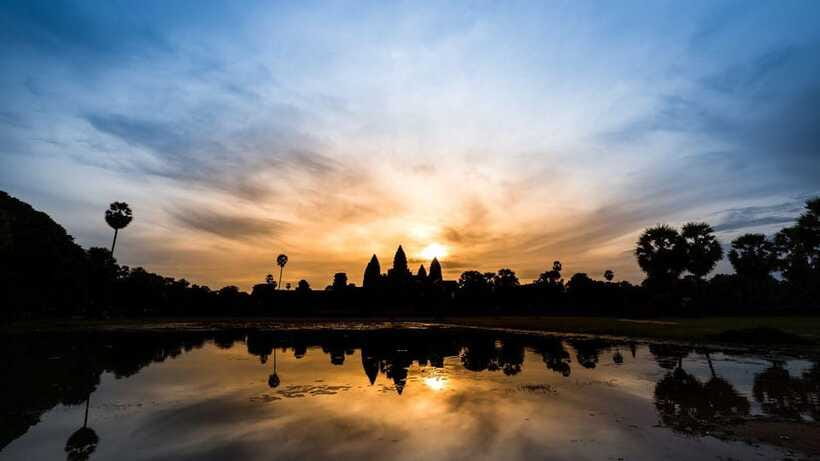
The tour then moves into Angkor Thom, the fortified city that contains Bayon. Before reaching the temple, you pass the Terrace of the Leper King and the Terrace of Elephants. These stops help show that Angkor was not a collection of isolated shrines. It was a planned royal center with ceremonial spaces, defensive walls, gates, and large public areas.
Bayon is the visual change-up of the morning. Its central towers carry more than 200 enormous carved faces, looking out in different directions. The faces are the feature you will remember, but the temple can be confusing at first. Towers, narrow passages, and stacked stone levels create a maze-like layout.
Give yourself time to look up and around. The faces appear at different heights and angles, sometimes emerging suddenly between galleries. A guide can point out the arrangement and explain the temple’s place in the 12th-century Khmer world. Sam, Kiz, and the other named guides were repeatedly praised for combining history with a friendly, relaxed manner.
Bayon is another place where a guide adds real value. The stone is impressive on its own, but the meaning behind the images gives the visit more shape. You should also expect more uneven walking and steps. The site is not suitable for wheelchair users, and this tour is not recommended for children under eight.
The Southern Gate and the final temple views
The final listed stop is Tonle Om Gate, also called the Southern Gate of Angkor Thom. The gate is flanked by rows of 54 stone figures on each side. Gods line one side and demons the other, creating a striking approach over the causeway.
This is a short stop of about 20 minutes, but it is worth seeing after Bayon because it puts the city’s design into context. The entrance feels ceremonial and fortified at the same time. Look along the full row rather than focusing only on the gate tower.
Afterward, you return through Angkor Archaeological Park and head back to Krong Siem Reap. The tour usually ends between 12:30 and 1:30 p.m., depending on timing. That gives you the rest of the afternoon, though you may want a quiet lunch and a nap after the early start.
Guides, vehicles, and the small touches
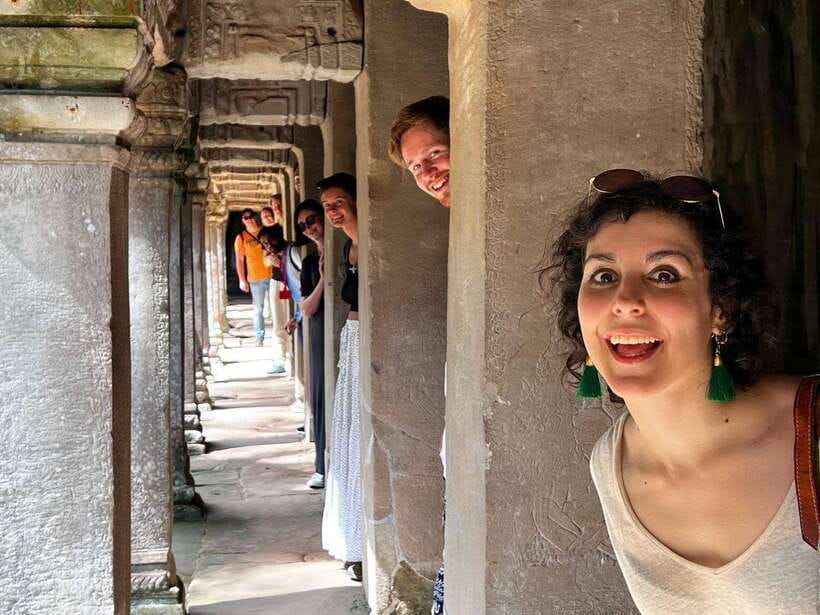
The English-speaking guide is the heart of this experience. The strongest praise has gone to guides who explain the temples clearly without turning the morning into a nonstop lecture. Mr. Sokpee was described as passionate about religion, architecture, and Cambodian history. Chhay was praised for his humor and stories. Lucky, also called Samnung, used jokes to keep the group together, including a memorable reminder to stay together like mango sticky rice.
That warmth matters in a large archaeological park. It is easy to lose your group, especially around Bayon’s narrow passages and Angkor Wat’s many corridors. Pay attention when the guide explains where to meet. Humor helps, but staying alert helps more.
The drivers also receive praise for safe, attentive service. The air-conditioned vehicle offers relief between sites, and water and cool towels are supplied. Transport quality received a perfect score from all published ratings for this experience, which fits the practical details provided.
This is a group tour, but the exact group size is not provided. If you want a private pace or long photography sessions at every stop, ask before booking. The route is designed to cover the major highlights in one morning, not to provide unlimited time at each temple.
What the $16 price really covers
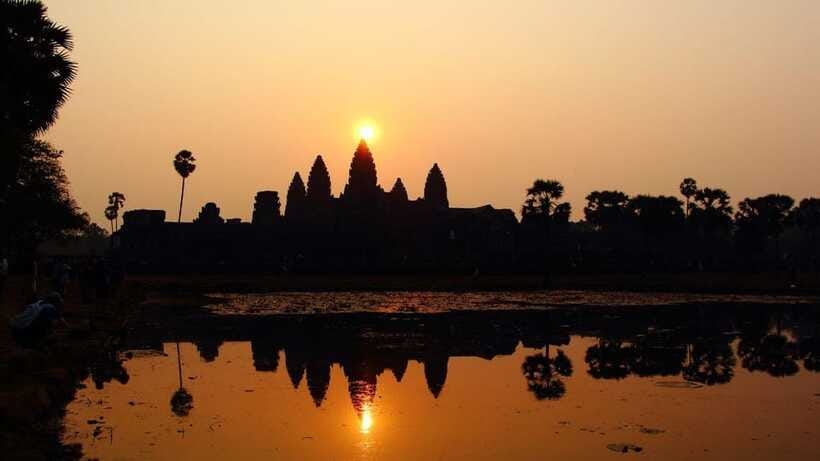
At $16 per person, the tour price is low for an eight-hour outing with hotel pickup, an air-conditioned vehicle, an English-speaking guide, water, cool towels, and visits to four major Angkor sites.
The crucial catch is the temple entrance fee. You must pay an additional $37 for the one-day Angkor pass, and that ticket covers all the temples visited that day. Breakfast is also extra. Once you add the pass and food, the total cost is much higher than the advertised tour price, but the combined value remains strong if you want a guided introduction to Angkor.
The tour saves you from arranging transport between distant sites and from trying to interpret a huge temple complex alone. It also places Angkor Wat first, which is the right order for most first-time visitors. If you already have a pass and only need a driver, this may not be the best match, since the guide is a central part of the experience.
Free cancellation up to 24 hours before departure and the option to reserve now and pay later make planning easier. Those policies are useful if your Siem Reap schedule is still shifting.
What to bring and who should book
Pack comfortable shoes, a camera, biodegradable sunscreen, cash, and a small torch. Bring a light layer if you dislike the cool air before sunrise, though the supplied information does not specify morning temperatures.
Your clothing must cover shoulders and knees inside the temples. Do not wear shorts. The tour is not suitable for children under eight or wheelchair users, and anyone with difficulty walking should think carefully before booking because the route includes temple paths, courtyards, and upper terraces.
I would recommend this for a first visit to Angkor, solo visitors who want company, couples, and anyone who wants the main sights handled in one organized morning. It is also a good choice if you value explanation rather than simply collecting photographs.
I would be more cautious if you dislike early mornings, need a slow pace, or want to spend half a day at Angkor Wat alone. The schedule is full, and the heat can build quickly after sunrise.
Should you book this Angkor Wat sunrise tour?
Book it if you want the essential Angkor route at a very low tour price and appreciate having a guide explain the carvings, royal city, religions, and architecture. The strongest parts are the early entrance to Angkor Wat, the two hours inside the main temple, the atmospheric stop at Ta Prohm, and the memorable faces of Bayon.
Go in with clear expectations. The $16 price does not include the $37 temple pass or breakfast, and the early pickup is demanding. Bring a boxed breakfast if that suits you, carry cash, wear proper clothing, and bring a torch.
For a first day in Siem Reap, this is a well-planned introduction with thoughtful guides, reliable transport, and a good balance of famous views and useful context.
FAQ
How long does the Angkor Wat sunrise tour last?
The tour lasts eight hours and usually ends between 12:30 and 1:30 p.m.
What time does the tour start?
It begins before sunrise with a pre-dawn hotel pickup. Some people may need to wake before 4 a.m., depending on the sunrise and pickup schedule.
Is the Angkor temple entrance fee included?
No. The temple pass costs US$37 and covers all the temples visited during the one-day visit.
Is breakfast included?
No. Breakfast is available at a local restaurant near Srah Srang, or you can bring a boxed breakfast from your hotel.
Which temples and sites are included?
The route includes Angkor Wat, Srah Srang for a break, Ta Prohm, Bayon Temple, Angkor Thom, the Terraces of the Leper King and Elephants, and Tonle Om Gate, also called the Southern Gate.
What language does the guide speak?
The live tour guide speaks English.
What should I wear?
You should wear comfortable clothing that covers your shoulders and knees inside the temples. Shorts are not allowed.
Is the tour suitable for children and wheelchair users?
The tour is not suitable for children under eight or wheelchair users. It includes walking through temple corridors, courtyards, and upper terraces.
More Sunrise Tours in Cambodia
- Angkor Wat Sunrise tour with Small – Group and Guide tours
★ 5.0 · 3,655 reviews - Angkor Wat Highlights and Sunrise Guided Tour from Siem Reap
★ 5.0 · 3,213 reviews - Full-Day Angkor Wat Sunrise Private Tour with Guide from Siem Reap
★ 5.0 · 2,920 reviews - Angkor Wat Sunrise & 3 Main Temples with Breakfast – Small Group
★ 5.0 · 2,857 reviews
More Visits to Ta Prohm
- Private Temples Guided Tour (Angkor Wat, Ta Prom & Angkor Thom)
★ 5.0 · 75 reviews - One Full Day Private tour of Angkor Wat, Ta Prohm, Angkor Thom & Banteay Srie
★ 5.0 · 64 reviews - Siem Reap Private Day Tour: Angkor Wat Sunrise, Bayon & Ta Prohm
★ 5.0 · 48 reviews - A Day Angkor Wat Sunrise Tour, Ta Prohm & Hidden Gems Beng Mealea
★ 5.0 · 36 reviews
Newest reviews from Cambodia
- War Museum, Killing Field, and APOPO Hero RATs Tour★ 5.0 · 7 reviews
- Angkor Wat at Sunrise★ 4.0 · 7 reviews
- Siem Reap Angkor Airport Taxis (from Airport to Hotel)★ 5.0 · 44 reviews
- Cambodian Cooking Class and Oxcart Ride with Local Village Tour★ 5.0 · 4 reviews
- Secret Temples of Angkor – Guided Tour in Siem Reap★ 5.0 · 6 reviews
- Short Cycling at Countryside★ 5.0 · 29 reviews
- SIEM REAP E-BIKE HALF-DAY COUNTRYSIDE (25-30 km)★ 4.0 · 1 review
- Unveiling the Mystical Beauty of Phnom Kulen National Park★ 5.0 · 6 reviews
Angkor Wat Tours, compared.
Angkor Wat Sunrise or Sunset Tour with Guide from Siem Reap
Read our review →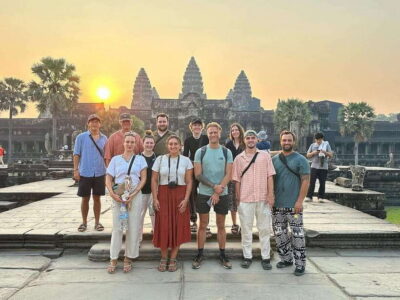
Angkor Wat: Small-Group Sunrise or Sunset Tour
Read our review →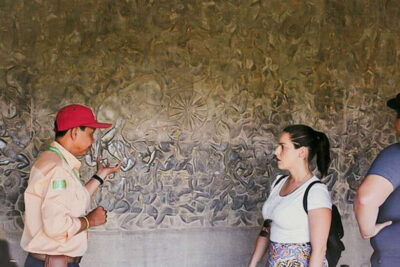
Angkor Wat 2-Day Tour with Sunrise and Sunset
Read our review →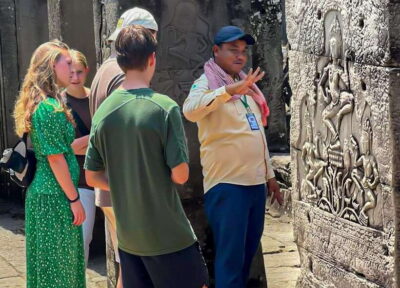
Angkor Wat Sunrise tour with Small – Group and Guide tours
Read our review →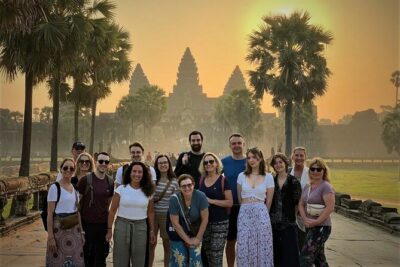
Angkor Wat Highlights and Sunrise Guided Tour from Siem Reap
Read our review →
Angkor Wat Sunset Small Group Tour with Lunch Included
Read our review →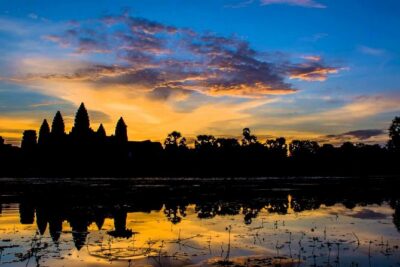
Full-Day Angkor Wat Sunrise Private Tour with Guide from Siem Reap
Read our review →Browse the lists this tour appears in