
Reviewed · ANGKOR WAT TOURS
Angkor Wat Private Tour in a Tuk Tuk
The temples unfold best at tuk-tuk speed. This private tour from Siem Reap gives you a practical way to cover Angkor Thom, Bayon, Ta Prohm, and Angkor Wat without arranging transport yourself. I like the private format, which keeps the day focused on your group, and I like the included hotel or airport pickup, drop-off, and bottled water. The main catch is the extra $37 Angkor National Park ticket, which brings the basic cost to $82 per person before food and insurance.
The day begins at 8 a.m. and lasts about six to seven hours. You will spend much of that time walking around temples, so comfortable shoes, sun protection, and a little patience with the heat matter. The tour is a good fit for people who want live English commentary rather than simply being driven from monument to monument.
In This Review
- Five things worth knowing before you book
- Why a private tuk-tuk works well at Angkor
- The 8 a.m. departure from Siem Reap
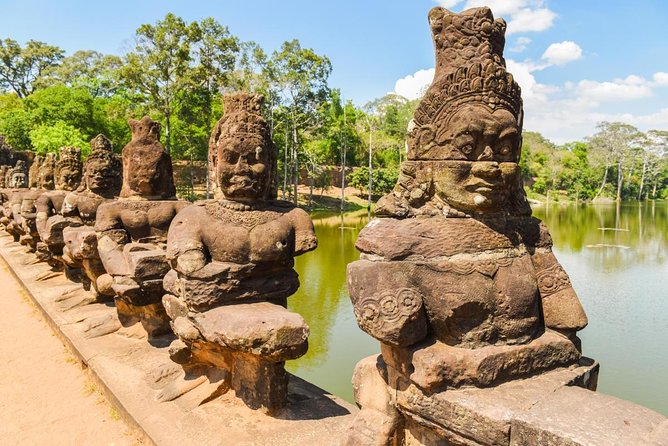
- Angkor Thom and the 12th-century royal center
- Bayon’s carved faces and crowded stone galleries
- The Terraces of the Elephants and Leper King
- Ta Prohm, where trees meet the ruins
- Two hours at Angkor Wat
- The guide can make or break the day
- What the $45 price really covers
- Who should choose this tour
- Should you book the Angkor Wat tuk-tuk tour?
- FAQ
- How long does the Angkor Wat private tuk-tuk tour last?
- What time does hotel pickup begin?
- Is hotel pickup and drop-off included?
- Is the tour private?
- What transportation is used?
- Is an English-speaking guide included?
- Is bottled water provided?
- Is the Angkor National Park ticket included?
- Are food and drinks included?
- Can I cancel for a full refund?
Five things worth knowing before you book
- Bayon comes early in the temple circuit: You reach its famous carved faces while the day is still manageable.
- Ta Prohm gets a full hour: That gives you time to appreciate its galleries, carvings, and tree-covered ruins.
- Angkor Wat receives two hours: This is enough for a meaningful visit, though the temple can easily hold your attention longer.
- Your guide matters greatly: Guides named in guest feedback include Soydy, Vantha, Phy, Long, Voath Vinh, Phuy Phy, and Nak.
- The tuk-tuk suits Angkor’s scale: It connects the widely separated monuments while avoiding the feel of a sealed vehicle.
- The advertised price is not the final price: Add the $37 park admission fee, plus any food and drinks.
Why a private tuk-tuk works well at Angkor
Angkor Archaeological Park is too large to handle comfortably on foot. Its major monuments are separated by roads, forest, open courtyards, and broad temple grounds. A tuk-tuk gives you open-air transport between the stops, while the driver handles the movement from one part of the park to the next.
I also like the small-group setup. This is not a shared outing where you wait for a coach full of strangers. Only your own group participates, so you can hear the English-speaking guide more clearly and ask questions as the carvings catch your eye.
The tuk-tuk is not luxurious transport, and the ride itself is part of the deal. You may feel road dust, heat, and traffic around the most popular monuments. Still, for a temple day, it offers a useful middle ground: faster than walking, more open than a car, and better suited to narrow routes around the park.
The tour includes pickup from your Siem Reap hotel or the airport, plus the return transfer. That removes one common nuisance: finding a driver who knows the temple circuit and negotiating separate rides. Mineral water is also supplied, a small detail that becomes useful during several hours outside.
More Tuk-Tuk Tours in Siem Reap
- Siem Reap: Angkor Wat Private Tuk-Tuk Tour
★ 4.9 · 2,222 reviews - Siem Reap Countryside Bike Tour / E-Bike or Tuk Tuk
★ 5.0 · 935 reviews - Angkor Sunrise Bike Tour / E-Bike or Tuk Tuk
★ 5.0 · 615 reviews
The 8 a.m. departure from Siem Reap
Pickup is scheduled for 8 a.m. from your hotel in Siem Reap. The initial transfer is listed as about 10 minutes, though the exact ride depends on your hotel location and traffic.
An 8 a.m. start gives you a full morning and afternoon at the temples. It is not an early sunrise departure, so you will not be signing up for a dawn view of Angkor Wat. That may disappoint anyone focused on sunrise photography, but it also avoids making the entire day begin before dawn.
This timing suits people who want a steady sightseeing day rather than a rushed race through the park. The itinerary allows 40 minutes at Angkor Thom, 40 minutes at Bayon, 30 minutes at the terraces, one hour at Ta Prohm, and two hours at Angkor Wat.
Those scheduled times add up to a substantial temple visit, but you should remember that the total tour duration is about six to seven hours. The actual pace may depend on road conditions, walking speed, the guide’s approach, and the time needed between monuments.
Angkor Thom and the 12th-century royal center
The first major temple-area stop is Angkor Thom, the capital city built near the end of the 12th century under King Jayavarman VII. The name refers to a large fortified royal center rather than one single building.
You have about 40 minutes here. That is enough for an introduction to the city’s role and a look at its major features, but not enough to inspect every corner of the wider complex. Your guide can help you understand how the capital fitted into the Khmer Empire and point out details that are easy to miss when you are simply passing through.
This is where a live guide adds real value. The stones do not explain themselves, and the meaning of the carvings can be hard to read without context. The tour focuses on the stories behind the monuments, including Hindu legends represented in the artwork, as well as the Buddhist period linked with Jayavarman VII.
If you prefer to wander slowly and photograph every gate, 40 minutes may feel short. If you want a clear introduction before the larger temples, it is a sensible opening stop.
Bayon’s carved faces and crowded stone galleries
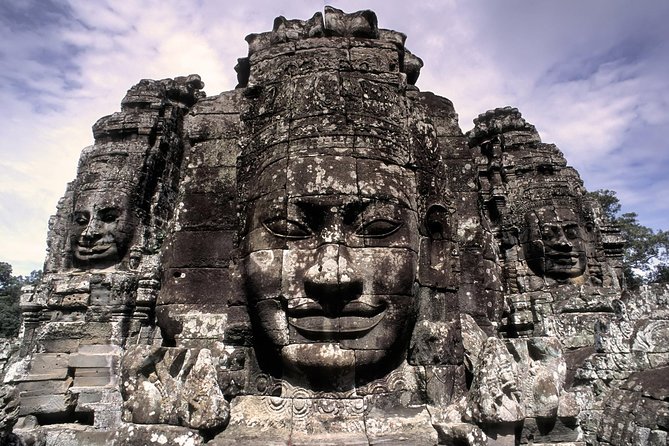
Bayon Temple receives another 40 minutes. Located at the center of Angkor Thom, Bayon was built in the late 12th or early 13th century as the state temple of the Mahayana Buddhist king Jayavarman VII.
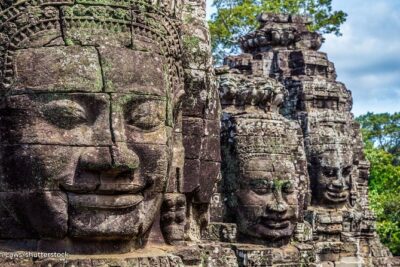
Its best-known feature is the collection of enormous carved faces looking out from the temple towers. The effect changes as you walk around the stone passages. Faces appear above you, beside you, and across gaps in the masonry. The temple’s structure can feel confusing, which is exactly why commentary helps.
I would pay close attention here rather than treating Bayon as a quick photo stop. Ask your guide to explain the carvings and how the temple’s Buddhist purpose differed from the Hindu symbolism found at other Angkor monuments.
The 40-minute visit is useful but compact. Bayon has tight galleries and plenty of visual detail. You may leave wishing for more time, especially if you enjoy architectural photographs or want to study the bas-reliefs. The advantage of a private tour is that you can ask how flexible the pace may be for your particular group, though no specific extension is promised.
More ways to see Angkor Wat:
- Angkor Wat Sunrise or Sunset Tour with Guide from Siem Reap
★ 5.0 · 12,109 reviews - Siem Reap: Angkor Wat: Small-Group Sunrise or Sunset Tour
★ 5.0 · 9,444 reviews - Siem Reap: Angkor Wat 2-Day Tour with Sunrise and Sunset
★ 4.9 · 4,429 reviews - Siem Reap: Full-Day Angkor Wat Guided Tour with Sunset
★ 4.9 · 3,803 reviews
The Terraces of the Elephants and Leper King
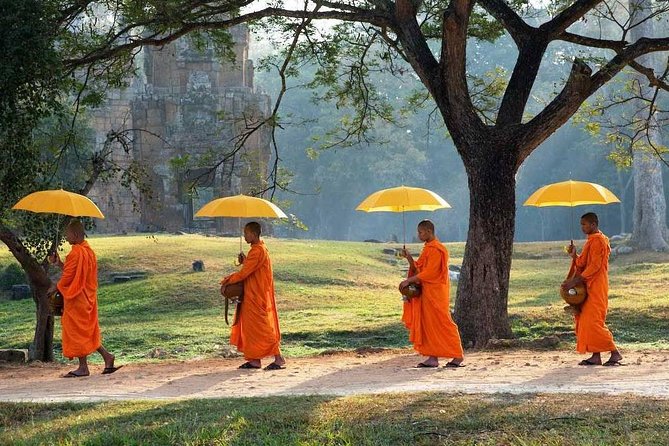
The itinerary next allows 30 minutes for the Terrace of the Elephants and the Terrace of the Leper King. The Terrace of the Elephants served as a platform from which the king watched the victorious return of his army.
This stop offers a different kind of Angkor experience. Instead of entering a large temple and tracing interior corridors, you are looking at a ceremonial platform tied to royal power, public display, and military triumph. The elephant carvings give the site its name and provide another chance to examine the skill of Khmer stoneworkers.
The Terrace of the Leper King adds detailed carvings and a more enclosed, sculptural feel. Thirty minutes should work for a guided look and photographs, but it is not a leisurely study period.
I see this stop as an important bridge between the major temples. It helps you understand that Angkor was not only a collection of religious buildings. It was also a royal center with spaces designed for processions, ceremony, and public life.
Ta Prohm, where trees meet the ruins
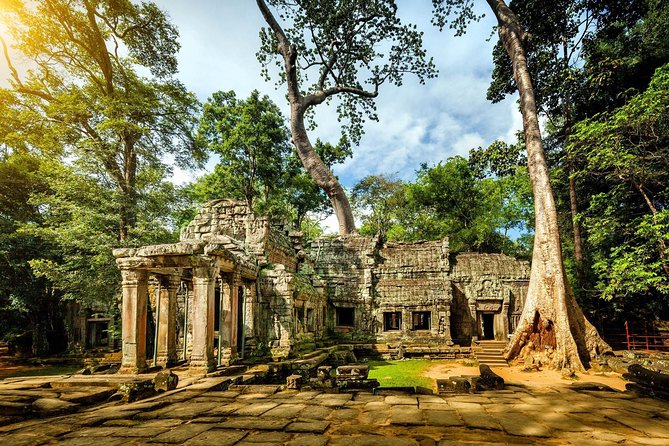
Ta Prohm gets the longest visit after Angkor Wat, with about one hour. King Jayavarman VII built it between the mid-12th and early 13th centuries, around 1186, and dedicated it to his mother.
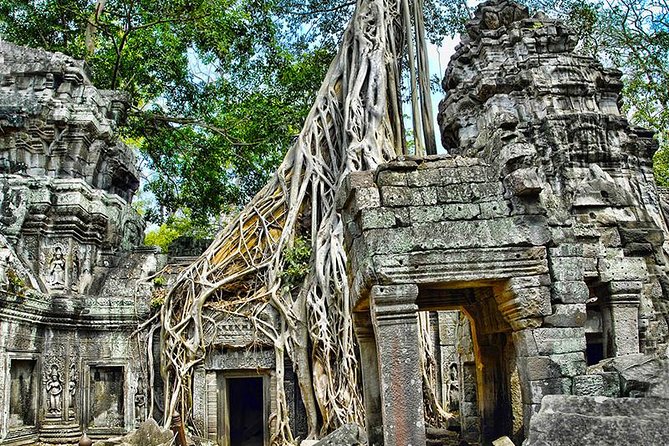
The temple is famous for its ruined appearance and the trees growing through or around the stonework. That combination gives Ta Prohm a mood different from Bayon or Angkor Wat. You can see how time, vegetation, and weather have shaped the site, even where restoration work has made parts safer to visit.
One hour gives you room to move beyond the first striking view. Look for carved doorways, galleries, and sections where the ruin feels less like a staged monument and more like an old building slowly being reclaimed by nature.
Ta Prohm can also be a demanding stop. Uneven stone, narrow passages, and extended walking are part of the visit. A guest aged 82 praised the guide and driver for bringing the tuk-tuk close to the monuments to reduce walking, which shows the benefit of telling the team about mobility limits before the tour begins.
The tour is not described as wheelchair-accessible, and no special mobility equipment is included. Most people can participate, but anyone with limited mobility should discuss needs with the provider in advance.
Two hours at Angkor Wat
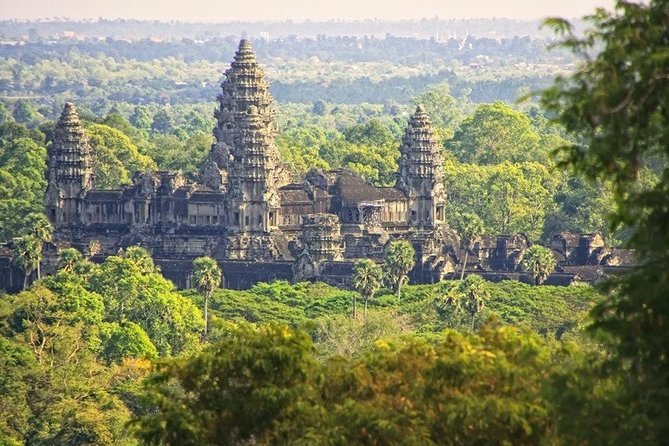
The final major stop is Angkor Wat, with about two hours to explore. Built in the early 12th century for King Suryavarman II, it served as his state temple and capital city. It was originally associated with Hindu worship and is dedicated to Vishnu.
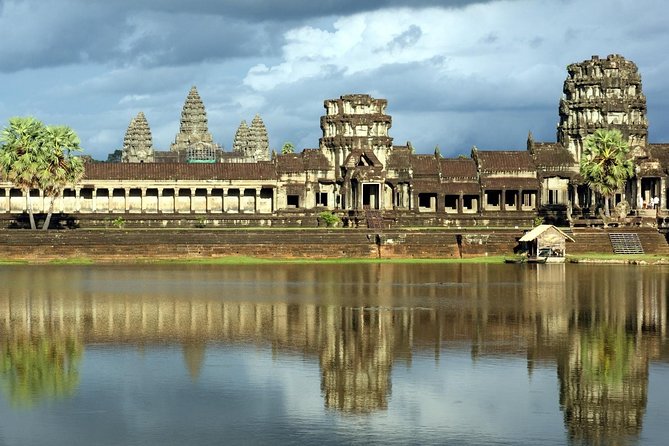
Angkor Wat is the most intact major temple in the park, and its scale can be difficult to grasp from a single viewpoint. You will have time to see the broad approach, outer areas, galleries, towers, and carved scenes, depending on the day’s pace and access conditions.
The guide’s explanation is especially useful here. The carvings are not random decoration. Hindu legends, religious ideas, royal power, and the temple’s design all connect. With clear commentary, the walls become easier to read, and you can spend less time wondering what you are looking at.
Two hours is a solid allocation for a first visit. It lets you see the essential areas without turning the entire day into a single-temple tour. Still, Angkor Wat is large, and visitors who love architecture or photography may want much longer. This tour is built for coverage of several key monuments, not for an exhaustive study of one site.
The guide can make or break the day
The strongest praise for this experience centers on the guides. Soydy is described as having a huge command of the site and its history. Vantha is praised for clear English and strong explanations. Phy, Long, Voath Vinh, Phuy Phy, and Nak also receive specific praise for their friendly manner, clear speech, and ability to explain temple details.
Nak is especially noted for pointing out inscriptions and decorations. That is the sort of detail that can change your visit from a sequence of grand ruins into a closer look at how Angkor communicates through stone.
The guide and driver also appear to work as a team. That matters when the group includes someone who walks slowly or needs the tuk-tuk positioned close to a monument. The tour is described as a long day with a great deal of information, so you should expect an active program rather than a relaxed ride with occasional photo stops.
English ability is reported positively across the feedback, but individual guide assignments may vary. If you have a strong interest in religious symbolism, inscriptions, or royal history, send that request when booking so the guide can shape the commentary around your priorities.
What the $45 price really covers
The advertised tour price is $45 per person. That includes the full-day tuk-tuk, a local live English-speaking guide, pickup and drop-off from your hotel or the airport, and bottled water.
The Angkor National Park admission fee is separate and listed at $37 per person. That puts the main cost at $82 per person before food, drinks, and travel insurance.
For a private tour, that is a reasonable package if you value convenience and interpretation. You are paying for transport, a guide, and a planned route through several major monuments, not simply a ride to Angkor Wat. Group discounts may also be available, though the exact discount is not specified.
The value is strongest for first-time visitors and people who want the temples explained. If you already know the site well and prefer to move independently, you may see the guide fee as less useful. The private format also costs more than joining a large shared group, but you gain a more personal setup and avoid waiting for other groups.
Food is not included, so plan for your own meals and drinks beyond the supplied water. The information provided does not specify a restaurant stop or lunch arrangement.
Who should choose this tour
I would recommend it to a first-time visitor staying in Siem Reap who wants to see the major highlights in one organized day. It also suits couples, families, and small groups who prefer not to share transport with strangers.
The private setup is particularly useful if members of your group have different walking speeds. The example of the 82-year-old participant shows that the guide and driver may be able to reduce unnecessary walking by positioning the tuk-tuk well, though the temples themselves still require movement over historic surfaces.
You should think twice if your main goal is sunrise photography, a slow archaeological study, or a flexible day with long breaks. The tour begins at 8 a.m., follows a set sequence, and covers several monuments in six to seven hours.
The cancellation terms are simple: you receive a full refund if you cancel at least 24 hours before the start time. Cancellations or changes made within 24 hours are not accepted for a refund.
Should you book the Angkor Wat tuk-tuk tour?
Book this tour if you want efficient coverage, a private ride, and clear English commentary across Angkor’s most important monuments. The strongest reason to choose it is the guide service, with several named guides praised for their subject knowledge, friendly approach, and clear speech.
Before booking, budget for the additional $37 park ticket and remember that this is a long walking day. If you want dawn photography or hours at one temple, choose a more specialized plan. If you want a well-organized introduction to Angkor Thom, Bayon, Ta Prohm, and Angkor Wat without arranging every transfer yourself, this tour offers good value at $45 before admission.
FAQ
How long does the Angkor Wat private tuk-tuk tour last?
The tour lasts approximately six to seven hours.
What time does hotel pickup begin?
Pickup is scheduled for 8 a.m. from your hotel in Siem Reap.
Is hotel pickup and drop-off included?
Yes. Pickup and drop-off from a hotel or airport are included.
Is the tour private?
Yes. Only your group participates in the private activity.
What transportation is used?
The tour uses a tuk-tuk for the full-day temple visit.
Is an English-speaking guide included?
Yes. A local live English-speaking guide is included.
Is bottled water provided?
Yes. Bottled mineral water is provided during the tour.
Is the Angkor National Park ticket included?
No. The admission fee is separate and listed at $37 per person.
Are food and drinks included?
No. Food and drinks are not included, apart from the bottled water supplied during the tour.
Can I cancel for a full refund?
Yes. You can cancel at least 24 hours before the start time for a full refund. Cancellations made within 24 hours are not refunded.
Newest reviews from Siem Reap
- War Museum, Killing Field, and APOPO Hero RATs Tour★ 5.0 · 7 reviews
- Angkor Wat at Sunrise★ 4.0 · 7 reviews
- Siem Reap Angkor Airport Taxis (from Airport to Hotel)★ 5.0 · 44 reviews
- Cambodian Cooking Class and Oxcart Ride with Local Village Tour★ 5.0 · 4 reviews
- Secret Temples of Angkor – Guided Tour in Siem Reap★ 5.0 · 6 reviews
- Short Cycling at Countryside★ 5.0 · 29 reviews
- SIEM REAP E-BIKE HALF-DAY COUNTRYSIDE (25-30 km)★ 4.0 · 1 review
- Unveiling the Mystical Beauty of Phnom Kulen National Park★ 5.0 · 6 reviews
Angkor Wat Tours, compared.
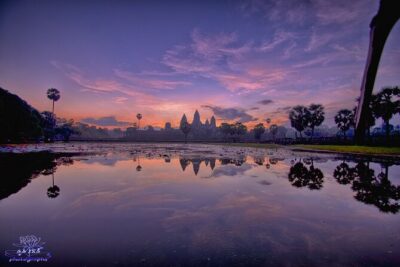
Angkor Wat Sunrise or Sunset Tour with Guide from Siem Reap
Read our review →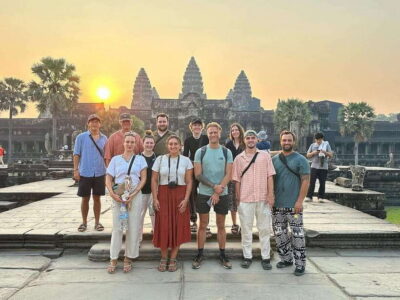
Angkor Wat: Small-Group Sunrise or Sunset Tour
Read our review →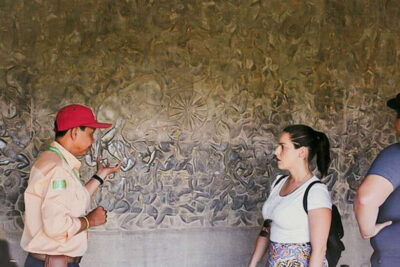
Angkor Wat 2-Day Tour with Sunrise and Sunset
Read our review →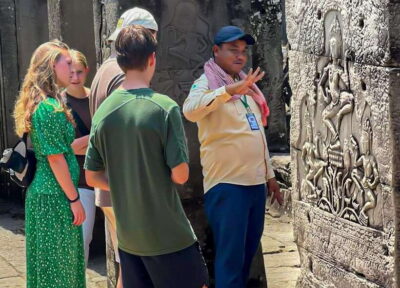
Angkor Wat Sunrise tour with Small – Group and Guide tours
Read our review →
Angkor Wat Highlights and Sunrise Guided Tour from Siem Reap
Read our review →
Angkor Wat Sunset Small Group Tour with Lunch Included
Read our review →
Full-Day Angkor Wat Sunrise Private Tour with Guide from Siem Reap
Read our review →Browse the lists this tour appears in