Reviewed · ANGKOR WAT TOURS
Angkor Wat Admission Ticket
Sunrise waits for no ticket queue. This Angkor Wat admission service is useful because your pass is delivered to your hotel the evening before, and you can choose a pass lasting one, three, or seven days. I like the time saved at the ticket office, especially if Angkor Wat is your first stop before dawn. I also like the freedom to arrange your own temple days rather than follow a fixed sightseeing schedule. The main drawback is price: at about $59 per person, you pay more than the official one-day rate of $37 for the delivery and booking service.
This is not a guided temple tour with transport included. You receive an Angkor National Park pass, then arrange your own tuk-tuk, car, minivan, bus, or guide. That makes the service a good fit if you already have transport planned, but less useful if you want one booking to cover the whole day. You must also send a passport-style photo for every person, and the pass cannot be refunded or transferred.
In This Review
- Key points to know before booking
- What you are actually buying for $59
- The hotel delivery process and sunrise advantage
- Angkor Wat and the central temple route
- Smaller temples that reward a slower pace
- Banteay Srei, Kbal Spean, and the farther sites
- Beng Mealea and ticket limits
- Guides, vehicles, and how to build your day
- Rules, clothing, and practical cautions
- Should you book the Angkor Wat admission service?
- FAQ
- What does the Angkor Wat admission service include?
- When is the pass delivered?
- Do I need to send a photo?
- Is transport included?
- Is a tour guide included?
- Can children enter without a ticket?
- Does the pass cover Phnom Kulen and Koh Ker?
- Can I get a refund or give my pass to someone else?
Key points to know before booking
- Hotel delivery at about 6 pm: Your printed pass is delivered to the hotel front desk the evening before your planned visit, under your name.
- Sunrise-friendly timing: You can go directly toward Angkor Wat instead of first stopping at the ticket office.
- Three pass lengths: Choose one, three, or seven days, depending on how much time you have in Siem Reap.
- Lanyards make checks easier: The pass may be checked repeatedly at temple entrances, so keeping it easy to reach matters.
- The fee buys convenience, not transport: Food, drinks, guides, vehicles, insurance, Phnom Kulen, and Koh Ker are separate.
- Photo required for every pass: The ticket includes your photo, is personal to you, and must be shown when requested.
What you are actually buying for $59
The product is best understood as a ticket delivery service, not a full Angkor excursion. The core benefit is simple: Green Era Travel arranges the Angkor Archaeological Park pass and brings it to your hotel, allowing you to begin sightseeing without visiting the ticket office first.
The listed price is about $59 per person, though the final amount can depend on the pass selected and service charges. The official rates provided are $37 or more for one day, $62 or more for three days, and $72 or more for seven days, with additional service fees and promotional or delivery costs. The information also refers to a two-day option in one place, so you should confirm the exact pass length and total price before paying.
That extra charge will feel reasonable if you have a short stay, an early departure, or a sunrise visit planned. It may feel less worthwhile during a quiet period when the ticket office has no line. One person paid a high surcharge after being told a three-day pass was unavailable and ended up with a seven-day option, so it is wise to confirm availability for your dates.
The pass is valid from the printed start date to the printed end date. It is not valid before or after those dates. The service says a ticket delivered one day before your visit becomes valid the next day, so check the dates carefully when the envelope arrives.
More ways to see Angkor Wat:
- Angkor Wat Sunrise or Sunset Tour with Guide from Siem Reap
★ 5.0 · 12,109 reviews - Siem Reap: Angkor Wat: Small-Group Sunrise or Sunset Tour
★ 5.0 · 9,444 reviews - Siem Reap: Angkor Wat 2-Day Tour with Sunrise and Sunset
★ 4.9 · 4,429 reviews
The hotel delivery process and sunrise advantage
The practical strength of this service is timing. Tickets are usually delivered to the hotel front desk around 6 pm for the next day. Some passes have arrived earlier, and one booking made shortly before the visit received a printed ticket the same day. That speed is helpful, but you should not rely on an early delivery if your schedule is tight.
The hotel front desk arrangement is convenient. The pass is placed in an envelope under your name, and some customers received lanyards so the ticket could hang around the neck. That small touch matters because temple staff may ask to see the pass more than once during the day.
The sunrise benefit is even clearer. If you plan to reach Angkor Wat before dawn, buying in person can add an awkward stop at the start of an already early morning. With the pass in hand, you can go directly to your planned entrance.
You need to send a portrait photo for each person after booking. Include your booking reference when sending the photos by email, and respond promptly if the operator contacts you through WhatsApp. Without the required photo, the ticket will not be issued.
Angkor Wat and the central temple route
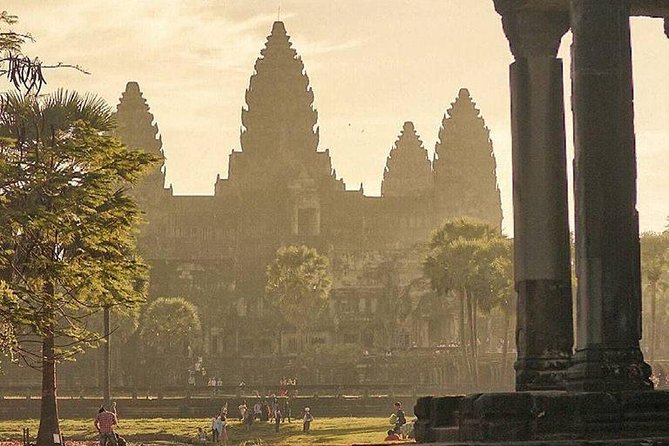
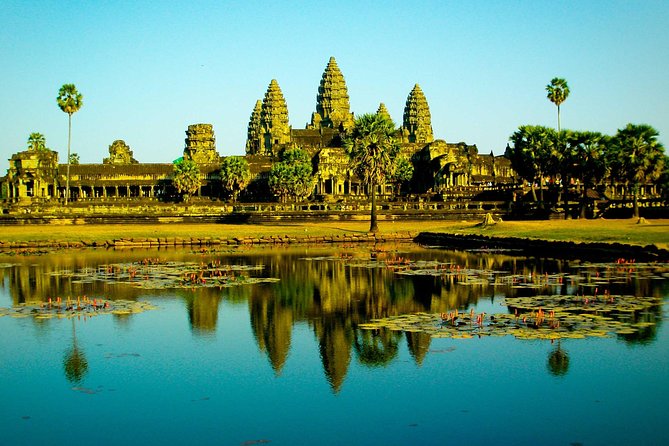
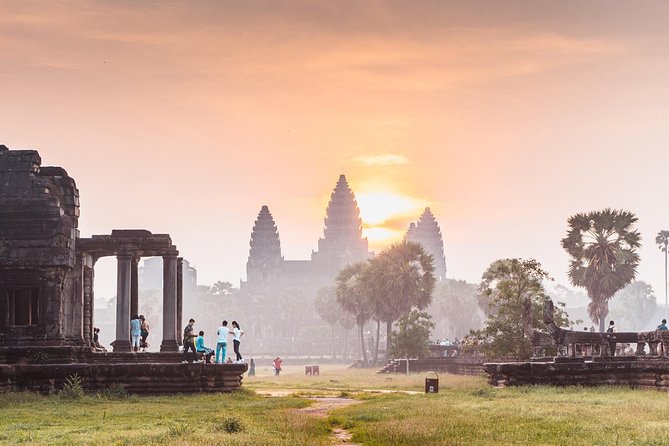
Angkor Wat deserves the largest block of your attention. The complex covers 162.6 hectares and is the world’s largest religious monument. It began as a Hindu temple dedicated to Vishnu and later became a Buddhist site, a change reflected in its long religious life and imagery.
A two-hour visit gives you time to see the main structure without racing through every detail. Sunrise is the obvious draw, but the ticket service does not provide a viewing spot, transport, or guide. You must arrange those parts yourself.
Angkor Wat can be physically demanding. You will walk across broad temple grounds, climb steps in some areas, and spend time outdoors. Wear sturdy, comfortable shoes. One account described spending at least eight hours among the temples, so footwear is not a minor concern.
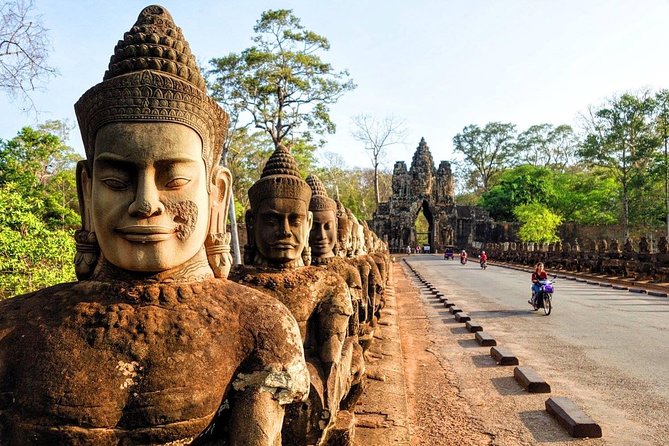
Angkor Thom takes about an hour and 20 minutes in the suggested schedule. This was the last and most enduring capital of the Khmer Empire, established in the late 12th century by King Jayavarman VII. The fortified city gives you a sense of scale beyond one temple, though the area is too broad to understand fully without a guide or advance reading.
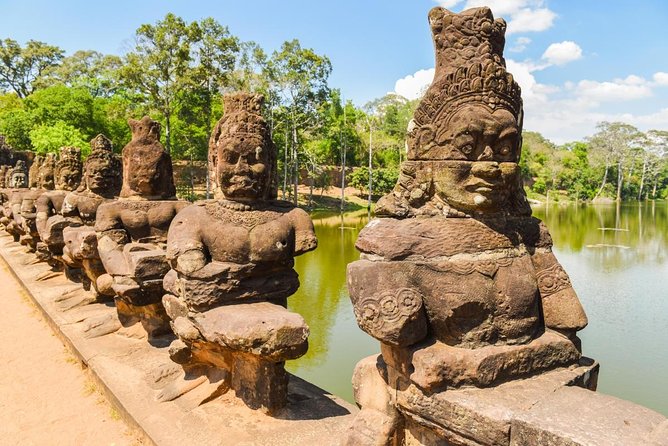
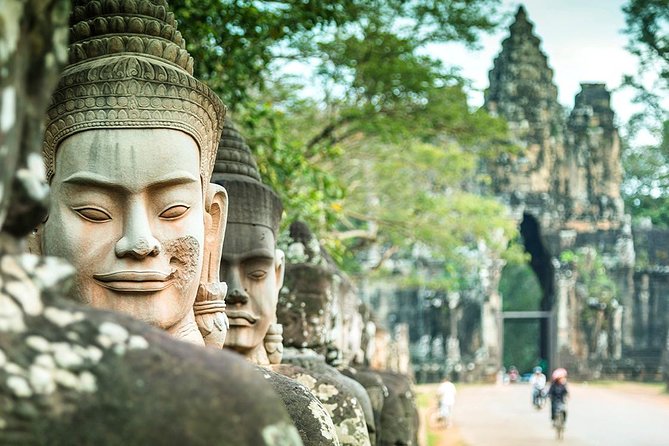
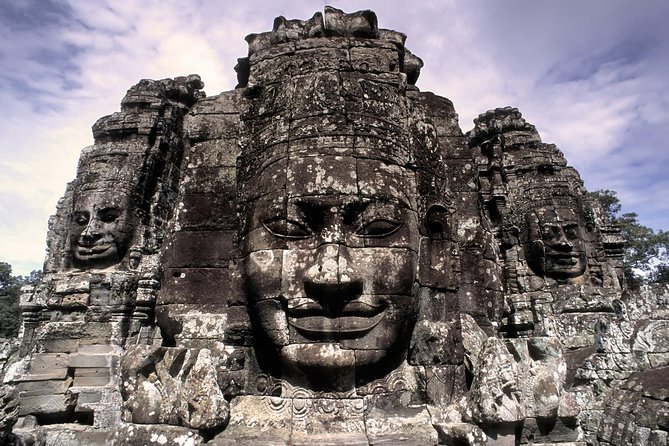
Inside Angkor Thom, Bayon Temple receives about an hour. Built in the late 12th or early 13th century as a state temple for Jayavarman VII, Bayon is known for its decorated towers and enormous carved faces. The site is compact but visually busy, so an hour can pass quickly.
Ta Prohm is another one-hour stop. Its modern fame comes from its appearance in the Tomb Raider film, but the temple is more than a movie setting. It was built in the late 12th and early 13th centuries in the Bayon style and was originally called Rajavihara. The trees and partially ruined galleries give it a different mood from Angkor Wat, though narrow paths and popular photo areas can slow your progress.
Smaller temples that reward a slower pace
Preah Khan receives about an hour and 20 minutes in the planned schedule. Jayavarman VII built it in the 12th century to honor his father. Its location northeast of Angkor Thom makes it a natural companion to Neak Pean, and the longer suggested visit gives you time to look beyond the first courtyard.
Neak Pean takes about an hour. This small Buddhist temple sits on an artificial island in the Jayatataka Baray, a reservoir linked with Preah Khan. The approach across the water is part of the appeal, but the site is less extensive than Angkor Wat or Angkor Thom.
Ta Som is another compact temple, with about 40 minutes suggested. Jayavarman VII built it near Neak Pean at the end of the 12th century. It works well as a short stop on a day focused on the northern temples.
Banteay Samre takes roughly 40 minutes. Built in the early 12th century during the reigns of Suryavarman II and Yasovarman II, it is a Hindu temple east of the East Baray. Its slightly more distant position can make it a worthwhile addition if you have transport and enough time, but it is not a quick walk from the main Angkor Wat area.
Pre Rup is scheduled for 30 minutes. This Hindu temple was built in 961 or early 962 as the state temple of King Rajendravarman. It is a temple mountain made from brick, laterite, and sandstone. The short visit works well for a sunset-oriented stop, although the ticket itself does not guarantee sunset access or provide a ride.
Ta Keo also receives about 40 minutes. This 11th-century temple mountain may have been the first Khmer temple built entirely from sandstone. Its position on the small circuit makes it easy to pair with other nearby sites.
Prasat Kravan is a small 10th-century temple with five reddish brick towers on one terrace. Thirty minutes is enough for a brief look, especially if you are building a long day around larger temples. Its scale is modest, so you should not expect another Angkor Wat.
Srah Srang, the Royal Bath, takes about 20 minutes. It is a reservoir south of the East Baray and east of Banteay Kdei. This is more of a brief scenic pause than a major temple visit.
More entry tickets in Siem Reap:
- Siem Reap: Phare, the Cambodian Circus Show Tickets
★ 4.9 · 1,850 reviews - Siem Reap: Angkor Wat Admission Ticket
★ 4.7 · 106 reviews - Kullen Waterfall Park with Small Group included entrance fee
★ 5.0 · 105 reviews - Kulen National Park Ticket
★ 5.0 · 33 reviews
Banteay Srei, Kbal Spean, and the farther sites
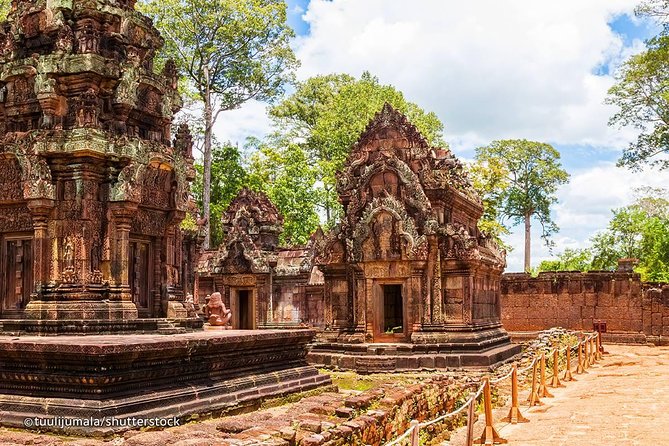
Banteay Srei is about 25 kilometers northeast of the main Angkor group and receives one hour in the suggested plan. This 10th-century temple is dedicated to Shiva and is often singled out for its finely worked decoration. The distance means you need a vehicle and a longer day, but the stop adds a different scale and style to the central temples.
Kbal Spean requires much more time, about three hours in one part of the schedule and four hours in another. It is an Angkorian archaeological site on the southwest slopes of the Kulen Hills, arranged along a 150-meter stretch of stream. The inconsistent timing shown for this stop is a reminder to confirm your own transport plan and allow plenty of time.
Phnom Bok Temple takes about two hours. It sits on a hill northeast of the Eastern Baray and is one of a trio of mountain sites with similar temple layouts. The hill setting means this is not the easiest addition to an already packed day.
Phnom Krom is about 12 kilometers southwest of Siem Reap and receives two hours and 20 minutes in the suggested schedule. The ninth-century temple sits on a hill known for broad views. As with Phnom Bok, you need to consider the extra driving and uphill effort.
The Roluos group offers another look at early Khmer temple building. Bakong, about 15 kilometers from downtown Siem Reap, was the first sandstone temple mountain built by Khmer rulers at Angkor and takes about an hour. Lolei, the northernmost of the Roluos group’s three late ninth-century Hindu temples, takes about 25 minutes. Preah Ko, located between Bakong and Lolei, takes around 30 minutes.
These sites are useful if you have a three-day or seven-day pass. Trying to fit every named stop into one day would be punishing. A one-day pass is better suited to Angkor Wat, Angkor Thom, Bayon, and Ta Prohm, with one or two nearby additions.
Beng Mealea and ticket limits
Beng Mealea is about 40 kilometers east of the main Angkor group and takes about two hours. It belongs to the Angkor Wat period and sits along an ancient royal road. The supplied information lists admission here as free, but you still need to arrange transport because this service does not provide it.
Kbal Spean is listed a second time with a four-hour visit and free admission. This appears to refer to the same wider destination described earlier, so you should clarify exactly what is included before planning two separate visits.
Phnom Kulen and Koh Ker are specifically excluded and require separate tickets. Do not assume that an Angkor National Park pass covers every Khmer-era site in the wider Siem Reap region.
Guides, vehicles, and how to build your day
You arrange transport independently. A tuk-tuk suits the main temple circuits, while a car or minivan may be more comfortable for Banteay Srei, Kbal Spean, Beng Mealea, or the hill temples. The ticket service does not include any of these vehicles.
A guide is also separate, but I would consider hiring one for at least a full day. Angkor’s carvings and layout are easier to appreciate when someone explains who built each temple and why. Names associated with especially strong service include Mr Ho, Vantha, Bob, and Sok. Bunthang Lim is another guide name connected with a two-day temple visit.
The operator’s contact, Sok Piseth, is praised for quick replies, reminders about sending photos, and careful ticket delivery. That kind of communication is useful when your arrival and temple schedule are close together, though you should still keep written confirmation of your dates and pass type.
The full list of stops is too ambitious for a single outing. I would use the pass like this:
- One day: Angkor Wat, Bayon, Angkor Thom, and Ta Prohm.
- Three days: Add Preah Khan, Neak Pean, Ta Som, Banteay Srei, Pre Rup, and the Roluos group.
- Seven days: Spread out the farther sites, including Kbal Spean, Beng Mealea, Phnom Krom, and Phnom Bok.
This approach leaves room for heat, meals, rest, and the occasional temple that deserves more than the schedule suggests.
Rules, clothing, and practical cautions
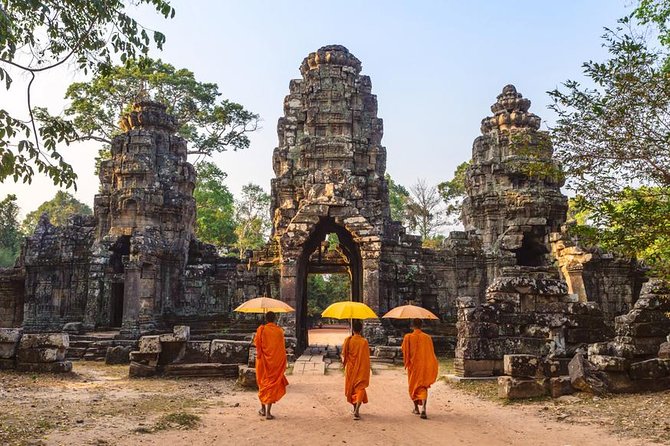
Your pass contains your photo and belongs only to you. Keep it safe and show it to ticket controllers when asked. Producing, distributing, or using a fake ticket is a crime, and the pass cannot be transferred or refunded.
Children under 12 do not need a national park ticket, but they must show a passport to prove their age. Dress with shoulders and knees covered, and respect signs, monks, and sacred spaces. Do not touch carvings, litter, smoke, or give money or candy to children.
A moderate level of physical fitness is needed. Several sites involve long walks, uneven ground, hills, or steps. Professional filming, commercial photography, and drone use require a permit from the APSARA National Authority.
The booking is non-refundable and cannot be changed for any reason. If your plans are uncertain, the extra service fee is not the only risk. You may also lose value if you buy a multi-day pass and later cancel temple days.
Should you book the Angkor Wat admission service?
I would book it if you have a sunrise visit, a short stay, a late arrival, or little interest in handling local ticket arrangements. The strongest benefit is peace of mind: your pass is waiting at the hotel, often with a lanyard, and you can head toward the temples without first joining a ticket line.
I would skip it if saving every dollar matters, your dates are flexible, or you can comfortably buy the official pass yourself. The surcharge is real, and one account found no line at the ticket office. You also still need to arrange transport and decide if you want a guide.
For most first-time visitors with only one or two days in Siem Reap, the convenience is defensible. Send the required photos promptly, confirm the pass dates and length, and treat the service as ticket delivery rather than a complete tour. That is the clearest way to judge its value.
FAQ
What does the Angkor Wat admission service include?
It includes delivery of an Angkor National Park pass to your hotel front desk, access from sunrise to sunset on the valid dates, and a one-day, three-day, or seven-day pass option. A two-day option is also mentioned in the information, so confirm the available choice when booking.
When is the pass delivered?
The pass is delivered to your hotel in the evening, generally around 6 pm, for a visit planned on the following day. Some passes may arrive earlier.
Do I need to send a photo?
Yes. You must email a passport-style photo for every person in the booking. The ticket will not be issued if the required photo is not received.
Is transport included?
No. Tuk-tuk, car, minivan, bus, and other transport costs are separate.
Is a tour guide included?
No. Guides are not included, though you can hire one separately in several languages.
Can children enter without a ticket?
Children below 12 do not need a national park ticket, but they must show a passport to prove their age.
Does the pass cover Phnom Kulen and Koh Ker?
No. Phnom Kulen and Koh Ker require separate admission tickets.
Can I get a refund or give my pass to someone else?
No. Passes are non-refundable and non-transferable. Each pass contains your photo and is valid only during the printed validity period.
Newest reviews from Siem Reap
- War Museum, Killing Field, and APOPO Hero RATs Tour★ 5.0 · 7 reviews
- Angkor Wat at Sunrise★ 4.0 · 7 reviews
- Siem Reap Angkor Airport Taxis (from Airport to Hotel)★ 5.0 · 44 reviews
- Cambodian Cooking Class and Oxcart Ride with Local Village Tour★ 5.0 · 4 reviews
- Secret Temples of Angkor – Guided Tour in Siem Reap★ 5.0 · 6 reviews
- Short Cycling at Countryside★ 5.0 · 29 reviews
- SIEM REAP E-BIKE HALF-DAY COUNTRYSIDE (25-30 km)★ 4.0 · 1 review
- Unveiling the Mystical Beauty of Phnom Kulen National Park★ 5.0 · 6 reviews
Angkor Wat Tours, compared.

Angkor Wat Sunrise or Sunset Tour with Guide from Siem Reap
Read our review →
Angkor Wat: Small-Group Sunrise or Sunset Tour
Read our review →
Angkor Wat 2-Day Tour with Sunrise and Sunset
Read our review →

Angkor Wat Sunrise tour with Small – Group and Guide tours
Read our review →
Angkor Wat Highlights and Sunrise Guided Tour from Siem Reap
Read our review →
Angkor Wat Sunset Small Group Tour with Lunch Included
Read our review →