Reviewed · ANGKOR WAT TOURS
2 Days Siem Reap Angkor Wat Tour-Small Group
Wake up early, and Angkor rewards you. This two-day small-group tour combines Angkor Wat at sunrise with the Bayon, Ta Prohm, Banteay Srei, Preah Khan, and several quieter temples. I like the wide mix of major and lesser-known sites, and I like having hotel pickup, air-conditioned transport, water, and an English-speaking guide included.
The main drawback is the 4:30 am start on day one, followed by long temple days on both dates. At $52 per person, the price is attractive, but temple entrance fees, meals, and drinks cost extra. The group can reach 15 people, so this is small enough to be manageable, but not a private tour.
In This Review
- What makes this two-day tour useful
- The early start and the real cost
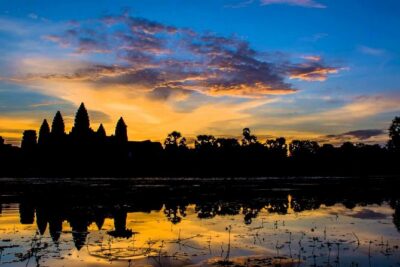
- Angkor Wat at sunrise
- Angkor Thom and the many-faced Bayon
- Ta Prohm and Banteay Kdei
- Pre Rup begins the second day
- Banteay Srei and Cambodia’s finest stone detail
- Preah Khan, Ta Som, and Neak Pean
- What the guide and vehicle add
- Who should book this tour
- Should you book the two-day Angkor route?
- FAQ
- How long is the tour?
- What time does the tour begin?
- Is hotel pickup included?
- Is the Angkor temple entrance fee included?
- Are meals and drinks included?
- How large is the group?
- Which temples are visited?
- Is an English-speaking guide included?
- Can I cancel for a full refund?
What makes this two-day tour useful
- Angkor Wat at sunrise: The early start gives you the classic morning view before a full day among the temples.
- A strong first-day route: Angkor Wat, Angkor Thom, Bayon, Ta Prohm, and Banteay Kdei cover several of the area’s best-known monuments.
- Banteay Srei’s fine carving: This smaller sandstone temple offers a very different look from the larger royal complexes.
- A second day beyond the main circuit: Pre Rup, Preah Khan, Ta Som, and Neak Pean add variety without repeating the first day’s route.
- A group capped at 15 people: You get shared transport and guiding without the scale of a large coach tour.
- A guide praised by name: One particularly strong experience came from guide Sophanna Muon, whose organization and explanations of Khmer culture received high marks.
The early start and the real cost
Your first pickup is scheduled for 4:30 am. That is not a small detail. Angkor Wat sunrise is one of the main reasons to choose this tour, but you will need to prepare for a very short night and a long day afterward.
The vehicle takes you from your hotel by minivan, with a stop to obtain the temple ticket on the way to Angkor Wat. The tour price does not include the entrance fee, so set aside money for that separately. Food and drinks are also your responsibility.
At $52 per person, the value comes from the two full days of transport, guiding, hotel pickup and drop-off, an air-conditioned vehicle, and bottled mineral water. You are also paying for a route that covers many temples without having to arrange a driver for each day.
The value is strongest if you want structure. You will not need to negotiate separate rides, work out the order of the temples, or study the basic history before arriving. If you prefer moving at your own pace, stopping whenever you wish, or spending a whole morning at one monument, a private arrangement may suit you better.
The group size is limited to 15 people. That should feel more personal than a large bus, though it cannot promise the quiet pace of a private visit. The tour requires a minimum number of bookings, and poor weather can also lead to a change of date or a full refund.
More ways to see Angkor Wat:
- Angkor Wat Sunrise or Sunset Tour with Guide from Siem Reap
★ 5.0 · 12,109 reviews - Siem Reap: Angkor Wat: Small-Group Sunrise or Sunset Tour
★ 5.0 · 9,444 reviews - Siem Reap: Angkor Wat 2-Day Tour with Sunrise and Sunset
★ 4.9 · 4,429 reviews
Angkor Wat at sunrise
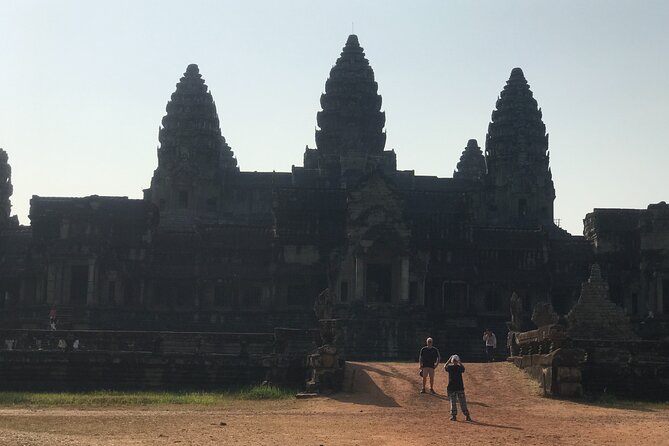
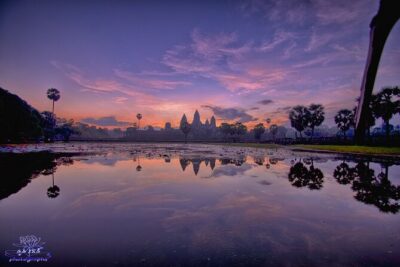
The first stop takes about four hours, including the early arrival and time around the temple. You enter through the primary approach to Angkor Wat and wait for the morning light to reveal the towers and surrounding temple grounds.
Sunrise is the photo-friendly part of this visit, but do not treat it as only a photo stop. Angkor Wat is the largest and most famous monument in the complex, and beginning here gives you a useful reference point for the rest of the tour. Its formal layout and scale make the later jungle-covered and partly ruined temples easier to understand.
The schedule allows a substantial visit rather than a quick look. You can expect an early, potentially busy start, since sunrise is popular. Bring water and dress for walking. The tour includes bottled water, but the provided information does not specify meals or other refreshments.
A guide can make this first stop much more useful. The strong feedback for Sophanna Muon focused on clear explanations of Khmer history and culture, along with careful organization over two days. If Sophanna is assigned to your group, his approach may be a particular advantage. Guide assignments can vary, so you should not assume he will lead every departure.
Angkor Thom and the many-faced Bayon
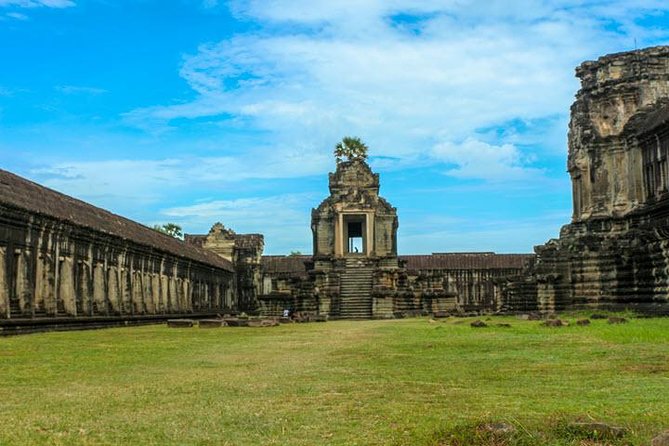
After Angkor Wat, the route moves to the South Gate of Angkor Thom. This was a major city area within the Khmer empire, and the entrance gives you an immediate sense of its ceremonial scale.
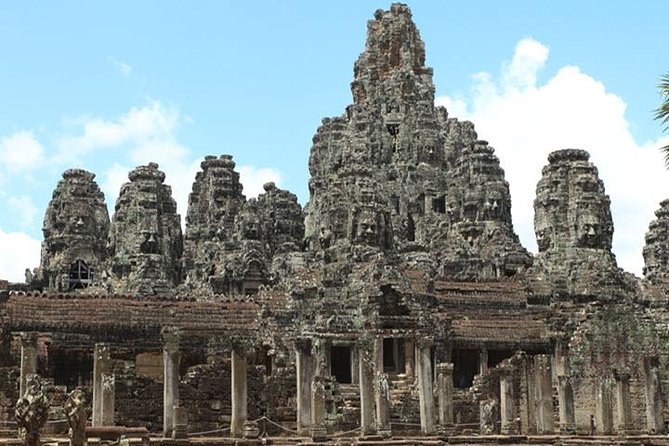
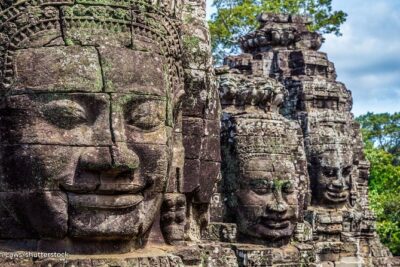
The main focus is Bayon, known for its towers and carved faces associated with Avalokitesvara. The tour description refers to 54 towers and 216 faces, though the condition and visibility of individual carvings can vary as you move through the monument.
Bayon is not as orderly at first glance as Angkor Wat. Towers crowd one another, corridors turn unexpectedly, and the faces appear from different levels. That makes a guide helpful. You can use the walk to learn how Khmer builders combined religious imagery with royal power, as well as how to read common Angkor architectural features.
Angkor Thom also includes Baphuon, another major temple within the city. After lunch, the vehicle passes the Terrace of the Elephants and the Terrace of the Leper King. These terraces functioned as royal viewing areas and parts of the king’s audience complex.
The schedule gives Angkor Thom about an hour and a half. That is enough for a guided introduction, but you should not expect an unhurried examination of every carving. The route has many stops ahead, so listen closely when your guide points out the most important details.
Ta Prohm and Banteay Kdei
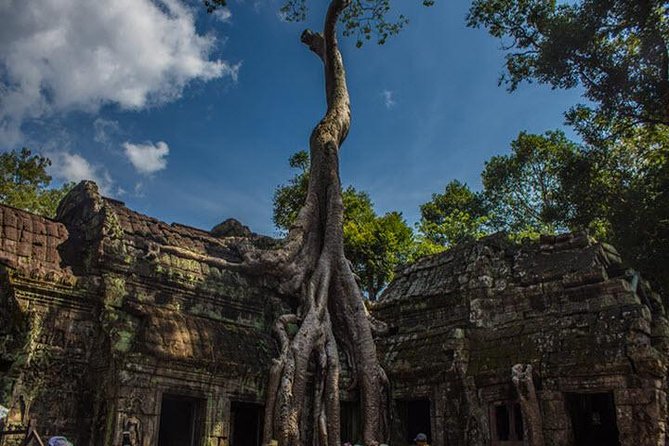
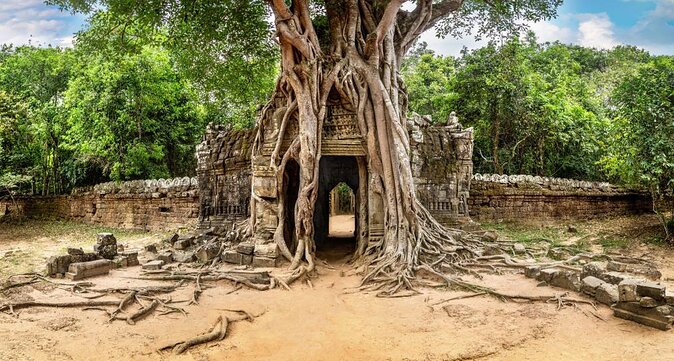
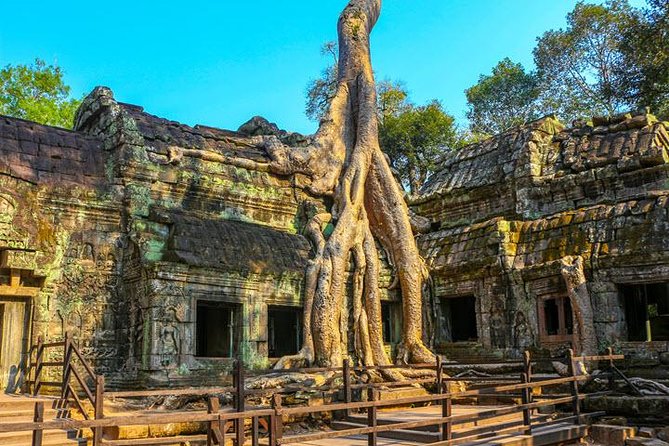
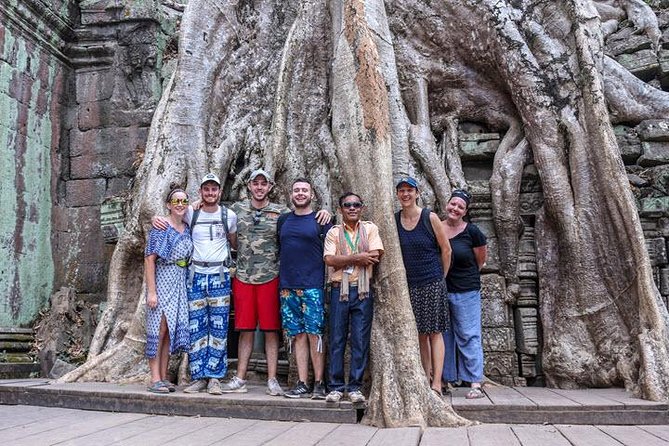
Ta Prohm is the temple many people picture when they imagine Angkor covered by jungle. Large tree roots press against and around the stone buildings, creating the famous meeting of architecture and plant life.
The attraction is partly visual, but the ruin also helps you see how the site has changed over time. Unlike the open, monumental feel of Angkor Wat, Ta Prohm feels enclosed and irregular. Roots, collapsed sections, and narrow passages make it atmospheric, though they can also make walking less direct.
The planned visit lasts about an hour and a half. That gives you time to see the best-known sections and hear the story behind the temple. It also leaves room for photographs without turning the entire day into a series of rushed stops.
The day includes a brief stop at a temple mountain associated with King Jayavarman V and his state shrine. The supplied information does not identify this temple by name, so you should ask your guide to clarify which monument you are seeing and why it matters.
The final listed stop is Banteay Kdei, built by King Jayavarman VII in the late 12th century. It is less immediately famous than Ta Prohm, but that is part of its appeal. I like the way the first day moves from Angkor Wat’s grand order to Ta Prohm’s roots and then to a quieter temple with a different feel.
A few more options around Siem Reap worth reading up on
- From Siem Reap: Kampong Phluk Floating Village Tour by Boat
★ 4.9 · 6,979 reviews - Sunset tour of Kampong Phluk stilts home village on the Tonle Sap
★ 5.0 · 4,865 reviews - Siem Reap: Kampong Phluk Floating Village Tour with Boat
★ 4.9 · 3,843 reviews - Siem Reap: Full-Day Angkor Wat Guided Tour with Sunset
★ 4.9 · 3,803 reviews
Pre Rup begins the second day
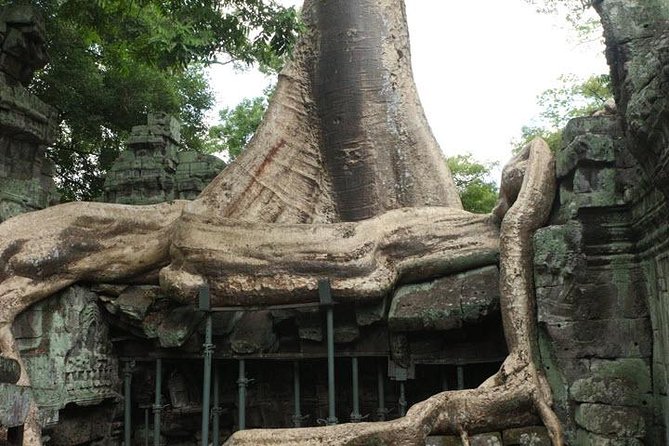
Day two starts at 8:00 am and runs for about eight hours. The first stop is Pre Rup, a Hindu temple mountain built during the reign of Rajendravarman and dedicated in 961 or early 962.
Pre Rup uses brick, laterite, and sandstone, so it gives you a clear change in materials from the larger monuments on day one. The stepped temple form also helps explain the idea of a temple mountain, with the upper levels creating a strong vertical focus.
The temple is outside Angkor Thom’s central city area, which gives the second day a different rhythm. You are no longer following only the most famous central route. Instead, the tour uses longer drives to connect a series of sites with different designs and moods.
The eight-hour day is useful for covering ground, but it is also demanding. You will spend much of the day walking, climbing, getting back into the vehicle, and repeating the process at another monument. Comfortable shoes and a willingness to keep moving will make a real difference.
Banteay Srei and Cambodia’s finest stone detail
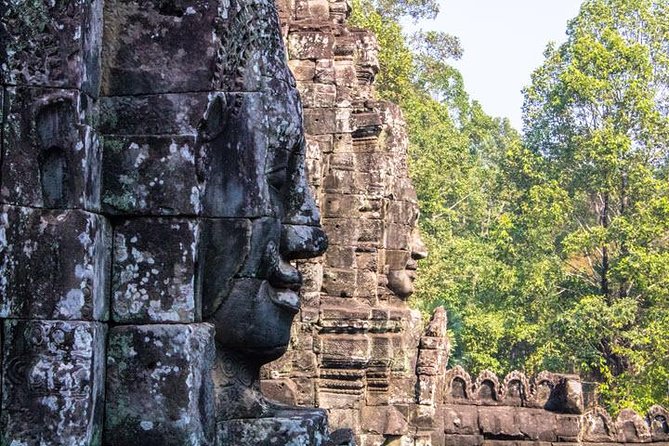
The drive continues to Banteay Srei, a smaller temple known for exceptionally detailed sandstone carvings. The relief work is the reason to come here. Compared with the huge scale of Angkor Wat or the crowded towers of Bayon, Banteay Srei rewards close looking.
The temple was only accessible from the late 1990s after the Khmer Rouge left the area. That recent history adds context to the visit, while the delicate carvings show a more intimate side of Khmer temple art.
The scheduled time is about an hour and a half. That is a sensible amount for a small complex, especially after the drive from the central Angkor area. I would pay attention to the guide’s explanation here, because the fine reliefs can look decorative at first, while the stories and symbols give them more meaning.
Banteay Srei is also a good reason to choose the two-day plan instead of seeing only Angkor Wat and the nearby central temples. It takes you farther out and adds a distinct architectural style to the route. The tradeoff is time in the vehicle, which may matter if you dislike long transfers.
Preah Khan, Ta Som, and Neak Pean
After Banteay Srei, the tour includes lunch at the temple area, but lunch is not included in the price. You will also have a short rest before continuing to Preah Khan.
Preah Khan is a large ruined complex where tree roots, broken stone, and long corridors create a moody setting. It is less polished than Angkor Wat, and that is precisely why I find it valuable. You can see how time, vegetation, and structural collapse have shaped the site.
The planned visit lasts about an hour and a half. That gives you room to move through the complex without reducing it to a single photo stop. Ask your guide to point out the parts that are easiest to miss, since ruins can be confusing when several walls and galleries look alike.
Ta Som follows for about 45 minutes. It is a smaller, highly photogenic temple, with one of its towers overtaken by a sacred fig tree. The short stop works well here. You get the memorable tree-and-stone image without spending energy on another large complex late in the day.
Neak Pean is also scheduled for 45 minutes. This small island temple is reached by a wooden walkway over the water. The approach is different from the other sites, and the walk gives you a break from enclosed stone corridors and steep temple steps.
These final stops create a pleasant contrast. Preah Khan gives you scale and atmosphere, Ta Som offers a compact tree-covered ruin, and Neak Pean changes the setting entirely. You may feel tired by this point, but the variety keeps the second day from becoming a string of similar temples.
What the guide and vehicle add
The package includes an English-speaking guide and an air-conditioned vehicle. In Siem Reap’s heat, the vehicle matters as much as the route. You can cool down between sites rather than walking or arranging separate transport in the middle of the day.
Hotel pickup and drop-off also simplify the early start. At 4:30 am, finding transport on your own can add unnecessary stress. The tour keeps the first morning focused on getting to Angkor Wat.
The guide is the most important part of the shared format. A good explanation can connect Bayon’s faces, Pre Rup’s temple-mountain design, Banteay Srei’s carvings, and the role of the Khmer kings. One highly praised departure was led by Sophanna Muon, specifically noted for his organization and explanations of Khmer culture and temple history.
The information does not promise a private guide or a guaranteed guide by name. You should think of Sophanna’s praise as a useful sign of the service standard, not a certainty for your booking.
Who should book this tour
I would recommend this tour to you if you want to see the essential Angkor sites plus several less central temples in two organized days. It suits first-time visitors who prefer a guide, shared transport, and a clear schedule.
It also works well for travelers watching their budget. The $52 price is low for two days of transport and guiding, although you must add temple admission, food, and drinks. Group discounts may also be available, but the supplied details do not specify the discount amount.
You should think twice if you dislike very early mornings, long sightseeing days, or fixed group schedules. The first day begins at 4:30 am, and both days involve substantial walking and repeated stops.
The tour is open to most people, and the group maximum is 15. However, the information does not provide a detailed accessibility assessment. If you have mobility concerns, ask the operator before booking about steps, uneven surfaces, and the walking requirements at each temple.
Free cancellation is available if you cancel at least 24 hours before the start time. Changes or cancellations inside that period are not refunded, and poor weather or failure to meet the minimum group size can result in a new date, another experience, or a full refund.
Should you book the two-day Angkor route?
Book it if you want a strong introduction to Angkor without paying for a private vehicle. The route has the right mix: sunrise at Angkor Wat, the faces of Bayon, the roots of Ta Prohm, fine carving at Banteay Srei, and atmospheric ruins at Preah Khan and Ta Som.
The best reason to choose it is not simply the number of temples. It is the way the two days show different sides of the Khmer world, from formal royal monuments to small shrines and partly reclaimed ruins.
Skip it if you want to linger at one or two temples, sleep late, or set your own pace. For everyone else, the combination of a low price, air-conditioned transport, an English-speaking guide, and a group capped at 15 makes this a practical choice. If Sophanna Muon leads your departure, his reported organization and cultural explanations would be an added benefit.
FAQ
How long is the tour?
The experience lasts approximately two days. Day one includes about four hours at Angkor Wat, an hour and a half at Angkor Thom, and an hour and a half at Ta Prohm, plus other stops. Day two runs for about eight hours.
What time does the tour begin?
The meeting time is 4:30 am on day one. Day two begins with hotel departure at 8:00 am.
Is hotel pickup included?
Yes. Hotel pickup and drop-off are included, with transport provided by minivan or another air-conditioned vehicle.
Is the Angkor temple entrance fee included?
No. Temple entrance fees are not included in the $52 price. The tour stops to obtain the ticket on the way to Angkor Wat.
Are meals and drinks included?
No. Food and beverages are not included. Bottled mineral water is included.
How large is the group?
The tour has a maximum of 15 travelers. It is a shared small-group experience, not a private tour.
Which temples are visited?
The route includes Angkor Wat, Angkor Thom, Bayon, Baphuon, the Terrace of the Elephants, the Terrace of the Leper King, Ta Prohm, Banteay Kdei, Pre Rup, Banteay Srei, Preah Khan, Ta Som, and Neak Pean. It also includes an unnamed temple-mountain and state shrine associated with King Jayavarman V.
Is an English-speaking guide included?
Yes. An English-speaking tour guide is included. Sophanna Muon was specifically praised for organizing the two-day trip and explaining Khmer history and culture, though a particular guide is not guaranteed.
Can I cancel for a full refund?
Yes, if you cancel at least 24 hours before the experience begins. Cancellations or changes made less than 24 hours before the start time are not refunded. Weather or minimum-group cancellations may result in another date or a full refund.
Newest reviews from Siem Reap
- War Museum, Killing Field, and APOPO Hero RATs Tour★ 5.0 · 7 reviews
- Angkor Wat at Sunrise★ 4.0 · 7 reviews
- Siem Reap Angkor Airport Taxis (from Airport to Hotel)★ 5.0 · 44 reviews
- Short Cycling at Countryside★ 5.0 · 29 reviews
- Cambodian Cooking Class and Oxcart Ride with Local Village Tour★ 5.0 · 4 reviews
- Secret Temples of Angkor – Guided Tour in Siem Reap★ 5.0 · 6 reviews
- SIEM REAP E-BIKE HALF-DAY COUNTRYSIDE (25-30 km)★ 4.0 · 1 review
- Unveiling the Mystical Beauty of Phnom Kulen National Park★ 5.0 · 6 reviews
Angkor Wat Tours, compared.
Angkor Wat Sunrise or Sunset Tour with Guide from Siem Reap
Read our review →
Angkor Wat: Small-Group Sunrise or Sunset Tour
Read our review →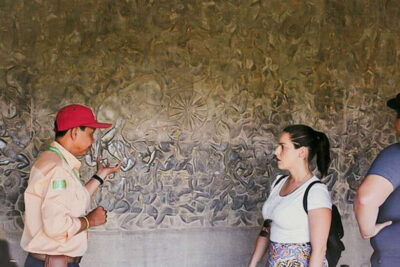
Angkor Wat 2-Day Tour with Sunrise and Sunset
Read our review →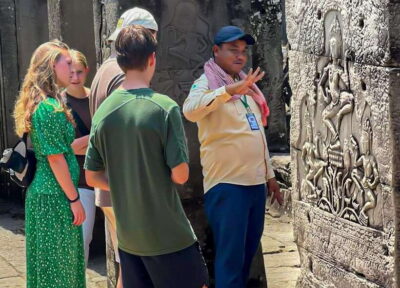
Angkor Wat Sunrise tour with Small – Group and Guide tours
Read our review →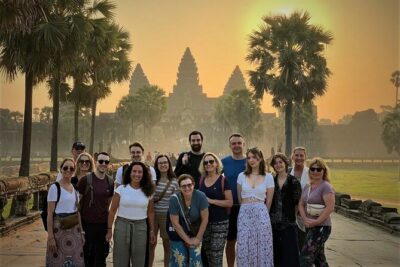
Angkor Wat Highlights and Sunrise Guided Tour from Siem Reap
Read our review →
Angkor Wat Sunset Small Group Tour with Lunch Included
Read our review →