Reviewed · ANGKOR WAT TOURS
2 Days Discover Angkor Wat Complex and Cambodia’s Villages Tours
Angkor rewards an early start. This private two-day trip pairs Angkor Wat and its famous temple circuit with quieter Beng Mealea, a ride through Cambodian villages, and Kompong Phluk on Tonle Sap. I like the air-conditioned private vehicle, which gives your group room to manage a demanding schedule, and I like the chance to see more than the usual Angkor highlights. The main drawback is the 5:00 am start and the number of stops packed into two long days.
I also like the guide support. Praim is praised for clear English, helpful photo-taking, and explanations that connect Cambodia’s past with its present. Khim is another named guide associated with the experience, and his detailed temple explanations are especially useful if you want more than a quick walk past the stones. Just remember that the advertised price does not include the temple tickets, meals, or the boat trip.
In This Review
- Key points to know before booking
- What the $235 price really covers
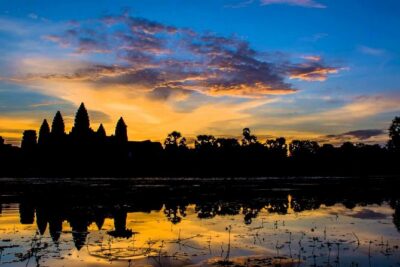
- Day one begins with Angkor Wat
- Ta Prohm and the power of the jungle
- Ta Keo offers a sharper climb
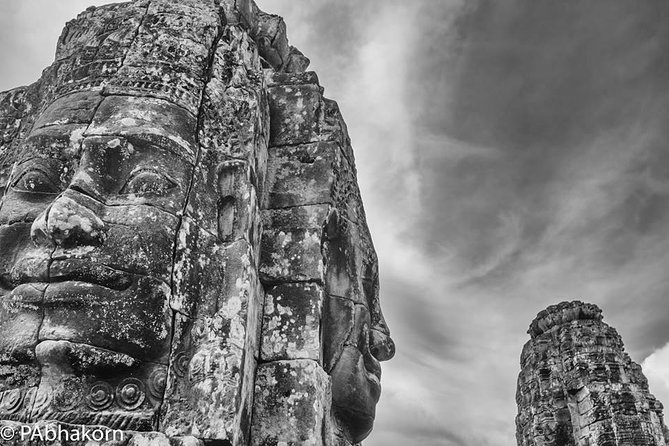
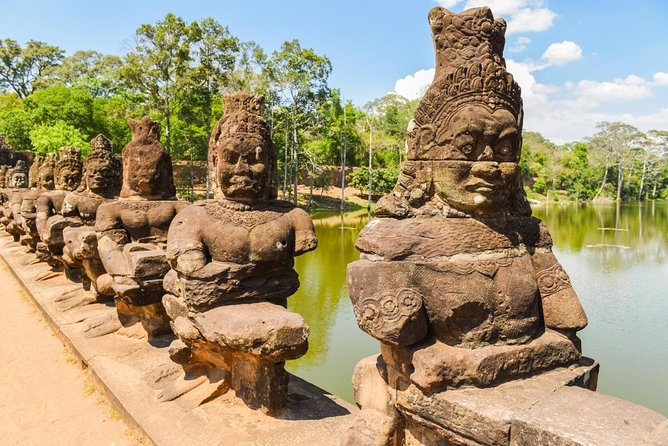
- Angkor Thom, the Terrace of the Elephants, and Bayon
- Day two trades crowds for Beng Mealea
- Kompong Phluk shows a working lakeside community
- Tonle Sap adds a wider view
- The guide can make or break the two days
- Transport, comfort, and the physical effort
- Who will get the most from this tour
- Should you book the two-day Angkor and village tour?
- FAQ
- How much does the tour cost?
- What additional admission fees should I expect?
- What time does the tour start?
- Is transportation included?
- Is this a private tour?
- What does the tour provide during the day?
Key points to know before booking
- A 5:00 am start gives you an early beginning at Angkor, but you should be ready for a full day on your feet.
- Private transport for up to 10 people makes this easier to manage than a large coach trip, especially when your group wants a little flexibility.
- Day one covers the major Angkor sights, including Angkor Wat, Ta Prohm, Angkor Thom, Bayon, Ta Keo, and the Terrace of the Elephants.
- Day two changes the pace, taking you to the unrestored Beng Mealea temple and the stilt village of Kompong Phluk.
- Extra admission costs are substantial, with listed fees of $37 per person for Angkor and other temples, $10 for Beng Mealea, and $22 for Kompong Phluk and the private boat.
- Cold water and towels are included, a small but useful comfort in Cambodia’s heat.
What the $235 price really covers
The base price is $235 per group, with as many as 10 people included. That is strong value if you have a larger family or a full group of friends. At the maximum group size, the tour itself works out to $23.50 per person before admission charges.
For a couple, the price is less of a bargain because the same group rate is divided between fewer people. Still, you are paying for private use of an air-conditioned SUV or minivan and an English-speaking guide, rather than simply buying transport between temples.
The additional fees need to be part of your budget from the beginning. The listed charges are:
- $37 per person for Angkor Wat and the other Angkor temples
- $10 per person for Beng Mealea
- $22 per person for admission and the private boat ride at Tonle Sap and Kompong Phluk
That adds $69 per person. A two-person booking would therefore pay $235 for the tour, plus $138 in listed admissions, before food and drinks. A group of 10 would pay $235 plus $690 in listed admissions. The final value improves sharply as your group gets larger.
Meals, beverages, and personal expenses are not included. Cold drinking water and cold towels are supplied, which helps, but you should still plan for your own meals during two busy days.
More ways to see Angkor Wat:
- Angkor Wat Sunrise or Sunset Tour with Guide from Siem Reap
★ 5.0 · 12,109 reviews - Siem Reap: Angkor Wat: Small-Group Sunrise or Sunset Tour
★ 5.0 · 9,444 reviews - Siem Reap: Angkor Wat 2-Day Tour with Sunrise and Sunset
★ 4.9 · 4,429 reviews
Day one begins with Angkor Wat
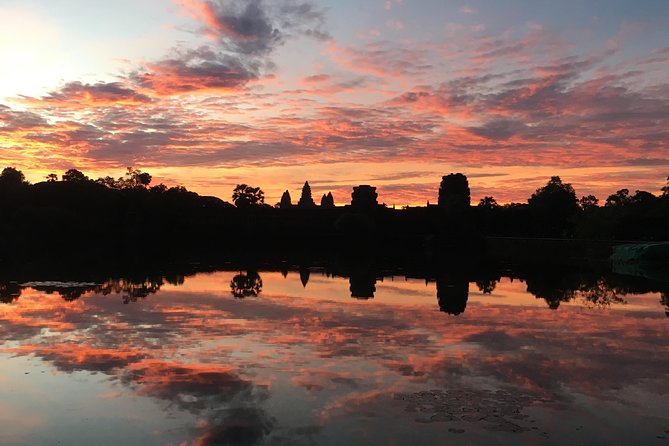
Angkor Wat receives about two hours, which is enough for an initial visit but not enough to examine every gallery and carving at a slow pace. The temple was built as a Hindu monument dedicated to Vishnu and occupies a vast site, so even reaching the major areas takes time.
I would use this first stop to focus on the structure, the scale, and the carved details your guide points out. An English-speaking guide is particularly useful here because the temple can feel overwhelming without a plan. Two hours also helps keep the rest of the day on schedule.
The early departure matters. Starting at 5:00 am is demanding, but it gives you a head start on one of Cambodia’s busiest sights. The exact sunrise arrangement is not specified, so you should not book this solely on the assumption that a formal sunrise viewing is included. The clear benefit is simply being out early and ready for the temple circuit.
Ta Prohm and the power of the jungle
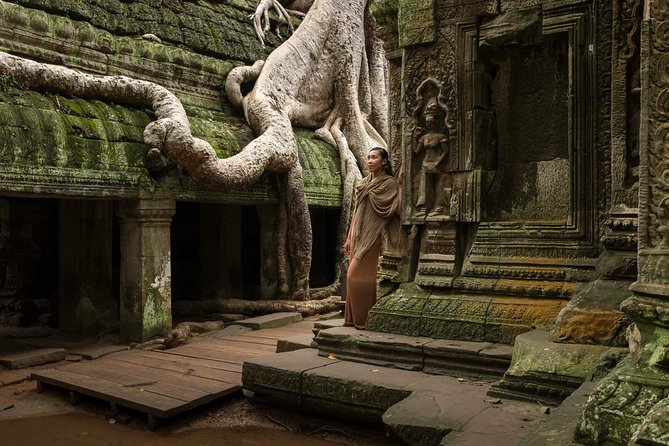
The next major stop is Ta Prohm, with about an hour to explore. This is the temple where trees and giant roots have grown into the stone walls, creating the image many people associate with Angkor’s jungle ruins.
Ta Prohm is also linked with the film Tomb Raider, but the movie connection is only one small part of its appeal. The roots, broken galleries, and partly ruined corridors show how nature has shaped the site over time. I would listen closely to the guide here, since the best experience comes from understanding what you are seeing rather than searching only for the most famous photo spot.
The hour-long visit is practical, though short for anyone who wants to linger over every carved surface. You will need comfortable footwear and a moderate level of fitness, as the tour includes walking around several large temple compounds.
Ta Keo offers a sharper climb
Ta Keo is a smaller stop, scheduled for about 30 minutes. It is a mountain temple built by Jayavarman V, with five sanctuaries placed on top of a five-stepped pyramid rising about 22 meters.
This stop changes the mood. Ta Prohm is known for trees and atmospheric ruins, while Ta Keo is about height, stone blocks, and a more severe pyramid form. Thirty minutes is enough for a look and some context, but the short visit may feel rushed if you want to spend much time climbing or studying the monument.
Because the tour covers several temples in one day, the schedule asks you to keep moving. That is useful if you want broad coverage, but less suitable if your ideal temple day means sitting quietly at one site for a long time.
A few more options around Siem Reap worth reading up on
- From Siem Reap: Kampong Phluk Floating Village Tour by Boat
★ 4.9 · 6,979 reviews - Sunset tour of Kampong Phluk stilts home village on the Tonle Sap
★ 5.0 · 4,865 reviews - Siem Reap: Kampong Phluk Floating Village Tour with Boat
★ 4.9 · 3,843 reviews - Siem Reap: Full-Day Angkor Wat Guided Tour with Sunset
★ 4.9 · 3,803 reviews
Angkor Thom, the Terrace of the Elephants, and Bayon
Angkor Thom was an ancient Khmer city built around 1181 under King Jayavarman VII. The city was enclosed by walls about 8 meters high and stretches more than 12 kilometers around its nearly square form.
You receive about 30 minutes at Angkor Thom itself, followed by another 30 minutes at the Terrace of the Elephants. The terrace served as a platform from which the king could view victorious armies. Its position within the walled city gives you a clearer sense that Angkor was not just a collection of isolated temples, but a large royal center.
Bayon receives about an hour and is likely to be one of the day’s highlights. Its towers carry the famous large stone faces, often described as smiling or associated with Buddha imagery. The temple is densely decorated, and the repeated faces create a very different feeling from Angkor Wat’s long galleries or Ta Prohm’s tree-covered ruins.
This part of the itinerary is well chosen for variety. You see a royal city, a ceremonial terrace, and a temple famous for its faces, all in a compact stretch of the day. The tradeoff is physical: by this point, you will have spent hours walking, climbing, and getting in and out of the vehicle.
Day two trades crowds for Beng Mealea
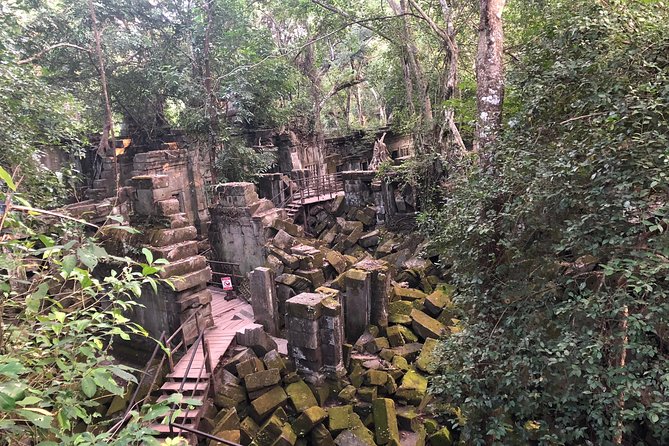
Day two begins at Prasat Beng Mealea, about two hours from the schedule. This temple is largely unrestored, with sandstone blocks, thick brush, and trees growing through the remains. Its name is connected with lotus ponds, and although it was built as a Hindu temple, some carvings show Buddhist motifs.
Beng Mealea is a good reason to choose this two-day plan instead of stopping after the main Angkor circuit. The first day gives you the celebrated monuments. Beng Mealea offers a rougher, less orderly look at a ruined temple complex, where fallen stones and plant growth are part of the experience.
Do not expect the same polished presentation as Angkor Wat. That is the point, but it can also make walking less straightforward. The tour description calls for moderate physical fitness, and Beng Mealea is one of the stops where sturdy shoes and careful footing matter most.
The $10 admission fee is separate from the main Angkor charge. Keep that cost in mind, especially if you are comparing this experience with a shorter temple package.
Kompong Phluk shows a working lakeside community
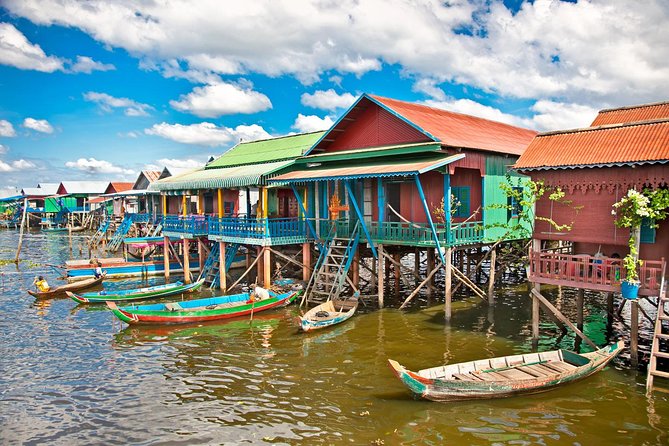
The afternoon moves away from temple architecture and toward everyday life at Kompong Phluk. The village is built on stilts on the Tonle Sap, and its name means Harbor of the Tusks. The community depends largely on fishing, giving you a different view of Cambodia from the royal monuments of Angkor.
About two hours are set aside for Kompong Phluk. That is enough time to see the village and take the private boat ride listed in the additional charges. The boat is not included in the $235 price, so allow $22 per person for admission and the boat experience.
This stop is valuable because it places Cambodia’s ancient monuments beside a living community shaped by water. You are not simply moving from one old structure to another. You are seeing how people organize homes and work around the changing conditions of Tonle Sap.
The village is seasonally affected by the lake’s changing water levels, so the exact appearance of the surroundings can vary. The provided details do not promise a particular water level or a specific type of boat, so it is best to view this as a community and lake excursion rather than a guaranteed scenic set piece.
Tonle Sap adds a wider view
The final stop is Tonle Sap Great Lake, with about an hour scheduled. Tonle Sap is the largest freshwater lake in Southeast Asia and is linked to a river about 120 kilometers long. Its water levels change with the seasons, which shapes the villages, fishing, and travel around it.
An hour at the lake is not a full natural history lesson, but it gives your guide a useful setting for explaining why the water matters so much to local life. After two days of temples, this open-water setting also offers a welcome change of pace.
The boat and lake admission are additional costs, not part of the tour price. That arrangement is worth clarifying when you book, since the lake visit is one of the main reasons to choose this itinerary.
The guide can make or break the two days
The strongest part of this experience is the guide service. Praim is praised for speaking English very well, explaining the temples at the right level of detail, answering questions, and keeping people comfortable. He is also willing to take photos, which is a practical bonus when you are traveling as a couple or small group.
Khim is also named as a guide for both days, with particular strength in temple history and detailed explanations. Since this is a private activity, your experience depends heavily on which guide is assigned and how well the pace fits your group.
The guide is not just there to point out a doorway. At Angkor, an explanation can help you understand why one temple emphasizes Vishnu, why another was built under Jayavarman VII, and why the Bayon’s faces matter. At Kompong Phluk, the guide can connect the village to fishing and the seasonal lake.
You can also ask for help with pacing. The schedule is set, but private touring should give your group more room to communicate preferences than a large shared bus. The available information specifically praises the guides for being accommodating, but it does not promise that every stop can be extended.
Transport, comfort, and the physical effort
An air-conditioned SUV or minivan is included. That matters in Siem Reap, where two days of walking among exposed stone temples can be tiring. The vehicle gives you a cooler place to rest between stops, and cold water and towels are included.
The tour is private, so only your group participates. For a family, this can make the early start and long schedule easier to manage. You are not waiting for a coach full of strangers at every stop, and your guide can focus on your questions.
Still, private transport does not make the tour easy physically. You should expect repeated walking, time outdoors, and some uneven temple surfaces. The stated requirement is moderate physical fitness, so this is not the right choice if you need a very low-walking itinerary.
The two-day plan is also quite full. Day one includes six stops, while day two combines a remote ruin with a village and a lake. I like that it covers so much, but you should choose it because you want variety and broad coverage, not because you expect a slow, restful holiday.
Who will get the most from this tour
This trip suits you best if you have only two days in Siem Reap and want the major temples plus a wider look at Cambodian life. It is especially useful for first-time visitors who want a guide to explain the sites rather than simply arrange a car.
It also works well for groups of friends or families of up to 10. The group price becomes more attractive as more people share it, and the private format gives you a little more control over the experience.
You may want a different plan if you prefer to spend an entire morning at one temple, avoid early starts, or keep walking to a minimum. The schedule is efficient, but it is not leisurely.
The experience is booked, on average, 72 days ahead, so planning early is sensible if your dates are fixed. Confirmation is provided at booking, and pickup is offered. The stated start time is 5:00 am, so make sure your accommodation and morning plans fit that departure.
Should you book the two-day Angkor and village tour?
I would book this tour if you want a private, guide-led introduction to both Angkor’s famous monuments and Cambodia’s countryside and lake communities. The strongest reasons are the wide range of sights, the air-conditioned vehicle, and the guides Praim and Khim, who are praised for clear explanations, strong English, flexibility, and practical help with photos.
I would hesitate only if you want a relaxed pace or are traveling alone or as a couple on a tight budget. The $235 group price is much better for a larger party, and the $69 per person in listed extra fees makes the total noticeably higher.
For a full two-day snapshot of Siem Reap, though, this is a sensible choice. You get Angkor Wat, the faces of Bayon, tree-covered Ta Prohm, the rough ruins of Beng Mealea, and a boat-based look at Kompong Phluk and Tonle Sap. That is a lot of Cambodia in two early-start days.
FAQ
How much does the tour cost?
The tour costs $235 per group, for up to 10 people. Temple admissions, the Beng Mealea fee, the Tonle Sap and Kompong Phluk admission, the private boat, meals, beverages, and personal expenses are not included.
What additional admission fees should I expect?
The listed additional charges are $37 per person for Angkor Wat and the other temples, $10 per person for Beng Mealea, and $22 per person for admission and the private boat ride at Tonle Sap and Kompong Phluk.
What time does the tour start?
The start time is 5:00 am. The experience lasts approximately two days.
Is transportation included?
Yes. The tour includes an air-conditioned SUV or an air-conditioned minivan, along with pickup.
Is this a private tour?
Yes. Only your group participates, with up to 10 people in the group.
What does the tour provide during the day?
An English-speaking guide, cold drinking water, and cold towels are included. Meals, beverages, entrance fees, and personal expenses are not included.
Newest reviews from Siem Reap
- War Museum, Killing Field, and APOPO Hero RATs Tour★ 5.0 · 7 reviews
- Angkor Wat at Sunrise★ 4.0 · 7 reviews
- Siem Reap Angkor Airport Taxis (from Airport to Hotel)★ 5.0 · 44 reviews
- Cambodian Cooking Class and Oxcart Ride with Local Village Tour★ 5.0 · 4 reviews
- Secret Temples of Angkor – Guided Tour in Siem Reap★ 5.0 · 6 reviews
- Short Cycling at Countryside★ 5.0 · 29 reviews
- SIEM REAP E-BIKE HALF-DAY COUNTRYSIDE (25-30 km)★ 4.0 · 1 review
- Unveiling the Mystical Beauty of Phnom Kulen National Park★ 5.0 · 6 reviews
Angkor Wat Tours, compared.
Angkor Wat Sunrise or Sunset Tour with Guide from Siem Reap
Read our review →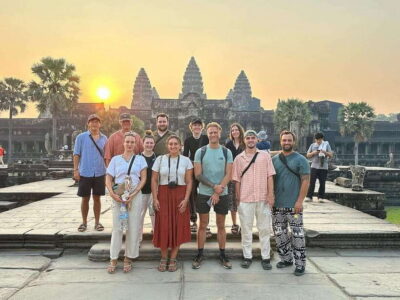
Angkor Wat: Small-Group Sunrise or Sunset Tour
Read our review →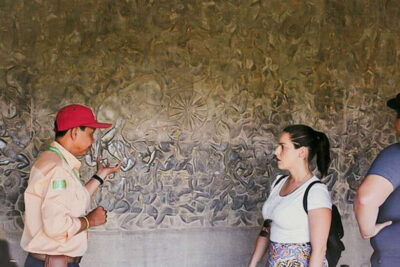
Angkor Wat 2-Day Tour with Sunrise and Sunset
Read our review →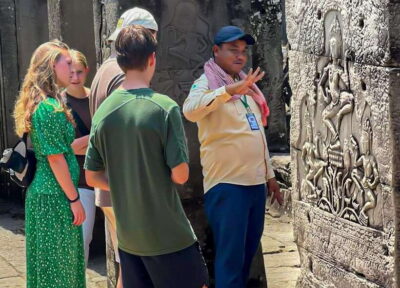
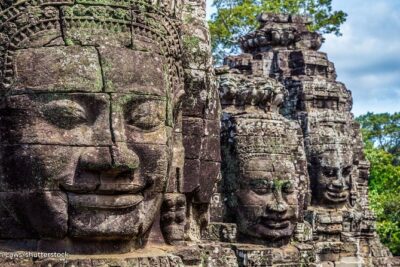
Angkor Wat Sunrise tour with Small – Group and Guide tours
Read our review →
Angkor Wat Highlights and Sunrise Guided Tour from Siem Reap
Read our review →
Angkor Wat Sunset Small Group Tour with Lunch Included
Read our review →