Reviewed · ANGKOR WAT TOURS
2 Days Angkor Wat Tranquility Tour
Angkor rewards an early start. This two-day private tour combines the famous temples with quieter stops such as Prasat Bat Chum and Banteay Prei, giving you a fuller view of the Angkor complex than a standard highlights-only outing. I like the careful mix of major sights and small temples, and I like having air-conditioned transport between far-flung ruins.
The sunrise visit to Angkor Wat is another strong point, especially since the second day also includes Ta Prohm and Angkor Thom. The main drawback is cost: at $110 per person, you still need to add the $62 three-day Angkor pass, along with meals. The schedule is also packed, with long temple days and several hours on foot.
In This Review
- Key points at a glance
- Why this tour works for Angkor
- Day one begins with small temples
- Pre Rup offers brickwork and broad views
- Banteay Samre rewards a slower look
- Eastern Mebon and its stone elephants
- Preah Khan brings stone and nature together
- Banteay Prei closes the quiet part of day one
- Sunrise at Angkor Wat requires an early morning
- Ta Prohm brings the Tomb Raider connection
- Banteay Kdei adds another layer
- Angkor Thom fills the afternoon
- What the guide adds
- The $110 price and the real budget
- Who should book this experience
- Should you book the 2 Days Angkor Wat Tranquility Tour?
- FAQ
- How long is the 2 Days Angkor Wat Tranquility Tour?
- What is included in the tour price?
- Is the Angkor entrance pass included?
- Does the tour include food and drinks?
- Is accommodation included?
- Is hotel pickup available?
- What time does the tour start?
- Is this a private tour?
- What clothing is required at the temples?
- Can most people participate?
- Can I cancel for a full refund?
Key points at a glance
- Seven quieter temples on day one: Prasat Kravan, Prasat Bat Chum, Pre Rup, Banteay Samre, Eastern Mebon, Preah Khan, and Banteay Prei.
- Sunrise at Angkor Wat: You leave early enough to arrive before dawn, followed by about four hours at the temple.
- Private transport throughout: An air-conditioned car, minivan, or minibus takes you from your hotel to each stop.
- A useful balance of famous and lesser-known sites: Ta Prohm and Angkor Thom receive plenty of time, while smaller temples offer more peace.
- A guide-led experience: Your English-speaking guide provides background and practical advice, with Pal Chen receiving especially warm praise for detailed explanations and crowd avoidance.
- Budget carefully: The tour costs $110 per person, but the three-day Angkor pass costs another $62. Food, drinks, and accommodation are also separate.
Why this tour works for Angkor
The Angkor Archaeological Park is spread over a large area. Walking between temples is not realistic, and arranging each ride yourself can become tiring. This tour solves the basic transport problem with hotel pickup and private transfers in an air-conditioned vehicle.
I like the way the route gives day one a quieter character. Instead of rushing straight from one headline temple to another, you visit smaller sites where the setting can feel calm and uncluttered. Then day two brings the big names: Angkor Wat, Ta Prohm, and Angkor Thom.
That balance matters. If you only visit Angkor Wat and Ta Prohm, you see the most famous images but miss some of the variety. Smaller temples reveal different building materials, layouts, carvings, and settings. You also get a better sense of how large the Angkor area really is.
This is a private activity, so only your own group participates. That gives you more room to ask questions and adjust your pace than you would have on a large coach excursion. Still, the itinerary is fixed enough that you should not expect a slow, unplanned day at each temple.
More ways to see Angkor Wat:
- Angkor Wat Sunrise or Sunset Tour with Guide from Siem Reap
★ 5.0 · 12,109 reviews - Siem Reap: Angkor Wat: Small-Group Sunrise or Sunset Tour
★ 5.0 · 9,444 reviews - Siem Reap: Angkor Wat 2-Day Tour with Sunrise and Sunset
★ 4.9 · 4,429 reviews
Day one begins with small temples
The first stop is Prasat Kravan, a 10th-century Hindu temple dedicated to Vishnu. You have about 30 minutes here. It is a short visit, but the temple provides a useful introduction to the brick architecture found around Angkor.
Next comes Prasat Bat Chum, another small 10th-century site. It was built by Kavindrarimathana, a Buddhist minister of the Khmer king Rajendravarman. The stop lasts about 30 minutes, and its main appeal is the quiet atmosphere.
Bat Chum is one of the places that gives this tour its name. You might find few, if any, other people there. That peace lets you look closely and listen to your guide without the noise and movement found at the most popular temples.
The short time at both Prasat Kravan and Prasat Bat Chum is sensible for a first look, though anyone fascinated by temple details may want longer. The route is designed for variety, not extended study at every monument.
Pre Rup offers brickwork and broad views
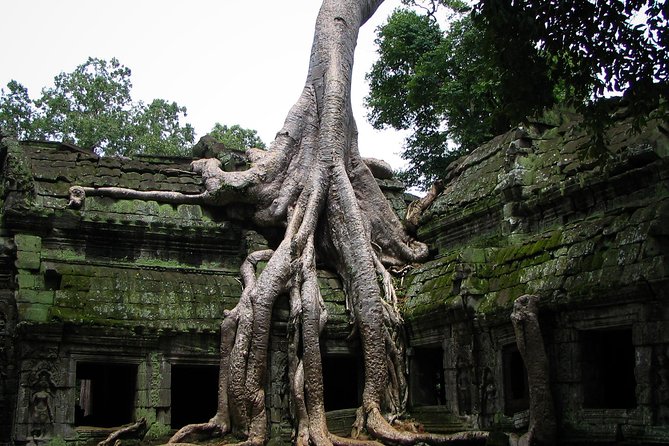
You then spend about an hour at Pre Rup, a large brick temple with a strong vertical design. The upper level gives you a view across the surrounding area, and the temple’s height helps explain how much of Angkor was once covered by jungle.
Pre Rup can feel more exposed than the smaller sites, so this is a good place to protect yourself from the sun and carry water. The tour provides bottled drinking water, but you should still bring suitable clothing and sun protection.
I like this stop because it adds scale to the day. You are not only looking at carved stones. From the upper level, you gain a sense of the enormous area once controlled by the Angkor civilization.
Banteay Samre rewards a slower look
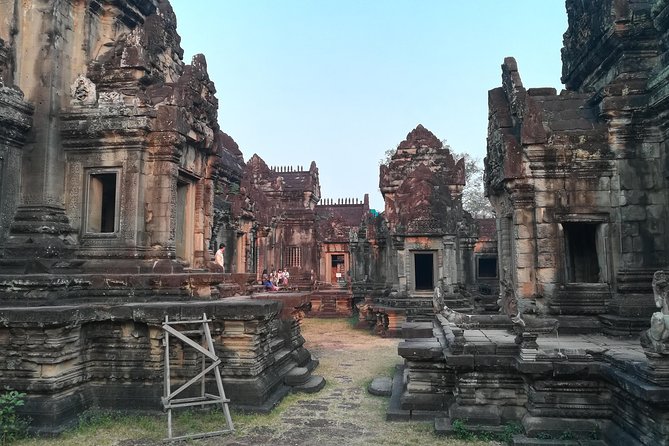
Banteay Samre receives about an hour, and that is useful. The temple is noted for its architectural style and peaceful setting. The description of this stop suggests a place where you may not want to hurry away, and the longer visit gives you time to take in the walls, towers, and carved surfaces.
This is one of the better places to ask your guide about design and construction. The tour promises hints and tips at each stop, and a guide can help you notice details that are easy to miss when you first walk through a temple entrance.
The route does not treat Banteay Samre as a quick photo stop. That makes it more valuable than a schedule that tries to squeeze in too many monuments with only a few minutes at each.
A few more options around Siem Reap worth reading up on
- From Siem Reap: Kampong Phluk Floating Village Tour by Boat
★ 4.9 · 6,979 reviews - Sunset tour of Kampong Phluk stilts home village on the Tonle Sap
★ 5.0 · 4,865 reviews - Siem Reap: Kampong Phluk Floating Village Tour with Boat
★ 4.9 · 3,843 reviews - Siem Reap: Full-Day Angkor Wat Guided Tour with Sunset
★ 4.9 · 3,803 reviews
Eastern Mebon and its stone elephants
Eastern Mebon is another one-hour stop. Its most memorable feature is a group of elephant statues, including eight elephants described as being made from single large stones.
The elephants give the temple an immediate visual hook, but the stop is also useful for comparing it with the other brick and stone structures from the day. Your guide can help place the temple within the wider Angkor story, rather than leaving you with only a collection of attractive ruins.
By this stage, the day is already long. Eastern Mebon follows several earlier temples, so you may begin to feel the heat and walking. The one-hour visit is enough to see the main features without turning the first day into an exhausting race.
Preah Khan brings stone and nature together
Preah Khan is the longest stop on day one, at about 90 minutes. It is a major temple complex where piles of stone, carvings, and natural growth combine in a way that many people find especially memorable.
The appeal here comes from contrast. Carefully carved galleries sit beside broken sections and signs of nature reclaiming the structure. You can spend time looking at the overall plan, then pause over smaller carvings and doorways.
This is a good place for your guide’s explanations. Without context, a large temple such as Preah Khan can feel like a maze. With help, you can better understand what you are seeing and decide which details deserve a closer look.
The drawback is simple: 90 minutes may not feel long enough if you want to explore every corridor. The benefit is that the schedule protects you from spending the entire day at one complex.
Banteay Prei closes the quiet part of day one
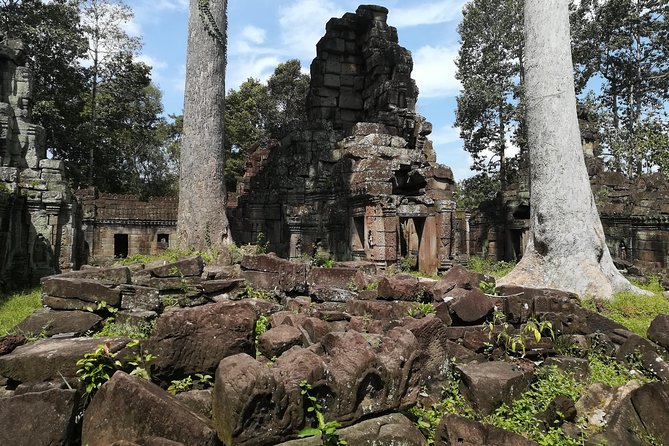
The final stop is Banteay Prei, with about 30 minutes set aside. It is another small temple where you may have the site largely to yourself.
After the larger spaces at Preah Khan, Banteay Prei provides a calm finish. It is less about ticking off a famous name and more about enjoying a quieter corner of the Angkor area.
Day one includes seven temples, so expect a full schedule. The private vehicle makes the plan practical, but you will want comfortable shoes and a willingness to keep moving. This is not a relaxed poolside holiday with one temple before lunch.
Sunrise at Angkor Wat requires an early morning
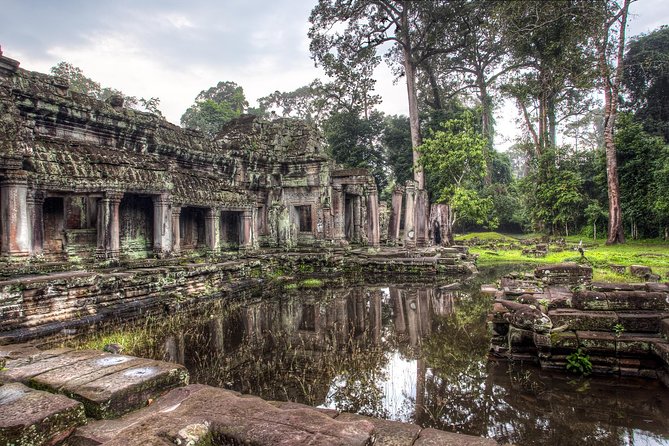
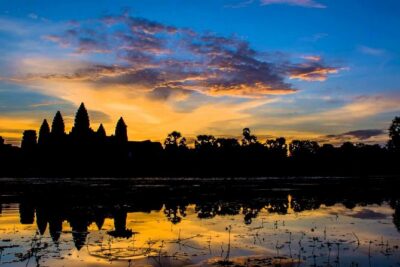
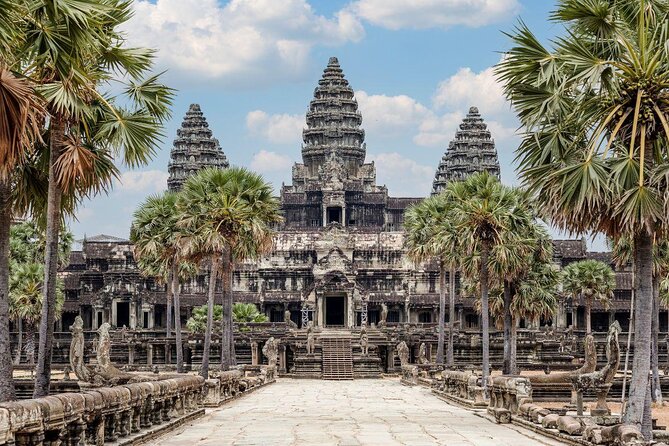
Day two starts before dawn. You are taken to Angkor Wat early enough to see the temple before sunrise, then spend about four hours exploring the complex.
The long visit is appropriate. Angkor Wat is vast, and a rushed hour would leave you seeing only the approach, the famous reflecting pools, and a small part of the interior. Four hours allow time for the main galleries, courtyards, towers, and carvings, depending on how quickly you walk and how much your guide explains.
Sunrise is a major reason to choose this tour, but keep expectations sensible. The experience depends on the morning conditions and the number of people arriving at the same time. The early start helps, but it does not turn Angkor Wat into a private monument.
The dress code matters here and at every temple. You must cover your thighs and shoulders. If your clothing does not meet the rules, you may be refused entry, so plan temple-appropriate clothing before leaving your hotel.
Ta Prohm brings the Tomb Raider connection
After Angkor Wat, the tour continues to Ta Prohm for about an hour. This is the temple associated with the film Tomb Raider, and its dramatic stonework makes it one of the most recognizable stops in the park.
Ta Prohm is popular for good reason. Trees and temple ruins appear together, creating striking views through doorways and along the galleries. The movie connection may bring you here, but the temple is more than a film location.
An hour gives you time to see the key areas, though it can feel brief if the site is busy. Your guide can help keep the visit focused and point out parts that might otherwise be lost among the crowds.
Banteay Kdei adds another layer
Banteay Kdei receives about an hour. The temple is associated with archaeological work by Japanese students, who found 274 Buddha statues during excavation.
That detail gives the site a useful human connection. You are not only looking at old walls. You are also seeing a place that continues to produce evidence about the past through careful digging and study.
Banteay Kdei is a good companion to Ta Prohm. Both have atmospheric ruins, but the experience is not identical. The stop helps prevent day two from becoming a simple repeat of the same famous temple style.
Angkor Thom fills the afternoon
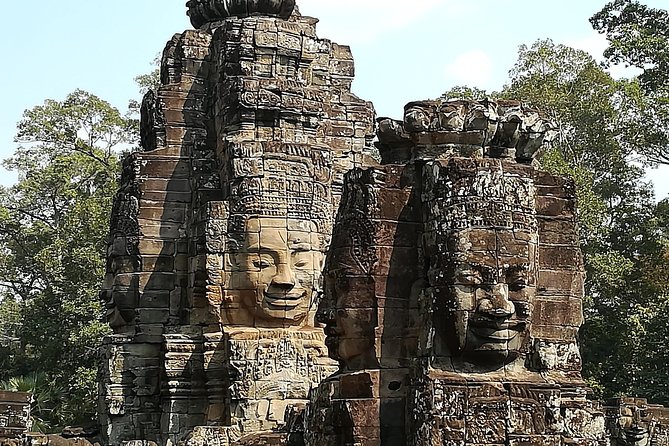
The final major section is Angkor Thom, where you spend about three hours exploring the ancient city compound. The schedule also includes sunset at the South Gate.
Three hours makes sense here because Angkor Thom is not one single temple. It is a large compound with several areas to explore, and the South Gate provides a memorable approach and departure point.
The afternoon timing gives you room to slow down after the early start. You can use the time to follow your guide’s explanations, study the entrances and carved details, and enjoy the scale of the former city rather than rushing through it.
Sunset is included, but the exact quality of the view depends on conditions and timing. The strongest part of this stop is the chance to give Angkor Thom a proper afternoon, rather than treating it as a quick drive-by.
What the guide adds
The tour includes an English-speaking guide, and the guide is important to its value. These temples can look like beautiful ruins without explanation. A good guide connects the buildings to their religious purpose, rulers, construction, and later discovery.
Pal Chen received particularly strong praise for giving detailed background at each temple while helping the group avoid the worst crowd pressure. That combination is worth looking for in a private tour. Clear explanations matter, but so does knowing when to pause, where to stand, and how to move through a busy site.
One mixed account described the experience as useful for getting from place to place but not quite worth the premium expected from a private tour. That is a fair warning. The quality of the day depends heavily on how actively the guide explains the sites and responds to your interests.
You can improve the experience by telling the guide what matters most to you. If you care about architecture, religious imagery, photography, or quiet corners, say so early. The tour includes lesser-known stops, and the provider has indicated that optional additional stops may sometimes be offered.
The $110 price and the real budget
The tour costs $110 per person. The three-day Angkor pass is not included and costs $62 per person, bringing the basic combined cost to $172 before food and drinks.
That price is easier to justify for two people or a small private group that values direct transport and a personal guide. You are paying for an air-conditioned vehicle, hotel transfers, two full sightseeing days, sunrise, sunset, and access to a route that would be awkward to arrange with public transport.
The value is less clear if you mainly want the three most famous temples. In that case, a shorter tour could cover Angkor Wat, Ta Prohm, and Angkor Thom for less time and possibly less money. This tour earns its price through its breadth and quieter temples.
Group discounts are offered, so the final per-person cost may work better for a larger party. Accommodation, meals, drinks, and the entrance pass remain separate expenses.
Who should book this experience
I would recommend this tour if you want to see the major Angkor sights without giving up smaller, quieter temples. It suits first-time visitors who want a guide, private transport, and a planned route rather than a day spent negotiating rides.
It is also a good choice if you care about context. The stops are varied enough to keep the two days interesting, and the guide can explain why a small brick temple deserves attention alongside Angkor Wat.
You should think twice if you dislike early mornings, long temple days, or frequent vehicle transfers. Day one includes seven stops, and day two starts before dawn. The schedule is rewarding, but it is not gentle.
Bring water, wear clothing that covers your shoulders and thighs, and use sturdy footwear. The tour supplies bottled water, but food and drinks beyond that are your responsibility.
Should you book the 2 Days Angkor Wat Tranquility Tour?
Book it if you want quiet corners alongside the essential temples, private transport, and a guide-led visit that covers a lot in two days. The strongest parts are the lesser-known stops, the four-hour Angkor Wat visit, and the chance to avoid arranging transport yourself.
Skip it if your priority is the lowest possible price or a slow schedule. At $110 plus the $62 pass, it is not a budget outing, and the packed route asks for energy. For the right visitor, though, it offers a practical way to see both the famous face of Angkor and its quieter edges.
FAQ
How long is the 2 Days Angkor Wat Tranquility Tour?
The tour lasts approximately two days.
What is included in the tour price?
The price includes an English-speaking guide, transportation in an air-conditioned car, minivan, or minibus, bottled drinking water, sunrise, and sunset.
Is the Angkor entrance pass included?
No. The three-day Angkor pass costs $62 per person and must be paid separately.
Does the tour include food and drinks?
Food and drinks are not included. Bottled drinking water is provided.
Is accommodation included?
No. You must arrange and pay for your own accommodation.
Is hotel pickup available?
Pickup and round-trip transfers are offered, so you do not need to use public transport between your hotel and the temples.
What time does the tour start?
The stated start time is 8:00 am, although day two begins early so you can reach Angkor Wat before dawn for sunrise.
Is this a private tour?
Yes. Only your own group participates in the activity.
What clothing is required at the temples?
You must cover your thighs and shoulders when entering the temple complex. Incorrect clothing may result in refused entry.
Can most people participate?
Yes. Most people can participate according to the tour information.
Can I cancel for a full refund?
Yes, if you cancel at least 24 hours before the experience start time. Cancellations made less than 24 hours in advance are not refunded, and changes within that period are not accepted.
Newest reviews from Siem Reap
- Village walking & Cooking class in Siem Reap★ 5.0 · 2 reviews
- Angkor Wat Sunrise Shared Tours: Bayon, Ta Prohm And Kravan★ 5.0 · 1 review
- Ultimate Sunrise to Angkor Wat, Angkor Thom and Bayon Temple★ 5.0 · 3 reviews
- Twilight Tastes of Siem Reap Include Dinner★ 5.0 · 13 reviews
- Two Days Tour Angkor Complex; Banteay Srei, and Kulen Hill★ 5.0 · 1 review
- Trekking Tour at Phnom Kulen National Park from Siem Reap★ 5.0 · 3 reviews
- Trip to Big Circle included Banteay Srey and Banteay Samre★ 5.0 · 1 review
- Full-Day Private Tour of Angkor Wat with Pick Up★ 5.0 · 12 reviews
Angkor Wat Tours, compared.
Angkor Wat Sunrise or Sunset Tour with Guide from Siem Reap
Read our review →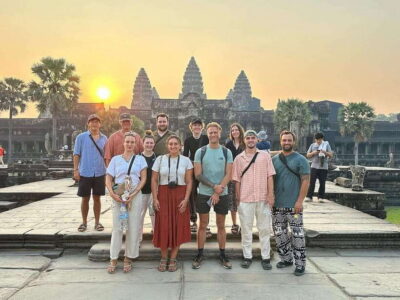
Angkor Wat: Small-Group Sunrise or Sunset Tour
Read our review →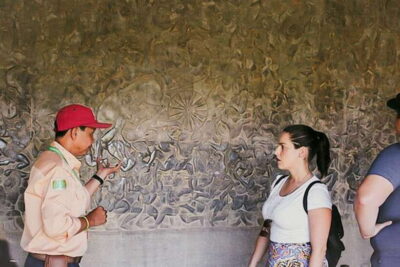
Angkor Wat 2-Day Tour with Sunrise and Sunset
Read our review →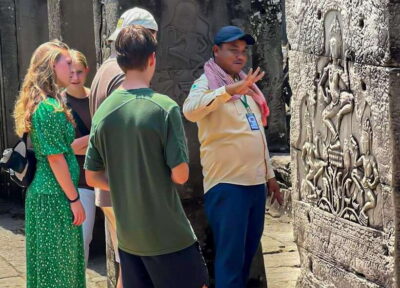
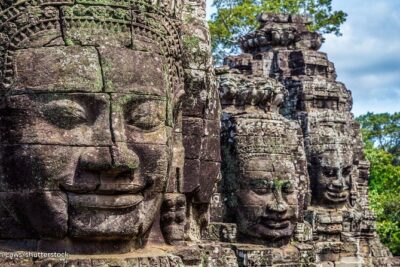
Angkor Wat Sunrise tour with Small – Group and Guide tours
Read our review →
Angkor Wat Highlights and Sunrise Guided Tour from Siem Reap
Read our review →
Angkor Wat Sunset Small Group Tour with Lunch Included
Read our review →