Reviewed · 1-DAY TOURS
1-Day Angkor Temple Small Group Day Tour
Angkor’s great temples reward a full day. I like that this tour combines Angkor Wat, Bayon, and Ta Prohm with the less-famous terraces and gates that help explain how the Khmer capital worked. I also like the small maximum of 10 people, plus hotel pickup, air-conditioned transport, bottled water, and an English-speaking guide included in the $17 price.
The main point to consider is that the temple admission fee is not included. You must also be ready for a long day on foot, with uneven surfaces and temple clothing rules that require covered knees and shoulders at some sites. The itinerary is full, so this suits you best if you want a broad first look rather than a slow, silent study of one or two temples.
In This Review
- Key points at a glance
- Why this $17 tour can be good value
- Starting at Angkor Wat from the quieter eastern side
- Angkor Thom’s South Gate and the scale of the old capital
- Bayon’s serene stone faces
- The Terraces of Elephants and the Leper King
- A brief Angkor Thom stop before Ta Prohm
- Ta Prohm and the power of the jungle setting
- What the day feels like in practice
- Who should book this Angkor day tour?
- Should you book it?
- FAQ
- How long does the Angkor temple tour last?
- What temples are included?
- Is hotel pickup included?
- Is the temple entrance fee included in the $17 price?
- How do I purchase the temple entrance ticket?
- Is transportation included?
- Is a guide included?
- What is the maximum group size?
- What should I wear to the temples?
- What type of shoes should I wear?
- Is bottled water provided?
- Can I cancel for a full refund?
Key points at a glance
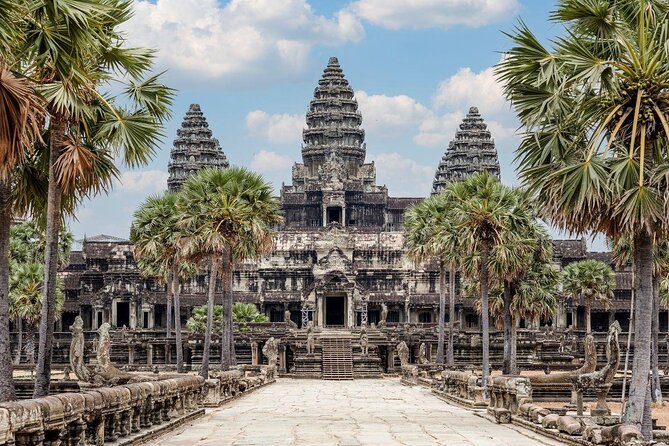
- A full Angkor circuit in about eight hours: You see the site’s best-known monuments in one organized day.
- Angkor Wat from the eastern side: The route begins away from the usual main approach, then continues through the temple’s galleries, chambers, and upper terraces.
- A guide-led look at stone stories: At Angkor Wat, the guide explains myths, history, and scenes carved into the long bas-reliefs.
- Small group size capped at 10: That is a useful middle ground between a private tour and a crowded coach.
- Ta Prohm brings the jungle atmosphere: The Tomb Raider temple is the day’s most dramatic contrast to the grand order of Angkor Wat.
- Low headline price, separate entrance fee: At $17 per person, the tour is inexpensive, but you need to budget for the required temple ticket.
Why this $17 tour can be good value
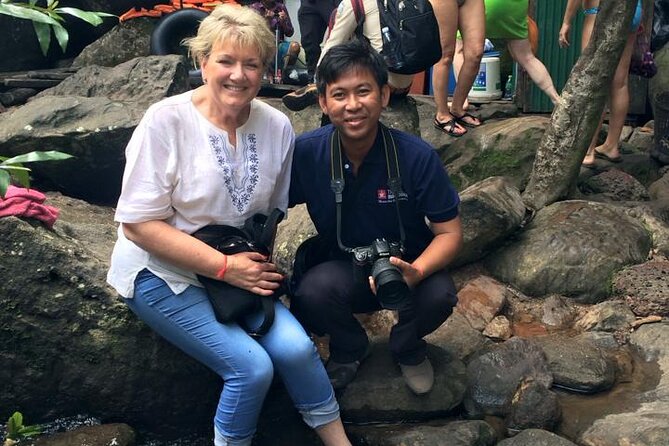
At $17 per person, this is an unusually low-cost way to arrange a full day around Siem Reap’s main Angkor sights. The price covers the English-speaking guide, air-conditioned vehicle, hotel pickup and drop-off, and bottled water. For you, that means less time arranging transport between far-flung temple areas and more time looking at the monuments.
The value depends on what you expect from a tour. If you want a private guide who will adjust every stop to your pace, this is not that product. The group can contain up to 10 people, and the schedule gives each site a set amount of time.
The entrance fee is extra, and that matters more than the low tour price might suggest. Your guide will send you a link to purchase the temple entrance e-ticket several days before the tour. Read that message carefully, and arrange the pass before the morning of the tour so you are not trying to sort out admission at the last minute.
One helpful detail is the air-conditioned vehicle. Angkor involves heat, walking, and repeated movement in and out of open courtyards. A cool ride between sites gives you a place to recover, even though you should not expect the vehicle to replace the walking.
A few more options around Siem Reap worth reading up on
- Angkor Wat Sunrise or Sunset Tour with Guide from Siem Reap
★ 5.0 · 12,109 reviews - Siem Reap: Angkor Wat: Small-Group Sunrise or Sunset Tour
★ 5.0 · 9,444 reviews - From Siem Reap: Kampong Phluk Floating Village Tour by Boat
★ 4.9 · 6,979 reviews
Starting at Angkor Wat from the quieter eastern side
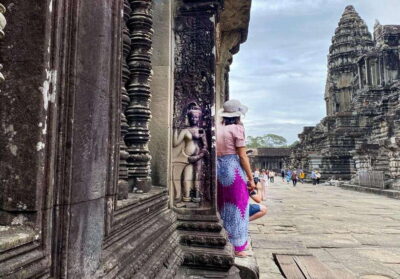
Angkor Wat receives the most attention for good reason. Built in the early 12th century, it is the largest religious monument in the world and the best-preserved major temple in the Angkor area. It also continued as an important religious center after its foundation, which gives the site a sense of ongoing purpose rather than simply being an abandoned ruin.
This tour enters from the eastern side, described as the less-visited approach. That choice can make the first moments feel less like a standard photo stop and more like a gradual arrival through the temple complex. You continue on foot along a jungle path toward the north ancient library pool before reaching the main architectural spaces.
Allow two hours here, and use them well. Your guide explains the temple’s design, the stories connected with it, and the carved scenes on the walls. Angkor Wat contains the longest stretch of bas-relief carvings in the world, so a guide adds real value by pointing out what the figures and scenes represent.
The route continues into the central chambers and toward the upper terraces. This is where the practical warning matters: you need comfortable flat shoes, and some surfaces may be uneven. The central and upper areas also require patience, especially if you want time to look closely rather than simply follow the group.
Clothing is important at some temples. Wear something that covers your shoulders and knees from the start. It is easier than carrying a spare outfit and trying to change between stops.
Two hours is a sensible amount of time for Angkor Wat, but it is not enough to examine every carving. I would treat this stop as the day’s main history lesson, then save some energy for the more compact temples later.
Angkor Thom’s South Gate and the scale of the old capital
After Angkor Wat, the tour moves to the South Gate of Angkor Thom. This is not merely a doorway on the way to Bayon. It introduces the scale and planning of the ancient Khmer capital, which had five gates and was protected as a fortified city.
The gate is flanked by rows of 54 stone figures on each side. The scene gives you a visual sense of a ceremonial entrance, with the figures lining the approach toward the city. You have about 30 minutes here, enough for an explanation and photographs without turning the stop into a long architectural study.
The old capital is described as having had more than one million people at its height and being larger in size than London. Those comparisons are useful as a reminder that Angkor was not just a group of isolated temples. It was a major urban center with royal, religious, and public spaces.
Because the stop is short, listen to the guide before wandering too far. The best use of the time is to understand what the gate meant and how it connects to the larger city beyond it.
Bayon’s serene stone faces
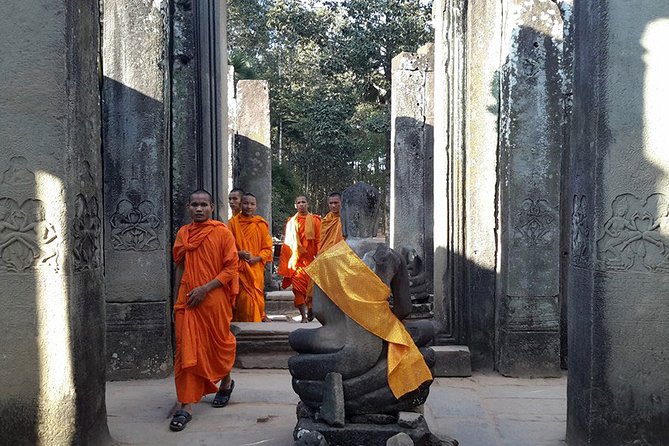
Bayon is one of the most memorable stops because its many towers carry enormous carved faces. Built in the 13th century as the state temple of King Jayavarman VII, it sits at the center of Angkor Thom, making it a natural next step after the South Gate.
You have about 50 minutes here. That is enough to see the central towers, study the faces from different angles, and hear how the temple functioned within the capital. More than 200 large faces are associated with the temple, and their calm expressions create a mood very different from Angkor Wat’s long galleries and grand formal approach.
Bayon also has two sets of bas-reliefs. They combine mythological scenes with historical events and ordinary daily life. That mix is especially useful because it moves the temple experience beyond royal monuments. You get glimpses of the wider society represented in stone, not only gods and kings.
The drawback is that Bayon can feel visually confusing. Towers, galleries, narrow passages, and carvings overlap, so it is easy to lose your sense of direction. This is one of the places where an English-speaking guide can help you see a pattern instead of just a collection of stone faces.
Something completely different for another day:
- Sunset tour of Kampong Phluk stilts home village on the Tonle Sap
★ 5.0 · 4,865 reviews - Siem Reap: Angkor Wat 2-Day Tour with Sunrise and Sunset
★ 4.9 · 4,429 reviews - Siem Reap: Kampong Phluk Floating Village Tour with Boat
★ 4.9 · 3,843 reviews - Siem Reap: Full-Day Angkor Wat Guided Tour with Sunset
★ 4.9 · 3,803 reviews
The Terraces of Elephants and the Leper King
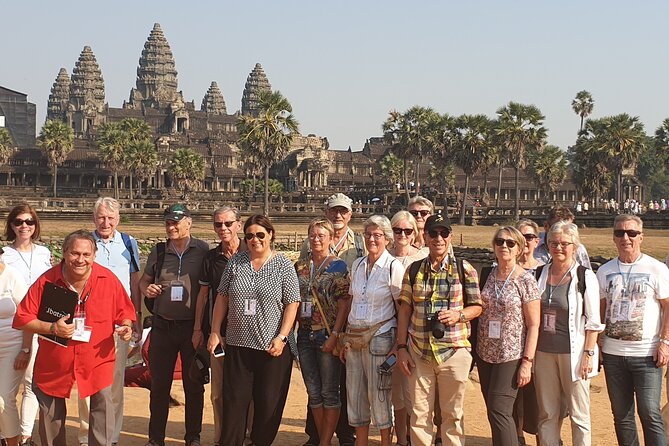
The Terrace of the Elephants is a quick but worthwhile stop. At about 350 meters long, it served as a reviewing stand for public ceremonies and as a base for the king’s grand audience. Some local Khmer residents call it the Ancient Khmer Stadium, a name that helps you picture its broad ceremonial function.
You have roughly 30 minutes here. The terrace is less about entering a temple and more about understanding how royal power was displayed in public. Look for the elephant imagery and the long front facing the former civic area.
The Terrace of the Leper King receives another 30 minutes. Its U-shaped structure may have served as a royal cremation site, although the use is not certain. It dates to the 13th century under Jayavarman VII, while its modern name comes from a 15th-century sculpture discovered there.
That statue depicts Yama, the Hindu god of death. The site is a good reminder that names attached to ancient monuments can come from later discoveries and modern interpretation, not necessarily from the original Khmer use.
These two terraces are easy to rush past because they lack the immediate fame of Angkor Wat or Ta Prohm. I like their place in the route. They add civic and ceremonial context, helping you picture Angkor Thom as a functioning capital rather than a set of picturesque ruins.
A brief Angkor Thom stop before Ta Prohm
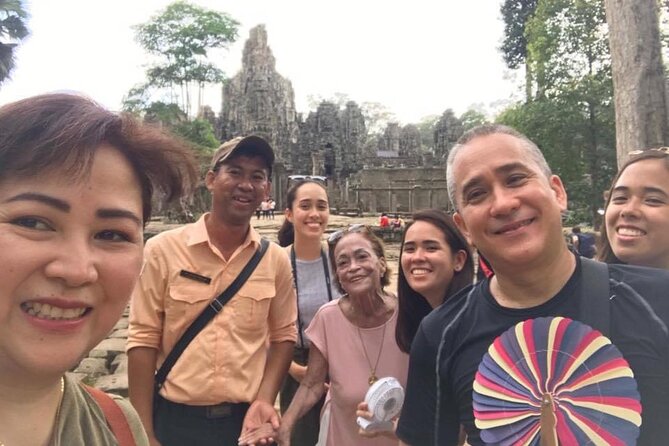
The itinerary includes a short 10-minute stop within Angkor Thom described as a special or secret stop. No detailed description is provided, so you should think of this as a brief pause rather than a major standalone monument.
That uncertainty is not necessarily a problem. It may give the guide room to show you a place that does not fit neatly into the main sequence. Still, do not book this tour expecting a long visit at this point. The scheduled time is short, and the day’s major sights remain Bayon, Angkor Wat, and Ta Prohm.
Ta Prohm and the power of the jungle setting

Ta Prohm is the day’s most atmospheric temple. Built in the 13th century, it is famous for trees growing through and around the ruins. The effect is dramatic, but the site matters for more than photographs.
Unlike many restored monuments, Ta Prohm remains in much the same condition in which it was found. The combination of stone galleries, tree roots, and jungle surroundings gives you a clear sense of how difficult it would be to reclaim such a place from the forest.
Its popular nickname, the Tomb Raider temple, comes from its appearance in the film. That connection brings more people here, but it should not reduce Ta Prohm to a movie backdrop. It was a religious temple positioned at the center of an ancient Khmer university during the 12th and 13th centuries, and UNESCO added it to the World Heritage List in 1992.
The one-hour visit gives you time to see the best-known sections without making the stop too long. Watch your footing, follow the route set by the guide, and give yourself time to look at the stonework beneath the roots. The contrast with Angkor Wat is the reason this pairing works so well: one temple shows controlled scale and formal order, while the other shows architecture meeting the forest.
What the day feels like in practice
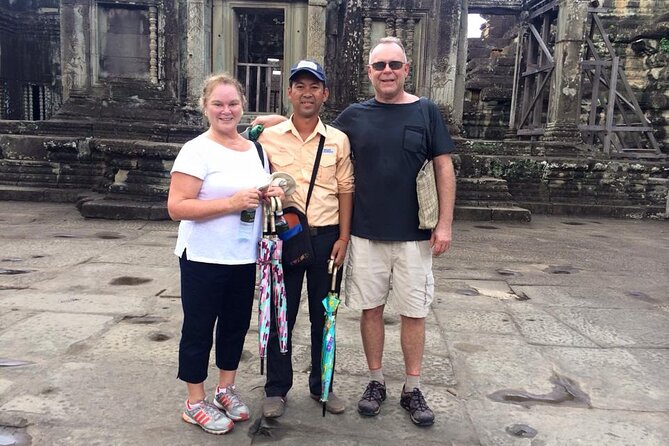
The tour lasts about eight hours, including the movement between stops. Pickup and drop-off at your hotel simplify the day, and the air-conditioned vehicle is useful after each walk. The itinerary does not include a meal, so you should clarify the food plan with the provider or make sure you have an appropriate way to handle lunch.
The listed stop times add up to several hours of sightseeing, but transport and transitions fill out the rest of the day. You should expect a steady schedule rather than long breaks. Comfortable shoes, water, sun protection, and modest clothing will make a larger difference than packing extra camera equipment.
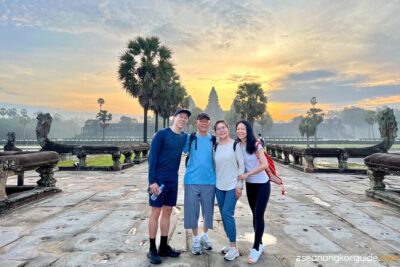
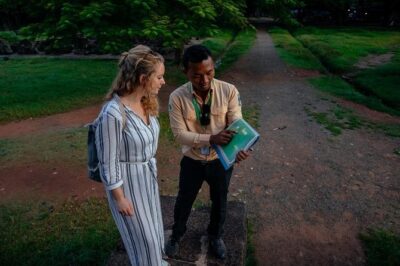
A group maximum of 10 is worth noting. You will not have the complete flexibility of a private tour, but the group is small enough that the guide can potentially explain details without addressing a huge crowd. The strongest praise attached to this experience goes to the guide and driver, especially Sym, whose passion for temple history was singled out, along with the pair’s kindness and willingness to help.
That personal quality matters at Angkor. A vehicle gets you from one site to another, but the guide determines whether a carved wall becomes a story you remember or just another old surface.
Who should book this Angkor day tour?
I would recommend it to a first-time visitor who wants the major Angkor sights in one day and prefers a low price with transport already arranged. It also suits you if you want an English-speaking guide to explain the temples rather than walking through them alone.
It is a good fit for people who value variety. You see a major religious monument, a fortified capital gate, a royal state temple, ceremonial terraces, and a jungle-covered temple in one route.
I would hesitate if you want a slow pace, long photography sessions, or a private itinerary. The day covers a lot, and the two-hour Angkor Wat visit is the longest single stop. The tour also requires walking, so flat comfortable shoes are not optional decoration.
The price is attractive, but compare the final cost after adding the temple entrance fee. Even with that extra expense, the included hotel transport, guide, vehicle, and water can make this a sensible choice for a short Siem Reap stay.
Should you book it?
Book this tour if you want an efficient first day at Angkor, a small group, and a guide who can connect the carvings to Khmer history. The strongest reason to choose it is the balance between coverage and price: you get the essential temples plus Angkor Thom’s gates and terraces without paying for a private vehicle.
Skip it if you prefer to set your own pace or spend most of a day at Angkor Wat alone. Before booking, confirm the entrance ticket process, prepare clothing that covers shoulders and knees, and be ready for a full day of walking. For most first-time visitors with limited time in Siem Reap, this is a practical introduction to the Angkor complex.
FAQ
How long does the Angkor temple tour last?
The tour lasts approximately eight hours.
What temples are included?
The route includes Angkor Wat, Bayon, and Ta Prohm, along with Angkor Thom’s South Gate, the Terrace of the Elephants, and the Terrace of the Leper King.
Is hotel pickup included?
Yes. Hotel pickup and drop-off are included.
Is the temple entrance fee included in the $17 price?
No. The Angkor temple admission fee is not included.
How do I purchase the temple entrance ticket?
The tour guide will send you a link to purchase the temple entrance e-ticket several days before the tour.
Is transportation included?
Yes. Transportation is provided in an air-conditioned vehicle.
Is a guide included?
Yes. An English-speaking tour guide is included.
What is the maximum group size?
The tour has a maximum of 10 travelers.
What should I wear to the temples?
At some temples, you must wear clothing that covers your knees and shoulders. Casual clothing is otherwise acceptable.
What type of shoes should I wear?
Flat shoes that are comfortable for walking are recommended.
Is bottled water provided?
Yes. Bottled water is included.
Can I cancel for a full refund?
Yes, if you cancel at least 24 hours before the experience start time. Cancellations made less than 24 hours in advance are not refunded, and changes within that period are not accepted.
Newest reviews from Siem Reap
- Village walking & Cooking class in Siem Reap★ 5.0 · 2 reviews
- Ultimate Sunrise to Angkor Wat, Angkor Thom and Bayon Temple★ 5.0 · 3 reviews
- Angkor Wat Sunrise Shared Tours: Bayon, Ta Prohm And Kravan★ 5.0 · 1 review
- Twilight Tastes of Siem Reap Include Dinner★ 5.0 · 13 reviews
- Two Days Tour Angkor Complex; Banteay Srei, and Kulen Hill★ 5.0 · 1 review
- Trekking Tour at Phnom Kulen National Park from Siem Reap★ 5.0 · 3 reviews
- Trip to Big Circle included Banteay Srey and Banteay Samre★ 5.0 · 1 review
- Full-Day Private Tour of Angkor Wat with Pick Up★ 5.0 · 12 reviews
1-Day Tours, compared.
1-Day Amazing Angkor Wat Tour with Sunset & All Interesting Major Temples
Read our review →
Angkor Wat one Day Private Tour for All Highlight Angkor Temples
Read our review →
1-Day private Angkor Temple Tour from Siem Reap
Read our review →
1-Day Angkor Wat Sunrise & All Interesting Temples Private Tour
Read our review →
Angkor Wat Sunrise Small-Group 1-Day Tour from Siem Reap
Read our review →