
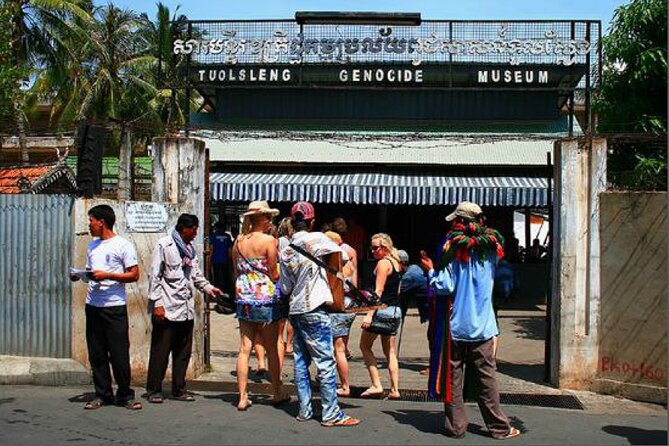
Reviewed · GENOCIDE MEMORIAL TOURS
Tuol Sleng Genocide Museum (S-21) and Choeung Ek Killing Fields Tour
The past is impossible to ignore here. I like the way this four-hour tour links Choeung Ek with Tuol Sleng, showing both the killing site and the prison system behind it. I also like the hotel pickup, air-conditioned transport, cool water, and the chance to ask questions along the way. The hard part is obvious: this is an upsetting experience, not a light sightseeing outing.
The tour costs $19.20 per person, with admission charged separately. I consider that a fair price for private transport, a driver, and an English-speaking guide, especially if you have limited time in Phnom Penh. Guides including Mr. Baboon, Mr. Tea, Sum Cheath, and Visal have been praised for clear English, compassion, and personal connections to Cambodia’s Khmer Rouge period.
In This Review
- Key points to know before you go
- Why visiting both sites matters
- Choeung Ek: a quiet site with a brutal past
- Tuol Sleng: from school to high-security prison
- Why a guide is worth the extra cost
- Transport, timing, and group size
- Price, admissions, and overall value
- Preparing for an emotionally difficult morning
- Who should book this Phnom Penh tour
- Should you book it?
- FAQ
- How long does the tour last?
- What places does the tour visit?
- Is hotel pickup included?
- Does the tour return to the hotel?
- Are admission fees included?
- What is included in the tour price?
- How many people can join the tour?
- Can I cancel for a full refund?
Key points to know before you go
- Two sites explain one tragedy: Choeung Ek shows where prisoners were killed and buried, while Tuol Sleng explains how many were held and tortured first.
- A guide adds real value: The history is complicated and painful, and guides such as Baboon and Visal help place the sites in context.
- Expect about four hours: Each stop is planned for roughly two hours, including time for explanations and quiet reflection.
- Admission costs extra: Budget $3 for Choeung Ek and $5 for Tuol Sleng, in addition to the tour price.
- Hotel pickup is offered: You can arrange pickup, or meet near River Crown Restaurant on Street 178.
- This is serious sightseeing: Prepare for disturbing evidence, personal stories, and a difficult account of Cambodia from 1975 to 1979.
Why visiting both sites matters
I think this tour works because it tells the story in two parts. At Choeung Ek, you see the place where prisoners were taken for execution. At Tuol Sleng, you learn about the prison where many people were detained and forced to provide false confessions.
Seeing only one site can leave gaps. Choeung Ek can feel like a quiet memorial site without enough explanation of how people arrived there. Tuol Sleng can feel like a former school filled with grim evidence, but without the wider setting of the killing fields. Together, the places show the machinery of persecution from detention to death.
The sites cover Cambodia’s Khmer Rouge rule from 1975 to 1979, when Pol Pot led the regime. The tour explains that Choeung Ek was once an orchard and a Chinese cemetery before it became one of the most infamous killing sites in the country.
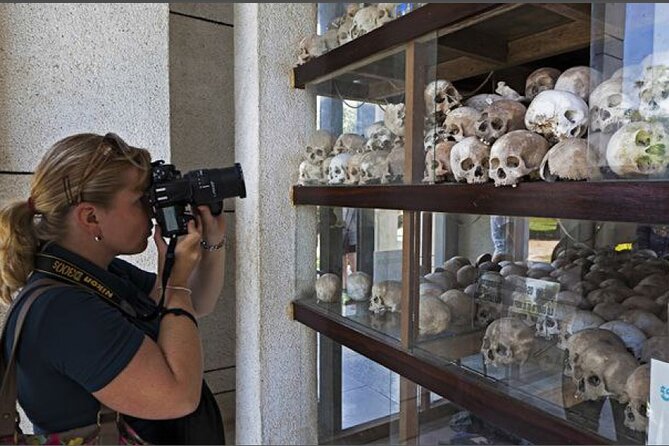
The numbers are difficult to absorb. The explanation at Choeung Ek refers to around 2,000 prisoners executed there, while the wider account of the Khmer Rouge period describes about 2.5 million people massacred and buried over three years. Your guide’s job is not only to give figures, but to connect them to individual lives and the physical places around you.
More Museum Visits in Phnom Penh
- The Killing Field and Toul Sleng Genocide Museum (S21) Tour
★ 5.0 · 1,977 reviews - Killing field and Toul Sleng genocide museum Tour
★ 5.0 · 610 reviews - Private Half Day To Killing Field & S21 Genocidal Museum in Phnom Penh
★ 5.0 · 137 reviews
Choeung Ek: a quiet site with a brutal past
Choeung Ek is about nine miles south of Phnom Penh. The drive gives you a short break from the city, though traffic can affect the timing. Air-conditioning matters here, especially during Cambodia’s hot weather, and the included cool water is a small but welcome touch.
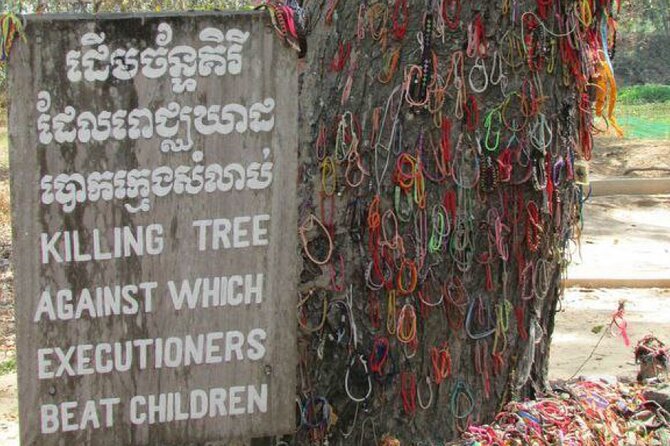
The site’s present-day calm can be unsettling. You may see open ground, trees, and memorial features, but the guide explains what happened here and why the place became known as the killing fields. That contrast is part of the experience. The setting does not look like the horror it represents.
You should expect two hours at the center, including the guide’s explanation. The pace appears to suit the subject. You have enough time to listen, look around, and pause without being pushed through in a few minutes.
This is also the part of the tour where plain language matters. The guide explains how the Khmer Rouge transported prisoners from Phnom Penh and carried out executions. Some accounts are graphic. If you are sensitive to descriptions of violence, listen at your own pace and take a quiet moment when needed.
The site is not presented as entertainment. That may sound obvious, but it matters. The best guides use a calm, respectful tone and allow the place to speak for itself. Baboon has been praised for preparing people for the difficult day ahead, then balancing facts with compassion. He has also shared his own family connection to the period, bringing the subject out of the textbook and into living memory.
That personal link can make the visit more meaningful, but it also means the tour may feel emotionally close. I would choose this experience only if you are ready to give the subject your full attention.
Tuol Sleng: from school to high-security prison
Back in Phnom Penh, the tour visits Tuol Sleng Genocide Museum, also known as S-21. The name is described as meaning hill of the poisonous trees. Before the Khmer Rouge took over, the site was a popular high school. Pol Pot’s regime converted it into a high-security prison.
That change is central to the visit. A school is normally linked with children, learning, and ordinary daily life. At Tuol Sleng, the same buildings became a place of detention and torture. The setting makes the political violence feel frighteningly close to normal life.
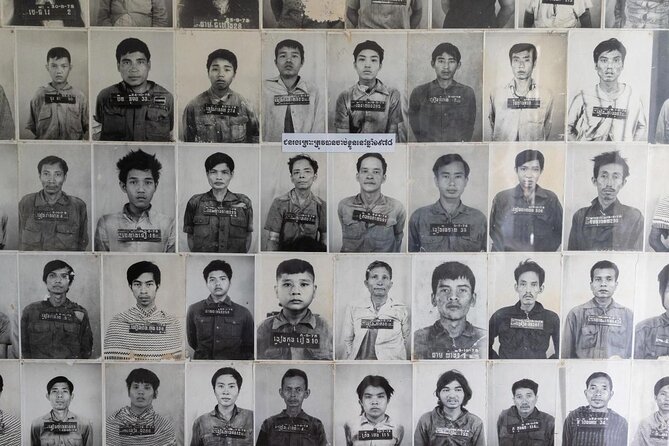
The museum account states that around 20,000 people were imprisoned there. Many were tortured for information, often as part of a system built on forced confessions and suspicion. The tour helps you understand that the Khmer Rouge did not target only one simple group. Teachers, officials, intellectuals, professionals, and ordinary people could all become suspects.
You have about two hours here. That is useful because the material needs time. You may want to listen carefully to the guide, look at the rooms and exhibits, and take a pause between sections.
The museum can be more confronting than Choeung Ek because the evidence of imprisonment and torture is tied to enclosed buildings. Some visitors find the prison atmosphere especially difficult. I would not try to rush through it just to complete the schedule. The point is to understand what happened, not to collect another attraction.
The strongest guide commentary makes a difference. Sum Cheath has been praised for explaining both the Khmer Rouge and the stories behind the sites. Visal has also been praised for thorough historical explanations and clear English. Baboon is repeatedly singled out for combining factual storytelling with a sense of humor when appropriate, while knowing when the subject demands complete seriousness.
That balance is valuable. A guide who only recites dates can leave you lost. A guide who dramatizes too much can make the visit feel disrespectful. The best approach is direct, calm, and human.
Why a guide is worth the extra cost
You can visit both places without a guided tour, but I think a guide is the main reason to book this format. The official material at each site can tell you what you are seeing. A good guide explains how the sites connect and answers questions in plain English.
That matters because the Khmer Rouge period is not a short, tidy story. Cambodia’s political history, the prison system, forced labor, executions, and the wider death toll can be hard to place in order. A guide gives you a framework before the most difficult details arrive.
The strongest feedback centers on the guides rather than the vehicle or the booking process. Baboon is the name most often highlighted, with praise for his factual storytelling, personal connection, and ability to prepare the group emotionally. Mr. Tea is described as kind and informative, while Sum Cheath and Visal are praised for clear explanations.
You should still remember that guide quality can vary by departure. The experience provider may assign different guides, so a particular person cannot be guaranteed from the information provided. Still, the repeated praise for the guiding team is a good sign.
A guide also helps with timing. You will not need to work out the order of the two sites, arrange transport between them, or negotiate with a driver. You can focus on listening and processing what you see.
More memorial visits in Phnom Penh:
- Visit 11 Places in One Day including S21 & Killing Field
★ 5.0 · 361 reviews - Killing Fields and Prison S21 Bus Tour
★ 4.0 · 206 reviews - Phnom Penh City Tour, Silver Pagoda, Genocide Museum, Killing Fields
★ 5.0 · 123 reviews - A Full Day Tour for Royal Palace, S21, Killing Fields & More
★ 5.0 · 115 reviews
Transport, timing, and group size
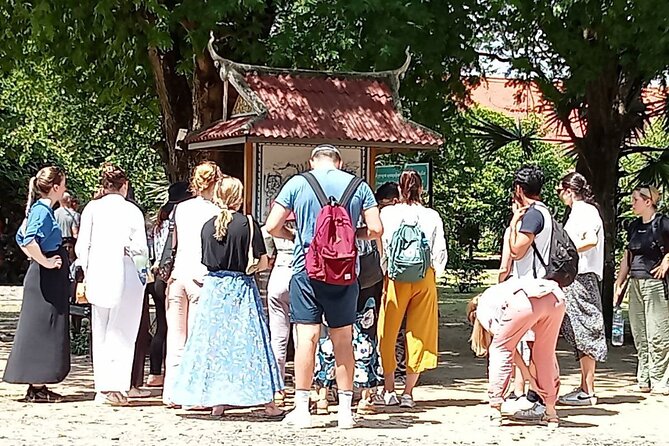
The experience lasts about four hours. The plan allows roughly two hours at Choeung Ek and two hours at Tuol Sleng, with driving time between the sites included in the overall outing.
Hotel pickup is offered. The listed meeting point is River Crown Restaurant at 357 Street 178, Preah Sisovath Quay, Phnom Penh 12206. The information also says the guide will return you to your hotel or guesthouse, while the formal end point is listed as the meeting point. I would confirm the exact pickup and drop-off arrangement when booking, particularly if you are staying outside central Phnom Penh.
The vehicle has air-conditioning, and cool water is included. Those details are practical rather than glamorous, but they make a difference on a warm Cambodian day.
The maximum group size is 20 people. That is not a private tour, so you should expect a shared experience. A larger group can make the guide’s presentation feel less personal, but it also keeps the price low. If you want to ask many questions, try to speak with the guide during the drive or at a natural pause rather than interrupting the explanation at the sites.
The tour is listed as suitable for most people and near public transportation. That does not remove the emotional demands of the visit. Physical participation may be straightforward for most people, but the information itself can be exhausting.
Price, admissions, and overall value
The tour price is $19.20 per person. You pay another $3 for entry to Choeung Ek and $5 for Tuol Sleng, bringing the stated basic cost to $27.20 before any tip or personal spending.
I see good value here if you want convenience. For that price, you receive an English-speaking guide, a driver, air-conditioned transportation, water, and pickup. You also avoid arranging two separate rides to sites outside and inside Phnom Penh.
The admission fees are not included, so budget for them in advance. Tipping is also excluded, as are personal expenses. You are not paying for luxury. You are paying for a straightforward half-day service that handles transport and provides historical explanation.
The value is strongest for first-time visitors, people with only a short stay, and anyone who wants context rather than a self-guided visit. If you already have transport and prefer to read at your own pace, going independently may suit you better.
The tour has a maximum of 20 participants, which helps explain the low price. I would not book it expecting a private conversation with the guide. I would book it expecting an efficient, guided introduction to two of Phnom Penh’s most important memorial sites.
Preparing for an emotionally difficult morning
This is not a casual city tour. You will hear about torture, executions, imprisonment, and mass death. The strongest accounts describe the day as heartbreaking, upsetting, thought-provoking, and eye opening.
That language is not overdone. You should prepare yourself before leaving the hotel. Do not schedule a lively party or packed sightseeing program immediately afterward if you know difficult history stays with you.
A respectful attitude is essential. Listen when the guide is speaking, avoid treating the sites as photo backdrops, and give yourself permission to step aside briefly if the material becomes too much. The tour is designed to inform, but you still control how closely you engage with each explanation.
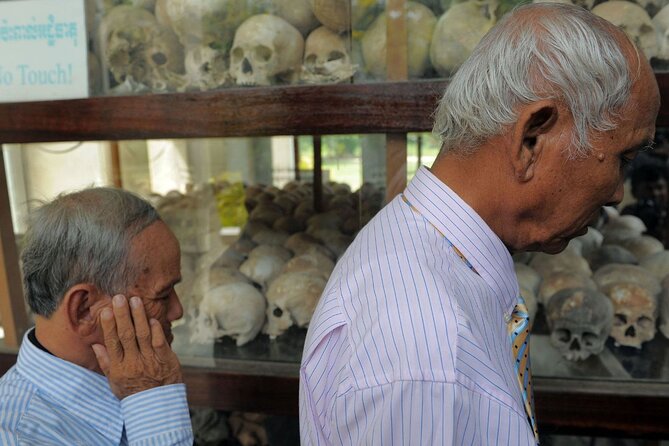
Meeting survivors can make the history feel especially immediate. Some accounts describe the honor of meeting two survivors of the Khmer Rouge period. That is not a guaranteed feature of every departure, so do not book on the assumption that it will happen. If it does, treat the encounter with patience and respect.
The guides’ personal family stories are another reason to listen carefully. Several guides have connections to the period, and that can bring the history into the present without turning the visit into a performance.
Who should book this Phnom Penh tour
I would recommend it to you if you want a clear introduction to the Khmer Rouge period and prefer having transport arranged. It suits first-time visitors, short-stay visitors, and anyone who wants to visit both Choeung Ek and S-21 in one morning or afternoon.
It is also a good choice if you value human explanation. The sites can be visited independently, but the guide helps connect the prison to the killing field and places the events in Cambodia’s wider story.
I would hesitate to recommend it to anyone looking for light sightseeing, private touring, or a relaxed cultural outing. The subject is severe, and the group may contain up to 20 people. You should also confirm the pickup and drop-off details if hotel service is important to you.
Free cancellation is available if you cancel at least 24 hours before the start time. Changes or cancellations inside that window are not accepted for a refund. Poor weather may lead to a different date or a full refund.
Should you book it?
Yes, if you want a practical and respectful way to visit both major genocide sites in Phnom Penh. The $19.20 tour price is reasonable once you add the $8 in admission fees, especially with transport, water, hotel pickup, and an English-speaking guide included.
I would book it for the structure and the guiding, not for comfort or entertainment. Go prepared for a sad day, listen closely to guides such as Baboon, Sum Cheath, Visal, or Mr. Tea if assigned, and leave enough quiet time afterward. For many people, this will be one of the hardest experiences in Cambodia, but also one of the most important.
FAQ
How long does the tour last?
The tour lasts approximately four hours. About two hours are planned at Choeung Ek and two hours at Tuol Sleng.
What places does the tour visit?
It visits the Choeung Ek Genocidal Center, also called the Killing Fields, and the Tuol Sleng Genocide Museum, also known as S-21.
Is hotel pickup included?
Yes. Hotel pickup is offered. The listed meeting point is River Crown Restaurant at 357 Street 178, Preah Sisovath Quay, Phnom Penh.
Does the tour return to the hotel?
The information says the guide returns you to your hotel or guesthouse, but the formal end point is also listed as the meeting point. Confirm the exact drop-off arrangement when booking.
Are admission fees included?
No. Admission costs $3 per person at Choeung Ek and $5 per person at Tuol Sleng.
What is included in the tour price?
The price includes a professional English-speaking guide and driver, air-conditioned transportation, cool water, and hotel pickup.
How many people can join the tour?
The maximum group size is 20 people.
Can I cancel for a full refund?
Yes, if you cancel at least 24 hours before the experience start time. Cancellations or changes made less than 24 hours beforehand are not eligible for a refund.
Newest reviews from Phnom Penh
- 10 Day Ethical Animals Tour Where the Wild Things Roam★ 5.0 · 1 review
- Watch Live Khmer Traditional boxing in Phnom Penh★ 5.0 · 46 reviews
- Watch Khmer Kickboxing with Free Beers by Ringside Seats★ 5.0 · 11 reviews
- The killing field and Toul Sleng Genocide museum (S21) Tour★ 4.5 · 19 reviews
- Private Transfer from Phnom Penh to Siem Reap by VIP Alphard 2005★ 5.0 · 2 reviews
- Warm Stone Massage★ 5.0 · 23 reviews
- Private Taxi Between Phnom Penh – Siem Reap Stop Sightseeing★ 5.0 · 23 reviews
- Udong Old Capital Tour★ 4.5 · 3 reviews