
Reviewed · FARMS
Siem Reap: Khmer Water Blessing by Monk and Lotus Farm Visit
A blessing can make a trip memorable. This four-hour Siem Reap experience links a sacred royal shrine, a lotus farm, a local snack stop, and a Buddhist water blessing in one easy tuk-tuk outing. I like the chance to meet Cambodian people in ordinary settings, and I like that the tour explains Buddhist practice instead of treating the temple as a quick photo stop. The full-body blessing is the special moment, but you should know that you will get completely wet and need dry clothes and a towel.
The experience costs $55 per person, including transport, an English-speaking guide, snacks, monk donations, and the lotus farm entrance fee. That is fair value if you want a guided cultural visit rather than simply hiring a tuk-tuk, though some of the price pays for organization and support that you could not easily arrange yourself.
In This Review
- Five things to know before you book
- Starting in Siem Reap with a sacred royal shrine
- Fried banana, sweet potato, and a taste of town
- Lotus fields on the road to Tonle Sap Lake
- Learning how a local pagoda works
- What happens during the water blessing
- Tuk-tuk transport and the four-hour pace
- Is $55 a fair price?
- The people make or break the morning
- Who should book this experience?
- What to bring and how to prepare
- My verdict: book it for the blessing and the context
- FAQ
- How long does the Siem Reap water blessing tour last?
- What is included in the $55 price?
- Is hotel pickup included?
- Will I get wet during the monk’s blessing?
- Do I receive anything after the blessing?
- What will I do at the lotus farm?
- Is food included?
- What should I bring?
- Is the tour suitable for wheelchair users?
- Can I cancel the booking?
Five things to know before you book
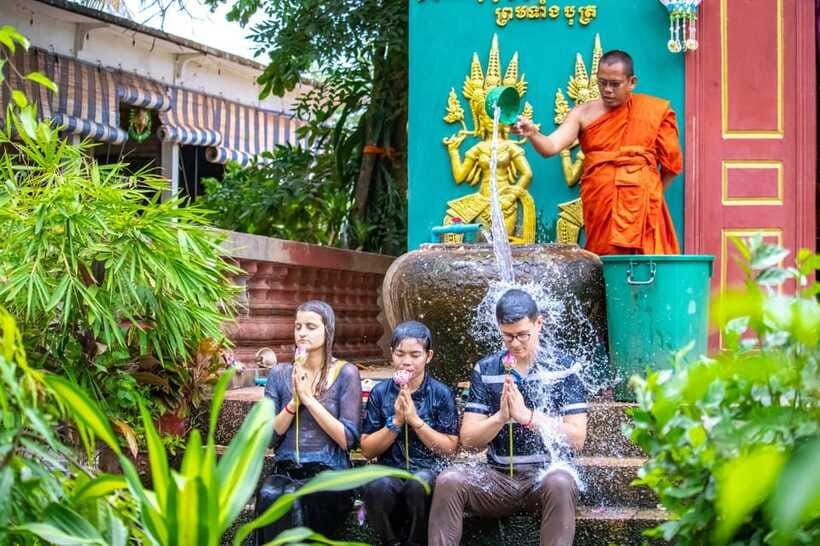
- The monk’s blessing is a full-water ceremony: Bring a towel, a complete change of clothes, and comfortable clothing you can change out of easily.
- You visit Preah Ang Chek Preah Ang Chorm Shrine: The spiritual house beside the Royal Residence is an important sacred place for Siem Reap residents.
- The lotus stop is more than a photo break: Your guide explains how flowers are farmed and harvested, and you pick lotus flowers for the temple offering.
- A long-running fried snack business adds a local touch: You can try fried banana and sweet potato before visiting the lotus fields.
- The guide makes a major difference: Guides such as Sarath and Hong have been praised for clear English, kindness, Cambodian history, and explanations of daily life.
- This is not suitable for wheelchair users: The tour includes walking around a farm and pagoda, with access details that may be difficult for anyone needing step-free mobility.
Starting in Siem Reap with a sacred royal shrine
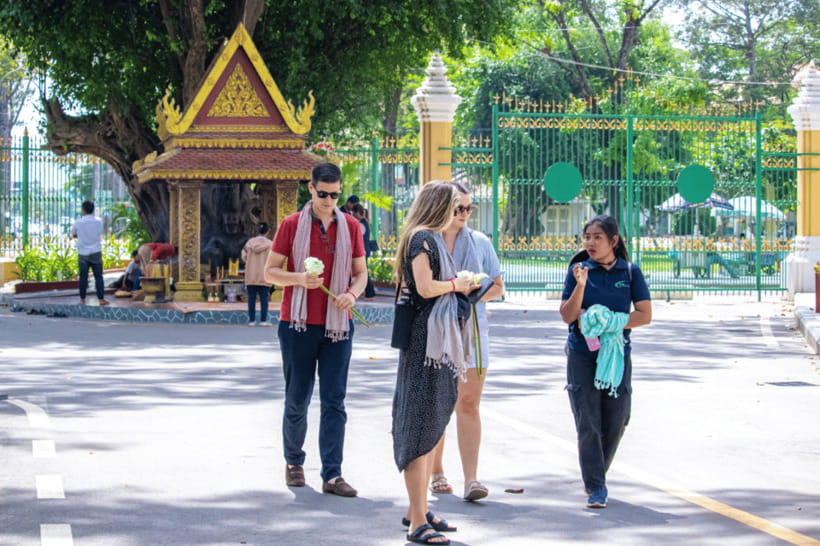
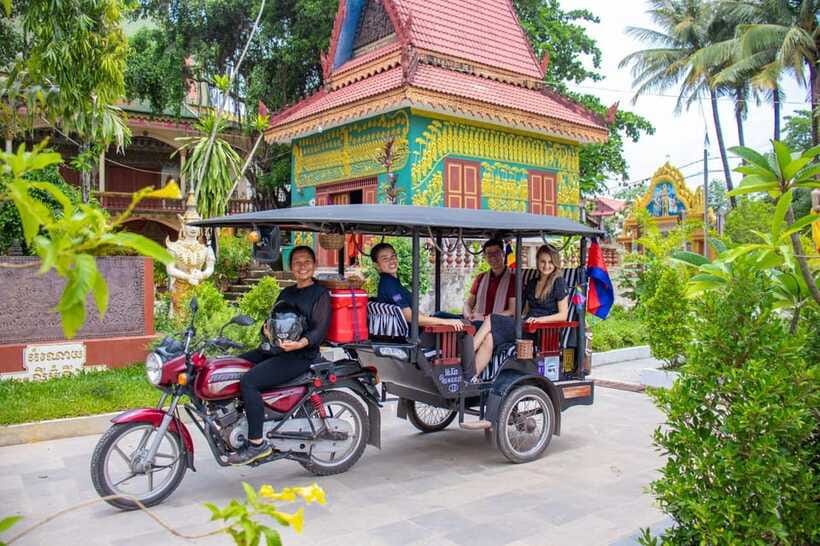
Your pickup begins in Krong Siem Reap, with transport by remork, the Cambodian version of a tuk-tuk. Hotel pickup is included within Siem Reap City, but you need to provide the exact hotel name and address when booking.
The first stop is Preah Ang Chek Preah Ang Chorm Shrine, located near the Royal Residence. The shrine’s spiritual house is considered one of the most important sacred places in Siem Reap and is known well beyond the city.
This is a useful opening because it gives you a setting for the rest of the morning. You are not simply moving from one attraction to another. You begin with a place connected to local worship, then later visit a working pagoda where a monk performs the blessing.
Plan on about 30 minutes here. Your English-speaking guide explains the religious importance of the site and helps you understand what you are seeing. The stop is short, so you should not expect a long temple lecture or an extended ceremony. Its value is in orientation and context.
I also like the order. You first learn that Buddhist and local spiritual practice is part of everyday Cambodian life. Later, the water blessing feels less like a staged activity and more like something connected to the place and its customs.
A few more options around Siem Reap worth reading up on
- Angkor Wat Sunrise or Sunset Tour with Guide from Siem Reap
★ 5.0 · 12,109 reviews - Siem Reap: Angkor Wat: Small-Group Sunrise or Sunset Tour
★ 5.0 · 9,444 reviews - From Siem Reap: Kampong Phluk Floating Village Tour by Boat
★ 4.9 · 6,979 reviews
Fried banana, sweet potato, and a taste of town
The tour also includes a meeting with a famous fried banana business owner in Siem Reap town. The business has been open for more than 20 years, and you can try fried banana and sweet potato as an early snack.
This small stop may be one of the most enjoyable parts for anyone who likes food with a story. You are not being taken to a polished restaurant or presented with a formal tasting menu. Instead, you get a simple local snack linked to a long-running family business.
The food is included, along with cold water and local snacks. Still, bring some cash. Personal expenses are not covered, and you may want to buy something extra or pay for small items along the way.
The supplied schedule lists the shrine, lotus farm, and pagoda as the main stops, while the experience description also includes this snack visit. The exact order can vary, so think of it as part of the morning rather than a separate major attraction.
Lotus fields on the road to Tonle Sap Lake
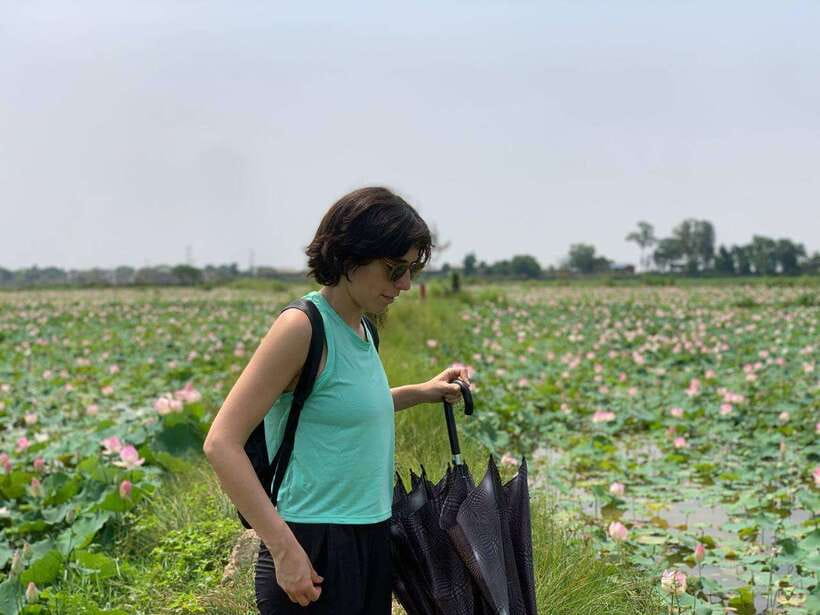
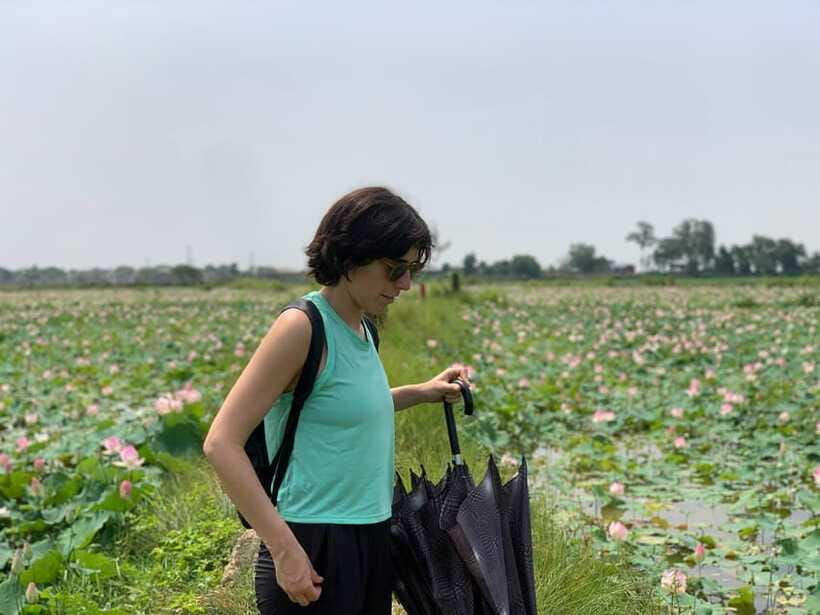
The route toward Tonle Sap Lake takes you past lotus fields, with ponds appearing along the road. At the lotus farm, your guide explains how the flowers are grown, collected, and prepared for use.
The stop is scheduled for around 30 minutes. That is enough time for a short walk, an explanation of the farming process, and picking lotus flowers for the offering at the pagoda. It is not a full agricultural workshop, so keep your expectations sensible.
I like this stop because it connects a familiar Cambodian image to actual work. Lotus flowers are not just decorative props for photographs. They are farmed, harvested, sold, and used in religious practice. When you pick flowers for the monk’s offering, the earlier explanation becomes part of the ceremony later in the morning.
The lotus ponds also give the remork ride a pleasant change of pace. You leave the town behind and see a more rural side of Siem Reap Province. Your guide can explain farming and harvesting methods, making the view more meaningful than a quick roadside glance.
Bring your camera and sunglasses, but keep your clothing practical. The stop involves walking, and you may encounter wet or uneven ground around the farm. The tour is not suitable for wheelchair users, so anyone with mobility concerns should ask the provider for more details before paying.
The description refers to the site as a lotus farm and also lists Lotus Silk Farm and Shop. You should expect a lotus-related farm and shop visit, not assume that every part of the stop focuses only on silk production.
Learning how a local pagoda works
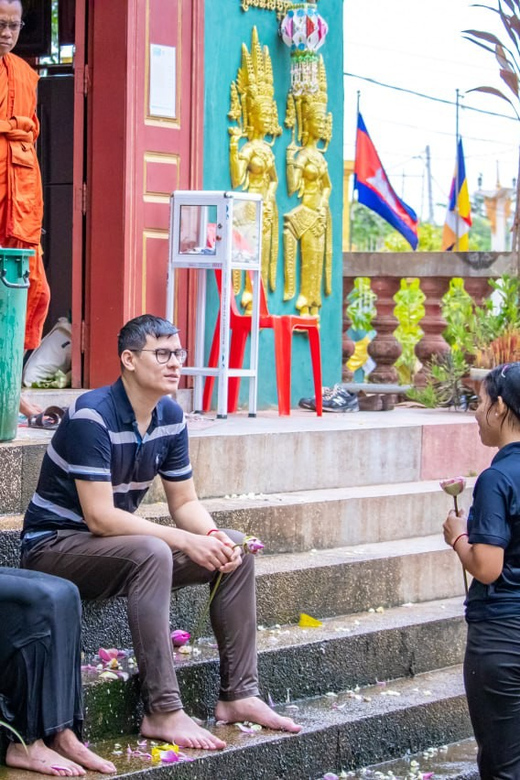
Wat Po Banteaychey is the longest stop, with about one hour for sightseeing, walking, and a guided visit. This is where the tour moves from explanation to participation.
Before the blessing, your guide explains Buddhist beliefs, the role of a local temple, and how the temple is organized. You also learn about activities that take place there. This matters because Cambodian pagodas are not only places where ceremonies happen. They are working religious spaces, and the guide helps you read the setting respectfully.
The strongest part of the experience is the chance to ask questions. Guides such as Sarath have been praised for making the visit friendly and informative, while Hong has been singled out for strong English and clear explanations of Cambodian history and local life. You may not receive either guide, but those comments point to the kind of personal guidance that makes this tour worthwhile.
The pace also allows you to look around after the ceremony. You can ask follow-up questions rather than being rushed straight back to the tuk-tuk. If you want to understand what you are seeing, use this time. Ask about the temple’s structure, the role of monks, or the meaning of the blessing.
Dress with respect for a pagoda. The supplied information does not give a formal dress code, but comfortable clothing is recommended, and a religious site calls for modest, appropriate clothing. Avoid treating the ceremony as a performance. Listen to your guide and follow local instructions.
Something completely different for another day:
- Sunset tour of Kampong Phluk stilts home village on the Tonle Sap
★ 5.0 · 4,865 reviews - Siem Reap: Angkor Wat 2-Day Tour with Sunrise and Sunset
★ 4.9 · 4,429 reviews - Siem Reap: Kampong Phluk Floating Village Tour with Boat
★ 4.9 · 3,843 reviews - Siem Reap: Full-Day Angkor Wat Guided Tour with Sunset
★ 4.9 · 3,803 reviews
What happens during the water blessing
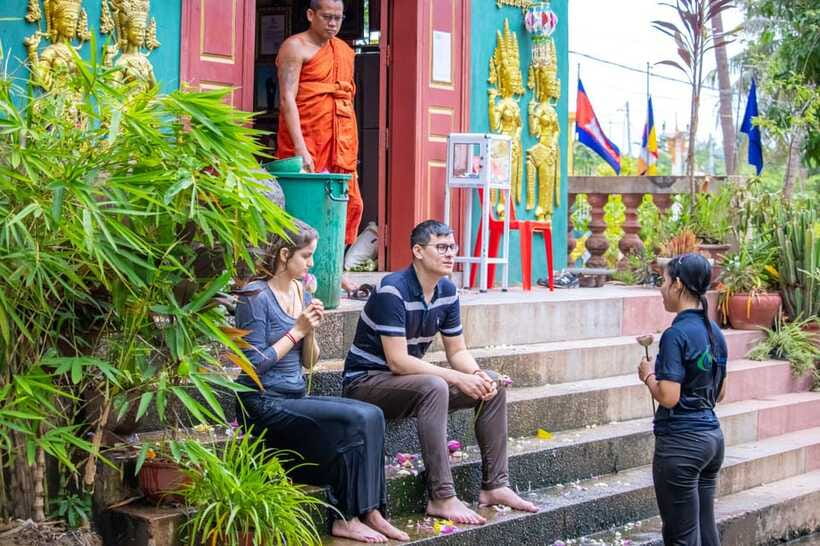
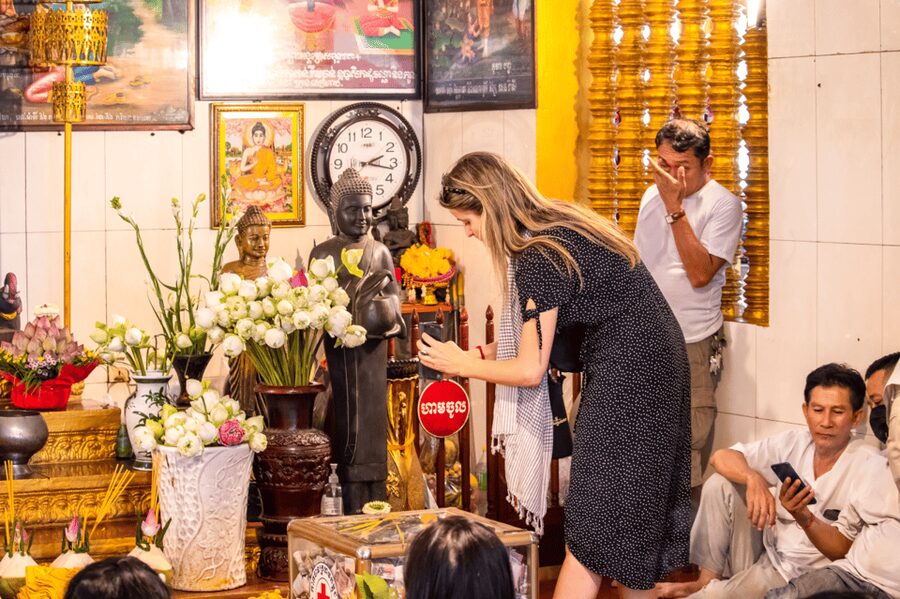
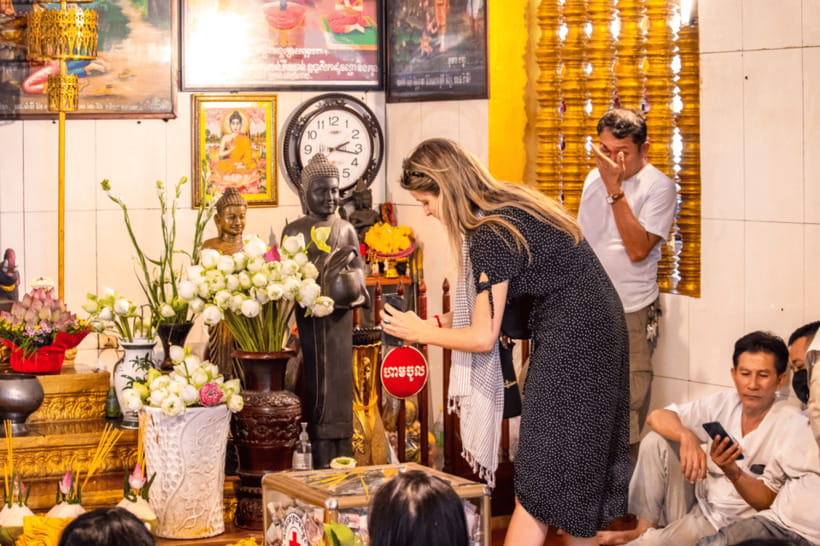
The blessing is the centerpiece of the tour. A monk gives you a traditional water blessing at the pagoda, and you receive a red ritual bracelet afterward.
The important practical point is blunt: you will get completely wet. This is not a light sprinkle that you can dry off with a handkerchief. Bring a towel and a full change of clothes. Put the dry clothes somewhere protected during the ceremony, and wear something comfortable for changing afterward.
The tour includes the monk’s offering and donations, so you do not need to arrange those payments separately. It also supplies the lotus flowers you picked at the farm for the offering.
The ceremony can feel moving, especially if you approach it with respect and curiosity. One account describes a conversation with the monk as inspiring, while another highlights the help provided when the participant was unsure what to do. You should still understand that the exact interaction may depend on the temple, the monk, and the timing of your visit.
Your guide is there to explain the customs and assist you. That is valuable if you have never attended a Buddhist blessing. You do not need to know the correct gestures in advance. Pay attention, follow instructions, and allow the ceremony to unfold without trying to control every moment.
Afterward, you change clothes and walk around the pagoda area. This second look is worth keeping. You will understand more after the blessing than before it, and the guide can answer questions that come to mind.
Tuk-tuk transport and the four-hour pace
The remork is a practical way to move around Siem Reap. You get open-air views along the road, and the ride suits a half-day route that combines town, countryside, and a temple.
The full duration is about four hours, though the exact starting time depends on availability. The listed stops account for about two hours of guided visits, with the remaining time used for transport, the snack stop, and the water ceremony.
That makes this a compact experience. You see several sides of the area without giving up an entire day that you might want for Angkor temples or Tonle Sap Lake. If you prefer slow, unhurried visits with long periods at each location, the schedule may feel brisk.
The guide and driver arrangement receives especially strong praise. Several participants describe both as kind, attentive, and helpful. Some tours use women as guides and tuk-tuk drivers, and the personal contact appears to be an important part of the experience.
The tour returns you to your hotel or to the city center. Tell the operator your preferred drop-off point in advance if you do not want to return to your hotel.
Is $55 a fair price?
At $55 per person, this is not the cheapest way to visit a pagoda. You could probably hire local transport for less, but that would not include the same explanations, snack stop, lotus farm visit, monk’s offering, donations, and planned ceremony.
The value depends on what you want. I consider the price reasonable if you want a guided cultural experience with a clear purpose. The guide ties the shrine, lotus farm, and pagoda together, and you do not have to negotiate each ride or figure out how to arrange the blessing.
The price feels less attractive if you only want a quick temple visit and a photograph with a red bracelet. In that case, the four-hour program may be more than you need.
One participant felt the price paid through the company was high compared with what the local guide’s own business received. That is a fair concern when you care about direct support for local operators. At the same time, booking through an established provider gives you cancellation protection, organized transport, and a clear English-language booking process.
Free cancellation is available up to 24 hours before the activity, and you can reserve now and pay later. Those terms add some flexibility if your Siem Reap schedule is still changing.
The people make or break the morning
The most highly praised part of this experience is not one particular view. It is the human attention.
Sarath is described as cheerful, considerate, and eager to make the outing enjoyable. Hong is praised for her English and for explaining Cambodian history and local life clearly. Other participants describe their guides and tuk-tuk drivers as excellent, helpful, and friendly.
You should not assume that you will receive a particular guide unless the provider confirms it. Still, the repeated emphasis on guide quality is useful when judging the tour. This is an experience where the guide carries much of the value. The lotus farm and shrine are pleasant stops, but the explanations and personal help turn them into a connected morning.
The guide may also take photographs for you. That was an appreciated touch during one visit, especially at the blessing. Bring your own camera, but do not let photography distract you from the ceremony.
Who should book this experience?
I would recommend it most strongly if you want:
- A short cultural activity between temple visits
- A respectful introduction to Buddhist practice
- A chance to visit a local pagoda with an English-speaking guide
- A rural stop with lotus farming and open views
- A personal experience rather than a large sightseeing circuit
- A meaningful activity that does not require a full day
It suits solo visitors, couples, and small groups who enjoy asking questions and meeting local people. The water blessing also gives families an unusual shared memory, though parents should be prepared for the practical issue of wet clothing.
I would be more cautious if you dislike getting wet, have limited mobility, want a highly formal religious tour, or prefer to explore independently. The tour is not suitable for wheelchair users, and personal expenses are not included.
What to bring and how to prepare
Pack a towel and a complete change of clothes first. These matter more than anything else because the blessing leaves you completely wet.
Also bring:
- Sunglasses
- A camera
- Comfortable clothing
- Cash for personal expenses
- A bag that protects your dry clothes and electronics
Pets are not allowed. Wear shoes and clothing suitable for walking around a farm and pagoda. You should also be ready for an open-air tuk-tuk ride.
Tell the operator your exact hotel name and address in Siem Reap City. The pickup is included, but precise details help avoid delays.
My verdict: book it for the blessing and the context
Book this tour if you want the water blessing to mean something beyond a quick tourist stop. The lotus flowers, local snack, royal shrine, and temple explanation give the ceremony a useful setting, while the guide helps you understand what to do.
The main drawback is the price compared with arranging a tuk-tuk independently, plus the short schedule and the need to change clothes after the blessing. Those are manageable concerns for most people.
For me, the strongest reason to choose it is the combination of spiritual practice and ordinary local life. You taste a simple fried snack, see how lotus flowers are farmed, learn about a pagoda, and receive a monk’s blessing. That is a thoughtful four hours in Siem Reap, especially if you want a break from the standard temple circuit.
FAQ
How long does the Siem Reap water blessing tour last?
The experience lasts about four hours. Starting times depend on availability.
What is included in the $55 price?
The price includes an English-speaking local guide, remork tuk-tuk transportation, cold water, local snacks, the monk’s offering and donations, and the lotus farm entrance fee.
Is hotel pickup included?
Yes. Pickup is included from hotels or other locations in Siem Reap City. You need to provide your hotel name and exact address.
Will I get wet during the monk’s blessing?
Yes. You will get completely wet during the water blessing. Bring a towel and clothes to change into afterward.
Do I receive anything after the blessing?
Yes. You receive a red ritual bracelet after the monk’s water blessing.
What will I do at the lotus farm?
You will walk around the lotus farm, learn about farming and harvesting methods, enjoy the lotus ponds, and pick lotus flowers for the traditional offering at the temple.
Is food included?
Local snacks and cold water are included. The experience also includes fried banana and sweet potato as a snack stop. Other personal expenses are not included.
What should I bring?
Bring sunglasses, a camera, comfortable clothes, cash, a towel, and a complete change of clothes.
Is the tour suitable for wheelchair users?
No. The activity is listed as unsuitable for wheelchair users.
Can I cancel the booking?
You can cancel up to 24 hours in advance for a full refund. You can also reserve now and pay later.
Newest reviews from Siem Reap
- War Museum, Killing Field, and APOPO Hero RATs Tour★ 5.0 · 7 reviews
- Angkor Wat at Sunrise★ 4.0 · 7 reviews
- Siem Reap Angkor Airport Taxis (from Airport to Hotel)★ 5.0 · 44 reviews
- Cambodian Cooking Class and Oxcart Ride with Local Village Tour★ 5.0 · 4 reviews
- Secret Temples of Angkor – Guided Tour in Siem Reap★ 5.0 · 6 reviews
- Short Cycling at Countryside★ 5.0 · 29 reviews
- Unveiling the Mystical Beauty of Phnom Kulen National Park★ 5.0 · 6 reviews
- Khmer Cooking Class in Cambodia★ 5.0 · 36 reviews
Farms, compared.
Pepper Farm Tours, Salt, Lake & Phnom Chhngok Temple
Read our review →
Siem Reap Lotus Silk Farm Discovery tour & Lake experience
Read our review →
Full-day Countryside Tour with Pepper Farm and Kep
Read our review →
Tuk Tuk Trip to Pepper Farm, Kep, Crab Market & More
Read our review →
Kampot Countryside include Pepper farm, Salt field & Lake
Read our review →
KAMPOT TRAVEL-Pepper farm. Cave.Secret lake-Crab market & Salt…
Read our review →
Browse the lists this tour appears in