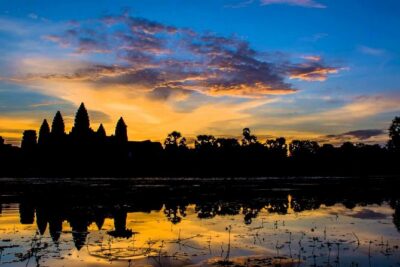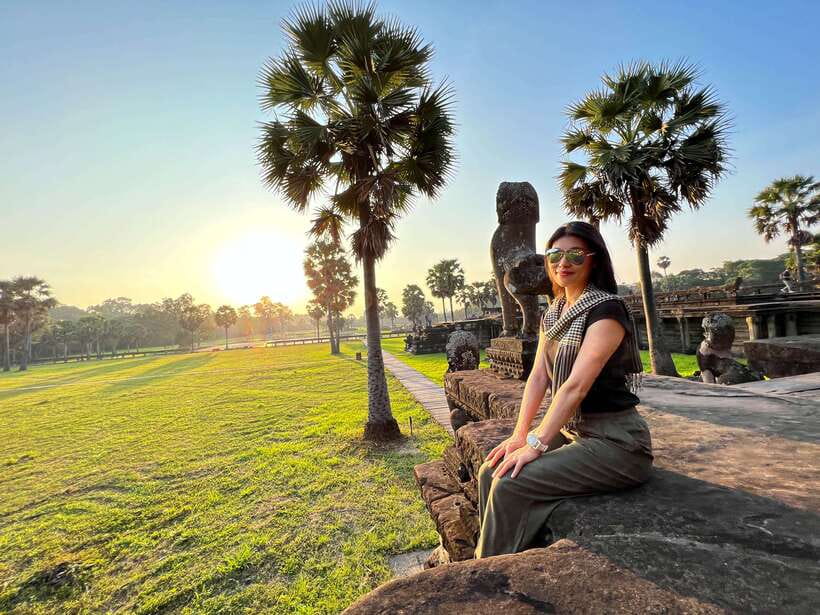
Reviewed · ANGKOR WAT TOURS
Siem Reap: Angkor Wat Small-Group Day Tour and Sunset
Ancient stones, jungle roots, and one long day. This $28 small-group tour packs Angkor Thom, Ta Prohm, Angkor Wat, a Cambodian village, and sunset at Phnom Bakheng into roughly 10 hours. I like the strong mix of major sights and local life, and I especially like the practical care: air-conditioned transport, cold water, chilled towels, lunch, and hotel pickup. The main catch is simple: this is an ambitious schedule in serious heat, and the separate $37 Angkor pass brings the basic cost to $65 per person.
The tour works best if you want to see the headline temples in one organized day without hiring separate transport or trying to understand the park’s layout alone. Guides such as Mony, Sam, David, Makara, Veasna, and Saroun have been praised for clear explanations, friendly humor, and taking good photos. Still, you should expect plenty of walking, stairs, temple stones, and a late return.
In This Review
- Key points to know before you book
- The $28 price and what you really pay
- Starting from Siem Reap at 8:00 a.m.
- Angkor Thom and the South Gate
- Bayon, Baphuon, and the royal terraces
- Ta Prohm and the power of the jungle
- Lunch, palm sugar, and Preah Dak village
- Angkor Wat in the afternoon
- Sunset from Phnom Bakheng
- Heat, comfort, and what to pack
- Guide quality and the small-group experience
- Should you book this Angkor day tour?
- FAQ
- How much does the tour cost?
- How long does the tour last?
- What time is hotel pickup?
- Is the Angkor pass included?
- Which temples are included?
- Is lunch included?
- What should I wear?
- Is this tour suitable for children or older people?
Key points to know before you book
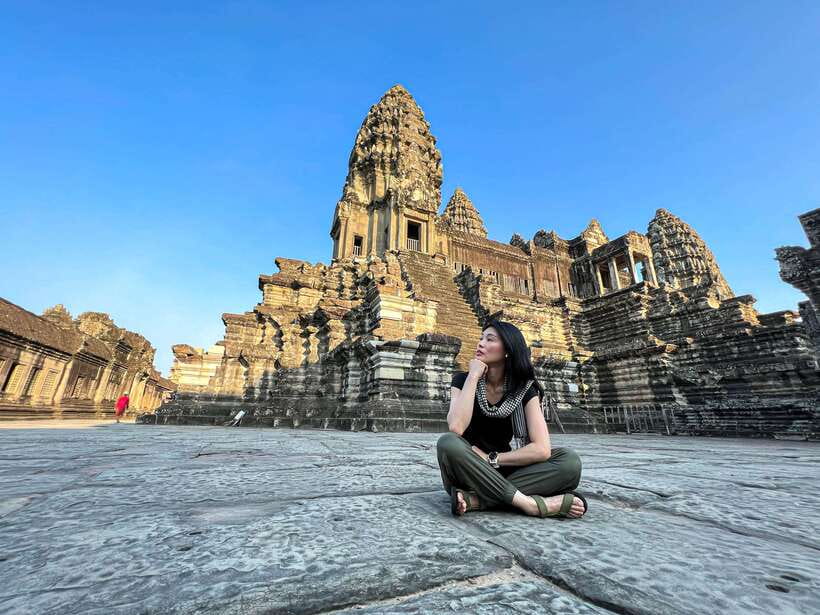
- Five major stops in one day: Angkor Thom, Bayon, Baphuon, Ta Prohm, and Angkor Wat provide a strong first look at the park.
- The small group is capped at 14 people: Some departures may be much smaller, even private in practice.
- Cold water and towels matter here: The driver refreshes you after temple walks, a useful touch in Cambodia’s heat.
- Preah Dak adds a local stop: You see how palm sugar and palm cake are made, rather than visiting temples all day.
- Sunset comes at Phnom Bakheng: The climb adds a memorable final view, but also more exertion after a full day.
- The temple pass costs extra: Buy the $37 Angkor pass online or before the tour begins.
The $28 price and what you really pay
At first glance, $28 is a very low price for a full-day Angkor tour. The included air-conditioned minivan or minibus, English-speaking guide, driver, lunch, hotel transfer, drinking water, and towels make it a strong deal.
But the Angkor temple pass is not included. It costs $37 per person, so your practical total is $65 before soft drinks or any optional spending. That is still fair for a 10-hour outing covering the park’s best-known temples, especially when you consider the cost of arranging a vehicle, driver, and guide separately.
I would not choose this tour mainly because it is cheap. I would choose it because it groups the expensive and useful pieces together. You get a guide to explain what the carvings mean, transport between widely spaced temples, and a driver waiting while you walk.
The price also includes lunch at a local restaurant, with vegetarian choices available if you request them ahead of time. The food is not presented as a special culinary event, but it removes one more decision from a long day.
More ways to see Angkor Wat:
- Angkor Wat Sunrise or Sunset Tour with Guide from Siem Reap
★ 5.0 · 12,109 reviews - Siem Reap: Angkor Wat: Small-Group Sunrise or Sunset Tour
★ 5.0 · 9,444 reviews - Siem Reap: Angkor Wat 2-Day Tour with Sunrise and Sunset
★ 4.9 · 4,429 reviews
Starting from Siem Reap at 8:00 a.m.
Hotel pickup takes place between 8:00 and 8:30 a.m. You should wait in the lobby about 10 minutes before your scheduled time. The first task is buying or confirming your Angkor pass, so having the pass arranged online can help the morning move faster.
The air-conditioned vehicle is more than a convenience. Angkor’s temple paths are exposed, and you may return to the van hot and dusty after every stop. Drivers including Mr. Theara, Mr. Kim, Chann, Sophat, Tha, and Mr. E have received praise for safe driving and attentive service.
The small-group limit of 14 people gives the guide a workable group size. You can hear explanations more easily than in a large coach party, and the guide has a better chance to help with photos or questions. Some departures have had only five people, while another booking became a private tour when other group members rescheduled.
Angkor Thom and the South Gate
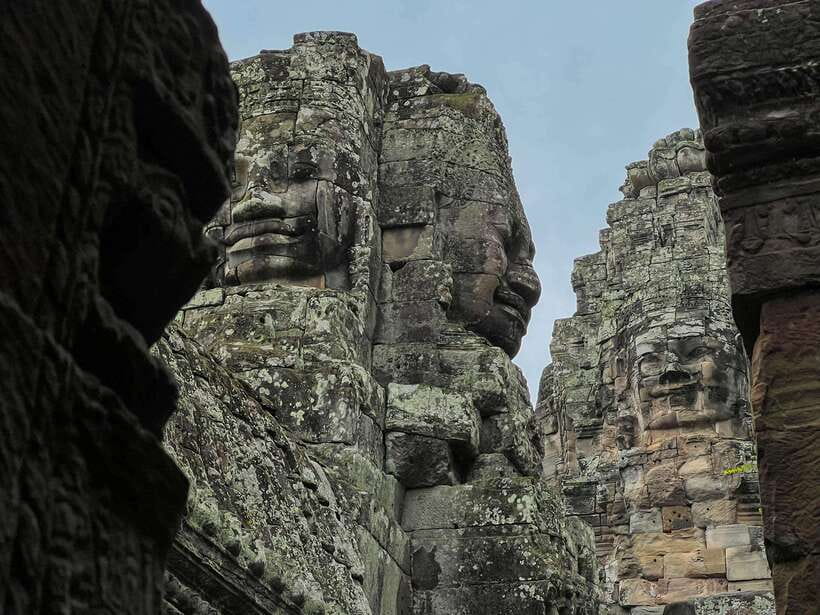
Angkor Thom was the fortified Great Royal City built in the 12th century by King Jayavarman VII. The South Gate makes a dramatic first stop, with a bridge lined by large stone figures and a prominent image of Avalokiteshvara.
The gate is also recognizable from Tomb Raider, which gives it a modern film connection. Still, the setting is older and more serious than a movie backdrop. Your guide can help you read the religious images and explain the role of the gate within the former royal city.
This is a good place to let the guide set the scene before you reach the temples themselves. Without context, the huge walls and stone faces can blur together. With an explanation, you start to see Angkor Thom as a planned capital, not simply a collection of ruins.
Bayon, Baphuon, and the royal terraces
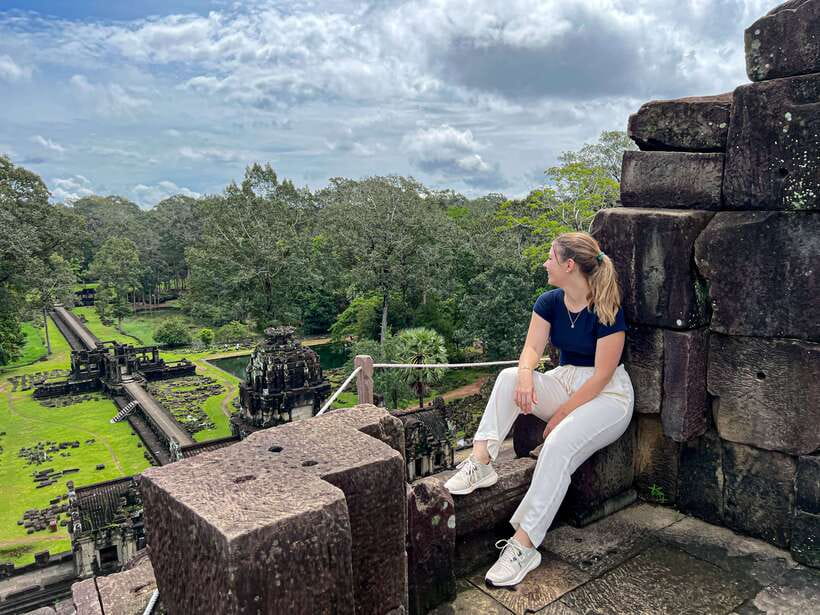
Inside Angkor Thom, the tour takes in Bayon, the Terrace of Elephants, the former Royal Palace area, Phimeanakas, the Terrace of the Leper King, and Baphuon.
Bayon is the visual star here. Its towers carry the famous serene stone faces associated with Angkor. You will want time to look up, move through narrow passages, and compare the faces from different angles. A guide is particularly helpful because the temple’s layout can feel confusing, and the carvings reward patient explanation.
Baphuon is described as the largest Hindu temple in Angkor Thom. Its scale helps you understand the ambition of the city’s builders, but you should expect stairs, uneven surfaces, and a fair amount of walking between viewpoints.
The terraces are less instantly recognizable than Bayon, yet they add useful detail. The Terrace of Elephants relates to royal ceremony and public display, while the Terrace of the Leper King is known for its carved stone figures. Phimeanakas and the former Royal Palace area help fill in the picture of Angkor Thom as a living royal center.
This section can feel fast because so much is included. If you want a slow, photo-heavy visit to every structure, a private itinerary or a multi-day Angkor plan would suit you better.
A few more options around Siem Reap worth reading up on
- From Siem Reap: Kampong Phluk Floating Village Tour by Boat
★ 4.9 · 6,979 reviews - Sunset tour of Kampong Phluk stilts home village on the Tonle Sap
★ 5.0 · 4,865 reviews - Siem Reap: Kampong Phluk Floating Village Tour with Boat
★ 4.9 · 3,843 reviews - Siem Reap: Full-Day Angkor Wat Guided Tour with Sunset
★ 4.9 · 3,803 reviews
Ta Prohm and the power of the jungle
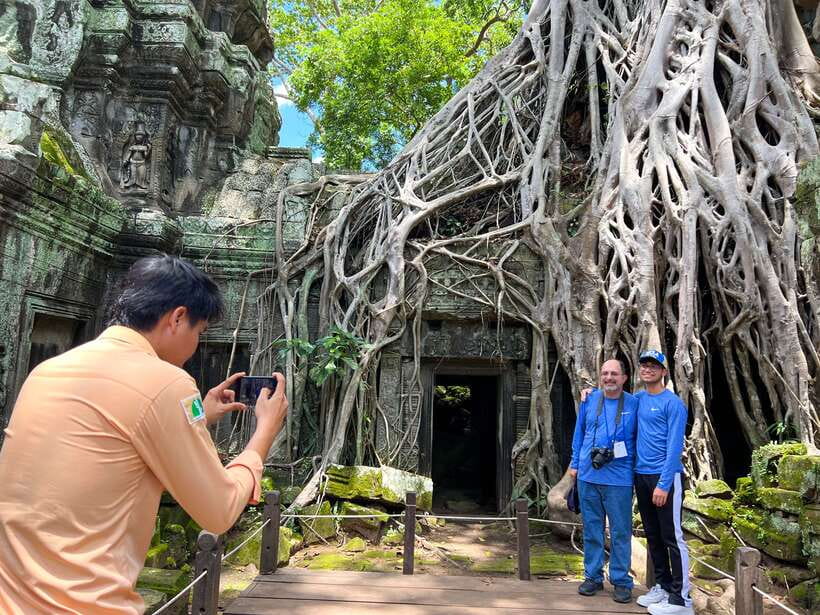
Ta Prohm is often the temple people picture when they imagine Angkor. Trees and huge roots grow over parts of the stonework, and the temple has been left in a condition that makes the meeting of forest and architecture easy to see.
It also appeared in Tomb Raider, starring Angelina Jolie. The film connection may bring you here, but the temple’s appeal is not limited to movie fame. Cracked galleries, root-covered walls, and shadowed corridors create a different mood from the open scale of Angkor Wat.
This is one of the places where a guide can improve the visit. You can ask where to look for carvings and how the temple was built, rather than spending the whole stop hunting for a famous photo angle.
The drawback is crowd pressure. Ta Prohm is popular, and a small group is still a group. Your guide may point out better photo positions, but you will not control every moment of the visit. Comfortable shoes are essential, as one traveler specifically advised, and sandals with poor grip may make the uneven stone harder.
Lunch, palm sugar, and Preah Dak village
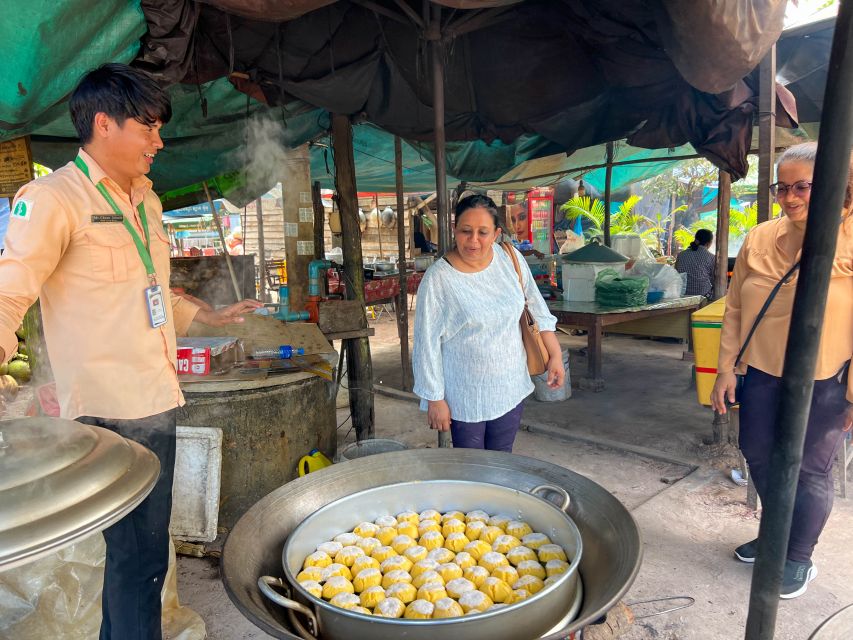
After the main morning temples, lunch takes place at a local restaurant. Vegetarian options are available, but tell the operator in advance. Soft drinks are not included, so carry some cash if you want something beyond the provided water.
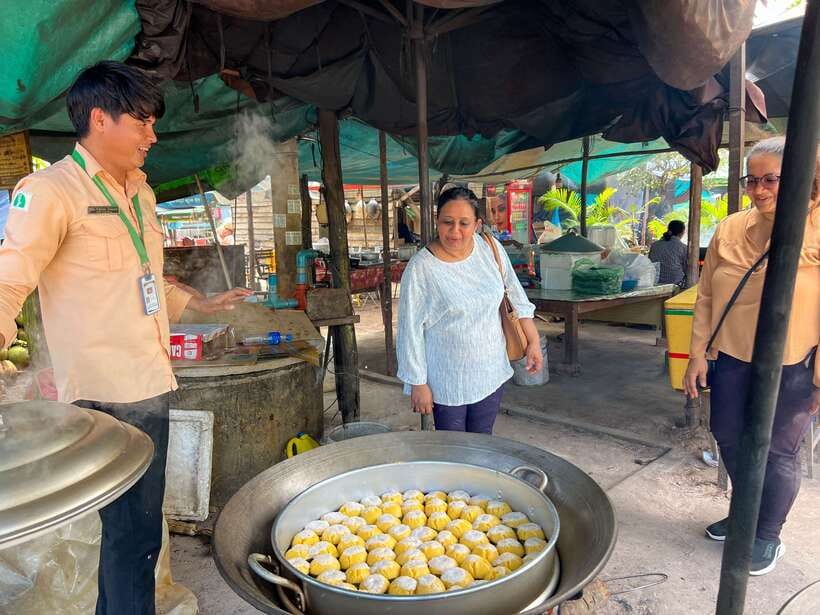
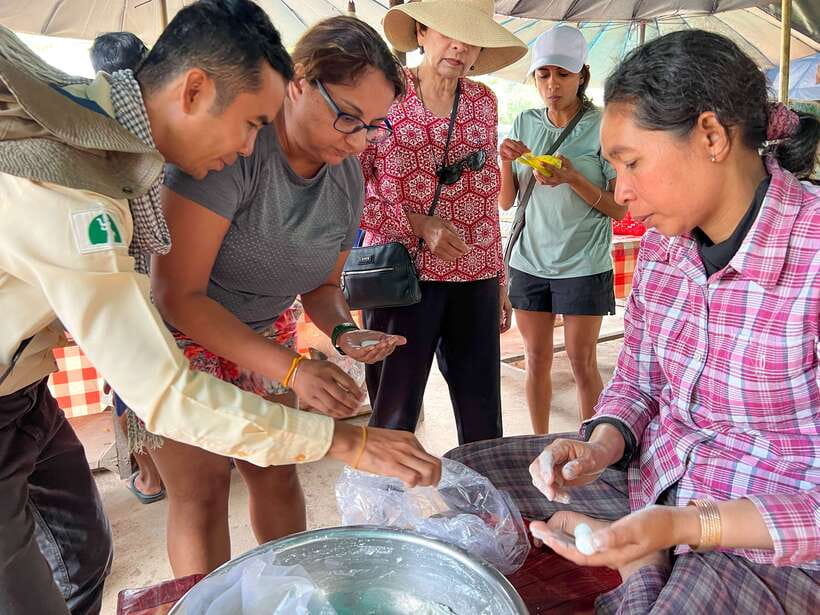
The visit to Phum Preah Dak, also called Preah Dak village, changes the pace. Here you can see how local people make palm cake and palm sugar. This stop gives you a small window into daily Cambodian food production and rural life, rather than keeping the entire day inside ancient monuments.
I value this part because it gives the itinerary some balance. Angkor can easily become a parade of towers and bas-reliefs. Seeing palm products being made connects the visit to present-day Cambodia.
At the same time, keep your expectations in check. This is a short cultural stop, not a full village homestay or a long community program. Its value comes from the contrast with the temples and the chance to see a familiar local ingredient made close to its source.
Angkor Wat in the afternoon
Angkor Wat is the day’s centerpiece. Built by King Suryavarman II and dedicated to the Hindu god Vishnu, it later became one of the defining symbols of Cambodia. Its five towers appear on the Cambodian flag, and the huge moat helps explain the scale of the complex.
The temple contains extensive wall decoration and a very long bas-relief. I recommend listening carefully to the guide before rushing toward the best-known views. The carvings are not just decoration. They present religious stories, battles, royal power, and scenes from Hindu tradition.
The afternoon timing has a practical advantage. The tour does not ask you to begin before dawn, which makes the opening hours more manageable for many people. But it also means you may reach Angkor Wat after several hours of walking, when your legs and attention are already tested.
You can see the jungle from higher parts of the temple, though access to upper levels may depend on current site rules and conditions. Dress for the temple, not for a pool day. Knees and shoulders must be covered, and short skirts and overly short clothing are not allowed.
The best guide contribution here is not simply naming buildings. Mony has been praised for explaining temple details and adding humor, while Sam, David, Makara, Veasna, Saroun, and others have been singled out for patient explanations and good photography. Several guides have taken more than 20 photos for a group during the day, which is useful if you want pictures of yourself without handing your phone to strangers.
Sunset from Phnom Bakheng
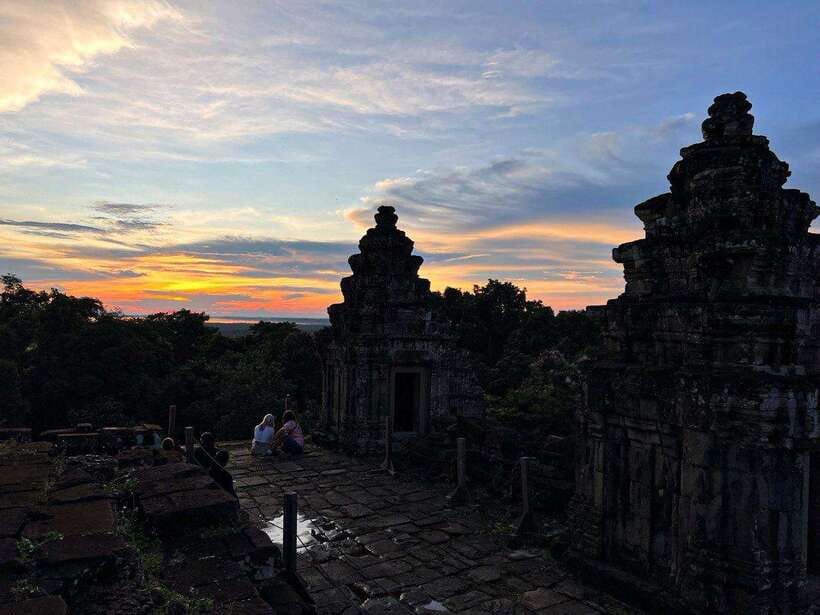
The final stop is Phnom Bakheng, where you climb the mountain for sunset. After a full day at Angkor Thom, Ta Prohm, and Angkor Wat, this climb can feel like a final exam.
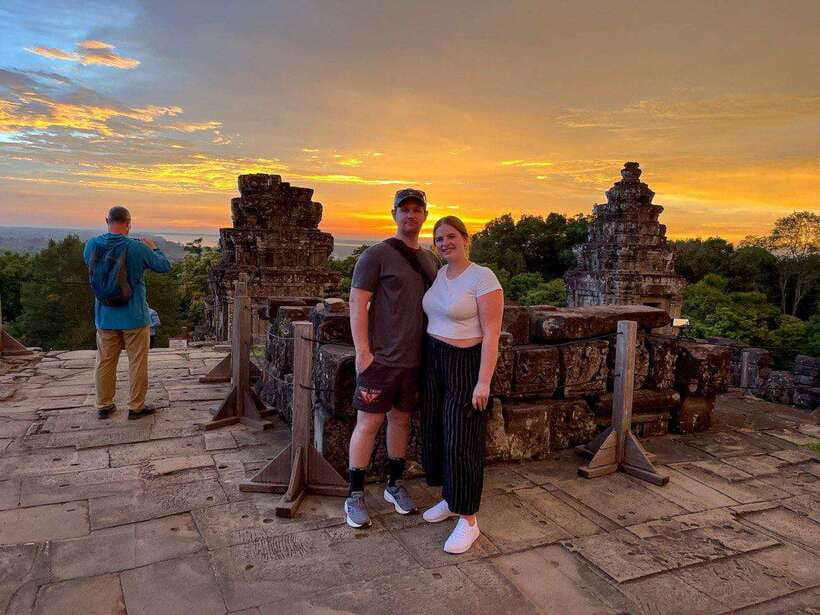
The reward is a broad view over the surrounding jungle and the temple area. Sunset gives the stone a softer look, and ending above the park creates a strong finish to the day.
The timing is also the main uncertainty. Sunset is popular, and conditions can affect how much space and quiet you find. The climb and the return to the vehicle add effort, so bring water, sun protection, and shoes you can trust.
Do not treat this as a gentle stroll. The full program lasts about 10 hours, and one person described the day as tiring even while finding it impressive. That is a fair warning, especially during hot periods when temperatures can reach 37 degrees Celsius.
Heat, comfort, and what to pack
The tour does several practical things right. The van has air conditioning, and cold bottles of water and towels are provided. Some guides and drivers have offered a fresh towel after each temple, and one guide even used a chilled Cambodian spring roll to cool passengers’ faces and necks during the ride.
Those details matter because the heat can shape your whole impression of Angkor. A good guide can explain the carvings, but a good driver also gets you back to a cool vehicle before you are completely worn out.
Bring:
- Sunscreen
- Sunglasses
- A sun hat
- Insect repellent
- An umbrella
- A camera
- Comfortable walking shoes
You should also dress modestly, with your knees and shoulders covered. Children under 10 are not considered suitable for the small-group option, and the tour is not suitable for people over 70. The combination of heat, uneven ground, stairs, and the sunset climb is the reason for those limits.
Guide quality and the small-group experience
The guides are the strongest part of this experience. Names that appear repeatedly in the tour’s service record include Mony, Sam, David, Makara, Veasna, Saroun, Sean, Raman, Sutin, and Sam Ath.
Their strengths are clear: fluent English, temple knowledge, friendliness, humor, patience, and help with photos. Sam Ath has been praised for connecting temple carvings with Cambodian culture and for sharing useful stories during rest stops. David is known for being both funny and informative, while Makara has been praised for his photography as well as his explanations.
Of course, no group tour can guarantee a particular guide unless your booking confirms one. The important point is the standard of service the company aims for. A guide can turn a long temple circuit into a coherent story, and this tour appears to place real value on that role.
The group limit also helps. Fourteen is not tiny, but it is far easier to manage than a full bus. If you want full control over how long you stay at each carving, choose the private option if available. If you prefer good value and shared transport, the small group is the sensible middle ground.
Should you book this Angkor day tour?
Book it if you have one main day for Angkor and want the key temples, a village visit, lunch, transport, and sunset handled in one plan. The combination of Angkor Thom, Ta Prohm, Angkor Wat, Preah Dak, and Phnom Bakheng gives you both famous sights and a little local context.
I would especially recommend it to first-time visitors who want explanations instead of simply being dropped at temple gates. The guide quality, cold towels, safe drivers, and photo help add real value to the $28 tour price.
Think twice if you dislike early starts, hot weather, long walks, or fixed schedules. You will cover a lot, but you will not have unlimited time at every temple. If you have several days in Siem Reap, spreading Angkor across more than one day would be easier on your body.
For a single full day, though, this is a well-planned and practical choice. Buy the pass, cover your shoulders and knees, wear good shoes, and save some energy for Bakheng.
FAQ
How much does the tour cost?
The tour costs $28 per person. The Angkor temple pass is separate and costs $37 per person, making the basic combined cost $65.
How long does the tour last?
The tour lasts about 10 hours, including temple visits, the village stop, lunch, and sunset at Phnom Bakheng.
What time is hotel pickup?
Pickup is between 8:00 and 8:30 a.m. You should wait in your hotel lobby 10 minutes before the scheduled pickup time.
Is the Angkor pass included?
No. Every participant must have an Angkor temple pass before the tour starts. You can purchase the pass online.
Which temples are included?
The route includes Angkor Thom, Bayon, Baphuon, the Terrace of Elephants, the former Royal Palace area, Phimeanakas, the Terrace of the Leper King, Ta Prohm, Angkor Wat, and Phnom Bakheng.
Is lunch included?
Yes. Lunch at a local restaurant is included, and vegetarian food is available if you request it in advance.
What should I wear?
Your knees and shoulders must be covered. Short skirts and very short clothing are not allowed. Comfortable walking shoes are strongly recommended.
Is this tour suitable for children or older people?
Children under 10 and people over 70 are not considered suitable for this tour. The long duration, heat, uneven temple paths, and climb at Phnom Bakheng make it physically demanding.
Newest reviews from Siem Reap
- War Museum, Killing Field, and APOPO Hero RATs Tour★ 5.0 · 7 reviews
- Angkor Wat at Sunrise★ 4.0 · 7 reviews
- Siem Reap Angkor Airport Taxis (from Airport to Hotel)★ 5.0 · 44 reviews
- Cambodian Cooking Class and Oxcart Ride with Local Village Tour★ 5.0 · 4 reviews
- Secret Temples of Angkor – Guided Tour in Siem Reap★ 5.0 · 6 reviews
- Short Cycling at Countryside★ 5.0 · 29 reviews
- Unveiling the Mystical Beauty of Phnom Kulen National Park★ 5.0 · 6 reviews
- Khmer Cooking Class in Cambodia★ 5.0 · 36 reviews
Angkor Wat Tours, compared.
Angkor Wat Sunrise or Sunset Tour with Guide from Siem Reap
Read our review →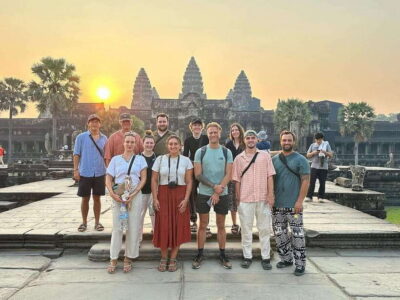
Angkor Wat: Small-Group Sunrise or Sunset Tour
Read our review →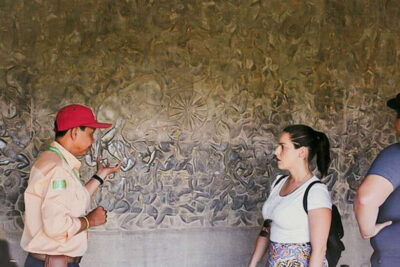
Angkor Wat 2-Day Tour with Sunrise and Sunset
Read our review →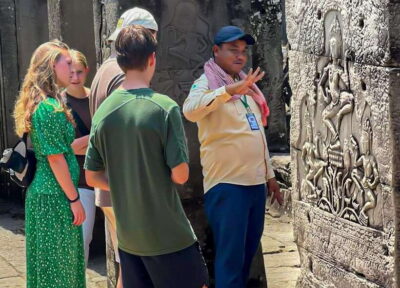
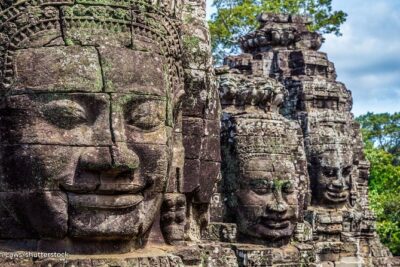
Angkor Wat Sunrise tour with Small – Group and Guide tours
Read our review →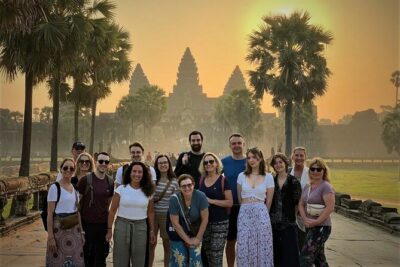
Angkor Wat Highlights and Sunrise Guided Tour from Siem Reap
Read our review →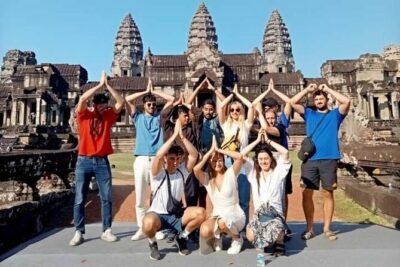
Angkor Wat Sunset Small Group Tour with Lunch Included
Read our review →