Reviewed · TOURS
Preah Khan, Neak Pean and Pre Rup Temple Tour
Ancient temples, one efficient circuit. This private five-hour trip takes you beyond the busiest Angkor stops, with Preah Khan’s grand ruins and the unusual island temple of Neak Pean leading the way. I like the air-conditioned vehicle and hotel pickup, and I like that your own group travels with an English-speaking guide. The main catch is the extra $37 temple pass, which is not included in the $39 tour price.
The route mixes large and small temples, Buddhist and Hindu architecture, forest paths, brick towers, and old reservoirs. It is a good choice if you want several major sights in one morning or afternoon without joining a large group. Just remember that the five-hour schedule leaves limited time for slow wandering, meals, or long photography stops.
In This Review
- Key points to know before you book
- Why this Grand Tour route is worth your time
- Preah Khan: two hours inside Jayavarman VII’s great complex
- Neak Pean: a small temple on a circular island
- Ta Som: a compact stop with a different mood
- East Mebon: an older Hindu temple in a former reservoir
- Pre Rup: a strong finish at a temple mountain
- What the $39 price really covers
- A private vehicle makes the schedule easier
- Who should book this temple tour?
- Should you book the Preah Khan and Pre Rup tour?
- FAQ
- How long is the Preah Khan, Neak Pean, and Pre Rup tour?
- What temples are included?
- Is hotel pickup included?
- Is the tour private?
- Is an English-speaking guide included?
- Is transportation included?
- Is the Angkor temple ticket included?
- Are meals included?
- Is bottled water provided?
- Can I cancel for a full refund?
Key points to know before you book
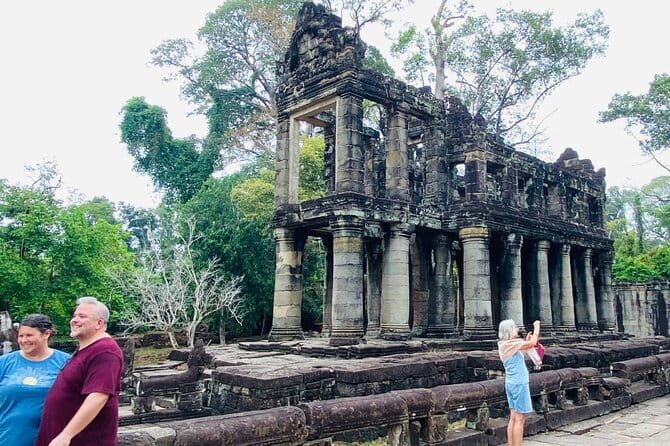
- Preah Khan gets the most time: Two hours lets you explore one of Angkor’s largest and most layered temple complexes.
- Neak Pean is reached across a causeway: The temple sits on a circular island in the former Jayatataka Baray.
- The route covers five different temple styles: You will see Jayavarman VII’s Buddhist-era sites alongside older Hindu temples built under Rajendravarman.
- The tour is private: Only your group participates, so the pace is more personal than a large coach excursion.
- The real cost is about $76 per person: Add the $37 one-day Angkor ticket to the $39 tour price, before meals and tips.
- Transport is part of the value: Hotel pickup, drop-off, bottled water, and an air-conditioned vehicle are included.
Why this Grand Tour route is worth your time
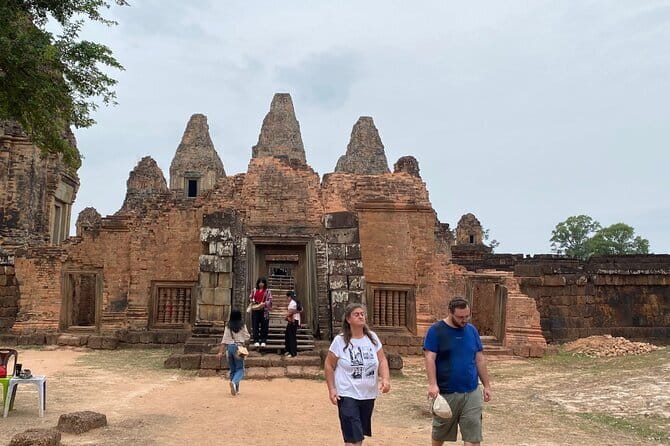
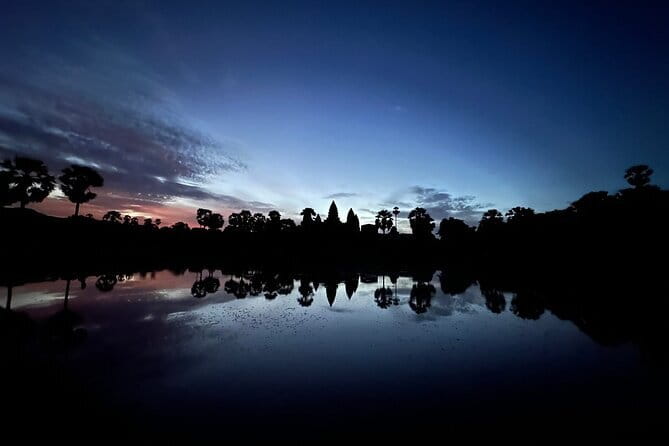
Many first visits to Angkor focus on Angkor Wat and Angkor Thom. This route takes you east and north through what is often called the Grand Tour circuit, giving you a broader view of Khmer temple design and royal ambition.
I like this route because the five stops do not feel like copies of one another. Preah Khan is sprawling and atmospheric. Neak Pean is small but unusual. Ta Som gives you a compact temple with a memorable tree-covered gate. East Mebon brings you to an older Hindu monument, while Pre Rup finishes with a strong temple-mountain design.
That variety matters. You are not spending five hours looking at the same arrangement of towers and galleries. You get different dates, religions, building materials, and settings in one outing.
The tour also works well for you if you prefer a private activity. Your group travels together rather than being mixed with other passengers, and pickup and drop-off at your hotel remove much of the day’s practical fuss. The driver is part of the experience too. A previous customer specifically praised the punctual, friendly service and comfortable journey, which is important in Siem Reap’s heat.
A few more options around Siem Reap worth reading up on
- Angkor Wat Sunrise or Sunset Tour with Guide from Siem Reap
★ 5.0 · 12,109 reviews - Siem Reap: Angkor Wat: Small-Group Sunrise or Sunset Tour
★ 5.0 · 9,444 reviews - From Siem Reap: Kampong Phluk Floating Village Tour by Boat
★ 4.9 · 6,979 reviews
Preah Khan: two hours inside Jayavarman VII’s great complex
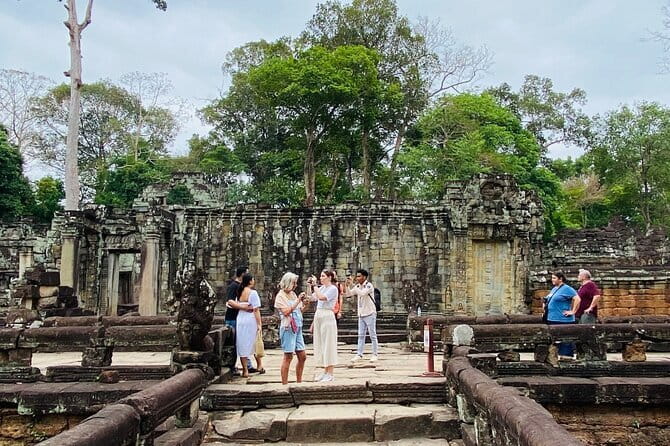
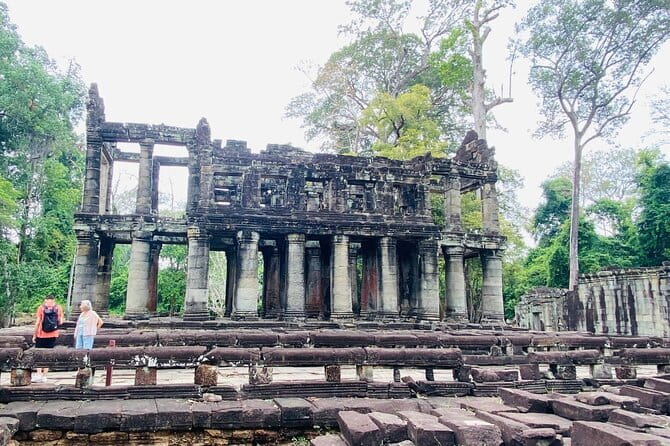
Preah Khan is the first and longest stop, with two hours assigned to it. That is sensible. This is not a quick photo stop but a large temple complex with corridors, courtyards, libraries, galleries, and carved stone details.
King Jayavarman VII built Preah Khan in the 12th century in honor of his father. The temple lies northeast of Angkor Thom and west of the Jayatataka Baray, the reservoir connected with the site. In its prime, Preah Khan was more than a place of worship. It supported a huge organization of nearly 100,000 officials and servants.
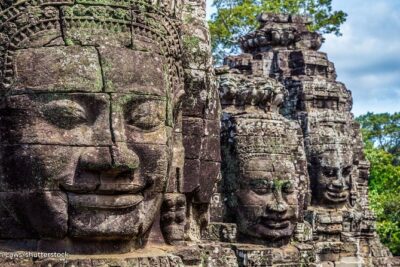
That number helps you understand the scale of the project. Preah Khan was part of a working royal and religious center, not an isolated monument placed in the forest for decoration. As you move through the complex, pay attention to how many layers it contains. You may find Buddhist imagery alongside later changes and Hindu elements, reflecting the shifts in Khmer religious life.
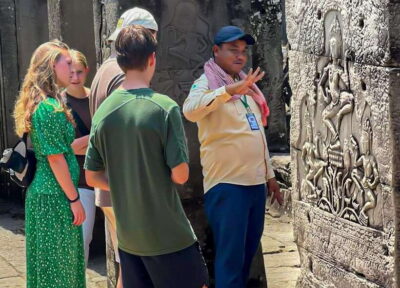
This is where an English-speaking guide can add real value. The stones are impressive on their own, but the layout can be confusing. A guide can help you understand how the complex related to the reservoir and why its long passages were built as they were.
Two hours is enough for a useful visit, though you should not expect to examine every corner at a slow pace. If you love architectural detail, you may want more time. If you prefer a clear introduction to several temples, the schedule is well judged.
Neak Pean: a small temple on a circular island
Neak Pean receives one hour. The temple is reached by a causeway across the Jayatataka Baray, and its setting makes it one of the more distinctive stops on the route.
Neak Pean is an artificial island with a Mahayana Buddhist temple on a circular island within the reservoir. It was built during the reign of Jayavarman VII and functioned as the Mebon of the Preah Khan baray. The connection between these two sites gives the stop more meaning after your time at Preah Khan.
This is a place where the approach matters as much as the central shrine. The water and open setting create a sharp contrast with Preah Khan’s enclosed corridors. You get a chance to slow down, look outward, and understand how Khmer builders used reservoirs as part of both practical planning and religious design.
The one-hour allocation should give you time to cross to the temple, see the central structure, and take photographs. Conditions can affect how much time you want to spend outside, so bring water and use the bottled water provided by the tour.
Neak Pean is not the largest monument here. Its appeal comes from the design and setting. If you want towering galleries and long carvings, Preah Khan will be the stronger stop. If you enjoy unusual layouts, Neak Pean may be the most memorable.
Ta Som: a compact stop with a different mood
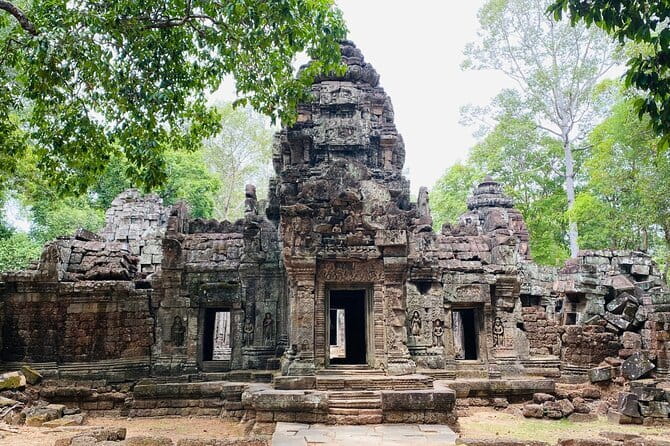
Ta Som is scheduled for 30 minutes. It is a small temple northeast of Angkor Thom and east of Neak Pean, built late in the 12th century for Jayavarman VII.
The king dedicated Ta Som to his father, Dharanindravarman II, who ruled the Khmer Empire from 1150 to 1160. That family connection links Ta Som to the larger pattern of royal memorial temples found across Angkor.
Because Ta Som is compact, half an hour can work. You can see the main structure without the long walking time required at Preah Khan. The short stop also keeps the overall tour moving, which matters when five temples are packed into about five hours.
The trade-off is obvious: you will not have much spare time. If you want to linger over every carving or take a large set of photographs, Ta Som may feel rushed. I would treat it as a focused visit, using the time to notice the temple’s smaller scale and its place within Jayavarman VII’s building program.
Something completely different for another day:
- Sunset tour of Kampong Phluk stilts home village on the Tonle Sap
★ 5.0 · 4,865 reviews - Siem Reap: Angkor Wat 2-Day Tour with Sunrise and Sunset
★ 4.9 · 4,429 reviews - Siem Reap: Kampong Phluk Floating Village Tour with Boat
★ 4.9 · 3,843 reviews - Siem Reap: Full-Day Angkor Wat Guided Tour with Sunset
★ 4.9 · 3,803 reviews
East Mebon: an older Hindu temple in a former reservoir
East Mebon is another 30-minute stop, but its story differs from the Jayavarman VII temples. It dates from the 10th century and was built during the reign of King Rajendravarman.
The temple was dedicated to Shiva and honored the king’s parents. It originally occupied an artificial island at the center of the East Baray, a large reservoir that is now dry. The former water setting is important. Today, you see a temple on land, but its original position would have made it appear as an island monument reached by boat or across the reservoir.
East Mebon is built from brick, laterite, and sandstone, giving you a useful comparison with the materials and forms used at the other stops. It also shows that Angkor’s grand building era stretches across several centuries and royal reigns.
Thirty minutes is enough for a clear look, especially because the site is smaller than Preah Khan. Still, you should expect a brisk visit. This is a stop for seeing the main structure and learning its purpose, not for an extended exploration.
Pre Rup: a strong finish at a temple mountain
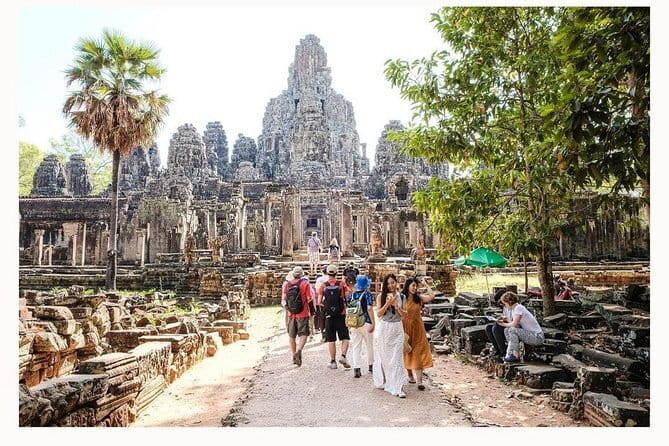
The final stop is Pre Rup, with one hour to explore. Built in 961 or early 962 under Rajendravarman, it was a Hindu state temple dedicated to Shiva.
Pre Rup is a temple mountain, with rising levels that create a powerful vertical design. It uses brick, laterite, and sandstone, and its name is a relatively modern phrase meaning turn the body. That name adds a slightly mysterious note, but the important point is that Pre Rup was built as a major state monument, not a minor shrine.
The one-hour visit gives you more room than Ta Som or East Mebon. You can study the brick towers, move through the upper levels where permitted, and take in the structure’s broad form. The stepped design helps explain how Khmer temple mountains represented a sacred center through height and geometry.
Pre Rup can be a good final stop because it feels visually different from the enclosed galleries earlier in the day. At the same time, the steps may require more effort than a flat temple visit. The tour information says most people can participate, but you should still consider your own comfort with temple stairs and uneven surfaces.
What the $39 price really covers
The advertised cost is $39 per person, but the required temple ticket adds $37 per person for a one-day pass. That brings the basic combined cost to about $76 per person, before meals, personal expenses, and tips.
At that price, the value depends on what you want from the day. You are paying for a private vehicle, hotel pickup and drop-off, an English-speaking guide, bottled water, and a planned route through five temples. You are not paying for food or the Angkor admission ticket, so budget for those separately.
For a private five-hour trip, the transport and guide make the price reasonable if you want comfort and structure. Hiring separate transport and arranging the route yourself may offer more control, but it also leaves you to manage timing and explanations. The tour is especially useful if you have limited time in Siem Reap and want to see more than the standard headline temples.
The value is weaker if you dislike a fixed schedule or want long, quiet visits at each site. The route covers a lot, and the 30-minute stops at Ta Som and East Mebon are deliberately brief.
A private vehicle makes the schedule easier
Pickup and drop-off at your hotel are included, along with an air-conditioned vehicle. In a hot destination, that is more than a small comfort. It gives you a cool break between temple visits and avoids the need to organize separate transport for each stop.
The activity is private, so only your group participates. That gives you a better chance to ask questions, request a small adjustment in pace, or take a little longer at the places you care about most. The exact flexibility is not specified, so you should not assume the whole schedule can be changed, but a private format is still more personal than a shared bus.
Bottled water is included. Meals are not, so plan to eat before or after the five-hour outing unless you arrange food separately. Since the experience is near public transportation and pickup is offered, it is designed to be straightforward from a Siem Reap hotel base.
Confirmation arrives at booking. Free cancellation is available if you cancel at least 24 hours before the start time. Within 24 hours, refunds and changes are not accepted.
Who should book this temple tour?
I would choose this tour if you want a compact introduction to the Grand Tour circuit, prefer private transport, and value having an English-speaking guide explain the sites as you go.
It suits families because the group stays together and the vehicle provides a comfortable break between stops. The private setup also worked well for one family who described the service as excellent and said they were satisfied with the experience.
It is also a good fit for first-time visitors who want more context than a self-guided circuit provides. Preah Khan and Pre Rup can be hard to read without some explanation, while Neak Pean and East Mebon make more sense when you understand their former reservoir settings.
I would hesitate if you want a slow, highly photographic day. Five temples in roughly five hours is efficient, not leisurely. You should also remember that the ticket is extra and that personal expenses and tips are not included.
The overall service received strong praise for organization, the driver’s punctuality and friendliness, and the enjoyable family experience. No specific guide name is provided, so the quality of your commentary will depend on the guide assigned to your group.
Should you book the Preah Khan and Pre Rup tour?
Book it if you want five varied Angkor temples, private hotel transport, and a manageable half-day schedule. The route gives you more than a quick temple checklist, especially at Preah Khan, Neak Pean, and Pre Rup.
Skip it if your priority is maximum free time at each ruin, or if the added $37 temple ticket pushes the total beyond your budget. For most people with one day to spare and an interest in seeing Angkor beyond its most famous monuments, this is a practical and well-planned choice.
FAQ
How long is the Preah Khan, Neak Pean, and Pre Rup tour?
The tour lasts approximately five hours.
What temples are included?
The route includes Preah Khan, Neak Pean, Ta Som, East Mebon, and Pre Rup.
Is hotel pickup included?
Yes. Pickup and drop-off at your hotel are included.
Is the tour private?
Yes. Only your group will participate in the activity.
Is an English-speaking guide included?
Yes. An English-speaking tour guide is included.
Is transportation included?
Yes. The tour includes an air-conditioned vehicle.
Is the Angkor temple ticket included?
No. The temple ticket costs $37 per person per day and must be paid separately.
Are meals included?
No. Meals are not included in the tour price.
Is bottled water provided?
Yes. Bottled water is included.
Can I cancel for a full refund?
Yes, if you cancel at least 24 hours before the experience start time. Cancellations or changes made less than 24 hours before the start time are not accepted for a refund.
Newest reviews from Siem Reap
- War Museum, Killing Field, and APOPO Hero RATs Tour★ 5.0 · 7 reviews
- Angkor Wat at Sunrise★ 4.0 · 7 reviews
- Siem Reap Angkor Airport Taxis (from Airport to Hotel)★ 5.0 · 44 reviews
- Cambodian Cooking Class and Oxcart Ride with Local Village Tour★ 5.0 · 4 reviews
- Secret Temples of Angkor – Guided Tour in Siem Reap★ 5.0 · 6 reviews
- Short Cycling at Countryside★ 5.0 · 29 reviews
- Unveiling the Mystical Beauty of Phnom Kulen National Park★ 5.0 · 6 reviews
- Khmer Cooking Class in Cambodia★ 5.0 · 36 reviews
Tours, compared.
Angkor Wat Sunrise or Sunset Tour with Guide from Siem Reap
Read our review →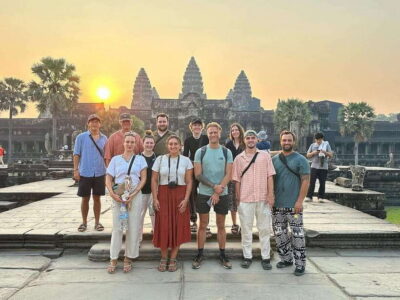
Angkor Wat: Small-Group Sunrise or Sunset Tour
Read our review →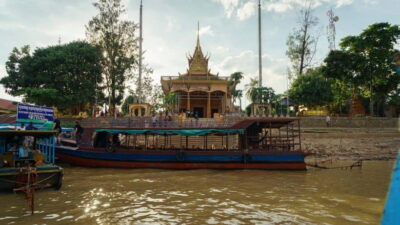
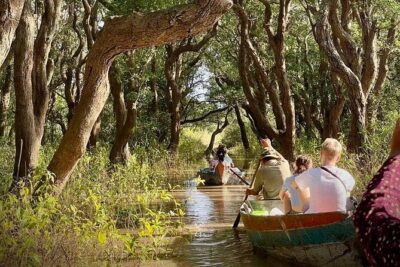
Sunset tour of Kampong Phluk stilts home village on the Tonle Sap
Read our review →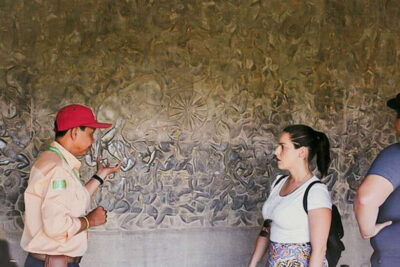
Angkor Wat 2-Day Tour with Sunrise and Sunset
Read our review →
Kampong Phluk Floating Village Tour with Boat
Read our review →