
Reviewed · 1-DAY TOURS
Prasith and Reap Temples Private Day Trip from Phnom Penh
Leave the city behind for quieter temples. This eight-hour private trip takes you from Phnom Penh to Phnom Prasith, the Putmondul Buddhist center, and Phnom Reap, a modern temple built in the style of Angkor Wat. I like the mix of old and new, and I like that your private guide can adjust the pace instead of waiting for a larger group. The main drawback is the long drive, about 90 minutes each way to the first temple, so this suits you best if you are happy to trade road time for a calmer day in the countryside.
The trip also gives you a more personal look at living Buddhist practice. You may see monks, nuns, and local people making offerings or asking for blessings. Guides such as Li and Seung have earned praise for clear English and warm, thoughtful explanations, though donations at the religious sites are not included in the $117.44 price.
In This Review
- Key points before you book
- Why this temple trip is different from Phnom Penh sightseeing
- The 90-minute ride to Phnom Prasith
- Phnom Prasith and its hilltop temple views
- Lunch beside the hill in a traditional Khmer restaurant
- Putmondul, the Buddhist center with a reclining Buddha
- Phnom Reap, Cambodia’s modern answer to Angkor Wat
- What the private guide adds
- Is $117.44 per person a fair price?
- Who should book this day trip?
- Should you book Prasith and Reap Temples?
- FAQ
- How long is the Prasith and Reap temple tour?
- Is hotel pickup included?
- Can I choose between a tuk tuk and a car?
- Are meals and drinks included?
- Is this a private tour?
- Do I need to be physically fit?
- Are donations included in the price?
Key points before you book
- Phnom Prasith sits high on twin hills, with wide views across the surrounding countryside and a resident monastic community.
- The 1998 Phnom Reap temple copies Angkor Wat’s style, making it an unusual modern counterpart to Cambodia’s ancient monuments.
- Putmondul offers a working Buddhist setting, with monks, nuns, local offerings, paintings, and a large reclining Buddha.
- The private format keeps the day flexible, with your own guide, driver, and choice of tuk tuk or car.
- Lunch, morning tea, coffee or tea, bottled water, and hotel pickup are included, which makes the price easier to assess.
- The day requires moderate fitness, including temple visits on hilltops and a full day of movement.
Why this temple trip is different from Phnom Penh sightseeing
Phnom Penh is usually treated as Cambodia’s starting point for bigger journeys. Many people head quickly toward Siem Reap and Angkor, but the capital has its own religious and historical character. This excursion helps you see a quieter side of the country without committing to a full trip north.
You are not visiting the famous Angkor complex itself. That is important. Phnom Reap is a modern structure, finished in 1998, and Phnom Prasith is a different kind of temple experience from the grand ruins around Siem Reap. The reward is a less crowded setting where daily worship matters as much as architecture.
I especially like the contrast between the stops. Phnom Prasith connects you with an older sacred site and a community of monks. Putmondul shows Buddhism as a living practice. Phnom Reap then offers a recent interpretation of Angkorian design, complete with sculptures of ancient kings and Buddha.
That blend gives the day a clear theme: Cambodia looks backward, lives in the present, and continues to create new sacred places.
A few more options around Phnom Penh worth reading up on
- The Killing Field and Toul Sleng Genocide Museum (S21) Tour
★ 5.0 · 1,977 reviews - Phnom Penh: Sunset Cruise with Unlimited Beers & BBQ Buffet
★ 4.5 · 727 reviews - Aroma Therapy Massage, Relaxation therapeutic aromatherapy oil massages.
★ 5.0 · 645 reviews
The 90-minute ride to Phnom Prasith
After hotel pickup in Phnom Penh, you can travel by tuk tuk or car. The journey to Phnom Prasith takes about 90 minutes, so your choice of vehicle matters. A tuk tuk gives you open views and a closer feel for village roads and local activity. A car offers more protection from heat, dust, and changing weather.
A small local snack is provided for morning tea. It is a modest touch, but useful on a long first transfer, especially if you prefer an early start or do not want to arrange food before pickup.
The road time is not simply dead time. You get to watch Phnom Penh thin into rural Cambodia, with the city giving way to countryside and local markets. One of the strongest moments mentioned by guests was the tuk tuk ride through a market. If you choose the tuk tuk, keep your eyes open during this part of the journey. It may become one of the day’s most memorable pieces of ordinary Cambodian life.
Still, be realistic about the distance. If you want a packed schedule of major ruins with almost no transport, this is not the right outing. The journey is part of the experience, but it takes up a significant portion of an eight-hour day.
Phnom Prasith and its hilltop temple views
Phnom Prasith is set on the eastern summit of twin hills. Reaching a temple above the surrounding countryside gives the first stop a strong sense of place. The views are a major reason to come, so do not rush straight through the site after arrival.
The temple is also home to a community of monks. You may see them going about daily routines rather than posing for a formal sightseeing scene. That makes this stop feel less like an attraction arranged for visitors and more like a functioning religious place.
I would give yourself time to look beyond the stonework. Notice the hilltop setting, the quiet rhythm of the monastery, and the way worship continues around the structure. Your guide can help explain what you are seeing, but the best moments may be simple ones: a monk crossing the grounds, a view over the fields, or the hush around the temple.
The climb and uneven ground mean you should have a moderate level of fitness. The information provided does not specify the number of steps or the exact walking surface, so comfortable shoes are sensible. Bring water, even though bottled water is supplied, and expect heat to make the hill feel harder than it looks.
Lunch beside the hill in a traditional Khmer restaurant
After visiting Phnom Prasith, the route returns to the base of the hill for lunch. The meal is served at a traditional Khmer restaurant in a shady location, with views across the rural countryside.
This break is well placed. Temple visits under the Cambodian sun can be tiring, and lunch gives you a chance to cool down before the afternoon stops. It also keeps the day from feeling like a string of hurried photo stops.
Lunch is included, along with coffee or tea and bottled water. That improves the value of the tour, since you do not need to budget separately for the main meal or basic drinks. The exact menu is not specified, so you should not book this expecting a particular dish or a special dietary plan.
The setting matters as much as the food. A shaded restaurant near the hill lets you pause in a pleasant rural spot rather than eating quickly in the vehicle or at a crowded tourist stop.
Something completely different for another day:
- Killing field and Toul Sleng genocide museum Tour
★ 5.0 · 610 reviews - Phnom Penh Full Day Private Tour Included All Admission Tickets
★ 5.0 · 585 reviews - Phnom Penh: Sunset Cruise with Unlimited Beer &Fruit platter
★ 4.7 · 515 reviews - Phnom Penh Silk Island Bike Tour/ E-Bike or Tuk Tuk
★ 5.0 · 495 reviews
Putmondul, the Buddhist center with a reclining Buddha
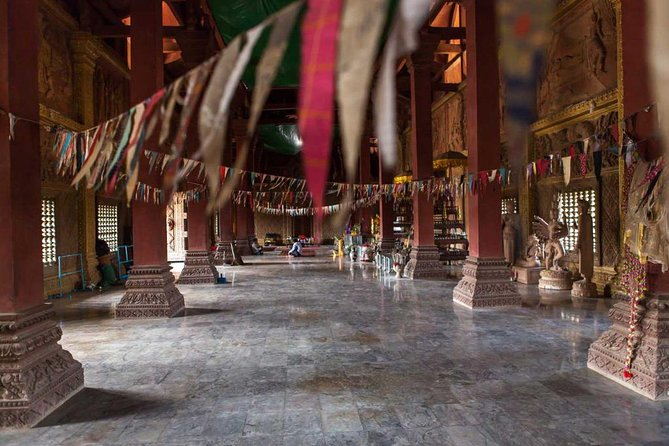
The next stop is Putmondul, described as a Buddhist center rather than simply another temple ruin. Here you can see monks and nuns, along with local people making offerings and seeking good luck.
This is one of the most useful parts of the day for understanding how religion fits into everyday Cambodian life. You are not only looking at architecture. You are watching a place where people come to ask for blessings, make offerings, and take part in a continuing religious tradition.
Putmondul is home to a large reclining Buddha and paintings that depict the story of Buddhism. The reclining image gives you a strong focal point, while the paintings help place the center within a wider religious story.
Your guide can add context, but remember that this is an active Buddhist site. Dress and behavior should be respectful, particularly around monks, nuns, and people receiving blessings. The tour price does not include donations, so carry some Cambodian currency if you want to contribute. A donation is optional, but the information provided makes clear that it is a separate cost.
This stop may appeal most to you if you enjoy cultural detail and real religious settings. If your main goal is ancient stone ruins, Putmondul may feel less visually dramatic than Phnom Prasith or Phnom Reap. Its value comes from people and practice.
Phnom Reap, Cambodia’s modern answer to Angkor Wat
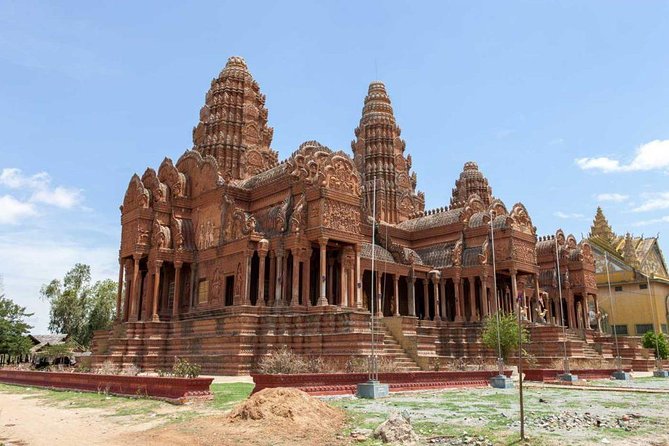
The final major stop is Phnom Reap Temple, also called Prasat Vihear Suor. Completed in 1998, it is based on the architectural style of Angkor Wat and is often called the new Angkor Wat.
That nickname helps set expectations, but it can also create the wrong ones. Phnom Reap is not an ancient Angkor monument. It is a recent religious building inspired by Cambodia’s most famous architectural tradition. The interest lies in seeing how Angkorian forms continue to shape Cambodian identity today.
Inside and around the temple, you can see sculptures of ancient kings and Buddha. The building gives you a chance to compare old Khmer design ideas with a modern place of worship. If you have already visited Angkor, you may find the comparison especially worthwhile. If you have not, Phnom Reap offers an introduction to familiar Angkorian shapes without replacing the real temple complex.
The religious activity here is also part of the visit. Local people make the journey to seek blessings from monks and hope for good fortune. You may need to step aside, wait quietly, or follow your guide’s advice around ceremonies. That is not an inconvenience to eliminate. It is the reason the place feels meaningful.
Photographs are likely to be tempting, but do not let the camera turn the visit into a quick architectural inspection. Look at the sculptures, observe the worshippers, and ask your guide about the building’s recent construction and purpose.
What the private guide adds
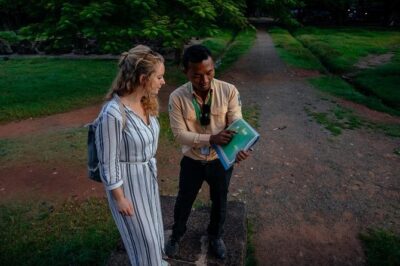
A private guide is the main reason to choose this experience over a cheaper shared excursion. Only your group participates, so you do not spend time collecting strangers or waiting for people who want different amounts of time at each site.
The guide also gives the temples a human frame. One guide, Li, was praised for being well informed without pushing too much information. That balance matters at religious sites, where a constant lecture can get in the way of observation.
Another guide, a woman whose name was not provided, received especially strong praise for warm conversation, excellent English, and detailed knowledge of Cambodian history. She also shared personal experiences and thoughtful anecdotes. Seung was also singled out for being on time, clear in English, and well informed about the places visited.
Guide quality can vary from one departure to another, as it can with any experience. Still, the comments suggest that the operator, Green Cultural Travel, has supplied guides who are more than drivers reading out facts. You should use the private format to ask questions about Buddhism, modern temple building, rural life, and Cambodia’s past.
The driver and guide arrangement is listed together, so confirm at booking who will handle each role if that distinction matters to you. Private transport is included, and you choose between a tuk tuk and a car.
Is $117.44 per person a fair price?
At $117.44 per person, this is not a bargain-priced city outing. It becomes better value when you count what is included: hotel pickup, private transport, a driver, a private guide, lunch, a morning snack, coffee or tea, and bottled water.
You are also paying for privacy and a full day outside Phnom Penh. A shared trip might cost less, but it could give you less control over timing and less access to one-on-one explanation. The private format is particularly useful for couples, families, and small groups who want to pause at a temple or move on without negotiating with strangers.
Group discounts are offered, though no discount amount is provided. Since the base price is listed per person, larger groups should check the final total before booking.
The value is strongest if you want local religious life and quieter sites. It is weaker if you want the biggest ancient monuments in Cambodia. For that, Siem Reap and Angkor remain the essential choice.
Who should book this day trip?
I would recommend it to you if you have already seen Phnom Penh’s central sights and want a change of pace. It also works well if you have a free day in the capital but cannot fit a longer trip to Siem Reap.
This is a good match for:
- Couples who want private transport and flexible timing
- Families with children old enough to manage a full day and moderate walking
- Visitors interested in Buddhism and active places of worship
- First-time Cambodia visitors who want temple context without major crowds
- People who enjoy rural road journeys and local markets
I would think twice if you dislike long drives, hills, heat, or religious sites where donations and worship are part of the setting. The tour is also not a replacement for Angkor Wat. It is a separate experience with a quieter, more local focus.
Confirmation arrives at booking. Children must be accompanied by an adult, and the child rate applies only when sharing with at least one paying adult. You can cancel for a full refund up to 24 hours before the local start time. Changes or cancellations inside that window are not accepted for a refund.
Should you book Prasith and Reap Temples?
Book this tour if you want to see Cambodia beyond the standard Phnom Penh route. The best reasons are the private guide, the hilltop views at Phnom Prasith, the living Buddhist setting at Putmondul, and the unusual modern design of Phnom Reap.
I would choose the tuk tuk if you want the open-air ride and market views, then choose a car if heat and comfort matter more. Either way, reserve a full day in your schedule and bring respectful clothing, practical shoes, and a little extra money for optional donations.
Skip it if your priority is ancient Angkor ruins or a short sightseeing trip. Choose it if you want a thoughtful day that connects Cambodia’s old temples with its present-day religious life.
FAQ
How long is the Prasith and Reap temple tour?
The experience lasts approximately eight hours. The journey from Phnom Penh to Phnom Prasith takes about 90 minutes.
Is hotel pickup included?
Yes. Hotel pickup in Phnom Penh is included in the tour.
Can I choose between a tuk tuk and a car?
Yes. The tour includes private transport of your choice, with a driver. The available options listed are a tuk tuk or car.
Are meals and drinks included?
Yes. Lunch, a local snack for morning tea, coffee or tea, and bottled water are included.
Is this a private tour?
Yes. Only your group participates, and a private guide and private transport are provided.
Do I need to be physically fit?
A moderate level of physical fitness is recommended. The itinerary includes visiting temples on hilltops, so you should be comfortable with a full day of travel and temple walking.
Are donations included in the price?
No. Donations are not included. You may encounter local offerings and blessing ceremonies at the Buddhist centers, so plan separately if you wish to donate.
Newest reviews from Phnom Penh
- 10 Day Ethical Animals Tour Where the Wild Things Roam★ 5.0 · 1 review
- Watch Live Khmer Traditional boxing in Phnom Penh★ 5.0 · 46 reviews
- Watch Khmer Kickboxing with Free Beers by Ringside Seats★ 5.0 · 11 reviews
- The killing field and Toul Sleng Genocide museum (S21) Tour★ 4.5 · 19 reviews
- Private Transfer from Phnom Penh to Siem Reap by VIP Alphard 2005★ 5.0 · 2 reviews
- Warm Stone Massage★ 5.0 · 23 reviews
- Udong Old Capital Tour★ 4.5 · 3 reviews
- S-21 Prison and Killing Fields★ 5.0 · 8 reviews
1-Day Tours, compared.
1-Day Amazing Angkor Wat Tour with Sunset & All Interesting Major Temples
Read our review →
Angkor Wat one Day Private Tour for All Highlight Angkor Temples
Read our review →
1-Day private Angkor Temple Tour from Siem Reap
Read our review →
1-Day Angkor Wat Sunrise & All Interesting Temples Private Tour
Read our review →
Angkor Wat Sunrise Small-Group 1-Day Tour from Siem Reap
Read our review →
Browse the lists this tour appears in