
Reviewed · NATIONAL PARKS
Phnom Penh & Kirirom National Park Birds Tour
Wake before dawn for Cambodia’s wild side. This two-day birding trip from Phnom Penh pairs lotus fields and rice country with the forest of Kirirom National Park. I like the small maximum group of eight and the chance to work with local guide Thong, whose sharp ear for bird calls has helped guests find species that are easy to miss. The main drawback is the early start, long birding days, and moderate walking effort.
I also like that the tour supports a community homestay rather than keeping you in the city. You can expect good photo chances and 50 to 80 possible bird species, but sightings are never guaranteed, and some of the forest birds are tricky to locate. Humid weather and occasional rain showers add another practical concern.
In This Review
- Key points at a glance
- Why this is a good Phnom Penh escape
- The 5:30 am start and the trip into the countryside
- Day one: lotus fields, rice country, and Chambok
- Day two: sunrise birds in Kirirom National Park
- The bird list: what you might see
- What the $350 price really covers
- Who should book this birding trip
- Practical details that affect your decision
- Should you book it?
- FAQ
- What time does the tour start?
- How long is each day?
- How many people can join the tour?
- Is accommodation included?
- Are meals included?
- Is the Chambok entrance fee included?
Key points at a glance
- A 5:30 am Phnom Penh departure gives you the best chance of hearing and seeing active birds before the day grows hot.
- Day one mixes lotus ponds, rice fields, cultivation, and woodland, giving you a broad introduction to Cambodia’s lowland birdlife.
- Chambok Community Based Ecotourism provides one night in a homestay and a more local setting than a standard city excursion.
- Kirirom National Park begins with sunrise birdwatching, with forest species such as Greater Racket-tailed Drongo, White-rumped Shama, and Red-whiskered Bulbul on the list.
- Thong is a major strength, especially for beginners, since he can locate birds by their calls and explain their habits in clear English.
- The $350 price includes transport, guides, meals, and the homestay, but dinner and the $7 Chambok entrance fee are extra.
Why this is a good Phnom Penh escape
Phnom Penh is a useful base, but its traffic and busy streets do not tell you much about Cambodia’s birdlife. This trip quickly moves you toward open country, village areas, wetlands, and forest. I like that change of pace. You are not simply ticking off birds in a manicured park. You are watching how birds use working farmland, natural water, and forest habitat.
The tour is especially useful if you have limited time in Cambodia but want more than a city sightseeing day. In roughly two days, you pass through several habitat types:
- Lotus fields and natural lake edges
- Rice fields and cultivated land
- Woodland
- Lowland broad-leaved forest
- Tropical moist forest
That variety explains the wide species range. You might see open-country birds such as Oriental Pratincole, Brown Shrike, Green Bee-eater, or Black-naped Oriole, then switch to forest species such as White-rumped Shama, Puff-throated Babbler, or Blue-eared Barbet.
The experience is not designed as a casual stop between temples. You leave at 5:30 am, spend about nine hours birding on each day, and need a moderate level of fitness. I would choose it for someone who is happy to stand quietly, walk at an easy pace, listen for calls, and accept that the most exciting moment may be a brief glimpse through leaves.
More national park trips in Phnom Penh:
- Kirirom National Park Private Day Tour from Phnom Penh
★ 5.0 · 4 reviews - Bokor National Park Private Day Trip from Phnom Penh
★ 5.0 · 2 reviews - Kampot Day Tour “Bokor National Park”
★ 5.0 · 82 reviews
The 5:30 am start and the trip into the countryside
Your day begins at 5:30 am with pickup in Phnom Penh. That hour sounds severe on paper, but it makes sense for birding. Early morning is when many birds call and feed, while Cambodia’s lowlands are still cooler and less humid.
The route includes a ferry crossing of the Mekong River before continuing toward the birding areas. That crossing adds a distinctly local touch, although it also means you should be ready for a full travel day. The journey is made in an air-conditioned vehicle, which matters in Cambodia’s heat, especially after several hours outdoors.
I would prepare the night before. Keep binoculars, water, a hat, sunscreen, rain protection, and a small camera ready to grab. The tour information notes occasional rain showers, so a light waterproof layer is sensible even if the morning begins clear.
The group maximum is eight people. That is a useful size for birding because a large crowd can scare birds away and make it hard for everyone to share a view. A small group also gives the guide more room to adjust the pace, though the experience still depends on everyone staying quiet and patient.
Day one: lotus fields, rice country, and Chambok
The first birding stop is around a natural lake where local farmers grow lotus, paddy rice, and vegetables. This is one of the most appealing parts of the trip because the setting connects birdwatching with everyday rural life. You are not looking at empty scenery. You are seeing habitat shaped by farming and water.
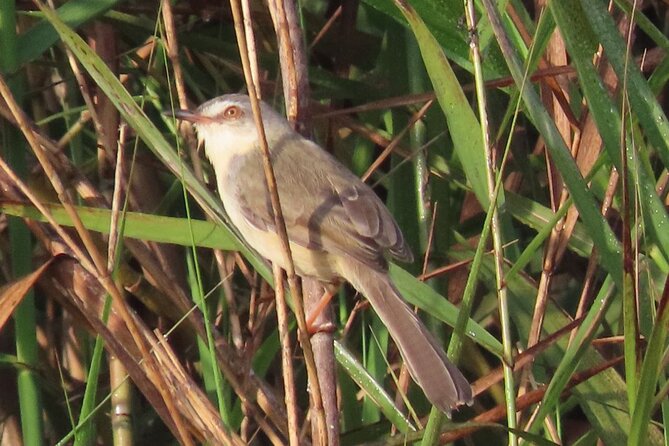
Lotus fields can be productive places for open-country birds. The tour’s possible species list includes Oriental Pratincole, Brown Shrike, Collared Kingfisher, Asian Brown Flycatcher, Green Bee-eater, and Cambodian Tailorbird. The Cambodian Tailorbird is particularly meaningful for anyone interested in local specialties, while the bee-eater offers the kind of bright, quick-moving subject that can be rewarding for photographers.
The mix of water, crops, and woodland gives you a chance to compare bird behavior. Some birds may be easier to spot in the open, while others stay close to cover. The guide can help you listen for calls and identify birds that you might otherwise dismiss as movement in the vegetation.
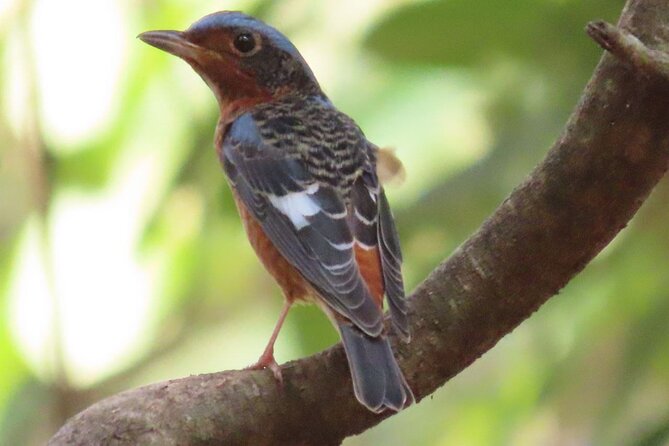
Day one also offers possibilities such as Grey-headed Canary-Flycatcher, Blue-bearded Bee-eater, White-throated Rock Thrush, Ashy Drongo, Chinese Francolin, Common Flameback, and Black-naped Oriole. That is a broad list, and conditions will affect how many you actually see. I would treat the 50 to 80 species estimate as a target range rather than a promise.
After roughly nine hours of birding and travel, you stay at Chambok Community Based Ecotourism. The one-night homestay is a real reason to choose this trip over a simple day outing. It gives you a closer look at community-based tourism and puts you nearer to the next morning’s forest birding.
The homestay may not suit someone who expects hotel comforts. The supplied details do not specify room style or facilities, so I would ask the provider about sleeping arrangements before booking if comfort is important to you. Dinner is not included, and the Chambok Ecotourism Community entrance fee is listed separately at $7.
Day two: sunrise birds in Kirirom National Park
Day two begins with sunrise birdwatching in Kirirom National Park. This early forest session is the strongest match for serious birders, especially if you want species that do not usually appear in open rice country.
The planned walk is at an easy pace, but the overall day still requires moderate fitness. Forest birding can be tiring because you may spend time looking upward, standing still, and moving over uneven ground. The tour does not promise an effortless roadside viewing session, so bring shoes suited to walking and expect humid conditions.
The Kirirom bird list includes Greater Racket-tailed Drongo, Forest Wagtail, White-rumped Shama, Red-whiskered Bulbul, Puff-throated Babbler, White-crested Laughingthrush, Dark-necked Tailorbird, Blue-eared Barbet, Black-naped Monarch, and Mountain Imperial-Pigeon.
Several of these birds are best appreciated with patience. A drongo with long tail feathers may pass quickly through the trees. A babbler or laughingthrush can stay hidden while making itself known by sound. A Mountain Imperial-Pigeon may be easy to hear but harder to see clearly. This is where a guide who follows calls can make a large difference.
Thong received the strongest praise for his bird-finding ability, English, and enthusiasm. He can locate birds by their calls and explain their habits, which is valuable for beginners and experienced birders alike. I especially like that the guiding appears to focus on teaching you how to notice birds, not simply pointing at one and naming it.
Photographers should find good opportunities, but they need realistic expectations. Forest conditions can produce shaded subjects, partial views, and fast movement. Open areas around fields and water may offer easier shots than the denser forest. A camera with a useful zoom lens and patience will help more than expensive equipment alone.
A few more options around Phnom Penh worth reading up on
- The Killing Field and Toul Sleng Genocide Museum (S21) Tour
★ 5.0 · 1,977 reviews - Phnom Penh: Sunset Cruise with Unlimited Beers & BBQ Buffet
★ 4.5 · 727 reviews - Aroma Therapy Massage, Relaxation therapeutic aromatherapy oil massages.
★ 5.0 · 645 reviews - Killing field and Toul Sleng genocide museum Tour
★ 5.0 · 610 reviews
The bird list: what you might see
The advertised range is unusually broad for a two-day trip, but it reflects the changing habitats rather than a guarantee of every species. Your exact results will depend on weather, season, bird activity, and how much time each sighting takes.
Possible birds include:
- Cambodian Tailorbird
- Oriental Pratincole
- Brown Shrike
- Collared Kingfisher
- Asian Brown Flycatcher
- Green Bee-eater
- Grey-headed Canary-Flycatcher
- Blue-bearded Bee-eater
- White-throated Rock Thrush
- Ashy Drongo
- Chinese Francolin
- Common Flameback
- Black-naped Oriole
- Greater Racket-tailed Drongo
- Forest Wagtail
- White-rumped Shama
- Red-whiskered Bulbul
- Puff-throated Babbler
- White-crested Laughingthrush
- Dark-necked Tailorbird
- Blue-eared Barbet
- Black-naped Monarch
- Mountain Imperial-Pigeon
The list includes both familiar Southeast Asian birds and more specialized forest species. If you are new to birding, that mixture is helpful because you can begin with obvious shapes and colors, then learn to recognize subtler clues such as call, feeding behavior, and habitat.
If you already keep a life list, the Cambodian Tailorbird, Blue-bearded Bee-eater, Greater Racket-tailed Drongo, and Mountain Imperial-Pigeon may be especially appealing. Still, I would not book this solely for one target bird. Wildlife has its own schedule, and a good guide can only improve your odds.
What the $350 price really covers
The cost is $350 per person. That is not a cheap Phnom Penh day trip, but it covers more than a vehicle and a few hours with a guide. Included are an air-conditioned vehicle, a local birding guide, a local guide, one night at the Chambok community homestay, two lunches, and two breakfasts.
That package has reasonable value if you would otherwise need to arrange transport, a rural overnight stay, meals, and a specialist guide separately. The small group limit also helps justify the price. A private or semi-private birding arrangement can cost more, particularly when the guide needs to work around calls, weather, and habitat.
You still need to budget for dinner, the $7 entrance fee at Chambok Ecotourism Community, personal expenses, tips, and travel insurance. The tour does not include travel insurance, so check that your policy covers outdoor activities and changes caused by poor weather.
The value is best for people who care about the quality of guiding and access to varied habitats. If you only want a quick introduction to common birds, the price may feel high. If you want local knowledge, two full birding days, a countryside stay, and a chance to support community ecotourism, it becomes easier to justify.
Who should book this birding trip
I would recommend this experience to:
- Beginners who want a friendly introduction to Cambodian birds
- Experienced birders building a Southeast Asia list
- Photographers who are comfortable with imperfect forest light
- Visitors who prefer countryside and community stays to city attractions
- People willing to start early and spend long days outdoors
- Small groups who value a maximum of eight participants
The trip may not suit you if you need a relaxed late-morning start, dislike humid weather, or want guaranteed close views of birds. It also may not be ideal if you expect a polished hotel stay, since the accommodation is a community homestay and details about its facilities are not provided.
The physical requirement is moderate rather than extreme, and the Kirirom walk is described as easy-paced. Even so, two nine-hour days can be demanding. I would rate the effort as manageable for most reasonably fit people, but not something to squeeze into a schedule already packed with early mornings.
Practical details that affect your decision
Pickup is offered, and the start time is 5:30 am. Confirmation is received at booking, and the experience is near public transportation, although the trip itself uses an air-conditioned vehicle.
The experience depends on good weather. If poor weather forces cancellation, you can choose another date or receive a full refund. The same applies if the minimum number of participants is not reached. For your own plans, cancel at least 24 hours before the start time for a full refund. Cancellations or changes made within 24 hours are not refunded or accepted.
I would also confirm the exact pickup point, dinner arrangements, and homestay facilities before paying. Those details matter more here than they would on a short city tour because you are spending a night outside Phnom Penh.
Should you book it?
Book this tour if you want serious birding with a local guide, varied countryside habitats, and a community-based overnight stay. The strongest reasons are Thong’s ability to track calls, the small group size, and the contrast between lotus fields on day one and Kirirom’s forest at sunrise on day two.
Skip it if you want guaranteed sightings, a soft schedule, or a hotel-style overnight experience. For the right person, though, this is a thoughtful way to trade Phnom Penh’s usual tourist circuit for Cambodia’s farmland, forest, and bird calls. The early alarm is part of the bargain.
FAQ
What time does the tour start?
The tour starts at 5:30 am.
How long is each day?
Each day is approximately nine hours.
How many people can join the tour?
The maximum group size is eight travelers.
Is accommodation included?
Yes. The tour includes one night at Chambok Community Based Ecotourism.
Are meals included?
Two breakfasts and two lunches are included. Dinner is not included.
Is the Chambok entrance fee included?
No. The entrance fee at Chambok Ecotourism Community is listed as $7 and must be paid separately.
Newest reviews from Phnom Penh
- 10 Day Ethical Animals Tour Where the Wild Things Roam★ 5.0 · 1 review
- Watch Khmer Kickboxing with Free Beers by Ringside Seats★ 5.0 · 11 reviews
- The killing field and Toul Sleng Genocide museum (S21) Tour★ 4.5 · 19 reviews
- Watch Live Khmer Traditional boxing in Phnom Penh★ 5.0 · 46 reviews
- Private Transfer from Phnom Penh to Siem Reap by VIP Alphard 2005★ 5.0 · 2 reviews
- Warm Stone Massage★ 5.0 · 23 reviews
- S-21 Prison and Killing Fields★ 5.0 · 8 reviews
- Private Taxi Between Phnom Penh – Siem Reap Stop Sightseeing★ 5.0 · 23 reviews
National Parks, compared.
Phnom Kulen Waterfall National Park from Siem Reap
Read our review →
Angkor Wat Private 2 day tour including National Park Phnom Kulen
Read our review →
Unveiling the Mystical Beauty of Phnom Kulen National Park
Read our review →
Phnom Kulen National Park & Beng Mealea Private Tour
Read our review →Browse the lists this tour appears in