
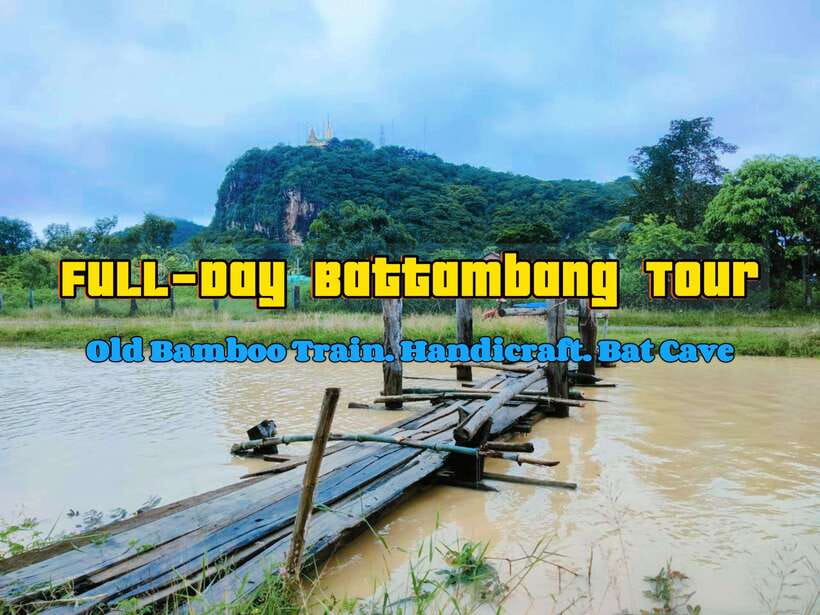
Reviewed · BAMBOO TRAIN TOURS
Full-day: Handicraft, Bamboo train, Killing cave, Bat Cave
A long day, but a revealing one. This private Battambang tour links food-making, village life, temples, the original bamboo train, and Phnom Sampau’s caves in one 10-hour outing. I like the strong mix of everyday Cambodia and major sights, especially the tastings of rice paper, rice wine, dried bananas, and bamboo sticky rice. I also like the chance to stop in rural villages and talk with farmers rather than simply drive from monument to monument.
The main drawback is the pace. You cover a lot of ground, and the schedule includes long stretches by tuk-tuk, several historical stops, a train ride, and a climb or ride toward the Killing Cave. Meals and the $5 bamboo train fee are extra, so the $15 headline price is excellent value, but not the final cost of every activity.
In This Review
- Key points at a glance
- Why this Battambang day feels different
- Morning food stops and Wat Samrong Knong
- Markets, farmers, and the Sangke River
- Battambang’s colonial center and Ta Dambong Kro Nhong
- The original bamboo train and its extra fee
- Phnom Sampau, the Monkey Forest, and the Golden Temple
- The Killing Cave and Cambodia’s difficult memory
- The Bat Cave finale at dusk
- What the $15 price really includes
- Ek Phnom Temple and the northern route
- Who should book this tour?
- Should you book the Battambang full-day tour?
- FAQ
- How long does the Battambang tour last?
- What is the tour price?
- Is the bamboo train included?
- Are meals included?
- Is hotel pickup available?
- What language does the guide speak?
- Is this a private tour?
- Are the Killing Cave and Bat Cave entrance fees included?
- Do I need to pay for transport to the Killing Cave?
- What should I bring?
Key points at a glance
- Food is part of the tour: See how rice paper, spring rolls, rice wine, dried bananas, bamboo sticky rice, and fish products are made, with local tastings included.
- The history is serious: Wat Samrong Knong’s Well of Shadows and Phnom Sampau’s Killing Cave explain some of Cambodia’s darkest years.
- The original bamboo train costs extra: The ride is not included in the tour price and is listed at $5 per person.
- David and Kim receive special praise: David is described as friendly and flexible, while Kim is praised for clear explanations and helpful food recommendations.
- The Bat Cave is the finale: At dusk, thousands of bats leave the mountainside cave, creating the day’s most dramatic natural sight.
- This is a private tour: Hotel pickup, drop-off, a live English-speaking guide, tuk-tuk transport, water, cold towels, snacks, and cave entry are included.
Why this Battambang day feels different
Many day tours show you a temple or two and call it a day. This one tries to explain how people around Battambang live, work, eat, worship, and remember. That makes it more useful if you want more than a quick photo stop.
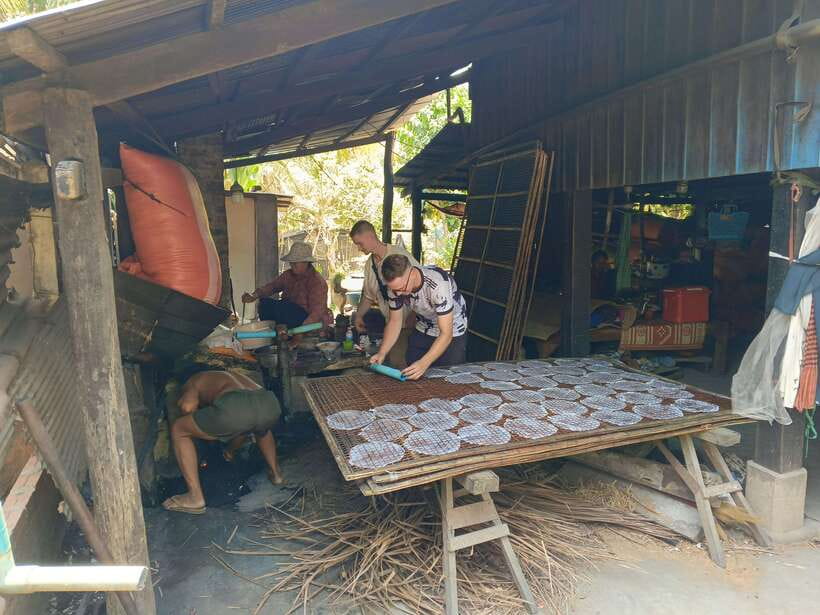
The morning is built around local production. You see rice paper being made, sample rice wine, learn about dried bananas, and watch the preparation of bamboo sticky rice. A market visit adds another layer, with the route including a Khmer prahok market and a fish market. Prahok is a strong-smelling fermented fish product, so this is not a polished food demonstration designed only for tourists. It is a look at food that matters in daily Cambodian cooking.
The guide is important here. David is praised for being open to requests and for taking guests through rural areas, while Kim is praised for stopping when something interesting appeared and explaining it clearly. The tour provider is David Local Family Battambang Trip, and the family connection seems to shape the relaxed feel of the outing.
This is also a private group, so you are not tied to the interests of a large busload. That matters on a long day. You can ask questions, pause at a village, or spend more time understanding a site instead of waiting for a crowd to move.
More Wildlife Tours in Battambang
- Afternoon tour by tuk tuk to bamboo train,bat cave,killing cave,countryside.
★ 5.0 · 344 reviews - Battambang: Bamboo Train, Bat Cave, Killing Cave by Tuk Tuk
★ 5.0 · 182 reviews - Full Day tour .City tour.Countryside.Bamboo Train.Secret Bat Cave
★ 5.0 · 178 reviews
Morning food stops and Wat Samrong Knong
Pickup is available from a hotel, guesthouse, or restaurant in Krong Battambang. The tour information uses both tuk-tuk transport and the phrase bike tour in its stop descriptions. Since transportation is included by tuk-tuk, confirm the exact arrangement when booking, especially if you are expecting to cycle.
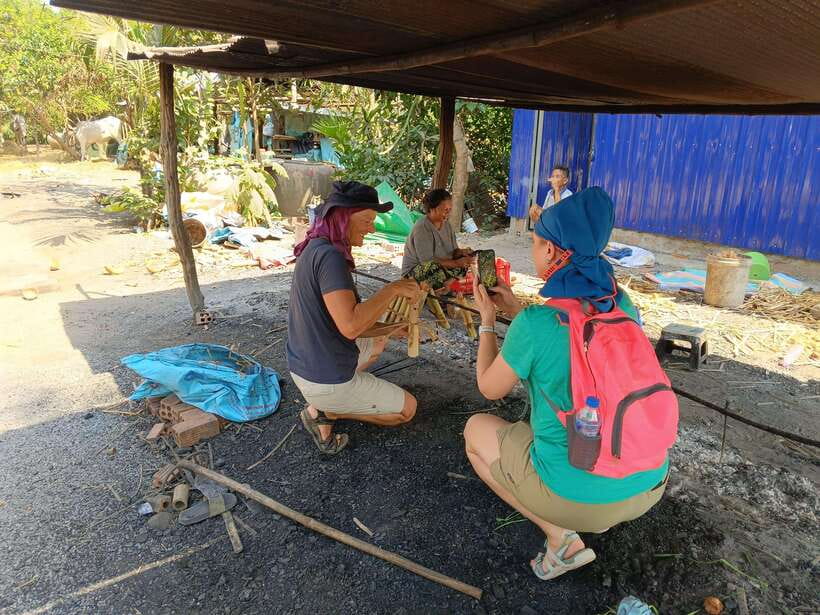
The early stops focus on small-scale food production. Rice paper and spring rolls show how a common food starts as a simple local product. Rice wine offers a look at another familiar Cambodian craft, while dried bananas and bamboo sticky rice add variety to the tasting stops.
The bamboo sticky rice is particularly interesting because it links food with local methods and materials. You are not just eating a finished snack. You are seeing how bamboo is used in preparation and storage. Snacks and local food tastings are included, but full meals are not.
Wat Samrong Knong brings a sharp change in mood. At the Well of Shadows, you learn about the Khmer Rouge period and the people who suffered under it. The site is connected with difficult memories, so give it your attention rather than treating it as another quick temple stop.
The temple setting also helps place the history in a real community. You are visiting a religious site while learning about a period that damaged Cambodian society on a huge scale. A good guide can help you understand the meaning without turning the stop into a string of grim facts.
Markets, farmers, and the Sangke River
The Khmer prahok market is another practical stop. It gives you a direct look at local commerce and Cambodian food habits, but the smells can be powerful. If you are sensitive to fermented fish, be prepared.
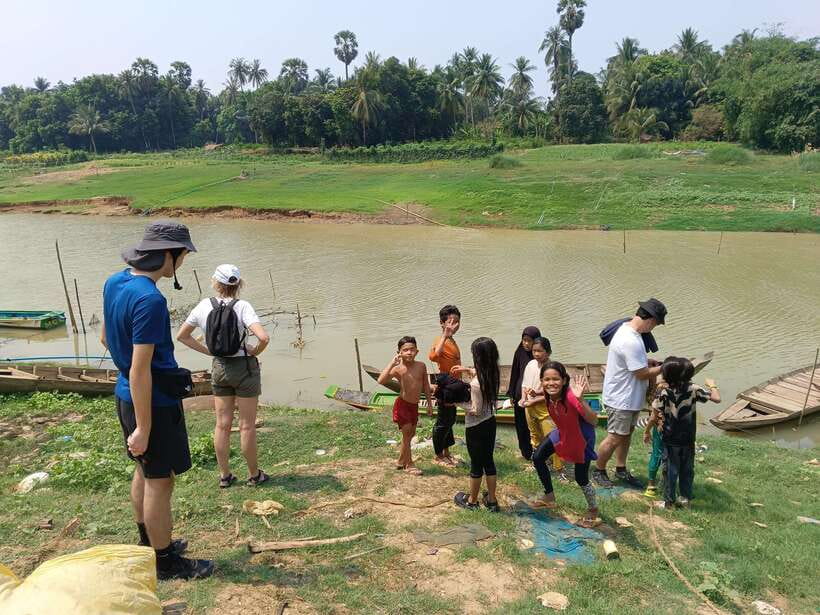
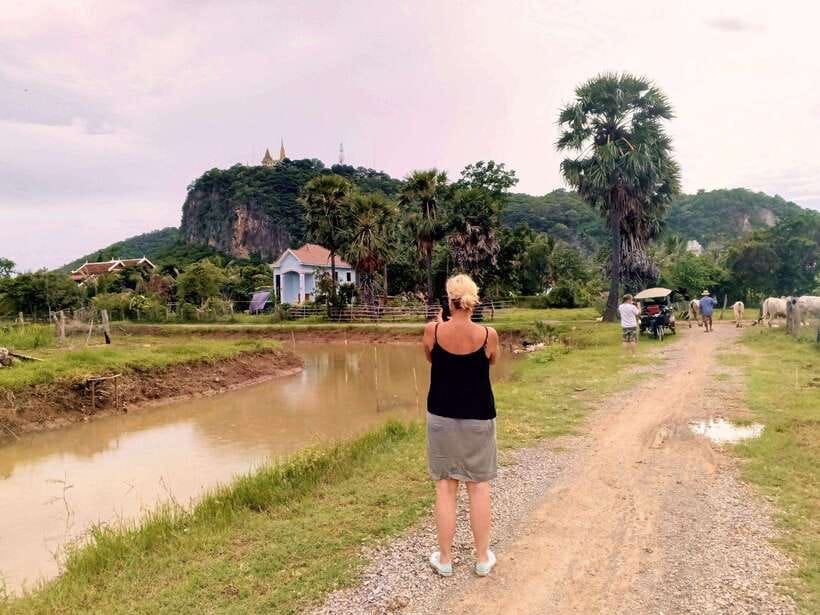
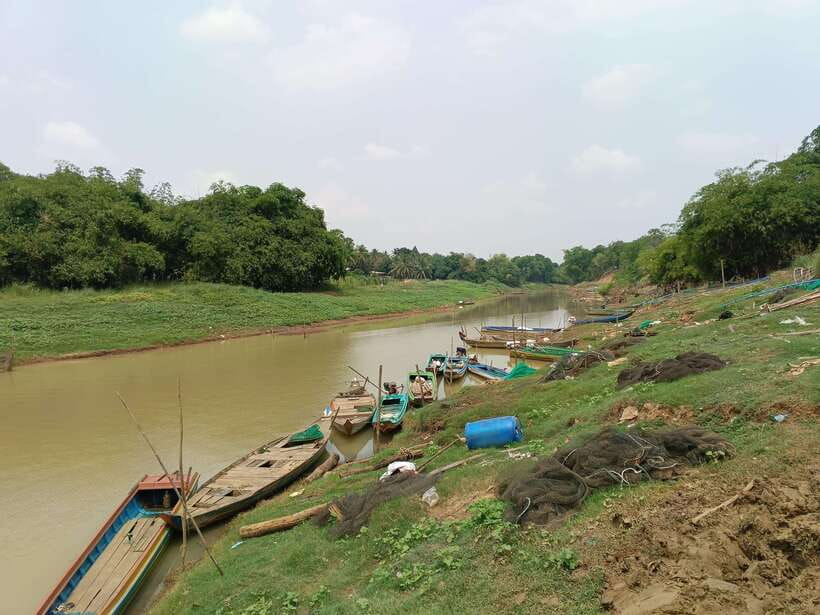
The route then moves through villages and toward the Sangke River. One of the tour’s stronger features is the chance to see suspension bridges, plantations, and farms. You may have time to speak with farmers, depending on the day and the people you meet.
I like this section because it slows the tour down in the right way. The temples and caves are the headline sights, but the rural roads help you understand the setting around Battambang. You see how much of the province is shaped by farming and village life.
A pagoda visit adds a religious side to the morning. Your guide explains Buddhist practice and the role of the pagoda, giving the stop more meaning than a quick look at painted walls. The route also includes a Cham village, another chance to see the cultural mix around the city.
The plantation farm and river crossings are best treated as living parts of the tour, not fixed attractions with a checklist. You might find that a spontaneous stop becomes one of the day’s most useful moments. Several guests especially valued the guide’s willingness to stop and explain things along the way.
Battambang’s colonial center and Ta Dambong Kro Nhong
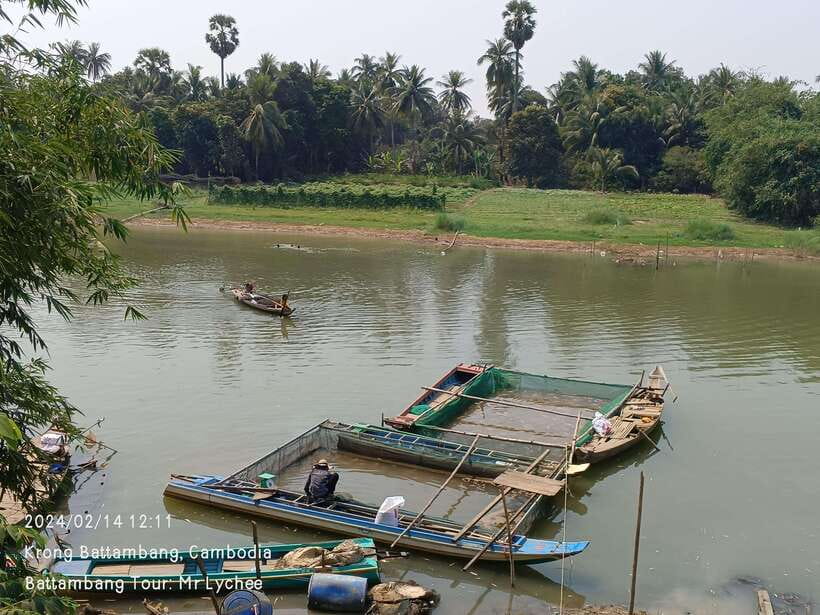
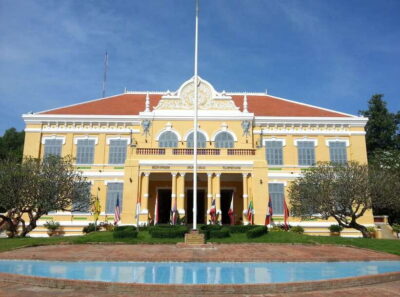
The return toward Battambang brings you back to the city’s public face. You see colonial-era buildings, the Battambang Provincial Hall, and the Ta Dambong Kro Nhong statue.
The city section is shorter and less dramatic than the caves, but it helps connect the province’s present-day identity with its past. Colonial architecture, government buildings, local legends, and roadside movement all sit close together.
Ta Dambong Kro Nhong is an important local symbol. The statue gives you a simple point of reference for Battambang before the tour heads back into the countryside and onward to the bamboo train.
Lunch is not included. The schedule mentions returning to the city for lunch and later stopping at a village restaurant for a late lunch, so ask your guide how the day’s meal timing will work. Kim is specifically praised for giving useful lunch and dinner recommendations, which is helpful on a packed schedule.
More rides on the bamboo train:
- Battambang: Tuk-Tuk, Bamboo Train, Killing/Bat Caves, Sunset
★ 4.9 · 1,436 reviews - Afternoon Tour: Bamboo Train, Killing Cave &Bat Cave
★ 5.0 · 73 reviews - Battambang: Bamboo Train, Bat Cave and Killing Cave Tour
★ 4.9 · 58 reviews - AfternoonTour.Bamboo train.killing cave with Secret bat cave
★ 5.0 · 41 reviews
The original bamboo train and its extra fee
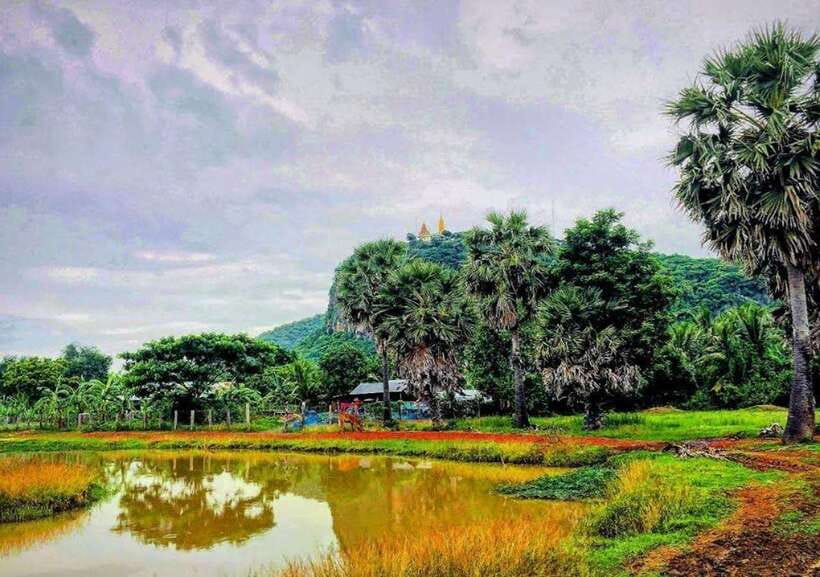
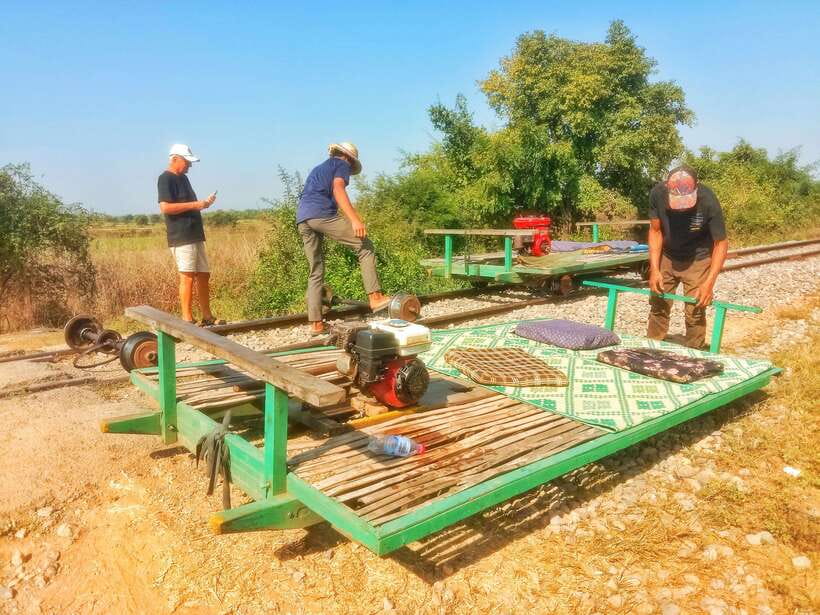
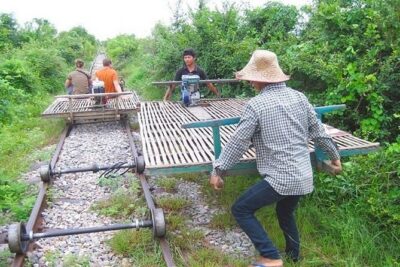
The bamboo train is one of Battambang’s best-known experiences, and this tour places it after the morning’s food, village, and city stops. The ride gives you open views along the route and a light, playful break before the more serious afternoon sites.
The key practical point is cost. The bamboo train fee is listed separately at $5 per person, written in the tour details as $5 per perron. Bring cash.
The ride may be simple, but that is part of its appeal. You are not signing up for a polished theme-park attraction. You are riding on a basic bamboo platform and taking in the scenery from close to the tracks. The tour calls it the original bamboo train, so it suits people who want the traditional version rather than a heavily packaged attraction.
The stop can be less appealing if you dislike rough transport or have mobility problems. The activity is also not ideal for anyone expecting a long train journey. It is one element in a much larger day.
Phnom Sampau, the Monkey Forest, and the Golden Temple
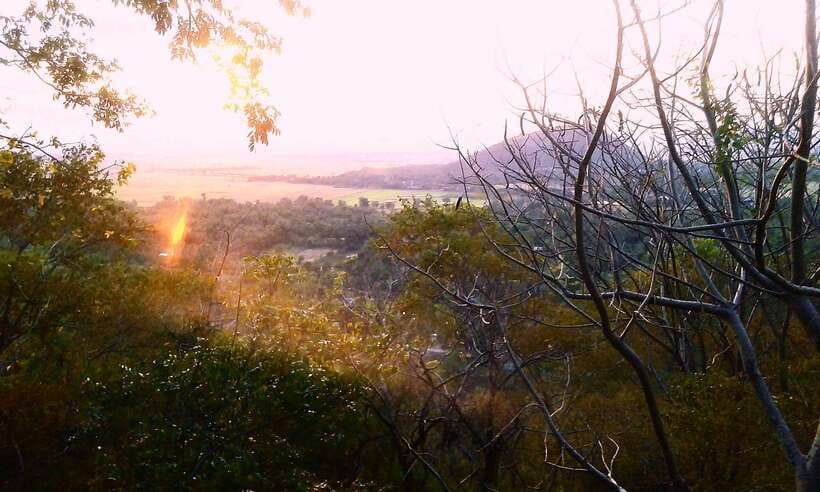
The afternoon continues by tuk-tuk toward Phnom Sampau mountain. This area combines religious buildings, natural scenery, memorial sites, and caves.
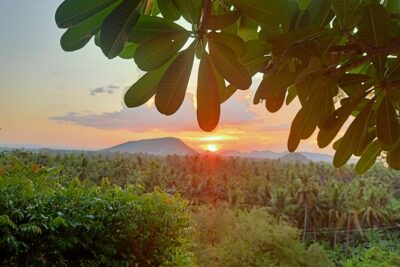
The Monkey Forest is one of the first attractions associated with the mountain. You then reach the Golden Temple and other shrines, with views across the surrounding countryside. The mountain setting makes a strong contrast with the flat roads and farms visited earlier.
The views are a reward, but reaching the upper sites can involve walking or a ride toward the Killing Caves. The tour states that walking to the caves is free, while the ride up is not included. If you prefer not to walk uphill, ask about the available ride and its price before setting off.
The Golden Temple is a more reflective stop. It gives you time to see Buddhist architecture and the mountain scenery before the tour returns to the painful history of the Killing Cave.
The Killing Cave and Cambodia’s difficult memory
Phnom Sampau’s Killing Cave was used during the Khmer Rouge period. The site is a memorial to those who were killed there, and the visit can be emotionally heavy.
This is not a stop to rush through. I would treat it as a place for quiet attention. The tour includes the entrance fee for the Killing Cave, but transportation up to the cave is listed separately. The information also says walking is free.
The morning visit to Wat Samrong Knong and the afternoon visit to the Killing Cave work well together. You see two places connected with the same period, but in different settings. One is near a temple and community, while the other is part of a mountain complex filled with shrines and caves.
Your guide’s role matters most here. The tour is in English, and the guide is expected to explain the sites. The supplied information does not promise a specialist historian, so if you want a very detailed academic account of the Khmer Rouge, you may need to ask questions and set your expectations accordingly. For a general introduction tied to the actual places, this is a useful part of the day.
The Bat Cave finale at dusk
The final major stop is the Bat Cave, often called the Bat Army because thousands of bats fly out at dusk. Timing is crucial. The tour aims to finish before sunset, but the exact spectacle depends on the day and the timing of your route.
This is the kind of ending that gives the long schedule a clear payoff. After food production, rural roads, temples, the bamboo train, and memorial sites, you finish with a natural event that requires no elaborate presentation. You simply watch the bats pour from the mountainside.
Bring a camera, but do not forget to watch the event directly. The tour recommends sunscreen, cash, hiking shoes, and a camera. Hiking shoes are especially sensible for Phnom Sampau, where the terrain and access to the caves may be more demanding than the morning city stops.
What the $15 price really includes
At $15 per person, this is a strong-value day if you want many different experiences in one private outing. The price includes hotel pickup and drop-off, tuk-tuk transportation, a live English-speaking guide, unlimited mineral water, cold towels, snacks, local food tastings, and entrance fees for the Bat Cave and Killing Cave.
That is a lot of coverage for the base price. The value is strongest for people who would otherwise need to arrange separate transport to the food stops, Wat Samrong Knong, Ek Phnom Temple, the bamboo train, and Phnom Sampau.
Still, plan for extra cash. Meals are not included, and the bamboo train costs $5 per person. The ride toward the Killing Cave may also cost extra, while walking is free. Personal expenses are not covered.
The free cancellation policy allows cancellation up to 24 hours in advance for a full refund, and you can reserve now and pay later. Those terms are useful if your Battambang plans are still shifting, but you should still provide a clear pickup location when booking.
Ek Phnom Temple and the northern route
Wat Ek Phnom is described as the final major landmark on the north side before the route returns to Battambang. It gives the day another temple setting after Wat Samrong Knong and the pagodas near the river.
The temple visit adds architectural interest, but it also contributes to the full schedule. By this point, you may be ready for food and a rest in the tuk-tuk. That is one reason the tour works better for visitors who enjoy variety than for anyone who wants a slow, single-theme day.
Because the tour includes many stops, ask your guide about the exact order on your date. The supplied schedule lists the morning food and temple stops in detail, while the wider description places the bamboo train and Phnom Sampau later in the day. Local conditions and timing can affect the sequence.
Who should book this tour?
I would choose this outing if you want a broad introduction to Battambang and prefer local food, village roads, and personal guiding to a simple temple transfer. It suits couples, families with older children, and small private groups who want flexibility.
It is less suitable if you have a mobility impairment, high blood pressure, or are over 95, all of which are specifically listed as restrictions. The day is long, the cave area may involve walking or a paid ride, and the schedule can be tiring.
You should also think about the emotional content. The Well of Shadows and Killing Cave are serious memorial sites. If you only want light sightseeing, the history portion may feel heavy. If you want to understand Cambodia beyond its scenery, those visits are among the most important parts of the day.
Should you book the Battambang full-day tour?
Book it if you want one affordable private day that combines food, village life, temples, modern city history, the bamboo train, Khmer Rouge memorials, and the Bat Cave. The strongest praise is reserved for the guides’ friendly approach, clear explanations, flexibility, and willingness to make spontaneous stops.
Before booking, confirm the tuk-tuk and bike-tour wording, ask how lunch will be handled, and carry enough cash for the bamboo train, meals, and any ride toward the Killing Cave. If you are comfortable with a 10-hour schedule and some walking, this is one of the better ways to see the many sides of Battambang without arranging every stop yourself.
FAQ
How long does the Battambang tour last?
The tour lasts 10 hours and includes pickup and drop-off in Krong Battambang.
What is the tour price?
The listed price is $15 per person.
Is the bamboo train included?
No. The bamboo train fee is listed separately at $5 per person.
Are meals included?
No. Meals are not included, although snacks and local food tastings are included.
Is hotel pickup available?
Yes. Pickup and drop-off are included. You should provide the name of your hotel, guesthouse, or restaurant in Battambang.
What language does the guide speak?
The live guide speaks English.
Is this a private tour?
Yes. It is offered as a private group experience.
Are the Killing Cave and Bat Cave entrance fees included?
Yes. Entrance fees for the Killing Cave and Bat Cave are included.
Do I need to pay for transport to the Killing Cave?
The tour information says that the ride up to the Killing Cave is not included. Walking is free.
What should I bring?
Bring a camera, hiking shoes, sunscreen, and cash.
More Train Experiences in Battambang
- Full Day-Tour: Handicraft, Bamboo train, Killing cave. Bat cave
★ 5.0 · 29 reviews - Full day tour by bicycle & tuk tuk,bamboo train,bat cave,villages
★ 5.0 · 27 reviews - Afternoon tour to Original Bamboo train. Bat cave. Killing cave
★ 5.0 · 25 reviews - Half-day swing bridge, bamboo train, batcave & Killing cave
★ 4.9 · 24 reviews
Newest reviews from Battambang
- Private Taxi Transfer From Battambang – Kampot★ 5.0 · 1 review
- Private Taxi Transfer Battambang from/to Phnom Penh★ 5.0 · 7 reviews
- Private Taxi Transfer From Battambang – Siem Reap City★ 5.0 · 4 reviews
- Afternoon tour to Original Bamboo train. Bat cave. Killing cave★ 5.0 · 25 reviews
- Afternoon Tour BambooTrain & Bat Cave★ 5.0 · 57 reviews
- Private Boat from Battambang to Siem Reap via Tonle Sap Lake★ 4.5 · 3 reviews
- Tuk Tuk Tour (Full-Day)★ 5.0 · 7 reviews
- Private Half-Day Tuk Tuk Tour in Battambang★ 5.0 · 2 reviews
Bamboo Train Tours, compared.
Tuk-Tuk, Bamboo Train, Killing/Bat Caves, Sunset
Read our review →
Afternoon tour by tuk tuk to bamboo train,bat cave,killing cave,countryside.
Read our review →
Full Day tour .City tour.Countryside.Bamboo Train.Secret Bat Cave
Read our review →
Battambang Full Day Tour from Siem Reap – Bamboo Train, Killing Cave & Sunset
Read our review →
Afternoon Tour: Bamboo Train, Killing Cave &Bat Cave
Read our review →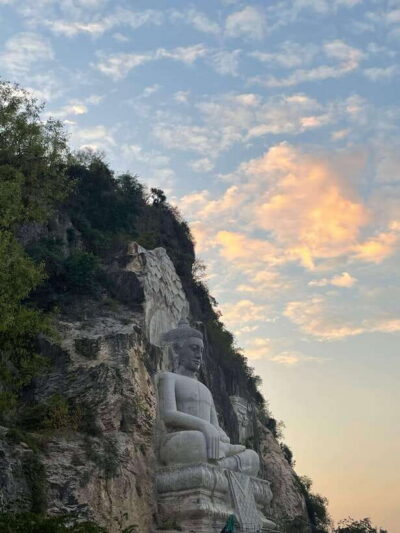
Full Day From Siem Reap – Bamboo Train, Killing Cave & Sunset
Read our review →Browse the lists this tour appears in