
Reviewed · GUIDED
Expert Private Guided Tour and learn about the Khmer Rouge’s
The past is impossible to ignore here. This private Phnom Penh tour pairs the sobering sites of Tuol Sleng and Choeung Ek with five major city sights, giving you both Cambodia’s painful recent history and its older religious and civic traditions. I like the private guide and car, which allow time for questions, and I like that entrance fees, water, and hotel pickup are included. The main drawback is emotional: the first half is grim and may feel heavy for some people.
The tour lasts about four to six hours, depending on traffic and the time you spend at each stop. The $89 per person price is fair for a private vehicle, licensed English-speaking guide, driver, and all listed admissions, but you should still expect a serious history lesson rather than a light sightseeing outing.
In This Review
- Key points to know before you book
- Why this private tour works in Phnom Penh
- Tuol Sleng: a school turned into S-21
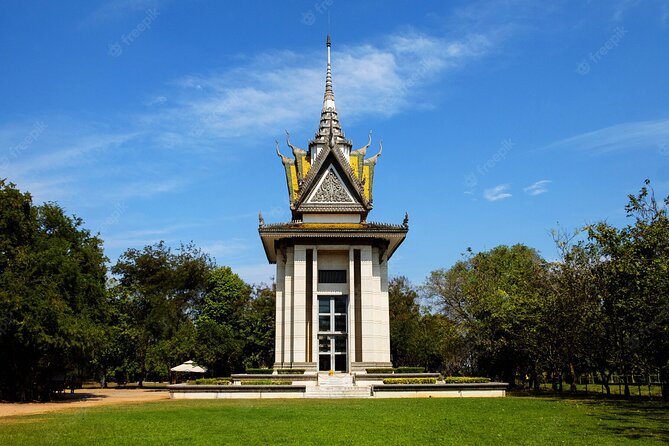
- Choeung Ek and the memorial stupa
- Wat Phnom and the story behind the city’s name
- King Norodom Sihanouk and the Independence Monument
- Wat Ounalom, a living Buddhist center
- Central Market: the city’s practical side
- What the $89 price really covers
- Timing, comfort, and practical limits
- Who should book this experience?
- My booking advice
- FAQ
- How long does the private Phnom Penh tour last?
- What attractions are included?
- Is hotel pickup offered?
- Is transportation private?
- Are entrance fees included?
- Is food included?
- Can I cancel for a full refund?
Key points to know before you book
- Tuol Sleng and Choeung Ek form the heart of the tour: These two sites explain how detention, torture, and execution worked under the Khmer Rouge.
- A private guide changes the experience: You can ask direct questions and set a pace that suits your group.
- The tour covers both sorrow and daily Phnom Penh: Wat Phnom, Wat Ounalom, monuments, and Central Market add religious, royal, and everyday city life.
- Hotel pickup and an air-conditioned vehicle help: Phnom Penh traffic and heat can make a private car useful.
- The price includes the important extras: Entrance fees, three bottles of mineral water per person per day, taxes, and service charges are covered.
- Plan your emotional energy: Tuol Sleng and Choeung Ek are not casual museum stops, and you may want quiet time afterward.
Why this private tour works in Phnom Penh
Phnom Penh can be hard to read at first. Its broad boulevards, colonial-era buildings, Buddhist shrines, markets, and memorial sites do not fit into one neat story. This tour gives you a guided introduction instead of leaving you to connect the pieces alone.
The first half deals with the Khmer Rouge period from 1975 to 1979, when Pol Pot’s regime caused mass death across Cambodia. The second half moves through older and more familiar city landmarks. That contrast matters. You see the capital not only as a place marked by suffering, but also as a living city with royal monuments, working religious centers, and markets.
Because the activity is private, only your own group participates. That is especially useful at the genocide sites, where you may need to stop, ask questions, or take a quiet moment without trying to keep up with a large party.
The exact duration is listed as four to six hours. That range is sensible for Phnom Penh, where traffic can stretch a short drive. It also reflects the fact that your time at each site may vary. You should not expect every stop to receive equal attention.
A few more options around Phnom Penh worth reading up on
- The Killing Field and Toul Sleng Genocide Museum (S21) Tour
★ 5.0 · 1,977 reviews - Phnom Penh: Sunset Cruise with Unlimited Beers & BBQ Buffet
★ 4.5 · 727 reviews - Aroma Therapy Massage, Relaxation therapeutic aromatherapy oil massages.
★ 5.0 · 645 reviews
Tuol Sleng: a school turned into S-21
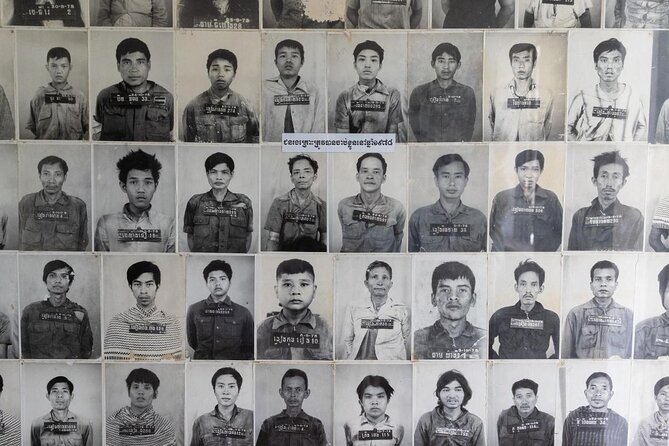
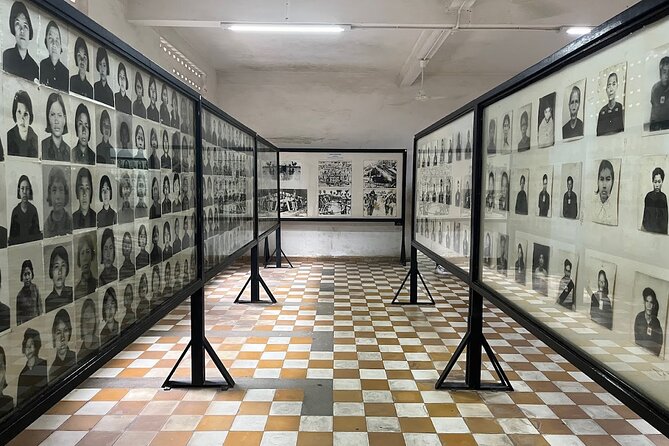
Tuol Sleng Genocide Museum is the most direct introduction to the Khmer Rouge’s system of repression. The site began as Tuol Svay Prey High School. In 1975, Pol Pot’s security forces took it over and renamed it Security Prison 21, usually called S-21.
The former classrooms became prison cells, interrogation rooms, and torture rooms. More than 17,000 people passed through the prison. Most were later taken to Choeung Ek for execution, while others died during torture and were buried on the grounds.
You receive about one hour here, with admission included. That is enough to see the main areas and hear the historical explanation, although you may wish you had longer if you read every display carefully. The guide’s role matters greatly at this stop. The site can feel stark and confusing without context, while a clear explanation helps you understand how an ordinary school became part of a killing machine.
The emotional weight is real. Photographs, prison rooms, and the physical setting make this more than a simple historical exhibit. You should approach it with patience and respect. It is not a place for rushed sightseeing or constant conversation.
The private format is a strong advantage here. One published account praised the guide’s answers and described the visit as informative despite the harrowing subject. That is exactly where a personal guide can help: you can ask about the prison’s function, the connection to Choeung Ek, or details that are difficult to understand from signs alone.
Choeung Ek and the memorial stupa
The drive to Choeung Ek takes you about 16 kilometers south of Phnom Penh. This site, commonly called the Killing Fields, was an extermination camp for prisoners brought from S-21 and other detention centers.
Between 1975 and 1978, roughly 17,000 men, women, children, and infants held at S-21 were transported here. The site includes mass graves, many of which were exhumed after the regime fell. The remains of 8,985 people were recovered from the graves, and more than 8,000 skulls are displayed behind glass panels in the memorial stupa.
The grounds also contain fragments of bone and pieces of clothing around the disinterred pits. These details can be difficult to see, but they help show the scale of what happened. Victims were often beaten to death to save ammunition, a fact that makes the site particularly hard to process.
You receive about one hour with admission included. Again, that gives you a meaningful visit, but not unlimited time. A guide can explain the layout and historical sequence while helping you avoid treating the place like an ordinary stop on a sightseeing checklist.
I would plan these first two sites as the central purpose of the day. The later pagodas and monuments are valuable, but Tuol Sleng and Choeung Ek require the most attention. If you have recently visited other war museums or memorials, you will recognize the emotional strain. If this is your first visit to a genocide site, give yourself room to absorb it.
Wat Phnom and the story behind the city’s name
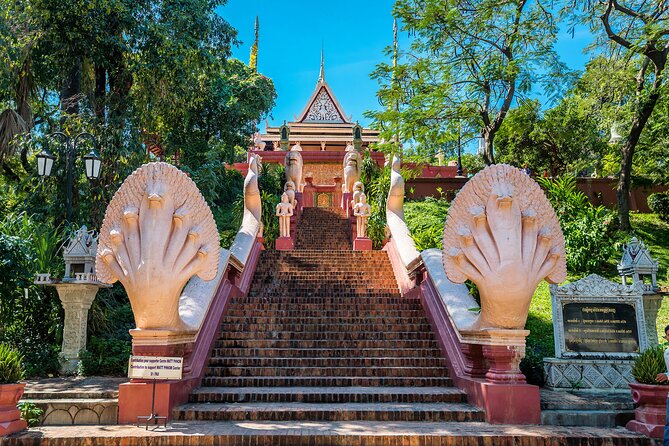
After the genocide sites, the tour shifts to Phnom Penh’s older identity. Wat Phnom sits on one of the few hills in this otherwise flat capital. The first pagoda was built in 1373 to house Buddha statues said to have been found in the Mekong by a woman named Penh.
That story explains the city’s name. Phnom means hill, so Phnom Penh means Penh’s Hill. The site remains a place of prayer, with people asking for help in love, work, exams, and daily life.
The planned visit lasts about 45 minutes and includes admission. Wat Phnom gives you a chance to see a functioning religious site rather than only a monument viewed from a car. You should dress and behave respectfully at the pagoda, though the supplied information does not specify a formal dress code.
This stop also changes the mood of the day. After the stark memorials, the shrine’s continuing use brings you back to ordinary Cambodian life. It is not just an old building. It helps explain how Phnom Penh grew from a small settlement around a hill into the national capital.
Something completely different for another day:
- Killing field and Toul Sleng genocide museum Tour
★ 5.0 · 610 reviews - Phnom Penh Full Day Private Tour Included All Admission Tickets
★ 5.0 · 585 reviews - Phnom Penh: Sunset Cruise with Unlimited Beer &Fruit platter
★ 4.7 · 515 reviews - Phnom Penh Silk Island Bike Tour/ E-Bike or Tuk Tuk
★ 5.0 · 495 reviews
King Norodom Sihanouk and the Independence Monument
The bronze statue of King Father Norodom Sihanouk sits in Independence Square in central Phnom Penh. The visit is scheduled for about 30 minutes.
Norodom Sihanouk remains closely linked with modern Cambodia’s independence and national identity. The statue is a civic memorial, not a museum, so your guide’s explanation will provide much of the context. You will likely spend part of the stop looking at the monument and its setting rather than entering a large attraction.
The nearby Independence Monument marks Cambodia’s independence from France in 1953. Built in 1958, it was designed by Cambodian architect Vann Molyvann. Its lotus-shaped stupa form draws on Khmer architectural traditions, including the temple style seen at Banteay Srei.
The monument rises 37 meters at the intersection of Norodom Boulevard and Sihanouk Boulevard. During national celebrations, it becomes a major gathering point, and a ceremonial flame inside the base may be lit by a royal or senior official.
The scheduled 30 minutes is enough for a guided look and photographs. This stop is most useful if you want the political and architectural story of Phnom Penh, not just a quick picture from the roadside.
Wat Ounalom, a living Buddhist center
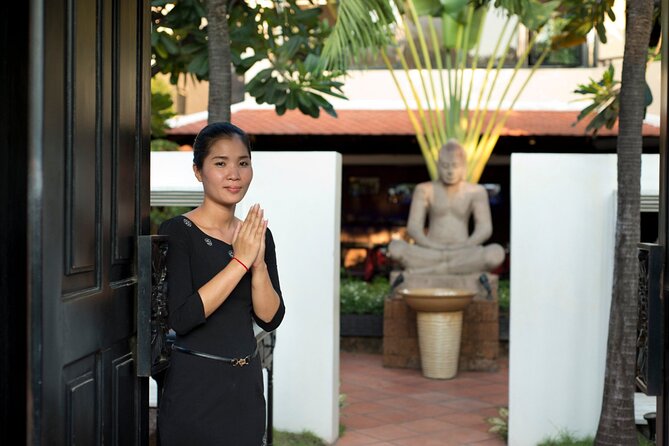
Wat Ounalom is one of Phnom Penh’s five original monasteries, dating to 1422. It sits near the riverfront, about 250 meters north of the Royal Palace, facing the Tonle Sap River.
The pagoda once housed the Institute Bouddhique and its library. Today, it serves as the headquarters for one of Cambodia’s most respected Buddhist patriarchs. That gives the site religious importance beyond its appearance.
The visit lasts about 45 minutes. You can expect a quieter, more reflective stop than Central Market, with the guide explaining why the monastery matters to Cambodian Buddhism and to Phnom Penh itself.
This is another place where respectful conduct matters. Keep your voice low, follow your guide’s instructions, and remember that this remains a religious center. The tour information does not promise a particular ceremony or meeting, so treat it as a sightseeing and cultural visit rather than a scheduled religious event.
Central Market: the city’s practical side
Central Market, or Psar Thmei, is one of Phnom Penh’s best-known landmarks. The French completed the striking building in 1937, and its huge central dome helps keep the market ventilated.
You receive about 45 minutes here. That is enough to walk beneath the dome, browse stalls, and see the wide range of goods sold in the market. The stop brings a useful everyday contrast to the formal monuments and memorials earlier in the day.
You should shop carefully. The market has a reputation for high opening prices and aggressive bargaining. Go in with a clear idea of what you want, compare prices, and avoid buying in a hurry. Your guide may be able to help with local buying customs, but the tour does not promise shopping assistance or specific purchases.
Central Market is also a good final stop because it gives you a more ordinary view of Phnom Penh. You see people working, buying, eating, and moving through the city. That grounding can be welcome after the difficult history earlier in the tour.
What the $89 price really covers
At $89 per person, this is not the cheapest way to see Phnom Penh. The value comes from the private setup and the number of included services.
Your fee covers a professional licensed English-speaking guide, private air-conditioned transportation, an experienced safe driver, all entrance fees at the listed attractions, three bottles of mineral water per person per day, VAT, taxes, and service charges. Meals are not included.
For a group of two, the price may feel high compared with hiring basic transport and visiting a few landmarks independently. For a larger private group, group discounts may improve the value. You also avoid paying separate admission charges at the genocide museums, Wat Phnom, Wat Ounalom, and the other listed stops.
The biggest benefit is time and explanation. You are not simply being driven past monuments. The guide connects S-21 with Choeung Ek, explains the city’s name at Wat Phnom, and places the independence memorial in Cambodia’s modern political story.
Timing, comfort, and practical limits
Pickup is offered, and the tour uses an air-conditioned private vehicle. That matters in Phnom Penh, especially when you are moving between central sights and Choeung Ek south of the city.
The tour is listed as lasting four to six hours. Traffic, time spent at the museums, and time at Central Market can all affect the final length. Keep your schedule flexible rather than booking an activity immediately afterward.
Confirmation is provided at booking. The tour is near public transportation, though the private pickup means you do not need to rely on buses or arrange several separate rides. Most people can participate, according to the supplied details, but the emotional difficulty of the memorial sites is a more important consideration than physical access for many people.
Free cancellation is available if you cancel at least 24 hours before the local start time. Changes or cancellations made within 24 hours are not accepted for a refund.
Who should book this experience?
I would recommend it to you if you want a serious introduction to Phnom Penh and prefer a guide who can explain the past rather than simply point at buildings. It suits first-time visitors, history-minded people, and families with older children who are ready for difficult subject matter.
It is also a good fit if you want to combine the Khmer Rouge sites with major city landmarks in one half-day outing. The private vehicle keeps the day simple, and the small-group format gives you room to ask questions.
I would hesitate to recommend it if you want a relaxed market tour or a gentle cultural introduction. Tuol Sleng and Choeung Ek are painful places. You may prefer to visit them separately, or choose a shorter city sightseeing tour if you are not ready for genocide memorials.
My booking advice
Book this tour if you want Phnom Penh explained in two parts: the country’s traumatic recent past, followed by the religious, royal, architectural, and commercial life that continues around it. The guide’s ability to answer questions is one of the strongest reasons to choose the private option.
Before booking, make sure everyone in your group understands the nature of Tuol Sleng and Choeung Ek. If they do, the $89 price offers solid value through private transport, included admissions, water, and personal guiding. Give the day enough breathing room, and do not schedule anything demanding afterward.
FAQ
How long does the private Phnom Penh tour last?
The tour lasts approximately four to six hours. The exact length may vary with traffic and the amount of time your group spends at each stop.
What attractions are included?
The tour includes Tuol Sleng Genocide Museum, Choeung Ek Genocidal Center, Wat Phnom, the Statue of King Father Norodom Sihanouk, the Independence Monument, Wat Ounalom, and Central Market. It also includes a short Phnom Penh city introduction.
Is hotel pickup offered?
Yes. The tour includes pickup, and the itinerary states that you meet the guide and driver at your hotel lobby.
Is transportation private?
Yes. The tour provides private transportation in an air-conditioned vehicle with an experienced driver. Only your group participates.
Are entrance fees included?
Yes. Entrance fees for the listed attractions are included in the price.
Is food included?
No. Meals are not included unless specifically stated as included. Mineral water is provided, with three bottles per person per day.
Can I cancel for a full refund?
Yes, if you cancel at least 24 hours before the experience start time. Cancellations or changes made less than 24 hours before the start time are not eligible for a refund.
Newest reviews from Phnom Penh
- 10 Day Ethical Animals Tour Where the Wild Things Roam★ 5.0 · 1 review
- Watch Live Khmer Traditional boxing in Phnom Penh★ 5.0 · 46 reviews
- Watch Khmer Kickboxing with Free Beers by Ringside Seats★ 5.0 · 11 reviews
- The killing field and Toul Sleng Genocide museum (S21) Tour★ 4.5 · 19 reviews
- Warm Stone Massage★ 5.0 · 23 reviews
- Private Transfer from Phnom Penh to Siem Reap by VIP Alphard 2005★ 5.0 · 2 reviews
- S-21 Prison and Killing Fields★ 5.0 · 8 reviews
- Private Taxi Between Phnom Penh – Siem Reap Stop Sightseeing★ 5.0 · 23 reviews
Guided, compared.
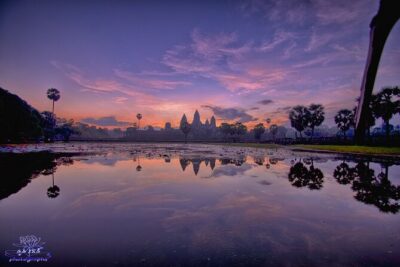
Angkor Wat Sunrise or Sunset Tour with Guide from Siem Reap
Read our review →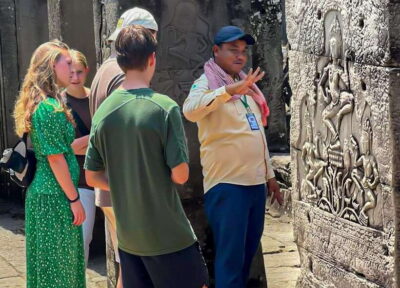
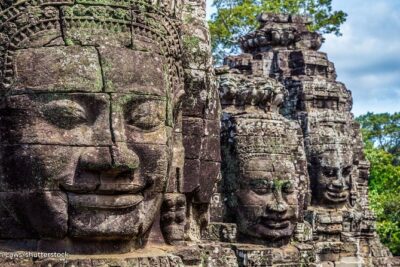
Angkor Wat Sunrise tour with Small – Group and Guide tours
Read our review →
Angkor Wat Highlights and Sunrise Guided Tour from Siem Reap
Read our review →
Full-Day Angkor Wat Sunrise Private Tour with Guide from Siem Reap
Read our review →
Angkor Wat: Highlights and Sunrise Guided Tour
Read our review →
Angkor Wat Small-Group Exploration with Expert Guide
Read our review →Browse the lists this tour appears in