
Reviewed · TUK-TUK TOURS
A Day TukTuk Bambootrain, Banan, Killing & Bat Caves, Sunset
Battambang comes alive beyond the city center. This 11-hour tuk-tuk tour joins temples, rice fields, village life, Khmer Rouge history, and one remarkable sunset show: millions of bats streaming from a cave. I especially like the mix of countryside stops and serious historical sites, plus the chance to learn from guides such as Samol, whose humor and clear storytelling receive repeated praise. The main drawback is the long day, and the Bamboo Train costs an extra $5, with lunch also separate.
At $14 per person, this is excellent value if you want a broad introduction to Battambang without arranging several short trips. You should be ready for heat, stairs, uneven ground, and a few slow stretches. The day is full rather than polished, but that is part of its appeal: you see working villages, local food, old temples, and Cambodia’s painful recent past in one outing.
In This Review
- Five details that shape the day
- Why this tour works so well
- Battambang town begins with a quick orientation
- Rural Cambodia by tuk-tuk
- The Bamboo Train is fun, but keep expectations sensible
- Wat Banan and the 358-step climb
- Rat barbecue is a real local food choice
- Phnom Sampov brings Cambodia’s painful past into view
- Hilltop temples, monkeys, and views
- The bat cave is the grand finale
- What the $14 price really covers
- Who should book this day
- Should you book the Battambang tuk-tuk tour?
- FAQ
- What time does the tour start?
- How long does the tour last?
- Is the Bamboo Train included in the price?
- What is included in the $14 price?
- How many steps are there at Wat Banan?
- Is the tour suitable for everyone?
Five details that shape the day
- The tour begins at 8:20 AM with hotel or restaurant pickup within 5 kilometers of Battambang town.
- The original Bamboo Train costs an extra $5 and runs through rice fields and rural villages.
- Wat Banan requires 358 steps, but the five-tower temple and views reward the climb.
- Phnom Sampov combines the Killing Cave with hilltop temples, monkeys, and viewpoints.
- The bat cave finale lasts more than 50 minutes, as huge streams of bats leave the mountain at dusk.
- Rat barbecue is offered as an optional tasting, while fruit salad, bottled water, wet wipes, admissions, and the mountain shuttle are included.
Why this tour works so well
The strength of this excursion is its range. You do not spend the whole day looking at temples, nor do you rush from one photo stop to another. The tuk-tuk carries you from Battambang’s public buildings to farms, from a historic railway oddity to an 11th-century hill temple, and finally to a site tied to the Khmer Rouge years.
That variety gives the day a useful rhythm. The morning feels open and rural. The middle brings temple steps and lunch by a lake. The afternoon turns darker and more reflective at the Killing Cave before ending with bats pouring into the evening sky.
I also like the guide-led approach. The guide is expected to explain Cambodian history, religion, agriculture, culture, and local stories throughout the route. Samol is the guide most often praised by name, with people especially enjoying his jokes, magic tricks, photo help, and ability to answer questions about Buddhism and Battambang. Other guides, including Uk Bon Thai and Jay, have also been singled out for strong service, so the exact personality of your day depends on who is assigned.
More Tuk-Tuk Tours in Battambang
- Battambang: Tuk-Tuk, Bamboo Train, Killing/Bat Caves, Sunset
★ 4.9 · 1,436 reviews - Battambang Tuk Tuk tour: Bambootrain, Killing & Bat Caves,Sunset
★ 5.0 · 799 reviews - Afternoon tour by tuk tuk to bamboo train,bat cave,killing cave,countryside.
★ 5.0 · 344 reviews
Battambang town begins with a quick orientation
Pickup is scheduled for 8:20 AM from your accommodation or a restaurant in or near town. The opening ride introduces you to Battambang through its central market, provincial hall, historic buildings, and the statue of Ta Dambong Kranhoung, the city’s symbolic figure.
This opening section is useful if you have just arrived and need a sense of place. Rather than treating Battambang as a stopover between Siem Reap and Phnom Penh, the guide gives you some context for its public life and local identity.
Do not expect a long walking tour of the city. One person specifically wished for more time on foot in Battambang, and that is a fair point. The city sights are an orientation, not the main event. If urban architecture and cafés are your priority, save extra time before or after this tour to explore independently.
Rural Cambodia by tuk-tuk
The ride toward the Bamboo Train takes you through small villages, fruit plantations, rice fields, and local roads. You may stop to speak with farmers and see people working around their homes and crops. A suspension bridge adds a simple but memorable walking stop.
This part of the trip is valuable because it slows your view of Cambodia down to a human scale. You are not only looking at monuments. You are seeing the farmland that supports daily life and hearing about agriculture from someone who knows the area.
The pace depends on the guide and the day’s traffic, but the route is built around observation rather than a tight schedule. Bring your camera, though do not treat every village as a staged attraction. The best moments may be small: a fruit plantation, a farmer explaining a crop, or a view across the paddy fields.
The Bamboo Train is fun, but keep expectations sensible
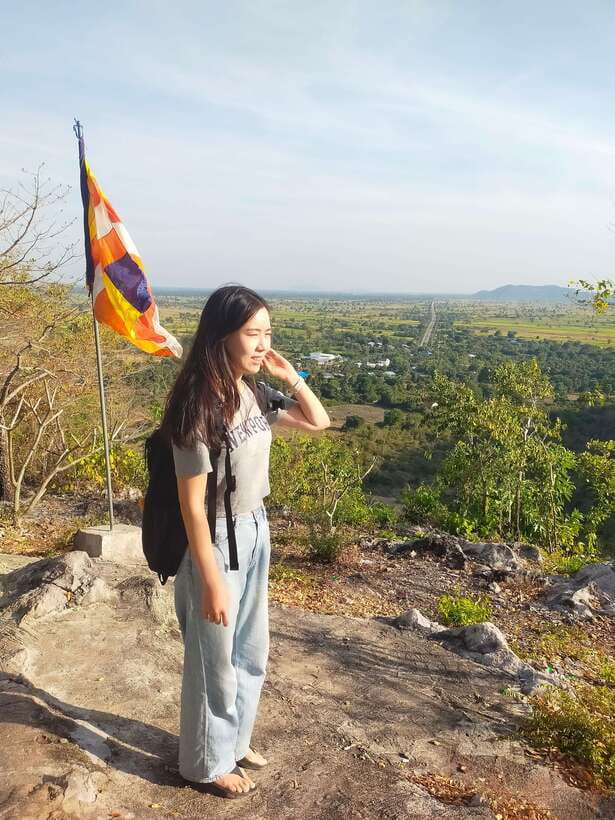
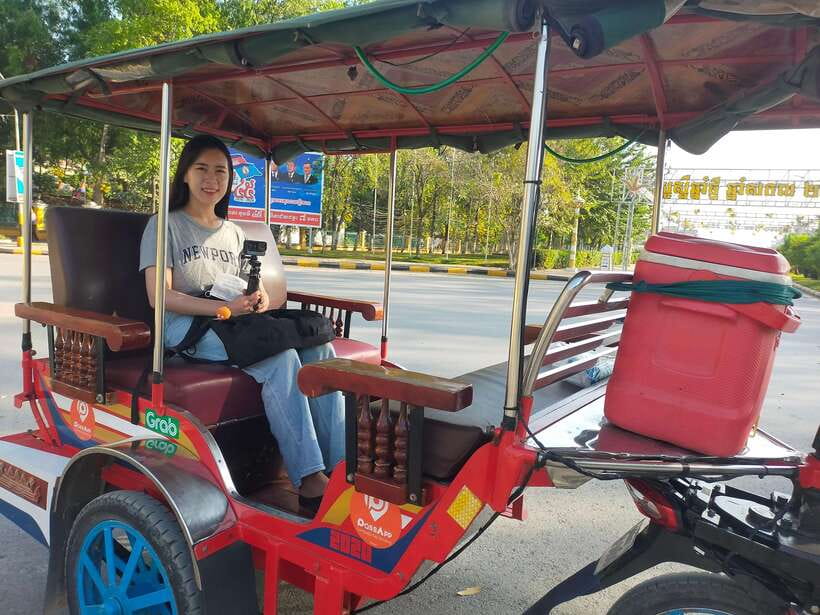
At Ou Srauo Laou, you buy a separate Bamboo Train ticket for $5 per person and board the simple bamboo platform used on the remaining line. The ride takes you through the countryside, with rice fields and village scenery passing close by.
The experience is noisy, bumpy, and unusual. It is less a grand railway journey than a short piece of Cambodian transport history turned into a memorable local attraction. You may also receive a free massage as part of the stop, according to the tour details.
I would not make this the sole reason to book the day. One person found the ride less exciting than expected, while others loved its playful, rough-edged character. Your enjoyment will depend on whether you like simple mechanical curiosities and rural views. If you need polished infrastructure or a long scenic railway trip, this may feel modest. If you enjoy odd little experiences that are closely tied to local life, it fits the day nicely.
The route between the Bamboo Train and Banan also includes trees where fruit bats hang during the day. These are different from the enormous bat flight you see at sunset, but they add another wildlife moment to the route.
Something completely different for another day:
- Local Livelihood Half Day Bike Tour in Battambang
★ 5.0 · 287 reviews - Explore Battambang full day tour by Tuk Tuk (start from 9am-6:30pm)
★ 5.0 · 240 reviews - Battambang: Bamboo Train, Bat Cave, Killing Cave by Tuk Tuk
★ 5.0 · 182 reviews - Full Day tour .City tour.Countryside.Bamboo Train.Secret Bat Cave
★ 5.0 · 178 reviews
Wat Banan and the 358-step climb
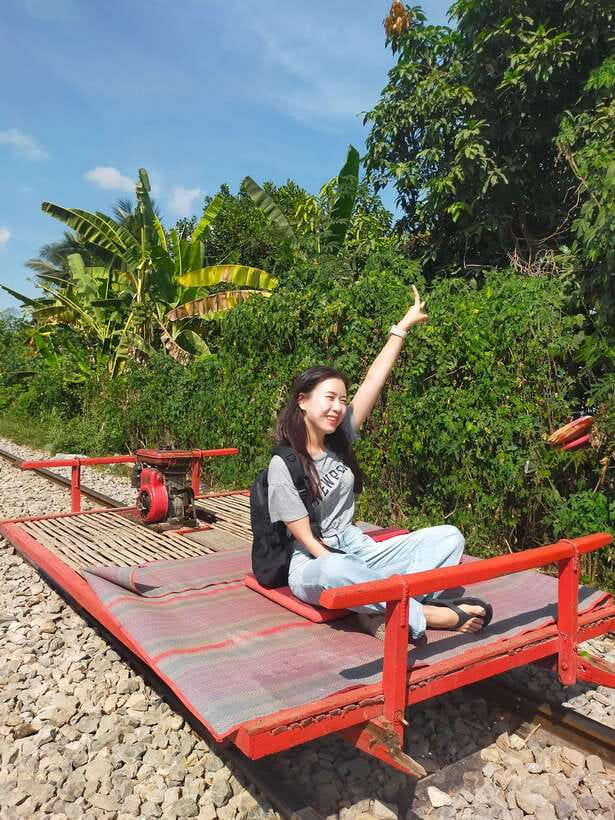
Wat Banan is the day’s strongest temple stop. The site is known as the best-preserved Khmer temple in Battambang and has five towers that recall the design of Angkor Wat, though on a much smaller scale.
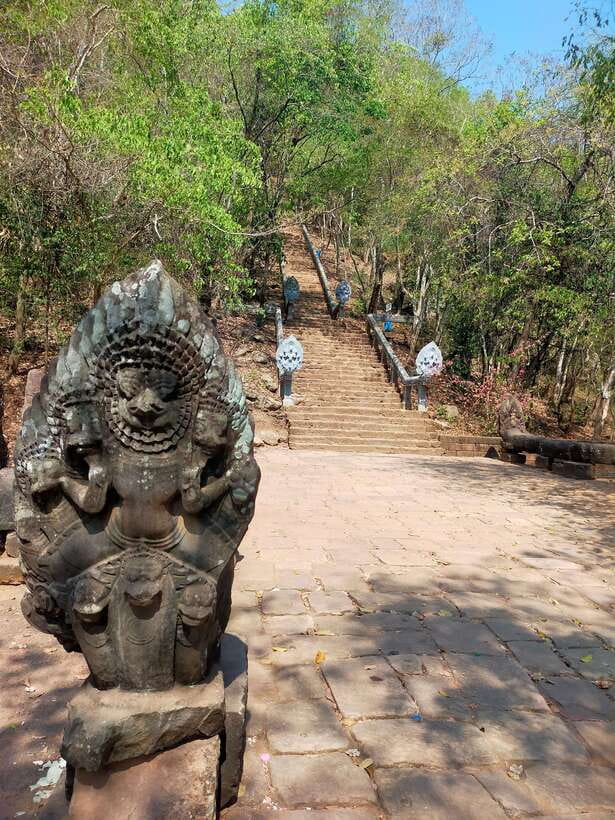
You reach the temple by climbing 358 steps up the mountain. The staircase is laterite and flanked by naga figures, giving the approach a proper ceremonial feel. The climb is not extreme for a fit person, but Cambodia’s heat can make it feel harder. Take water, use sunscreen, and climb at your own pace.
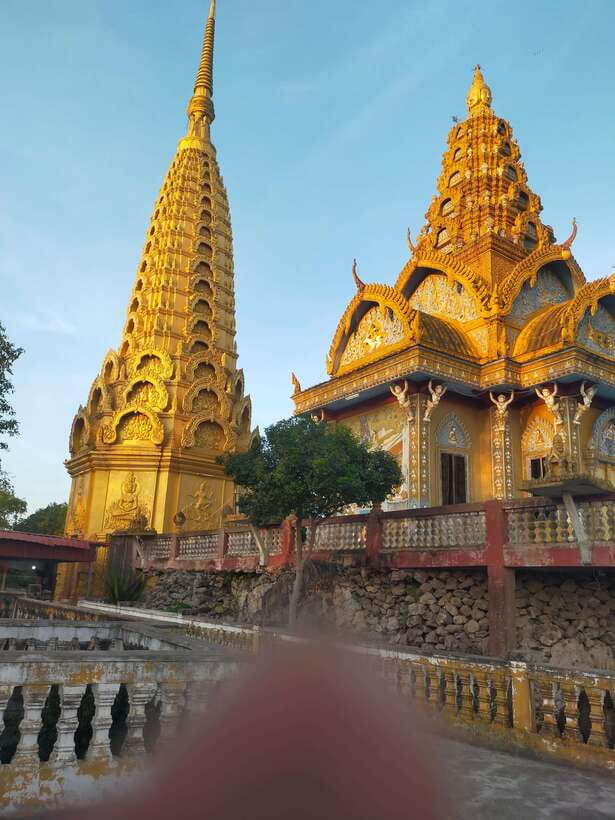
At the top, the five towers create a compact and striking group. The site dates to the 11th century and is linked to King Udayadityavarman II, who built it for prayer and offerings. The temple also reflects the changes in Cambodian religion and power over time. Although the original king was a Shaivite, the sculptures are mainly Buddhist, and later rebuilding under Jayavarman VII is considered likely.
The guide’s explanations matter here. Without context, Wat Banan can look like a small ruin after the larger temples of Angkor. With a good explanation, you begin to see how the temple’s design, religious changes, and hilltop setting fit into Cambodia’s past.
Lunch follows by a lake in a pleasant setting. It is not included, so carry cash and ask your guide about the available local choices. A relaxed meal here helps break up the physical effort of the morning.
Rat barbecue is a real local food choice
Before Phnom Sampov, the tour may stop for a rat barbecue tasting. This is optional, and it is not included as a required meal. The mention of it may sound like a dare designed for tourists, but the food is presented as a local rural specialty.
If you are curious, this is a chance to try something outside the usual Cambodian restaurant menu. If you are not, you can simply decline. The food reviews are strongly positive, but taste is personal, and nobody should feel pressured to eat it.
The tour also includes fruit salad, which provides a lighter break during a long, hot day. Bottled water and wet wipes are included, useful details when you are moving between dusty roads, food stops, and mountain sites.
Phnom Sampov brings Cambodia’s painful past into view
The Phnom Sampov section is the most serious part of the excursion. You take a motorbike or pickup truck up the hill to reach the Killing Cave and learn about the Khmer Rouge period from 1975 to 1979.
More than 10,000 people were killed at the site. The cave is not an easy attraction, and it should not be treated as one. The guide’s role is important here, since the history needs care and clear explanation rather than a quick photograph.
The stop gives you a direct connection to Cambodia’s recent past. You may find the cave emotionally heavy, particularly after a morning of temples and countryside scenery. That contrast is intentional and useful. It shows that Cambodia cannot be understood through ancient monuments alone.
The tour description says the cave can occasionally be closed. If that happens, the guide may adjust the afternoon and offer other activities, but the exact substitute is not specified. It is worth keeping your plans flexible.
Hilltop temples, monkeys, and views
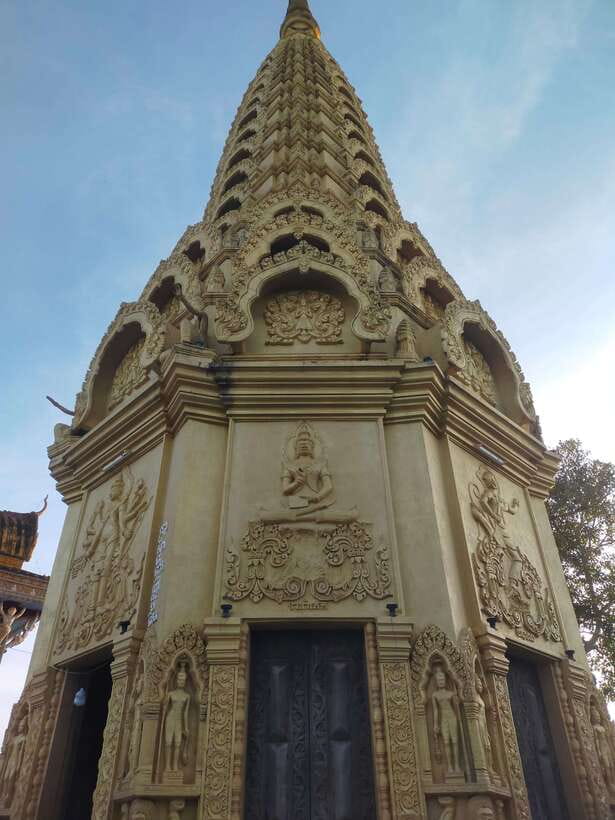
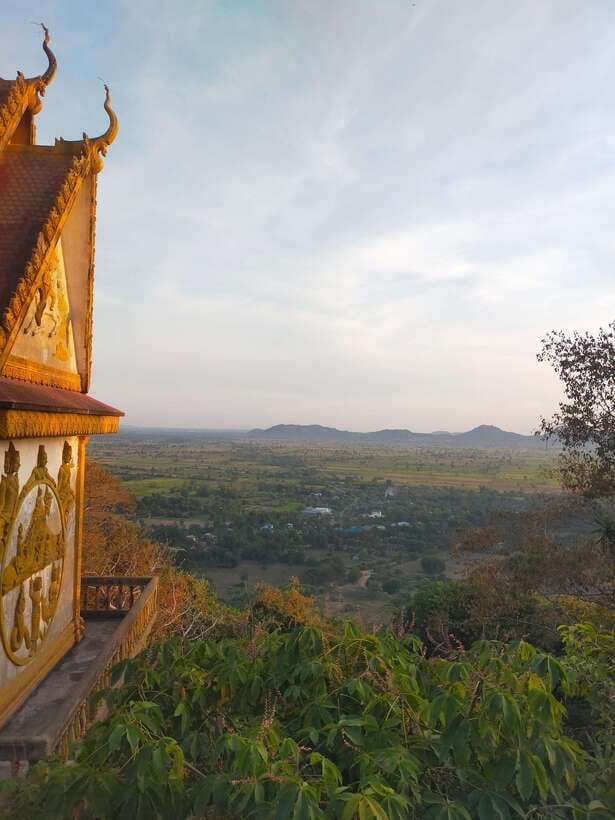
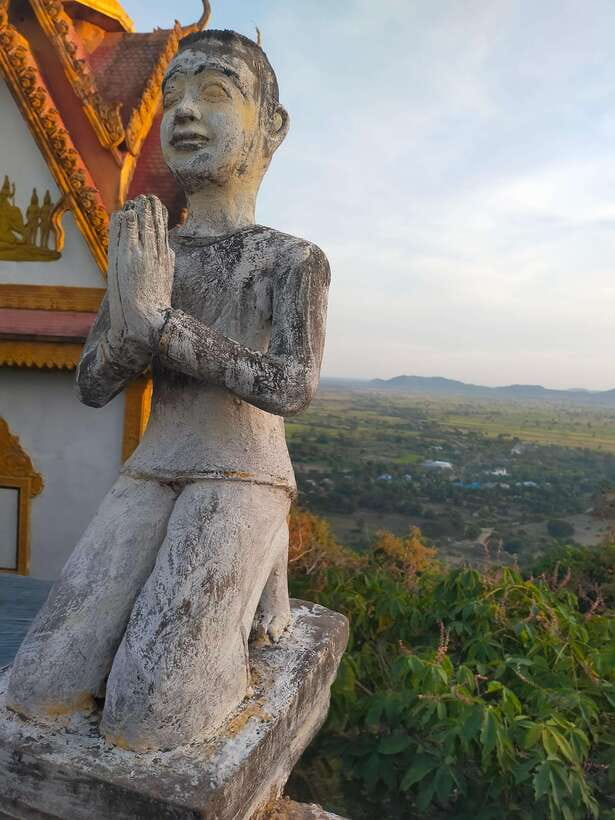
After the Killing Cave, you continue up Phnom Sampov to see temples, monkeys, and viewpoints. The mountain gives you a broad look across the surrounding countryside, with the paddy fields and villages spread below.
This is another place where footwear matters. The tour includes stairs, mountain paths, and uneven surfaces, so sandals with a secure strap or comfortable walking shoes are better than loose flip-flops. The mountain shuttle or motorbike for the return is included, which saves you from making the entire route on foot.
The hilltop section is less about one famous monument and more about collecting several experiences in one place. You may pause at a shrine, watch monkeys, take photographs, and listen to the guide connect the mountain’s religious sites with its wartime history.
The bat cave is the grand finale
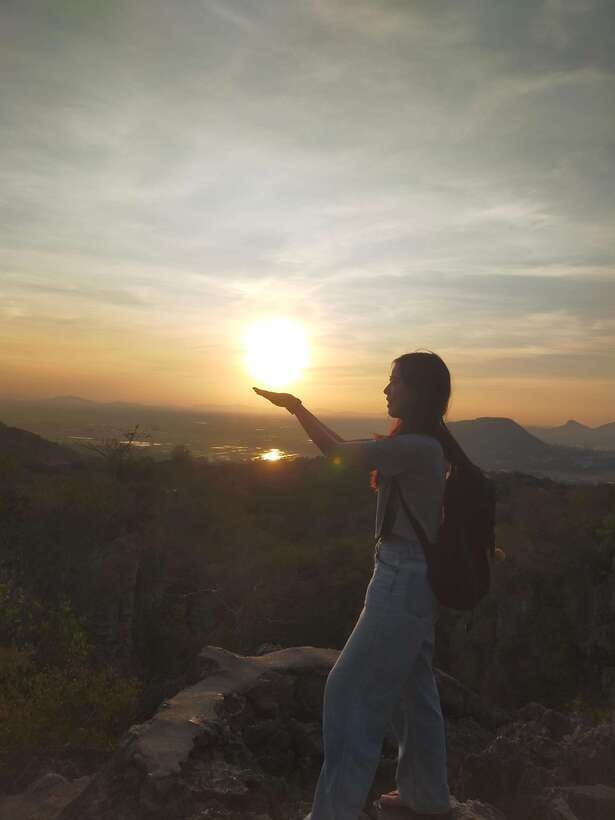
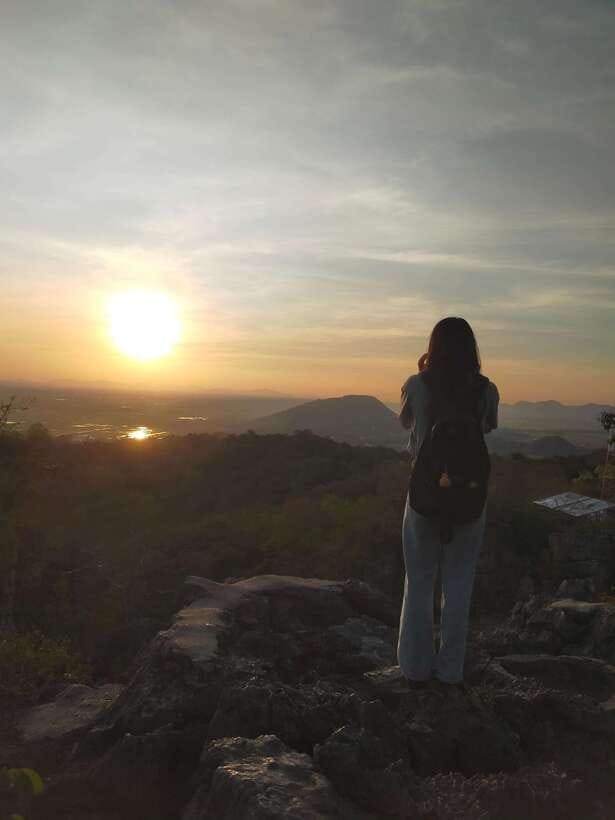
Near sunset, you come back down to watch millions of wrinkle-lipped bats leave the cave. The flight can continue for more than 50 minutes, creating a long, dark ribbon across the evening sky.
This is the most visually dramatic part of the day, but it requires patience. The bats do not appear on your schedule like a stage show. You wait, watch the cave mouth, and then follow the stream as it grows. The scale changes from a few first bats to a seemingly endless flow.
I like that the ending is simple. After the difficult history of the Killing Cave and the physical climb at Banan, you finish by standing still and watching a natural event. Bring a camera, but give yourself time to look without a screen. Sunset light, the mountain, and the moving bats provide the final strong memory of Battambang.
The tour usually returns you to your hotel, or you can finish at Pomme Bar in town. Since the day runs about 11 hours, an evening meal and a quiet night afterward may be all you want.
What the $14 price really covers
The advertised price is $14 per person, which is very low for a full day with hotel pickup and drop-off, an English-speaking guide, several admission fees, bottled water, fruit salad, wet wipes, mountain transport, and donations.
The Bamboo Train adds $5 per person. Lunch and personal spending are not included. The optional rat barbecue may also require clarification at the time, since the tour details describe it as both an included tasting and an optional item. Ask your guide so you know exactly what is covered.
Even with the train and lunch, the cost remains strong for the amount of ground covered. The value comes less from luxury and more from having one person connect the sites, explain the history, and handle the tuk-tuk transport. You are paying for access and interpretation, not an air-conditioned coach or a carefully timed museum circuit.
Pickup and drop-off are limited to locations within 5 kilometers of Battambang town. Bring cash, sunscreen, rain gear, and a camera. Cambodia’s weather can change, and the tuk-tuk is open to the air.
Who should book this day
I would recommend this tour to you if you want to see Battambang’s main sights and nearby countryside in one day. It suits curious first-time visitors, couples, solo people, and small groups who prefer local transport and a guide with personality.
It is especially good for anyone interested in both ancient Cambodia and the Khmer Rouge period. The day does not hide the difficult parts of history, but it balances them with food, farming, temples, wildlife, and village scenes.
The tour is less suitable if you want a slow, unstructured day. The 11-hour schedule is long, and the heat, steps, and mountain stops demand energy. It is also not suitable for pregnant women, people over 220 pounds or 100 kilograms, people with high blood pressure, or people over 95 years of age, according to the stated restrictions.
If you have limited mobility, the 358 steps at Banan and the mountain terrain at Phnom Sampov are the main concerns. Ask before booking if you need a modified route.
Should you book the Battambang tuk-tuk tour?
Book it if you want maximum variety for a low price and you are happy with a long, active day. The strongest reasons are the guide’s storytelling, the contrast between village roads and temple sites, the sobering Killing Cave, and the extraordinary bat flight at dusk.
Go in with realistic expectations about the Bamboo Train. It is a short, bumpy novelty, not a major railway adventure. Also allow extra money for the $5 train ticket and lunch, and do not schedule an important evening departure afterward.
For many people, this will be the best single-day introduction to Battambang. It gives you ancient temples, local food, rural Cambodia, difficult history, and a natural spectacle, all tied together by a guide who can make the long hours pass with humor and useful context.
FAQ
What time does the tour start?
Pickup begins at 8:20 AM from your accommodation or a restaurant within 5 kilometers of Battambang town.
How long does the tour last?
The experience lasts about 11 hours and ends at your hotel or at Pomme Bar in town.
Is the Bamboo Train included in the price?
No. The Bamboo Train costs an additional $5 per person. Lunch and personal expenses are also separate.
What is included in the $14 price?
Hotel pickup and drop-off, an English-speaking guide, bottled water, wet wipes, photo opportunities, fruit salad, admissions to Banan, Phnom Sampov, the Killing Cave and the Bat Cave, mountain transport, and donations are included.
How many steps are there at Wat Banan?
The climb to Wat Banan involves 358 steps.
Is the tour suitable for everyone?
No. It is not suitable for pregnant women, people over 220 pounds or 100 kilograms, people with high blood pressure, or people over 95 years old.
Newest reviews from Battambang
- Private Taxi Transfer From Battambang – Kampot★ 5.0 · 1 review
- Private Taxi Transfer Battambang from/to Phnom Penh★ 5.0 · 7 reviews
- Private Taxi Transfer From Battambang – Siem Reap City★ 5.0 · 4 reviews
- Afternoon tour to Original Bamboo train. Bat cave. Killing cave★ 5.0 · 25 reviews
- Afternoon Tour BambooTrain & Bat Cave★ 5.0 · 57 reviews
- Private Boat from Battambang to Siem Reap via Tonle Sap Lake★ 4.5 · 3 reviews
- Private Half-Day Tuk Tuk Tour in Battambang★ 5.0 · 2 reviews
- Tuk Tuk Tour (Full-Day)★ 5.0 · 7 reviews
Tuk-Tuk Tours, compared.


Tuk-Tuk, Bamboo Train, Killing/Bat Caves, Sunset
Read our review →
Siem Reap Countryside Bike Tour / E-Bike or Tuk Tuk
Read our review →
Battambang Tuk Tuk tour: Bambootrain, Killing & Bat Caves,Sunset
Read our review →
Phnom Penh Silk Island Bike Tour/ E-Bike or Tuk Tuk
Read our review →
Angkor Wat Private Tuk-Tuk Tour (sunrise Option) & more
Read our review →
Ultimate Phnom Penh Food Tour by Tuk Tuk: 20 Tastings and Drinks
Read our review →Browse the lists this tour appears in